Gold Surpasses $5,000 First, When Will the Crypto Market Reverse?

marsbitXuất bản vào 2026-01-26Cập nhật gần nhất vào 2026-01-26

Tóm tắt

The article discusses the outcome of a popular prediction on Polymarket from October last year: "First to $5,000: Gold or ETH?". While Ethereum had once approached $4,800 with high market confidence, gold ultimately surged past $5,100 per ounce on January 26, whereas Ethereum remained stagnant between $2,800 and $3,000. The rise in gold is attributed to macro factors including concerns over U.S. fiscal health, geopolitical tensions, and inflation-driven capital flight toward safe-haven assets. Institutional sentiment has turned strongly bullish, with banks like OCBC and Goldman Sachs raising their gold price targets. Meanwhile, tokenized gold products have seen record investment inflows. In contrast, the crypto market has faced significant outflows, with Bitcoin and Ethereum ETFs recording substantial withdrawals. Bitcoin has fallen 30% from its peak, and Ethereum is down around 40%. Analysts like Peter Brandt have turned bearish, citing completed bear channels. However, the article suggests that crypto’s downturn may be temporary—a phase in capital rotation toward safety. Once gold’s momentum slows or macro risks ease, capital may return to deeply oversold crypto assets. Bitcoin shows classic bottoming signals, including peak realized losses, while Ethereum’s high staking ratio reflects long-term confidence. The potential appointment of a crypto-friendly Fed chair could also boost the market. The piece concludes that gold’s rally may have further to go, and crypt...

Author:zhou, ChainCatcher

Remember that hot prediction event on Polymarket last October?

"First to $5,000: Gold or ETH?"
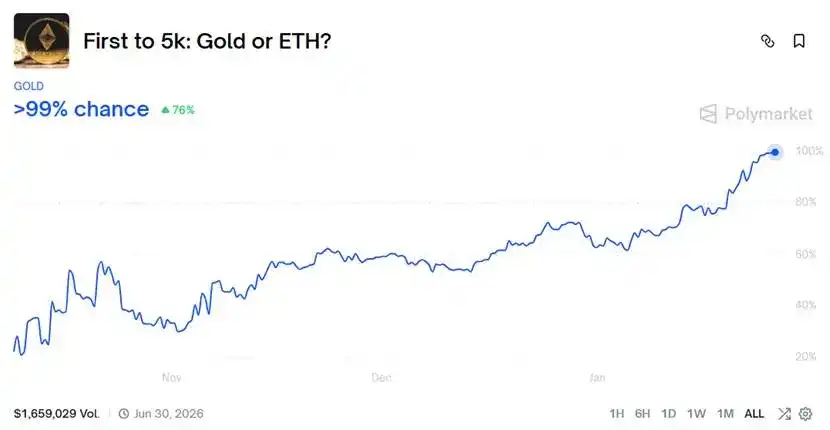
At that time, Ethereum's price surged to around $4,800, with the market giving it an 80% probability of breaking through $5,000. Many believed the era of digital gold had arrived.

Three months later, the market has given its answer.

On January 26, spot gold broke through $5,100 per ounce, while Ethereum is still oscillating between $2,800 and $3,000, with the overall crypto market remaining sluggish.

Amid extreme macroeconomic uncertainty, capital has collectively turned to the most traditional safe-haven assets, while cryptocurrencies, as high-volatility risk assets, were sold off first.

Gold Soars, Crypto Market Capital Votes with Its Feet

Gold's upward momentum stems from multiple macro factors.

First, signals of hedging against US dollar credit risk are becoming increasingly evident. The Danish academic pension fund AkademikerPension announced it would liquidate approximately $100 million in US Treasuries by the end of the month,直言 citing serious concerns about the US fiscal situation. Sweden's largest private pension fund, Alecta, also disclosed that since early 2025, it has significantly reduced its holdings of US Treasuries, amounting to approximately $7.7 to $8.8 billion. Institutions cite US policy uncertainty and持续 debt expansion as core reasons.

Second, geopolitical risks are intensifying. Less than a month into 2026, the world has already witnessed several major events, including the US proposing to "force-buy" Greenland, raiding and capturing the Venezuelan president, imposing 25% tariffs on countries trading with Iran, and further chaos within Iran. Coupled with the prolonged stalemate in the Russia-Ukraine conflict, geopolitical issues have not eased in the new year but have shown signs of恶化.

Additionally, inflation and currency depreciation pressures persist. Against the backdrop of massive central bank liquidity injections and fiscal deficit monetization, the purchasing power of fiat currency is constantly being diluted. Gold and silver, as hard assets, naturally become the首选 for capital seeking shelter.

In this context, institutional views on gold are rapidly turning optimistic. OCBC Bank has raised its year-end gold price target for 2026 to $5,600 per ounce; Goldman Sachs has also significantly adjusted its expectations, raising its year-end target from $4,900 to $5,400.

They emphasize that持续 buying by private investors and emerging market central banks is squeezing limited gold supply. Data shows that in 2025, global central banks net purchased over 1,100 tons of gold, and in 2026, it is expected to maintain a pace of over 60 tons per month. Against the backdrop of the Fed potentially restarting rate cuts, gold ETF holdings have also begun to回升.

On the crypto market side, on-chain gold investment enthusiasm has also reached new heights. According to Coingecko data, the total market capitalization of tokenized gold has now exceeded $525 million, and tokenized silver has also hit a historical record. According to Lookonchain monitoring, a whale lost $18.8 million on ETH in a short period and is now doubling down on gold. It spent $36.04 million to buy 7,536 XAUT at an average price of $4,786, with an unrealized profit of $2.3 million.

In contrast, the cryptocurrency market presents a截然不同的 picture. Bitcoin has fallen about 30% from last year's high, and Ethereum has dropped about 40%. Last week, both Bitcoin and Ethereum spot ETFs recorded massive net outflows: Bitcoin ETF net outflows were $1.33 billion (the second-highest weekly规模 in history), and Ethereum ETF net outflows were $611 million.

As of January 20, the performance of the two largest crypto treasury companies varied. Bitcoin treasury company MicroStrategy (MSTR) holds a total of 709,715 BTC with an average cost of $75,979, resulting in a floating profit of $10.813 billion. Ethereum treasury company Bitmine (BMNR) holds a total of 4,203,036 ETH with an average cost of $3,857, resulting in a floating loss of $3.232 billion.

Market sentiment is clearly偏向 bearish. The famous trader and chart analyst Peter Brandt, who successfully predicted Bitcoin's crash in 2018, stated that the Bitcoin bear market channel is complete and issued a sell signal again. He pointed out that Bitcoin's price needs to recover to $93,000 to negate the sell signal. Bloomberg analysts even believe that the possibility of Ethereum falling below $2,000 in the short term is higher than returning to $4,000.

Capital Rotation: The Day Gold Stops Rising is the Day Crypto Reverses?

However, the crypto market's sluggishness is more of a阶段性表现 of capital rotation. During periods of extreme risk aversion, capital flow typically first rushes into zero-credit-risk assets like US Treasuries and gold. Only after the peak of risk passes does it gradually flow back into stocks and crypto markets.

The current collective rise of gold, silver, and some大宗商品 is precisely the most concentrated stage of defensive allocation. Once gold's momentum weakens as it approaches institutional target prices, or a major macro risk shows signs of easing, profit-takers will likely begin searching for the next high-return opportunity. At that time, deeply回调ed crypto assets, with leverage fully washed out, will become the most natural承接 object.

Specifically for Bitcoin and Ethereum, their respective bottoming signals are becoming increasingly clear.

For Bitcoin, massive on-chain realized losses are often a classic bottom特征. CryptoQuant data shows that Bitcoin's realized loss (Realized Loss) has reached $4.5 billion, the highest level in three years. The last time this happened, Bitcoin's price was around $28,000 after about a year of brief adjustment.

On the institutional side, Bitcoin treasury companies continue to increase their BTC holdings through financing plans, especially after MSCI decided not to remove MSTR from its indices for now, prompting passive funds like Vanguard to follow up and buy MSTR stock. Arthur Hayes publicly stated that the core trading strategy this quarter is to go long on MSTR and Metaplanet.

The situation with Ethereum is similar. On one hand, over 36 million ETH has been staked, accounting for nearly 30% of the circulating supply, with the exit queue接近 zero. Validators are expressing long-term confidence in the network with their actions. On the other hand, BitMine recently obtained shareholder approval to increase the上限 of shares the company can issue to enhance future financing flexibility, and it will most likely continue to increase its Ethereum holdings.

It is worth mentioning that on Polymarket currently, the probability of BlackRock executive Rieder succeeding the Fed chair is close to 50%, significantly领先 competitors. Market analysis suggests that if this event materializes, his friendly stance towards RWA and the crypto ecosystem could provide a major boost to the crypto market.

However, history has proven countless times that when precious metal行情 go crazy, they are completely unreasonable.

How high can gold go next? No one knows. What needs to be done now is not to guess where the top is, let alone short it. In an era of inflation cycles and credit revaluation叠加, it is difficult to call a top for gold.

Loyal crypto investors may only need to patiently wait for the rotation signal to appear. Hopefully, that day will come sooner than we imagine.

Click to learn about open positions at ChainCatcher

Câu hỏi Liên quan

QWhat was the subject of the popular prediction event on Polymarket mentioned in the article?

AThe prediction event was 'First to $5,000: Gold or ETH?', which asked whether gold or Ethereum would be the first to break the $5,000 price level.

QWhich asset ultimately reached the $5,000 price target first, and what was its price on January 26th?

AGold reached the target first. On January 26th, the spot price of gold broke through $5,100 per ounce.

QWhat are the three main macro factors cited in the article as driving the rise in gold's price?

AThe three main drivers are: 1) Hedging against U.S. dollar credit risk, 2) Escalating geopolitical risks, and 3) Persistent inflation and currency devaluation pressures.

QAccording to the article, what is a potential signal for a reversal in the cryptocurrency market?

AA potential signal for a crypto market reversal is when the momentum in gold's price weakens after it nears institutional target prices, or when a major macro risk shows signs of easing, prompting profit-taking capital to seek higher returns in deeply corrected crypto assets.

QWhat on-chain metric for Bitcoin is mentioned as a classic bottoming feature, and what was its value?

AThe metric is Bitcoin's Realized Loss. The value mentioned is $4.5 billion, which is stated to be the highest level in three years.

Nội dung Liên quan

Đối thoại với Ray Dalio: Chúng ta đang ở trong bong bóng AI, 1% danh mục đầu tư của tôi là Bitcoin

Ray Dalio, người sáng lập Bridgewater Associates, trong một cuộc phỏng vấn đã chỉ ra rằng thế giới hiện tại đang trong một "AI bubble" (bong bóng AI) cổ điển, với giá tài sản tăng vọt và đầu cơ quá mức. Ông cảnh báo bong bóng có thể vỡ do lãi suất tăng, nguồn cung cổ phiếu dư thừa hoặc khi nhà đầu tư cần tiền mặt trả nợ, dẫn đến suy thoái kinh tế. Đồng thời, Dalio mô tả một "chu kỳ lớn" kéo dài khoảng 80 năm, bao gồm ba động lực chồng chéo: khoảng cách giàu nghèo và xung đột nội bộ, thâm hụt ngân sách chính phủ khổng lồ và thay đổi địa chính trị. Ông nhấn mạnh rằng Mỹ và Anh đang đối mặt với những thách thức trong giai đoạn suy yếu này. Để bảo vệ của cải, Dalio khuyến nghị đa dạng hóa danh mục đầu tư với cổ phiếu, vàng, trái phiếu, bất động sản thay vì chỉ giữ tiền mặt. Ông tiết lộ khoảng 1% danh mục của mình là Bitcoin, nhưng vẫn ưa chuộng vàng vật chất hơn do tính ổn định và vai trò tiền tệ dự trữ. Về tác động của AI, Dalio cho rằng nó không chỉ thay thế lao động chân tay mà còn cả tư duy, làm trầm trọng thêm bất bình đẳng thu nhập. Con người cần phát huy trí tuệ cảm xúc và trực giác - những thứ AI chưa có - và học cách hợp tác với AI. Cuối cùng, ông phân tích những rủi ro của thuế tài sản và xu hướng thế giới có thể trở nên "khu vực hóa" hơn, với các khối như châu Mỹ và châu Á - Thái Bình Dương, trong bối cảnh sự thống trị toàn cầu của Mỹ đang suy yếu.

marsbit50 phút trước

Đối thoại với Ray Dalio: Chúng ta đang ở trong bong bóng AI, 1% danh mục đầu tư của tôi là Bitcoin

marsbit50 phút trước

Hơn 7.2 nghìn tỷ won trong một ngày, ngoại hải nước ngoài mua ròng kỷ lục vào thứ Sáu! Phố Wall: Cơn gió ngược về mặt vốn của thị trường chứng khoán Hàn Quốc đã tan biến

Dòng vốn nước ngoài đổ mạnh vào thị trường chứng khoán Hàn Quốc (KOSPI) với mức mua ròng kỷ lục 7,2 nghìn tỷ won chỉ trong ngày 31/7, đánh dấu sự đảo chiều rõ rệt sau nhiều tháng bán ròng mạnh. Theo báo cáo từ Citigroup, áp lực bán từ dòng vốn nước ngoài đã giảm đáng kể, với mức bán ròng tháng 7 thu hẹp còn 9,8 nghìn tỷ won so với mức 48,4 và 44,5 nghìn tỷ won trong tháng 6 và tháng 5. Đồng thời, các quỹ hưu trí và quỹ đầu tư trong nước cũng chuyển sang vị thế mua ròng 1,0 nghìn tỷ won trong tháng 7. Một yếu tố hỗ trợ khác là quy định mới từ Ủy ban Dịch vụ Tài chính Hàn Quốc (FSC), có hiệu lực từ 31/7, siết chặt điều kiện đầu tư vào các ETF có đòn bẩy đối với nhà đầu tư cá nhân. Quy định này đã ngay lập tức làm giảm khoảng 50% khối lượng giao dịch của các ETF này, góp phần kỳ vọng giảm bớt biến động cho thị trường. Citigroup duy trì mục tiêu chỉ số KOSPI ở mức 10.000 điểm, dựa trên các yếu tố thuận lợi như ngành chip bán dẫn ổn định, định giá thị trường thấp, nền tảng kinh tế vững mạnh và các chính sách hỗ trợ. Họ nhận định áp lực dòng vốn ngược chiều đang giảm dần, tạo điều kiện cho các yếu tố cơ bản và chính sách tích cực phát huy tác dụng.

marsbit51 phút trước

Hơn 7.2 nghìn tỷ won trong một ngày, ngoại hải nước ngoài mua ròng kỷ lục vào thứ Sáu! Phố Wall: Cơn gió ngược về mặt vốn của thị trường chứng khoán Hàn Quốc đã tan biến

marsbit51 phút trước

Làm thế nào để khiến bản thân trở nên không thể bị thay thế bởi trí tuệ nhân tạo

**Tóm tắt: Làm thế nào để trở nên không thể bị thay thế bởi AI** Bài viết phản đối việc than vãn về AI và thay vào đó đề xuất một giải pháp căn cơ: trở thành một "siêu cá nhân" không thể bị thuê mướn. Mối đe dọa thực sự không phải là AI, mà là tình trạng "nô lệ lương thưởng" – phụ thuộc hoàn toàn vào người khác để sinh tồn, làm công việc nhàm chán mà không có mục đích. Để thoát khỏi vòng luẩn quẩn này và phát triển mạnh trong kỷ nguyên AI, bạn cần trau dồi 5 yếu tố then chốt: 1. **Tính tự chủ:** Khả năng hành động mà không cần chờ chỉ thị. 2. **Khiếu thẩm mỹ:** Khả năng nhận biết điều gì thực sự có giá trị. 3. **Khả năng thuyết phục:** Thu hút sự chú ý và sự công nhận. 4. **Sự kiên trì:** Không sợ thất bại, xem đó là bài học. 5. **Khả năng lặp:** Điều chỉnh dựa trên phản hồi để tiến tới mục tiêu. Giải pháp là đầu tư vào sự nghiệp của chính mình. Trong khi AI giỏi tạo ra "tài sản" (nội dung, code), nó không thể thay thế được khả năng phân biệt thứ gì đáng để tạo ra, làm cho mọi người quan tâm và kiên trì theo đuổi. Trong hai kỹ năng đòn bẩy mạnh mẽ là **Code (Lập trình)** và **Media (Nội dung)**, bài viết nhấn mạnh **Nội dung** quan trọng hơn. Giá trị của nội dung là chủ quan và đòi hỏi sự am hiểu, trải nghiệm mà AI khó có được, tạo không gian cho các cá nhân sáng tạo thực sự. **Cách bắt đầu (Bài tập 15 phút):** 1. **Khai thác nguyên liệu thô của bạn:** Xác định chủ đề bạn am hiểu sâu, vấn đề bạn tự giải quyết được, hay sở thích đặc biệt từ nhỏ. 2. **Xác định "trục phản biện" của bạn:** Tìm ra quan điểm độc đáo của bạn – những điều bạn tin là đúng nhưng số đông lại sai trong lĩnh vực của mình. 3. **Xuất bản ý tưởng đầu tiên:** Kết hợp câu trả lời từ bước 1 và 2, tạo ra một nội dung (bài đăng, video) và đăng nó lên. Hành động này mang lại phản hồi thực tế, bắt đầu quá trình học hỏi, lặp lại và phát triển kỹ năng thuyết phục. Bằng cách xây dựng một sự nghiệp xoay quanh con người thật, trải nghiệm thật và góc nhìn độc đáo của mình thông qua nội dung, bạn có thể tạo ra giá trị mà AI không thể sao chép, từ đó trở nên không thể thay thế.

marsbit2 giờ trước

Làm thế nào để khiến bản thân trở nên không thể bị thay thế bởi trí tuệ nhân tạo

marsbit2 giờ trước

Nhờ việc tung xúc xắc, chìa khóa Bitcoin được lưu trữ offline, nhưng không phải ai cũng muốn làm điều này

Cảm biến từ cuộc tranh cãi gần đây xung quanh lỗ hổng trong ví phần cứng Coldcard, bài viết thảo luận về phương pháp tạo seed (cụm từ khôi phục) cho ví Bitcoin bằng cách xúc xắc vật lý. Mỗi lần xúc xắc công bằng cung cấp khoảng 2,6 bit entropy (thước đo tính ngẫu nhiên). Để đạt mức entropy an toàn cho một seed 12 từ (128 bit), cần khoảng 50 lần xúc xắc; Coldcard khuyến nghị 99 lần để đạt mức bảo mật cao hơn. Lợi thế chính của phương pháp này là tách biệt hoàn toàn với bất kỳ lỗi phần cứng hoặc phần mềm nào trong trình tạo số ngẫu nhiên của thiết bị, từ đó bảo vệ seed chính của ví. Tuy nhiên, bài viết cảnh báo rằng trong sự cố Coldcard, các chức năng phụ khác của thiết bị (như tạo ví giấy, khóa đa chữ ký, mật mã phiên USB) vẫn có thể bị ảnh hưởng nếu chúng dựa vào trình tạo số lỗi, ngay cả khi seed chính được tạo an toàn bằng xúc xắc. Nhược điểm lớn của việc dùng xúc xắc là quá trình thủ công, dễ xảy ra sai sót, tốn thời gian và không thực tế cho đa số người dùng mới. Người dùng có thể ghi chép sai, sử dụng xúc xắc gian lận, hoặc để lộ chuỗi kết quả. Do đó, mặc dù có nền tảng toán học vững chắc, phương pháp này đòi hỏi sự tỉ mỉ cao và không phải là giải pháp khả thi cho việc áp dụng Bitcoin rộng rãi. Bài viết kết luận rằng mục tiêu dài hạn vẫn là phát triển phần cứng/phần mềm tạo số ngẫu nhiên mạnh mẽ và đáng tin cậy, trong khi vẫn giữ phương pháp thủ công như một tùy chọn cho người dùng có kinh nghiệm. Cuối cùng, bài viết đưa ra khuyến nghị cho chủ sở hữu Coldcard: cập nhật firmware, kiểm tra các chức năng phụ đã sử dụng và xem xét các biện pháp bảo mật bổ sung như ví đa chữ ký kết hợp nhiều nhà sản xuất để giảm thiểu rủi ro từ một điểm yếu đơn lẻ.

cryptonews.ru6 giờ trước

Nhờ việc tung xúc xắc, chìa khóa Bitcoin được lưu trữ offline, nhưng không phải ai cũng muốn làm điều này

cryptonews.ru6 giờ trước

Giao dịch

Giao ngay
活动图片





