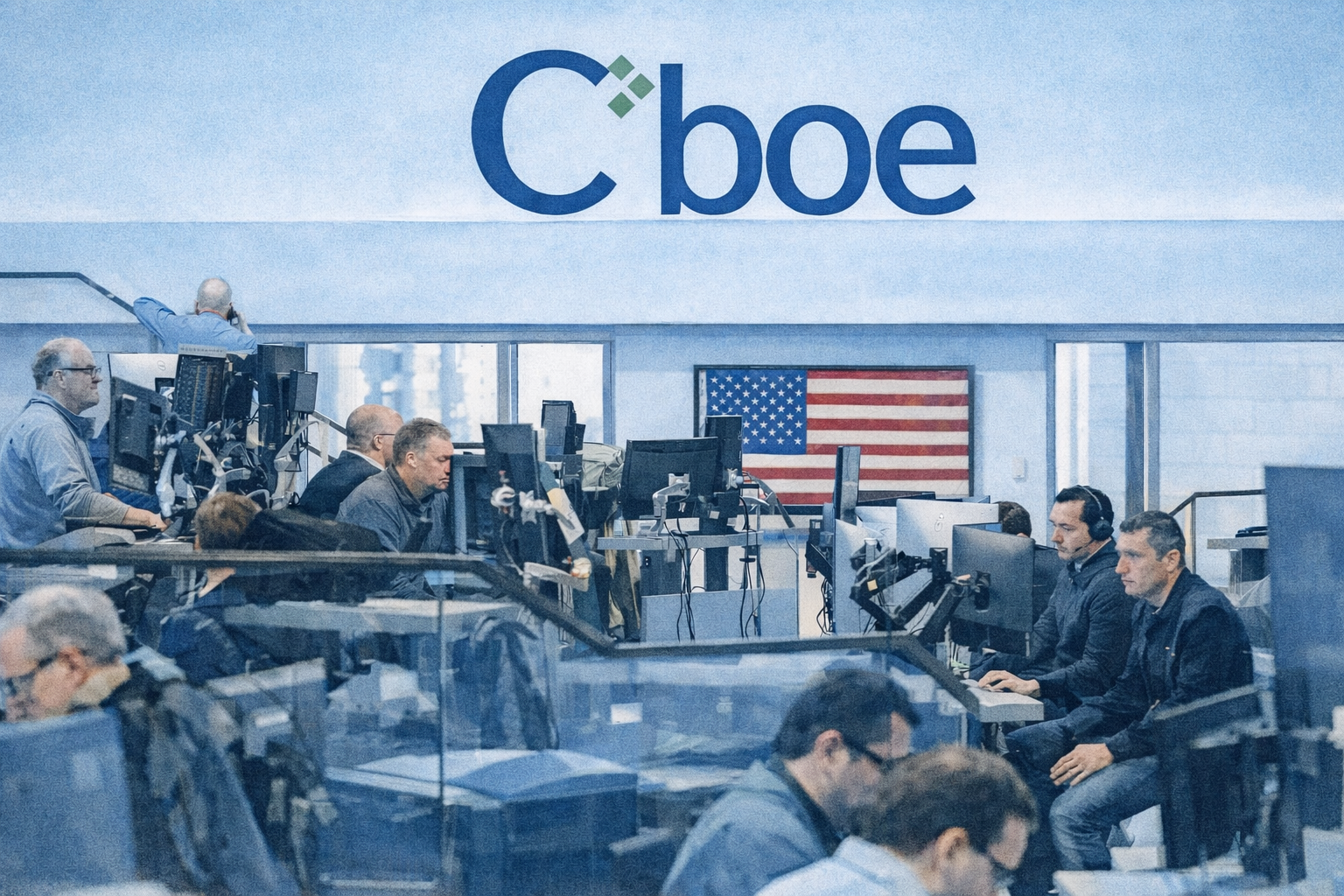
From Quiet Exit to Relaunch: Traditional Options Exchange Cboe Competes with Prediction Markets for Entry

marsbitXuất bản vào 2026-02-05Cập nhật gần nhất vào 2026-02-05

Tóm tắt

Cboe Global Markets is considering reintroducing "all-or-nothing" binary options to attract retail investors, as prediction markets like Kalshi and Polymarket surge in popularity. These contracts offer fixed payouts if specific conditions are met, such as an index reaching a certain level, otherwise expiring worthless. Cboe had previously launched similar products tied to the S&P 500 and VIX in 2008 but failed due to low liquidity and limited retail participation at the time. The current move is driven by the explosive growth in event-based trading and retail derivative activity, fueled by mobile apps and social media. Unlike the earlier institutional-focused offering, the new binary options are explicitly targeted at散户, with simpler, event-driven contracts designed to compete directly with prediction markets. Cboe emphasizes strict regulatory oversight by the SEC or CFTC and clearing via the OCC to distinguish its products from unregulated platforms. This relaunch represents a strategic effort by traditional exchanges to reclaim retail interest in outcome-based trading, leveraging today’s mature distribution channels and heightened investor appetite for straightforward, short-term derivatives. Success hinges on delivering an intuitive, low-friction experience that can effectively rival prediction markets while operating within a clear regulatory framework.

Author: Zen, PANews

As prediction markets continue to divert retail investors' attention, traditional financial institutions and exchanges are clearly unwilling to stand by idly.

Chicago Board Options Exchange (Cboe Global Markets) is taking the initiative, exploring the relaunch of "all-or-nothing" binary options contracts to attract retail investors. These contracts have a simple structure, paying a fixed return (e.g., $100) at expiration if predetermined conditions are met, otherwise expiring worthless.

According to a WSJ report, the new product will undergo rigorous legal and compliance reviews before official listing. Regulatory oversight may fall under the U.S. Securities and Exchange Commission (SEC) or the Commodity Futures Trading Commission (CFTC), with clearing support provided by the Options Clearing Corporation (OCC).

Cboe previously launched binary options linked to the S&P 500 Index (SPX) and the Volatility Index (VIX) in 2008, but they were delisted due to insufficient liquidity. Their comeback now is particularly noteworthy.

The First Attempt 18 Years Ago and the Quiet Exit

"All-or-nothing" options contracts are not a novel concept or product; Cboe itself introduced them over a decade ago. But ultimately, it was a case of starting early yet arriving late.

In July 2008, Cboe announced the launch of binary options linked to the S&P 500 (SPX) and the Cboe Volatility Index (VIX). According to an approval document released by the SEC in May of the same year, Cboe applied to add a framework for "cash-settled, European-style exercise" binary index options to its exchange rules. The document also clarified that the OCC (Options Clearing Corporation) would be responsible for issuance, clearing, and settlement, and amended its relevant bylaws and rules accordingly.

Compared to the later proliferation of "black platform binary options" on the internet, Cboe's binary options were a standardized, centrally cleared derivative innovation. They compressed the complex payoff curve of options into a fixed payout, allowing traders to use a more direct way to express their view on whether an index would reach a certain level. At launch, Cboe expected to attract diverse participants, including individual investors and hedge funds, to bet on the direction of these indices.

However, this product did not generate the anticipated market enthusiasm, nor did it achieve significant scale or sustained trading, ultimately leading to its quiet delisting. Behind this were both structural market issues and deep-seated problems stemming from its product positioning.

At that time, the market was dominated by institutional investors, with very low retail participation, leading to insufficient liquidity and lackluster subscription interest. Binary options require a "two-way street" between brokers and retail investors. But in the early stages of mobile internet development, the financial dissemination power of social media was far from formed, and retail investors typically lacked trading motivation and habits.

When demand didn't materialize, the supply side became even harder to sustain. Thin trading weakened market maker incentives, wider spreads further suppressed demand, creating a reflexive "liquidity death spiral." This was the main reason a compliant, centrally cleared binary option failed commercially.

In terms of positioning, the 2008 binary options were also more like tools for professional traders, a new product addition for existing options participants. Their product language, settlement rules, and underlying selection were more "institutionalized" rather than products for the masses. They were linked to SPX and VIX, with strike prices and settlement rules that were not intuitive for the average investor. Even though their payoff was binary in form, the barrier to understanding remained high.

In contrast, today's popular prediction markets have spread largely because they replaced the underlying assets with more intuitive events, including but not limited to political elections, sports events, etc. Retail investors can participate directly in trading without needing overly complex analytical logic. Cboe did not have such an ecosystem back then.

Relaunch Plan as Timing Matures

Cboe's current proposal for a relaunch is closely related to the current market environment. Since the 2024 U.S. presidential election, prediction market activity has experienced "explosive growth." In January 2026, combined trading volume on Kalshi and Polymarket exceeded $17 billion, hitting a record high.

As the prediction market boom brings a surge in retail derivative trading, the industry has begun to see it as an emerging growth area and an opportunity for exchanges and financial institutions to develop new businesses, thus joining the battle for users. In December 2025, CME Group partnered with sports betting giant FanDuel to launch an official prediction market platform in some U.S. states.

Equally noteworthy alongside prediction markets is the explosive enthusiasm of retail investors for derivative trading. Following the 2020 pandemic shock, U.S. options trading volume repeatedly hit record highs, with retail investors playing a significant role. Data from the Options Clearing Corporation shows that the average daily trading volume in the U.S. options market in 2025 was approximately 61 million contracts, a historical record.

At the same time, the rise of internet brokers and social media has fundamentally changed trading methods. Retail investors can quickly access trading strategies and contract information through mobile apps and online communities. In this environment, simple and clear derivative contracts have a natural appeal to retail users.

If the core reason for the failure of binary options in 2008 was the "absence of retail investors," today's market is the opposite, with distribution channels and product strategies now mature. Cboe realizes it's time to relaunch binary options contracts.

Not Nostalgia, but an "Entry Point Battle"

Binary options carry unavoidable historical baggage.

In the U.S. regulatory context, the term was once highly associated with internet fraud and manipulation. The CFTC and SEC jointly issued investor alerts, pointing out that regulators had received numerous complaints about fraud involving online binary options platforms, including refusal to return funds, identity theft, manipulation of trading software causing client losses, etc.

It is precisely for this reason that Cboe's current move particularly emphasizes strict compliance review before listing and oversight by the SEC or CFTC. The subtext is platform controllability, safety, and transparency. This also explains why traditional exchanges feel urgency amidst the prediction market frenzy. They do not want to completely cede the retail demand for outcome betting to a sector with more complex regulation and blurrier boundaries.

There are several key differences between the binary options being relaunched now and the 2008 version. First, the target audience is different. The previous product was mainly aimed at institutions and experienced investors, attracting almost no retail traders. This time, it explicitly targets the retail group, hoping to provide a simple and easy-to-understand derivative entry point for mass investors.

Second, there is a difference in product positioning. The 2008 contracts were essentially special options linked to indices (SPX, VIX), used to precisely express bullish or bearish views on market indices. Now, Cboe emphasizes introducing simpler, event-based contract forms, aiming to cater to ordinary investors' interest in betting on event outcomes.

Another key factor is the change in the external environment mentioned above. At the market level, Cboe's new product has different technological and channel support for marketing and participation. At the regulatory level, event contract products in the U.S. today are more often under CFTC oversight, whereas the previous binary options required SEC approval. This also reflects the regulatory boundary tensions brought by prediction markets.

Stringing these clues together, Cboe's move can be understood as: a recapture of the retail trading gateway for event outcomes. In 2008, Cboe early on brought binary options into the exchange system, but encountered an era where retail was absent, the understanding barrier was relatively high, and distribution channels were insufficient, ultimately leading to failure.

Today, prediction markets have cultivated a user mindset for intuitive betting and created a huge market imagination space. At the same time, retail options trading volume has long proven that散户 are willing to pay for derivatives that are "simple, short-cycle, and have clear outcomes."

The most critical factor going forward might be whether Cboe can, within compliance constraints, provide a trading experience sufficiently close to the "intuitive, smooth, low-friction" feel of prediction markets. If it fails, its fate might repeat itself. If it succeeds, it could become a landmark event in the "redrawing of boundaries" between traditional exchanges and prediction markets.


Câu hỏi Liên quan

QWhy is Cboe Global Markets considering reintroducing binary options contracts?

ACboe is reintroducing binary options to attract retail investors, as prediction markets are diverting significant attention and trading activity from散户, and the current market environment with high retail participation in derivatives makes it an opportune time to offer simpler, event-based contracts.

QWhat were the main reasons for the failure of Cboe's initial binary options launch in 2008?

AThe initial launch failed due to low liquidity and lack of retail investor participation, as the market was dominated by institutional investors, and the product was too complex and not intuitive enough for普通 investors, leading to a 'liquidity death spiral'.

QHow does the current retail trading environment differ from that in 2008, making a relaunch more viable?

AToday's environment features high retail engagement in derivatives, facilitated by internet brokers and social media, making简单, short-term contracts attractive. Retail option trading volumes have hit record highs, and distribution channels are成熟, unlike in 2008 when散户 were largely absent.

QWhat regulatory challenges are associated with binary options, and how is Cboe addressing them?

ABinary options have been linked to fraud and manipulation in the past. Cboe is addressing this by conducting strict legal reviews before launch, ensuring oversight by either the SEC or CFTC, and using the Options Clearing Corporation (OCC) for清算 to emphasize safety and transparency.

QHow does Cboe's new binary options product differ from its 2008 version in terms of target audience and design?

AThe 2008 version targeted institutional investors with complex index-based contracts, while the new product is designed for retail investors with simpler, event-based contracts that are more intuitive and easier to understand, aligning with the appeal of prediction markets.

Nội dung Liên quan

Anthropic khởi động IPO: Phép màu kinh doanh hay bong bóng định giá?

Tác giả: Phó Thịnh Tuần này, Anthropic, công ty AI cạnh tranh trực tiếp với OpenAI, đã bí mật nộp đơn IPO, dự kiến niêm yết vào tháng 10 với sự bảo lãnh của Morgan Stanley và Goldman Sachs. Định giá trước IPO của họ đã đạt 9650 tỷ USD sau đợt gọi vốn H, và được dự báo có thể chạm 1.5-2 nghìn tỷ USD khi lên sàn, vượt qua SpaceX. Nhiều người đặt câu hỏi liệu đây có phải bong bóng như thời kỳ dot-com 2000 hay không. Tác giả chỉ ra sự khác biệt cốt lõi: Các công ty thời dot-com thường định giá dựa trên "giấc mơ" và ý tưởng thuần túy, trong khi Anthropic có mô hình kinh doanh rõ ràng với doanh thu thực tế khổng lồ và đang bắt đầu có lãi. Doanh thu năm hóa (ARR) của Anthropic tăng vọt từ 10 tỷ USD đầu 2025 lên 470 tỷ USD vào tháng 5 năm nay, với mục tiêu cuối năm là 1000 tỷ USD. Họ dự kiến có lợi nhuận hoạt động trong quý II/2026. Với khoảng 3000 nhân viên, doanh thu trên mỗi nhân viên vượt 10 triệu USD. Khách hàng của họ bao gồm 8/10 công ty trong Fortune 10 và hơn 1000 doanh nghiệp lớn. Tác giả cho rằng định giá của Anthropic dựa trên mô hình SaaS truyền thống với hệ số Price-to-Sales, và doanh thu ổn định từ các gói đăng ký API cho doanh nghiệp hỗ trợ cho mức định giá này. Bài viết cũng đề cập đến một xu hướng lớn hơn: nền kinh tế thế giới đang chuyển dịch từ nền tảng "carbon" (dựa vào con người) sang kết hợp với nền tảng "silicon" (dựa vào AI và sức mạnh tính toán). Các công ty hàng đầu như Nvidia đã chứng kiến chi phí đầu tư vào năng lực tính toán vượt quá chi phí nhân sự. Việc Anthropic lên sàn không chỉ là câu chuyện của một công ty, mà có thể là điểm neo giá cho một mô hình kinh tế mới - nơi trí tuệ và năng lực được đo lường bằng sức mạnh tính toán và khả năng mở rộng quy mô của AI.

链捕手21 phút trước

Anthropic khởi động IPO: Phép màu kinh doanh hay bong bóng định giá?

链捕手21 phút trước

Các Thượng Nghị Sĩ Hoa Kỳ Gây Sức Ép Lên Cơ Quan Quản Lý Ngân Hàng Để Có Quy Định Vốn 'Công Bằng' Cho Crypto

Một nhóm thượng nghị sĩ đảng Cộng hòa Mỹ, đứng đầu là Chủ tịch Tiểu ban Tài sản Số Cynthia Lummis, đã gửi thư tới các cơ quan quản lý ngân hàng hàng đầu bao gồm Cục Dự trữ Liên bang, FDIC và OCC. Trong thư, họ kêu gọi xây dựng một khuôn khổ vốn rõ ràng và công bằng hơn cho các hoạt động tài sản tiền mã hóa của ngân hàng. Các thượng nghị sĩ chỉ trích tiêu chuẩn vốn của Ủy ban Basel, áp dụng trọng số rủi ro 1250% - mức phân loại trừng phạt nhất - đối với tài sản tiền mã hóa, coi đó là lệnh cấm thực tế thay vì đánh giá rủi ro thực tế. Họ hoan nghênh hướng dẫn chung gần đây về chứng khoán token hóa, khẳng định việc xử lý vốn nên dựa trên đặc điểm rủi ro của tài sản cơ bản chứ không phải công nghệ ghi nhận. Các nghị sĩ thúc giục nguyên tắc này cần được áp dụng nhất quán cho cả các tài sản số khác. Lời kêu gọi này được đưa ra khi các cơ quan quản lý đang chuyển sang mô hình giám sát dựa trên rủi ro. Chủ tịch FDIC Travis Hill nhấn mạnh vai trò của tiêu chuẩn vốn mạnh mẽ, đồng thời cho biết đã có các đề xuất quy định cho các công ty con phát hành stablecoin. Tương tự, Giám đốc OCC Jonathan Gould khẳng định nhiệm vụ là tạo điều kiện cho đổi mới có trách nhiệm, xem xét lại các hành động giám sát trước đây và chống lại việc ngân hàng từ chối dịch vụ bất hợp pháp.

bitcoinist29 phút trước

Các Thượng Nghị Sĩ Hoa Kỳ Gây Sức Ép Lên Cơ Quan Quản Lý Ngân Hàng Để Có Quy Định Vốn 'Công Bằng' Cho Crypto

bitcoinist29 phút trước

Near Tái Xuất Hiện Trên Sân Khấu AI: Chuyển Đổi Thành Blockchain Công Cộng Vì 'Khó Trả Lương', Agent và Quyền Riêng Tư Trở Thành Câu Chuyện Tăng Trưởng Mới

Tác giả: Jae, PANews Dù đã trải qua nhiều chu kỳ thị trường với các xu hướng khác nhau, từ blockchain hiệu suất cao, phân mảnh đến trừu tượng chuỗi và gần đây là AI Agent, Near luôn có mặt. Được đồng sáng lập bởi Illia Polosukhin, một trong những tác giả của kiến trúc AI Transformer nổi tiếng, Near có nền tảng kỹ thuật vững chắc. Điều ít người biết là Near ban đầu là một công ty khởi nghiệp AI, tập trung vào "tổng hợp chương trình" (dạy máy viết code). Tuy nhiên, họ gặp khó khăn trong việc trả lương xuyên biên giới cho các nhà phát triển toàn cầu do hạn chế của hệ thống thanh toán truyền thống và phí gas cao, tốc độ chậm của các blockchain thời kỳ đầu. Điều này buộc họ tạm dừng giấc mơ AI và tự xây dựng một blockchain riêng - Near - vào năm 2018. Sau một thời gian phát triển công nghệ phân mảnh nhưng gặp khó khăn trong việc thu hút hệ sinh thái, Near tìm thấy cơ hội mới khi làn sóng AI bùng nổ. Danh tiếng của Polosukhin với tư cách là đồng tác giả Transformer được công nhận rộng rãi, đưa Near trở lại ánh đèn sân khấu với tư cách là một dự án có "dòng máu AI" chính thống. Near hiện tập trung vào hai hướng phát triển chính: Near Intents và giao dịch riêng tư (Confidential Transactions). **Near Intents** đơn giản hóa trải nghiệm giao dịch chuỗi chéo. Thay vì thực hiện nhiều thao tác thủ công trên các chuỗi khác nhau, người dùng chỉ cần nêu ý định (ví dụ: "đổi BTC lấy ETH"), và mạng lưới "trình giải quyết" (Solver) sẽ tự động tìm đường đi tối ưu. Cơ chế này đã xử lý hơn 200 tỷ USD khối lượng giao dịch tích lũy, tạo ra hơn 34 triệu USD phí giao dịch, với TVL đạt 85 triệu USD trên 25 blockchain. Tuy nhiên, nguy cơ tập trung hóa trong mạng lưới Solver là một rủi ro tiềm ẩn. **Giao dịch riêng tư** là lợi thế cạnh tranh khác. Tính năng "Hoán đổi Bảo mật" cho phép ẩn số lượng, hướng giao dịch trước khi thanh toán, bảo vệ người dùng khỏi MEV và trượt giá. Trong 30 ngày qua, giao dịch riêng tư chiếm tới 41,63% tổng khối lượng giao dịch trên Near (~87 triệu USD trong tổng số 209 triệu USD), phản ánh nhu cầu thị trường mạnh mẽ. Tuy nhiên, tỷ lệ cao này cũng có thể thu hút sự giám sát từ các cơ quan quản lý. Tóm lại, sau hành trình đầy biến động, Near đang định vị lại mình ở giao lộ của blockchain và AI, thông qua trừu tượng hóa chuỗi, cơ chế ý định và giao dịch riêng tư. Việc liệu những nỗ lực này có giúp Near xây dựng được hào rào cạnh tranh vững chắc hay không vẫn cần được theo dõi thêm.

marsbit2 giờ trước

Near Tái Xuất Hiện Trên Sân Khấu AI: Chuyển Đổi Thành Blockchain Công Cộng Vì 'Khó Trả Lương', Agent và Quyền Riêng Tư Trở Thành Câu Chuyện Tăng Trưởng Mới

marsbit2 giờ trước

Từ Ethereum đến "CROPS" của AI: Bộ "Biến số Chậm" mà Vitalik Liên Tục Nhấn Mạnh Rốt Cuộc Là Gì?

Bài viết này giải thích khái niệm CROPS, một thuật ngữ được Vitalik Buterin nhấn mạnh nhiều lần gần đây, liên quan đến định hướng phát triển cốt lõi của Ethereum và tương lai của trải nghiệm người dùng trong thời đại AI. CROPS là viết tắt của năm nguyên tắc: Kháng kiểm duyệt (Censorship Resistance), Kháng chiếm đoạt (Capture Resistance), Mã nguồn mở/Mở (Open Source/Openness), Quyền riêng tư (Privacy) và Bảo mật (Security). Đây không chỉ là giá trị cốt lõi của Ethereum mà còn là kim chỉ nam cho Quỹ Ethereum (EF) trong việc phân bổ nguồn lực vào các nhiệm vụ dài hạn, đảm bảo người dùng giữ được quyền kiểm soát tối thượng đối với tài sản và hành động số của họ. Bài viết chỉ ra rằng khi AI, đặc biệt là AI Agent, ngày càng đóng vai trò là "đại lý số" xử lý các tác vụ phức tạp (như giao dịch, quản lý tài sản), CROPS trở thành vấn đề sống còn. Một hệ thống AI tuân thủ CROPS cần chạy cục bộ (local) khi có thể, bảo vệ quyền riêng tư, minh bạch và trao cho người dùng quyền xác nhận cuối cùng, tránh biến thành một "hộp đen" tập trung. Giao điểm giữa "CROPS Ethereum Access Layer" và "CROPS AI" nằm ở việc giải quyết cùng một vấn đề: làm sao để người dùng truy cập các dịch vụ từ xa (như mô hình LLM hoặc dữ liệu blockchain) mà không phải hy sinh thông tin cá nhân, ý định hay quyền kiểm soát. Các giải pháp như gọi LLM từ xa thanh toán bằng ZK-proof hay đọc RPC Ethereum riêng tư là những ví dụ điển hình. Tóm lại, trong bối cảnh AI đang định hình lại tương tác kỹ thuật số, CROPS nổi lên như một khuôn khổ quan trọng đảm bảo rằng sự tiện lợi và quyền lực của công nghệ không đi kèm với cái giá phải trả là quyền tự chủ, bảo mật và quyền riêng tư của người dùng. Điều này sẽ định hướng cho sự phát triển của các lớp cơ sở hạ tầng, đặc biệt là ví tiền điện tử, trong tương lai.

marsbit3 giờ trước

Từ Ethereum đến "CROPS" của AI: Bộ "Biến số Chậm" mà Vitalik Liên Tục Nhấn Mạnh Rốt Cuộc Là Gì?

marsbit3 giờ trước

Giao dịch

Giao ngay
Hợp đồng Tương lai

Bài viết Nổi bật

Làm thế nào để Mua ZEN

Chào mừng bạn đến với HTX.com! Chúng tôi đã làm cho mua Horizen (ZEN) trở nên đơn giản và thuận tiện. Làm theo hướng dẫn từng bước của chúng tôi để bắt đầu hành trình tiền kỹ thuật số của bạn.Bước 1: Tạo Tài khoản HTX của BạnSử dụng email hoặc số điện thoại của bạn để đăng ký tài khoản miễn phí trên HTX. Trải nghiệm hành trình đăng ký không rắc rối và mở khóa tất cả tính năng. Nhận Tài khoản của tôiBước 2: Truy cập Mua Crypto và Chọn Phương thức Thanh toán của BạnThẻ Tín dụng/Ghi nợ: Sử dụng Visa hoặc Mastercard của bạn để mua Horizen (ZEN) ngay lập tức.Số dư: Sử dụng tiền từ số dư tài khoản HTX của bạn để giao dịch liền mạch.Bên thứ ba: Chúng tôi đã thêm những phương thức thanh toán phổ biến như Google Pay và Apple Pay để nâng cao sự tiện lợi.P2P: Giao dịch trực tiếp với người dùng khác trên HTX.Thị trường mua bán phi tập trung (OTC): Chúng tôi cung cấp những dịch vụ được thiết kế riêng và tỷ giá hối đoái cạnh tranh cho nhà giao dịch.Bước 3: Lưu trữ Horizen (ZEN) của BạnSau khi mua Horizen (ZEN), lưu trữ trong tài khoản HTX của bạn. Ngoài ra, bạn có thể gửi đi nơi khác qua chuyển khoản blockchain hoặc sử dụng để giao dịch những tiền kỹ thuật số khác.Bước 4: Giao dịch Horizen (ZEN)Giao dịch Horizen (ZEN) dễ dàng trên thị trường giao ngay của HTX. Chỉ cần truy cập vào tài khoản của bạn, chọn cặp giao dịch, thực hiện giao dịch và theo dõi trong thời gian thực. Chúng tôi cung cấp trải nghiệm thân thiện với người dùng cho cả người mới bắt đầu và người giao dịch dày dạn kinh nghiệm.

Tổng lượt xem 307Xuất bản vào 2024.12.12Cập nhật vào 2026.06.02

Làm thế nào để Mua ZEN

Thảo luận

Chào mừng đến với Cộng đồng HTX. Tại đây, bạn có thể được thông báo về những phát triển nền tảng mới nhất và có quyền truy cập vào thông tin chuyên sâu về thị trường. Ý kiến ​​của người dùng về giá của ZEN (ZEN) được trình bày dưới đây.

活动图片











