From OpenSea to OpenRouter: The Business Strategy of a Serial Entrepreneur in 'Aggregation'

比推Xuất bản vào 2026-03-13Cập nhật gần nhất vào 2026-03-13

Tóm tắt

From OpenSea to OpenRouter: The "Aggregation" Playbook of a Serial Entrepreneur Alex Atallah, co-founder of OpenSea (the largest NFT marketplace, once valued at $13 billion), left at the NFT market's height before its collapse. He has now founded OpenRouter, an AI model aggregation platform that unifies API access to over 500 models (including Claude, GPT, and DeepSeek) and charges a 5% fee on transactions. OpenRouter simplifies developer access by providing a single interface, avoiding the complexity of dealing with multiple providers, separate registrations, and API inconsistencies. Its growth has been rapid: monthly transaction volume surged from $800,000 in October 2024 to $8 million by May 2025, with annual processed value exceeding $100 million. The company, recently valued at $500 million after a $40 million funding round led by a16z, benefits from the AI boom and tools like OpenClaw, which uses OpenRouter as a default provider. Atallah’s strategy remains consistent: he doesn’t bet on which specific asset or model will succeed but instead positions himself as the essential intermediary in fragmented market—aggregating supply and capturing value through transaction fees. His approach highlights the power of building platforms that become critical infrastructure, regardless of which trend emerges next.

Author: David, Deep Tide TechFlow

Original Title: The Person Who Exited at the Peak of NFTs Is Now the Most Hidden Winner Behind OpenClaw


OpenClaw is trending, but the one quietly making money in this wave is a company you might not have heard of:

OpenRouter.

To use OpenClaw, you need to connect various AI models to get things done. Claude, GPT, DeepSeek—each has its own pricing and interfaces. What OpenRouter does is bundle these models together. You use them through OpenRouter, and it profits from the margin.

The person behind this business is Alex Atallah. His company just raised $40 million led by a16z, and it's now valued at $500 million.
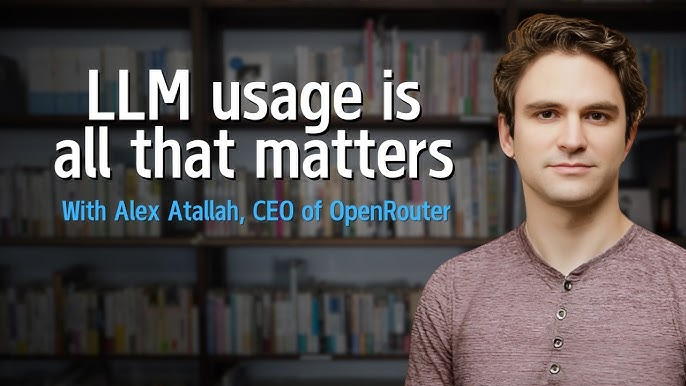
What you might not know is that his previous company was OpenSea, the world's largest NFT marketplace, which once reached a valuation of over $13 billion at its peak.

However, he chose to exit at the height of the NFT craze. A few months later, the NFT market crashed.

Now, he's making money again in the AI boom.

From Liquidity Aggregation to Large Model Aggregation

Alex Atallah, a Stanford computer science graduate.

In 2018, he co-founded OpenSea with Devin Finzer. The idea was simple: others mint NFTs, and they provide a platform for buying and selling, taking a 2.5% cut from each transaction.

OpenSea doesn't produce NFTs or speculate on them; it just provides shelves and aggregates liquidity.

When the NFT craze hit in 2021, breakout projects like Bored Ape Yacht Club became cultural phenomena. At its peak, OpenSea's monthly trading volume exceeded $5 billion. Forbes estimated that he and Finzer had a combined net worth of $2.2 billion.
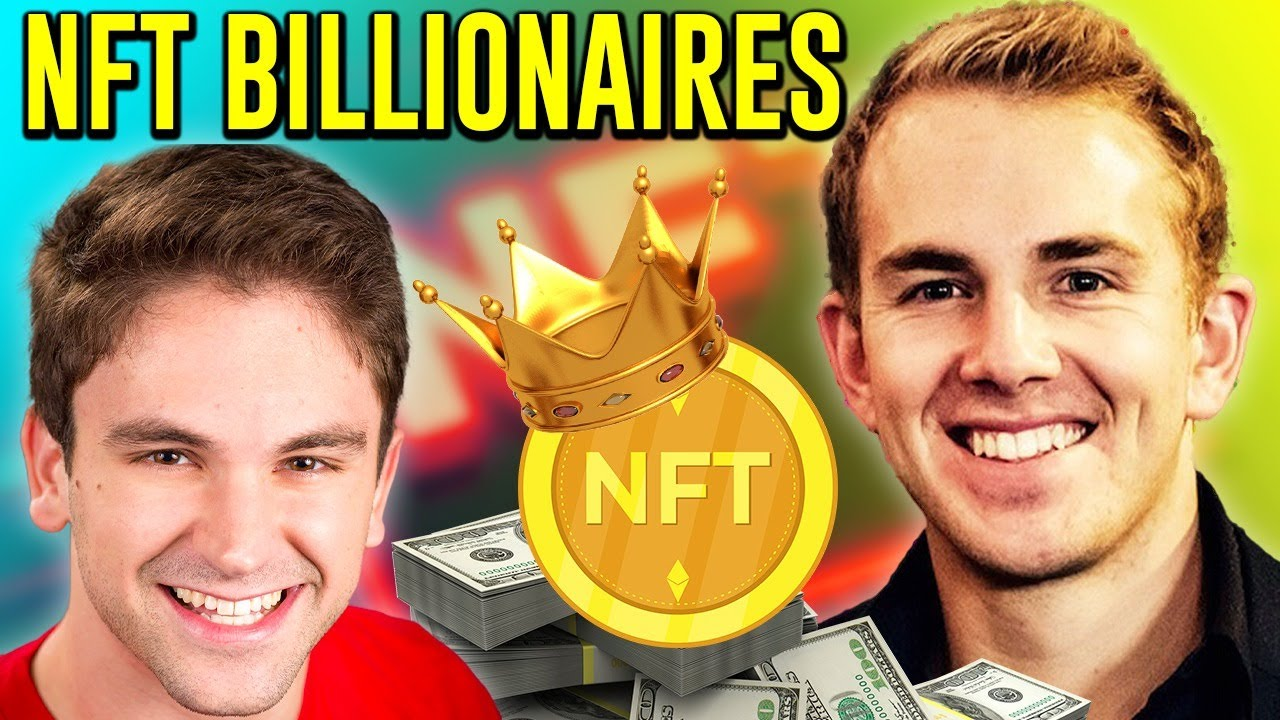
In July 2022, he stepped down as CTO, saying he wanted to work on something new.

What happened next is well-known: NFTs crashed, the market entered a deep freeze, and OpenSea's business was in shambles. However, while the feast had its losers, Alex left before the music stopped.

In 2023, he started working on something called OpenRouter. In a nutshell:

It's an aggregation and routing platform for large models, putting hundreds of model APIs behind a single interface. Developers call them through OpenRouter, which takes a 5% fee.

You might ask, why not just go directly to OpenAI or Anthropic to call Claude or GPT?

Of course, you can.

But nowadays, no one uses just one model. You might use Claude for coding, Gemini for research, and delegate cost-effective tasks to DeepSeek. Each requires separate registration, top-ups, and has different interface formats...

Not to mention that many users who want to use Claude or GPT can't directly access their APIs from within China.

Thus, OpenRouter becomes the path of least resistance. One interface, over 500 models, unified format, automatic switching—one key to rule them all.

You might not have noticed while using OpenClaw, but the default provider (API provider) in the configuration file was OpenRouter.
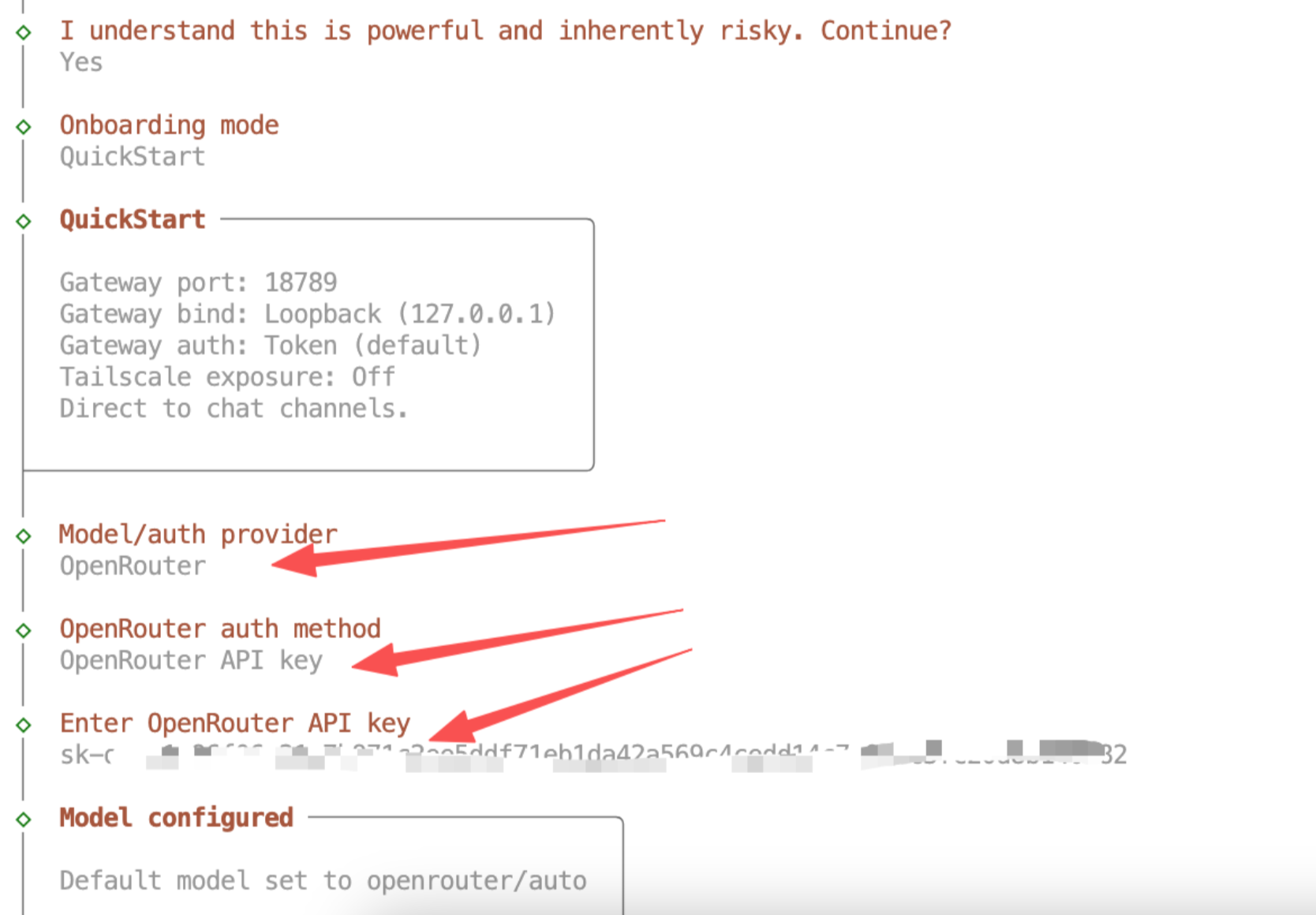
Image source: Zhihu user Feng控炼丹师

When you call Claude or DeepSeek, the request goes to OpenRouter first, then is forwarded to the model provider. Even OpenClaw's documentation states:

If the system doesn't recognize your API key format, it defaults to OpenRouter.

How fast is this business growing?

In October 2024, the amount of money flowing through OpenRouter monthly was $800,000. By May 2025, that number had grown to $8 million.

Seven months, tenfold growth.

Over a year, more than $100 million passed through his hands. He takes a 5% cut, netting $5 million, with a team of fewer than ten people.
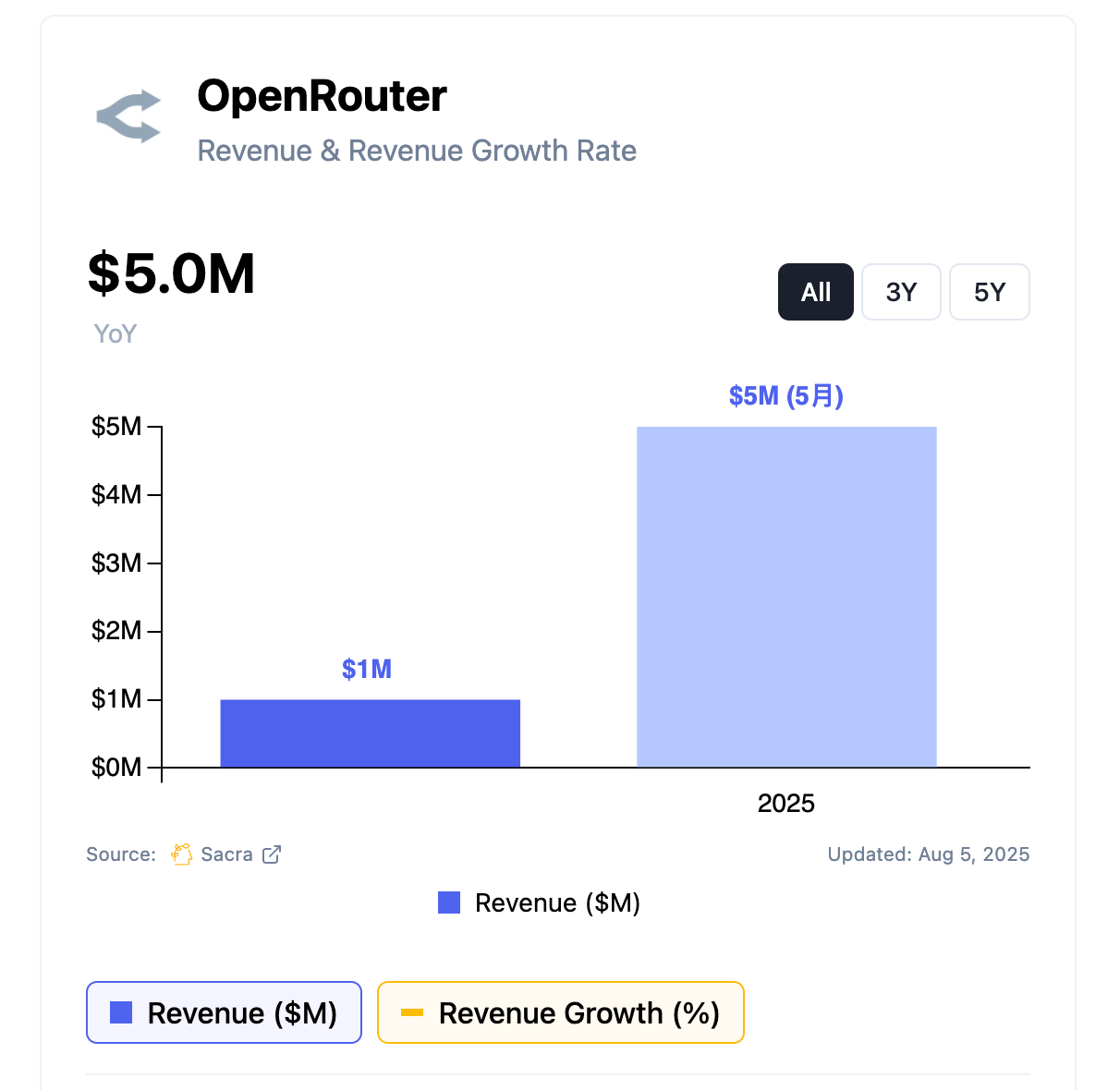
Image source: sacra.com

a16z used his data to write an industry report titled "The State of AI: 100 Trillion Tokens"; Stripe customized a billing system specifically for him.

And with the explosion of OpenClaw this year, more developers and enthusiasts are pouring in, finding creative ways to burn tokens, inevitably needing to call various large models. This has completely fueled OpenRouter's business.

Moreover, a16z led an investment round in the company, valuing it at $500 million.

A seller of shovels has once again become a seller of shovels.

Different Hotspots, Same Model

If you look closely at Alex's two businesses, their structures are actually the same.

OpenSea's business was not minting NFTs but putting others' minted NFTs in one place. Buyers and sellers come to trade, and it takes a 2.5% cut. OpenRouter's business is not training models but putting others' trained models in one place. Developers come to call them, and it takes a 5% cut.

This approach seems to be his comfort zone. Whether it's NFTs or AI, the market structures share very similar characteristics:

The supply side is extremely fragmented, and demand-side buyers don't know where to find the supply. He stands in the middle as the shelf.

How fragmented were NFTs in 2021? Dozens of chains, hundreds of projects, tens of thousands of new collections every day. If you wanted to buy a Bored Ape, you couldn't check each project's website one by one. OpenSea aggregated them; you came to browse and buy, and sellers offered them to you.

How fragmented are large models in 2025? OpenAI, Anthropic, Google, Meta, DeepSeek, Mistral, 01.AI... Dozens of mainstream ones, plus hundreds from the open-source community.

Today, Claude might be best for coding; tomorrow, a new version of Gemini might be stronger for search; the day after, DeepSeek might halve its prices. Each switch requires changing the interface.

Atallah himself once said something that explains this logic very clearly:

"OpenSea brought very fragmented inventory together in one place. AI today looks very similar to that."
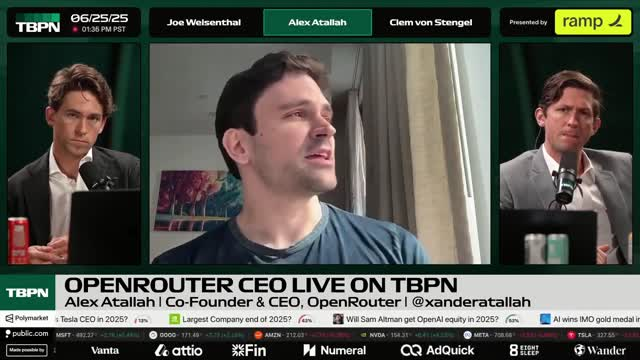
He doesn't need to know which NFT will rise or which model will win. He only needs to know one thing: the more fragmented the supply, the more valuable the middleman.

Moreover, the timing is interesting.

When he left in July 2022, OpenSea's valuation was still high. Although monthly NFT trading volume had fallen from its peak, no one thought it would crash. He said he wanted to "build something new from scratch." Half a year later, ChatGPT was released, and the era of large models began.

Did he see something, or was it just good luck?

I don't know. But one thing is certain:

When he registered OpenRouter in early 2023, AI large model routing products barely existed in the market. By the time everyone realized the need for a unified interface, he was already there.

Last time, he did the same thing in the NFT space. By the time everyone crowded in, he was already the largest platform.

Does It Matter If AI Is Hot?

In every wave of hype, most people ask: What will be hot?

In 2021, it was which NFT would rise; in 2024, which meme coin would 100x; in 2025, which AI application would break out; in 2026, what can be done with crayfish.

Atallah probably asks a different question. I think his thought process is: No matter what becomes hot, where will the money flow?

These two questions seem similar but are actually completely different bets.

Betting on "what will be hot," you need to guess right once. Bored Ape will rise, PEPE will 100x, some AI product will be the next ChatGPT. Guess right and get rich; guess wrong and go to zero. Most people experience the latter.

Betting on "where the money flows," you don't need to guess any single winner correctly. If NFTs rise, transactions happen on OpenSea, and he collects fees. The more fierce the AI model war, the more developers need a unified interface to switch between them, and the busier OpenRouter becomes.

Don't bet on who wins; bet that the battle will be long.

Looking back, those who make the most money in every cycle, in any industry, are usually platforms in this position.

Gold rushers come and go, but the water sellers keep collecting money.

But I think simply saying "selling water" or "selling shovels" isn't enough. Many shovel sellers have also failed. Atallah did something more specific right: he consistently positioned himself at the aggregation point.

Not just any tool can collect tolls. You need to be the one who consolidates fragmented supply. The more fragmented the supply and the higher the switching costs, the more pricing power the aggregation layer in the middle has.

This also explains why he entered both markets so early. Because aggregation businesses have one characteristic:

The first mover signs up the supply, making it hard for others to catch up.

So, Atallah's exceptional skill, I summarize in two sentences:

First, don't guess who will win; find the crossroads everyone must pass through. Second, build the road before others even realize they need a crossroads.

Exceptional People Never Choose the Table

Right now, I feel two voices are particularly loud.

One says AI Agents are toys; installing OpenClaw is useless except for burning tokens. The other says this is just another wave of AI hype, and no one will remember it in three months.

Both views might be right.

But for someone like Alex Atallah, it doesn't really matter.

Whether OpenClaw is useful or not, he's making money. If you think crayfish are boring and uninstall it today, the tokens you burned these two weeks have already passed through his hands.

Some think NFTs are dirty, a Ponzi scheme, a scam. He built a company valued at $13.3 billion on it. Some think AI Agents are a bubble, hype, with no business model. He built a company valued at $500 million on it...

Exceptional people probably don't need us to look down on the fields they're in.

He made money at the NFT table. He's making money again at the AI table. No one knows what the next table will be.

But I guess he'll still be at the door collecting tickets.


Twitter:https://twitter.com/BitpushNewsCN

Bitpush TG Discussion Group:https://t.me/BitPushCommunity

Bitpush TG Subscription: https://t.me/bitpush

Original article link:https://www.bitpush.news/articles/7619501

Câu hỏi Liên quan

QWho is the founder of both OpenSea and OpenRouter, and what is his background?

AAlex Atallah, a Stanford computer science graduate, is the co-founder of OpenSea and the founder of OpenRouter.

QWhat is the core business model of OpenRouter, and how does it generate revenue?

AOpenRouter aggregates hundreds of AI models into a single API interface, allowing developers to access them uniformly. It charges a 5% fee on each API call made through its platform.

QHow did Alex Atallah's timing in leaving OpenSea and starting OpenRouter prove advantageous?

AHe left OpenSea at its peak in July 2022, just before the NFT market crashed, and started OpenRouter early in 2023, positioning it as a key aggregator before the AI model market became crowded.

QWhat key market condition does Alex Atallah's business strategy rely on for success?

AHis strategy relies on highly fragmented supply in a market, where both providers and users benefit from a centralized aggregator that reduces complexity and switching costs, giving the middle layer pricing power.

QWhat was OpenRouter's growth in transaction volume from October 2024 to May 2025?

AOpenRouter's monthly transaction volume grew from $800,000 in October 2024 to $8 million in May 2025, a tenfold increase in seven months.

Nội dung Liên quan

Vị đại gia lưu trữ xây dựng nên vạn ức giang sơn, rốt cuộc không thành tỷ phú

Tập đoàn Trường Tân (Changxin) sắp lên sàn STAR Market với kỳ vọng định giá có thể vượt một nghìn tỷ NDT, thậm chí hai nghìn tỷ. Tuy nhiên, "linh hồn" của công ty, Chu Nhất Minh, chỉ sở hữu dưới 3% cổ phần (gián tiếp), khó có thể trở thành tỷ phú hàng đầu dù công ty đạt định giá cao. Bài viết phân tích con đường phát triển của GigaDevice (兆易创新), do Chu Nhất Minh sáng lập, được coi là "Tiền truyện của Trường Tân". Với vốn ban đầu ít ỏi, GigaDevice đã phát triển chiến lược "nhặt lộc" (捡漏) trong kẽ hở thị trường, tận dụng cơ hội khi các gã khổng lồ quốc tế rút lui khỏi các phân khúc bộ nhớ cũ như NOR Flash, SLC NAND và DRAM lợi thế. Công ty đa dạng hóa từ bộ nhớ sang vi điều khiển (MCU), cảm biến và chip analog, tạo thành bốn trụ cột sản phẩm, trong đó bộ nhớ và MCU vẫn chiếm đa số doanh thu. GigaDevice thể hiện là một cổ phiếu chất lượng trong ngành bộ nhớ có tính chu kỳ cao. Công ty duy trì biên lợi nhuận gộp ổn định trên 40%, kiểm soát tốt tỷ lệ chi phí và luôn có lợi nhuận hoạt động dương. Tuy lợi nhuận ròng biến động theo chu kỳ ngành, công ty đã phục hồi mạnh mẽ vào năm 2025 và quý I/2026. Tuy nhiên, bài viết chỉ ra rằng mô hình Fabless (không sở hữu nhà máy) của GigaDevice là một hạn chế trong ngành bộ nhớ, nơi mô hình IDM (tích hợp dọc) và khả năng mở rộng sản xuất ngược chu kỳ thường là chìa khóa để tồn tại và chiến thắng. Để giải quyết vấn đề này, năm 2016, Chu Nhất Minh hợp tác với chính quyền Hợp Phì thành lập Trường Tân Khoa Kỹ (Changxin), một công ty IDM chuyên về DRAM với vốn đầu tư cực lớn. Chu Nhất Minh đã có những cam kết mạnh mẽ như không nhận lương cho đến khi công ty có lãi và chia sẻ lợi ích cổ phần, giúp thu hút đầu tư mạo hiểm từ nhà nước và ngân hàng. Đầu tư vào cơ sở vật chất, thiết bị của Trường Tân thậm chí đã vượt qua Tập đoàn BYD. Kết luận, dù có thể tạo ra những công ty trị giá nghìn tỷ, nhưng do cơ cấu sở hữu cổ phần và mô hình kinh doanh, Chu Nhất Minh khó lòng lọt vào danh sách những người giàu nhất.

marsbit4 phút trước

Vị đại gia lưu trữ xây dựng nên vạn ức giang sơn, rốt cuộc không thành tỷ phú

marsbit4 phút trước

Lỗ Hổng Quản Trị Token Of Power Làm Thất Thoát 1.58 Triệu Đô WETH, TRM Cảnh Báo

Công ty phân tích blockchain TRM Labs đã báo cáo một vụ khai thác lỗ hổng quản trị trong giao thức Token of Power, dẫn đến thiệt hại khoảng 1,58 triệu USD giá trị WETH. Theo phân tích, kẻ tấn công lợi dụng điểm yếu trong thiết lập DAO Aragon của giao thức: việc không có timelock (khóa thời gian). Điều này cho phép chúng đề xuất, bỏ phiếu và thực thi một hành động quản trị độc hại chỉ trong một khối duy nhất. Được tài trợ ban đầu bằng 662 ETH rút từ Tornado Cash, kẻ tấn công đã mua đủ token TOP để giành quyền biểu quyết đa số, đúc mới 10 tỷ TOP, rồi hoán đổi số token này lấy WETH thông qua một pool Balancer trước khi chuyển tiền trở lại Tornado Cash. Sự kiện này là một minh chứng rõ ràng về rủi ro bảo mật từ thiết kế quản trị. Timelock có vai trò quan trọng trong việc tạo ra khoảng thời gian phản ứng cho cộng đồng trước khi một đề xuất được thực thi. Vụ việc cũng nhắc nhở người dùng DeFi rằng rủi ro không chỉ nằm ở lỗi mã hợp đồng thông minh, mà còn ở các tham số quản trị, kiểm soát kho bạc và ngưỡng biểu quyết. Cộng đồng hiện đang theo dõi động thái tiếp theo của số tiền bị đánh cắp và các thông tin khắc phục từ giao thức, Aragon hoặc các nhà cung cấp thanh khoản bị ảnh hưởng. Báo cáo dựa trên thông tin từ báo cáo bảo mật on-chain của TRM Labs.

bitcoinist2 giờ trước

Lỗ Hổng Quản Trị Token Of Power Làm Thất Thoát 1.58 Triệu Đô WETH, TRM Cảnh Báo

bitcoinist2 giờ trước

Phí Hàng Ngày Trên XRP Ledger Giảm Xuống Dưới 400 USD Khi Câu Hỏi Về Hoạt Động Mạng Lại Xuất Hiện

Mạng lưới XRP Ledger (XRPL) lại một lần nữa được đưa vào tầm ngắm khi dữ liệu phí hàng ngày được báo cáo giảm xuống dưới 400 USD, theo số liệu từ DefiLlama. Mức phí thấp vốn là một thiết kế và điểm mạnh của XRPL, nhằm đảm bảo giao dịch rẻ và dễ tiếp cận. Tuy nhiên, doanh thu phí cũng có thể được xem như một chỉ báo về mức độ hoạt động, nhu cầu thực tế và quy mô sử dụng có trả phí trên mạng. Việc phí đốt hàng tuần chỉ khoảng 3.100 USD làm nổi bật sự tương phản với các blockchain như Ethereum hay Bitcoin. Trong khi những người ủng hộ coi phí thấp là dấu hiệu của hiệu quả, thì một số ý kiến có thể đặt câu hỏi liệu mức phí thấp như vậy có phản ánh đủ nhu cầu giao dịch giá trị cao hay không, nhất là trong bối cảnh XRP thường được gắn với câu chuyện về thanh toán và ứng dụng doanh nghiệp. Điều quan trọng là không suy diễn quá mức từ một ngày phí thấp. Nó không có nghĩa mạng lưới thất bại hay ngừng hoạt động, mà chỉ cung cấp một dữ liệu để phân tích thêm. Bối cảnh này cũng tạo nên sự so sánh thú vị với các nỗ lực mở rộng của Ripple vào RLUSD, thanh toán AI và hạ tầng thanh toán doanh nghiệp. Cần theo dõi xem liệu con số phí có phục hồi không, số lượng giao dịch có kể một câu chuyện khác không, và các công cụ khám phá chuỗi khối XRPL như Bithomp có xác nhận xu hướng này hay không. Các câu chuyện crypto mạnh mẽ ngày càng đến từ dữ liệu on-chain, bản cập nhật giao thức và thông báo chính thức, hơn là chỉ từ bình luận. Do đó, báo cáo này nên được xem như một phần của bức tranh tổng thể về môi trường vận hành crypto, dựa trên nguồn đã xác minh và để ngỏ cho các dữ liệu tiếp theo.

bitcoinist4 giờ trước

Phí Hàng Ngày Trên XRP Ledger Giảm Xuống Dưới 400 USD Khi Câu Hỏi Về Hoạt Động Mạng Lại Xuất Hiện

bitcoinist4 giờ trước

Ripple Ra Mắt XRPL AI Starter Kit Cho Các Thanh Toán Đại Lý XRP Và RLUSD

Ripple đã ra mắt Bộ công cụ khởi động AI XRPL, một bộ công cụ dành cho nhà phát triển được thiết kế để giúp các tác nhân phần mềm thực hiện thanh toán bằng XRP và Ripple USD (RLUSD). Đây được mô tả là Giai đoạn 1 trong nỗ lực mở rộng hơn vào lĩnh vực thanh toán tự động trên XRP Ledger. Bộ công cụ này tích hợp hỗ trợ cho tiêu chuẩn thanh toán x402 và bao gồm Máy chủ MCP Tài liệu XRPL, cho phép kết nối các hệ thống AI như Claude và Cursor trực tiếp với tài liệu kỹ thuật của XRPL. Động thái này mang đến cho XRP một câu chuyện mới tập trung vào tính hữu ích, trong bối cảnh các nhà phát triển và công ty thanh toán đang khám phá cách các tác nhân tự trị có thể thanh toán cho API, dịch vụ, dữ liệu và các giao dịch máy với máy khác. Ripple không chỉ nói về chủ đề AI mà đang cố gắng kết nối các tác nhân AI với hạ tầng thanh toán sử dụng XRP và RLUSD, nhắm đến các giao dịch cần tốc độ xử lý nhanh, phí thấp và ổn định. Đối với thị trường, đây là một bản cập nhật sản phẩm cụ thể từ nguồn chính thức. Các bước tiếp theo cần theo dõi bao gồm cập nhật tài liệu kỹ thuật, ví dụ mã nguồn, hoạt động trên mạng thử nghiệm và phản hồi từ các nhà phát triển.

bitcoinist7 giờ trước

Ripple Ra Mắt XRPL AI Starter Kit Cho Các Thanh Toán Đại Lý XRP Và RLUSD

bitcoinist7 giờ trước

Giao dịch

Giao ngay
Hợp đồng Tương lai
活动图片





