Author: Connor Dempsey
Compiled by: Chopper, Foresight News
On Monday, I'll start a new position. Before embarking on my fifth work experience in the crypto industry, I wanted to write this article to reflect on the eight-year journey I've taken in this field.
When I entered the crypto industry in 2017, I believed this technology would change everything.
Government-issued fiat currencies would be replaced by decentralized tokens; blockchain would eliminate all rent-seeking intermediary giants from the transaction chain; power would be redistributed from large corporations back to ordinary users.
Looking back now, almost none of that initial vision has materialized, but the industry has charted a completely different path.
I have worked at four crypto companies for eight years, witnessing the industry's scale grow from less than $10 billion to over $4 trillion, enduring several speculative bubbles, and witnessing one systemic crash. I've gradually realized that what the industry is actually building is far more valuable than I initially imagined.
Before starting my next job, I want to document what I've seen and heard, and where I predict the industry is heading.
The Illusory Wealth-Fest: The 2017–2018 ICO Frenzy
In early 2017, I accidentally read about Bitcoin in a book and was instantly hooked. Soon after, I devoured every Bitcoin-related book I could find and conceived the idea of moving to Singapore to write a blog and delve into this new technology.
At the time, I didn't realize I was at the tail end of a super-speculative ICO bubble. ICOs allowed anyone to raise funds globally, simply by selling cryptocurrency to investors to crowdfund creative projects.
And Ethereum was the star of this carnival.
In November 2017, I published a beginner's guide to Ethereum that went viral on Reddit. That also happened to be the peak of that bubble. Just a month later, the market bubble completely burst.
Reading that article today feels more like a historical artifact: capturing the pervasive optimism of the time while also prophesying a future that never came to pass.

My main argument was: blockchain networks like Ethereum could be used to build entirely new consumer applications.
The value created by traditional internet platforms (Facebook, Uber, etc.) largely accrues to giant companies and a few investors; whereas the value generated by blockchain applications would be shared among early participants and ICO investors.
The article also envisioned building a decentralized Uber. In this system, early users and drivers would receive tokens for each completed trip, thereby owning a stake in the network and gaining a fairer share of its value.
On paper, the vision seemed beautiful, but this decentralized revolution ultimately failed spectacularly.
It was a crypto speculative frenzy mirroring the 2001 dot-com bubble.

Ethereum became the strongest fundraising platform in history, with over 3,000 ICO projects raising a combined $22 billion globally.
But, just like the dot-com bubble, the underlying technology wasn't mature enough to support the sky-high valuations the market assigned.
More fatally, ICOs completely distorted the incentive alignment between entrepreneurs and investors. A project could raise tens of millions overnight with just an idea; investors only held tokens, hoping the project would succeed and increase in value. Meanwhile, founding teams held massive native token allocations they could cash out on immediately, completely removing their incentive to diligently build a product.
In the bull market, founders and early investors reaped massive profits; in the bear market, ordinary retail investors were left holding the bag. Although there were well-intentioned builders, ICOs ultimately became a breeding ground for greed, hype, and fraud.
Throughout centuries of financial history, every speculative bubble has unfolded this way.
Rebuilding from the Rubble: The 2018–2019 Circle Hibernation
As the market languished, I leveraged my minor Reddit fame to join Circle in early 2018 in an entry-level marketing role.
At the time, Circle had been around for four years. Its various consumer products (investing, payments, exchange) were not profitable, but its over-the-counter trading desk quietly generated stable revenue, supporting the entire company's operations.
For the next two years, the entire industry was mired in the post-ICO bust depression. The vast majority of ICO projects were abandoned, countless tokens went to zero, and industry sentiment hit rock bottom.
But it was during this darkest period that the seeds for the industry's next revival were planted.
The industry's focus shifted away from obsessing over consumer apps and turned toward rebuilding the traditional financial system based on the internet.
Dollar-pegged stablecoins were initially created to allow traders to quickly enter and exit crypto positions. By maintaining 1:1 reserves in dollars and US Treasuries, the token's price remained pegged to $1.
Tether's USDT rose rapidly during the ICO boom, with its dollar reserves largely held in bank accounts outside the US. Stablecoins were initially used for trading, but they quickly benefited another group: people who lacked access to traditional banking but wanted exposure to dollar-denominated assets.
Think individuals trying to bypass capital controls, wealthy Chinese diversifying assets overseas, citizens of Argentina and Turkey ravaged by inflation.
In 2018, Circle, in partnership with Coinbase, launched the compliant dollar stablecoin USDC. Its early use cases were still primarily trading, but people began to imagine: this internet-native money could give anyone with a connection 24/7, permissionless access to dollar assets.
Meanwhile, the quality projects that survived the ICO era mostly focused on finance. Ethereum wasn't just for fundraising; it could rebuild the underlying infrastructure of financial markets: Uniswap in trading, Aave and Compound in lending, together forming the Decentralized Finance (DeFi) ecosystem.
Stablecoins and DeFi began to merge, and a once-in-a-century global pandemic would propel both to new heights.
Return to the Internet's Wild West: The 2019–2021 Messari Period
In late 2019, I joined the data research startup Messari, which had just 13 employees, as its first full-time marketing hire.
The company had only 4 analysts, delving deep into frontier DeFi research; the total DeFi market cap at the time was just $665 million.
In early 2020, the COVID-19 pandemic erupted, bringing the global economy to a near-standstill and causing a crash across all asset classes.
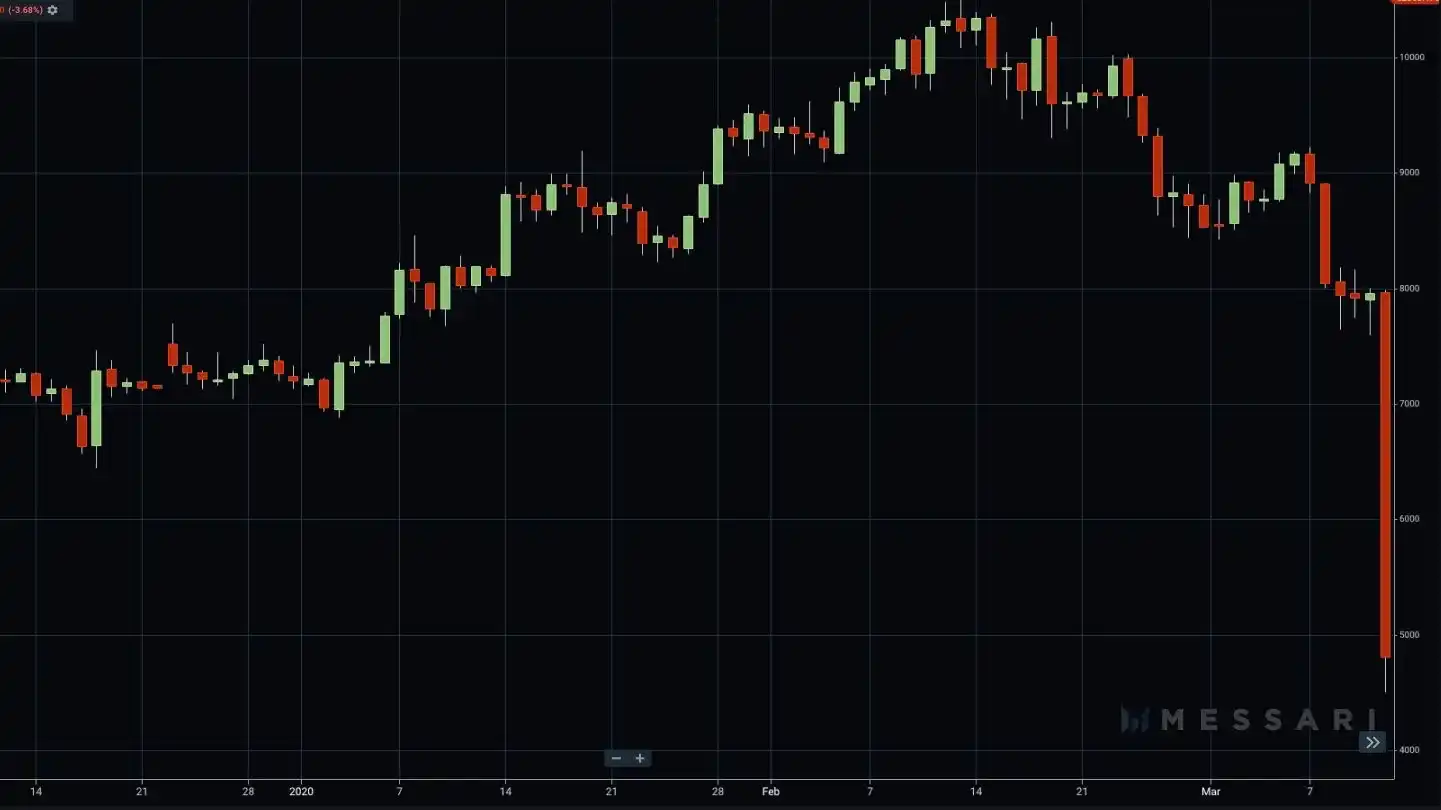
To prevent economic collapse, central banks worldwide unleashed massive monetary stimulus, pumping $9 trillion into the system in 2020 alone.
This ocean of liquidity needed somewhere to go. Combined with widespread lockdowns, a flood of hot money poured into Bitcoin, Ethereum, DeFi, and all manner of speculative assets.
Bitcoin soared from under $4,000 to nearly $70,000, surpassing a $1 trillion market cap with institutional backing, outperforming macro assets like gold.
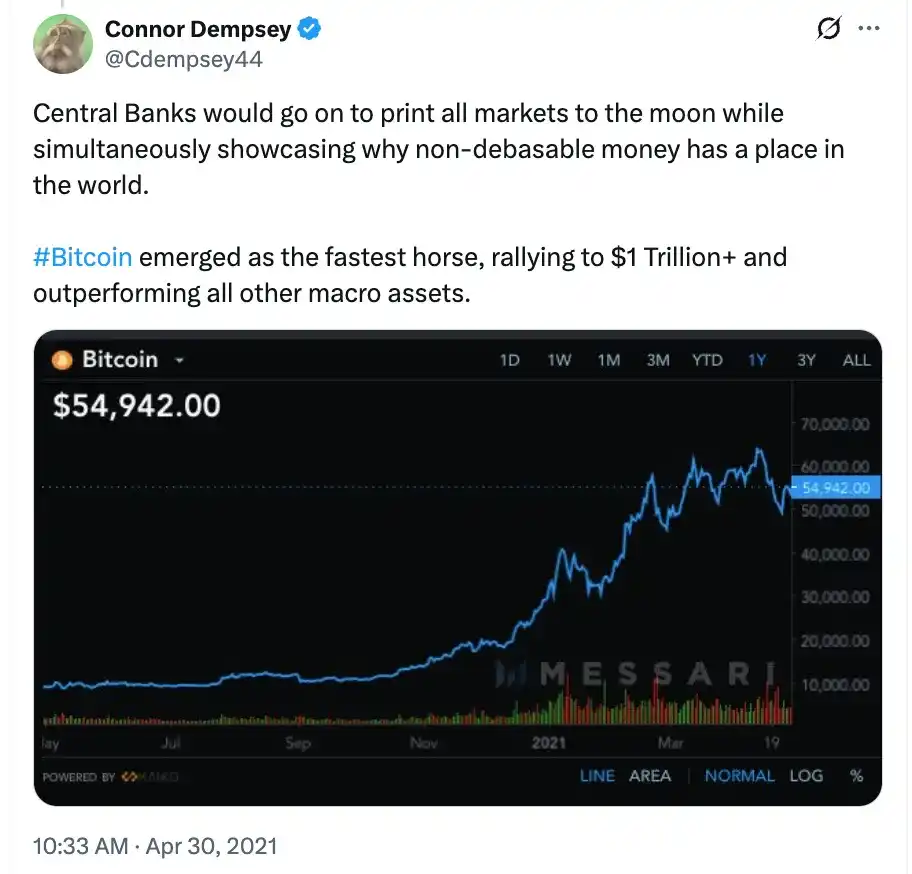
The loose monetary environment also gave rise to the famous "DeFi Summer," where the value of DeFi protocols surged 250x to $180 billion.
While DeFi was originally envisioned to rebuild traditional finance, DeFi Summer felt more like a massive online game dominated by profit-seeking traders, with tens of billions in real money at stake.
The core gameplay was liquidity mining. Anonymous developers kept launching new protocols, often with bizarrely themed names centered around food: YAM Finance, Spaghetti Money, SushiSwap. Traders would deposit mainstream tokens like ETH, USDC, USDT to earn newly issued project tokens like YAM, SPAGHETTI, SUSHI.
It was absurdly surreal: a new project would launch, and its food-themed token could reach a market cap exceeding $1 billion in days. Early players would cash out at the top, and the token would plummet.
This was the internet's Wild West in the truest sense.
Just like the ICO mania before it, DeFi Summer created a new wave of crypto millionaires and billionaires, and inevitably, the bubble popped. This wave also propelled a new crypto billionaire, Sam Bankman-Fried, who would later become the central figure in the industry's next disaster.
Peak of the Bubble: The 2021 Coinbase Period
In April 2021, shortly after Coinbase went public with a $100 billion valuation, I joined its Corporate Development & Venture team.
My work involved corporate M&A, evaluating early-stage crypto venture projects, writing industry trend analyses, and helping produce Coinbase's short-lived podcast. To this day, it remains one of the highest-caliber teams I've been on.

It was also during this period that another speculative bubble quietly formed, with the rise of NFTs, spearheaded by digital art.
If DeFi was the playground for professional traders, NFTs truly broke through to the mainstream. They offered artists a new online monetization channel and laid the groundwork for digital asset ownership on the internet.
But just like ICOs and DeFi Summer, NFT speculation quickly spiraled out of control. Digital collectibles of cartoon apes, punks, and penguins sold for $1 million apiece; a collage by artist Beeple fetched a ludicrous $69 million at Christie's.
Crypto had fully captured the mainstream: Larry David mocked crypto skeptics in a Super Bowl ad; Sam Bankman-Fried's exchange FTX spent $135 million to name the Miami Heat's arena. Everyone was getting rich off tokens, NFTs, and concept stocks.
The 2017 madness was replaying, supercharged by unprecedented monetary stimulus, making this bubble roughly four times larger.
Day of Reckoning: The 2022 Industry Crash
But soon, the party ended, and the industry imploded.
The sugar high from rate cuts, money printing, and fiscal stimulus that had inflated all asset prices finally translated into consumer goods inflation. By late 2021, Bitcoin, Ethereum, the Nasdaq, and the S&P 500 had all peaked; runaway inflation was a certainty, forcing central banks to tighten policy—the very policy that had driven stocks and crypto to historic highs.
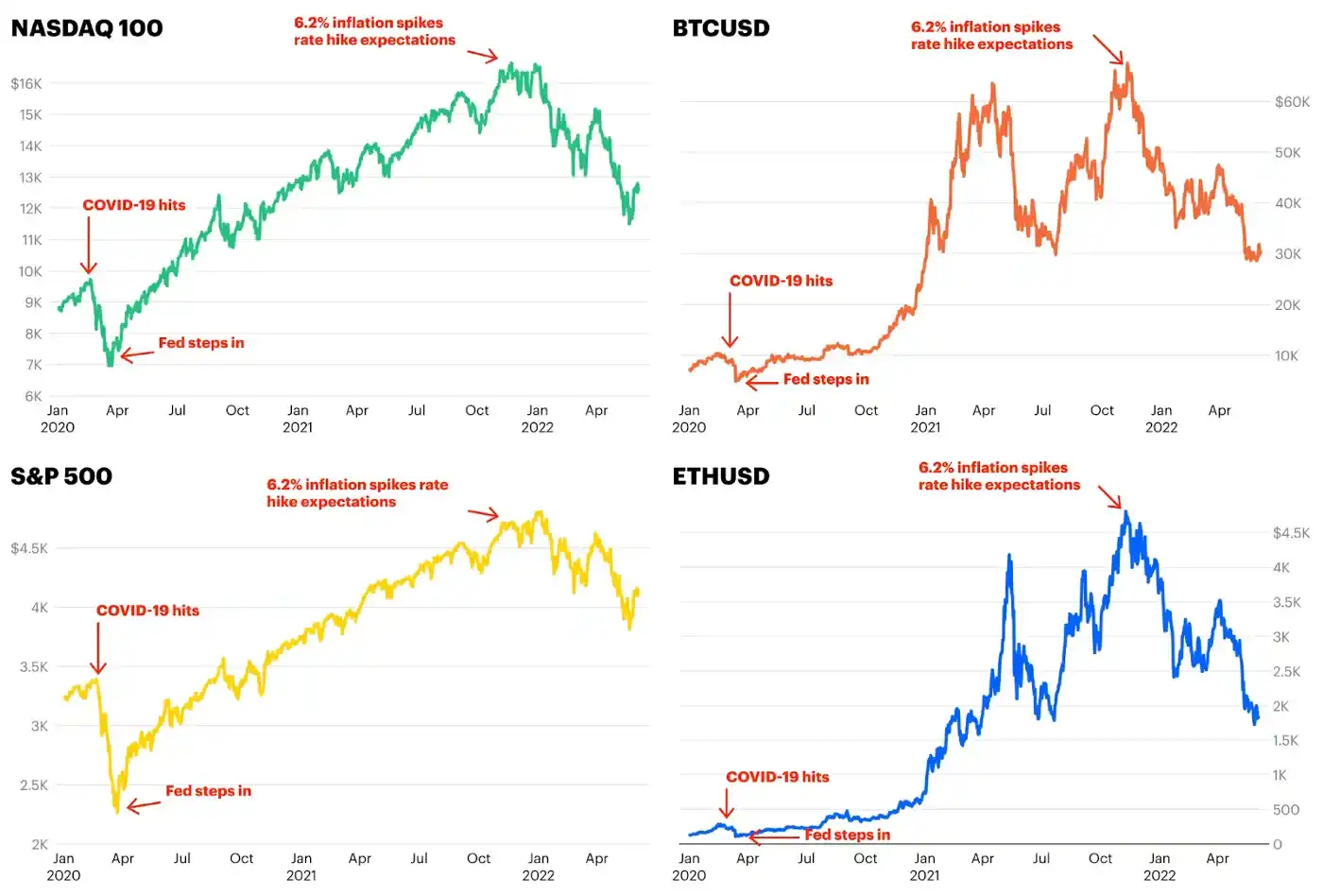
As the rate-hike cycle began and fiscal taps were tightened, investors reassessed their highly-valued assets: Was a cartoon ape really worth $1 million? Why was a sushi-themed token valued at $3 billion? How could Dogecoin sustain a $90 billion valuation?
Pessimism spread, and the industry's chain reaction of failures began.
If the ICO crash was akin to the 2001 dot-com bust, the 2022 saga resembled the 2008 Global Financial Crisis: a few toxic assets combined with high leverage nearly brought down the entire industry.
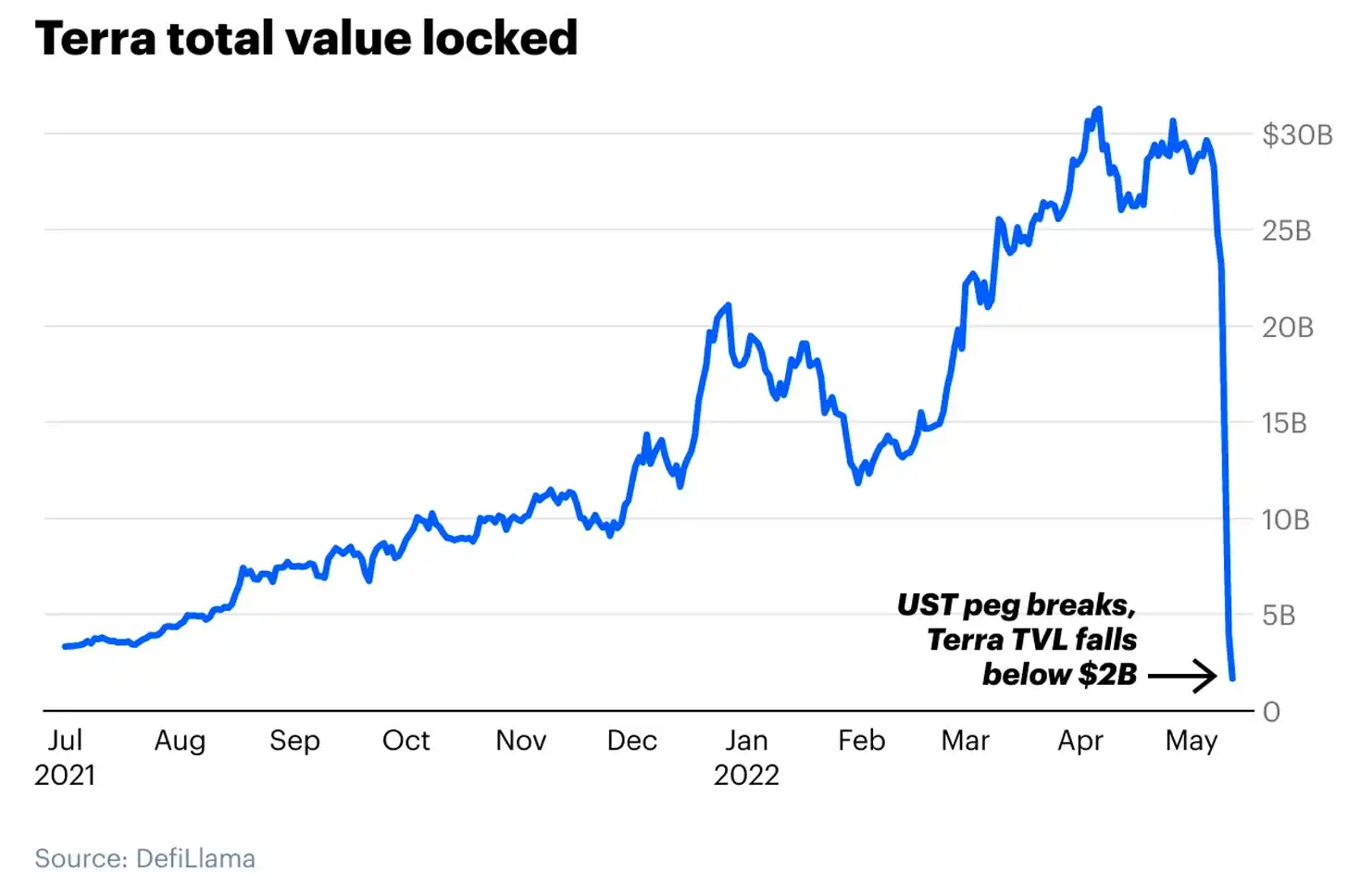
The first to blow up was the Terra algorithmic stablecoin UST.
While mainstream stablecoins like USDC and USDT were backed 1:1 by cash and treasury reserves, UST relied on a complex algorithmic mechanism to maintain its $1 peg. The mechanism worked in calm markets but collapsed when a selling frenzy hit.
Within days, $32 billion in value evaporated, wiping out countless holders' assets.
Next, the $10 billion hedge fund Three Arrows Capital, heavily exposed to Terra and leveraged, declared bankruptcy. 3AC had borrowed heavily from crypto lending platforms like Celsius and Voyager. These platforms, in turn, had taken user crypto deposits, promising seemingly safe 8% yields. When 3AC failed, the lending platforms froze withdrawals and filed for bankruptcy, wiping out ordinary users' deposits.
While at Coinbase, we watched Sam Bankman-Fried and FTX step in to bail out distressed crypto lenders like BlockFi. He was hailed as the "J.P. Morgan of Crypto," the industry's white knight.
But the truth eventually surfaced: SBF and FTX were the biggest risk of all.
Remember FTX's lavish arena naming rights deal? That expense, and indeed SBF's entire empire, were propped up by the platform's native token, FTT. SBF used FTT as collateral for massive loans. When FTT's price crashed, those loans were liquidated, and FTX declared bankruptcy.
Worse, FTX had commingled and misused customer funds for investments and to plug financial holes. The once $32 billion behemoth collapsed in a week, with $8 billion in customer deposits missing.
SBF violated the cardinal rule of exchange operation: never touch customer assets.
This was crypto's "Lehman Moment."
Gambling & The Casino: The 2023–2025 Memecoin Carnival
After FTX's collapse, SBF went to prison. In just 12 months, the crypto industry's market cap shrank from $3 trillion to under $1 trillion.
Next, the Biden administration launched a full-scale crackdown on the US crypto industry.
SEC Chair Gary Gensler, citing securities violations, sued nearly every compliantly operating crypto firm in the country. Coinbase, Kraken, Uniswap, Robinhood—all received Wells notices. The companies that had spent years trying to operate within the rules became the SEC's primary targets.
Meanwhile, Senator Elizabeth Warren pressured traditional banks to sever ties with crypto clients, attempting to isolate crypto firms from the banking system and force teams offshore.
This regulatory approach had several unintended consequences.
First, any crypto project with a business model (like various DeFi protocols) was deemed a securities violation, facing potential lawsuits. The legally safest bet became the memecoin—a purely narrative token with no utility or defined vision.
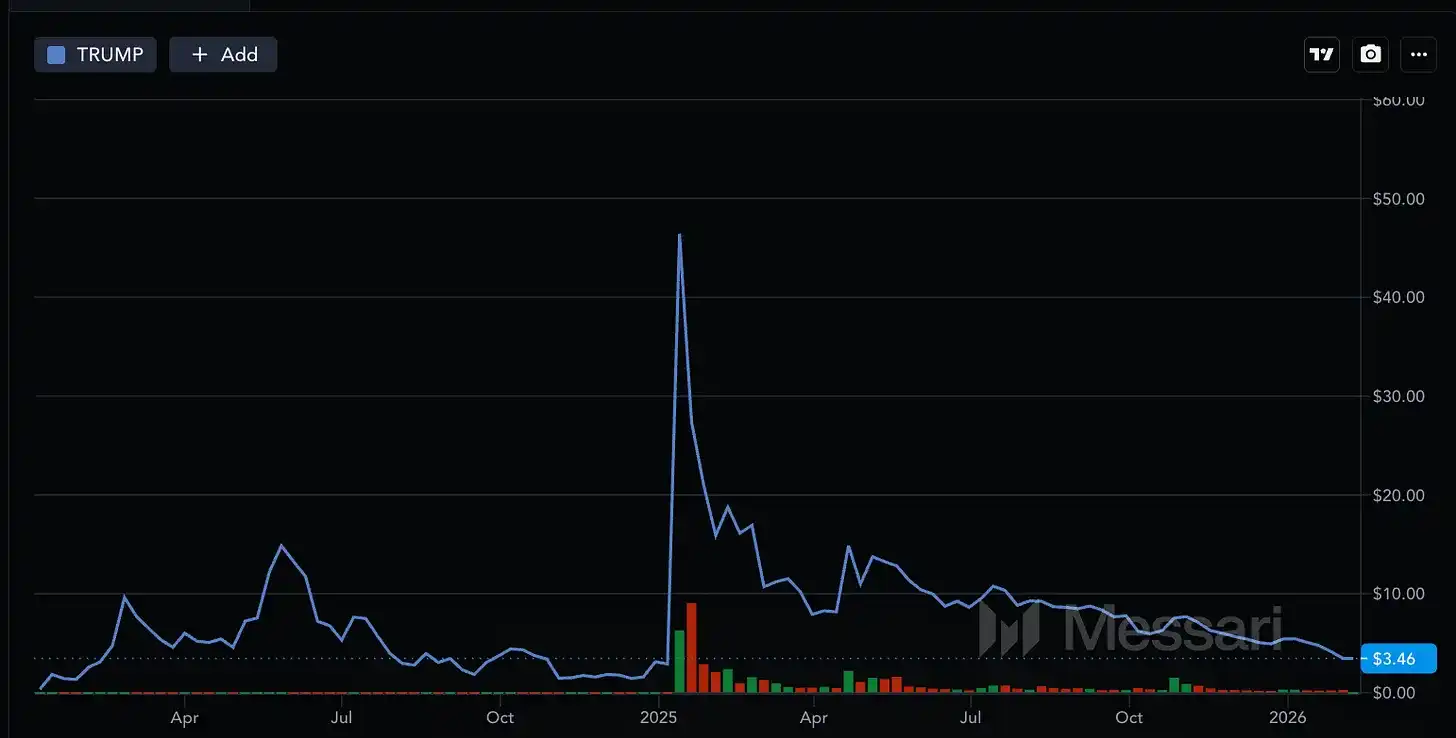
Platforms like Pump.fun launched millions of memecoins. Celebrities like Iggy Azalea, Caitlyn Jenner, and viral star the "Hawk Tuah girl" launched their own tokens, which all eventually turned into farces.
The crypto industry once again became a giant casino, larger than ever before. Over 6 million memecoins were launched, and the sector's market cap peaked at $150 billion in late 2024, a bubble even larger than the NFT craze.
The Institutional Turn: The 2025–2026 Crossmint Period
Putting aside the industry's circus, crypto's big bet on a Trump victory eventually paid off.
As Trump's election prospects solidified, Bitcoin hit new highs. The market logic was clear: the world's largest economy was shifting from hostile regulation to friendly support. Gary Gensler resigned, the new SEC dropped lawsuits against US crypto firms, and traditional banks reopened crypto business lines.
Most importantly, in July 2025, the GENIUS Act was passed—the first federal crypto-specific legislation in the US, establishing clear rules for stablecoins.
Washington sent a clear signal to Wall Street: crypto, especially stablecoins, was becoming a legitimate, massive business. Stablecoin companies like Bridge and BVNK were acquired by Stripe and Mastercard for over $1 billion valuations; Rain closed a nearly $2 billion Series C; my former employer, Circle (issuer of USDC), went public, reaching a peak valuation of $60 billion in June 2025.
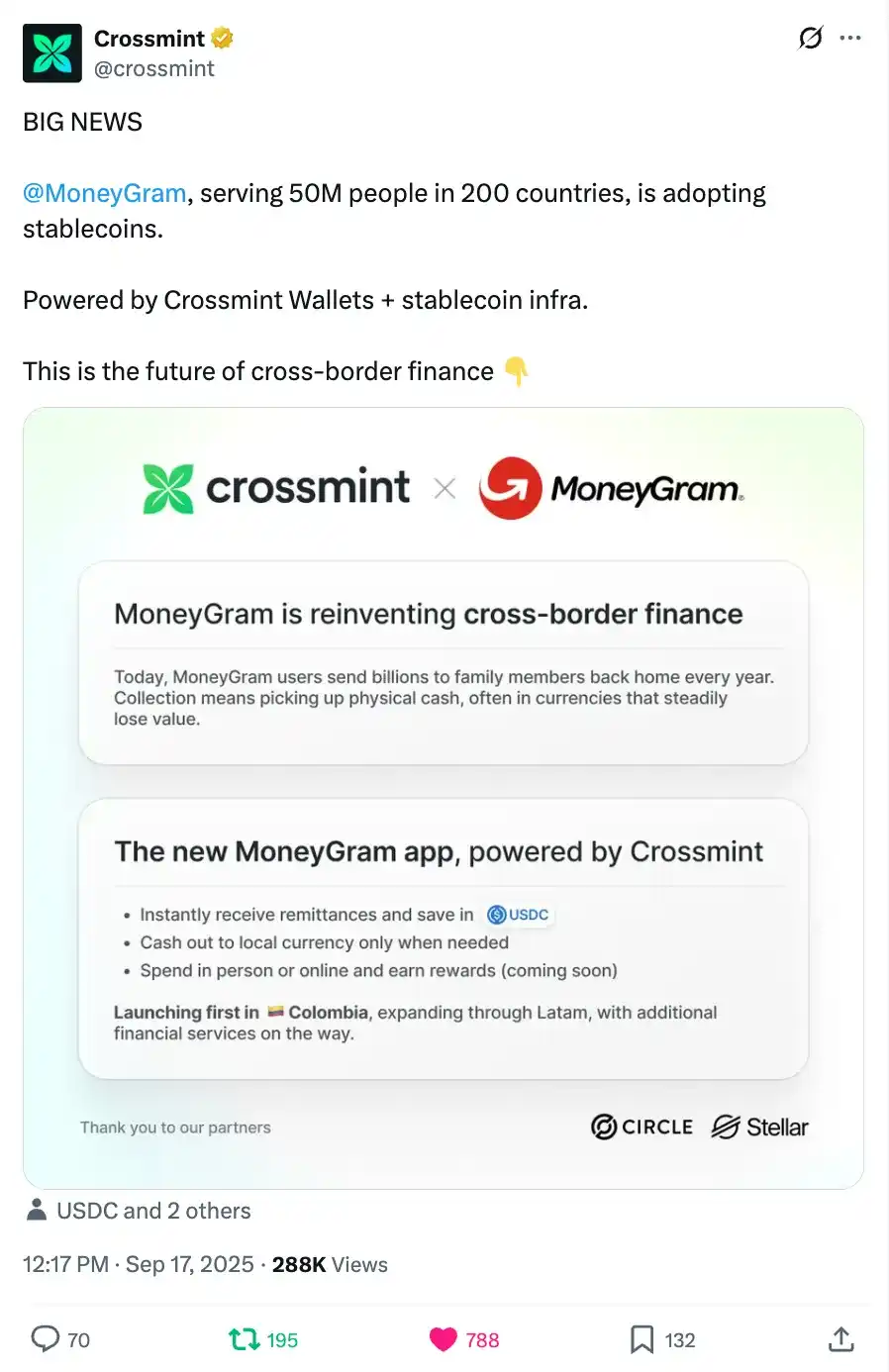
By then, I was leading marketing at Crossmint, where we partnered with MoneyGram to help the century-old remittance giant use stablecoins for global cross-border money movement.
As the value of dollar tokenization became undeniable, Wall Street began seriously exploring tokenizing other assets on-chain. Even BlackRock CEO Larry Fink, who once called Bitcoin an "index of money laundering," reversed course, stating tokenization was the next generation transformation for financial markets, with all asset classes—stocks, bonds—eventually moving onto blockchain.
An Unforeseen Revolution: The State of the Industry Today
Eight years after publishing that Reddit guide, we still don't have a decentralized Uber.
Blockchain hasn't eliminated all intermediaries, and decentralized tokens haven't replaced national fiat currencies.
But I believe, looking back, these turbulent years will be defined as the chaotic infancy of a new, internet-native financial system. Each boom and bust cycle has strengthened the underlying infrastructure, reshaped the global financial landscape, and made financial services accessible to anyone with a smartphone.
ICOs proved companies could raise capital globally, permissionlessly. DeFi proved financial services like trading and lending could run entirely via code. NFTs provided a foundational framework for digital asset ownership on the internet. Even the seemingly valueless memecoin cycle proved this on-chain infrastructure could handle massive, global-scale traffic.
The future simply involves tokenizing traditional assets—stocks, bonds, real estate—one by one. Combined with regulatory clarity, the entire traditional finance industry will migrate on-chain.
Critics can easily dismiss all this, but the stablecoin data is undeniable.
The total stablecoin supply now exceeds $300 billion. In 2025 alone, settlement volume reached $33 trillion. Transaction volume this year has already surpassed $40 trillion and could reach $100 trillion annually.
Skeptics will argue much of this is crypto trading and bot wash trading, which is partly true. But the sheer scale is a fact. And the US government's stance has already signaled the industry's direction.
There's a subtle but critical logic: stablecoins are backed by US Treasury reserves, and Treasuries are debt issued by the US government to fund its spending. Every stablecoin minted creates new demand for US Treasuries, perfectly aligning with the US's current fiscal financing needs. That's why the US Treasury Secretary has prioritized stablecoin development as a national strategic interest.
This isn't the idealistic world the original cypherpunks dreamed of. But upgrading the dollar system for the internet age and providing global, equal access to financial services is itself a monumental, historic undertaking.
Where the Industry is Heading
Artificial intelligence is disrupting every industry, and crypto is no exception.
The convergence of crypto and AI has begun. Soon, millions of AI agents will engage in real-world commerce: linking bank cards via stablecoins to merchant systems in over 200 countries; using crypto wallets and stablecoins for peer-to-peer automated transactions between agents.
In the future, it's highly likely AI agents will shop for us, manage our finances, even execute trades for large corporations. Further out, purely agent-driven, autonomous businesses will emerge: think quantitative hedge funds without analysts or fund managers, automatically reading financial reports, building models, and trading.
In this sci-fi future, crypto won't overthrow traditional finance; it will merge with it and go fully mainstream: the backend infrastructure replaced by blockchain, the front-end user interface remaining the familiar traditional form, with most people unaware of the underlying crypto technology.
Traditional institutions will phase out their decades-old financial systems; startups will build the next generation of financial giants. The result will be a financial system that operates 24/7, offering equal services globally—a user in Nigeria having the same financial access as one in New York—and on top of that, spawning millions of financial innovations.
Looking back eight years from now, these predictions of mine might seem as flawed as that old Reddit article.
Regardless, next week I'll embark on my fifth career chapter in the crypto industry, diving headfirst into this ongoing transformation.