Delphi Digital: The Era of Tokenization Has Arrived

比推Xuất bản vào 2026-02-18Cập nhật gần nhất vào 2026-02-18

Tóm tắt

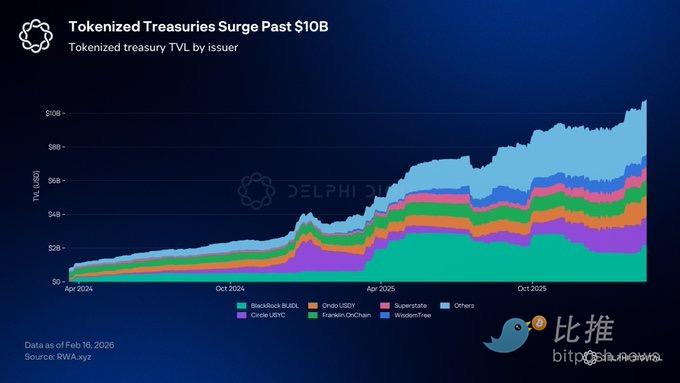
Tokenized U.S. Treasuries surpassed $10 billion in January 2024, led by institutions like BlackRock and Franklin Templeton. While government bonds are relatively straightforward to tokenize due to their standardized nature, equities present greater complexity because they involve shareholder rights such as voting and legal ownership. Two primary models exist: custodian-backed tokens (e.g., xStocks, Backed) offer price exposure but not direct ownership, while transfer agent-registered tokens (e.g., Superstate, Securitize) record holders directly on the shareholder registry, granting full rights. The latter enables functionalities like 24/7 trading, use as collateral in DeFi, cross-margin capabilities with crypto assets, and direct capital raises without traditional underwriters. However, challenges remain, including fragmented liquidity across blockchains, KYC/AML compliance friction, varying international regulations, and limited integration with traditional exchanges. While Nasdaq has applied to trade tokenized securities, broader market adoption depends on regulatory clarity and improved liquidity. The market is betting that the transfer agent model—which offers real ownership—will outperform custodian-based structures. Equities can now be settled instantly, traded around the clock, and used as collateral, but whether this becomes standard depends on regulatory and liquidity developments.

Source: Delphi Digital

Compiled and Edited: BitpushNews


In January, the scale of tokenized treasury bonds exceeded $10 billion, with BlackRock, Franklin Templeton, Ondo, and Circle leading the market. Government bonds were the first to be tokenized because they have standardized instruments and liquid markets, making the process relatively straightforward.

But the real challenge lies with stocks.

Stocks represent shareholders, who possess voting rights and legal rights that must be enforced. Tokenization projects have all hit the same wall: you can mint a token representing a stock, but you do not actually own the share.
Not all tokenized stocks operate in the same way. Tokens issued by platforms like xStocks, Backed, and similar are backed 1:1 by shares held by a custodian. Investors gain price exposure and can trade 24/7, but ownership remains with the custodian.

Custodian vs. Transfer Agent

Superstate and Securitize are registered as transfer agents with the U.S. Securities and Exchange Commission (SEC), directly recording token holders on the company's shareholder registry. In September 2025, when Galaxy Digital was tokenized via Superstate's Opening Bell platform, GLXY token holders became genuine shareholders with voting rights and dividend entitlements. The blockchain was integrated with the shareholder registry.

Securitize has adopted a similar approach on the fund side. As the transfer agent behind BlackRock's BUIDL, they manage one of the largest tokenized treasury funds. They are also bringing institutional-grade private funds on-chain, lowering investment barriers and expanding access to alternative assets that were previously out of reach for most investors.

Recent guidance from SEC staff clarifies this distinction. Issuer-led tokenization through registered transfer agents creates ownership with full shareholder rights. Custodian-backed tokens may face different regulatory treatment and limitations compared to direct shareholder registration.
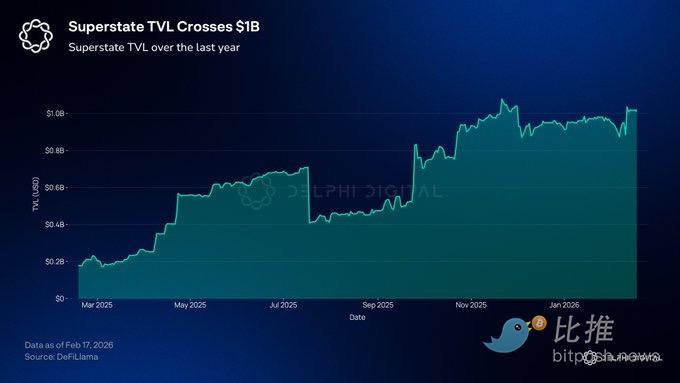
Genuine shareholder status enables functionalities that custodian-backed token structures cannot achieve.

Shareholders can trade 24/7 on supported trading platforms without waiting for the Toronto Stock Exchange to open. Shareholders of Forward Industries can pledge their equity as collateral on Kamino. Even if shares are deposited in lending pools, Superstate tracks beneficial ownership, ensuring dividends are distributed to the correct holders regardless of where the tokens are stored.

Backpack Exchange and Superstate have announced plans to enable cross-margining between tokenized stocks and crypto assets. Once live, traders can hold both tokenized stocks and SOL in the same account and use both as margin. Traditional brokers typically cannot offer this service because stocks and cryptocurrencies exist in completely separate custody and clearing systems.

This is unprecedented capital efficiency. Shareholders can obtain liquidity without selling, hedge across asset classes in a single account, and trade globally without settlement delays.

Raising Capital Without Underwriters

Superstate's direct issuance program allows publicly traded companies to reduce reliance on traditional underwriters for on-chain fundraising. Investors pay with stablecoins, shares are minted directly into their wallets, and companies receive funds instantly, with no cash settlement delays.

Traditional equity fundraising involves underwriters, roadshows, and settlement delays that can last weeks. Direct issuance compresses this into a single transaction, with the shareholder registry updated in real time.

The first issuances are expected later this year, likely from small-cap public companies that find traditional capital market infrastructure too costly relative to their trading size.

Missing Pieces

Liquidity remains fragmented. Tokenized stocks exist on multiple chains with no unified order book connecting them. Trading volumes are small compared to traditional markets, limiting the scale investors can move without impacting prices.

KYC requirements create friction with DeFi's permissionless architecture. Only whitelisted addresses can hold tokenized stocks, meaning they cannot be integrated into every lending protocol or liquidity pool. Issuers need to verify investors before they receive shares, and this verification must persist as tokens move between wallets.

Outside the U.S., regulatory frameworks vary significantly. SEC guidance applies to matters involving U.S. federal securities laws, but Europe, Asia, and other markets have their own rules, which may not align.

Traditional exchanges are watching closely. Nasdaq has filed an application with the SEC to trade tokenized securities. But until regulators and existing participants figure out how this fits into the existing market structure, actual exchange support for on-chain stocks remains pending.

Conclusion

Tokenized treasury bonds have proven that this mechanism can work at scale. Now, the stock space is catching up, achieving genuine compliance and true DeFi integration.

The market is betting that the transfer agent model, which records token holders as actual shareholders, will outperform indirect ownership structures that only provide price exposure.

Stocks can now be settled instantly, traded 24/7, and used as collateral in markets that never close. Whether this becomes the standard for how stocks operate or remains a niche play for crypto-native companies depends on whether liquidity and regulatory clarity can keep up with the infrastructure already in place.


Twitter:https://twitter.com/BitpushNewsCN

Bitpush TG Discussion:https://t.me/BitPushCommunity

Bitpush TG Subscription: https://t.me/bitpush

Original link:https://www.bitpush.news/articles/7612882

Tiền kỹ thuật số thịnh hành

Câu hỏi Liên quan

QWhat is the key difference between tokenized stocks issued by platforms like xStocks/Backed and those registered with the SEC as transfer agents like Superstate/Securitize?

APlatforms like xStocks and Backed issue tokens that are 1:1 backed by stocks held by a custodian, providing price exposure but not actual ownership. In contrast, SEC-registered transfer agents like Superstate and Securitize record token holders directly on the company's shareholder registry, granting them full shareholder rights including voting and dividends.

QWhat major milestone did tokenized treasury products achieve in January, and which companies are leading this market?

AIn January, the size of tokenized treasury products surpassed $10 billion. Companies such as BlackRock, Franklin Templeton, Ondo, and Circle are leading this market.

QWhat are some of the unique functionalities enabled by true shareholder status in tokenized stocks, according to the article?

ATrue shareholder status enables functionalities like 24/7 trading on supported platforms, the ability to use equity as collateral (e.g., on Kamino), receiving dividends regardless of where the token is held, and cross-margining between tokenized stocks and crypto assets in a single account for unprecedented capital efficiency.

QHow does Superstate's direct issuance plan aim to change the traditional capital raising process for public companies?

ASuperstate's direct issuance plan allows public companies to raise capital on-chain with reduced reliance on traditional underwriters. Investors pay with stablecoins, shares are minted directly to their wallets, the company receives funds instantly, and the shareholder registry is updated in real-time, compressing a process that traditionally takes weeks into a single transaction.

QWhat are the main challenges or missing pieces currently hindering the wider adoption of tokenized stocks?

AThe main challenges include fragmented liquidity across different blockchains without a central order book, smaller trading volumes limiting large-scale moves, friction between KYC requirements and DeFi's permissionless architecture, and varying regulatory frameworks outside the U.S. that are not necessarily aligned with the SEC's guidance.

Nội dung Liên quan

Báo cáo Ethereum Q1 2026: Phí giảm, người dùng và khối lượng giao dịch lập kỷ lục mới

Báo cáo Q1/2026 của Ethereum cho thấy một xu hướng đối lập: lượng người dùng, số giao dịch và thông lượng mạng lưới đều đạt mức cao kỷ lục, trong khi phí giao dịch, tổng giá trị bị khóa (TVL), khối lượng giao dịch và vốn hóa pha loãng hoàn toàn (FDV) của ETH lại giảm. Hiện tượng này được giải thích là "Nghịch lý Jevons": việc giảm chi phí sử dụng mạng lưới sau đợt nâng cấp Fusaka đã giải phóng nhu cầu, thúc đẩy tăng trưởng quy mô. Báo cáo nhấn mạnh sự chuyển dịch trong định vị cốt lõi của Ethereum từ một blockchain DeFi sang một tầng thanh toán tài chính toàn cầu. Ethereum tiếp tục thống trị thị trường tài sản được mã hóa, chiếm phần lớn thị phần trong các lĩnh vực stablecoin (61,8%), quỹ được mã hóa (73%), hàng hóa được mã hóa (84%) và cổ phiếu được mã hóa. Sự tham gia của các tổ chức lớn như BlackRock, JPMorgan và Fidelity đang đẩy nhanh quá trình "thể chế lên chuỗi". Mặc dù phí giao dịch tầng cơ sở giảm mạnh (-47,9%), đây được xem là một sự đánh đổi có chủ đích để đổi lấy tăng trưởng mạng lưới dài hạn. Chiến lược này nhằm củng cố vị thế là nền tảng định sẵn cho việc thanh toán và quyết toán các tài sản tài chính ngày càng được mã hóa, từ đó tạo ra giá trị cơ bản cho ETH thông qua nhu cầu sử dụng mạng lưới.

marsbit1 giờ trước

Báo cáo Ethereum Q1 2026: Phí giảm, người dùng và khối lượng giao dịch lập kỷ lục mới

marsbit1 giờ trước

Anh ấy vừa gọi được 2,7 tỷ USD, Lý Phi Phi cũng rót tiền đầu tư

"Generalist AI", công ty khởi nghiệp trí tuệ thể hiện (embodied AI) do Pete Florence - cựu nhà khoa học nghiên cứu cốt cán của Google DeepMind và là một trong những người đặt nền móng cho kiến trúc mô hình VLA (Vision-Language-Action) - sáng lập, vừa huy động thành công 4 tỷ USD (tương đương 27 tỷ RMB) ở vòng gọi vốn mới, định giá 20 tỷ USD. Vòng đầu tư có sự tham gia của các tổ chức và cá nhân uy tín như NVentures (từ NVIDIA), NFDG, Bezos Expeditions, đồng sáng lập Xiaomi Lin Bin, người sáng lập Zoom Eric Yuan, và nhà khoa học nổi tiếng Fei-Fei Li. Mặc dù được coi là người tiên phong trong lĩnh vực "mô hình thế giới" (world model), Florence lại công khai phản đối việc dán nhãn này cho công ty mình. Triết lý của ông, chịu ảnh hưởng từ người thầy Russ Tedrake tại MIT, là ưu tiên "mục tiêu" cụ thể hơn các "nhãn" công nghệ chung chung. Mục tiêu tối thượng của Generalist AI là tạo ra những robot đa năng có thể thực hiện với độ tin cậy cực cao nhiều nhiệm vụ chưa từng thấy mà không cần dữ liệu huấn luyện riêng cho từng tác vụ. Để hiện thực hóa điều này, Generalist AI đã lần lượt ra mắt các mô hình GEN-0 và GEN-1. GEN-1, được công bố vào tháng 4/2026, được huấn luyện trên hơn 50 nghìn giờ dữ liệu tương tác vật lý thu thập qua một thiết bị đeo tay đặc biệt. Theo công ty, mô hình này đạt tỷ lệ thành công 99% trong một số nhiệm vụ thao tác lặp lại và tinh vi (như gấp hộp, đóng gói), với tốc độ nhanh gấp ba lần GEN-0 và chỉ cần khoảng một giờ để thích ứng với tác vụ mới. Thành tựu này chứng minh lộ trình phát triển rõ ràng của công ty và là lý do chính thu hút được sự ủng hộ mạnh mẽ từ các nhà đầu tư hàng đầu, đưa Generalist AI trở thành một trong những công ty được kỳ vọng nhất trong lĩnh vực robot và trí tuệ thể hiện.

marsbit1 giờ trước

Anh ấy vừa gọi được 2,7 tỷ USD, Lý Phi Phi cũng rót tiền đầu tư

marsbit1 giờ trước

Mất hai huyền thoại trong ba ngày: Con đập nhân tài AI của Google đang vỡ?

Chỉ trong ba ngày, Google đã chứng kiến hai huyền thoại AI rời đi: Noam Shazeer (đồng tác giả Transformer, lãnh đạo Gemini) gia nhập OpenAI, và John Jumper (người đoạt giải Nobel Hóa học 2024, lãnh đạo AlphaFold) chuyển sang Anthropic. Đây không phải là trường hợp cá biệt mà là một xu hướng rõ ràng, bổ sung cho việc cựu thành viên sáng lập OpenAI Andrej Karpathy gia nhập Anthropic trước đó. Các tài năng AI hàng đầu đang tập trung ngày càng nhiều vào OpenAI và Anthropic, khiến Google trở thành nguồn cung cấp chính trong cuộc tái cấu trúc nhân tài này. Sự dịch chuyển này bắt nguồn từ sự khác biệt cốt lõi về sứ mệnh. Google, với doanh thu chính phụ thuộc vào quảng cáo, thường đặt các dự án AI trong khuôn khổ phục vụ mục tiêu sản phẩm và lợi nhuận. Ngược lại, OpenAI (với sứ mệnh AGI) và Anthropic (tập trung vào AI an toàn) cho phép các nhà nghiên cứu tập trung hoàn toàn vào việc đẩy xa giới hạn năng lực mô hình. Ngoài ra, cơ hội thu lợi nhuận lớn từ cổ phiếu trước thềm IPO của hai công ty này là động lực hấp dẫn mà Google - một gã khổng lồ trưởng thành - khó có thể sánh được. Việc sáp nhập Google Brain và DeepMind vào năm 2023 cũng tạo ra những lực ly tâm mới, làm xói mòn văn hóa nghiên cứu dài hạn dưới áp lực phải phù hợp với lộ trình sản phẩm. Sự ra đi của các nhân vật then chốt như Jumper và Shazeer phản ánh điều này. Cuộc khủng hoảng nhân tài này mang tính cấu trúc. Google có thể sở hữu cơ sở hạ tầng máy tính khổng lồ và kho dữ liệu đồ sộ, nhưng việc thiếu những bộ óc xuất sắc nhất để khai thác chúng khiến lợi thế đó trở nên vô nghĩa. Trong khi OpenAI và Anthropic củng cố vị thế với đội ngũ tinh nhuệ ngày càng mạnh, Google đang mất dần hào quang là trung tâm hấp dẫn nhân tài AI toàn cầu. Trong cuộc đua mà mật độ tài năng quyết định năng lực mô hình và thị phần, đây là một thách thức tồn vong thầm lặng nhưng nghiêm trọng của Google.

marsbit3 giờ trước

Mất hai huyền thoại trong ba ngày: Con đập nhân tài AI của Google đang vỡ?

marsbit3 giờ trước

Phía sau bảng điểm AI, ẩn giấu một 'người ra đề' gốc Hoa

Mỗi khi một mô hình AI tiên tiến ra mắt, giới công nghệ lại dõi theo những “bảng điểm” quen thuộc như MMLU-Pro, MMMU hay MMMU-Pro. Đây là các tiêu chuẩn đánh giá quan trọng giúp so sánh năng lực của các mô hình lớn như GPT, Claude hay Gemini. Tuy nhiên, ít người biết rằng đằng sau những bộ đề thi này là một nhà nghiên cứu người Hoa: Chen Wenhu (Trần Văn Hổ), trợ lý giáo sư tại Đại học Waterloo, Canada. Ông cùng phòng thí nghiệm TIGERLab (còn gọi là Hổ Đầu Bang) đã tạo ra MMLU-Pro vào năm 2024 để giải quyết vấn đề “mất chuẩn” của bộ đánh giá MMLU cũ, khi nhiều mô hình tiên tiến đạt điểm gần tuyệt đối, khó phân biệt được sự khác biệt thực sự. MMLU-Pro với hơn 12.000 câu hỏi, mở rộng lựa chọn và tăng cường các câu đòi hỏi suy luận, đã giúp kéo giãn khoảng cách điểm số và đánh giá ổn định hơn. Trước đó, nhóm của Chen Wenhu cũng phát triển MMMU - bộ đánh giá đa phương thức (multimodal) yêu cầu mô hình kết hợp hiểu biết hình ảnh, biểu đồ với kiến thức chuyên môn để trả lời câu hỏi. Ngay cả các mô hình mạnh nhất thời điểm đó như GPT-4V cũng chỉ đạt độ chính xác khoảng 56%. Phiên bản MMMU-Pro sau này được thiết kế để đảm bảo mô hình không thể “bỏ qua” thông tin hình ảnh mà chỉ dựa vào văn bản để đoán đáp án. Nghiên cứu của Chen Wenhu tập trung vào việc hiểu thông tin phức tạp, hỏi đáp tri thức và suy luận. Ông từng làm việc tại Google Research và DeepMind, tham gia vào dự án Gemini, trước khi gia nhập Đại học Waterloo và thành lập TIGERLab. Phòng thí nghiệm không chỉ tạo ra các bộ đánh giá mà còn nghiên cứu phát triển mô hình, chẳng hạn trong lĩnh vực xử lý video. Hiện tại, Chen Wenhu làm việc tại Phòng thí nghiệm Siêu trí tuệ (Super Intelligent Lab) của Meta, tiếp tục tập trung vào dữ liệu huấn luyện và đánh giá đa phương thức. Công việc của ông và nhiều nhà nghiên cứu người Hoa khác đang đóng góp quan trọng vào sự phát triển chung của ngành AI, dù có thể không nằm dưới ánh đèn sân khấu.

marsbit3 giờ trước

Phía sau bảng điểm AI, ẩn giấu một 'người ra đề' gốc Hoa

marsbit3 giờ trước

Giao dịch

Giao ngay
Hợp đồng Tương lai

Bài viết Nổi bật

Làm thế nào để Mua ERA

Chào mừng bạn đến với HTX.com! Chúng tôi đã làm cho mua Caldera (ERA) trở nên đơn giản và thuận tiện. Làm theo hướng dẫn từng bước của chúng tôi để bắt đầu hành trình tiền kỹ thuật số của bạn.Bước 1: Tạo Tài khoản HTX của BạnSử dụng email hoặc số điện thoại của bạn để đăng ký tài khoản miễn phí trên HTX. Trải nghiệm hành trình đăng ký không rắc rối và mở khóa tất cả tính năng. Nhận Tài khoản của tôiBước 2: Truy cập Mua Crypto và Chọn Phương thức Thanh toán của BạnThẻ Tín dụng/Ghi nợ: Sử dụng Visa hoặc Mastercard của bạn để mua Caldera (ERA) ngay lập tức.Số dư: Sử dụng tiền từ số dư tài khoản HTX của bạn để giao dịch liền mạch.Bên thứ ba: Chúng tôi đã thêm những phương thức thanh toán phổ biến như Google Pay và Apple Pay để nâng cao sự tiện lợi.P2P: Giao dịch trực tiếp với người dùng khác trên HTX.Thị trường mua bán phi tập trung (OTC): Chúng tôi cung cấp những dịch vụ được thiết kế riêng và tỷ giá hối đoái cạnh tranh cho nhà giao dịch.Bước 3: Lưu trữ Caldera (ERA) của BạnSau khi mua Caldera (ERA), lưu trữ trong tài khoản HTX của bạn. Ngoài ra, bạn có thể gửi đi nơi khác qua chuyển khoản blockchain hoặc sử dụng để giao dịch những tiền kỹ thuật số khác.Bước 4: Giao dịch Caldera (ERA)Giao dịch Caldera (ERA) dễ dàng trên thị trường giao ngay của HTX. Chỉ cần truy cập vào tài khoản của bạn, chọn cặp giao dịch, thực hiện giao dịch và theo dõi trong thời gian thực. Chúng tôi cung cấp trải nghiệm thân thiện với người dùng cho cả người mới bắt đầu và người giao dịch dày dạn kinh nghiệm.

Tổng lượt xem 541Xuất bản vào 2025.07.17Cập nhật vào 2026.06.02

Làm thế nào để Mua ERA

Thảo luận

Chào mừng đến với Cộng đồng HTX. Tại đây, bạn có thể được thông báo về những phát triển nền tảng mới nhất và có quyền truy cập vào thông tin chuyên sâu về thị trường. Ý kiến ​​của người dùng về giá của ERA (ERA) được trình bày dưới đây.

活动图片