Cross-Chain Bridges Actively Adapt, LI.FI Leverages Intent Architecture to Become the Liquidity Hub for TradFi Institutions

Odaily星球日报Xuất bản vào 2026-06-03Cập nhật gần nhất vào 2026-06-03

Tóm tắt

Cross-Chain Bridge LI.FI Transforms with Intents Architecture to Serve as Liquidity Hub for TradFi Institutions Facing declining cross-chain transaction volumes and overall crypto market liquidity, cross-chain bridge protocol LI.FI is proactively shifting its strategy. Moving beyond its role as a "liquidity transfer protocol," LI.FI is targeting new assets, clients, and operational systems. Key to this transformation is the launch of LI.FI Intents, an intent-based execution architecture. This product positions itself as a foundational layer for stablecoin payments, Real World Assets (RWA), and compliant on-chain liquidity, catering specifically to fintech companies, neobanks, wallets, and regulated financial institutions. LI.FI Intents simplifies user experience by offering a turnkey solution. It leverages a solver network for market-maker level execution, enabling precise cross-chain swaps (e.g., between USDC and USDT) without users managing gas tokens or complex blockchain steps. It lowers barriers to entry by integrating with applications like Jumper and Rabby, allowing enterprise users to bypass direct wallet interactions for transactions like payments and asset transfers. The architecture emphasizes compliance. Its network consists of verified legal entities, and enterprises can review and approve orders within their compliance frameworks before processing. All interacting wallets undergo OFAC screening. For ecosystem coverage, LI.FI Intents supports major networks i...

Original|Odaily Planet Daily (@OdailyChina)

Author|Wenser(@wenser2010)
When TradFi becomes a must-have for the crypto industry, no project can stand apart. However, some choose to start with asset types, while others set their sights on the various companies and institutions behind the assets.

Last month, the cross-chain bridging protocol LI.FI officially and prominently announced the launch of its intent-based execution architecture, LI.FI Intents. This product will serve as the underlying execution layer providing stablecoin payments, RWA, and compliant on-chain liquidity, targeting services for fintech companies, neobanks, wallets, and regulated financial institutions.

Amidst the current trend of stablecoin payments, RWA assets, and compliant assets converging with the on-chain ecosystem, Li.Fi is no longer content with being just a "liquidity transfer protocol." Instead, it is proactively seeking breakthroughs and role upgrades in areas such as new assets, new customers, and new operating systems.

When Industry Liquidity Tightens, Cross-Chain Bridge Protocols Actively Adapt

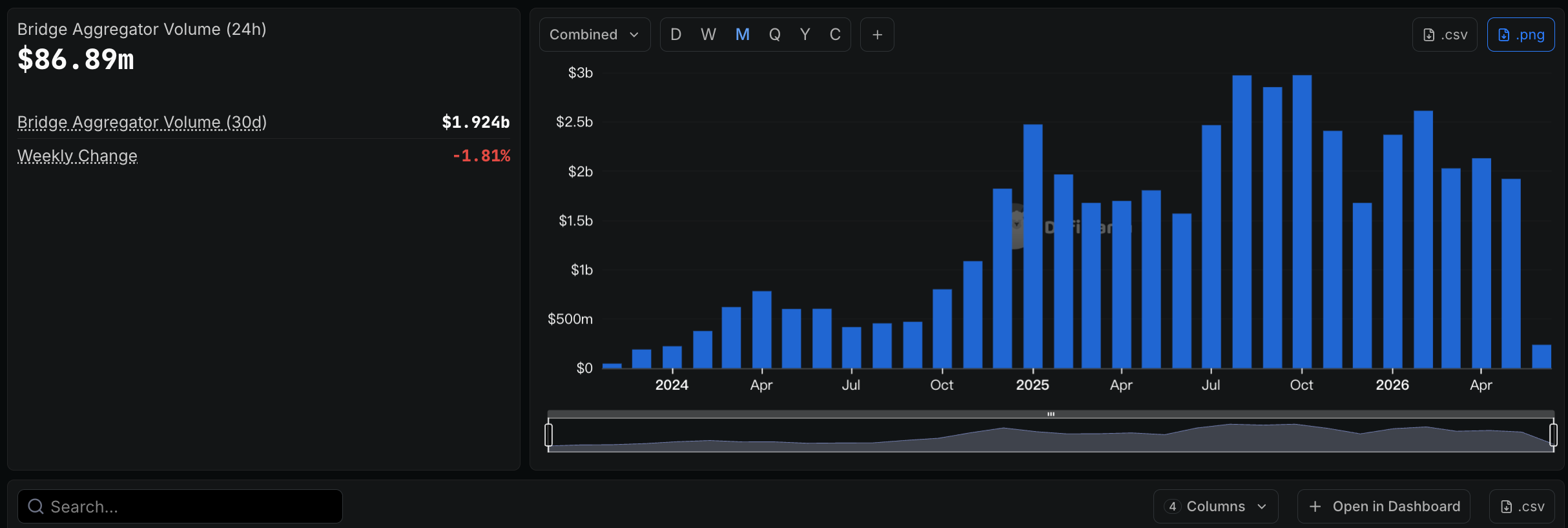
According to DefiLlama data, cross-chain bridge aggregated trading volume over the past 30 days was approximately $1.92 billion, with a weekly decline of about 1.81%. Since reaching a high of $2.974 billion in October last year, the monthly trading volume of cross-chain bridges has shown a slow downward trend. The trading volume in May dropped to around $1.9 billion, representing a decline of nearly 34% compared to the peak.
On the other hand, the overall crypto market is in a fluctuating downward trend, with BTC spot trading volume having fallen by as much as 81% from last year's highs; on-chain liquidity has further tightened as a result.

Faced with this situation, Li.Fi, as a cross-chain bridge protocol, did not wait passively like most crypto projects. Instead, it actively explored new business areas, seeking new application scenarios and service targets to ensure its long-term development.

In December last year, LI.FI announced the completion of a $29 million funding round led by Multicoin and CoinFund, bringing its total funding raised to $52 million. At that time, the project stated it planned to use this latest funding to expand its business into different trading domains, including perpetual futures, yield opportunities, prediction markets, and lending markets.

Ample funding gave Li.Fi the confidence to explore and build new products while maintaining its core business.

In April this year, LI.FI announced the launch of a new product, LI.FI Earn, providing on-chain yield functionality for enterprises with digital asset strategies. It supports accessing strategies from over 20 vault protocols through a single integration and features built-in cross-chain execution capabilities across more than 60 chains.

In May, the intent execution architecture LI.FI Intents was released, marking Li.Fi's official entry into the enterprise services sector. It empowers a range of B2B clients with the underlying operational capabilities for stablecoin payments, RWA assets, and compliant liquidity.

In the current convergence of TradFi assets and crypto assets, Li.Fi's new direction for upgrades is to lower user barriers, improve liquidity operation efficiency, and open channels for tokenized asset exchange from the operational execution layer. Compared to cross-chain protocols limited to the crypto market, providing financial services to global fintech companies, neobanks, wallets, and regulated financial institutions is undoubtedly a cash cow business with a much higher ceiling.

In terms of user experience, Li.Fi Intents provides users with a more streamlined execution solution, ready to use. It is reported that it primarily offers market-maker-level execution through a solver network, supporting precise output cross-chain swaps between stablecoins like USDC and USDT without requiring users to manage Gas tokens or handle complex underlying blockchain steps. Simultaneously, the architecture allows applications to integrate multiple tokenized asset issuers through a unified interface.

Regarding entry barriers, LI.FI Intents is already live on applications and wallets like Jumper and Rabby. Moreover, with LI.FI Intents, enterprise users do not need to interact with any wallet, which will significantly lower the cognitive barrier for enterprises in areas like transfer payments and asset movements, reducing many cumbersome operational steps.
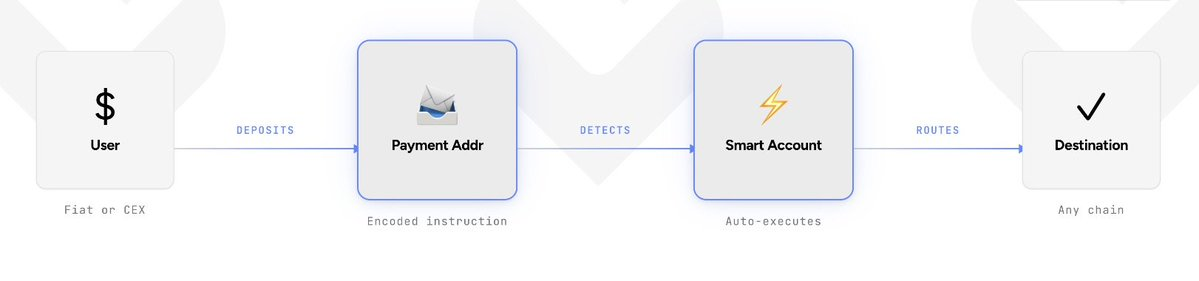
In terms of compliance, the network built by LI.FI Intents consists of verified legitimate entities. Enterprises can review and approve corresponding orders one by one before the trading processing system handles them, precisely choosing the trading processing systems they trust. This ensures orders flow within a compliant approval system. All wallets interacting with this system are subject to OFAC (U.S. Department of the Treasury's Office of Foreign Assets Control) screening, which can be considered the final layer of "compliance insurance."

Regarding ecosystem coverage, LI.FI Intents covers mainstream blockchain networks, including the EVM ecosystem, Solana network, and Tron network. It achieves a certain level of adaptation in ecosystem usability and broad coverage, avoiding potential security risks or single points of failure caused by high dependence on a single blockchain network.

Conclusion: Efficient Automated Services Behind Intent Execution

If tokenized U.S. stocks and RWA assets solve the problems of asset type updates and traditional finance entry barriers, then what Li.FI Intents targets is how to introduce stablecoin payments, RWA assets, and compliant on-chain liquidity into the ecosystems of enterprise users in a better and faster way, improving their operational efficiency and capital utilization.

More importantly, the Li.FI Intents system serves intent execution. Like destination navigation in autonomous driving, enterprise users only need to set the goal; all intermediate execution steps are outsourced and handled by the system.

In today's world of extremely rich asset types, the value of efficient operations will be further amplified, and Li.Fi has already taken the most crucial step.


Nội dung Liên quan

Lãi Mở XRP Chạm Mốc 2,6 Tỷ USD Khi Nhu Cầu Phái Sinh Tăng

Dữ liệu từ CoinGlass cho thấy lãi mở (open interest) của hợp đồng tương lai XRP đã tăng hơn 10% trong 24 giờ, đạt mốc 2,6 tỷ USD, đưa XRP trở thành một trong những tài sản tiền điện tử có lãi mở phái sinh lớn nhất. Mức tăng này phản ánh nhu cầu giao dịch phái sinh quanh XRP đang gia tăng đáng kể. Tuy nhiên, lãi mở tăng cho thấy nhiều vị thế đang được mở ra, nhưng không tự động chỉ ra rằng dòng tiền này lạc quan hay bi quan về giá. Nó có thể đến từ các vị thế mua, bán khống, phòng ngừa rủi ro hoặc giao dịch đòn bẩy. Do đó, sự tích tụ này có thể hỗ trợ một đợt biến động mạnh hơn, nhưng cũng làm tăng rủi ro biến động và thanh lý. Các nhà giao dịch cần xem xét thêm các chỉ số khác như phí funding, khối lượng giao dịch spot, hướng giá và dữ liệu thanh lý để có bức tranh đầy đủ. Sự gia tăng lãi mở cho thấy XRP đang thu hút sự chú ý nghiêm túc từ thị trường phái sinh, nhưng sự bền vững của xu hướng sẽ phụ thuộc vào việc liệu hoạt động spot có tăng theo để xác nhận hay không. Kết quả cuối cùng có thể là một xu hướng mạnh hơn hoặc đơn giản là thêm biến động cho một thị trường vốn đã sôi động.

bitcoinist58 phút trước

Lãi Mở XRP Chạm Mốc 2,6 Tỷ USD Khi Nhu Cầu Phái Sinh Tăng

bitcoinist58 phút trước

Nhịp Đập Thị Trường BTC: Tuần 30

Bitcoin (BTC) đã hồi phục từ dưới 58.000 USD để thử nghiệm mức 65.000 USD trước khi đi vào giai đoạn củng cố quanh 64.500 USD. Động lượng tăng đã chậm lại và khối lượng giao dịch spot vẫn ở mức thấp. Mặc dù vậy, sự phục hồi được duy trì trong bối cảnh thị trường đang tìm kiếm điểm cân bằng vững chắc hơn. Chênh lệch biến động (volatility spreads) thu hẹp cho thấy thị trường phái sinh không còn định giá phí bảo hiểm rủi ro cao, phản ánh tâm lý phòng thủ giảm bớt. Dù sự tham gia của thị trường giao ngay còn yếu, khẩu vị đầu cơ đang dần quay trở lại. Lãi suất mở (open interest) cho hợp đồng tương lai và quyền chọn tăng lên, dòng tiền của nhà giao dịch vĩnh viễn (perpetual taker flow) chuyển sang mua ròng và nhu cầu bảo vệ trước rủi ro giảm xuống. Hoạt động on-chain cũng đang ổn định, được hỗ trợ bởi sự cải thiện vừa phải về thông lượng kinh tế và sự tham gia của người dùng. Dòng vốn vẫn thận trọng, nhưng dòng tiền ETF spot tại Mỹ đang phục hồi và các nhóm ETF đang trở lại gần mức hòa vốn, cho thấy áp lực bán từ tổ chức đang giảm dần. Nhìn chung, thị trường Bitcoin dường như ngày càng cân bằng hơn, với niềm tin dài hạn tạo đà hỗ trợ trong khi sự tham gia đầu cơ vẫn được kiểm soát. Tuy nhiên, tỷ trọng ngày càng tăng của vốn ngắn hạn nhạy cảm với giá cả làm tăng khả năng biến động mạnh hơn, khiến thị trường vẫn kiên cường nhưng ngày càng nhạy cảm với sự thay đổi trong động lượng và áp lực bán.

insights.glassnode3 giờ trước

Nhịp Đập Thị Trường BTC: Tuần 30

insights.glassnode3 giờ trước

Nhu cầu Bitcoin tại thị trường giao ngay suy yếu khi vốn mới do dự bất chấp dòng tiền vào ETF

Mặc dù dòng tiền vào các quỹ ETF Bitcoin đã chuyển sang tích cực kể từ giữa tháng 7, nhưng điều này vẫn chưa đủ để đưa giá Bitcoin vượt lên vùng cung địa phương quanh mốc 65.000 USD. Theo phân tích từ CryptoQuant, nhu cầu mua Bitcoin trên thị trường giao ngay (spot) trong 30 ngày đã suy yếu đáng kể, giảm từ -80.000 BTC xuống -170.000 BTC. Sự ổn định tương đối của giá hiện tại chủ yếu được hỗ trợ bởi các lệnh mua để đóng vị thế bán (short-covering) trên thị trường phái sinh và áp lực bán từ các nhà đầu tư ngắn hạn đã giảm bớt. Chỉ số "Nhà đầu tư mới vào Bitcoin", đo lường tỷ trọng vốn hóa nắm giữ bởi các đồng coin non trẻ (dưới 1 tháng tuổi), vẫn ở gần mức thấp nhất trong năm, cho thấy sự tham gia của dòng vốn mới còn yếu. Tỷ lệ lợi nhuận trên đầu ra đã chi tiêu của nhà đầu tư ngắn hạn (STH SOPR) cũng duy trì dưới mức 1.0, có nghĩa là họ vẫn đang chốt lỗ trung bình. Những chỉ báo này cùng củng cố quan điểm rằng thị trường hiện đang trong giai đoạn ổn định cục bộ, chứ chưa có dấu hiệu đảo chiều tăng mạnh. Các nhà phân tích nhấn mạnh rằng, cần theo dõi việc giá có thể vượt qua đỉnh dao động địa phương 67.300 USD hay không để xác nhận một sự đảo chiều thực sự.

ambcrypto4 giờ trước

Nhu cầu Bitcoin tại thị trường giao ngay suy yếu khi vốn mới do dự bất chấp dòng tiền vào ETF

ambcrypto4 giờ trước

Vì sao giao dịch "cá voi" 32,6 triệu USD của Chainlink có thể định hình đà tăng của LINK về phía 9 USD

Một giao dịch chuyển 3,89 triệu LINK (trị giá 32,58 triệu USD) từ ví Coinbase Institutional sang một ví ẩn danh đã thu hút sự chú ý đến Chainlink. Chuyển động này làm dấy lên suy đoán về việc các tổ chức lớn đang tích lũy thay vì bán ra ngay lập tức. Dòng tiền ròng trên sàn giao dịch đã chuyển sang dương với lượng vào khoảng 620,18 nghìn USD, đánh dấu sự thay đổi sau một thời gian dài dòng tiền ra chiếm ưu thế. Tuy nhiên, tâm lý trên thị trường phái sinh vẫn thận trọng, với chỉ số CVD 90 ngày cho thấy lệnh bán vẫn chiếm ưu thế. Về mặt kỹ thuật, LINK đang giao dịch quanh mức 8,35 USD, thử thách vùng kháng cự gần đó. Chỉ số RSI ở mức 57,71 cho thấy áp lực mua đang tăng lên. Để duy trì đà hồi phục, giá cần vượt qua được ngưỡng 8,35 USD, từ đó mở đường hướng tới mục tiêu 9,00 USD. Ngược lại, nếu bị từ chối tại đây, giá có thể quay lại kiểm tra vùng hỗ trợ 8,18 USD. Tóm lại, hoạt động của ví tổ chức và dòng tiền ròng trên sàn là tín hiệu tích cực, nhưng tâm lý bán trên thị trường phái sinh vẫn tạo ra sự thận trọng, khiến triển vọng ngắn hạn của LINK chưa thực sự rõ ràng.

ambcrypto5 giờ trước

Vì sao giao dịch "cá voi" 32,6 triệu USD của Chainlink có thể định hình đà tăng của LINK về phía 9 USD

ambcrypto5 giờ trước

Giao dịch

Giao ngay
活动图片