Circle stock drops nearly 20% as stablecoin yield restrictions spark concern

ambcryptoXuất bản vào 2026-03-24Cập nhật gần nhất vào 2026-03-24

Tóm tắt

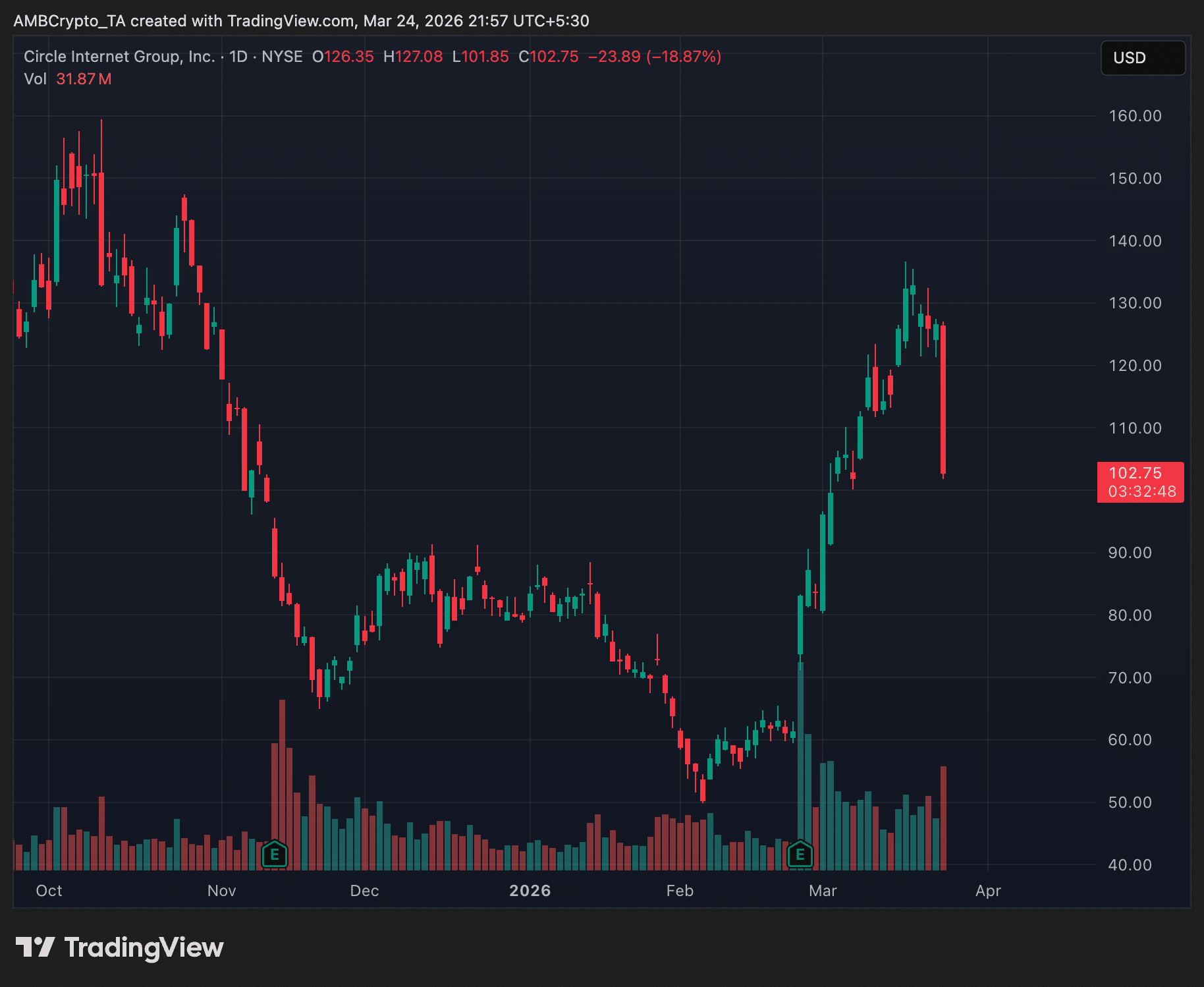
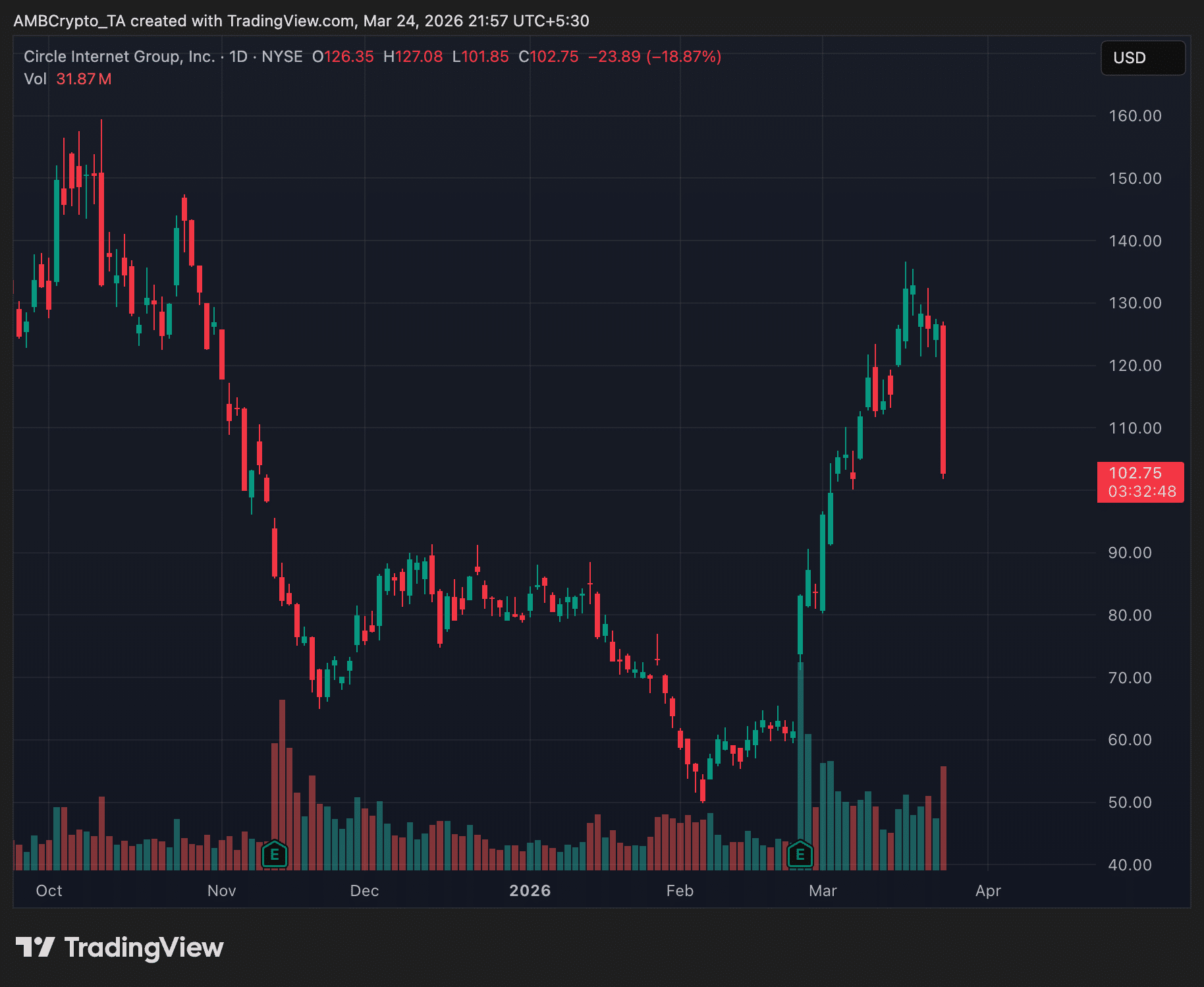
Shares of Circle Internet Group (CRCL) fell nearly 19% on March 24, dropping from an intraday high of around $127 to approximately $102. The sharp decline followed a strong rally earlier in March and was accompanied by high trading volume, indicating a shift in investor sentiment. The sell-off appears linked to emerging regulatory concerns, particularly a draft legislative proposal that could prohibit platforms from offering yield or interest-like rewards for holding stablecoins. This restriction, which targets both direct and indirect incentives, may impact Circle’s USDC stablecoin growth and user engagement. The proposal would still permit activity-based rewards but could reduce stablecoins' competitiveness against traditional financial products. The move underscores the sensitivity of crypto equities to regulatory developments.

Shares of Circle Internet Group [CRCL] fell sharply on 24 March, dropping nearly 19% in a single session as markets reacted to emerging concerns around potential restrictions on stablecoin yield and rewards.

The stock declined from an intraday high of around $127 to approximately $102, marking one of its steepest single-day losses in recent weeks. The move comes after a strong rally earlier in March, when CRCL climbed from below $60 to above $130.

Sharp reversal follows March rally

CRCL’s latest decline stands in contrast to its recent momentum, with the stock having more than doubled earlier this month before reversing course.
Source: TradingView

The sell-off was accompanied by a spike in trading volume, suggesting strong conviction behind the move rather than routine market fluctuations.

The abrupt reversal suggests a potential shift in sentiment, with investors reacting quickly to new developments in the stablecoin sector.

While no official trigger has been confirmed, the timing of the decline coincides with growing regulatory scrutiny around stablecoins.

Draft proposal targets stablecoin yield

According to a report from Eleanor Terrett, new legislative language under discussion could significantly limit how stablecoin issuers and platforms offer rewards to users.

The proposal would prohibit platforms from offering yield “directly or indirectly” for holding a stablecoin, or in any way that resembles a bank deposit. The restriction would apply broadly across exchanges, brokers, and affiliated services.

It would also ban any mechanism deemed “economically or functionally equivalent” to interest.

At the same time, the draft would allow activity-based rewards tied to user behavior, such as loyalty or promotional programs, provided they are not interpreted as interest-like incentives.

The proposal is expected to undergo further review, including feedback from banking representatives.

Implications for Circle and stablecoin issuers

For Circle, which issues the USDC stablecoin, yield restrictions could have direct implications for growth and user incentives.

Stablecoin yield and reward programs have become a key mechanism for attracting and retaining users across exchanges and platforms.

Limiting these features could reduce stablecoins’ competitiveness relative to traditional financial products and narrow revenue opportunities tied to user balances.

The uncertainty surrounding how regulators may interpret “economic equivalence” adds another layer of risk, particularly for business models that rely on flexible reward structures.


Final Summary

  • Circle’s sharp decline highlights how sensitive crypto-linked equities are to emerging regulatory risks, particularly around stablecoin incentives.
  • Growing scrutiny and industry moves toward transparency suggest a structural shift in how stablecoin issuers operate going forward.


Câu hỏi Liên quan

QWhat caused Circle's stock (CRCL) to drop nearly 20% on March 24?

AThe sharp decline was triggered by emerging concerns and a draft legislative proposal that could restrict stablecoin issuers and platforms from offering yield or interest-like rewards to users.

QWhat was the price range of CRCL's intraday movement during the sell-off?

AThe stock dropped from an intraday high of around $127 to approximately $102.

QWhat specific activity does the new legislative proposal aim to prohibit regarding stablecoins?

AThe proposal aims to prohibit platforms from offering yield 'directly or indirectly' for holding a stablecoin, or any mechanism deemed 'economically or functionally equivalent' to interest or a bank deposit.

QHow might the proposed restrictions impact Circle and other issuers?

AThe restrictions could reduce stablecoins' competitiveness compared to traditional financial products, narrow revenue opportunities from user balances, and create uncertainty for business models relying on reward structures.

QWhat type of rewards would still be allowed under the draft proposal?

AActivity-based rewards tied to user behavior, such as loyalty or promotional programs, are allowed provided they are not interpreted as interest-like incentives.

Nội dung Liên quan

Máy sấy tóc kiếm được 34,000 USD? Giải mã nghịch lý phản xạ của thị trường dự đoán

Một người đàn ông đã kiếm được 34.000 USD chỉ bằng cách dùng máy sấy tóc làm nóng cảm biến thời tiết tại sân bay, từ đó thao túng kết quả trên thị trường dự đoán Polymarket. Sự kiện này làm nổi bật nghịch lý cốt lõi của các thị trường dự đoán: chúng được thiết kế để phản ánh hiện thực, nhưng chính cơ chế khuyến khích tài chính lại tạo động lực cho người tham gia thao túng hiện thực. Bài viết phân chia các thị trường dự đoán thành bốn loại rủi ro theo khả năng bị thao túng: thị trường phụ thuộc vào nguồn dữ liệu vật lý đơn lẻ (như thời tiết), thị trường mà người trong cuộc biết trước kết quả (như nội dung video của người nổi tiếng), thị trường mà đối tượng được dự đoán có động cơ tự thao túng (như số lượng tweet), và thị trường mà một cá nhân có thể tự mình thay đổi kết quả (như ném đồ vật vào sân thi đấu). Hai nền tảng hàng đầu, Polymarket và Kalshi, có cách tiếp cận trái ngược. Kalshi thực thi nghiêm ngặt luật chống giao dịch nội gián, yêu cầu xác minh danh tính (KYC) và công khai xử phạt. Ngược lại, Polymarket ban đầu có quan điểm khoan dung hơn, coi thông tin nội gián giúp giá cả chính xác hơn, nhưng gần đây cũng bắt đầu phối hợp với cơ quan điều tra. Nghịch lý phản xạ của thị trường dự đoán nằm ở chỗ: khi một sự kiện có thể được giao dịch, nó không còn là đối tượng để quan sát mà trở thành mục tiêu để người tham gia tác động. Thị trường càng thành công trong việc dự đoán hiện thực thì càng tạo ra động cơ để biến dạng chính hiện thực đó.

marsbit3 giờ trước

Máy sấy tóc kiếm được 34,000 USD? Giải mã nghịch lý phản xạ của thị trường dự đoán

marsbit3 giờ trước

Giao dịch

Giao ngay
Hợp đồng Tương lai
活动图片




