
TL,DR
- The Fed kept interest rates unchanged this month, insisting on policy independence. Although inflation has eased, it remains above the target. Employment shows resilience but new job growth has slowed. The overall policy tone is cautious and steady. U.S. stocks fluctuated and rose at high levels driven by AI and profit expectations, but political uncertainty, fiscal expansion, and external risks continued to disturb the market. Looking ahead to February, if inflation continues to decline, U.S. stocks are expected to fluctuate and rise, but volatility caused by policy divergence and geopolitical risks still needs to be guarded against.
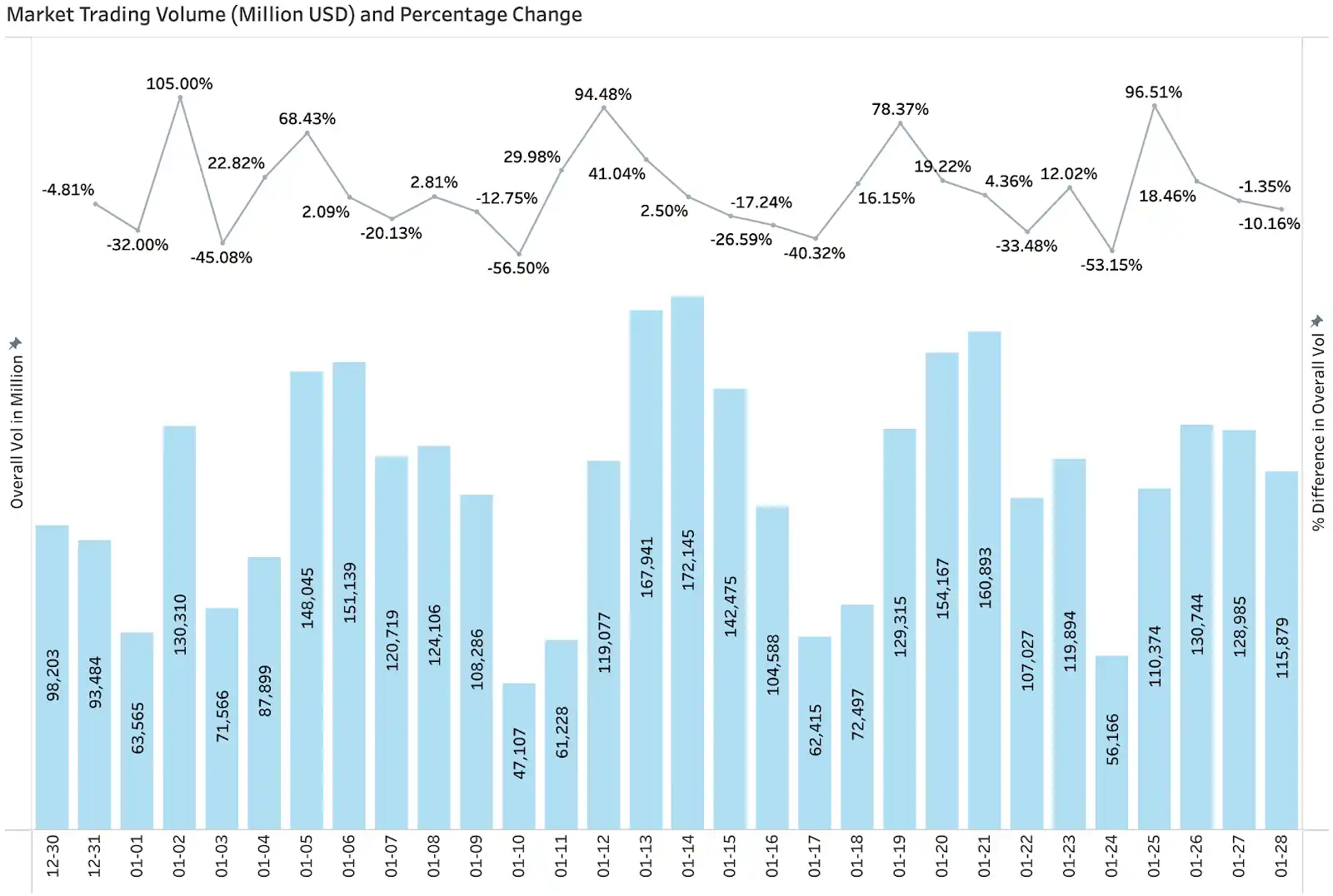
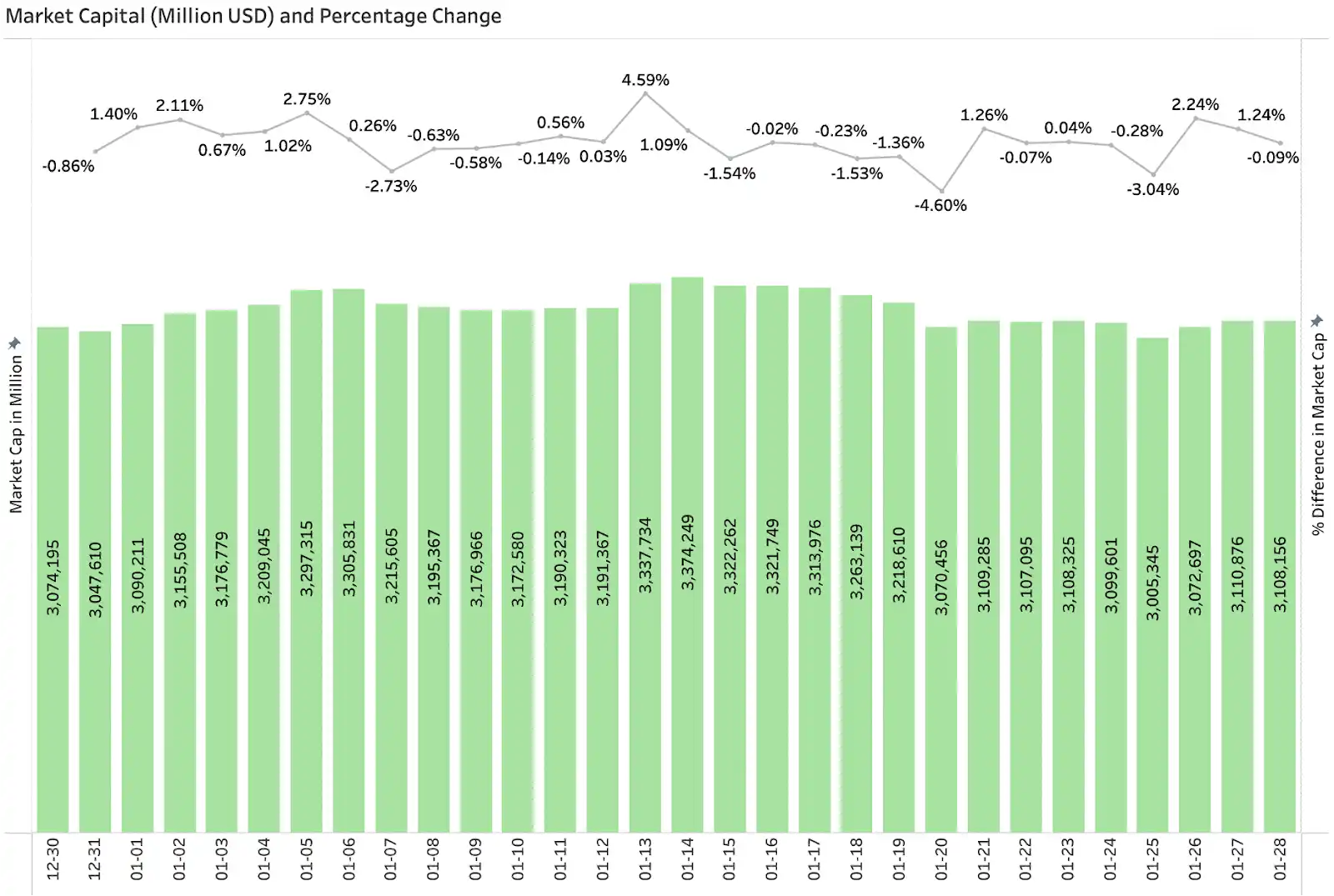
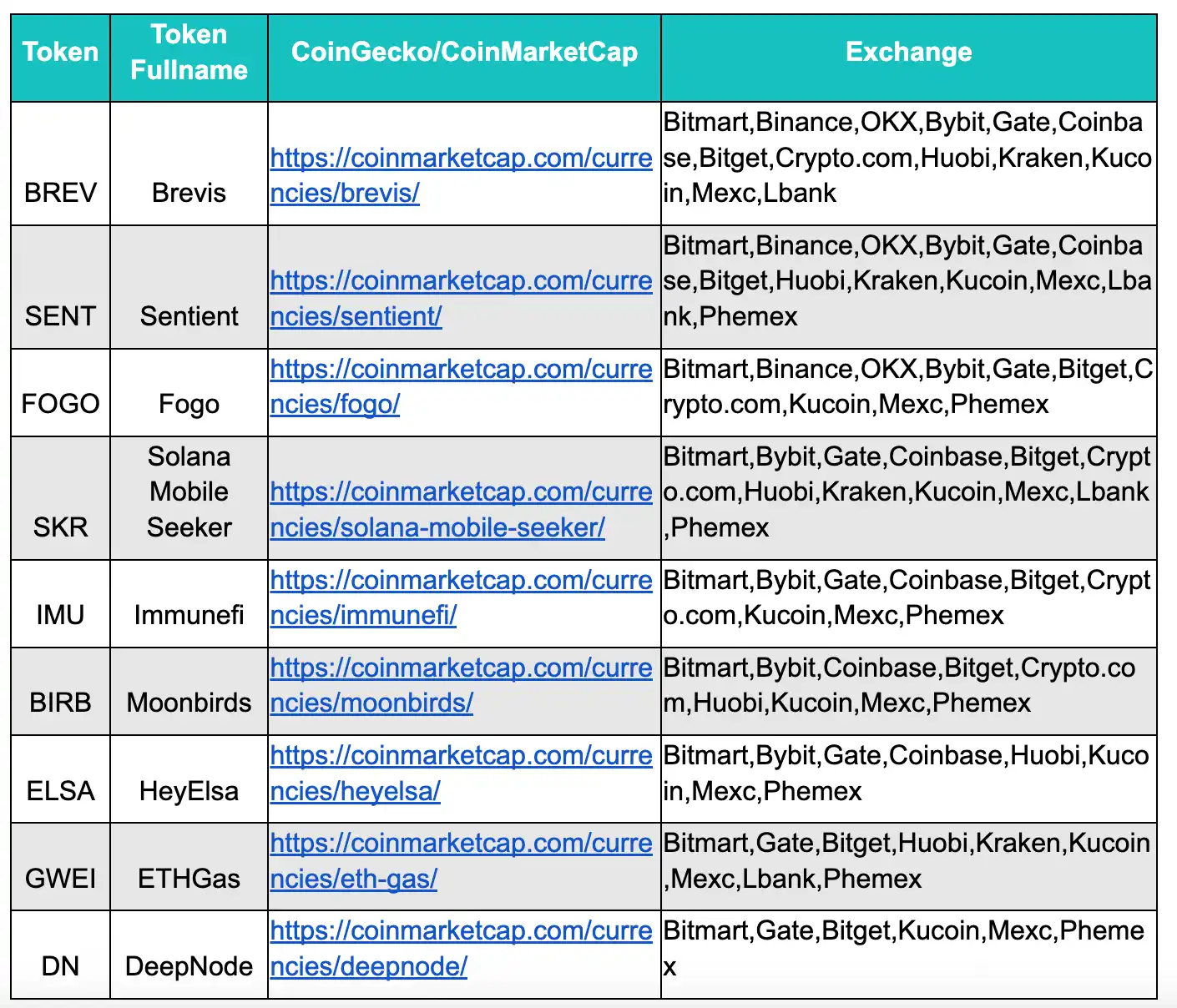
- In January, both trading volume and total market capitalization of the crypto market showed characteristics of range-bound fluctuations. The lack of sustained volume increases reflects that market activity is recovering but long-short divergence still exists, making it difficult to form a clear trend in the short term. Newly listed popular tokens are still dominated by VC-backed projects, with Brevis, Sentient, Fogo, etc. performing relatively actively, while the popularity of meme projects lacks sustainability.
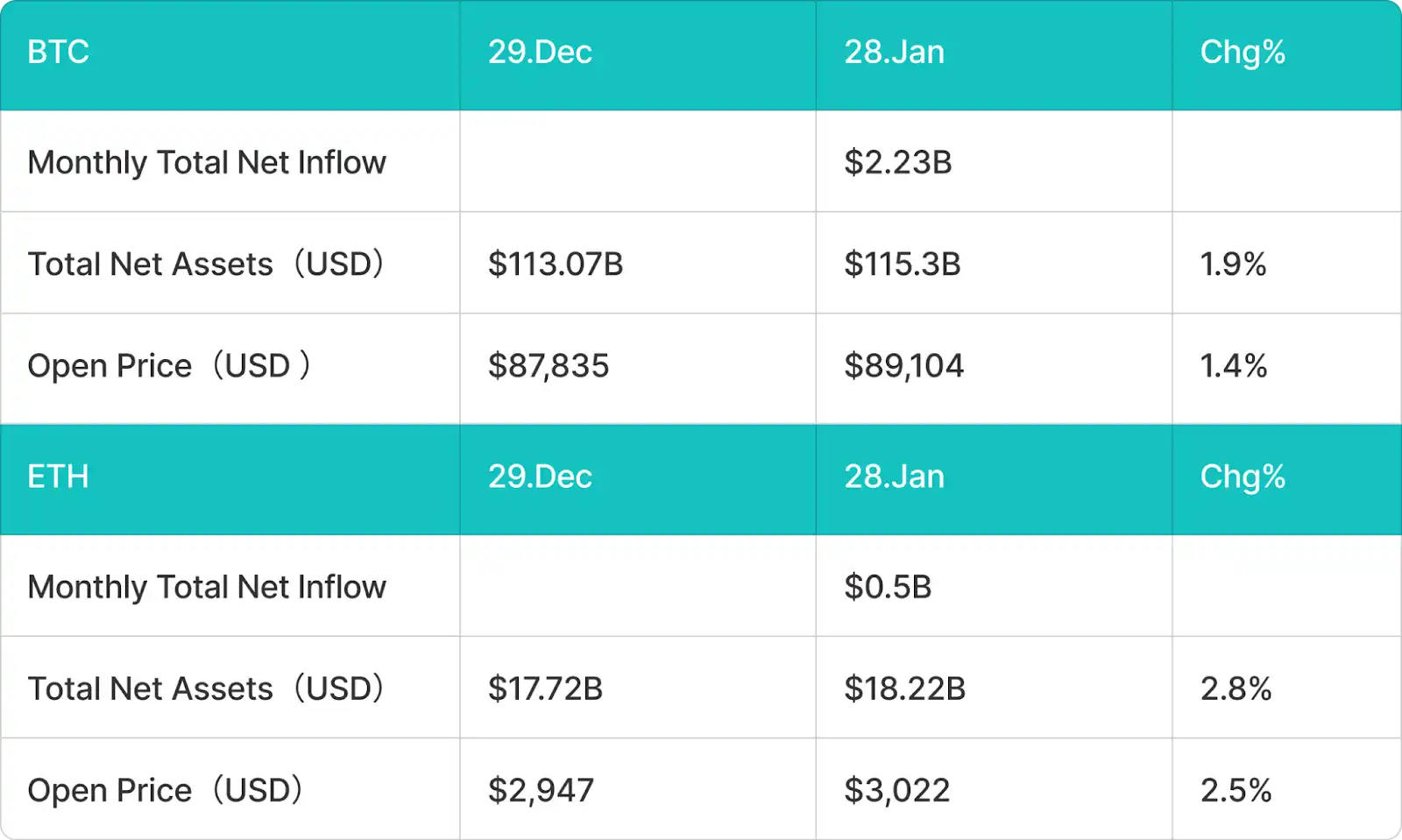
- In January, BTC and ETH spot ETFs saw net inflows of $2.23 billion and $500 million respectively, showing a recovery in institutional risk appetite and a rebound in allocation demand for mainstream assets. At the same time, the total circulation of stablecoins decreased slightly, but USDT remained stable. Some emerging stablecoins such as USD1 and USDE grew against the trend, reflecting a structural migration of funds in a存量 environment.
- Both BTC and ETH broke through key technical levels, with short-term momentum weakening. Any rebound is more likely to be a technical correction, with support levels to watch at $84,000 and $2,623 respectively. Although SOL found support near $117 and rebounded, it is still suppressed by moving averages. The overall pattern remains volatile and weak, and the risk of accelerated decline after losing support needs to be guarded against.
- This month, stablecoins and regulatory issues became the core focus of the market. World Liberty Financial advanced its application for a national trust bank charter, while the CLARITY Act made procedural progress in the Senate but with obvious partisan differences. Meanwhile, X's ban on InfoFi projects triggered a sector correction, indicating that platform incentives and traffic governance logic are undergoing structural changes. Technically, ERC-8004 was officially launched on the Ethereum mainnet and synergized with the x402 micropayment protocol, laying the foundation for the implementation of the decentralized AI agent economy.
1、Macro Perspective
Policy Direction
The Federal Reserve decided to keep interest rates unchanged (maintaining the 3.50%–3.75% range) in its January meeting, showing confidence in the current economy, while emphasizing that it will continue to adjust policies based on data. Although the market is highly speculative about whether there will be a rate cut in the future (some views expect a possible rate cut in M6–M9), the policy is cautiously steady in the short term, with no clear inclination towards a significant rate cut. Fed officials have repeatedly stated their insistence on monetary policy independence, suggesting that future chairs maintain this principle to prevent political interference in inflation and employment decisions.
U.S. Stock Market Trends
U.S. stocks generally showed a trend of fluctuating and rising at high levels in January. The S&P 500 index historically broke through the 7000-point mark, mainly driven by the AI sector, strong corporate profit expectations, and expectations of loose policies. Technology stocks led the gains, with heavyweights like Nvidia and Microsoft being the driving force. However, there are still short-term fluctuations and emotional divergence in the market, especially when news of geopolitical and bond market fluctuations emerges, posing a pullback risk, but the overall trend is still biased towards a bullish structure.
Inflation Data
The latest data shows that U.S. inflation has moderated but remains above the target: the CPI is about 2.6%–2.8% year-on-year, and the core CPI also remains at a moderate level. Short-term base effects and rental factors may lead to a month-on-month rebound, but the overall downward trend of inflation has not significantly changed. Structurally, tariffs and supply chain disruptions still have an impact on consumer prices, and inflation expectations may remain at a "new normal" of 2.5%–3% in the medium term.
Employment Data
Recent employment data presents a "highly contradictory" pattern: the growth of new non-farm employment was significantly lower than expected, while the unemployment rate remained relatively stable or even slightly decreased; wage growth is still higher than inflation, showing that companies are improving efficiency while marginally contracting labor demand. The overall job market remains resilient, but the growth of new jobs has slowed. Whether the labor market will continue to remain strong in the future is still a core variable for the Fed's policy considerations.
Political Factors
Political uncertainty continues to disturb the market. On the one hand, the game of selecting the Fed chairman and discussions around the independence of monetary policy have attracted market attention; on the other hand, the Trump administration's aggressive strategies on tariffs and trade policies have increased market volatility in the short term, but in the long run, it may turn to negotiation and compromise to ease market sentiment. The risk of a government shutdown is also seen as a potential short-term suppressant for the market.
Fiscal and External Risks
U.S. fiscal expansion and loose measures (such as the MBS purchase plan) have a positive effect on reducing actual financing costs and supporting the real estate market, while also potentially putting marginal upward pressure on the inflation center. In terms of external risks, U.S.-Europe trade frictions, geopolitical events (such as the topic of purchasing Greenland), and global bond market fluctuations are short-term potential risk points; abnormal fluctuations in the Japanese bond market and the yen also increase uncertainty in the global asset price transmission mechanism.
Next Month Outlook
Entering February, the market will closely watch the progress of trade negotiations, the results of government shutdown negotiations, the selection of the Fed chairman, and the upcoming PCE and labor data. Against the backdrop of relatively robust fundamental performance, U.S. stocks are expected to continue fluctuating and rising, but policy divergence and external risks may increase volatility. If inflation continues to hover in the 2.5%–3% range, it will open a window for a rate cut in the middle of the year, but policies will still be "data-driven, wait-and-see first" in the short term. Overall, it is recommended to focus on the profit of the technology sector and the AI growth logic, the safe-haven属性 of precious metals, and asset rotation opportunities driven by macro events.
2、Crypto Market Overview
Token Data Analysis
Trading Volume & Daily Growth Rate
According to CoinGecko data, as of January 28, the overall trading volume of the crypto market fluctuated significantly. The average daily trading volume during the month was roughly concentrated in the range of $110 billion to $160 billion. There were multiple short-term volume spikes during the period, but the increase in volume lacked sustainability and often quickly fell back in a short time, reflecting that the market has not yet formed a clear trend. From the trading structure, active trading was more driven by short-term funds and event-driven factors, rather than the continuous entry of medium- and long-term funds. Overall, the trading volume in January reflected a recovery in activity but with long-short divergence still existing. The market is more likely to maintain a range-bound fluctuation pattern.
Total Market Cap & Daily Growth
According to CoinGecko data, as of January 28, the overall market capitalization of the crypto market showed fluctuating characteristics. During the month, the total market cap mainly operated in the range of $3.00 trillion to $3.37 trillion, with relatively controllable overall amplitude. The gains and losses of most trading days remained around "±1%", with only阶段性 pullbacks or rebounds at individual points in time. After hitting a阶段性 high in the middle of the month, it failed to form an effective breakthrough and then fell back and entered a sideways consolidation. Overall, the performance of the total market cap in January reflects that the market has entered a relatively mature fluctuating stage, with balanced long and short forces, and is more likely to maintain a range-bound fluctuation pattern in the short term.
Popular New Tokens in January
Newly listed popular tokens in January are still dominated by VC-backed projects, with meme activity lacking sustainability. Among them, projects such as Brevis, Sentient, and Fogo performed prominently, with active trading volume after listing.
3、On-Chain Data Analysis
BTC, ETH ETF Inflow and Outflow Analysis
BTC Spot ETF Net Inflow of $2.23 Billion in January
This month, BTC spot ETFs saw a significant回流 of funds, with a net inflow of $2.23 billion in a single month, indicating a marginal improvement in institutional fund sentiment. The price of BTC rose slightly, with the opening price rising from $87,835 to $89,104 during the month, an increase of about 1.4%, driving the total asset scale of ETFs to rise同步. Total net assets increased from $113.07 billion to $115.3 billion, a month-on-month increase of 1.9%. After experiencing previous market fluctuations, overall risk appetite recovered somewhat in January, and funds重新 flowed back into Bitcoin-related allocation tools, reflecting that institutional recognition of BTC's medium- and long-term value has warmed up.
ETH Spot ETF Net Inflow of $500 Million in January
ETH spot ETFs recorded a温和 net inflow this month, with an inflow of about $500 million, indicating that the market's allocation demand for Ethereum assets is steadily recovering. The price of ETH rose from $2,947 to $3,022, an increase of about 2.5% during the month, driving the total assets of ETFs from $17.72 billion to $18.22 billion, a month-on-month increase of 2.8%. Compared with the previous period of fund outflows, ETH ETFs showed a trend of stabilization and recovery in January, indicating that institutional investors' confidence in the Ethereum ecosystem and medium- and long-term application prospects is gradually recovering.
Stablecoin Inflow and Outflow Analysis
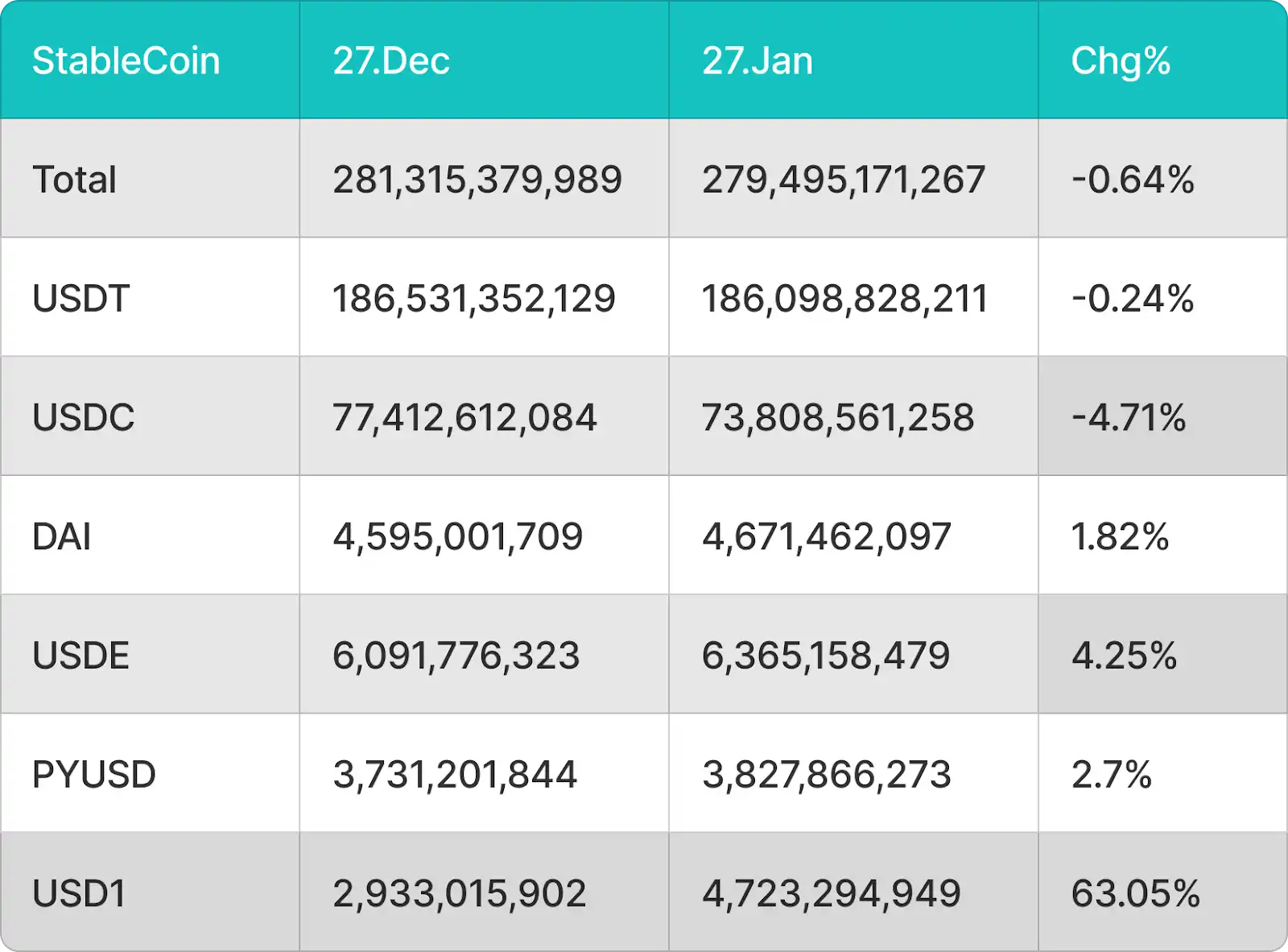
Total Stablecoin Circulation Decreased by $1.82 Billion in January
Affected by the structural adjustment of the overall crypto market, the inflow of incremental funds from the场外 continued to slow down, and the overall circulation of stablecoins decreased slightly, with the total scale dropping from about $281.3 billion to $279.5 billion, a month-on-month decrease of 0.64%. Among them, USDT remained relatively stable, with only a small outflow of 0.24%, showing that its market position as a core settlement and storage tool remains solid. USDC recorded a more obvious outflow, decreasing by about 4.71% in a single month, reflecting the migration of some funds from compliant stablecoins to other assets or on-chain scenarios.
At the same time, some non-mainstream or emerging stablecoins grew against the trend. USDE and DAI achieved slight expansions of 4.25% and 1.82% respectively, showing that the demand for specific mechanism-based stablecoins has recovered. PYUSD continued to maintain温和 growth, increasing by 2.7% month-on-month. It is worth noting that the circulation of USD1 increased significantly by 63.05% in a single month, becoming the fastest-growing stablecoin品种 this month, reflecting that market funds are migrating structurally to new stablecoin products in the context of存量 games.
4、Price Analysis of Mainstream Currencies
Bitcoin (BTC) Price Analysis
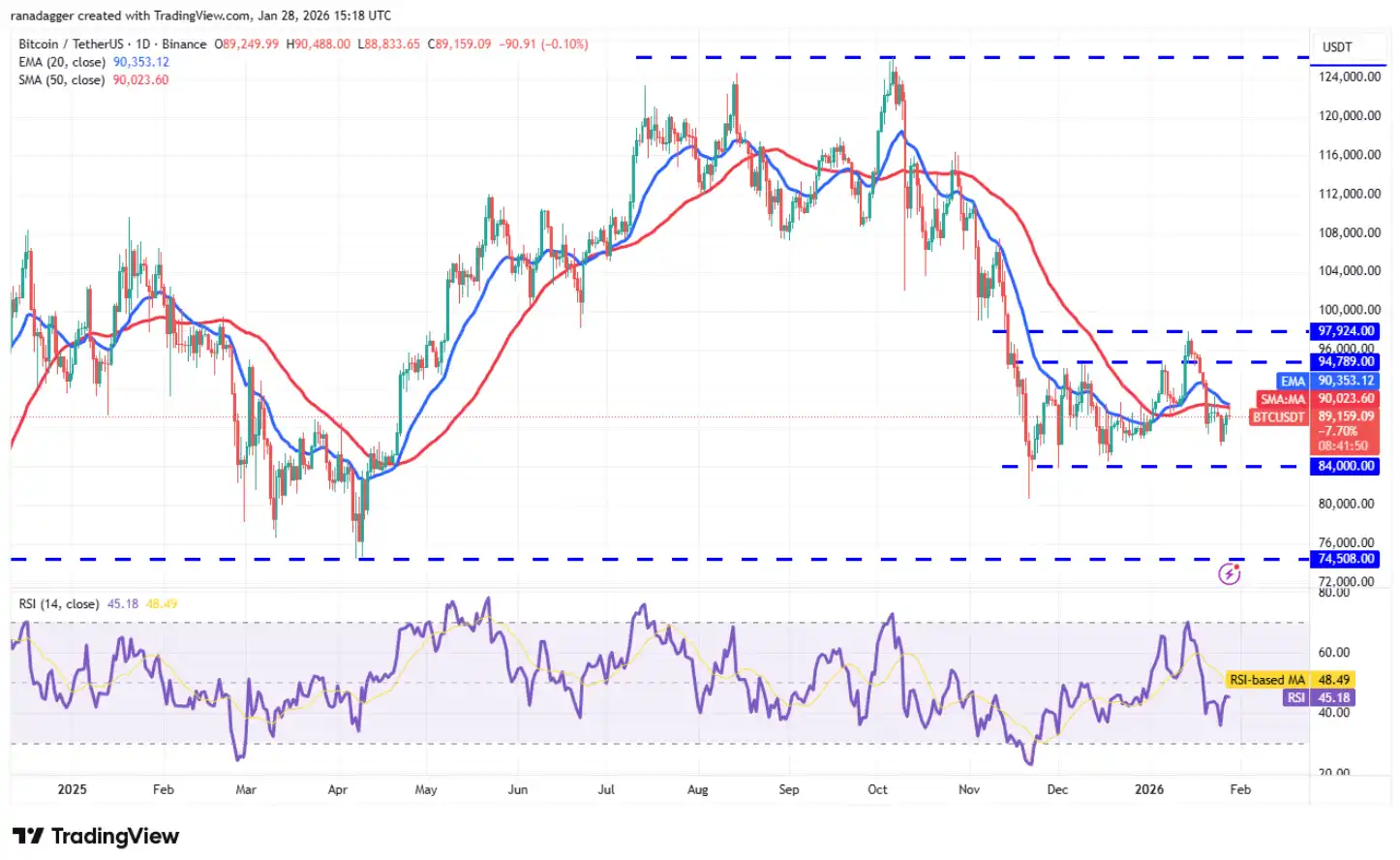
The price of Bitcoin fell back under pressure near the 20-day Exponential Moving Average (EMA, approximately $90,521) and effectively broke below the previous upward trend line, with the short-term structure turning from strong to weak.
From the perspective of trend and momentum indicators, the 20-day EMA has begun to flatten and show signs of turning downward, and the RSI is operating below the zero axis, indicating that market momentum is biased towards the short side, and short sellers are taking the initiative in short-term trading. At the current stage, any rebound is more likely to be regarded as a technical correction, and the price is expected to encounter continuous selling pressure in the moving average area.
In a bearish scenario, if BTC cannot quickly recover the moving average and falls back again, the first support level to watch is the $84,000 line. If this level is lost, the price may further探至 $80,600, and market sentiment may明显 turn weak. From a reverse scenario, if the Bitcoin price重新站上 the short- and medium-term moving averages and forms an effective breakthrough, it means that the short-side momentum has weakened, and the market is expected to turn strong again and test the key resistance area of $97,924.
Ethereum (ETH) Price Analysis
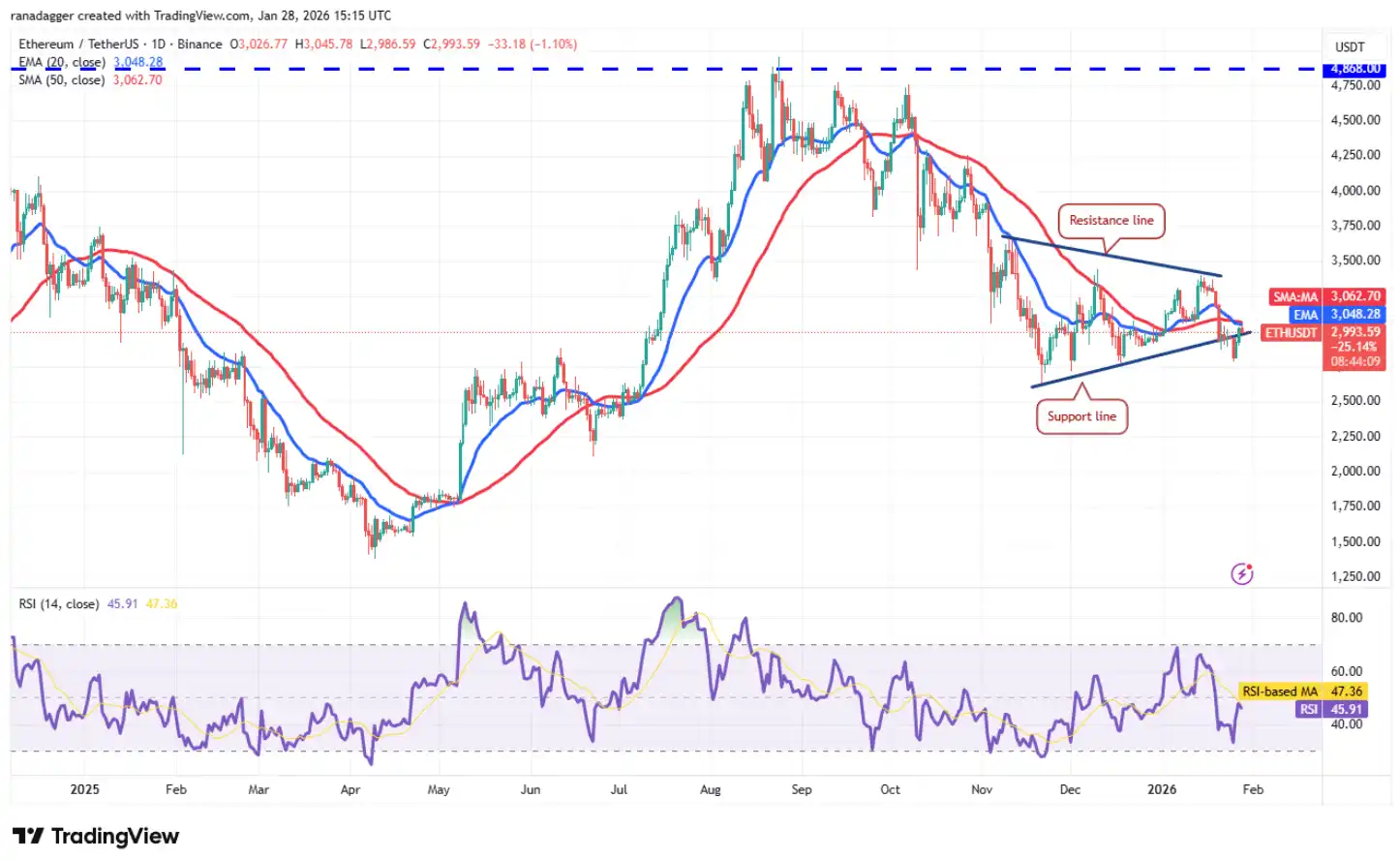
Ethereum was previously operating in a symmetrical triangle consolidation structure, but the price broke below the support line, breaking the original balance state, and the short-term trend is biased towards the short side.
In terms of technical形态, a break below the triangle usually means that the directional selection is completed. The current price is operating below the moving average, indicating limited rebound momentum. Bulls may try to push the price back into the triangle in the short term, but in the resistance area transformed by the moving average and previous support, it is expected to encounter obvious suppression from bears.
If ETH turns weak again during the rebound process, the下行 target for ETH/USDT will point to the $2,623 line, which will become a key node for the long-short game. On the other hand, if the price can quickly recover the moving average and重新回到 the triangle区间内 operation, then we need to be wary of the "false break" situation. At that time, ETH may experience an accelerated rebound and test the resistance area of the upper edge of the triangle.
Solana (SOL) Price Analysis
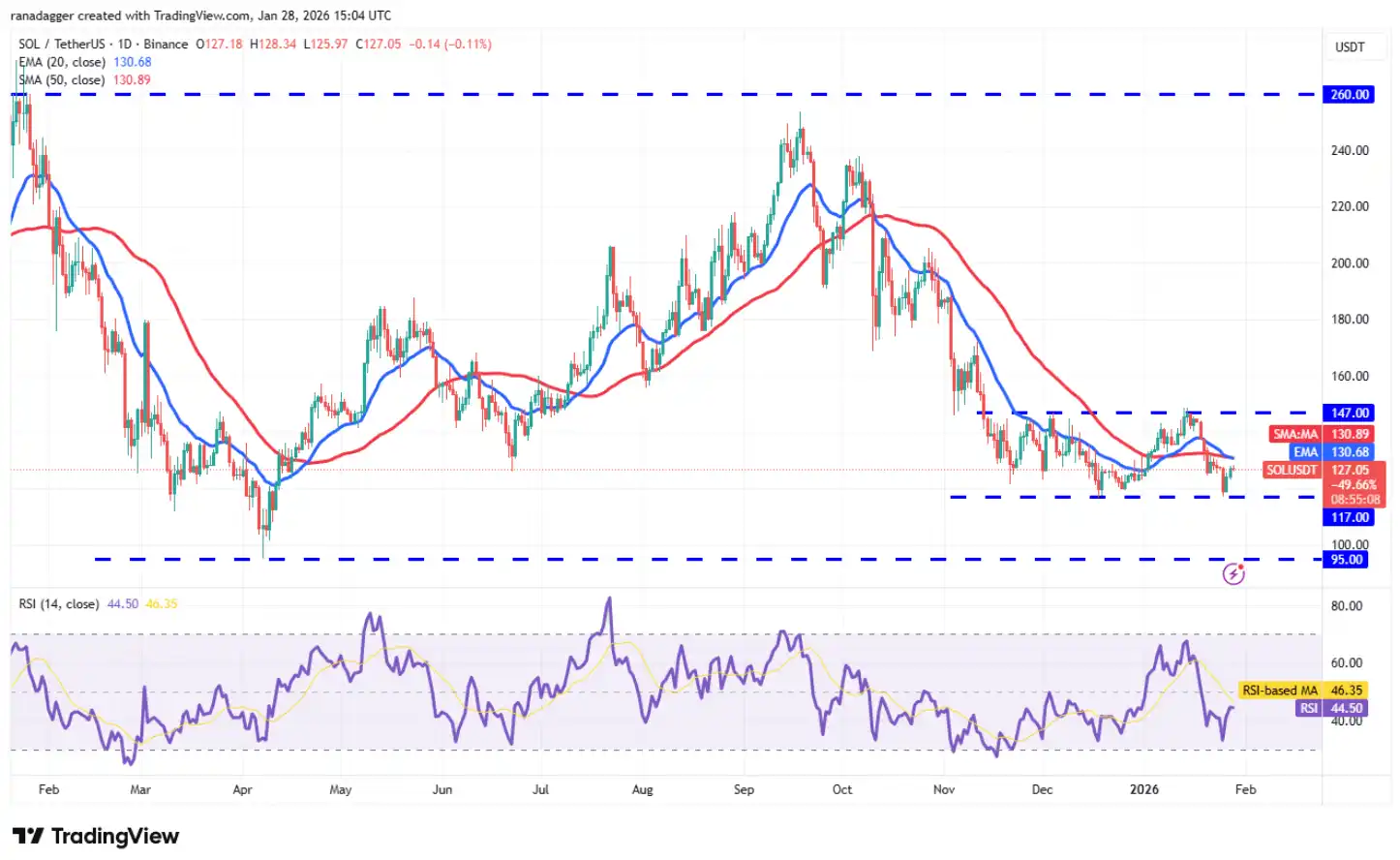
Solana found obvious support near $117 and launched a rebound, showing that there is certain medium-term buying承接 in this area, and the short-term structure has not completely deteriorated.
However, from a trend perspective, SOL is still operating below the main moving averages, and the current rebound is more偏向于 technical repair. The 20-day EMA above (approximately $131) will constitute the primary resistance. If the price encounters resistance and falls back in this area, we need to be警惕 of the risk of the downward trend continuing.
In a bearish scenario, once the $117 support is effectively broken, SOL/USDT may accelerate its decline to the strong support area near $95, at which time market volatility may明显放大. If the bulls can push the price to break through and stabilize above the moving average, it means that the downward momentum has significantly weakened, and SOL may重新 enter a range-bound fluctuation pattern, with the short-term operating range focusing on $117 to $147.
5、Hot Events of the Month
1. World Liberty Trust Applies to OCC for U.S. National Trust Bank Charter
This month, World Liberty Financial, through its subsidiary World Liberty Trust, submitted a de novo application to the U.S. Office of the Comptroller of the Currency (OCC) to establish a national trust bank for directly conducting the issuance, redemption, and digital asset custody business of the USD1 stablecoin. The current circulation of USD1 has exceeded $3.3 billion, and it plans to provide free withdrawal conversion between USD and USD1 at the time of launch, showing its attempt to expand the circulation and use scenarios of stablecoins with extremely low friction. This move marks that stablecoin issuers are further moving closer to the banking regulatory framework, and the product narrative has also shifted from "crypto asset tools" to "regulated digital dollar channels".
At the same time, relevant entities of World Liberty Financial have reached合作意向 with Pakistan, intending to incorporate USD1 into the regulated digital payment system for cross-border payments and settlement. This arrangement reflects the practical choice of emerging markets to优先 introduce dollar stablecoins to improve cross-border settlement efficiency and reduce dependence on traditional clearing systems under foreign exchange pressure and geopolitical financing constraints. Overall, if the charter application is approved, USD1 will obtain substantial expansion in terms of compliance framework, institutional access, and cross-border payment scenarios. Whether its risk control and compliance penetration capabilities can match the growth in circulation scale will become a key focus in the follow-up.
2. 《2025 Digital Asset Market Clarity Act》 Game Escalates, Senate Advances but Divisions Intensify
The 《2025 Digital Asset Market Clarity Act》(CLARITY Act, H.R. 3633) made key progress at the Senate level. The U.S. Senate Agriculture Committee formally advanced the legislative process of the bill with a partisan vote of 12–11. Committee Chairman, Republican John Boozman, said this was an important breakthrough after months of collaboration, "it's time to push the bill forward". Democratic core negotiator Corey Booker responded that although the progress is commendable, "there is still a lot of work to be done, and I hope to continue negotiations in the subsequent process".
However, the vote result was completely along party lines, lacking Democratic support, leaving the bill still facing major uncertainty before a full Senate vote. The current bill also needs to be reviewed by the Senate Banking Committee. The version of this committee has been slow to advance due to more controversial terms involving stablecoin收益, DeFi definition, and regulatory authority division. The White House plans to convene another coordination meeting next week to integrate the positions of the crypto industry, banking industry, both parties, and regulatory agencies. If the bill is finally passed by the Senate, it will be integrated with the version already passed by the House of Representatives with high votes, and then submitted to the president for signing into law.
The core goal of the bill is still to clarify the regulatory boundaries of the SEC and CFTC, provide a safe harbor for DeFi, and improve the stablecoin regulatory framework, complementing the already effective 《GENIUS Act》. The most controversial remains the限制条款 on stablecoin "passive income" (rewards obtained仅 by holding), while retaining the "active income" model linked to user on-chain behavior. Banking groups emphasize that passive income may impact the deposit base and financial stability, while the crypto industry, represented by Coinbase CEO Brian Armstrong, believes that excessive restrictions on income will weaken the competitiveness of U.S. stablecoins in the global market. Although the advancement of the Agriculture Committee this time is regarded as a procedural breakthrough, it further highlights the structural and long-term nature of the differences between the two parties.
3. X Bans InfoFi and Impact of New Algorithm Mechanism
This month, X systematically restricted multiple InfoFi projects, including banning accounts, reducing visibility, and cutting off some data interfaces, causing the InfoFi sector's market value to fall by about 11.5% in a single day, with KAITO falling more than 20% and COOKIE falling about 15%. The official made it clear that even if API fees are paid, such third-party forms will no longer be accepted, showing the platform's overall negation of the InfoFi mechanism.
InfoFi projects convert social behavior on X into tokenized收益 through external points, leaderboards and other mechanisms, which is essentially "attention mining". Such mechanisms guide user behavior away from the platform's native recommendation and incentive system. The platform bears the infrastructure cost, while the value of attention is captured by external protocols. X is currently accelerating the promotion of its own native creator incentive system (such as advertising revenue sharing and Grok rewards), hoping to重新掌控 incentive and traffic distribution rights. This month, X公开了 the core logic of its new recommendation algorithm, which is based on large models to predict user interaction probability,实现 "AI自主学习 user preferences", and reduces monopolistic exposure through an author diversity scorer. This algorithm mechanism emphasizes improving content relevance and author diversity, while weakening the impact of external intervention on the recommendation flow. In such an ecological strategy, the automated interaction and low-quality content created by the InfoFi mechanism are regarded as factors affecting user experience and recommendation quality. Therefore, this ban is not only a commercial rate dispute but also closely related to the adjustment of platform governance and algorithm recommendation strategies.
After being impacted, Kaito closed Yaps incentives and turned to cross-platform creator distribution and AI data analysis tools, and Cookie DAO focused on B-end data services. In the short term, the valuation logic of related tokens and community confidence are under pressure; in the medium to long term, whether InfoFi can transform from an attention incentive layer依附 on a single social platform into an independent data and analysis infrastructure is still full of uncertainty. Secondary market participants need to focus on on-chain indicators and strategic transformation, rather than social noise.
6、Next Month Outlook
1. Follow-up Progress of the 《2025 Digital Asset Market Clarity Act》
The CLARITY Act has completed the advancement process in the Senate Agriculture Committee, but due to the completely partisan vote and the slow review rhythm of the Banking Committee version, the bill still faces great resistance before full Senate passage. In the short term, the multi-party coordination meeting led by the White House will become a key variable determining the direction of the bill. If a compromise can be formed on the stablecoin income mechanism, DeFi definition, and regulatory authority division, the bill is still expected to make substantial breakthroughs within 2026; otherwise, the process may continue to spill over into 2027 and beyond.
From a market impact perspective, if the final version strictly restricts passive income, stablecoin projects will be forced to turn to active income models (such as lending, market making, liquidity mining, etc.), increasing user participation thresholds, and may抑制 the expansion speed of stablecoins in low-friction scenarios such as payment and storage. If market-based rewards are allowed to exist under a compliance framework, it will help accelerate the integration of blockchain and mainstream finance and enhance the global competitiveness of the U.S. stablecoin system, but on the premise of simultaneously strengthening reserve transparency, risk disclosure, and liquidity supervision to prevent hidden leverage and de-anchoring risks. Overall, the next quarter will become a key window period for whether the U.S. digital asset regulatory path turns to a "functional division of labor + risk分层 supervision" model. The result will directly affect the medium- and long-term structural evolution of stablecoins, DeFi, and the on-chain process of TradFi.
2. ERC-8004 Launch and x402 Synergy to Promote Ecological Development
After the ERC-8004 standard was officially deployed on the Ethereum mainnet on January 28, February will enter a key stage of actual ecological implementation. ERC-8004 and the x402 micropayment protocol launched by Coinbase complement each other: the former solves the decentralized identity, reputation, and verification mechanism of AI agents, and the latter provides it with HTTP-native stablecoin micropayment settlement capabilities, combining on-chain AI service discovery and value exchange, thus laying the foundation for the decentralized machine economy. Based on this combination, it is expected to promote autonomous Agents to conduct real value exchange in scenarios such as DeFi, data markets, and automated workflows, realizing the closed loop of "who can provide services, how to charge, and how to pay".
- Progress of the first batch of integration and pilot projects: such as infrastructure components围绕 x402 payment routers, micropayment tools, Agent management and operation platforms, etc., began to be deployed in test environments or early mainnets.
- Increased activity of developers and cross-protocol collaboration: As the standard stabilizes, more development teams, such as DayDreams system-like projects, try to integrate Agent identity, AP2 communication protocol, x402 payment, and ERC-8004 identity/reputation to form a complete commercial Agent stack.
- Infrastructure projects attract attention: Protocol layer ecology (e.g., payment Facilitator, x402 tool library, Agent operation monitoring platform, etc.) will出现 early user and developer feedback loops, which are crucial for measuring the performance and experience of the standard in real use.
In the short term, since the ecology is still in its early stages, the actual transaction volume and Agent registration growth of x402 and ERC-8004 may be small. However, with the maturity of developer tools, the improvement of infrastructure, and the growth of cross-chain Agent collaboration demand, this combination is expected to become the core technical path for building the next generation of decentralized AI service ecology.
3. World Liberty Trust Follow-up Outlook
With World Liberty Trust submitting an application to the OCC for a national trust bank charter, the compliance and institutional access prospects of USD1 will become clearer. If the charter is approved, USD1 can not only be legally issued, redeemed, and custodied under the U.S. federal regulatory framework, but may also become an emerging compliant digital dollar channel for institutional customers and cross-border payments. This will significantly improve the acceptance of USD1 in financial institutions, trading platforms, and corporate payment systems, enhancing market trust and circulation activity.
In the short term, it is expected that the use cases of USD1 will expand to more institutional payments and corporate cross-border settlements, especially in digital payment projects cooperating with regulatory authorities in emerging markets (such as Pakistan), further reflecting the advantages of dollar stablecoins in replacing traditional clearing systems and reducing cross-border transaction friction. At the same time, the dollar锚定属性 and "free withdrawal and exchange" mechanism may attract more individual and institutional users to participate, thereby promoting the growth of USD1 circulation and strengthening its position in the global payment ecosystem. However, it should be noted that charter approval is still uncertain, and complete implementation may take several months. Moreover, the stablecoin business must strictly comply with reserve management, monthly audits, anti-money laundering, and compliance penetration requirements. Whether the project's risk control and compliance capabilities can match the rapidly expanding market scale will become the key to the sustainable development of USD1. At the same time, changes in regulatory policies, the speed of cross-border cooperation advancement, and market competition pressure (such as other dollar stablecoins or central bank digital currencies) may also affect its expansion rhythm and market share.
Therefore, next month, it is necessary to focus on the OCC approval progress, implementation with Pakistan and other emerging markets, institutional access and user activity, and the project's risk control and compliance execution. These factors will directly determine the competitiveness and sustainable development potential of USD1 in global payments, institutional applications, and the stablecoin ecosystem.







