Bitcoin Weak and Volatile, Is a Big Fluctuation Coming?

深潮Xuất bản vào 2025-12-11Cập nhật gần nhất vào 2025-12-11

Tóm tắt

Bitcoin remains trapped in a structurally fragile range, with rising unrealized losses, elevated realized losses, and significant profit-taking by long-term holders. Despite persistent selling pressure, patient demand has anchored the price above the Realized Price (~$81.3K). A reclaim of the $95K level (0.75 cost basis quantile) and the Short-Term Holder cost basis (~$102.7K) is possible if seller exhaustion emerges. Off-chain conditions remain weak, with negative ETF flows, thin spot liquidity, and muted speculative interest in futures markets. Options markets show a defensive stance, with traders accumulating short-term implied volatility and demanding downside protection ahead of the FOMC meeting. Market stability relies on patient buyers absorbing sales, but the path forward depends on whether liquidity improves and sellers retreat, or if time-driven bearish pressure persists. Post-FOMC, implied volatility is expected to decay into year-end barring a hawkish surprise.

Written by: Chris Beamish, CryptoVizArt, Antoine Colpaert, Glassnode

Compiled by: AididiaoJP, Foresight News

Bitcoin remains trapped in a fragile range, with increasing unrealized losses, long-term holders selling, and persistently weak demand. ETFs and liquidity remain sluggish, futures markets are weak, and options traders are pricing in short-term volatility. The market is currently stable, but confidence is still lacking.

Summary

Bitcoin remains in a structurally fragile range, pressured by increasing unrealized losses, high realized losses, and significant profit-taking by long-term holders. Despite this, demand is anchoring the price above the true market mean.

The market has failed to reclaim key thresholds, particularly the short-term holder cost basis, reflecting continued selling pressure from recent high buyers and experienced holders. If signs of seller exhaustion emerge, a retest of these levels is possible in the short term.

Off-chain indicators remain weak. ETF flows are negative, spot liquidity is thin, futures open interest shows a lack of speculative confidence, making prices more sensitive to macro catalysts.

The options market shows a defensive setup, with traders buying short-term implied volatility (IV) and consistently showing demand for downside protection. Volatility surface signals indicate short-term caution, but longer-term sentiment is more balanced.

With the FOMC meeting as the last major catalyst of the year, implied volatility is expected to gradually decay in late December. Market direction depends on whether liquidity improves and sellers step back, or whether the current time-driven bearish pressure persists.

On-Chain Insights

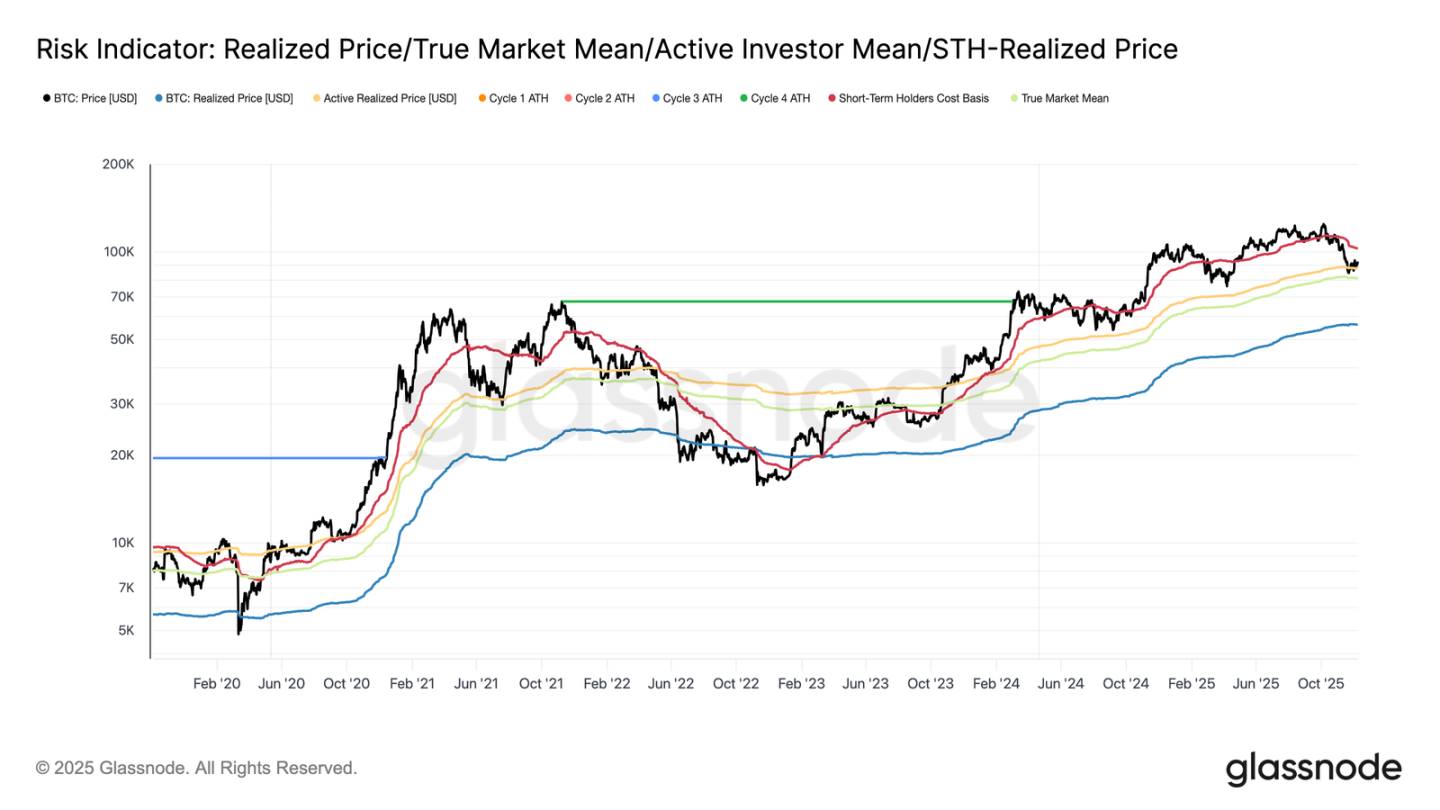
Bitcoin entered the week still confined to a structurally fragile range, bounded above by the short-term holder cost basis ($102.7k) and below by the true market mean ($81.3k). Last week, we highlighted weakening on-chain conditions, thin demand, and a cautious derivatives landscape, collectively echoing the market setup of early 2022.

Although the price barely holds above the true market mean, unrealized losses continue to expand, realized losses are rising, and spending by long-term investors remains elevated. The key ceiling to reclaim is the 0.75 cost basis quantile ($95k), followed by the short-term holder cost basis. Until then, barring a new macro shock, the true market mean remains the most likely area for bottom formation.
Time is Not on the Bulls' Side

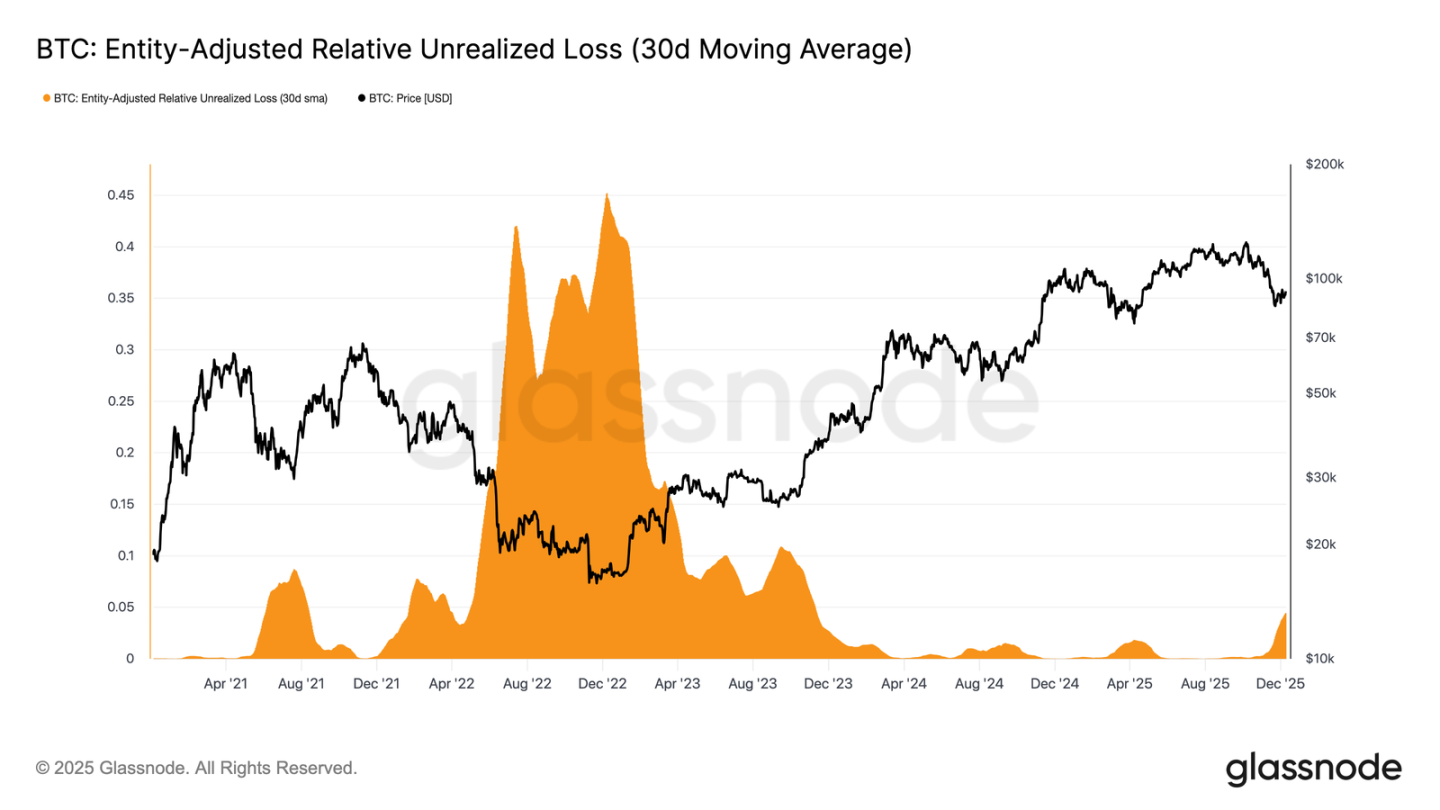
The market is stuck in a mild bearish phase, reflecting the tension between modest capital inflows and persistent selling pressure from high buyers. As the market drifts in a weak but bounded range, time becomes a negative force, making it harder for investors to bear unrealized losses and increasing the likelihood of realizing losses.

The Relative Unrealized Loss (30-day SMA) has climbed to 4.4%, after staying below 2% for nearly two years, marking a shift from a phase of euphoria to one of increased stress and uncertainty. This indecision currently defines this price range, and resolving it will require a new wave of liquidity and demand to rebuild confidence.
Losses Mounting

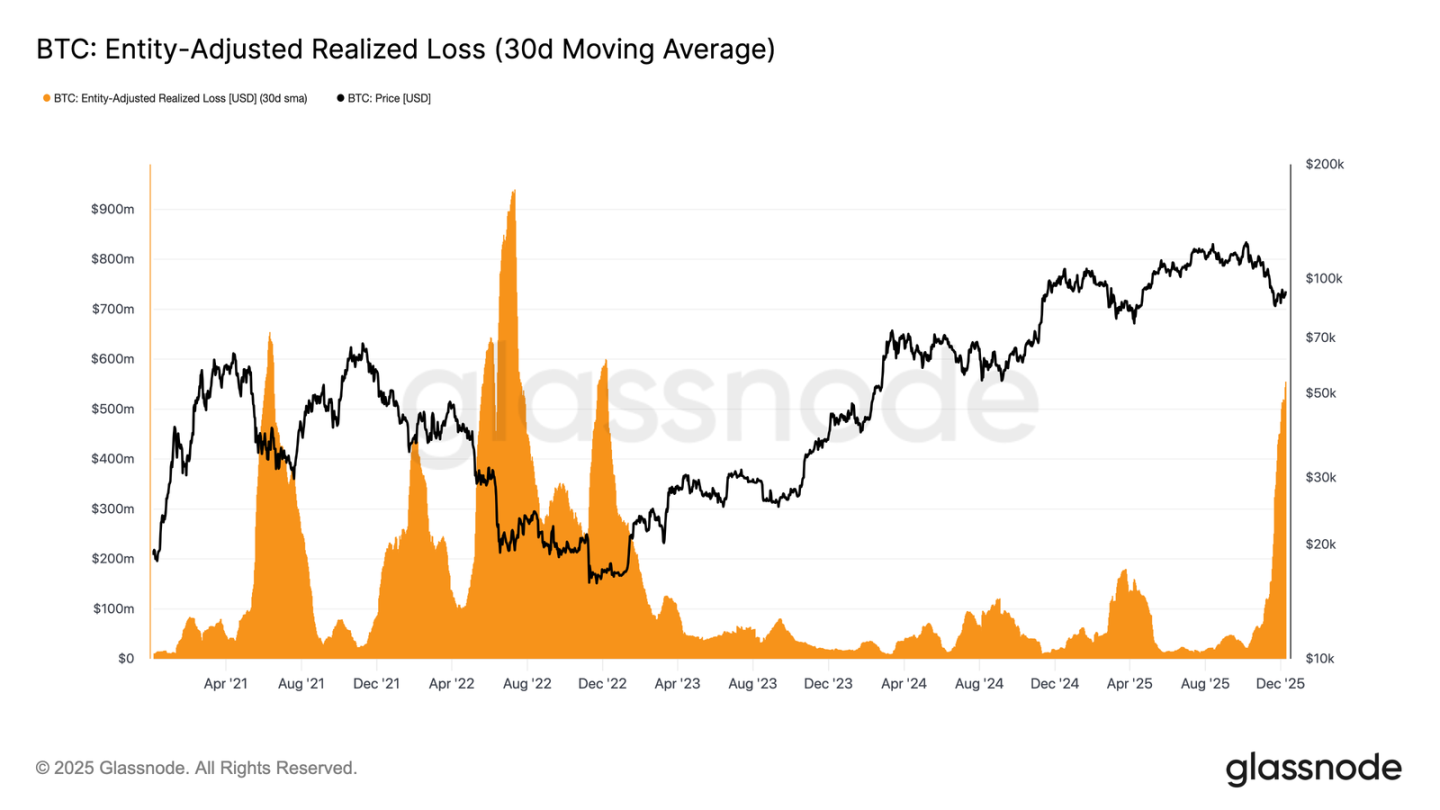
This time-driven pressure is even more evident in spending behavior. Although Bitcoin has rebounded from the November 22nd low to around $92.7k, the Entity-Adjusted Realized Loss (30-day SMA) has continued to climb, reaching $555 million per day, the highest level since the FTX collapse.

Such high realized losses during a modest price recovery reflect the growing frustration of high buyers, who are choosing to capitulate as the market strengthens rather than holding through the rebound.
Hindering a Reversal

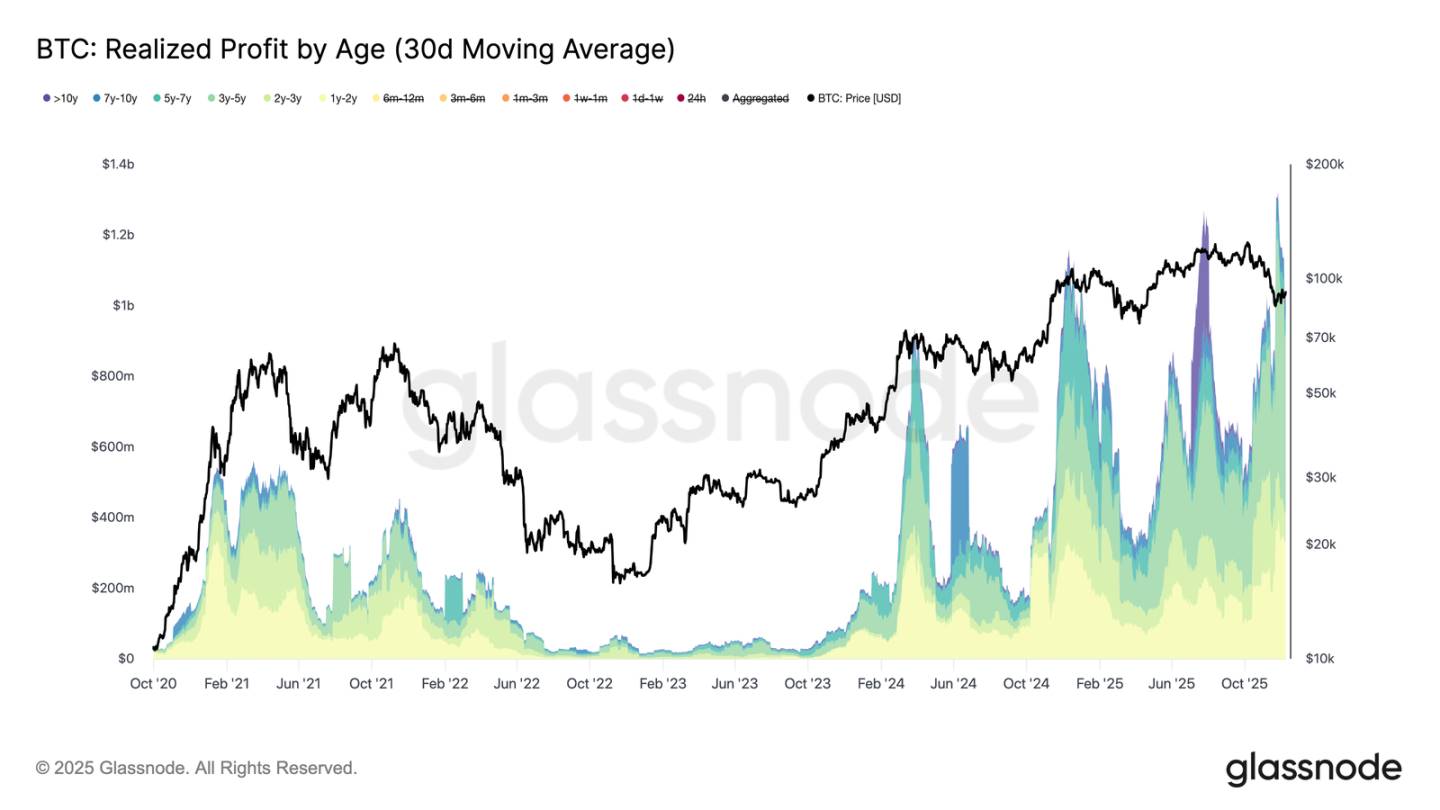
Rising realized losses further hinder recovery, especially when they coincide with a surge in realized profits from veteran investors. During the recent rebound, realized profits for holders over 1 year (30-day SMA) exceeded $1 billion per day, peaking at over $1.3 billion near the new all-time high. The combination of high buyer capitulation and substantial profit-taking by long-term holders explains why the market is still struggling to reclaim the short-term holder cost basis.

However, despite such significant selling pressure, the price has stabilized and even slightly recovered above the true market mean, suggesting that sustained and patient demand is absorbing the sell-off. In the short term, if sellers begin to show signs of exhaustion, this underlying buying pressure could drive a retest of the 0.75 quantile (~$95k) and even the short-term holder cost basis.
Off-Chain Insights

ETF Woes

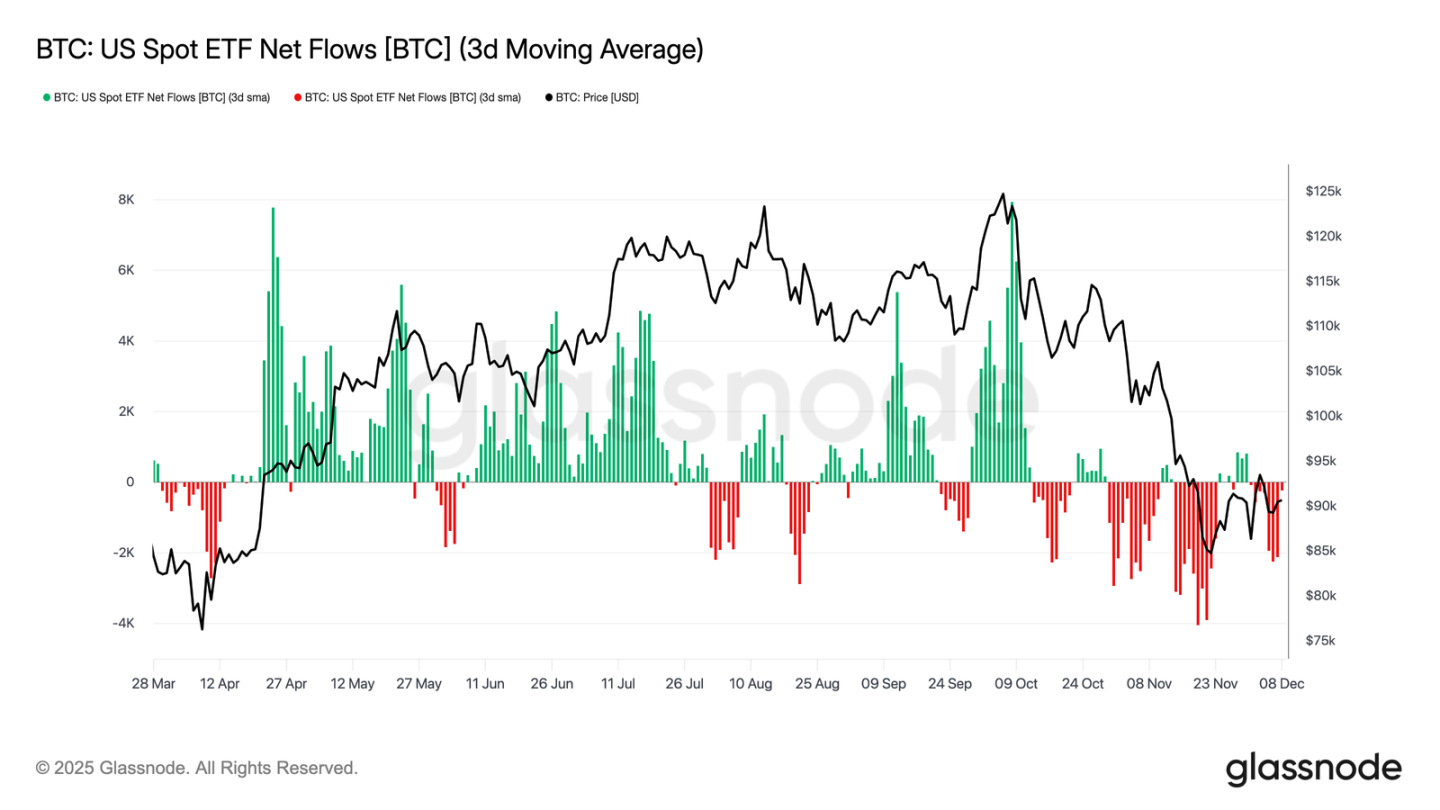
Turning to the spot market, U.S. Bitcoin ETFs had another quiet week, with the three-day average net inflows remaining negative. This continues the cooling trend that began in late November, marking a clear departure from the strong inflow regime that supported price appreciation earlier this year. Redemptions from several major issuers remained steady, highlighting a more risk-off stance from institutional allocators amid a shaky broader market environment.

As a result, the demand buffer in the spot market has thinned, reducing immediate buyer support and leaving prices more vulnerable to macro catalysts and volatility shocks.
Liquidity Remains Subdued

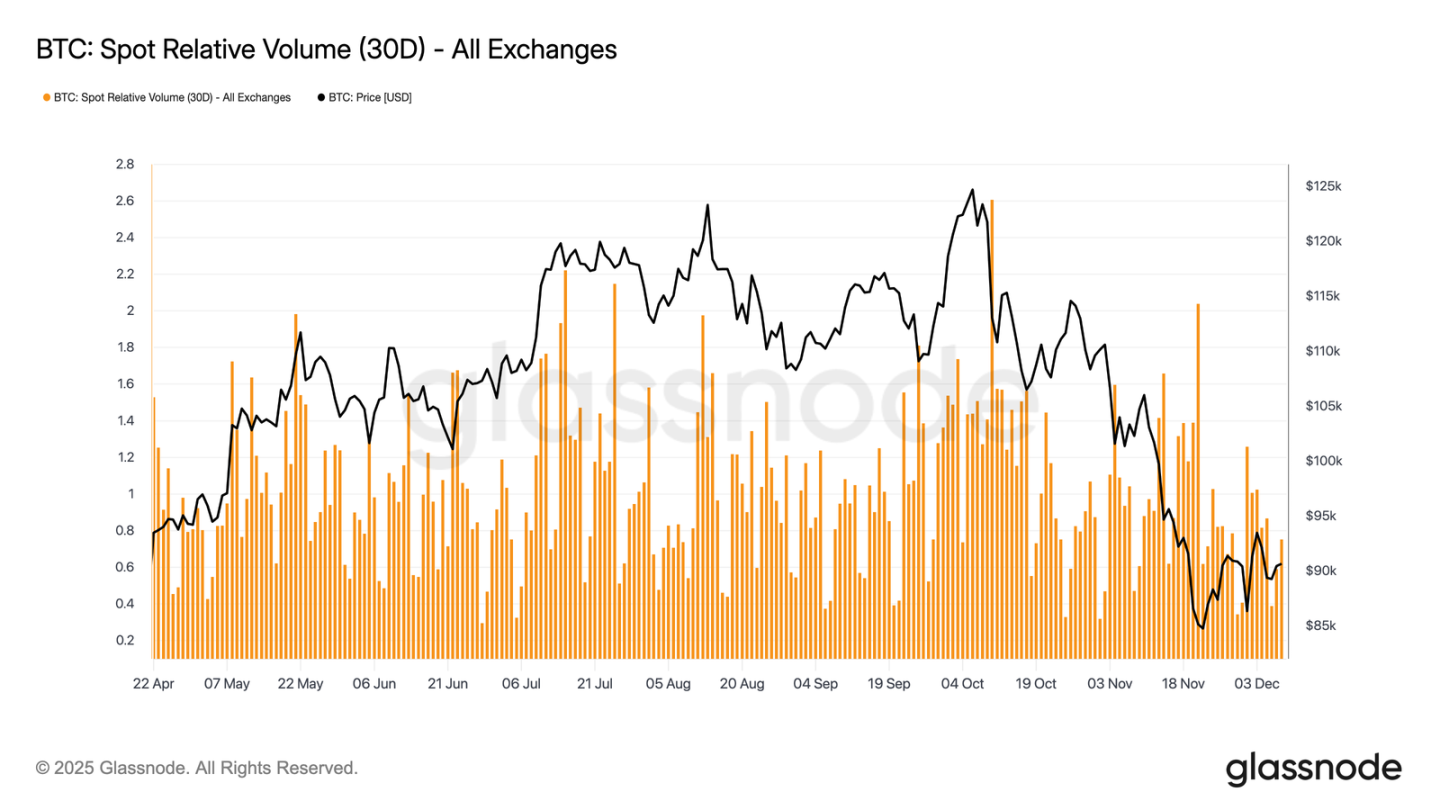
Parallel to weak ETF flows, Bitcoin's spot relative volume continues to hover near the lower end of its 30-day range. Trading activity has weakened persistently from November into December, reflecting both price declines and reduced market participation. The contraction in volume reflects a more defensive positioning overall, with fewer liquidity-driven flows available to absorb volatility or sustain directional moves.

With spot markets quieting down, attention now turns to the upcoming FOMC meeting, which could serve as a catalyst to reactivate market participation depending on its policy tone.
Futures Market Muted

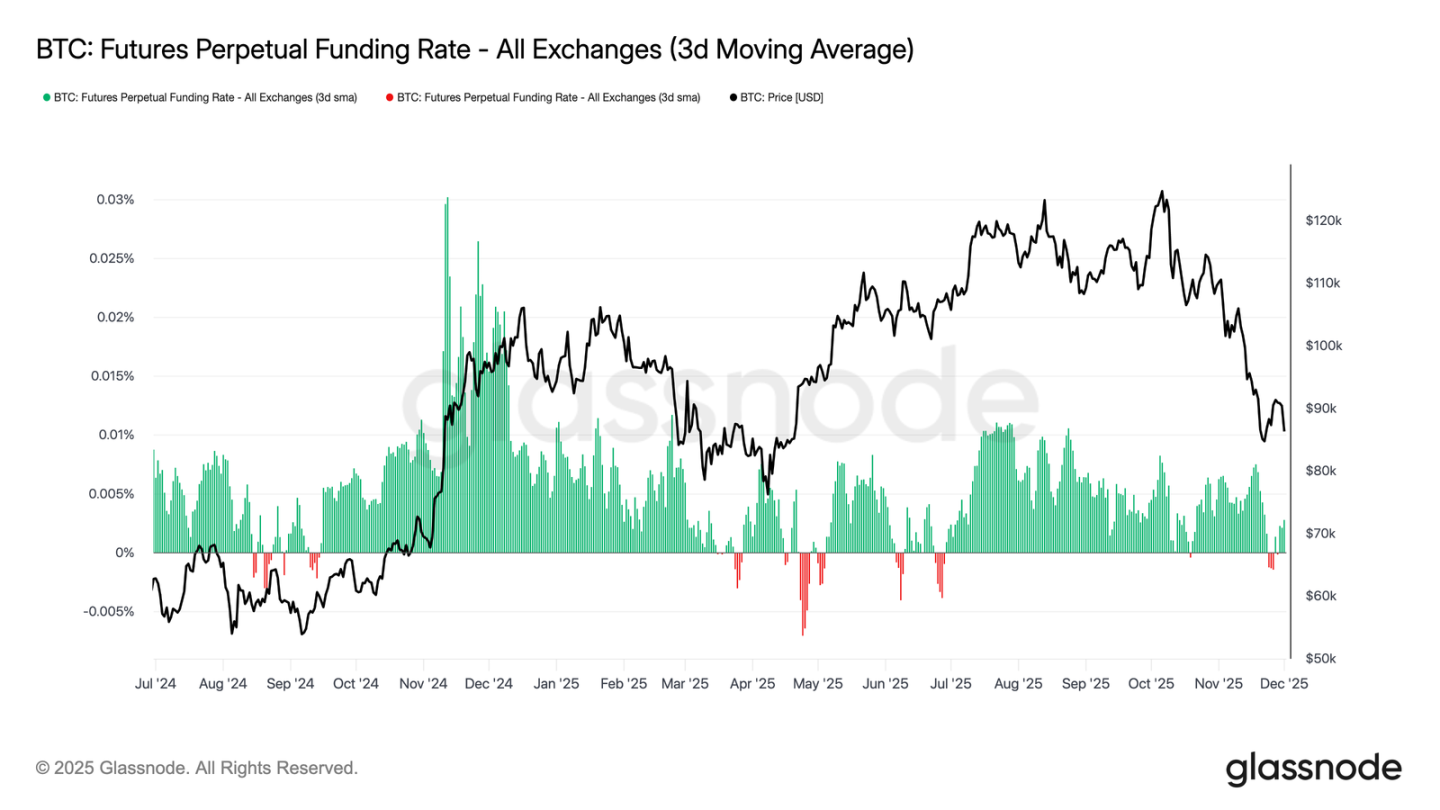
Continuing the theme of subdued market participation, the futures market also shows limited interest in leverage, with open interest failing to rebuild substantially and funding rates holding near neutral. These dynamics highlight a derivatives environment defined by caution rather than confidence.

In the perpetual swap markets, funding rates hovered around zero to slightly negative this week, highlighting the continued exodus of speculative long positions. Traders maintain balanced or defensive postures, applying little directional pressure via leverage.

With derivative activity muted, price discovery leans more on spot flows and macro catalysts rather than speculative expansion.
Short-Term Implied Volatility Spikes

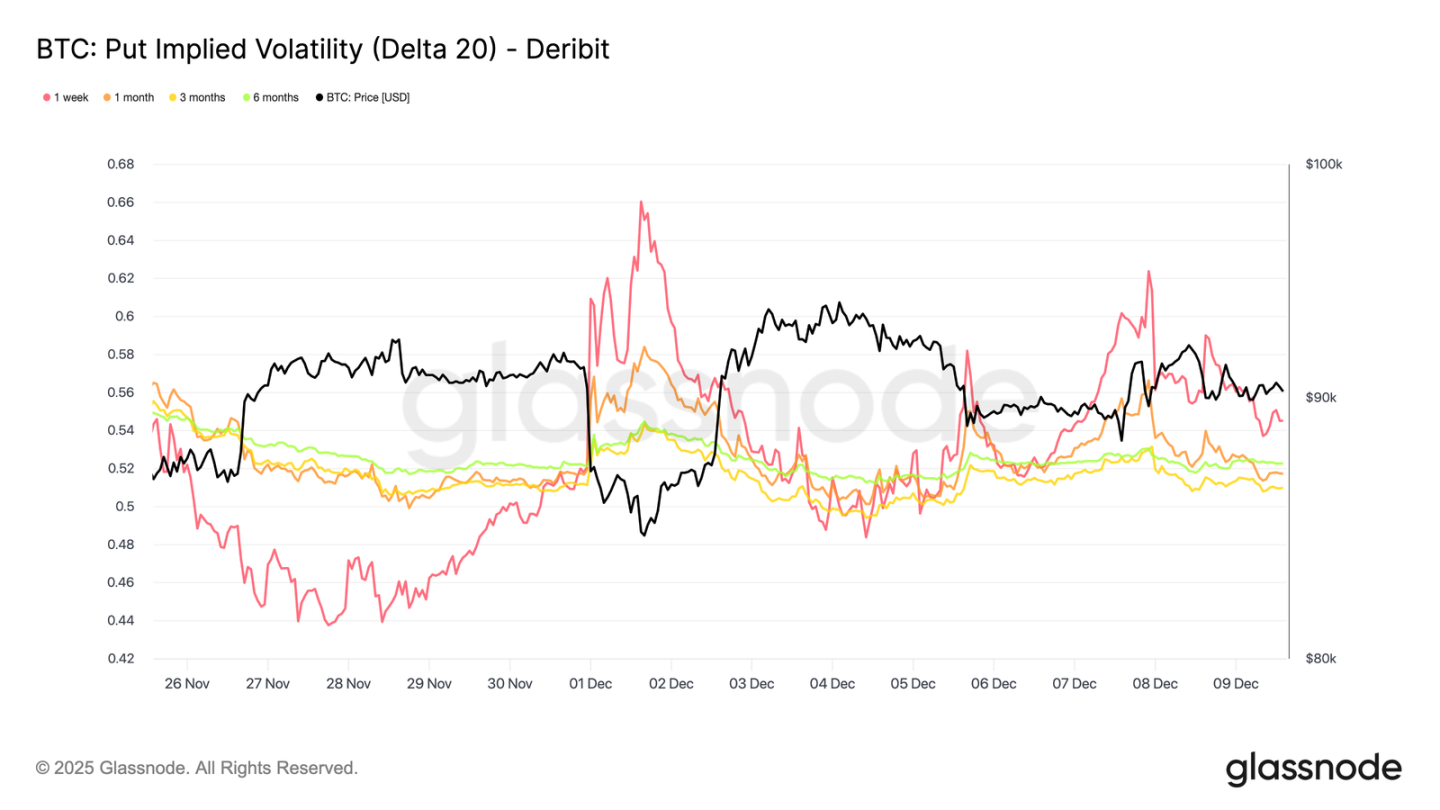
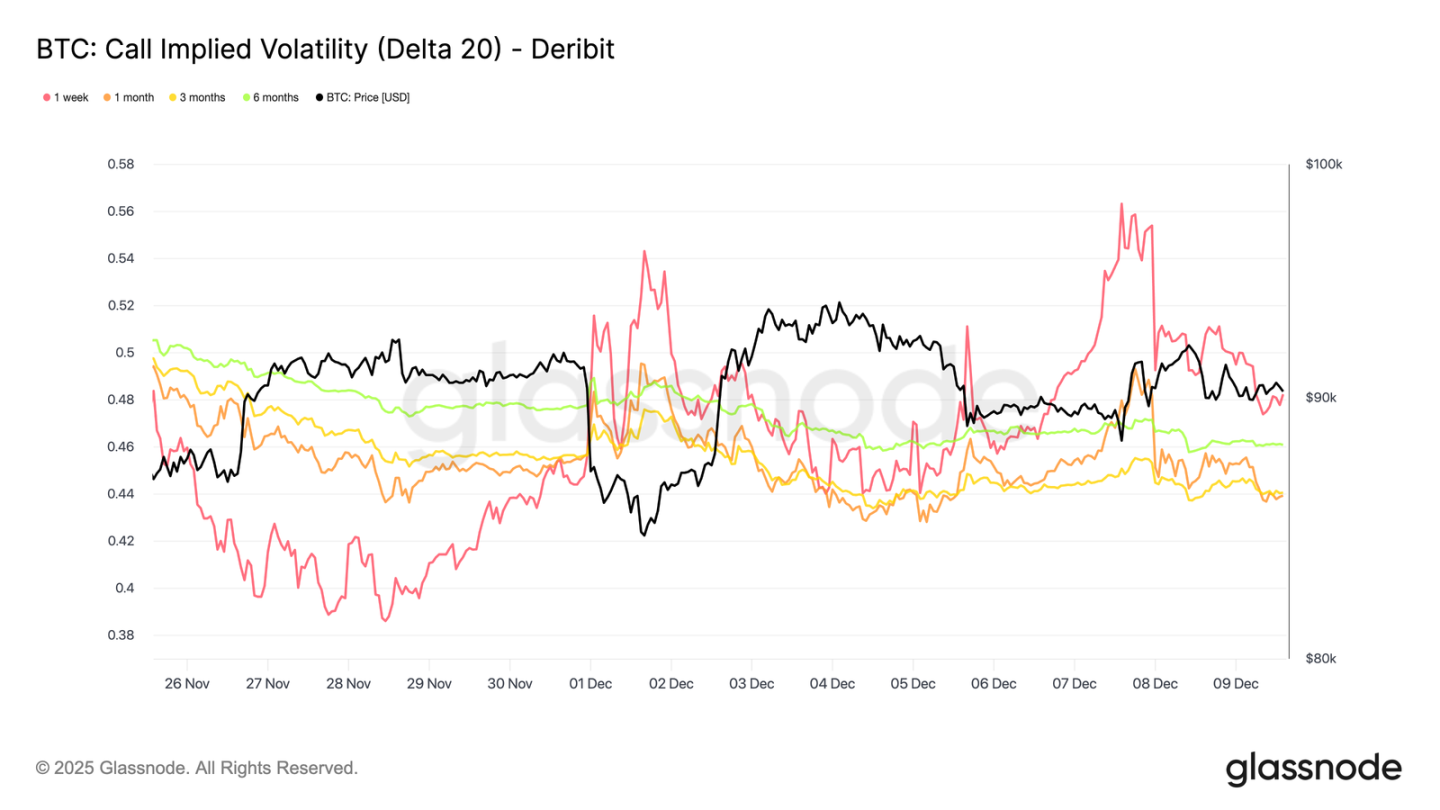
Turning to the options market, Bitcoin's flat spot activity contrasts with a sudden rise in short-term implied volatility, as traders position for larger price moves. Interpolated Implied Volatility (which estimates IV using fixed delta values rather than relying on listed strikes) provides a clearer view of how risk is priced across maturities.

On 20-Delta calls, 1-week IV rose by about 10 volatility points compared to last week, while longer tenors remained relatively flat. The same pattern appears on 20-Delta puts, with short-term downside IV rising while longer tenors stay calm.

Overall, traders are accumulating volatility where they expect stress, favoring convexity over selling into the December 10th FOMC meeting.
Downside Demand Returns

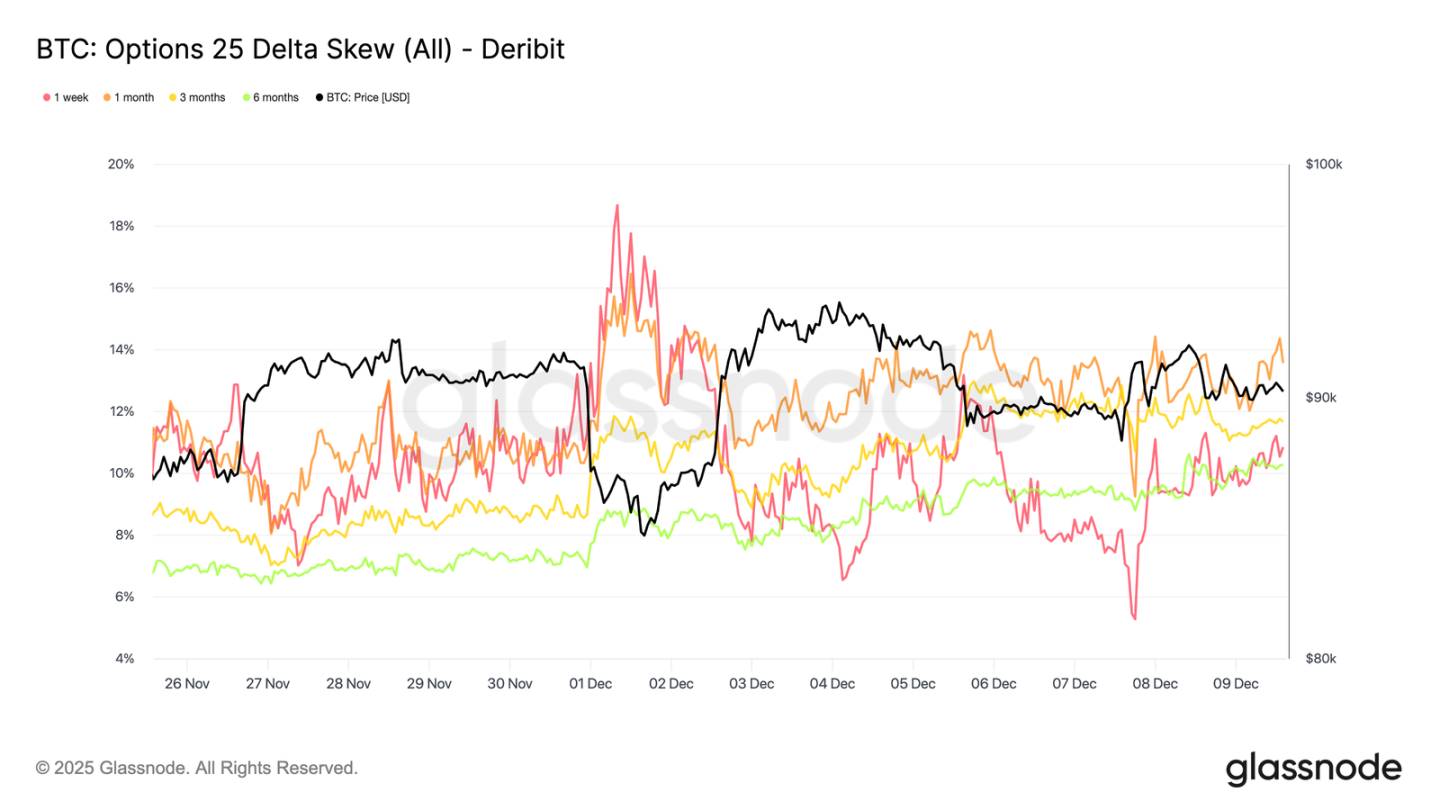
Accompanying the rise in short-term volatility, downside protection is again commanding a premium. The 25-delta skew, which measures the relative cost of puts versus calls at the same delta value, has climbed to around 11% for the 1-week tenor, indicating a clear increase in demand for short-term downside insurance ahead of the FOMC.

Skew remains tightly clustered across tenors, ranging from 10.3% to 13.6%. This compression suggests that the preference for put protection is curve-wide, reflecting a consistent risk-off tilt rather than isolated pressure at the short end.
Volatility Accumulation

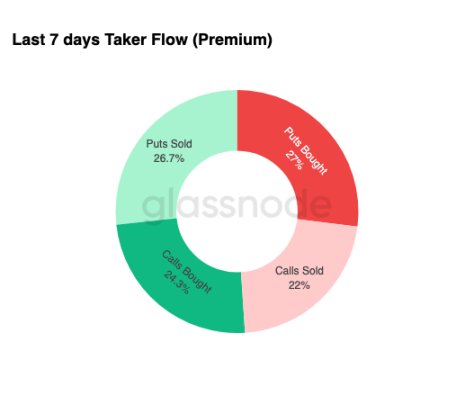
Summarizing the options market conditions, weekly flow data reinforces a clear pattern: traders are buying volatility, not selling it. Paid option premiums dominate the total notional flow, with puts slightly leading. This does not reflect a directional bias, but a state of volatility accumulation. When traders buy both sides, it signals hedging and convexity-seeking behavior, not sentiment-based speculation.

Coupled with rising implied volatility and a downside-leaning skew, the flow picture suggests market participants are preparing for a volatility event with a downward bias.
Post-FOMC

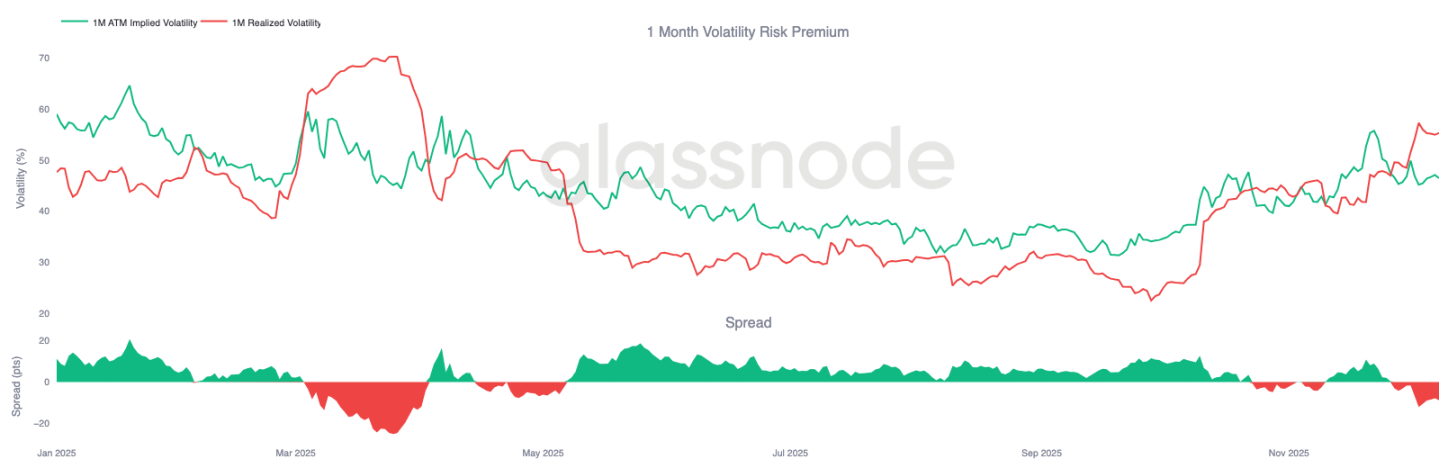
Looking ahead, implied volatility has already begun to ease, and historically, IV tends to compress further once the last major macro event of the year passes. With the December 10th FOMC meeting as the last meaningful catalyst, the market is preparing to transition into a low-liquidity, mean-reverting environment.

Post-announcement, sellers typically re-enter the market, accelerating IV decay into year-end. Barring a hawkish surprise or a significant shift in guidance, the path of least resistance points to lower implied volatility and a flatter volatility surface persisting into late December.
Conclusion

Bitcoin continues to trade in a structurally fragile environment, with rising unrealized losses, high realized losses, and substantial profit-taking by long-term holders collectively anchoring price action. Despite persistent selling pressure, demand remains resilient enough to hold price above the true market mean, suggesting patient buyers are still absorbing the sell-off. If signs of seller exhaustion begin to emerge, a near-term push toward $95k and the short-term holder cost basis remains possible.

Off-chain conditions echo this cautious tone. ETF flows remain negative, spot liquidity is subdued, and futures markets lack speculative participation. The options market reinforces the defensive posture, with traders accumulating volatility, buying short-term downside protection, and positioning for a near-term volatility event ahead of the FOMC.

Taken together, the market structure suggests a weak but stable range, underpinned by patient demand but constrained by persistent selling pressure. The near-term path depends on whether liquidity improves and sellers step back, while the longer-term outlook hinges on the market's ability to reclaim key cost basis thresholds and move beyond this time-driven, psychologically taxing phase.


Câu hỏi Liên quan

QWhat are the key factors contributing to Bitcoin's current structurally fragile trading range according to the article?

ABitcoin is trapped in a fragile range due to increasing unrealized losses, elevated realized losses, and significant profit-taking by long-term holders, while demand remains weak and fails to reclaim key thresholds like the short-term holder cost basis.

QHow are ETF flows and liquidity conditions affecting the Bitcoin market as described in the article?

AETF flows have turned negative, and spot liquidity remains thin, reducing immediate buyer support and making prices more vulnerable to macro catalysts and volatility shocks.

QWhat does the options market indicate about trader expectations for Bitcoin's near-term price movement?

AOptions traders are pricing in short-term volatility, buying short-dated implied volatility and showing increased demand for downside protection, particularly around the FOMC meeting, indicating defensive positioning and anticipation of potential price swings.

QWhy is time described as a negative force for Bitcoin bulls in the current market environment?

ATime is negative for bulls because prolonged consolidation in a weak range increases pressure on investors with unrealized losses, making them more likely to capitulate and realize losses, which hinders price recovery.

QWhat potential catalyst could trigger a change in market dynamics, and what is the expected outcome post-FOMC?

AThe FOMC meeting is seen as the last major catalyst for the year. If there are no hawkish surprises, implied volatility is expected to decay into year-end, with markets transitioning to a low-liquidity, mean-reverting environment unless liquidity improves or selling pressure subsides.

Nội dung Liên quan

Bản tin buổi sáng | BitMine bổ sung 126.971 ETH trong tuần trước; Nhà giao dịch Eugene tuyên bố rút khỏi thị trường crypto

Tóm tắt tin tức chính: **Thông tin quan trọng:** * Giao dịch viên Eugene tuyên bố rút khỏi thị trường tiền mã hóa, cho rằng cơ hội từ cổ phiếu vượt xa. * Cầu nối chuỗi chéo Syscoin bị tấn công, liên quan khoảng 50 tỷ SYS, dịch vụ bridge đã tạm dừng. * Moonshot AI tìm kiếm vòng gọi vốn mới lên tới 20 tỷ USD, nhắm mức định giá 300 tỷ USD. * BitMine mua thêm 126,971 ETH trong tuần trước, nâng tổng nắm giữ lên 5.54 triệu ETH (đạt 92% mục tiêu nắm giữ 5% tổng cung). * Revolut lên kế hoạch bán cổ phần thứ cấp với định giá khoảng 1150 tỷ USD. * Chiến lược trả cổ tức STRC được phê duyệt chuyển từ hàng tháng sang nửa tháng, lần đầu vào 15/7. **Sự kiện 24h qua:** * **Strategy:** Cổ đông phê duyệt việc trả cổ tức STRC hai lần mỗi tháng. Công ty cũng mua thêm 1,550 BTC với giá 101.3 triệu USD trong tuần. * **SBF:** Người sáng lập FTX, Sam Bankman-Fried, đã chính thức nộp đơn xin ân xá tổng thống. * **Revolut:** Lên kế hoạch bán cổ phần thứ cấp với định giá 1150 tỷ USD, cho phép nhà đầu tư và nhân viên sớm thoát vốn. * **BitMine:** Tăng mua mạnh ETH, coi đây là cơ hội khi giá điều chỉnh không phản ánh cải thiện cơ bản của Ethereum. Hơn 85% ETH nắm giữ đang được stake. * **Đơn xin ân xá của SBF:** Đã được nộp chính thức, mặc dù Tổng thống Trump trước đó bày tỏ không có ý định ân xá. **Xu hướng Meme Coin (24h):** * **ETH:** HEX, SHIB, LINK, PEPE, mUSD. * **Solana:** TROLL, WORLDCUP, neet, Buttcoin, PBTC. * **Base:** toby, ELSA, SKI, cbETH, CYPR. **Bài viết đáng đọc:** Thảo luận về "thị trường đuôi cá" (fish tail market) - giai đoạn cuối của một xu hướng tăng thường biến động mạnh và rủi ro cao, và câu hỏi giá trị sẽ được nắm giữ ở tầng nào trong hệ thống khi tài nguyên suy luận AI (AI inference) trở nên khan hiếm.

链捕手17 phút trước

Bản tin buổi sáng | BitMine bổ sung 126.971 ETH trong tuần trước; Nhà giao dịch Eugene tuyên bố rút khỏi thị trường crypto

链捕手17 phút trước

Michael Saylor: Ai Đang Định Nghĩa Linh Hồn Của Bitcoin?

Michael Saylor định nghĩa bốn hệ tư tưởng chính trong cộng đồng Bitcoin, mỗi nhóm có trọng tâm và đóng góp riêng cho tương lai của mạng lưới: 1. Người theo chủ nghĩa tối đa Bitcoin: Xem Bitcoin là mạng lưới tiền tệ kỹ thuật số thống trị, một đột phá đạo đức và kinh tế mang lại quyền sở hữu tài sản vượt trội và chống lại lạm phát. 2. Người theo chủ nghĩa tư bản Bitcoin: Tin rằng Bitcoin cần tích hợp sâu với nền kinh tế toàn cầu (thông qua doanh nghiệp, ngân hàng, thị trường vốn) để phát huy toàn bộ tiềm năng như một dạng vốn kỹ thuật số. 3. Người theo chủ nghĩa kỹ thuật Bitcoin: Nhấn mạnh việc cải tiến liên tục giao thức cơ bản để nâng cao khả năng mở rộng, quyền riêng tư, bảo mật và chức năng, đáp ứng nhu cầu và mối đe dọa mới. 4. Người theo chủ nghĩa nguyên tắc Bitcoin: Tập trung bảo vệ các nguyên tắc cốt lõi như tự lưu ký, chạy node cá nhân, phi tập trung, bất biến và sử dụng Bitcoin như tiền tệ, chống lại sự tha hóa hoặc thỏa hiệp. Bài viết kết luận rằng tương lai bền vững của Bitcoin cần sự cân bằng giữa cả bốn quan điểm: giữ vững niềm tin, thúc đẩy áp dụng, đổi mới có trách nhiệm và bảo vệ các nguyên tắc nền tảng. Con đường phát triển mạnh mẽ nhất là mở rộng có kỷ luật, với phần lớn đổi mới diễn ra ở các lớp trên, trong khi vẫn giữ vững sự ổn định thiêng liêng của giao thức cơ bản.

marsbit59 phút trước

Michael Saylor: Ai Đang Định Nghĩa Linh Hồn Của Bitcoin?

marsbit59 phút trước

Tại sao Ethereum vẫn cần Kohaku? Vấn đề riêng tư không chỉ nằm ở giao dịch

Kohaku là một sáng kiến của Ethereum nhằm giải quyết vấn đề quyền riêng tư cơ bản cho người dùng, vượt ra ngoài giao dịch đơn thuần. Trong khi tính minh bạch của Ethereum tạo nền tảng cho tài chính mở, nó cũng vô tình khiến mọi hoạt động on-chain của người dùng (tài sản, lịch sử tương tác, quan hệ…) dễ dàng bị theo dõi và phân tích. Kohaku không phải là một sản phẩm đơn lẻ mà là một bộ công cụ hạ tầng (tooling) tập trung vào quyền riêng tư, kết nối các giao thức riêng tư (như Railgun, Privacy Pools), ví, công cụ dành cho nhà phát triển và trải nghiệm người dùng. Mục tiêu chính là biến khả năng bảo mật từ nghiên cứu phức tạp thành trải nghiệm mặc định, khả dụng và dễ tích hợp. Bài viết nêu bật bốn vấn đề cụ thể Kohaku hướng đến: 1. **Quyền riêng tư ở lớp ví:** Khuyến khích quản lý nhiều tài khoản cho các ngữ cảnh khác nhau, thay vì dùng chung một địa chỉ. 2. **Quyền riêng tư giao dịch:** Hướng tới khả năng kiểm soát mức độ hiển thị thông tin, sử dụng các giao thức "hồ bơi riêng tư". 3. **Quyền riêng tư RPC & mạng:** Bảo vệ cả hành vi truy vấn dữ liệu on-chain của người dùng khỏi bị rò rỉ. 4. **Khả năng sử dụng cho nhà phát triển:** Cung cấp công cụ và tài liệu để tích hợp quyền riêng tư vào ứng dụng một cách dễ dàng. Tóm lại, Kohaku là nỗ lực "bổ sung hạ tầng" cần thiết để quyền riêng tư trở thành một phần không thể thiếu trong trải nghiệm Ethereum hàng ngày, trao lại cho người dùng quyền kiểm soát ranh giới thông tin của họ trong một thế giới mặc định minh bạch.

marsbit1 giờ trước

Tại sao Ethereum vẫn cần Kohaku? Vấn đề riêng tư không chỉ nằm ở giao dịch

marsbit1 giờ trước

SpaceX IPO sắp mở bán nóng, kỷ lục trước đó được thiết lập bởi một công ty Trung Quốc

SpaceX đang chuẩn bị IPO với mức định giá 1,77 nghìn tỷ USD, huy động 75 tỷ USD, phá kỷ lục về quy mô phát hành lần đầu ra công chúng (IPO) toàn cầu trước đó do Alibaba của Trung Quốc thiết lập năm 2014. Alibaba đã từng là biểu tượng của sự bùng nổ internet tiêu dùng Trung Quốc khi IPO tại Mỹ với 25,03 tỷ USD, thúc đẩy thời kỳ hoàng kim của cổ phiếu Trung Quốc ở nước ngoài. Tuy nhiên, sau khi đạt đỉnh vốn hóa 630 tỷ USD vào năm 2020, công ty bước vào giai đoạn suy thoái với các vấn đề như bị phạt độc quyền, bệnh "công ty lớn", sai lầm chiến lược và mất thị phần vào tay Pinduoduo. Đến tháng 11/2023, Pinduoduo lần đầu vượt qua Alibaba về vốn hóa thị trường. Trong thời đại AI, Alibaba tìm kiếm sự hồi sinh thông qua mô hình Tongyi Qianwen và dịch vụ điện toán đám mây Alibaba Cloud, chiếm thị phần lớn tại Trung Quốc. Tuy nhiên, họ vẫn đối mặt với thách thức từ các đối thủ như ByteDance (Doubao) trong việc thu hút người dùng cuối, cạnh tranh nhân tài và định vị chiến lược rõ ràng. Hành trình của Alibaba phản ánh số phận của một gã khổng lồ: vươn lên nhờ làn sóng thời đại, vật lộn với những rủi ro khi mở rộng quá mức và cố gắng chuyển mình thông qua công nghệ cốt lõi.

marsbit1 giờ trước

SpaceX IPO sắp mở bán nóng, kỷ lục trước đó được thiết lập bởi một công ty Trung Quốc

marsbit1 giờ trước

Giao dịch

Giao ngay
Hợp đồng Tương lai

Bài viết Nổi bật

Làm thế nào để Mua BILL

Chào mừng bạn đến với HTX.com! Chúng tôi đã làm cho mua Billions Network (BILL) trở nên đơn giản và thuận tiện. Làm theo hướng dẫn từng bước của chúng tôi để bắt đầu hành trình tiền kỹ thuật số của bạn.Bước 1: Tạo Tài khoản HTX của BạnSử dụng email hoặc số điện thoại của bạn để đăng ký tài khoản miễn phí trên HTX. Trải nghiệm hành trình đăng ký không rắc rối và mở khóa tất cả tính năng. Nhận Tài khoản của tôiBước 2: Truy cập Mua Crypto và Chọn Phương thức Thanh toán của BạnThẻ Tín dụng/Ghi nợ: Sử dụng Visa hoặc Mastercard của bạn để mua Billions Network (BILL) ngay lập tức.Số dư: Sử dụng tiền từ số dư tài khoản HTX của bạn để giao dịch liền mạch.Bên thứ ba: Chúng tôi đã thêm những phương thức thanh toán phổ biến như Google Pay và Apple Pay để nâng cao sự tiện lợi.P2P: Giao dịch trực tiếp với người dùng khác trên HTX.Thị trường mua bán phi tập trung (OTC): Chúng tôi cung cấp những dịch vụ được thiết kế riêng và tỷ giá hối đoái cạnh tranh cho nhà giao dịch.Bước 3: Lưu trữ Billions Network (BILL) của BạnSau khi mua Billions Network (BILL), lưu trữ trong tài khoản HTX của bạn. Ngoài ra, bạn có thể gửi đi nơi khác qua chuyển khoản blockchain hoặc sử dụng để giao dịch những tiền kỹ thuật số khác.Bước 4: Giao dịch Billions Network (BILL)Giao dịch Billions Network (BILL) dễ dàng trên thị trường giao ngay của HTX. Chỉ cần truy cập vào tài khoản của bạn, chọn cặp giao dịch, thực hiện giao dịch và theo dõi trong thời gian thực. Chúng tôi cung cấp trải nghiệm thân thiện với người dùng cho cả người mới bắt đầu và người giao dịch dày dạn kinh nghiệm.

Tổng lượt xem 299Xuất bản vào 2026.05.07Cập nhật vào 2026.06.02

Làm thế nào để Mua BILL

ATWO là gì

I. Giới thiệu Dự ánArena Two là một nền tảng tương tác phi tập trung cho phép người hâm mộ đóng vai trò tích cực, có thể mã hóa trong kết quả sự kiện theo thời gian thực. Khác với các mô hình phát sóng truyền thống khiến người hâm mộ trở thành người xem thụ động, Arena Two tận dụng công nghệ blockchain để cho phép người hâm mộ trực tiếp bỏ phiếu theo thời gian thực và ảnh hưởng đến kết quả trên sân.II. Thông tin TokenTên token: ATWO(Arena Two)III. Liên kết liên quanWebsite:https://arenatwo.com/Explorers:https://basescan.org/token/0x499D35eBE6cEe9B2Ac35Fd003fcBbeeB9CFc7B32Twitter:https://x.com/arenatwoXGhi chú: Giới thiệu dự án đến từ các tài liệu được công bố hoặc cung cấp bởi đội ngũ dự án chính thức, chỉ mang tính tham khảo và không cấu thành lời khuyên đầu tư. HTX không chịu trách nhiệm cho bất kỳ tổn thất trực tiếp hoặc gián tiếp nào phát sinh.

Tổng lượt xem 261Xuất bản vào 2026.05.18Cập nhật vào 2026.06.02

ATWO là gì

Làm thế nào để Mua ATWO

Chào mừng bạn đến với HTX.com! Chúng tôi đã làm cho mua Arena Two (ATWO) trở nên đơn giản và thuận tiện. Làm theo hướng dẫn từng bước của chúng tôi để bắt đầu hành trình tiền kỹ thuật số của bạn.Bước 1: Tạo Tài khoản HTX của BạnSử dụng email hoặc số điện thoại của bạn để đăng ký tài khoản miễn phí trên HTX. Trải nghiệm hành trình đăng ký không rắc rối và mở khóa tất cả tính năng. Nhận Tài khoản của tôiBước 2: Truy cập Mua Crypto và Chọn Phương thức Thanh toán của BạnThẻ Tín dụng/Ghi nợ: Sử dụng Visa hoặc Mastercard của bạn để mua Arena Two (ATWO) ngay lập tức.Số dư: Sử dụng tiền từ số dư tài khoản HTX của bạn để giao dịch liền mạch.Bên thứ ba: Chúng tôi đã thêm những phương thức thanh toán phổ biến như Google Pay và Apple Pay để nâng cao sự tiện lợi.P2P: Giao dịch trực tiếp với người dùng khác trên HTX.Thị trường mua bán phi tập trung (OTC): Chúng tôi cung cấp những dịch vụ được thiết kế riêng và tỷ giá hối đoái cạnh tranh cho nhà giao dịch.Bước 3: Lưu trữ Arena Two (ATWO) của BạnSau khi mua Arena Two (ATWO), lưu trữ trong tài khoản HTX của bạn. Ngoài ra, bạn có thể gửi đi nơi khác qua chuyển khoản blockchain hoặc sử dụng để giao dịch những tiền kỹ thuật số khác.Bước 4: Giao dịch Arena Two (ATWO)Giao dịch Arena Two (ATWO) dễ dàng trên thị trường giao ngay của HTX. Chỉ cần truy cập vào tài khoản của bạn, chọn cặp giao dịch, thực hiện giao dịch và theo dõi trong thời gian thực. Chúng tôi cung cấp trải nghiệm thân thiện với người dùng cho cả người mới bắt đầu và người giao dịch dày dạn kinh nghiệm.

Tổng lượt xem 155Xuất bản vào 2026.05.18Cập nhật vào 2026.06.02

Làm thế nào để Mua ATWO

Thảo luận

Chào mừng đến với Cộng đồng HTX. Tại đây, bạn có thể được thông báo về những phát triển nền tảng mới nhất và có quyền truy cập vào thông tin chuyên sâu về thị trường. Ý kiến ​​của người dùng về giá của A (A) được trình bày dưới đây.

活动图片