Anthropic Just Released an "AI Job Disruption Report": The Higher the Education, the More "Disrupted"

marsbitXuất bản vào 2026-01-16Cập nhật gần nhất vào 2026-01-16

Tóm tắt

Anthropic's latest "Economic Index Report" reveals a counterintuitive finding: AI accelerates work most dramatically in complex, high-skill tasks. While AI boosts speed by 9x for high-school-level tasks, this jumps to 12x for college-level work, indicating that knowledge-intensive roles are most impacted. The report highlights a critical shift towards "deskilling," where AI handles the analytical core of jobs, potentially leaving humans with diminished, routine tasks. However, effective human-AI collaboration extends AI's effective task horizon from 2 hours to 19 hours, showcasing a 10x improvement in handling complex projects. Globally, a divide exists: wealthier nations use AI for productivity enhancement, while poorer regions primarily use it for education. Anthropic forecasts AI could drive 1.0-1.2% annual US productivity growth, echoing 1990s tech boom levels. The key takeaway is that the future belongs not to those replaced by AI, but to those who master defining problems and collaborating with it.

Original Author: Xinzhiyuan

The "gold content" of your job is being hollowed out by AI. Anthropic's latest report reveals a counterintuitive truth: the more complex a task is as measured by years of education required, the more dramatically AI accelerates it. More frightening than direct replacement is "deskilling"—AI takes away the joy of thinking, leaving you with only mundane chores. But the data also points to the only way out: mastering human-AI collaboration can increase your odds of success tenfold. In this era of computational surplus, this is a survival guide you must understand.

Anthropic just released its "Economic Index Report" on its official website yesterday.

The report not only focuses on what people are using AI for but also on the extent to which AI is truly replacing human thinking.
This time, they introduced a new dimension called "Economic Primitives" to quantify task complexity, required education level, and the degree of AI autonomy.

The future of the workplace reflected in the data is far more complex than simple "unemployment" or "utopian" theories.

The Harder the Task, the Faster AI Does It

In our traditional understanding, machines are usually good at repetitive, simple labor but appear clumsy in areas involving profound knowledge.

But Anthropic's data presents a completely opposite conclusion: the more complex the task, the more惊人 (stunning) the "acceleration" brought by AI.

The report shows that for tasks understandable with just a high school education, Claude can increase work speed by 9 times;

once the task difficulty rises to a level requiring a college degree, this acceleration multiplier soars to 12 times.

This means that the white-collar elite work that originally required humans to ponder for hours is currently the area where AI "harvests" most efficiently.

Even when considering the failure rate of AI occasionally producing hallucinations, the conclusion remains unchanged: the efficiency surge AI brings to complex tasks is enough to offset the cost of fixing its errors.

This explains why programmers and financial analysts are now more reliant on Claude than data entry clerks—because in these high-intelligence-density fields, the leverage effect demonstrated by AI is the strongest.

19 Hours: The "New Moore's Law" of Human-AI Collaboration

The most shocking data in this report comes from the test of AI's "endurance" (task horizons, measured by 50% success rate).

Standard benchmark tests like METR (Model Evaluation & Threat Research) suggest that current top models (like Claude Sonnet 4.5) see their success rate drop below 50% when handling tasks that would take a human 2 hours.
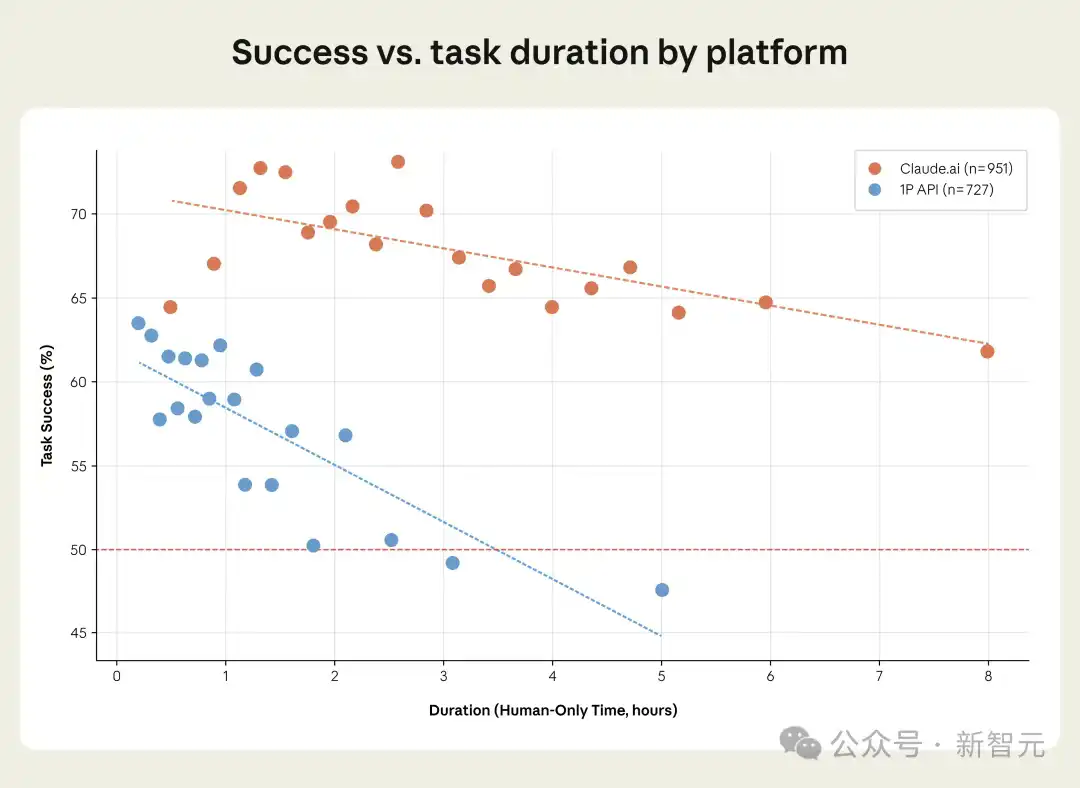
But in Anthropic's actual user data, this time limit is significantly extended.

In commercial scenarios using API calls, Claude can maintain a success rate of over 50% for tasks involving 3.5 hours of work.

And in the Claude.ai chat interface, this number is astonishingly pushed to 19 hours.

Why such a huge gap? The secret lies in human intervention.

Benchmark tests are AI facing the test alone, while real-world users break down a massive complex project into countless small steps, constantly correcting AI's course through feedback loops.

This human-AI collaborative workflow pushes the (50% success rate measured) task duration上限 (upper limit) from 2 hours to about 19 hours, nearly a 10-fold increase.

This might be the true shape of future work: not AI doing everything independently, but humans learning how to steer it through a marathon.

The Folded World Map: The Poor Learn Knowledge, the Rich Engage in Production

If we zoom out to a global perspective, we see a clear and slightly ironic "adoption curve".

In high per capita GDP developed countries, AI is already deeply embedded in productivity and personal life.

People use it to write code, create reports, and even plan travel itineraries.

But in countries with lower per capita GDP, Claude's primary role is "teacher," with大量 (a large number of) uses concentrated on coursework and educational tutoring.
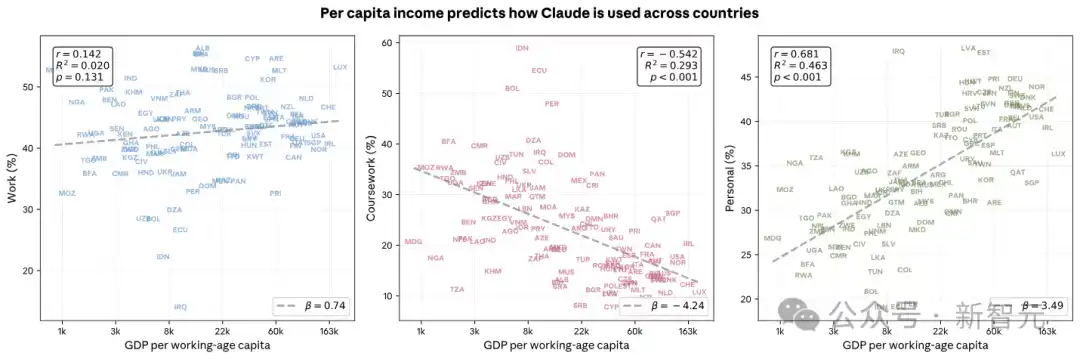
Beyond wealth disparity, this is also a manifestation of a technological gap.

Anthropic mentioned they are collaborating with the Rwandan government, trying to help people there leapfrog the mere "learning" phase and enter broader application layers.

Because without intervention, AI is likely to become a new barrier: people in wealthy regions use it to exponentially amplify output, while people in less developed regions are still using it to补习 (remedially learn) basic knowledge.

Workplace Concerns: The Specter of "Deskilling"

The most controversial and警惕 (warranting caution) part of the report is the discussion on "Deskilling".

Data indicates that the tasks currently covered by Claude require, on average, 14.4 years of educational background (equivalent to an associate degree), significantly higher than the 13.2 years required on average for overall economic activity.
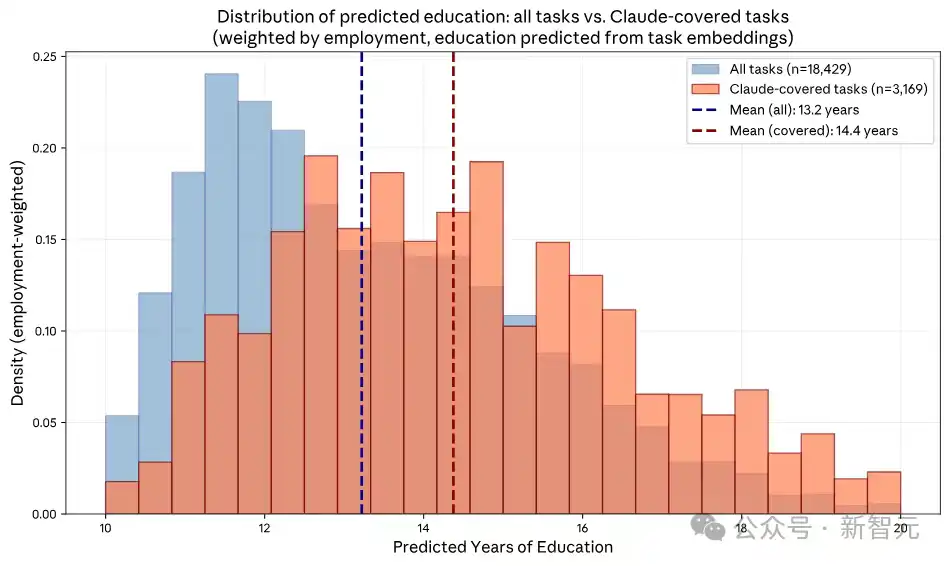
AI is systematically剔除 (removing) the "high-intelligence" parts of work.

For technical writers or travel agency agents, this could be disastrous.

AI takes over分析行业动态 (analyzing industry trends),规划复杂行程 (planning complex itineraries) — the tasks that require "brains" — leaving humans with only琐碎工作 (trivial tasks) like sketching or collecting invoices.

Your job remains, but the "gold content" of the job is hollowed out.

Of course, there are beneficiaries.

For example, real estate managers, when AI handles枯燥的行政工作 (tedious administrative work) like bookkeeping and contract comparison, can focus their energy on client negotiation and stakeholder management requiring high emotional intelligence—this is反而 (instead) a form of "Upskilling".

Anthropic cautiously states this is only an extrapolation based on the current situation, not an inevitable prophecy.

But the alarm it sounds is real.

If your core competitiveness is merely processing complex information, then you are at the eye of the storm.

A Return to the "Golden Age" of Productivity?

Finally, let's return to the macro perspective.

Anthropic revised its forecast for US labor productivity.

After剔除 (removing) possible AI errors and failures, they predict AI will drive productivity growth by 1.0% to 1.2% annually over the next decade.

This seems like a reduction of one-third compared to the previous optimistic estimate of 1.8%, but don't underestimate this 1 percentage point.

It is enough to bring US productivity growth back to the levels of the late 1990s internet boom.

Moreover, this is based solely on the model capabilities as of November 2025. With the entry of Claude Opus 4.5, and the gradual dominance of "augmented mode" (where people no longer try to dump all work on AI but collaborate with it more intelligently) in user behavior, this number has significant upside potential.

Conclusion

Reading through the entire report, what is most感慨 (striking) is not just how strong AI has become, but more how quickly humans are adapting.

We are undergoing a migration from "passive automation" to "active enhancement".

In this transformation, AI acts like a mirror; it takes over those tasks that require high education but can be completed through logical deduction, thereby forcing us to seek out value that cannot be quantified by algorithms.

In this era of computational surplus, humanity's scarcest ability is no longer finding answers, but defining problems.

References:

https://www.anthropic.com/research/economic-index-primitives

https://www.anthropic.com/research/anthropic-economic-index-january-2026-report

Câu hỏi Liên quan

QAccording to Anthropic's report, which type of tasks does AI accelerate the most?

AAI accelerates complex tasks that require a higher level of education the most. Tasks requiring a college degree see a 12x speedup, compared to a 9x speedup for tasks requiring only a high school education.

QWhat is the key finding regarding human-AI collaboration in terms of task duration?

AThe key finding is that human-AI collaboration dramatically extends the viable task duration. While benchmarks suggest AI's 50% success rate drops at 2-hour tasks, real-world collaborative workflows push this limit to approximately 19 hours.

QHow does the primary use of AI differ between high-GDP and low-GDP countries, as per the report?

AIn high-GDP countries, AI is primarily used for productivity and personal life enhancement (e.g., coding, reports). In low-GDP countries, its main role is as an educational tool for coursework and tutoring.

QWhat is 'deskilling' and which professionals are most at risk from it?

A'Deskilling' is the process where AI systematically removes the high-intellect, analytical parts of a job, leaving humans with more mundane tasks. Professionals like technical writers and travel agents, whose core value is processing complex information, are most at risk.

QWhat is Anthropic's revised forecast for AI's annual impact on US productivity growth over the next decade?

AAnthropic's revised forecast estimates that AI will boost US labor productivity growth by 1.0% to 1.2% annually over the next decade, a figure comparable to the growth rates seen during the late 1990s internet boom.

Nội dung Liên quan

Đối thoại với Ray Dalio: Chúng ta đang ở trong bong bóng AI, 1% danh mục đầu tư của tôi là Bitcoin

Ray Dalio, người sáng lập Bridgewater Associates, trong một cuộc phỏng vấn đã chỉ ra rằng thế giới hiện tại đang trong một "AI bubble" (bong bóng AI) cổ điển, với giá tài sản tăng vọt và đầu cơ quá mức. Ông cảnh báo bong bóng có thể vỡ do lãi suất tăng, nguồn cung cổ phiếu dư thừa hoặc khi nhà đầu tư cần tiền mặt trả nợ, dẫn đến suy thoái kinh tế. Đồng thời, Dalio mô tả một "chu kỳ lớn" kéo dài khoảng 80 năm, bao gồm ba động lực chồng chéo: khoảng cách giàu nghèo và xung đột nội bộ, thâm hụt ngân sách chính phủ khổng lồ và thay đổi địa chính trị. Ông nhấn mạnh rằng Mỹ và Anh đang đối mặt với những thách thức trong giai đoạn suy yếu này. Để bảo vệ của cải, Dalio khuyến nghị đa dạng hóa danh mục đầu tư với cổ phiếu, vàng, trái phiếu, bất động sản thay vì chỉ giữ tiền mặt. Ông tiết lộ khoảng 1% danh mục của mình là Bitcoin, nhưng vẫn ưa chuộng vàng vật chất hơn do tính ổn định và vai trò tiền tệ dự trữ. Về tác động của AI, Dalio cho rằng nó không chỉ thay thế lao động chân tay mà còn cả tư duy, làm trầm trọng thêm bất bình đẳng thu nhập. Con người cần phát huy trí tuệ cảm xúc và trực giác - những thứ AI chưa có - và học cách hợp tác với AI. Cuối cùng, ông phân tích những rủi ro của thuế tài sản và xu hướng thế giới có thể trở nên "khu vực hóa" hơn, với các khối như châu Mỹ và châu Á - Thái Bình Dương, trong bối cảnh sự thống trị toàn cầu của Mỹ đang suy yếu.

marsbit30 phút trước

Đối thoại với Ray Dalio: Chúng ta đang ở trong bong bóng AI, 1% danh mục đầu tư của tôi là Bitcoin

marsbit30 phút trước

Hơn 7.2 nghìn tỷ won trong một ngày, ngoại hải nước ngoài mua ròng kỷ lục vào thứ Sáu! Phố Wall: Cơn gió ngược về mặt vốn của thị trường chứng khoán Hàn Quốc đã tan biến

Dòng vốn nước ngoài đổ mạnh vào thị trường chứng khoán Hàn Quốc (KOSPI) với mức mua ròng kỷ lục 7,2 nghìn tỷ won chỉ trong ngày 31/7, đánh dấu sự đảo chiều rõ rệt sau nhiều tháng bán ròng mạnh. Theo báo cáo từ Citigroup, áp lực bán từ dòng vốn nước ngoài đã giảm đáng kể, với mức bán ròng tháng 7 thu hẹp còn 9,8 nghìn tỷ won so với mức 48,4 và 44,5 nghìn tỷ won trong tháng 6 và tháng 5. Đồng thời, các quỹ hưu trí và quỹ đầu tư trong nước cũng chuyển sang vị thế mua ròng 1,0 nghìn tỷ won trong tháng 7. Một yếu tố hỗ trợ khác là quy định mới từ Ủy ban Dịch vụ Tài chính Hàn Quốc (FSC), có hiệu lực từ 31/7, siết chặt điều kiện đầu tư vào các ETF có đòn bẩy đối với nhà đầu tư cá nhân. Quy định này đã ngay lập tức làm giảm khoảng 50% khối lượng giao dịch của các ETF này, góp phần kỳ vọng giảm bớt biến động cho thị trường. Citigroup duy trì mục tiêu chỉ số KOSPI ở mức 10.000 điểm, dựa trên các yếu tố thuận lợi như ngành chip bán dẫn ổn định, định giá thị trường thấp, nền tảng kinh tế vững mạnh và các chính sách hỗ trợ. Họ nhận định áp lực dòng vốn ngược chiều đang giảm dần, tạo điều kiện cho các yếu tố cơ bản và chính sách tích cực phát huy tác dụng.

marsbit30 phút trước

Hơn 7.2 nghìn tỷ won trong một ngày, ngoại hải nước ngoài mua ròng kỷ lục vào thứ Sáu! Phố Wall: Cơn gió ngược về mặt vốn của thị trường chứng khoán Hàn Quốc đã tan biến

marsbit30 phút trước

Làm thế nào để khiến bản thân trở nên không thể bị thay thế bởi trí tuệ nhân tạo

**Tóm tắt: Làm thế nào để trở nên không thể bị thay thế bởi AI** Bài viết phản đối việc than vãn về AI và thay vào đó đề xuất một giải pháp căn cơ: trở thành một "siêu cá nhân" không thể bị thuê mướn. Mối đe dọa thực sự không phải là AI, mà là tình trạng "nô lệ lương thưởng" – phụ thuộc hoàn toàn vào người khác để sinh tồn, làm công việc nhàm chán mà không có mục đích. Để thoát khỏi vòng luẩn quẩn này và phát triển mạnh trong kỷ nguyên AI, bạn cần trau dồi 5 yếu tố then chốt: 1. **Tính tự chủ:** Khả năng hành động mà không cần chờ chỉ thị. 2. **Khiếu thẩm mỹ:** Khả năng nhận biết điều gì thực sự có giá trị. 3. **Khả năng thuyết phục:** Thu hút sự chú ý và sự công nhận. 4. **Sự kiên trì:** Không sợ thất bại, xem đó là bài học. 5. **Khả năng lặp:** Điều chỉnh dựa trên phản hồi để tiến tới mục tiêu. Giải pháp là đầu tư vào sự nghiệp của chính mình. Trong khi AI giỏi tạo ra "tài sản" (nội dung, code), nó không thể thay thế được khả năng phân biệt thứ gì đáng để tạo ra, làm cho mọi người quan tâm và kiên trì theo đuổi. Trong hai kỹ năng đòn bẩy mạnh mẽ là **Code (Lập trình)** và **Media (Nội dung)**, bài viết nhấn mạnh **Nội dung** quan trọng hơn. Giá trị của nội dung là chủ quan và đòi hỏi sự am hiểu, trải nghiệm mà AI khó có được, tạo không gian cho các cá nhân sáng tạo thực sự. **Cách bắt đầu (Bài tập 15 phút):** 1. **Khai thác nguyên liệu thô của bạn:** Xác định chủ đề bạn am hiểu sâu, vấn đề bạn tự giải quyết được, hay sở thích đặc biệt từ nhỏ. 2. **Xác định "trục phản biện" của bạn:** Tìm ra quan điểm độc đáo của bạn – những điều bạn tin là đúng nhưng số đông lại sai trong lĩnh vực của mình. 3. **Xuất bản ý tưởng đầu tiên:** Kết hợp câu trả lời từ bước 1 và 2, tạo ra một nội dung (bài đăng, video) và đăng nó lên. Hành động này mang lại phản hồi thực tế, bắt đầu quá trình học hỏi, lặp lại và phát triển kỹ năng thuyết phục. Bằng cách xây dựng một sự nghiệp xoay quanh con người thật, trải nghiệm thật và góc nhìn độc đáo của mình thông qua nội dung, bạn có thể tạo ra giá trị mà AI không thể sao chép, từ đó trở nên không thể thay thế.

marsbit2 giờ trước

Làm thế nào để khiến bản thân trở nên không thể bị thay thế bởi trí tuệ nhân tạo

marsbit2 giờ trước

Nhờ việc tung xúc xắc, chìa khóa Bitcoin được lưu trữ offline, nhưng không phải ai cũng muốn làm điều này

Cảm biến từ cuộc tranh cãi gần đây xung quanh lỗ hổng trong ví phần cứng Coldcard, bài viết thảo luận về phương pháp tạo seed (cụm từ khôi phục) cho ví Bitcoin bằng cách xúc xắc vật lý. Mỗi lần xúc xắc công bằng cung cấp khoảng 2,6 bit entropy (thước đo tính ngẫu nhiên). Để đạt mức entropy an toàn cho một seed 12 từ (128 bit), cần khoảng 50 lần xúc xắc; Coldcard khuyến nghị 99 lần để đạt mức bảo mật cao hơn. Lợi thế chính của phương pháp này là tách biệt hoàn toàn với bất kỳ lỗi phần cứng hoặc phần mềm nào trong trình tạo số ngẫu nhiên của thiết bị, từ đó bảo vệ seed chính của ví. Tuy nhiên, bài viết cảnh báo rằng trong sự cố Coldcard, các chức năng phụ khác của thiết bị (như tạo ví giấy, khóa đa chữ ký, mật mã phiên USB) vẫn có thể bị ảnh hưởng nếu chúng dựa vào trình tạo số lỗi, ngay cả khi seed chính được tạo an toàn bằng xúc xắc. Nhược điểm lớn của việc dùng xúc xắc là quá trình thủ công, dễ xảy ra sai sót, tốn thời gian và không thực tế cho đa số người dùng mới. Người dùng có thể ghi chép sai, sử dụng xúc xắc gian lận, hoặc để lộ chuỗi kết quả. Do đó, mặc dù có nền tảng toán học vững chắc, phương pháp này đòi hỏi sự tỉ mỉ cao và không phải là giải pháp khả thi cho việc áp dụng Bitcoin rộng rãi. Bài viết kết luận rằng mục tiêu dài hạn vẫn là phát triển phần cứng/phần mềm tạo số ngẫu nhiên mạnh mẽ và đáng tin cậy, trong khi vẫn giữ phương pháp thủ công như một tùy chọn cho người dùng có kinh nghiệm. Cuối cùng, bài viết đưa ra khuyến nghị cho chủ sở hữu Coldcard: cập nhật firmware, kiểm tra các chức năng phụ đã sử dụng và xem xét các biện pháp bảo mật bổ sung như ví đa chữ ký kết hợp nhiều nhà sản xuất để giảm thiểu rủi ro từ một điểm yếu đơn lẻ.

cryptonews.ru5 giờ trước

Nhờ việc tung xúc xắc, chìa khóa Bitcoin được lưu trữ offline, nhưng không phải ai cũng muốn làm điều này

cryptonews.ru5 giờ trước

Giao dịch

Giao ngay
活动图片





