A Voice from a Seasoned Polymarket User: We've Actually Been Overtaken by Our Competitor

marsbitXuất bản vào 2026-04-23Cập nhật gần nhất vào 2026-04-23

Tóm tắt

A veteran Polymarket user expresses deep concern that the platform is losing its leadership in the prediction market space to its competitor, Kalshi. Despite Polymarket's pioneering role, strong brand, and cultural significance, operational issues and strategic missteps have allowed Kalshi to gain a significant advantage. Key points include: - Kalshi now has a higher valuation ($22B vs. $15B) and greater trading volume year-to-date. - Polymarket faces repeated technical delays, poor communication, and extended downtime, undermining user trust. - The recent announcement of perpetual contracts—prior to fixing core platform issues and fully launching the U.S. app—signals misplaced priorities, focusing on monetization over stability and accessibility. - The author urges Polymarket to prioritize fixing the platform, opening the U.S. app to all users, and improving operational reliability before expanding into new products. Despite these challenges, the author remains optimistic due to Polymarket’s iconic brand, strong community, major partnerships (e.g., ICE, MLB), and regulatory positioning. The piece concludes with a call to action: stabilize the core product, execute reliably, and reclaim market leadership.

Author:Jonah

Compiled by: Jiahuan, ChainCatcher

I've been holding onto this article for a while.

I've wanted to write it, but kept holding back, hoping things would quietly correct themselves. Until this morning when Bloomberg published "Polymarket Loses Prediction Market Lead to Delays and Backlash". To be honest, that report already says most of what I originally wanted to say. So I'll quote heavily from it, letting it shoulder some of the weight.

Polymarket, facing increasing operational setbacks in its attempt to reach its key audience (US customers), has now fallen behind its main competitor. From bloomberg.com

That headline is painful. And it should be.

I've been watching Polymarket since mid-2024. I believed in its vision, defended the platform in every regulatory scare, and recommended it to every trader I know. Prediction markets are some of the most important financial infrastructure of this decade, and Polymarket was the company I always hoped would win this赛道.

So this is not a hit piece. This is the kind of letter you write to something you truly care about.

Shayne Coplan, and the entire team, we need to talk.

The Current Situation is Brutal

Let's start with the data.

Reportedly, Kalshi's valuation is around $22 billion, and Polymarket's negotiated valuation is around $15 billion. That's a gap of about $7 billion against an opponent that was once far behind Polymarket. Year-to-date trading volume: Kalshi ~$37 billion, Polymarket ~$29 billion. US market share: Kalshi nearly 90%, while Polymarket is still stuck behind a waitlist.

A year ago, the mainstream narrative was "Polymarket is the king of prediction markets, Kalshi is the regulated stepchild." Today, the narrative has completely flipped. Kalshi has become the compliant, fast-delivering, institutionally credible option, while Polymarket has become the crypto-native veteran that keeps tripping over itself.

This lead was once firmly in our hands. Now, we are giving it away.

The Platform Itself Isn't Fully Operational

This needs to be said straight: there are real problems with the core product, and the company is acting like it's fine.

Last weekend, Polymarket delayed the CLOB V2 migration, the new pUSD collateral token, and the rebuilt matching engine by at least a week. To be fair, the delay itself was the right decision. The developer community had been shouting for weeks that there simply wasn't enough time for a clean migration integration. Pushing a half-finished product live would have been much worse than a delay.

So the delay is not the problem; the delay is actually a good thing.

What was embarrassing was the way the announcement was handled.

From what circulated in the community: the news of the delay went out on Twitter first, but the official migration announcement containing the guide hadn't even been posted yet. The migration guide that followed shortly after still referenced the old, now obsolete dates. Then corrections were added on top of corrections.

Structurally, this is exactly the kind of communication chaos that a "methodical operating machine" should not produce.

Then on Monday, a scheduled five-minute restart took over an hour. The exchange was effectively offline during peak weekday hours. Another small thing added to the mountain of problems.

As the Bloomberg article quotes a Polymarket spokesperson: you can't "build one of the most interesting consumer finance products of the last few years without becoming a methodical operating machine." That's true, that's the vision. But the reality is that this machine keeps failing on avoidable small things, and these small things are accumulating into a pattern.

And these are not isolated incidents:

  • Fee adjustments for sports and crypto markets seemed reactive and poorly communicated
  • The team预告ed the migration for months, with repeated delays on the infrastructure
  • Planned maintenance windows repeatedly far exceeded the stated duration
  • The US app has been stalled for months in a "mobile-only, sports-only, invite-only" beta phase, reportedly with over a million people on the waitlist

"Crypto-native" was supposed to mean more transparent, more resilient, and more accountable than traditional platforms, not an excuse for poor UX and unreliable infrastructure.

The community has patience, but patience is clearly not infinite. Every outage, every missed deadline, every vague status update pushes marginal users towards the competitor that "just works".

The Priority Order is Wrong

What really broke me yesterday was this.

Objectively, the platform is not at 100%. The upgrade was delayed. The US app is not fully open. A million people are on the waitlist. Traders on the global product suffered an outage on Monday afternoon.

And then yesterday, Polymarket announced Perpetuals.
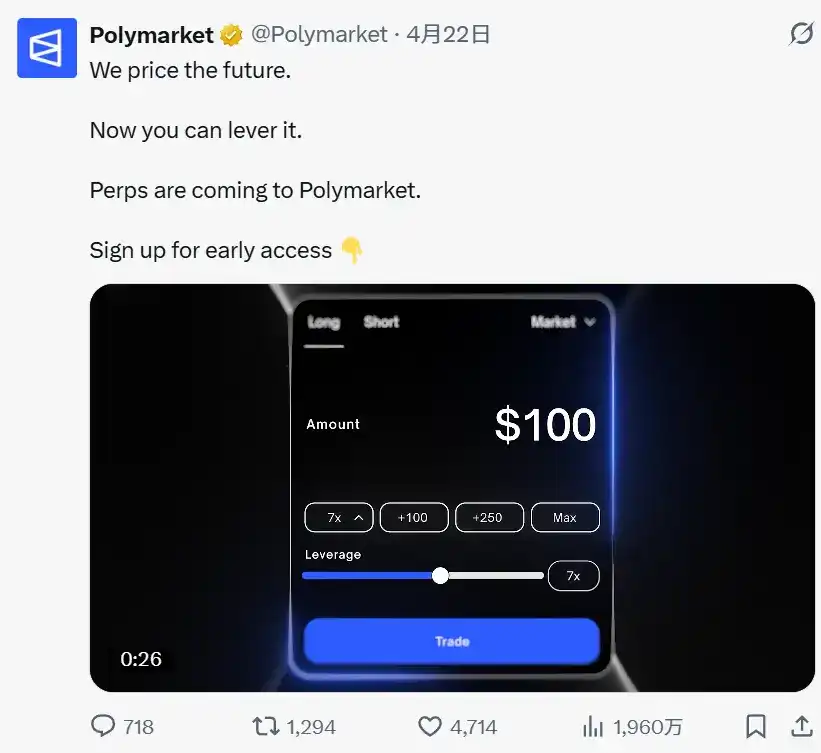
We price the future. Now you can leverage it. Perpetuals are coming to Polymarket. Sign up for early access.

Perpetuals are a great product, and in the long run, they absolutely belong on the roadmap. But announcing them now—just days after an infrastructure upgrade was delayed and a restart ran严重overtime, and while the US app is still in beta—sends only one message to most community members: a cash grab.

Perpetuals are the highest-fee, highest-leverage, highest-volume product in crypto, the fastest path to extracting revenue from existing users. Announcing them while the core exchange is unstable and a million Americans are locked out clearly signals where the team's true priorities lie: monetize the existing traders first, fix the platform later, and address the people outside the gate even later.

Whether intended or not, that is the signal this move sends. Revenue coverage优先于 product stability. Shipping new收费 products优先于 perfecting already-launched products. Harvesting existing users rather than fixing the experience for everyone—current and waiting.

Honestly, interpreting this as a "cash grab" might already be generous.

Look at the order. Kalshi预告ed its crypto perpetual product "Timeless": specific date, specific venue, specific launch event—April 27th, New York, a full product, delivered a week later.

Breaking: US's first CFTC-regulated prediction market exchange @Kalshi has chosen Pyth Pro as the exclusive data layer for its commodity markets. Gold, silver, oil, natural gas, copper, corn, soybeans, wheat. Here's why it matters.

Within days, Polymarket's response was... an early access sign-up page. No release date, no venue, no product specs, no product itself. Just a marketing tweet, a slogan "We price the future. Now you can leverage it," and a form to collect accounts.

That wasn't a product launch; it was a press release disguised as a launch announcement. When what you put out to counter an opponent is明显空洞, you are no longer setting the pace in this赛道—you are chasing someone else's pace. And there's a waitlist for it?

This is a赛道 defined by Polymarket itself. Polymarket was the pioneer, the cultural phenomenon, the incumbent with a head start of years. And today, on the derivatives launch, Polymarket became the chaser, using a sign-up form as PR material, simply because Kalshi announced first.

This is the most embarrassing sentence in this entire letter, but it's exactly what the Bloomberg article is really about.

The operational order should be very simple:

  1. The US App. Fully open it, kill the waitlist, make it stable, make it feature-complete. This is Polymarket's biggest lever, yet it's been sealed for months, letting Kalshi eat the US retail market. This must be priority number one. Not second, first.
  2. Core Platform Reliability. Finish the CLOB V2 migration, execute the pUSD transition cleanly, stop missing maintenance windows, make the exchange something traders can "set and forget".
  3. Then, and only then, expand the business surface. Perpetuals, new market categories, other things on the whiteboard.

The current order is backwards, and the community sees it clearly.

The Startup Phase is Over

The Bloomberg article put into the open what the community has been discussing for months: delays, distractions, and a culture that still feels like a 2021 wild-west startup—despite Polymarket now sitting on billions in open interest, a major partnership with ICE, a CFTC designated exchange status via the QCEX acquisition, and an MLB partnership.

That wild-west startup era is over. It has to be.

You are no longer facing a forum or a niche crypto app. You are facing a CFTC-licensed, institutionally-backed, New York-bred opponent that delivers on time and is taken seriously by regulators, counterparties, and the media.

This is the maturation period that every phenomenal finance company must eventually go through. Coinbase went through it, Stripe went through it. Every serious trading venue must eventually stop operating like a "group chat" and start becoming—to borrow the spokesperson's own words—a methodical operating machine.

Concretely, this means bringing in truly seasoned professionals in operations, risk, and PR. It means cutting out distractions that don't serve US rollout and core stability. It means over-communicating when things go wrong, with real post-mortems and real accountability, not just brief status updates and subsequent silence.

This is not hostility. This is what every serious financial venue eventually does. Polymarket is now one of them. Act like it.

Why I'm Still Bullish on Polymarket

With all that said, here's why I haven't left the platform, and why I don't think this race is over.

ICE is on your side. Jeffrey Sprecher doesn't write checks for vaporware. Intercontinental Exchange, the parent company of the NYSE, led a round last fall, a signal the market still hasn't fully priced in. You now have direct access to one of the world's most sophisticated market infrastructure operators. Use it.

The MLB partnership is a ceiling-level bonus. This signal says the endgame here is not "another betting app," but making prediction markets mainstream, embedded institutional financial infrastructure. Sports leagues, TV networks, traditional finance rails all converging on a single order book is epoch-making. Kalshi clearly doesn't have this cultural reach.

The brand is iconic. For better or worse, in public perception, Polymarket is almost synonymous with prediction markets. The election cycle cemented this彻底, with the platform being cited by journalists, hedge funds, and memes repeatedly. This is a moat most companies can only dream of.

The community is still here. The people who showed up in the early markets, scaled it during the 2024 election, and stuck with the platform through all the growing pains, haven't left. We want to win, and we want to see you win. That's why we're writing letters like this now,而不是 silently migrating volume to another platform.

Bring the Win Home

Truth: Kalshi is winning this quarter, and possibly this entire year.

But Polymarket can still win the decade. The brand, the partnerships, the community, the regulatory angle via QCEX, the ICE relationship—it's all still there, nothing is lost. It's just not being fully utilized while the team is pushing the wrong things in the wrong order.

So the ask is simple.

Fix the platform. Push out the US app. Stop announcing new products until the old ones are stable. Truly become the methodical operating machine the spokesperson described.

The community is still with you, and the believers are still here. But the window to close the gap is narrower than it was six months ago, and it will be even narrower in another six months.

Fix the platform first. Then, bring the win home.

Penned by a longtime Polymarket user who wants, more than anyone, to never have to write a letter like this again.


Câu hỏi Liên quan

QWhat are the main reasons the author believes Polymarket is losing its leading position in the prediction market?

AThe author cites several reasons: operational setbacks like repeated delays in infrastructure upgrades and extended maintenance windows, poor communication during these events, the prolonged waitlist for the U.S. app which blocks growth, and a misalignment of priorities where new revenue-generating products (like perpetuals) are announced before core platform stability and U.S. market access are secured.

QHow does the data compare between Polymarket and its competitor Kalshi according to the article?

AThe article states that Kalshi has a higher valuation of approximately $22 billion compared to Polymarket's reported $15 billion. In terms of year-to-date trading volume, Kalshi has about $37 billion while Polymarket has around $29 billion. Most significantly, Kalshi holds close to 90% of the U.S. market share, while Polymarket's access is still behind a waitlist.

QWhat specific product launch timing does the author criticize as demonstrating misplaced priorities?

AThe author heavily criticizes the announcement of Polymarket's perpetual contracts product. This announcement came just days after a core infrastructure upgrade was delayed and a platform restart ran significantly over time, and while the U.S. app was still in a limited, invite-only beta with a million people on the waitlist. The author sees this as prioritizing quick revenue from existing users over fixing fundamental platform issues and expanding access.

QWhat does the author suggest should be Polymarket's correct order of operational priorities?

AThe author proposes a clear order of priorities: 1) Fix and fully launch the U.S. application, removing the waitlist. 2) Ensure core platform reliability by completing the CLOB V2 migration and pUSD transition smoothly and avoiding operational hiccups. 3) Only after the first two are accomplished should the company expand into new product areas like perpetual contracts.

QDespite the criticisms, what advantages does the author believe Polymarket still holds over Kalshi?

AThe author remains bullish on Polymarket due to several key advantages: the strategic investment and infrastructure expertise from ICE (Intercontinental Exchange, owner of the NYSE), the landmark partnership with MLB which offers immense cultural reach, its iconic brand that is synonymous with prediction markets for many, and a loyal core community that has supported it through growth pains.

Nội dung Liên quan

Seeking Alpha nổi bật: Tại sao thị trường chứng khoán Mỹ có thể sụp đổ vào tháng 6?

Tác giả Damir Tokic, giáo sư tài chính và nhà phân tích Seeking Alpha, cảnh báo thị trường chứng khoán Mỹ có thể sụp đổ vào tháng 6 do sự kết hợp của bong bóng định giá và một cú sốc lạm phát. Chỉ số S&P 500 đang tiến gần mức định giá cao nhất lịch sử, chủ yếu được dẫn dắt bởi đà tăng mạnh của nhóm cổ phiếu công nghệ, với tỷ lệ P/E điều chỉnh theo chu kỳ (Shiller P/E) trên 40, tương đương thời kỳ bong bóng dot-com năm 2000. Lợi nhuận hiện tại dựa trên khoản chi tiêu vốn AI khổng lồ 7700 tỷ USD được xem là không bền vững và có thể là một phần của "gói kích thích Trump". Nguy cơ chính đến từ cuộc chiến Iran. Việc eo biển Hormuz bị đóng cửa trong ba tháng đang làm cạn kiệt dự trữ dầu mỏ chiến lược toàn cầu, dự kiến đạt mức cực kỳ thấp vào tháng 6. Nếu tình hình leo thang, với việc đóng cửa thêm eo biển Mandeb, giá dầu có thể tăng vọt lên 200 USD/thùng, gây ra lạm phát đứt gãy nguồn cung, đẩy lợi suất trái phiếu chính phủ Mỹ tăng cao. Cục Dự trữ Liên bang Mỹ (Fed), hiện có xu hướng ôn hòa, sẽ buộc phải phản ứng trước áp lực lạm phát. Thị trường hiện đang định giá khả năng tăng lãi suất vào cuối năm 2026. Do đó, sự chuyển hướng chính thức sang lập trường diều hâu của Fed tại cuộc họp tháng 6 có khả năng sẽ là "cò súng" châm ngòi cho vụ nổ bong bóng. Ngay cả khi Fed giữ nguyên lập trường, uy tín của họ có thể bị tổn hại, dẫn đến biến động hệ thống lớn hơn. Tóm lại, sự kết hợp giữa định giá đắt đỏ, cú sốc năng lượng tiềm tàng và phản ứng chính sách tiền tệ thắt chắt có thể khiến thị trường chứng khoán Mỹ đối mặt với một đợt sụt giảm nghiêm trọng vào tháng tới.

marsbit11 phút trước

Seeking Alpha nổi bật: Tại sao thị trường chứng khoán Mỹ có thể sụp đổ vào tháng 6?

marsbit11 phút trước

Cuộc chiến AI PC: Đừng đặt cược vào phe phái, hãy đặt cược vào trạm thu phí

**Tóm tắt: Cuộc chiến AI PC: Đừng đặt cược vào phe phái, hãy đặt cược vào "trạm thu phí"** Bài viết phân tích cơ hội đầu tư trong cuộc cạnh tranh AI PC, nhấn mạnh rằng trọng tâm không nên là cuộc chiến ý thức hệ giữa kiến trúc x86 và Arm. Thay vào đó, nhà đầu tư nên tập trung vào các công ty nắm giữ vị trí then chốt, có khả năng thu lợi nhuận bền vững bất kể ai thắng. **Cơ hội được chia thành ba lớp:** 1. **Lớp "Trạm thu phí" công nghệ tiên tiến:** TSMC là bên hưởng lợi rõ ràng nhất, vì hầu hết chip AI PC cao cấp đều phụ thuộc vào quy trình sản xuất tiên tiến của họ. 2. **Lớp năng lực tính toán và nền tảng:** AMD (kết hợp CPU x86 và GPU) và NVIDIA (phần mềm và kiến trúc GPU) có lợi thế trong việc mở rộng ảnh hưởng. 3. **Lớp cơ hội co giãn và phục hồi:** Arm và Intel có tiềm năng tăng trưởng mạnh, nhưng đi kèm rủi ro cao hơn, đòi hỏi kỷ luật đầu tư chặt chẽ. **Quan điểm ngành:** AI PC đang chuyển từ giai đoạn khái niệm sang triển khai. Mặc dù dự báo ngắn hạn có thể điều chỉnh, xu hướng AI trở thành tính năng tiêu chuẩn trong dài hạn là không đổi. Động lực thay thế thiết bị thực sự sẽ phụ thuộc vào việc liệu các ứng dụng AI cục bộ (như xử lý riêng tư, cơ sở tri thức nội bộ) có đủ sức hút với doanh nghiệp hay không. **Đề xuất đầu tư:** Ưu tiên các công ty có dòng tiền ổn định và vị thế độc quyền trong chuỗi cung ứng. * **Nền tảng/Tài sản thế chấp:** TSMC. * **Cơ hội tấn công:** AMD. * **Cơ hội co giãn (thận trọng):** Intel và Arm. **Cảnh báo rủi ro:** Bao gồm ứng dụng AI PC kém hấp dẫn, khả năng tương thích Windows trên Arm cải thiện chậm, tác động của thuế quan và kinh tế vĩ mô đến nhu cầu, biến động nguồn cung công nghệ bán dẫn tiên tiến và định giá cao tổng thể của lĩnh vực AI. **Kết luận:** Cách tiếp cận khôn ngoan là xem AI PC như một sự chuyển dịch công nghiệp dài hạn, đầu tư vào các "trạm thu phí" và hệ sinh thái vững chắc sau khi cơn sốt thị trường lắng xuống, thay vì chạy theo các sự kiện marketing ngắn hạn.

marsbit26 phút trước

Cuộc chiến AI PC: Đừng đặt cược vào phe phái, hãy đặt cược vào trạm thu phí

marsbit26 phút trước

AI Trung chuyển gây tranh luận sôi nổi trên Zhihu: Đằng sau Token rẻ, người dùng thực sự lo lắng điều gì?

Một cuộc thảo luận trên Zhihu về "trạm trung chuyển AI" đã đưa chủ đề "Token giá rẻ" ra trước đông đảo người dùng, vượt khỏi phạm vi nhà phát triển. Cuộc thảo luận tập trung vào những lo ngại thực tế hơn là việc phán xét tính hợp pháp. Người dùng quan tâm hàng đầu tới tính xác thực của mô hình: liệu tên mô hình họ gọi có thực sự là mô hình đó hay đã bị "đánh tráo" thành phiên bản rẻ hơn, do nguồn cung token giá rẻ thường không minh bạch. Điều này tạo ra giao dịch thiếu cân bằng thông tin. Về chi phí, giá rẻ của trạm trung chuyển thường được so sánh với API chính thức tính theo lượng dùng, nhưng có thể không rẻ hơn gói đăng ký chính thức, mô hình trong nước hay hạn mức miễn phí. Người dùng cần xác định nhu cầu thực tế của mình trước. Nguồn gốc token giá rẻ được chỉ ra có thể từ kênh hợp pháp (mua số lượng lớn, tối ưu định tuyến) đến các kênh xám (chia sẻ tài khoản, lợi dụng chênh lệch giá, thẻ gian lận). Điều này làm tăng chi phí tin cậy, bao gồm rủi ro về tính ổn định dịch vụ và số dư tài khoản. Rủi ro an ninh dữ liệu là mối lo ngại lớn, đặc biệt khi xử lý mã nguồn, tài liệu kinh doanh hay thông tin khách hàng nhạy cảm. Trong các kịch bản Agent, rủi ro có thể leo thang từ "câu trả lời sai" sang "thực thi sai lệnh". Cuộc thảo luận đi đến đồng thuận chung: có thể sử dụng trạm trung chuyển cho các nhiệm vụ ít nhạy cảm, thay thế được, nhưng không nên coi đó là lựa chọn mặc định. Các khuyến nghị bao gồm: không nạp số tiền lớn, không ràng buộc toàn bộ quy trình làm việc, giữ đường dự phòng, kiểm tra chất lượng mô hình định kỳ và tuyệt đối không kết nối vào môi trường sản xuất của doanh nghiệp. Bài học cốt lõi là chi phí thực sự của việc sử dụng AI không chỉ nằm ở giá token, mà còn ở sự tin cậy, an toàn dữ liệu và trách nhiệm giải trình.

marsbit1 giờ trước

AI Trung chuyển gây tranh luận sôi nổi trên Zhihu: Đằng sau Token rẻ, người dùng thực sự lo lắng điều gì?

marsbit1 giờ trước

Hiệp hội Blockchain Thúc giục Thượng viện Thông qua Đạo luật CLARITY với Lá thư được Hỗ trợ bởi 160 Cựu Quan chức

Hiệp hội Blockchain, một trong những nhóm vận động hàng đầu ngành, đã gửi thư tới lãnh đạo Thượng viện Mỹ, thúc giục thông qua Đạo luật CLARITY. Thư có chữ ký của 160 cựu chuyên gia an ninh, tình báo và thực thi pháp luật. Các bên ký tên cho rằng thiếu khuôn khổ pháp lý rõ ràng sẽ đẩy hoạt động tiền mã hóa ra nước ngoài, gây khó khăn cho việc điều tra tội phạm tài chính. Đạo luật CLARITY nhằm tăng cường năng lực thực thi pháp luật và ngăn ngừa tội phạm tài chính trong lĩnh vực tài sản số. Các biện pháp chính bao gồm: củng cố nghĩa vụ chống tài chính bất hợp pháp (mở rộng yêu cầu theo Đạo luật Bảo mật Ngân hàng và luật trừng phạt), tăng cường chia sẻ thông tin giữa Bộ Tài chính, Bộ Tư pháp, FBI, DEA và khu vực tư nhân, cũng như tăng cường bảo vệ cho các máy giao dịch tài sản số (kiosk) thông qua giám sát giao dịch, báo cáo, hạn mức và các quy định chống gian lận. Hiệp hội nhấn mạnh đây là các biện pháp tăng cường thực thi, không phải bãi bỏ quy định. Một cuộc họp thị trấn trực tuyến sẽ được tổ chức để thảo luận về lợi ích của dự luật đối với thực thi pháp luật và an ninh quốc gia. Dự luật đã được Ủy ban Nông nghiệp Thượng viện thông qua một phần vào tháng 1 và dự kiến được đưa ra biểu quyết toàn thể tại Thượng viện vào mùa hè này. Tuy nhiên, nếu thông qua, nó vẫn cần được Hạ viện phê chuẩn, và có thể cần phải điều chỉnh để phù hợp với phiên bản đã được Hạ viện thông qua vào mùa thu năm ngoái.

bitcoinist1 giờ trước

Hiệp hội Blockchain Thúc giục Thượng viện Thông qua Đạo luật CLARITY với Lá thư được Hỗ trợ bởi 160 Cựu Quan chức

bitcoinist1 giờ trước

ByteDance Dùng CPU Arm, Ông Hoàng Nhân Huân: Đáng Tiếc Không Mua Được Arm

Bài báo đưa tin từ sự kiện Computex 2026, nơi CEO của Arm, Rene Haas, thông báo rằng ByteDance (TikTok) và Oracle đã áp dụng chip CPU dành cho trung tâm dữ liệu do Arm tự nghiên cứu, tên là Arm AGI. Arm đã tăng gấp đôi kỳ vọng về nhu cầu đối với CPU này, dự kiến đạt doanh thu 20 tỷ USD vào các năm tài chính 2027-2028 và 150 tỷ USD hàng năm trong khoảng 5 năm. Haas cũng chia sẻ quan điểm rằng việc Mỹ ngăn cản xuất khẩu CPU AI sang Trung Quốc là gần như không thể. Trong một cuộc đối thoại thú vị, CEO NVIDIA, Jensen Huang, đã tham gia và bày tỏ sự tiếc nuối khi NVIDIA không thể mua lại Arm trước đây. Ông cũng giải thích lý do đằng sau việc NVIDIA phát triển siêu chip RTX Spark dựa trên kiến trúc Arm, nhấn mạnh nhu cầu về CPU mạnh mẽ cho các tác nhân AI (AI agent) chạy cục bộ trên PC. Huang dự đoán ngành công nghiệp máy tính có thể mở rộng gấp mười lần nhờ sự phát triển của các tác nhân AI tự chủ. Bài báo cũng đề cập đến những tiến bộ của Arm trong lĩnh vực chip PC và CPU cho trung tâm dữ liệu. Nhiều đối tác lớn như OpenAI, Meta, Google và Microsoft đang sử dụng hoặc hợp tác với Arm. Haas đã công bố lộ trình phát triển cho các thế hệ CPU Arm AGI tiếp theo, khẳng định cam kết lâu dài trong việc tự sản xuất chip. Kết luận chỉ ra rằng sự bùng nổ của các tác nhân AI đang dịch chuyển sự chú ý trong cuộc đua sức mạnh tính toán sang CPU, thúc đẩy xu hướng tích hợp theo chiều dọc trong ngành công nghiệp bán dẫn, nơi hiệu quả năng lượng trở thành yếu tố cạnh tranh chính.

marsbit2 giờ trước

ByteDance Dùng CPU Arm, Ông Hoàng Nhân Huân: Đáng Tiếc Không Mua Được Arm

marsbit2 giờ trước

Giao dịch

Giao ngay
Hợp đồng Tương lai
活动图片




