Original | Odaily Planet Daily (@OdailyChina)
Author | Wenser (@wenser 2010 )

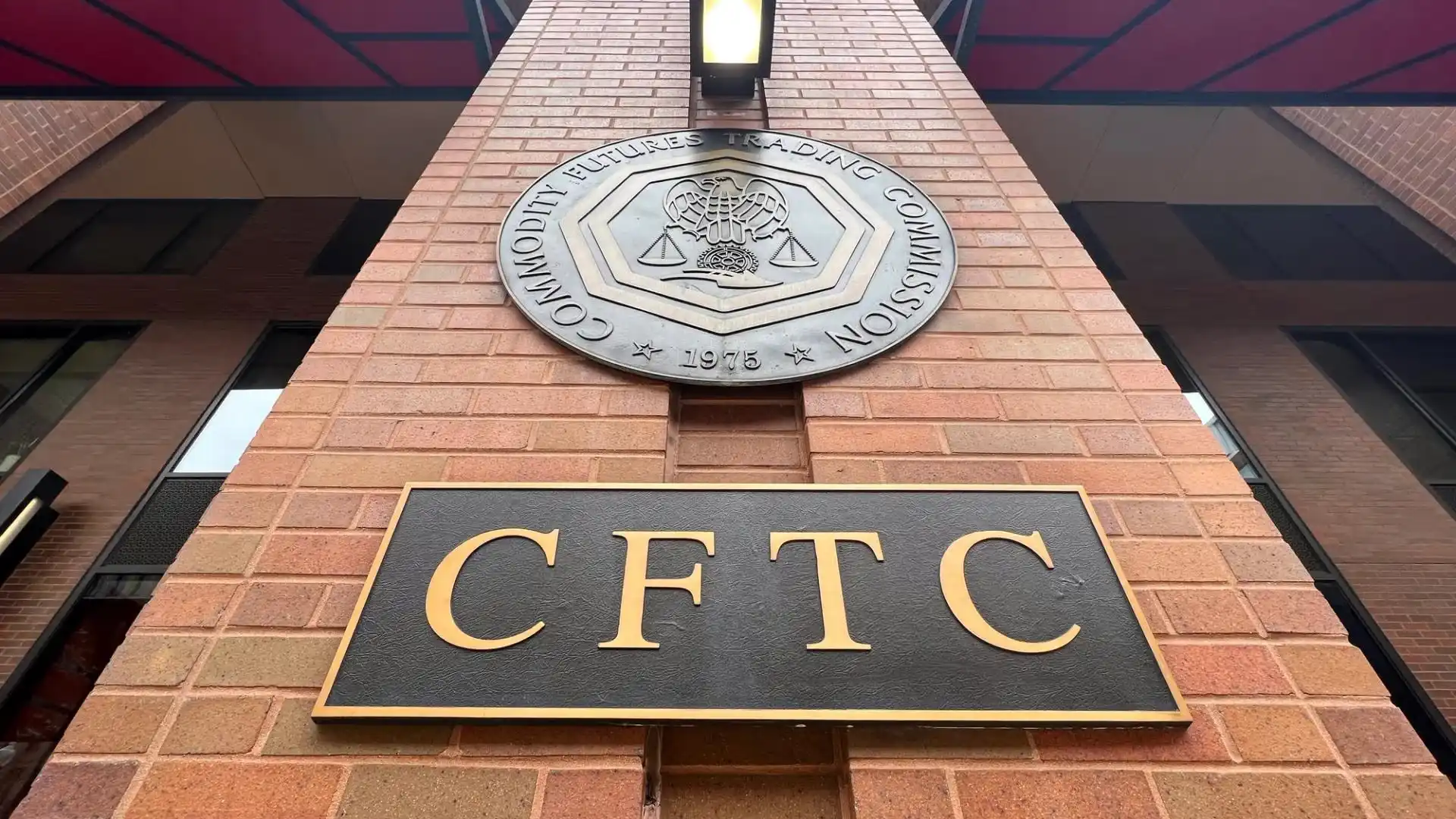
On May 29, the U.S. Commodity Futures Trading Commission (CFTC) issued guidance on 7*24 trading supervision, emphasizing that, due to their digital infrastructure and global continuous trading features, derivatives related to crypto assets are more suitable for round-the-clock trading and clearing.
This means that the United States, previously considered a "no-go zone for crypto perpetual contracts," has opened its doors for the first time. It adds more fuel to the United States becoming a "crypto hub."
Numerous crypto trading platforms and traditional exchanges have responded promptly, launching corresponding trading gateways.
The CFTC's Biggest Gift to the Crypto Market: Opening the 7*24 Perpetual Market
According to incomplete statistics, in 2025, the trading volume of crypto derivatives perpetual contracts ranged between 60 trillion and 85 trillion US dollars, with the highest single-day trading volume reaching 750 billion US dollars; accounting for approximately 75% to 80% of total crypto trading volume.(Odaily Planet Daily Note:Kalshi postedstating the total trading volume for this market in 2025 exceeded 90 trillion US dollars)
However, for U.S. crypto platforms, regulations have never provided clear rules for this huge cake.
Now, the U.S. CFTC has officially opened this market, which originally had almost 0% share, to U.S. citizens and domestic crypto platforms as well as certain CEM exchanges. Simultaneously, U.S. institutions and individual users can now trade crypto perpetual contracts 7*24 seamlessly, eliminating the previous "time difference."
CFTC Chairman Michael S. Selig called this a historic step "to bring the world's most active crypto derivatives into the U.S. regulatory framework." The regulatory move quickly triggered action from leading crypto platforms.
Direct Beneficiaries of the New Policy: Kalshi, Coinbase, CME
On the same day, the U.S. CFTC issued a product certification order to the designated contract market KalshiEX, LLC, approving the listing of BTCPERP, a perpetual contract referencing the Bitcoin spot price, as a futures product for trading. The contract was submitted for approval under CFTC Regulation 40.3 on May 29, 2026. Additionally, Kalshi plans to launch over a dozen other crypto perpetual contracts subsequently.
Furthermore, Coinbase announced it has become the first and currently the only CFTC-regulated Futures Commission Merchant (FCM) in the U.S., providing U.S. clients with access to global crypto derivatives markets, including crypto perpetual contracts and options(connecting to platforms like Deribit, whose Bitcoin options open interest exceeds $31 billion); simultaneously, Coinbase also received approval to allow using client crypto assets/stablecoins as margin (subject to rehypothecation conditions).
Finally, as a traditional exchange, CME (Chicago Mercantile Exchange) is also a direct beneficiary of this policy change. Bitcoin futures and options on its Globex platform transitioned to 7*24 trading starting this Friday, ending the previous fixed weekend closure from Friday to Sunday, allowing institutional clients to hedge spot volatility seamlessly.
However, this does not mean trading volume will suddenly surge – although the "CME gap" formed due to weekend closures disappears, market liquidity remains concentrated mainly in ETF options and offshore perpetual contracts; the open interest scale of IBIT options is significantly higher than the CME crypto options market. Currently, large traders' short positions continue to decline, reducing short-term selling pressure, but clear long-term positioning trends have not yet formed.
The Cautious Stance Behind the CFTC Guidance: Commodity Differentiation and Strengthening Authority
Yesterday, alongside issuing a "No-Action Letter" to Coinbase, the relevant CFTC department specifically emphasized two things:
- Traditional commodity derivatives like agricultural products, due to their regional nature and trading structure, may not be suitable for fully 7*24 round-the-clock operation;
- Regulated trading platforms, swap execution facilities, derivatives clearing organizations, and futures commission merchants must comply with the Commodity Exchange Act (CEA) and relevant regulatory rules when expanding round-the-clock trading, and proactively assess risk management and operational arrangements.
In other words, 7*24 perpetual trading for commodities like agricultural products is currently not permitted; and any institution wishing to offer 7*24 trading for derivatives must communicate with CFTC staff in advance, submit detailed plans and risk analyses, with the CFTC reviewing compliance on a case-by-case basis.
Thus, it can be seen that the CFTC's move is more like a "special case treatment" for crypto assets, opening a gateway for more crypto platforms to launch derivatives sections and further strengthening its regulatory authority over crypto asset derivatives.
Industry Insider Comments: Overwhelming Praise and Support
The CFTC's regulatory guidance represents the true localization of round-the-clock trading for crypto derivatives in the U.S. market. Liquidity from many domestic users previously excluded from the U.S. market is expected to flow back rapidly, further increasing participation from domestic institutions, capital efficiency, and to some extent reducing risk management costs (rollover costs, weekend time gaps).
Strategy founder Michael Saylor posted, stating the CFTC guidance advances Bitcoin capital markets, including round-the-clock trading, BTC collateral, perpetual futures, options, and regulated access. This will benefit BTC holders, support MSTR's development, and support STRC as Bitcoin-backed digital credit development.
Coinbase CEO Brian Amstrong cheered: "U.S. users have been excluded from this 80% segment of the global crypto market (including perpetual futures and options). But not anymore!"
Kalshi CEO Tarek Mansour stated, "This marks Kalshi's evolution from a prediction market leader to a next-generation derivatives exchange. U.S.-based, secure, and regulated perpetual contracts will improve capital allocation and risk management for countless U.S. businesses."
Such statements from beneficiaries are understandable. Some outsiders interpret it as "opening Pandora's box of speculation."
U.S. Public Interest Third-Party Organization: CFTC Ignores Public Interest and Investor Protection
Better Markets, a third-party consumer protection organization established after the 2008 financial crisis, officially stated, "Retail investors are unlikely to fully understand the risks posed by perpetual futures. We urged the CFTC last year to require enhanced disclosures that are easier for retail investors to understand. Unfortunately, the CFTC not only failed to require such enhanced disclosures but also seemed to completely ignore the risks of the products it approved."
"The CFTC's action lacks the decorum expected of a regulator. However, considering Coinbase and Kalshi serve as advisory bodies on two of the CFTC's advisory committees, this is not surprising. It's clear the CFTC's work is not for the public interest or protecting investors, but for the very industries it is supposed to regulate."
The wording directly implies the U.S. CFTC might have interests involved or some level of internal cooperation with Coinbase and Kalshi.
The U.S. Market to Enter a Period of Derivatives Trading Explosion
Apart from the direct beneficiaries mentioned above, U.S. crypto exchange Kraken also stated it plans to launch the first CFTC-regulated perpetual futures product for the U.S. market within the next 30 days. Currently, perpetual futures on Kraken Pro are provided by NinjaTrader Clearing, LLC (operating as Kraken Derivatives US), a CFTC-registered Futures Commission Merchant; related spot margin and perpetual futures products will be offered on Bitnomial Exchange(Odaily Planet Daily Note: the latter is a CFTC-regulated exchange recently acquired by Kraken's parent company Payward).
Setting aside polarized opinions, the gate to the multi-trillion-dollar perpetual derivatives market is slowly opening for U.S. users.