Coldcard Vulnerability Leads to $89 Million Theft, Sparking Largest On-Chain Migration Since FTX Collapse

marsbitXuất bản vào 2026-08-03Cập nhật gần nhất vào 2026-08-03

Tóm tắt

A security vulnerability in Coldcard hardware wallets led to the theft of 1,367.05 BTC (approx. $89 million) from 4,585 addresses, according to Galaxy Research. The flaw, caused by insufficient randomness in seed phrase generation for specific firmware versions, triggered a massive migration of funds as users moved assets to new, secure wallets. This event caused the largest on-chain movement of small Bitcoin transactions since the FTX collapse, distorting key market indicators like active addresses and exchange deposits, and significantly dampening market sentiment. The incident also highlighted challenges in cybersecurity investigations, as researchers reported that safety guardrails on mainstream U.S. AI models hindered the analysis of attack patterns, forcing them to use an open-source Chinese AI model for forensic work. This underscores a dilemma in balancing AI security restrictions with the need for rapid response in tracing stolen crypto assets.

Original author: Oluwapelumi Adejumo

Original compilation: Saoirse, Foresight News

The Coldcard wallet crisis has severely impacted Bitcoin market sentiment, distorted various on-chain reference metrics, and simultaneously exposed long-standing weaknesses in AI-assisted cybersecurity defense systems.

On July 30, hardware manufacturer Coinkite issued a risk alert to users: wallets generated by specific versions of Coldcard firmware were at risk of asset theft due to a software flaw that caused the random generation of seed phrases to fall far below the design standard.

Galaxy Research stated that this security incident involved three waves of attacks, targeting a total of 4,585 addresses. The amount of Bitcoin stolen was 1,367.05 BTC, with an approximate value of $89 million.
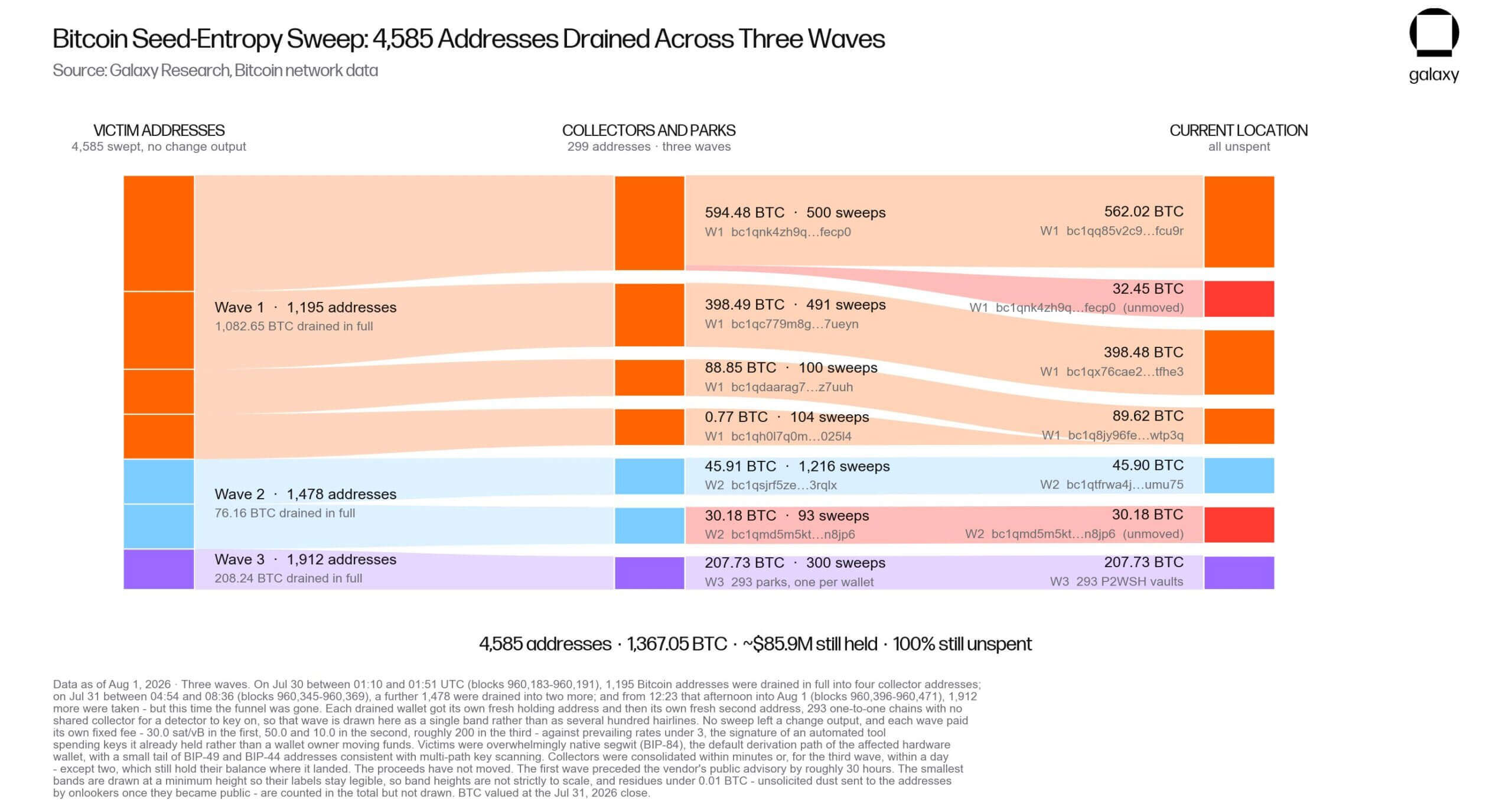
Coldcard Bitcoin Wallet Hacking Incident (Source: Galaxy Research)

Alex Thorn, Global Head of Research at Galaxy, said that the Bitcoin stolen in the three attack waves remains in addresses controlled by the attackers. However, he added that some scattered, small amounts of stolen funds have already been laundered through peel chains, cross-chain services, and overseas casinos.

Coldcard Wallet Migration Disrupts Bitcoin Bearish Signals

As the security risk continued to develop, users with potentially exposed vulnerabilities rushed to transfer their Bitcoin to prevent theft by hackers. Although Coinkite has already released a patched firmware version for affected devices, the high-risk seed phrases previously generated cannot be fixed through system updates. Users could only create new wallets and transfer assets to secure addresses.

This large-scale wallet migration caused an abnormal surge in the on-chain activity of small holders and long-dormant Bitcoin. Julio Moreno, Head of Research at CryptoQuant, explained that on July 31, the total volume of transactions with an output of less than 1 Bitcoin reached 39,600 BTC. This is the single-day highest value for this category since the FTX bankruptcy in November 2022; shortly after the FTX collapse that year, the flow volume for similar transactions was 39,900 BTC.

The daily number of active Bitcoin addresses also surged from about 645,000 on July 30 to nearly 1 million the next day, marking the highest level since December 10, 2024. Moreno noted that the surge in address count was mainly concentrated in sending addresses, with a very limited increase in receiving addresses, which is sufficient to indicate that users were transferring funds out of their original wallets due to security concerns.
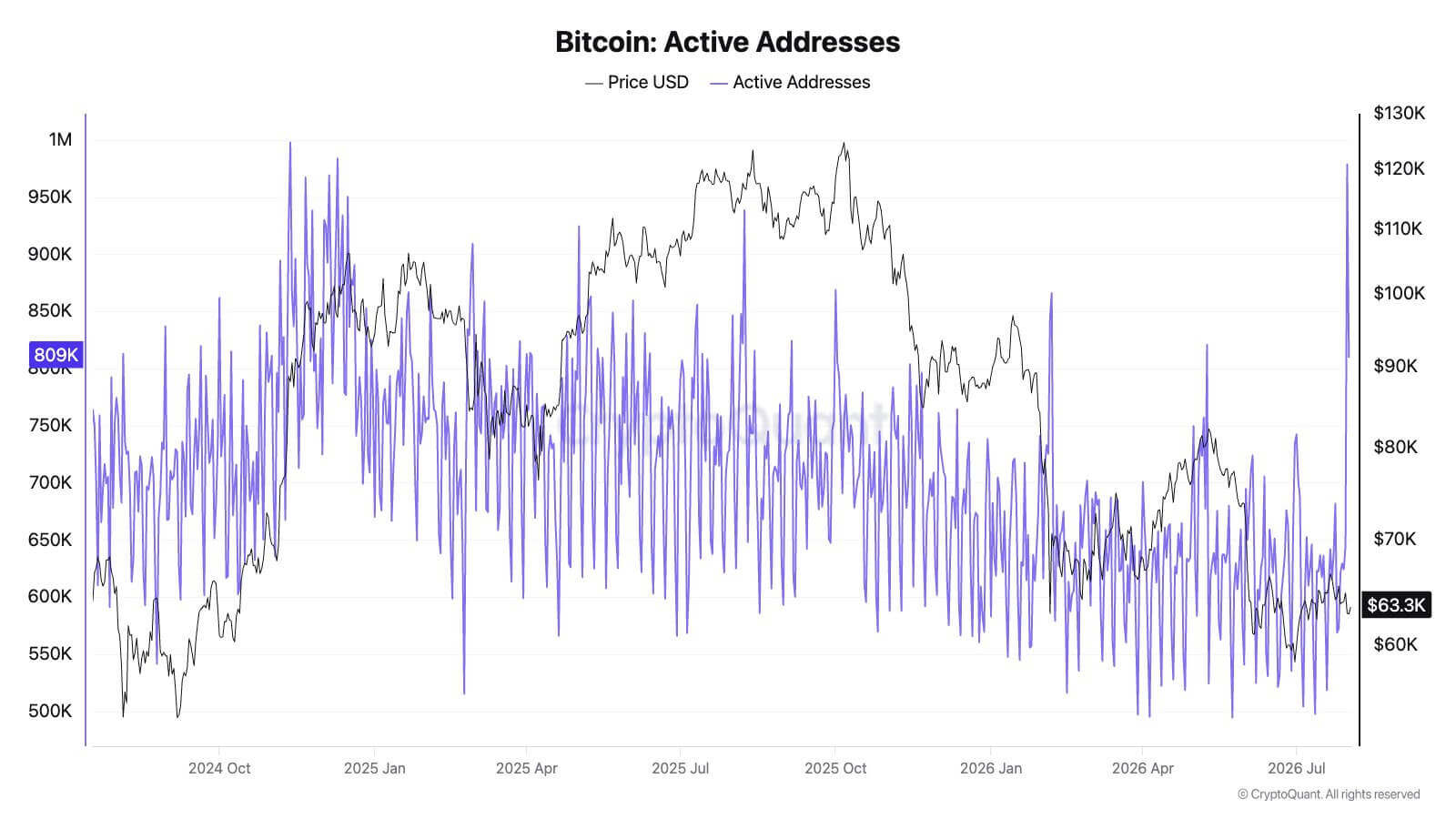
Daily Active Bitcoin Addresses (Data Source: CryptoQuant)

Exchange deposits from transactions involving less than 10 Bitcoin rose to 7,300 BTC, hitting a new high since February 6 of that year. Some users temporarily deposited assets into exchanges during the transition period while setting up new secure wallets, although this flow also included chips that investors intended to sell for cash.
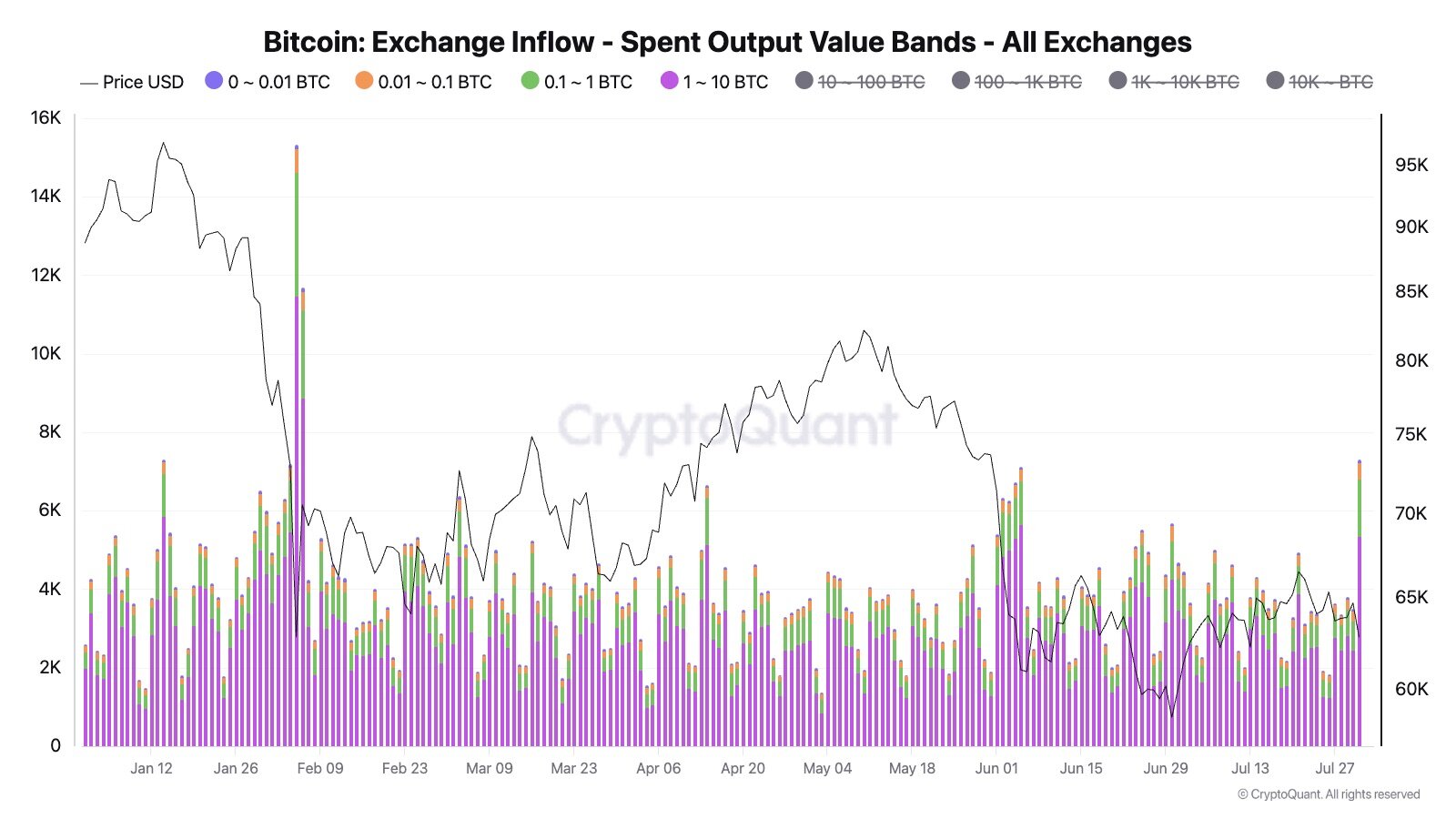
Surge in Bitcoin Exchange Deposits After Coldcard Incident (Source: CryptoQuant)

CryptoQuant analyst JA Maartunn added that after the vulnerability was exposed, 77,402 BTC that had been inactive for a long time were transferred. However, Maartunn cautioned that this large-scale movement of funds should not be seen as evidence of widespread panic selling by investors. Considering the context of the event, the nature of the fund movement is essentially users strengthening their wallet security.

He stated: "The Coldcard seed phrase issue has led users to transfer their long-held Bitcoin to ensure asset safety. This will interfere with the accuracy of various chart data such as Long-Term Holder supply changes, Coin Days Destroyed, and Spent Output Age Bands."

With the surge in on-chain transaction activity, overall market sentiment deteriorated sharply. Blockchain analytics firm Santiment pointed out that the ratio of bullish to bearish Bitcoin comments across the entire network fell to its lowest level since the platform began modern social data tracking. On platforms like X, Reddit, and Telegram, for every 1 bearish comment, there were only 0.58 bullish comments.
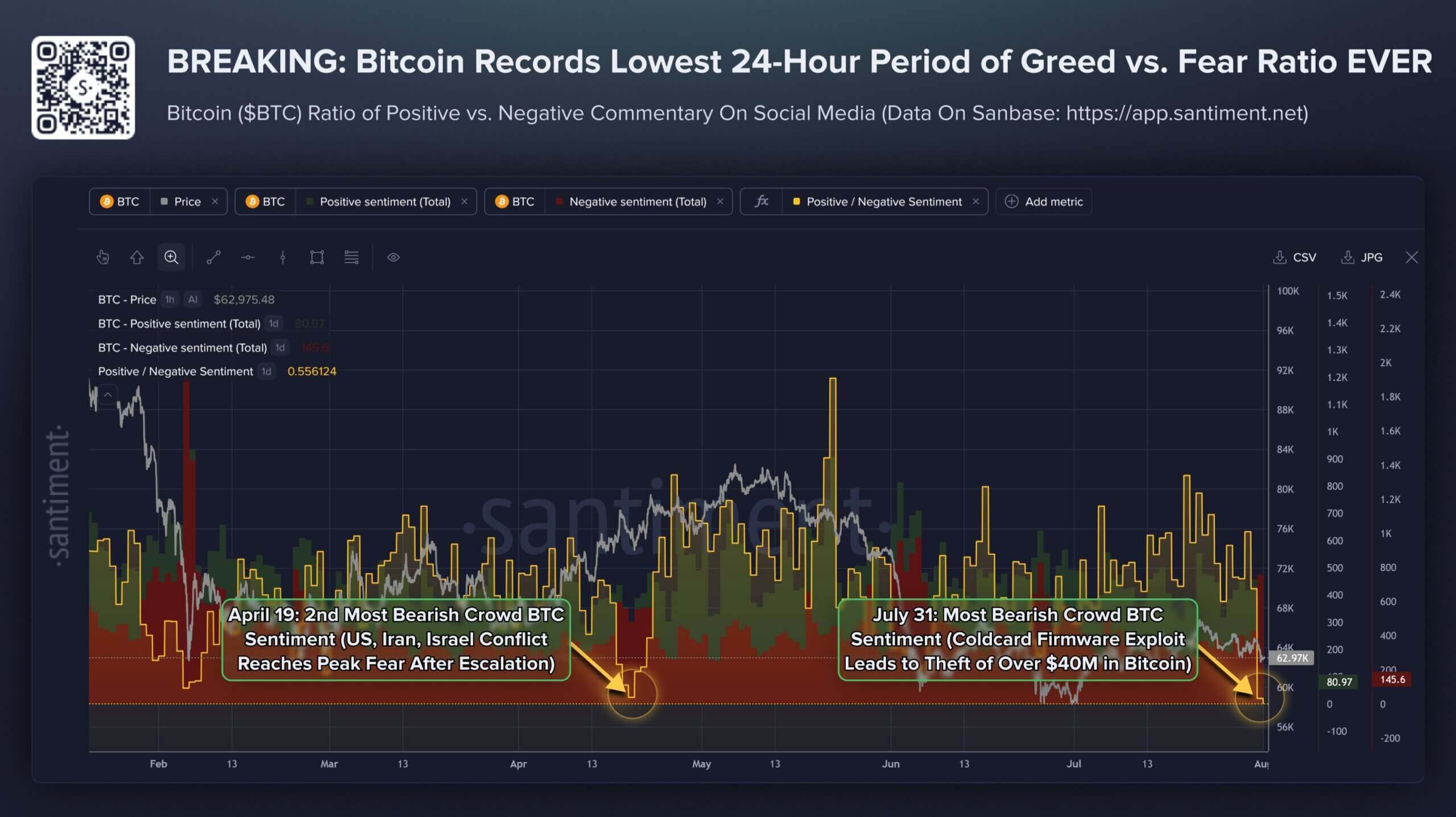
Bitcoin Market Sentiment Turns Bearish (Source: Santiment)

Santiment believes the reason for such a strong market reaction lies in the fact that the vulnerability attack targeted cold storage wallets. Most holders view cold wallets as the final line of security for their Bitcoin assets after withdrawing from exchanges and distancing themselves from high-risk crypto platforms.

US AI Control Regulations Increase Difficulty in Tracking Coldcard Case

These wallet transfers, which caused the distortion of Bitcoin market signals, also made tracing the stolen funds an urgent task, requiring the flow to be identified before the funds enter platforms where they can be exchanged or withdrawn.

Galaxy Research compiled information reported by victims, collated a series of suspected hacker addresses, and shared the materials with law enforcement, compliance institutions, and other cybersecurity investigators. Thorn revealed that institutions have reported approximately 600 suspected hacker addresses holding stolen Bitcoin.

However, he stated that security guardrails set by major mainstream AI models in the United States have hindered stolen asset tracking and user protection efforts, forcing the investigation team to switch to a Chinese open-source AI model. Thorn did not specify which U.S. AI models were involved, which query commands were blocked, nor did he detail what assistance this alternative model provided for the investigation. Nonetheless, the dilemma he described closely resembles the challenges faced by Hugging Face during a previous cyberattack.

This AI platform stated that automated programs had once infiltrated part of its infrastructure, and the security team needed to analyze over 17,000 event logs. Initially, investigators used commercial APIs to call mainstream leading AI models, uploading attack commands, exploit payloads, and command-and-control-related logs for analysis.

Hugging Face claimed that all these queries were blocked by the system. The reason was that the AI security system could not distinguish between investigators conducting emergency response and actual attackers. Ultimately, the team chose GLM 5.2, an open-source weight model independently developed by China's Zhipu AI, and completed all forensic analysis on their own servers.

This model assisted staff in mapping out the complete attack timeline, locating leaked credentials, extracting intrusion characteristics, and differentiating between real attack traces and decoy interference. Hugging Face stated that forensic work that originally would have taken several days was shortened to a few hours with AI assistance.

This case confirms the offensive-defensive AI asymmetry mentioned by Thorn in the Coldcard case: hackers can use unrestricted, self-modifiable AI tools, free from the security rules of commercial models; meanwhile, defenders often face AI rejections when submitting materials containing malicious characteristics for case investigation, even if the intent is to contain a severe security incident.

However, broadly removing AI security restrictions would create new risks. AI service providers cannot grant permissions based solely on users' verbal claims of tracking stolen funds, as such unrestricted tools could also be abused for wallet attacks, money laundering, evading transaction regulations, and other illegal activities.

This contradiction is particularly acute in the crypto field: stolen assets can circulate through cross-chain bridges, exchanges, and gambling platforms within minutes. Any delay in tracking means funds could be transferred into platforms that allow free withdrawals before victims receive a police report receipt or investigators complete manual tracing, completely losing the opportunity for freezing.


Câu hỏi Liên quan

QWhat was the primary cause of the Coldcard wallet vulnerability that led to the theft?

AThe primary cause was a software flaw in specific versions of Coldcard firmware, which resulted in the generation of seed phrases (mnemonics) with significantly lower randomness than the designed standard.

QAccording to the article, how did the mass migration of funds following the Coldcard incident affect Bitcoin's on-chain indicators?

AThe mass migration caused a sharp, anomalous spike in the activity of small Bitcoin holders and long-dormant wallets. It disrupted key on-chain metrics like Long-Term Holder supply changes, Coin Days Destroyed, and Spent Output Age Bands, making them less accurate for market analysis.

QWhat challenge did investigators face when trying to track the stolen funds from the Coldcard hack, as mentioned by Galaxy Research's Alex Thorn?

AInvestigators faced challenges due to the security guardrails of mainstream US AI models, which blocked their queries even when the intent was investigative. This limited their ability to analyze malicious data for tracking, creating an asymmetry where attackers could use unrestricted AI tools while defenders were hindered.

QWhat was the notable similarity between the investigation difficulties in the Coldcard case and a previous incident involving Hugging Face?

AIn both cases, the security protocols of commercial AI models prevented investigators from submitting attack-related data (like logs or payloads) for analysis, as the AI could not distinguish between malicious actors and security researchers conducting forensic investigations.

QWhy does the article suggest the market reaction to the Coldcard vulnerability was particularly severe?

AThe market reaction was particularly severe because the vulnerability targeted cold storage wallets, which are widely perceived by holders as the final, most secure line of defense for Bitcoin assets after withdrawing them from riskier platforms like exchanges.

Nội dung Liên quan

Rubin Ultra bị cắt giảm mạnh cấu hình, NVIDIA cũng không chịu nổi giá bộ nhớ tăng?

Tuần qua, một báo cáo từ công ty nghiên cứu SemiAnalysis đã gây xôn xao ngành AI, tiết lộ thông số kỹ thuật của Rubin Ultra - phiên bản cao cấp nhất trong kiến trúc Rubin mới của NVIDIA - đã bị giảm mạnh so với kỳ vọng trước đó. Theo báo cáo, Rubin Ultra sẽ giữ nguyên hiệu suất tính toán lý thuyết đỉnh (35 PFLOPs) so với Rubin thông thường, nhưng dung lượng bộ nhớ (VRAM) bị cắt giảm nghiêm trọng, chỉ còn 192GB (8-Hi), thậm chí thấp hơn Rubin tiêu chuẩn (288GB, 12-Hi). Băng thông bộ nhớ gần như không cải thiện và mức tiêu thụ điện năng thậm chí còn tăng nhẹ. Thay vào đó, nâng cấp chính của Rubin Ultra tập trung vào khả năng mở rộng kết nối hệ thống, có thể liên kết tối đa 576 GPU thành một "siêu GPU logic" duy nhất thông qua NVLink. Nguyên nhân chính của việc giảm cấu hình được cho là do chi phí HBM (High Bandwidth Memory) tăng quá cao, ảnh hưởng đến tính kinh tế chung của hệ thống AI. Giá HBM3 đã tăng mạnh từ mức 180-220 USD (Q2/2025) lên 700-850 USD (Q2/2026). Việc điều chỉnh thiết kế giúp giảm chi phí nguyên vật liệu (BOM) cho một tủ máy từ khoảng 8 triệu USD xuống còn 6,4 triệu USD, chuyển trọng tâm đầu tư từ HBM đắt đỏ sang khả năng kết nối mở rộng. Thông tin này đã khiến thị trường lo ngại về đỉnh cao nhu cầu HBM, dẫn đến cổ phiếu của các hãng sản xuất bộ nhớ hàng đầu như SK Hynix và Samsung giảm khoảng 8%. Động thái của NVIDIA cho thấy ngay cả gã khổng lồ dẫn đầu về sức mạnh tính toán cũng đang bắt đầu tính toán kỹ lưỡng chi phí, đánh dấu sự dịch chuyển trong ngành AI từ việc "tích trữ linh kiện và tăng giá vô tội vạ" sang tối ưu hóa hiệu quả chi phí toàn hệ thống.

Odaily星球日报21 phút trước

Rubin Ultra bị cắt giảm mạnh cấu hình, NVIDIA cũng không chịu nổi giá bộ nhớ tăng?

Odaily星球日报21 phút trước

Mô hình sinh đã có thể huấn luyện end-to-end? Cốt lõi chỉ là một vòng lặp for

Mô hình tạo sinh (generative models) từ lâu đã phụ thuộc vào các phương pháp đào tạo nhiều giai đoạn (như diffusion, autoregressive), dẫn đến "exposure bias" - sự khác biệt giữa cách huấn luyện và suy luận. Bài báo "Explorative Modeling" (XM) từ UIUC và Harvard đề xuất một giải pháp đơn giản nhưng mạnh mẽ: thay vì tách quá trình tạo mẫu, hãy tách vòng lặp huấn luyện. Trong mỗi bước huấn luyện, mô hình tạo ra K ứng viên, sau đó chỉ chọn ứng viên gần nhất với dữ liệu thực để cập nhật gradient. Vòng lặp `for` đơn giản này giải quyết vấn đề "mode blurring" - xu hướng của hàm mất mát tái tạo đẩy đầu ra về trung bình của các mode hợp lệ, tạo ra kết quả mờ nhạt. Bằng cách khám phá nhiều ứng viên, mô hình học cách bao phủ nhiều mode khác nhau trong phân phối dữ liệu. Khả năng này được gọi là "biểu đạt tạo sinh" (generative expressivity). Thí nghiệm cho thấy "khám phá" (exploration) trở thành một trục mở rộng quy mô hiệu quả thứ ba, bên cạnh quy mô dữ liệu và tham số. Khi quy mô tăng, lợi ích từ việc khám phá càng lớn, cải thiện hiệu suất FLOP, mẫu và tham số. XM đạt được kết quả tạo ảnh trên ImageNet (FID 1.43 không guidance) ngang bằng các mô hình hàng đầu. Quan trọng hơn, XM cho phép huấn luyện mô hình tạo sinh "end-to-end" thực sự. Trong thí nghiệm điều khiển robot, Explorative Policy chỉ cần một lượt truyền thẳng mạng, đạt hiệu suất tương đương Diffusion Policy cần hàng trăm bước suy luận. Điều này chuyển chi phí tính toán từ giai đoạn suy luận sang giai đoạn huấn luyện, mở ra khả năng cho các mô hình tạo sinh nhanh và hiệu quả hơn. Công trình dựa trên lý thuyết "Mode Forcing" trước đó của nhóm tác giả. Hạn chế hiện tại bao gồm chi phí tính toán cho "Forward XM" trên phân phối nhiều mode và thách thức với mô hình ngôn ngữ tự hồi quy thuần túy.

marsbit1 giờ trước

Mô hình sinh đã có thể huấn luyện end-to-end? Cốt lõi chỉ là một vòng lặp for

marsbit1 giờ trước

Mỗi người tối đa 20 bài? Quy định mới của ICLR bị nhà nghiên cứu DeepMind 'mỉa mai' kiến nghị

Tác giả Google DeepMind Dan Roy đã khởi xướng một kiến nghị trào phúng nhằm phản đối quy định mới của hội nghị AI hàng đầu ICLR, giới hạn mỗi tác giả chỉ được đăng ký tối đa 20 bài báo tham dự ICLR 2027. Quy định này được đưa ra do số lượng bài nộp tăng đột biến 68% vào năm 2026, gây áp lực nặng nề lên hệ thống phản biện. Trong bài đăng của mình, Dan Roy giả vờ ủng hộ việc để AI Agent tạo ra càng nhiều nghiên cứu gia tăng càng tốt, và cho rằng giới hạn này sẽ "làm chậm sự phát triển của AI". Anh còn mỉa mai nhận xét rằng "tất cả công việc phản biện giờ đã được giao cho các mô hình ngôn ngữ lớn xử lý", ám chỉ đến một nghiên cứu trước đó phát hiện khoảng 21% ý kiến phản biện tại ICLR 2026 có khả năng cao là do AI tạo ra. Bài viết chỉ ra rằng thông điệp trào phúng của Roy thực chất phản ánh mối lo ngại về một vòng luẩn quẩn: AI tạo ra bài báo hàng loạt, nhà nghiên cứu gửi đi hàng loạt, và phản biện viên lại dùng AI để đánh giá hàng loạt. Qua đó, tác giả đặt câu hỏi liệu biện pháp giới hạn số lượng cứng nhắc có phải là giải pháp tối ưu cho những thách thức căn bản về chất lượng học thuật trong kỷ nguyên AI này.

marsbit1 giờ trước

Mỗi người tối đa 20 bài? Quy định mới của ICLR bị nhà nghiên cứu DeepMind 'mỉa mai' kiến nghị

marsbit1 giờ trước

OpenAI không bán tiền dựa trên mô hình đắt nhất

OpenAI đã điều chỉnh giá, giảm 80% cho mô hình GPT-5.6 Luna và 20% cho Terra, đồng thời giới thiệu chế độ Fast cho mô hình mạnh nhất Sol. Động thái này, cùng với việc Anthropic giới thiệu Claude Opus 5 với giá bằng một nửa so với flagship Fable 5, đánh dấu sự thay đổi chiến lược quan trọng: các hãng không còn chỉ tập trung bán mô hình mạnh nhất. Thay vào đó, họ khuyến nghị người dùng kết hợp các mô hình theo nhiệm vụ: dùng Sol (đắt, mạnh) để phân tích và lập kế hoạch phức tạp, sau đó giao cho Luna (rẻ, hiệu quả) thực thi. Điều này cho thấy trọng tâm thương mại đang chuyển từ các mô hình flagship (chứng minh năng lực kỹ thuật) sang các mô hình tầm trung, phục vụ cho lượng truy vấn API khổng lồ hàng ngày của doanh nghiệp, nơi hiệu quả chi phí (ROI) và độ ổn định là yếu tố quyết định. Một yếu tố then chốt giúp giảm chi phí là việc chính các mô hình AI (như Sol) tham gia tối ưu hóa mã nguồn và quy trình vận hành của chính chúng, tạo ra một vòng lặp tự thúc đẩy giảm chi phí. Điều này có thể đẩy nhanh hơn nữa đà giảm giá trong tương lai. Cạnh tranh đang chuyển từ "mô hình thông minh nhất" sang "hệ sinh thái hiệu quả nhất". OpenAI muốn biến các mô hình như Luna thành lựa chọn mặc định cho các tác vụ thường ngày, từ đó gia tăng độ phụ thuộc và chi phí chuyển đổi cho doanh nghiệp. Tương tự như ngành điện hay điện toán đám mây, mục tiêu cuối cùng là AI trở thành một tiện ích phổ biến, hoạt động âm thầm và không thể thiếu trong mọi quy trình, thay vì chỉ là một sản phẩm công nghệ đình đám.

marsbit3 giờ trước

OpenAI không bán tiền dựa trên mô hình đắt nhất

marsbit3 giờ trước

Lương trăm nghìn đô la săn thợ điện, Meta vội vàng tự mở trường dạy nghề

Cuộc đua AI đang vấp phải nút thắt mới: thiếu hụt nghiêm trọng lao động lành nghề như thợ điện và công nhân xây dựng để xây dựng các trung tâm dữ liệu quy mô lớn. Tại Mỹ, dự báo cần thêm 130.000 thợ điện và 240.000 công nhân xây dựng từ 2023-2030 cho hạ tầng AI, trong khi mỗi năm có 80.000 vị trí thợ điện không thể lấp đầy. Các công ty AI sẵn sàng trả lương cao (thợ điện giỏi có thể kiếm 240.000-280.000 USD/năm), nhưng sự chậm trễ xây dựng vẫn gây thiệt hại hàng chục triệu USD. Độ phức tạp của các trung tâm dữ liệu AI, với công suất điện khổng lồ, hệ thống phân phối điện và làm mát phức tạp, đòi hỏi lao động có kỹ năng đặc biệt. Để giải quyết, các gã khổng lồ công nghệ như Meta và Google đang đầu tư hàng trăm triệu USD vào đào tạo. Meta mở trường dạy nghề miễn phí, cung cấp cả trợ cấp sinh hoạt, trong khi OpenAI hợp tác với công đoàn xây dựng. Chiến dịch tuyển dụng nhắm đến cả học sinh trung học, góp phần làm tăng mạnh tỷ lệ Gen Z theo học trường nghề. Tuy nhiên, nhu cầu điện cho AI tiếp tục bùng nổ, chiếm phần ngày càng lớn trong tổng tiêu thụ điện và đẩy giá điện lên cao. Một nghịch lý tồn tại: các dự án xây dựng cần hàng nghìn lao động cùng lúc, nhưng khi hoàn thành chỉ cần số ít vận hành, dẫn đến rủi ro dư thừa lao động lành nghề trong tương lai.

marsbit3 giờ trước

Lương trăm nghìn đô la săn thợ điện, Meta vội vàng tự mở trường dạy nghề

marsbit3 giờ trước

Giao dịch

Giao ngay
活动图片