A rare robotics financing deal surfaces.
Investment industry has learned that Sihe Robot, an intelligent high-altitude robotics company, has completed a Series C financing round of several hundred million yuan. The round was jointly led by Qianggang Capital and Zhongji Innolight, with Guangxi Investment Capital, Guohai Securities, and Jun Tong Capital participating. Existing shareholder Fosun Rui Zheng continued to add capital.
The founder behind the company is Xu Huayang, a Tsinghua PhD from Gushi County, Henan Province, near the Sihe River. Around 2015, he led a team to establish Sihe Robot, entering the high-altitude specialized robotics track. Over the past decade, the company has focused on the core technology and application scenarios of intelligent high-altitude robots. To date, it has accumulated reference customer cases from over 40 countries worldwide, making it one of the few embodied intelligent specialized robotics companies in China that has passed commercialization validation and entered the scale delivery phase.
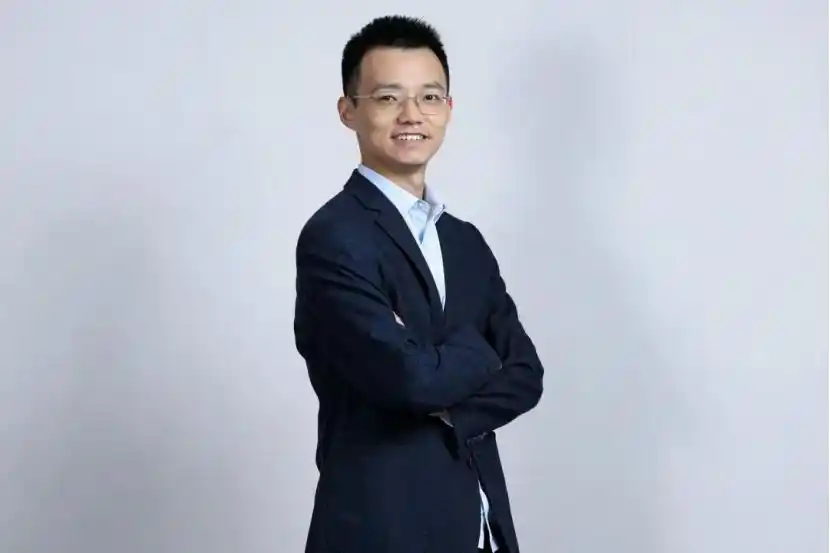
Xu Huayang, Founder and CEO of Sihe Robot
"The essence of business is value creation and value sharing. The robotics industry is no exception; it ultimately has to return to real scenarios, create value for customers, and achieve a business closed-loop." Talking about the initial intention of starting the business, Xu Huayang told the investment industry that Sihe hopes to "empower humans with robotics and AI, eliminating dangerous and arduous work in the world."
Tsinghua PhD's Decade of Entrepreneurship
Dedicated to Building Robots
The Sihe River, ancient name 'Jue Shui', flows across Henan and Anhui provinces. It originates from the northern foothills of the Dabie Mountains, flows through Jinjiazhai and Meishan in Anhui, Gushi in Henan, and enters the Huai River at Sanhejian.
Xu Huayang grew up by the Sihe River, enjoying swimming in the river and playing on its banks. He completed his undergraduate studies at the School of Mechanical and Electrical Engineering of Central South University, then pursued his master's, PhD, and postdoctoral research at the Department of Mechanical Engineering, Tsinghua University. Many years later, when naming his company, his first thought was "Sihe", taking its meaning of "long history and flowing river, originating far and lasting long", hoping the company could have enduring and healthy longevity.
In Xu Huayang's memory, what truly allowed him to see the heights an individual's life might reach was at Tsinghua. Apart from immersing in the library, working on projects, and conducting research, his greatest interest during his time at Tsinghua was attending various top-tier lectures and sharing sessions. Entrepreneurs like Jack Ma, Pony Ma, Lei Jun, Wang Xing, Peter Thiel, as well as Nobel laureates, Fields Medalists, and academicians, all appeared on Tsinghua's stage.
"A great university is not about buildings, but about masters." These experiences broadened Xu Huayang's horizons and slowly planted the seed of entrepreneurship. He later concluded: in peacetime, perhaps the best path to realize self-worth is entrepreneurship.
The first venture happened within the Tsinghua campus. Inspired by the "Steve Jobs" biography, Xu Huayang initiated an "optical computer" project for a Mini PC All-in-One, creating optical interaction and display equipment based on VR interaction. In early 2015, he assembled a team of around 10 people, secured initial funding by mid-year, and completed small-batch trial production by year-end. In 2016, the project was acquired by an industrial investor. This experience allowed Xu Huayang to complete the entire entrepreneurship cycle for the first time.
In mid-2017, Xu Huayang graduated with his PhD. Before graduation, he had not sent out a single resume nor attended a single job interview. After graduation, Xu Huayang had no hesitation about entrepreneurship. The day after graduation, he rented an office in Wudaokou and began his new entrepreneurial journey.
For his next venture, driven by interest and guided by vision, Xu Huayang naturally chose the robotics direction. He is an avid fan of science fiction; Asimov's "Foundation" and "Robot" series deeply influenced him. Works like "The Hitchhiker's Guide to the Galaxy", "2001: A Space Odyssey", "Journey to the Center of the Earth", and "The Three-Body Problem" also continuously expanded his imagination of the future world. Combined with years of work in robotics at Tsinghua, Xu Huayang at that time nurtured the idea of creating a world-class robotics company.
Xu Huayang likes a quote from Lao Tzu's "Tao Te Ching": "Deal with the difficult while it is still easy; accomplish the great task by a series of small acts. The difficult things of the world must be tackled when they are easy; the great things of the world must be tackled when they are small. Therefore, the Sage never attempts great things, and thus he can achieve greatness." Even the grandest vision must start from a specific entry point.
At that time, robotics entrepreneurship was not quiet. DJI had already emerged in the air; ground mobile robots had seen a batch of companies in scenarios like power inspection; underwater robotics was still some distance from scaled commercialization. Xu Huayang led the team to repeatedly investigate opportunities for mobile robots in "land, sea, air, and space" scenarios. Sihe finally targeted a less noticed area—high-altitude vertical surface scenarios.
According to the national standard GB 3608-2025 "Classification of Work at Height", all operations at a height of 2 meters or more above the falling reference plane, where there is a risk of falling, are uniformly defined as work at height. Shipyards, petrochemical plants, wind farms, thermal power plants, and building facades all have such massive and high-risk needs. The scale is sufficiently large and sufficiently high-risk. Globally, the number of technicians engaged in high-altitude work exceeds 50 million; in China, the estimated scale exceeds 10 million workers. According to years of safety statistics from the Ministry of Emergency Management, falls from height have long occupied the top position in fatal production safety accidents in industrial, commercial, and mining sectors.
Beyond danger, there are more realistic changes: workers are increasingly difficult to recruit, costs are rising, and job quality is hard to fully stabilize. High-altitude work is gradually becoming a scenario that needs to be redone by robots.
But finding the scenario is only the first step.
In the following years, Sihe experimented with different technical paths and multiple niche scenarios. The team worked on cleaning vertical columns of high-speed rail stations, cleaning wind turbine towers, and inspecting boilers in thermal power plants. After repeated trial and error, Sihe gradually converged to today's technical architecture and product layout. Over the years, the company has applied for over 480 intellectual property rights and has been recognized as a national-level "Little Giant" specialized and sophisticated enterprise and a national intellectual property advantage enterprise.
What truly opened the door for Sihe was the ship hull cleaning robot.
Ship hull cleaning (descaling) is a rigid necessity in ship repair. Ocean-going vessels inevitably corrode and rust during long-term voyages. The broader background is that China has become one of the world's most important shipbuilding and ship repair markets. According to data from the Ministry of Industry and Information Technology and the China Association of the National Shipbuilding Industry, in 2025, China's ship completions reached 53.69 million deadweight tons, accounting for 56.1% of the world's total. In 2024, 10,532 ships of over 10,000 deadweight tons were repaired globally, with China accounting for 54.1% of the world's total.
For shipyards, the calculation is straightforward. The dock is the core asset of a ship repair yard, and cleaning is the process that occupies the dock's schedule the most. Therefore, faster cleaning allows earlier progression to subsequent painting, inspection, and delivery. The higher the dock turnover rate, the higher the shipyard's efficiency.
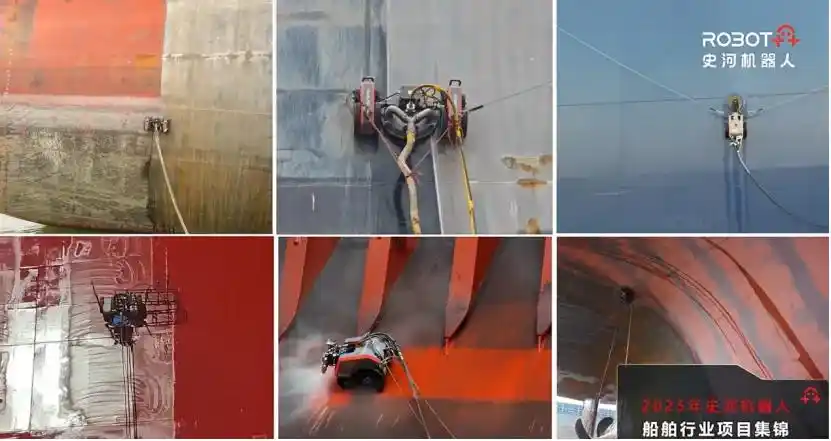
Sihe Ship Hull Cleaning Robot
Today, the ship hull cleaning robot has become one of Sihe's core products. According to Sihe Robot, the shipment volume of this single product ranks among the top globally, with a market share of 70% to 80% in China's segment. During operation, the robot adheres to the ship's hull surface, carrying ultra-high-pressure water jets to complete cleaning, with efficiency 5 to 6 times that of manual labor.
Starting from ship hull cleaning, Sihe's capabilities are extending to more high-altitude specialized operation scenarios, including petrochemical storage tank maintenance, energy equipment maintenance, bridge infrastructure, and building curtain wall maintenance. In the shipbuilding and repair industry, scenarios like cleaning, painting, and grinding require balancing efficiency, cost, safety, and environmental requirements. In the petrochemical industry, operations like internal and external tank wall cleaning/painting, and pressure vessel grinding/inspection have high requirements for explosion-proof equipment, safety approvals, and quality consistency. In the energy industry, scenarios like wind turbine tower weld inspection and thermal power boiler water-wall inspection require equipment with flexible movement, precise positioning, efficient detection, and remote data collection capabilities. In the construction industry, building exterior and glass curtain wall cleaning has long relied on "spider-men", posing significant safety risks and issues like recruitment difficulty and high labor costs. In bridge maintenance, inspection and upkeep of large steel box girders and steel bridge towers require robots with adaptability to complex structures and reliability.
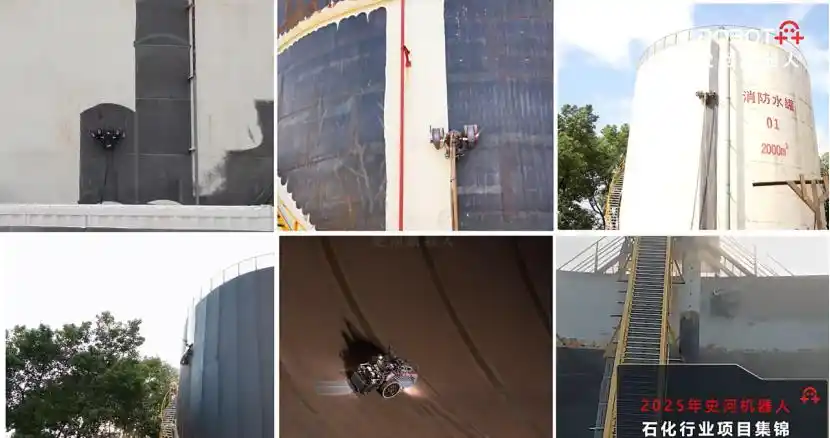
Sihe Chemical Tank Maintenance Robot
After a decade of experience, Xu Huayang's team realized: to win in the specialized intelligent robotics business, the core philosophy is "one machine for multiple uses, process closed-loop". To enhance the company's overall competitiveness, it cannot rely on a single product; ultimately, a series of product portfolios and complete solution sets must be formed.
It is reported that the company has served clients including COSCO Heavy Industry, China State Shipbuilding Corporation (CSSC), China Merchants Industry, CNPC, Sinopec, CNOOC, Wanhua Chemical, Dutch Vopak, Saudi Aramco, and has accumulated overseas orders worth billions of yuan.
Behind the orders lies the time a hardware company must endure. Xu Huayang later summarized the rhythm of hardware: three years to enter the industry, five years to understand it, ten years to dominate. Hardware entrepreneurship has its own rhythm: the first two years building the team and accumulating technology, the third and fourth years refining products and iterations, the fifth and sixth years commercial landing, the seventh and eighth years entering the first tier, and around ten years to have a chance to become a top player in the industry. Many things cannot be rushed. The more a robotics company relies on heavy scenarios, delivery, safety, quality, and reputation, the more it must be honest and patient, to withstand the test of time.
Over the past decade, Sihe did not wait for a trend to arrive. The scenarios it addresses are not glamorous, but sufficiently rigid; the work it replaces has long been overlooked, yet concerns efficiency, cost, and safety.
Perhaps robots start changing the world precisely from these places.
Zhongji Innolight, Meituan's Strategic Investment Backing
Decoding the Financing Story
In Xu Huayang's memory, fundraising in the earliest years was not too difficult.
At that time, the mass entrepreneurship and innovation wave was strong, and Sihe quickly secured its first 6 million yuan angel round from early investors like Panda Capital and Eagle Fund. Subsequently, Baidu Ventures entered, quadrupling the company's valuation.
By 2020, the company completed a 100-million-yuan level Series A financing, led by ZWC Partners, with HeTong Capital participating. Existing shareholders Baidu Ventures and TusStar continued to follow on. By then, Sihe had passed the early trial-and-error stage, and industrial scenarios like ship cleaning and chemical tank anti-corrosion were beginning to take shape.
"The pain points of high-altitude work are clear enough: low efficiency, high cost, high danger." Yao Anmin, Partner at ZWC Partners, believed this is precisely the rigid-need scenario most suitable for robotics to enter. Sihe's years of deep cultivation, with landed products and customer recognition, were key.
Han Zhou, Managing Director of HeTong Capital, valued Sihe's team foundation and platform technical capabilities. In his view, Sihe originated from Tsinghua, had achieved scaled application in ship cleaning, and still had opportunities to enter more high-altitude work scenarios.
At the Series B stage, Sihe encountered a crucial juncture. In 2021, the company underwent management restructuring, with early co-founders exiting, and negotiations lasted for months. At that time, Meituan's Strategic Investment had already expressed investment intent. Xu Huayang did not avoid the situation, honestly communicating it to the other party. After learning the details, Meituan's Strategic Investment continued to firmly support Xu Huayang: as long as the equity issue was properly resolved, they remained optimistic about the team and direction, and the investment decision would not change.
Eventually, Sihe transitioned smoothly. Months later, Meituan's Strategic Investment participated in Sihe's Series B financing as promised.
Sihe's roadshows often happen not in PowerPoint, but on job sites. When investors enter the shipyard, many judgments become concrete. A hundred-thousand-ton vessel sits in the dock, its hull stretching along the sightline, with layers of rust and old paint covering the steel plates. Standing below, one must stand on tiptoe and look up to see where the robot is working.
The more one understands the industry, the easier it is to grasp this company's value. In subsequent rounds like B+ and B++, industrial capital and local state-owned assets such as Hefei Xingtai, Jiujiang Venture Capital, ZEN Capital, and Zhejiang Port Group gradually entered.
The latest Series C round was jointly led by Qianggang Capital and Zhongji Innolight, with Guangxi Investment Capital, Guohai Securities, and Jun Tong Capital jointly investing. Existing shareholder Fosun Rui Zheng continued to increase its stake.
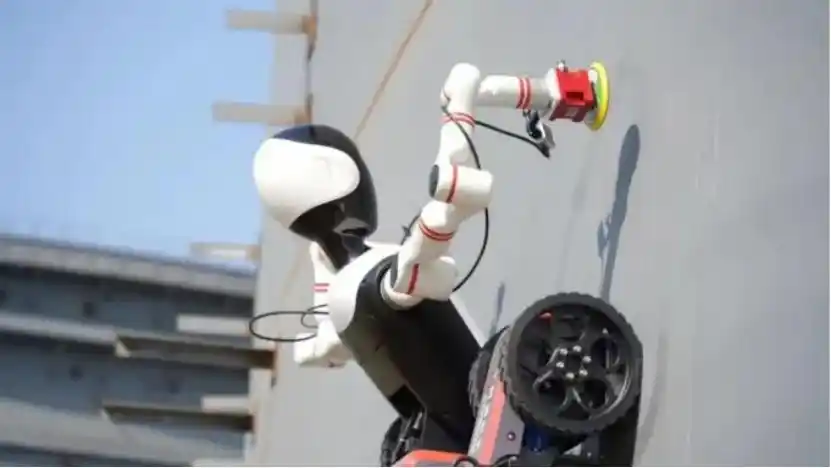
Sihe Professional-Grade Embodied Intelligent Specialized Robot
"Sihe Robot is one of the enterprises we have seen in the port and shipping intelligence sector with the tightest integration of technology and scenario." A relevant person in charge of Qianggang Capital stated that after nearly a decade of deep cultivation, the Sihe team has not only developed mature and reliable product portfolios but also built a core barrier of 'embodiment + AI' with scenario data. They look forward to Sihe accelerating the intelligent transformation of the port and shipping industry.
The entry of Zhongji Innolight adds a layer of industrial synergy. The company values Sihe's technical capabilities and scenario landing in specialized robotics and sees intersections in "AI + intelligent manufacturing". With precision manufacturing accumulation on one side and embodied intelligent robotics capabilities on the other, there is opportunity for further integration in specific scenarios.
Jin Hualong, Chairman of Fosun Rui Zheng, provided a more systematic judgment when discussing this round's continued investment. In his view, Sihe is already one of the embodied AI companies in China with a leading revenue scale. Its competitiveness stems first from long-term roots in marine economy scenarios. Starting from ship cleaning, Sihe's products are extending to more maritime and high-risk operation scenarios like cargo hold cleaning, petrochemical tank maintenance, and offshore wind power inspection.
Breakthroughs in the overseas market validate the spillover potential of this product capability. Furthermore, Sihe is also laying out industrial-grade embodied intelligence, attempting to integrate VLA, world models, reinforcement learning, etc., into specialized operation scenarios, moving from single devices to complete system solutions.
"We entered as an early investor in 2022 and have continuously added capital to accompany the company's growth." Jin Hualong stated that what Fosun Rui Zheng values is precisely Sihe's long-term accumulation in frontline industrial scenarios. With continuous product iteration and expanding scenario boundaries, Sihe has the opportunity to grow into a significant company in the global specialized embodied robotics field.
For Sihe, with more investors on board, what is illuminated is not just the company itself, but also the long-standing, deep-seated needs within the industry.
Going Global
Towards Broader Horizons
Over the past two years, Xu Huayang has witnessed the excitement surrounding embodied intelligence, but his judgment remains more restrained.
The robotics industry does not lack flashy videos or cool demo performances; it lacks products that can create long-term value. A perfect demo is one thing; whether it can operate stably in real environments is another.
Sihe still chooses to return to industrial sites. It is not rushing to tell a general-purpose robotics story but is embedding AI capabilities into specific scenes like shipyards, petrochemical plants, wind farms, and thermal power plants. How to autonomously judge rust on hull surfaces, how autonomous robots can work on vertical surfaces, how to adapt to complex curves and dynamic loads—all must be verified in repeated operations.
Comparing the landing path of autonomous driving, Xu Huayang judges that embodied intelligence will first land in specialized industries and structured scenarios, then move to outdoor and semi-structured scenarios, and finally enter more complex commercial and household scenarios.
The advantage of specialized scenarios is that the data flywheel is easier to establish. Xu Huayang summarizes it in one sentence: Operation is collection; collection is effective.
Compared to some general embodied AI companies needing to build data collection centers or specifically purchase data, Sihe's robots are already operating during tasks. Teleoperation already brings commercial returns, and environmental, path, action, and feedback data naturally accumulate during operations. This data will also form the foundation for higher-level autonomous operation robots in the future.
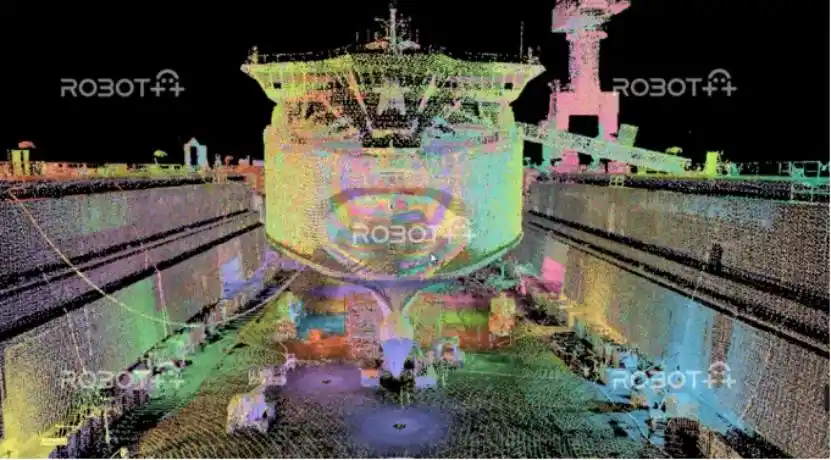
Sihe High-Quality Industrial Scenario World Model
According to Sihe Robot's disclosure, based on nearly a decade of operational accumulation in industrial scenarios like ships, petrochemicals, energy, and construction, the company has amassed over approximately 2 million hours of high-fidelity, multi-dimensional, full-condition industrial field raw data, forming an industry-rare, real industrial dataset that cannot be simply replicated through simulation.
On this foundation, Sihe's algorithm team, in collaboration with top university labs, developed and built an industrial-scenario vertical world model, forming a complete closed-loop technical route: "real industrial field data accumulation—multimodal vertical large model pre-training—virtual-real combined simulation iteration—real-machine field reinforcement learning tuning."
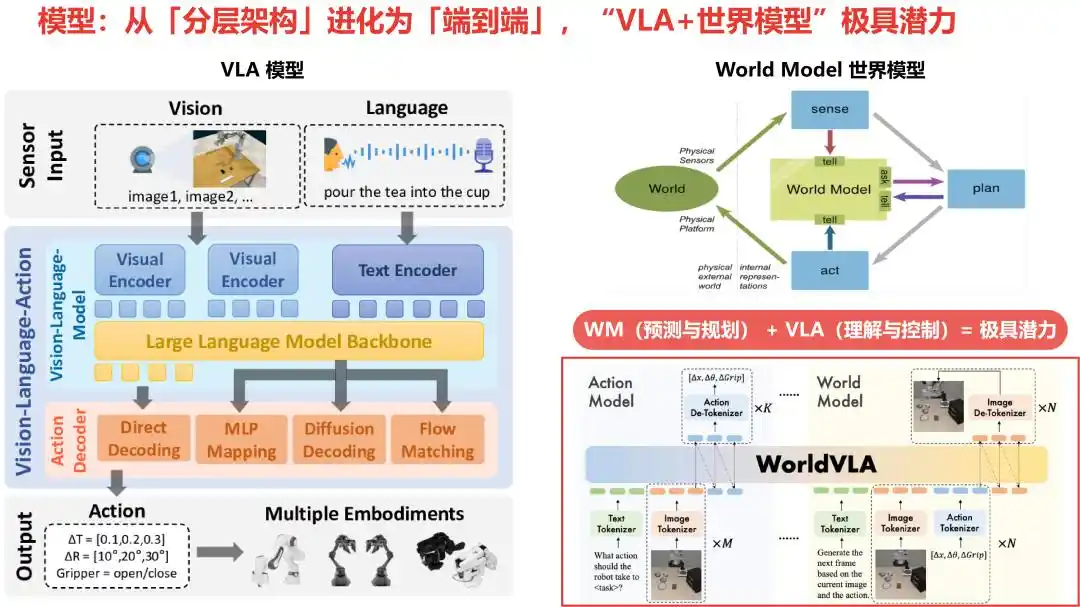
Sihe Embodied Intelligent Specialized Robot Control Paradigm
Compared to general embodied large models, industrial scenarios demand higher safety, stability, and adaptation capabilities. In scenarios like shipyards, petrochemical parks, and energy stations, robots face complex spaces, high-risk areas, and non-standardized equipment; simple generalization is insufficient.
Sihe's vertical industrial world model is precisely built around the operational needs of intelligent specialized robots. It needs to predict equipment defects, plan paths in complex spaces, assess risks in high-risk areas, and continuously optimize actions based on operational feedback, thereby reducing manual remote intervention and enhancing the robot's autonomous perception, decision-making, and operation capabilities.
This is also one of Sihe's technical barriers differentiating it from some industry competitors. As model capabilities continue to iterate, specialized robots are transitioning from "manual remote-controlled tools" to robotic agents with environmental understanding and autonomous operation capabilities. In the future, it will provide underlying AI support for unmanned, scaled, and standardized operations in high-risk scenarios like shipyards, petrochemical parks, and energy stations.
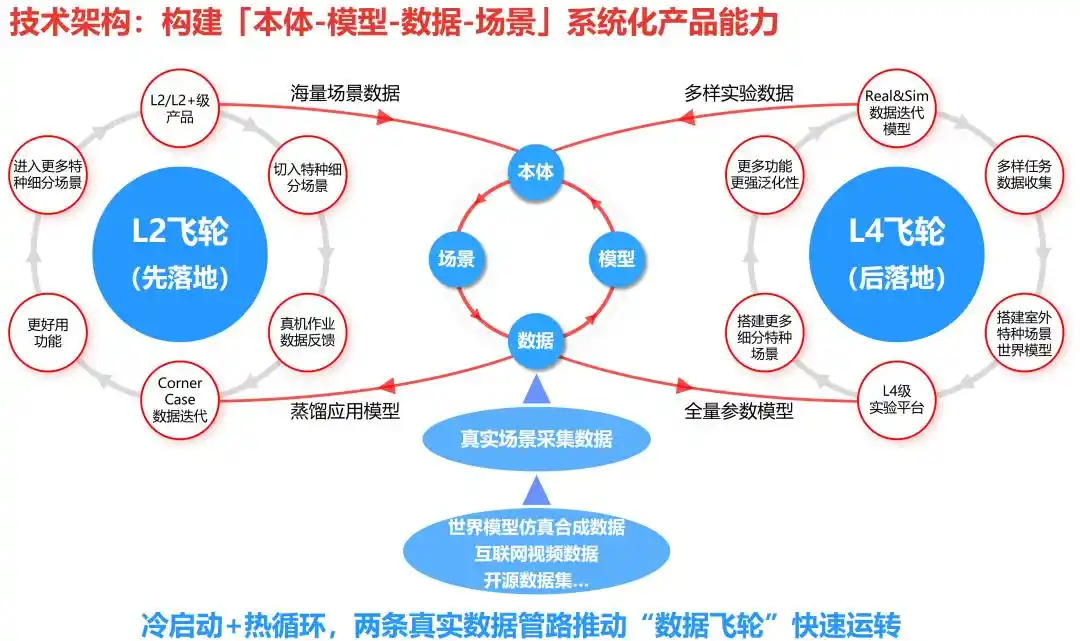
While domestic business grows rapidly and embodied AI technology lands, Sihe's global expansion is also accelerating. In 2023, Sihe began overseas business; two years later, overseas revenue grew tenfold. Xu Huayang hopes that in the next three years, overseas revenue can account for one-third of the company's total, and half after five years.
These demands are not limited to the Chinese market. Vast infrastructure in Southeast Asia, the Middle East, Europe, North America, and South America also faces safety, efficiency, and labor pressure. Sihe aims to bring the products, services, and delivery systems validated in China to a larger global market.
Less is more, slow is fast, giving up is gaining. This is Xu Huayang's long-term philosophy for products and business.
To B robotics is hard to suddenly take off with a single hit. Entering a new market requires building channels, service systems, and local response capabilities bit by bit. Xu Huayang understands that Sihe is engaged in a slow business; only by extending the timeline will compound interest appear.
Over the past decade, Sihe has sent robots into docks, tank areas, and energy stations, and sent itself into industrial sites. Over the next ten to twenty years, Xu Huayang hopes to lead Sihe into the global first tier of intelligent robotics, becoming "the most respected robotics enterprise."
More dangerous and arduous work is being handed over to robots. Sihe's long run has just entered the next leg.
This article is from the WeChat public account "Investment Community" (ID: pedaily2012), Author: Wang Lu