Source: "When Shift Happens" Podcast
Compiled by: Felix, PANews
Cryptocurrency strategist Mark Moss recently appeared on the "When Shift Happens" podcast, using perspectives such as the 50-year technological revolution cycle, the value storage basket, and geopolitics of de-dollarization to point out that Bitcoin will reach $45 million by 2050. If it replaces the US dollar as the globally accepted unit of account and becomes a neutral reserve asset, its value could even reach $500 million.
This prediction sounds crazy, but Moss also provided his analytical basis. PANews has compiled the highlights of the conversation.
Host: Every newcomer to Bitcoin asks themselves a question: How can I get rich through Bitcoin without relying on luck or falling into various scams? People always have a mentality of wanting to "get rich overnight."
Mark Moss: I think this is a flaw of the fiat currency system. The debt system continuously steals your wealth, while real wage growth cannot keep up with rising costs. Therefore, people are forced to adopt more extreme methods, take further risks, and try to offset these losses. Lenin once said to Keynes, the father of Keynesian economics, that the best way to destroy capitalism is to devalue the currency. Through a series of inflation, they can arbitrarily steal wealth and continue to do so until all wealth is gone. The best way to get rich would then be gambling and theft. This is where we are now. Look at our current situation; the best way to get rich today is considered to be gambling. For example, "YOLO (You Only Live Once)," putting all your money into meme coins, or going to Las Vegas for a gamble. This is what people today perceive as the best way to get rich. Or theft, unfortunately, whether it's fraud on Wall Street or robbery on the streets, theft is rampant.
Although we are in such an environment, I don't think this is the best path to wealth. It might sometimes make you lucky, but the fact is, 75% of lottery winners go bankrupt in less than 5 years. This proves that relying on luck, making a big bet, and profiting is not the path to wealth. Musicians and professional athletes who earned thirty or forty million, or even hundreds of millions of dollars, ultimately ended up bankrupt. So, you might indeed make money by chance on some meme stock or crypto token, but the chances of you holding onto that wealth are minimal. In many cases, this even ruins their lives because we must build the ability to hold wealth. Although no one wants to hear it, an inevitable part of the experience is that you must earn money and then lose it 100%. You need to go through gains and losses repeatedly. Only then will you cherish it. Only when you lose it will you learn to cherish it. Then you will tell yourself that you must never make the same mistake again. If you just get lucky and make money once, you will eventually lose it and not know how to make it back.
Host: This is underestimated; there is actually no such thing as a "get rich quick" shortcut. The cryptocurrency or Bitcoin space is only a slow path to wealth, or even a strategy for quick bankruptcy.
Mark Moss: I want to slightly refute this point. If you're willing to say so, you can think of it as a strategy to get rich slowly. The best way to accumulate wealth in the world has always been the stock market. Of course, the best way to accumulate wealth is to start a business. As a creator, solve problems and provide value to the world. The richest people in the world, like Musk, Bezos, Bill Gates, they all built businesses that solved difficult problems; this is the best way to get rich. After that, we reinvest the money we make into real estate or the stock market to double our wealth. The real estate market and the S&P 500 index have created most of the world's wealthy. If you look at their 30-year return rates, it's about 7% to 8% per year. The richest people in the world, like Buffett and Ray Dalio, became wealthy in these markets with 7% to 8% returns.
Host: And now Bitcoin is growing every year. Buffett had about $1 million when he was 31 or 32, which shows that even then, after 60 years you can still become a billionaire.
Mark Moss: But I must point out something about Buffett and Dalio. I see many people entering this field, wanting to quit their jobs and become full-time investors, thinking this is how they can get rich like them. But I want to remind everyone, Buffett didn't just get rich by investing; he built a company called Berkshire Hathaway, and he used to go to work there every day. Ray Dalio too, he built a company called Bridgewater Associates and went to work every day. So they are not just investors; they are entrepreneurs, and we need to balance both.
Returning to the previous point, they accumulated wealth in real estate and the S&P 500 markets with annual returns of 7%-8%. In the past five years, Bitcoin's annualized return has been 85%. Over the past three years, an average of 60% per year. So when we say this is a "slow way to get rich," other markets only have 8% returns, while Bitcoin has 65%, how can that be slow? People are just in an extremely狂热 gambler mentality, hoping to get everything in 3 weeks or 3 days. Everyone really needs to calm down. They have lost a proper perspective on life and have no foundational concept of what wealth is. I often hear people complain that Bitcoin is too slow; they need something that can triple their money in 30 days.
Host: As you said, not wanting stable returns of 3 to 5 times, they often end up losing 99%. This excessive speculative gambling mentality is really sad. Some call it a "financial suicide tendency."
Mark Moss: Yes, Michael Saylor said that in everyone's investment portfolio, there is usually a space left for some risk. This goes back to the hierarchy of needs: first lay the foundation, ensure the safety of capital; if you want to take a portion of money to gamble, that's fine too, but you need to separate it and use only a small portion of funds. Professional investors all understand that we always think from the perspective of risk-adjusted returns. The higher the risk of something, the higher the potential return, so we invest less money. For things with lower risk, we invest more money. We don't allocate money equally. So if you want to chase those hundred-fold returns for excitement, no problem, but be sure to only use a small portion of your portfolio to do it.
Host: Why do people think Bitcoin's price will stop at 1 million?
Mark Moss: It's just the next big round number, but there's no reason for it to stop there. The Congressional Budget Office (CBO) made predictions that the size of the global value storage basket will reach $1600 trillion by 2030, $3800 trillion by 2040, and about $8000 trillion by 2050. And I think the actual number might be higher. Judging by Bitcoin's current growth rate, the compound annual growth rate over the next decade might average around 30%. By 2040, Bitcoin will occupy about 8% of this value basket. In comparison, Uber and Airbnb gained 10% market share within 10 years. Once it occupies 8%, Bitcoin's price will reach $14 million. By 2050, it might occupy about 20% of this basket, which would bring Bitcoin's price to an astonishing $45 million.
Host: It sounds crazy. But I interviewed David Bailey the other day, and he said it is entirely possible for Bitcoin to reach $50 million to $100 million someday in the future.
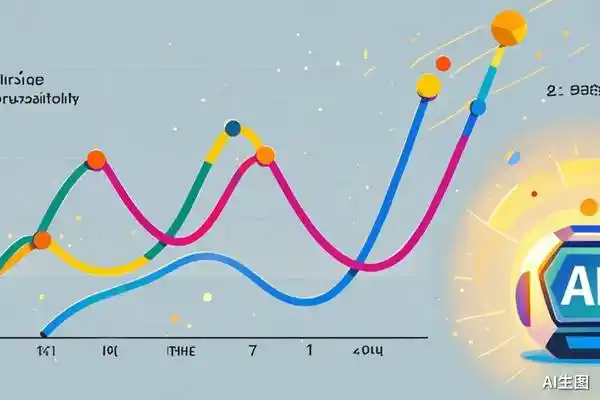
Mark Moss: This is entirely possible. I've done a lot of cycle research, including 4-year, 8-year, 50-year cycles, etc. A technological revolution happens every 50 years, and we are now in the sixth one. Bitcoin and AI正好 belong to this technological revolution cycle. This includes four different stages. We can look at the diffusion of this innovation cycle through the S-curve. We are currently in the parabolic phase and should achieve full adoption around 2050. Furthermore, for thousands of years, money usually started as a "collectible." If people believe in it, it becomes a store of value. Only when it possesses attributes like portability, durability, etc., can it become "money." If enough people use it, it becomes a unit of account, which is the final stage. Superimposing these four stages onto the 50-year cycle chart, I believe that by 2050, Bitcoin could become the world's unit of account.
From a geopolitical perspective, the US dollar has depreciated by 99% over the past 110 years. What really pushed the world to the edge was NATO's decision a few years ago to freeze Russia's bank accounts. As a superpower with nuclear weapons having its funds confiscated, this was equivalent to a warning to the world. Therefore, the BRICS countries are trying to issue their own currency, China is cooperating to advance its central bank digital currency (CBDC). Everyone is looking for solutions to escape the US dollar. In a new world of tariff wars and lack of mutual trust, countries are finding ways to脱离 the fiat currency system. The only way for the world to continue functioning is to find a neutral reserve asset, like the gold standard of the past. And Bitcoin perfectly fits this requirement.
Combining the technology curve and the geopolitical landscape, I believe that between 2050-2060, Bitcoin will become the global unit of account. This means that the value storage basket originally worth $85 quadrillion will no longer be denominated in US dollars, but in Bitcoin. If we divide this $8600 trillion by 21 million Bitcoins, each Bitcoin will be worth $4 to $5 billion.
Host: Hearing this, even the camera crew's expression is like, "Oh no, I have to go buy some Bitcoin quickly."
Mark Moss: I know it sounds crazy, but Bitcoin is programmed to rise forever. This is because the real wealth of human society (goods and services) is always growing; we are always inventing new things and solving new problems. Fiat currency dilutes your share of the world's wealth by printing money, but Bitcoin's total supply is fixed; you are never diluted. As long as I own 1 Bitcoin, I will forever own 1/21 millionth of the world's wealth, and as the total world wealth rises forever, Bitcoin's purchasing power will never be diluted.
Host: You once said that once you buy Bitcoin, your life will change. Why?
Mark Moss: Bitcoin changes your life for many reasons, but ultimately it begins to change your entire mindset, pulling your time horizon for viewing problems further out. The purpose of the fiat currency system is to turn us into consumers, encouraging us to constantly spend. One of the reasons governments create inflation is to stimulate people to spend money to boost the economy, when in fact people should be incentivized to save. For example, during the pandemic, people started staying home and saving money, which hit the economy hard, so the government injected trillions of dollars in stimulus to get people spending again. Our money depreciates too quickly, which also prompts us to keep spending because if we wait, things will become more expensive. However, once we own Bitcoin, we realize that our money can actually buy more goods and services in the future. Under the Bitcoin system, you feel that buying things will be cheaper in the future. When Bitcoin is rising by 50% or 60% every year, this changes your cost of capital. You start to think: Do I really need that vacation? Do I really need that new house or new car? Because I could just put this money into Bitcoin. A few tens of thousands of dollars worth of Bitcoin today, if it becomes $1 million in 5 years, and $15 million in 15 years, am I willing to spend this $100,000 today and sacrifice the future $15 million? Of course, if it's to buy a beach house for the kids, I absolutely am willing; I would trade all the money in the world for a great experience with my children. But this adds an extra layer of scrutiny to all your decisions: "Do I really need this?" This changes our value system; Bitcoin makes you more prudent and discerning, which is a good thing.
Host: You mentioned "my money depreciates very quickly." So how fast is the money in the bank account actually depreciating?
Mark Moss: Much faster than people imagine. The government reports the Consumer Price Index (CPI) to us, which tracks the rate at which a basket of goods' prices rise, with an official target usually around 2%. Fed Chairman Powell even hinted that they might abandon this absolute target and let inflation run moderately higher. But CPI is just the result. What truly represents the depreciation rate of the funds in your bank account is the increase rate of the money supply. Inflation is like inflating a balloon, increasing the volume of money in circulation. Over the past 5 years, the global M2 money supply has grown by about 8% per year, and in the US this rate has been even faster. So, you are probably suffering a loss of purchasing power of about 8% to 10% per year. If you add, say, a 2% risk premium, then your loss is probably around 10% to 12%. This means any investment I make must yield a return of over 10% per year. Once you realize you must beat this 10% inflation hurdle, all your business and investment decisions become extremely clear. If you have 17 assets you can invest in, you will find that 15 of them cannot beat this 10%. So you naturally only focus on the two things that can beat it: Nasdaq tech stocks and Bitcoin.
Host: Even if the government's target is to steal only 2% of our wealth every year, it doesn't sound like much, but this 2% compounded over several years is a large amount; if it's 10% to 15% compound interest, your money shrinks by 40% to 50% in a few years, which is very surprising.
Mark Moss: Exactly, this is the effect of the rule of compound interest. We often think linearly and ignore the power of compounding. If we make a slight change in our financial观念, even just saving an additional 10% of our income and letting it invest for 20 years, that is absolutely wealth足以改变人生轨迹. People often look down on the few thousand dollars saved now, thinking it's not worth the time to consider, because they ignore the huge power that this money can爆发 after being well preserved and generating compound interest.
Related reading: Conversation with Arthur Hayes: AI Causes Deflation, Oil Prices Indicate War, 90% of Assets Are Still BTC