Kaito Revives 'Talk-to-Earn' Economy, But Many Are Hesitant to Install the New Plugin

marsbitXuất bản vào 2026-08-21Cập nhật gần nhất vào 2026-08-21

Tóm tắt

Kaito AI has launched a new browser extension called Kaito Pulse, aiming to integrate users' discussions on X (formerly Twitter) with their on-chain activities and social influence to build a new "attention + behavior verification" scoring system. The plugin displays users' public trading positions from platforms like Polymarket directly on the X timeline, allowing others to assess if their statements align with their actual market behavior. This move is seen as reviving "influence-to-earn" incentives. However, the launch sparked significant privacy concerns. Critics, including an analysis by "Ultra," allege the extension collects extensive data, such as device fingerprints (via GPU, hardware info), X user behavior (browsing paths, clicks), and may access sensitive data from third-party accounts (e.g., ChatGPT, trading platforms). This raised debates about trading privacy for verified influence. In response, Kaito founder Yu Hu stated the design follows data minimization principles, aiming to generate verification proofs without collecting or storing raw user data, using technologies like zkTLS. He acknowledged some permission descriptions could be misleading and promised improvements. The controversy highlights a core dilemma for social finance (SocialFi) platforms: as fake engagement and AI content grow, more user data is needed to verify genuine influence, but this risks encroaching on user privacy and trust.

Author | Asher(@Asher_ 0210)

Your X feed might soon be flooded with 'talk-to-earn' projects again.

On August 18th, Kaito AI announced the launch of its browser plugin, Kaito Pulse, further tying users' discussion behavior on X, on-chain activity, and social influence together. Simultaneously, Kaito revealed its first post-relaunch partnership with Axis Robotics, restarting the incentive model centered around content creators and community contributors.

Unlike the simple content incentives previously centered around Yaps, what Kaito aims to do this time is not just 'reward posting,' but to establish a new scoring system based on 'attention + behavior verification.'

What is Kaito Pulse?

Kaito Pulse is a browser plugin launched by Kaito, designed to add more 'on-chain identity' information to the X timeline, allowing users to not only see the views expressed by an X account but also understand the real market behavior behind it.
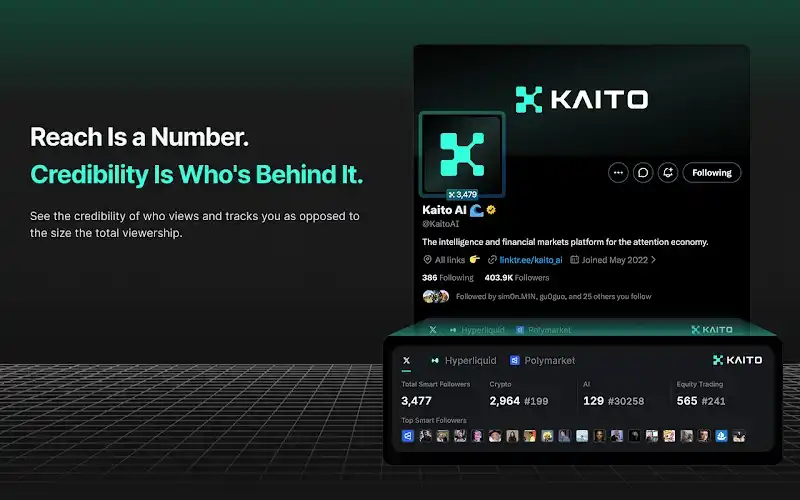
After installing the plugin, users can directly view other users' on-chain activity information within the X timeline, including public trading positions from platforms like Polymarket and Hyperliquid, thereby further assessing whether an account's views align with its actual actions.

By combining social influence with on-chain behavior, Kaito hopes to transform X from a mere information dissemination platform into a social layer that integrates 'views, identity, and trading behavior.'

This is also an evolution for Kaito from Yaps to Pulse.

Previously, Kaito primarily tracked the popularity of crypto discussions on X, creating content influence leaderboards, and incentivized user participation around KAITO. However, as many accounts began mass-producing content, the problem of measuring influence solely based on discussion volume became apparent. Therefore, Pulse further incorporates dimensions such as content influence, community interaction, and on-chain behavior verification, while introducing a new scoring system called Aura to measure user influence and verified on-chain behavior.

Previously, Kaito focused on who generated the most discussion; now, Kaito is more concerned with whose discussion is worth believing.

Plugin Requires Extensive Permissions, Sparking 'Data Collection' Controversy Post-Launch

The launch of Kaito Pulse sparked lively community discussion, with many feeling that as market conditions recover, a new wave of 'talk-to-earn' economy is imminent. However, Kaito Pulse quickly ignited a debate within the community regarding privacy permissions.

Kaito Pulse Plugin Accused of Multiple Deep Data Collection Practices

Ultra stated in an X post that by analyzing the Pulse plugin code, it was found that it may involve multiple data collection behaviors, including device fingerprinting, X platform behavior tracking, and third-party account verification.

Among these, the most concerning is the device identification issue. Ultra stated that Kaito Pulse might generate a device fingerprint using information such as GPU rendering results, hardware models, and hardware test audio, linking this information to X accounts, potentially compromising anonymity for multi-account users and community matrix accounts.

Beyond device information, Ultra also questioned the scope of user X behavior data collection by Kaito Pulse. The plugin may record certain user behaviors on the X platform, including browsing paths, content dwell time, click behavior, and follow status, and use periodic requests to determine if a user is active.

Furthermore, third-party account verification is another focal point of controversy. Ultra pointed out that Pulse involves verification processes for ChatGPT, Claude, and multiple trading platform accounts, suggesting these processes might access sensitive data such as user subscription status, usage quotas, and trading account information.

Community Divided: Verifying Authenticity or Sacrificing Privacy?

In the Yaps era, Kaito primarily relied on discussion popularity on X to measure influence. However, as mass content production by numerous accounts became prevalent, the community gradually began questioning: does high popularity equal real influence?

By incorporating more dimensions like on-chain behavior and external account verification, Kaito Pulse aims to reduce the room for gaining rankings solely through posting and interactions, making the influence score closer to a user's real contribution.

But more verification mechanisms also mean users need to grant more data permissions. Consequently, the community has formed two different views on Kaito Pulse:

  • Supporters believe that the biggest problem with InfoFi is farming and fake influence, and only by adding identity and behavior verification can a more credible incentive system be built;
  • Skeptics argue that platforms should not infinitely expand data collection scope just to improve scoring accuracy, and a new balance needs to be found between user privacy and incentive rewards.

Official Response to Privacy Controversy: Kaito Pulse Does Not Collect User Raw Data

Facing community skepticism, Kaito founder Yu Hu later responded.

Yu Hu stated that Kaito Pulse's design principle is data minimization. The product goal is not to collect user data, but, under active user authorization, to prove certain identities or behaviors through verification mechanisms.

Addressing community concerns about account information, Kaito Pulse does not obtain complete account content from users, nor does it store user raw data. The related processes are primarily used to generate verification results; the platform receives proof information, not the underlying user data.

Regarding the controversy sparked by external account verification, Kaito Pulse uses verification technologies, including zkTLS, hoping to allow users to prove they possess certain off-chain identities or behavior records without exposing the original data.

Simultaneously, Yu Hu acknowledged that the presentation scope of certain permissions might be prone to misunderstanding, and future versions will further optimize permission descriptions and user prompts.

The Next Step for the 'Talk-to-Earn' Economy: Verify Influence, or Surrender Privacy?

The discussion sparked by Kaito Pulse is essentially an unavoidable data dilemma in the InfoFi sector.

In the past, platforms judged an account's value primarily based on follower count, engagement data, and content popularity. However, as AI-generated content, batch accounts, and matrix operations become increasingly common, mere 'discussion volume' has become less and less representative of real influence.

Therefore, Kaito attempts to introduce more verification dimensions, and controversy follows—when a platform wants to further prove 'who you are' and 'whether your views are credible,' users need to surrender more and more information.

For users, installing the plugin to participate in the next wave of the 'talk-to-earn' economy also means they need to reconsider: for the sake of rankings, points, and potential rewards, how much data are they actually willing to open up? Platforms need more data to distinguish real influence from fake hype; but users also need assurance that this data is truly used only for verification and does not become a new digital profile.

Kaito Pulse wants to verify user influence, but as it masters more and more data on devices, behaviors, and accounts, Kaito itself becomes the subject of scrutiny.


Tiền kỹ thuật số thịnh hành

Câu hỏi Liên quan

QWhat is Kaito Pulse and what does it aim to achieve?

AKaito Pulse is a browser plugin launched by Kaito AI. It aims to enhance the X (Twitter) timeline by displaying users' on-chain activity information, such as public trading positions from platforms like Polymarket and Hyperliquid. The goal is to bind users' discussion behavior, on-chain activity, and social influence to help others assess if an account's opinions align with their actual actions, thereby transforming X into a social layer that integrates viewpoints, identity, and trading behavior.

QWhat were the main privacy concerns raised by the community regarding the Kaito Pulse plugin?

AThe community raised several privacy concerns, including potential device fingerprinting (collecting GPU rendering results, hardware models, and test audio), tracking user behavior on X (browsing paths, content dwell time, clicks, follow status), and accessing sensitive data from third-party account verification processes (like ChatGPT, Claude, and trading platforms). Critics feared this compromised user anonymity and privacy.

QHow did Kaito's founder, Yu Hu, respond to the privacy controversy?

AYu Hu responded that Kaito Pulse operates on a principle of data minimization and does not aim to collect user data. He stated that the plugin verifies identities or behaviors only with active user authorization, and it does not access or store users' complete account content or raw underlying data. He acknowledged that some permission descriptions could be misleading and promised optimizations in future versions.

QWhat is the core dilemma highlighted by the article regarding platforms like Kaito in the InfoFi (Information Finance) space?

AThe core dilemma is balancing the need for data verification against user privacy. Platforms need more data (like on-chain behavior and account verification) to distinguish real influence from fake hype generated by AI or bot accounts. However, requiring users to provide more personal data raises significant privacy concerns. Users must decide how much data they are willing to share for potential rewards and rankings.

QHow did Kaito's approach to measuring user influence change from its Yaps era to the Pulse era?

ADuring the Yaps era, Kaito primarily measured user influence based on the volume of crypto-related discussions on X. The shift to the Pulse era involves moving beyond simple discussion metrics. Kaito Pulse introduces a more comprehensive scoring system called Aura, which evaluates content influence, community interaction, and verified on-chain behavior. The focus has shifted from 'who creates the most discussion' to 'whose discussion is credible and backed by real actions.'

Nội dung Liên quan

MiCA sắp áp dụng cho các hầm chứa DeFi, nhưng việc điều chỉnh sẽ khó khăn

MiCA, bộ khung quy định về tài sản tiền mã hóa của EU, ban đầu chưa bao gồm hoạt động cho vay tiền mã hóa. Ủy ban châu Âu hiện đang tham vấn về việc có đưa lĩnh vực này, bao gồm các dịch vụ tài chính phi tập trung (DeFi) và các khoản vay crypto, vào phạm vi quản lý hay không. Một thách thức lớn là việc phân loại và quản lý các "vault" (kho tiền) cho vay trên blockchain. Các vault này có chức năng kinh tế tương tự cho vay nhưng hoạt động thông qua hợp đồng thông minh và nhiều bên tham gia, chứ không phải một công ty đơn lẻ, khiến việc xác định "nhà cung cấp dịch vụ" chịu trách nhiệm trở nên phức tạp. Các chuyên gia pháp lý chỉ ra rằng luật EU hiện không có định nghĩa rõ ràng cho "vault". Việc quy định cần dựa trên chức năng thực tế chứ không phải tên gọi. Có ý kiến cảnh báo không nên gộp chung "cho vay DeFi" thành một danh mục quy định duy nhất, vì sẽ bao gồm cả những cấu trúc có chức năng và mức độ kiểm soát hoàn toàn khác biệt. Câu hỏi then chốt là ai sẽ là đối tượng bị điều chỉnh. Một đề xuất là dựa vào mức độ phi tập trung, nhưng điều này có thể bất lợi cho các giao thức mới. Giải pháp khác là tập trung vào cấu trúc vault và quyền kiểm soát thực tế của con người đối với nó. Nhiều ý kiến nhấn mạnh rằng nếu được quy định, cho vay DeFi cần một khung riêng biệt, phù hợp với đặc thù khác biệt so với tài chính truyền thống. Thách thức của Brussels không chỉ là có nên quy định hay không, mà là làm thế nào để xây dựng các quy tắc phân biệt được các hình thức cho vay onchain khác nhau và xác định rõ ràng các bên thực sực kiểm soát chúng. Kết quả tham vấn sẽ quyết định số phận pháp lý của các lending vault trong tương lai.

cointelegraph11 phút trước

MiCA sắp áp dụng cho các hầm chứa DeFi, nhưng việc điều chỉnh sẽ khó khăn

cointelegraph11 phút trước

Báo cáo Grayscale: Trong kỷ nguyên AI, quyền riêng tư tài chính – Tại sao Zcash không nên bị bỏ qua?

**Báo cáo Grayscale: Sự riêng tư tài chính trong thời đại AI, Tại sao Zcash không nên bị bỏ qua?** Grayscale Research nhận định chúng ta đang ở bên bờ của làn sóng thứ ba về mối quan tâm công chúng đến quyền riêng tư tài chính, được thúc đẩy bởi sự phổ biến của stablecoin, ứng dụng blockchain và các phương tiện giám sát tài chính mới do AI tạo ra. Trong bối cảnh đó, Zcash - một loại tiền kỹ thuật số phi tập trung với cơ chế bảo mật vững chắc - xuất hiện. Trong khi Bitcoin minh bạch nhưng thiếu tính riêng tư, Zcash cung cấp các giao dịch được che chắn (shielded transactions) sử dụng bằng chứng không tiết lộ thông tin (zero-knowledge proof) để ẩn người gửi, người nhận và số tiền, đồng thời vẫn cho phép tiết lộ có chọn lọc khi cần. Bài viết nêu bật sự phát triển của Zcash từ một dự án mang tính lý thuyết ban đầu trở thành một giao thức khả dụng nhờ các bản nâng cấp lớn như Sapling (2018) và Orchard/NU5 (2022), cải thiện đáng kể khả năng sử dụng. Cơ sở hạ tầng như ví Zodl và các đề xuất kỹ thuật như Tachyon (mở rộng quy mô) và Crosslink (tăng cường độ tin cậy) nhằm mục đích thúc đẩy việc áp dụng quy mô lớn. Về định giá, ZEC (token của Zcash) hiện chỉ chiếm khoảng 0,6% thị phần trong lĩnh vực tiền kỹ thuật số, cho thấy thị trường đánh giá thấp nhu cầu về quyền riêng tư. Tuy nhiên, dữ liệu trên chuỗi cho thấy nhu cầu thực tế: tính đến tháng 7/2026, ~90% tổng số giao dịch Zcash là các giao dịch được che chắn, với ~25% nguồn cung lưu thông nằm trong các nhóm che chắn. Bài viết kết luận rằng cơ hội cho các nhà đầu tư không nằm ở việc Zcash thay thế Bitcoin, mà ở việc giá trị của tiền kỹ thuật số riêng tư vẫn chưa được thị trường nhận thức đầy đủ. Tuy nhiên, các rủi ro như môi trường quy định, các vấn đề kế thừa từ thiết lập tin cậy ban đầu và rủi ro thực thi lộ trình công nghệ cần được xem xét.

marsbit2 giờ trước

Báo cáo Grayscale: Trong kỷ nguyên AI, quyền riêng tư tài chính – Tại sao Zcash không nên bị bỏ qua?

marsbit2 giờ trước

OriginX Mang Đến Seoul Các Nhà Lãnh Đạo Bitcoin Từ 22 Quốc Gia Và Hơn 70 Đối Tác Cho ORIGIN SEOUL 2026

OriginX, một công ty Bitcoin bản địa có trụ sở tại Seoul, sẽ tổ chức hội nghị ORIGIN SEOUL 2026 vào ngày 1 và 2 tháng 9 tại SKY31 Convention, Tòa tháp Lotte World. Sự kiện quy tụ các nhà lãnh đạo, doanh nhân và nhà phát triển Bitcoin từ 22 quốc gia, cùng hơn 70 đối tác bao gồm các công ty, tổ chức truyền thông và cộng đồng. Các nhà tài trợ và đối tác chính gồm Satori Coin, SmashFi, MoneyToday, LifPay và nhiều tổ chức toàn cầu khác. Chương trình nghị sự được chia thành hai phần chính: Ngày Công nghiệp (1/9) thảo luận về cấu trúc ngành Bitcoin đang thay đổi, như đầu tư thể chế, ETF, tài chính Bitcoin bản địa và hạ tầng khai thác. Ngày Cộng đồng (2/9) tập trung vào phân tích thị trường, tự lưu giữ tiền mã hóa, công việc xây dựng cộng đồng lâu dài và các bài thuyết trình từ các chuyên gia như James Check (Checkonchain) và Teruko Neriki. Hội nghị mở rộng với 14 sự kiện bên lề trên khắp Seoul từ ngày 29/8, bao gồm hội thảo, chuyến du thuyền trên sông Hán và sự kiện chạy bộ cộng đồng "Run for Hal". ORIGIN SEOUL còn kết nối với Bitcoin Asia tại Hồng Kông để tạo thành Bitcoin Asia Week. OriginX, đơn vị tổ chức, điều hành Bitcoin House ORIGIN - không gian làm việc chung về Bitcoin lớn nhất Hàn Quốc. Hội nghị này là đỉnh cao cho các hoạt động cộng đồng, giáo dục và kết nối toàn cầu mà họ xây dựng quanh năm.

TheNewsCrypto2 giờ trước

OriginX Mang Đến Seoul Các Nhà Lãnh Đạo Bitcoin Từ 22 Quốc Gia Và Hơn 70 Đối Tác Cho ORIGIN SEOUL 2026

TheNewsCrypto2 giờ trước

Với sự chuyển đổi của đại lý AI sang chi tiêu thực tế, XRP có thể bước vào giai đoạn mới

Với việc các tác nhân AI chuyển từ giao dịch tài sản số sang thực hiện các nhiệm vụ thương mại thực tế, XRP có thể bước vào một giai đoạn phát triển mới. Chandler Fang, đồng sáng lập startup t54 chuyên phát triển các tác nhân AI đáng tin cậy, đã chia sẻ về quá trình chuyển đổi này, mô tả một nền kinh tế tác nhân với các thị trường có giá trị thanh toán, tần suất giao dịch và yêu cầu thanh toán khác nhau. Các tác nhân tự động đã thực hiện hơn một triệu giao dịch không cần sự can thiệp của con người thông qua XRP Ledger (XRPL). Câu hỏi tiếp theo là làm thế nào để hoạt động này mở rộng sang các hoạt động thương mại rộng hơn. Giai đoạn triển khai đầu tiên tập trung vào các sản phẩm số, nơi XRPL AI Starter Kit của Ripple đã hỗ trợ thanh toán. Giai đoạn tiếp theo sẽ cấp cho tác nhân quyền hạn chi tiêu có giới hạn, với ngân sách và quy tắc do người dùng thiết lập, như được mở rộng bởi chương trình "Agent Pay for Machines" của Mastercard với sự tham gia của RippleX. Việc mở rộng này sẽ không biến mọi hành động thành một giao dịch trên XRPL. Các kênh thanh toán có thể được sử dụng cho các giao dịch lặp lại, và các nền tảng có thể tổng hợp hoạt động. Tài sản thanh toán ($XRP hoặc $RLUSD) sẽ thay đổi tùy theo nhu cầu của mỗi giao dịch, bổ sung cho nhau thay vì cạnh tranh. Về lâu dài, việc áp dụng XRPL có thể trở nên vô hình, với các tác nhân được tích hợp vào các nền tảng và hệ thống, lựa chọn cơ sở hạ tầng blockchain trong nền mà không cần người dùng tương tác trực tiếp. Do đó, khối lượng giao dịch đơn thuần sẽ không phản ánh đầy đủ mức độ áp dụng. Các chỉ số quan trọng hơn sẽ là hoạt động lặp lại, doanh thu, tuân thủ ngân sách và giải quyết tranh chấp hiệu quả. Sự tiến bộ sẽ dần dần, tương tự như sự xuất hiện của ChatGPT, và XRPL cuối cùng sẽ được đánh giá dựa trên khối lượng hoạt động kinh tế hữu ích mà các tác nhân chọn thực hiện thông qua nó.

cryptonews.ru3 giờ trước

Với sự chuyển đổi của đại lý AI sang chi tiêu thực tế, XRP có thể bước vào giai đoạn mới

cryptonews.ru3 giờ trước

Giao dịch

Giao ngay

Bài viết Nổi bật

Làm thế nào để Mua KAITO

Chào mừng bạn đến với HTX.com! Chúng tôi đã làm cho mua Kaito (KAITO) trở nên đơn giản và thuận tiện. Làm theo hướng dẫn từng bước của chúng tôi để bắt đầu hành trình tiền kỹ thuật số của bạn.Bước 1: Tạo Tài khoản HTX của BạnSử dụng email hoặc số điện thoại của bạn để đăng ký tài khoản miễn phí trên HTX. Trải nghiệm hành trình đăng ký không rắc rối và mở khóa tất cả tính năng. Nhận Tài khoản của tôiBước 2: Truy cập Mua Crypto và Chọn Phương thức Thanh toán của BạnThẻ Tín dụng/Ghi nợ: Sử dụng Visa hoặc Mastercard của bạn để mua Kaito (KAITO) ngay lập tức.Số dư: Sử dụng tiền từ số dư tài khoản HTX của bạn để giao dịch liền mạch.Bên thứ ba: Chúng tôi đã thêm những phương thức thanh toán phổ biến như Google Pay và Apple Pay để nâng cao sự tiện lợi.P2P: Giao dịch trực tiếp với người dùng khác trên HTX.Thị trường mua bán phi tập trung (OTC): Chúng tôi cung cấp những dịch vụ được thiết kế riêng và tỷ giá hối đoái cạnh tranh cho nhà giao dịch.Bước 3: Lưu trữ Kaito (KAITO) của BạnSau khi mua Kaito (KAITO), lưu trữ trong tài khoản HTX của bạn. Ngoài ra, bạn có thể gửi đi nơi khác qua chuyển khoản blockchain hoặc sử dụng để giao dịch những tiền kỹ thuật số khác.Bước 4: Giao dịch Kaito (KAITO)Giao dịch Kaito (KAITO) dễ dàng trên thị trường giao ngay của HTX. Chỉ cần truy cập vào tài khoản của bạn, chọn cặp giao dịch, thực hiện giao dịch và theo dõi trong thời gian thực. Chúng tôi cung cấp trải nghiệm thân thiện với người dùng cho cả người mới bắt đầu và người giao dịch dày dạn kinh nghiệm.

Tổng lượt xem 496Xuất bản vào 2025.02.21Cập nhật vào 2026.06.02

Làm thế nào để Mua KAITO

Thảo luận

Chào mừng đến với Cộng đồng HTX. Tại đây, bạn có thể được thông báo về những phát triển nền tảng mới nhất và có quyền truy cập vào thông tin chuyên sâu về thị trường. Ý kiến ​​của người dùng về giá của KAITO (KAITO) được trình bày dưới đây.

活动图片