"I have been painting, but I don't want to hold exhibitions. Apart from those few years of teaching, I have always been outside the 'art world'; the movements within the circle, I know nothing about. The short videos about me on the phone are all for selling products, but are any of the endless art world activities on the phone about me?"
Chen Danqing has been painting, but he no longer wants to hold solo exhibitions. He hasn't held one since 2019. Nowadays, most of his time is spent on "organizing exhibitions for others," or, as he puts it, inviting souls from centuries past to Wuzhen to let everyone have a look.
He and Mu Xin would never have imagined such a thing many years ago. In Chen Danqing's view, Wuzhen thirty-one years ago was a bit like a black-and-white movie, he wrote——"No one in 1995 knew that Wuzhen would undergo great changes."
In January 1995, Mu Xin arrived at his long-lost home—No. 186, Caishen Bay, Dongzha—and took many photographs. That autumn, Chen Danqing returned to China for a visit and also found his way here. At that time, the courtyard was in ruins, with a dilapidated factory building and several old rooms outside the workshop that had been vacant for years; the carved window frames were also brittle.
Chen Xianghong was the person who changed Wuzhen's fate, overseeing the protection of the ancient town and tourism development. After much persuasion from him, Mu Xin returned to Wuzhen in his later years, living in the "Wan Qing Xiao Zhu" built on the soil of his old home, spending the final days of his life there.
Many years later, the Mu Xin Former Residence Memorial was built on the site of his old home in Wuzhen's Dongzha, while about 1 kilometer away, the Mu Xin Art Museum in Xizha has already entered its 11th year.
At the request of Mu Xin and Chen Xianghong, Chen Danqing took on the responsibility of museum director; before this, he knew nothing about "literature exhibitions" or "art museum" affairs. When the Mu Xin Art Museum opened to the public in 2015, it was a period of dense emergence of private contemporary art museums, but Chen Danqing wrote——"I only regarded that as an illusion, observing from the sidelines. When the opening ceremony invited several heads of major museums to join in the fun, with hosts and guests holding wine glasses and mingling around tables, I found myself also entering this highly questionable illusion: what should I do?"
The museum's operation is shouldered by Wuzhen Tourism Company, so Chen Danqing wasn't worried then. The museum's external narrative is a special exhibition concept, partly hidden in *The Literature Memoirs*. What he needed to think about was three-dimensional space, to transform literary legends into exhibitions. Chen Danqing considers himself "not ambitious," but not completely without ambition either. "The real challenge is, I have to produce completely different exhibitions."
The loan fees for original works by Leonardo da Vinci and Cézanne, whom Mu Xin liked, were too expensive; bringing authentic works by Fan Kuan or Ni Yunlin to Wuzhen was also pure fantasy. A new idea emerged—why not follow the example of the Morgan Library & Museum in New York and borrow literary artifacts for exhibition. Thus, Nietzsche's letters, costumes from Shakespeare's plays, Beethoven's death mask... Western objects from centuries past arrived in this Eastern town, creating quite a "postmodern" feel. Visitors walking in can naturally sense their aura.
Art museums are not a "necessity" in people's lives. Located in the bustling Wuzhen, what possible inspiration could the Mu Xin Art Museum offer for people's lives?
Chen Danqing believes: "The inspiration of this museum is that a town can build a decent art museum for its own people. Xizha is a scenic spot, tourists pour in, and they drop by for a look. There's no need to 'persuade' them to come in and see."
Is art niche or mass?
When the Mu Xin Art Museum holds a special exhibition for someone, Chen Danqing likes to say, "So-and-so has arrived." Nietzsche, Lin Fengmian arrived; Shakespeare, Tang Xianzu arrived; Byron, Woolf, Wilde arrived; Tolstoy, Beethoven, Chopin, Pushkin also arrived.
Now the person who has come all the way from the north is Fyodor Dostoevsky—the "cruel genius" in Lu Xun's words, a writer who made Mu Xin feel "despair."
Do young people today still care about these things, events, and people from centuries ago?
"Who can assert: the masses, especially young people, will definitely detest a piece of Oscar Wilde's manuscript, Chopin's musical score, or Repin's portrait of Tolstoy?" In the museum notes, Chen Danqing mentioned his reflection on the "niche." "Currently, 'mass culture' seems 'correct,' while the value of the 'niche' is more like a configuration, and also constitutes a rebuttal. Who gets to define who is 'the masses'?"
He certainly also has moments of frustration. Sometimes, during the Q&A sessions of the museum's various sharing events, the audience doesn't ask questions related to the exhibition, preferring instead to discuss their personal anxieties.
Sometimes he tries hard to answer, sometimes he also shows a hint of irritation, "I hope you come here to ask some questions related to the exhibition." The documentary *Wind, Water, A Bridge* recorded this truthfully.
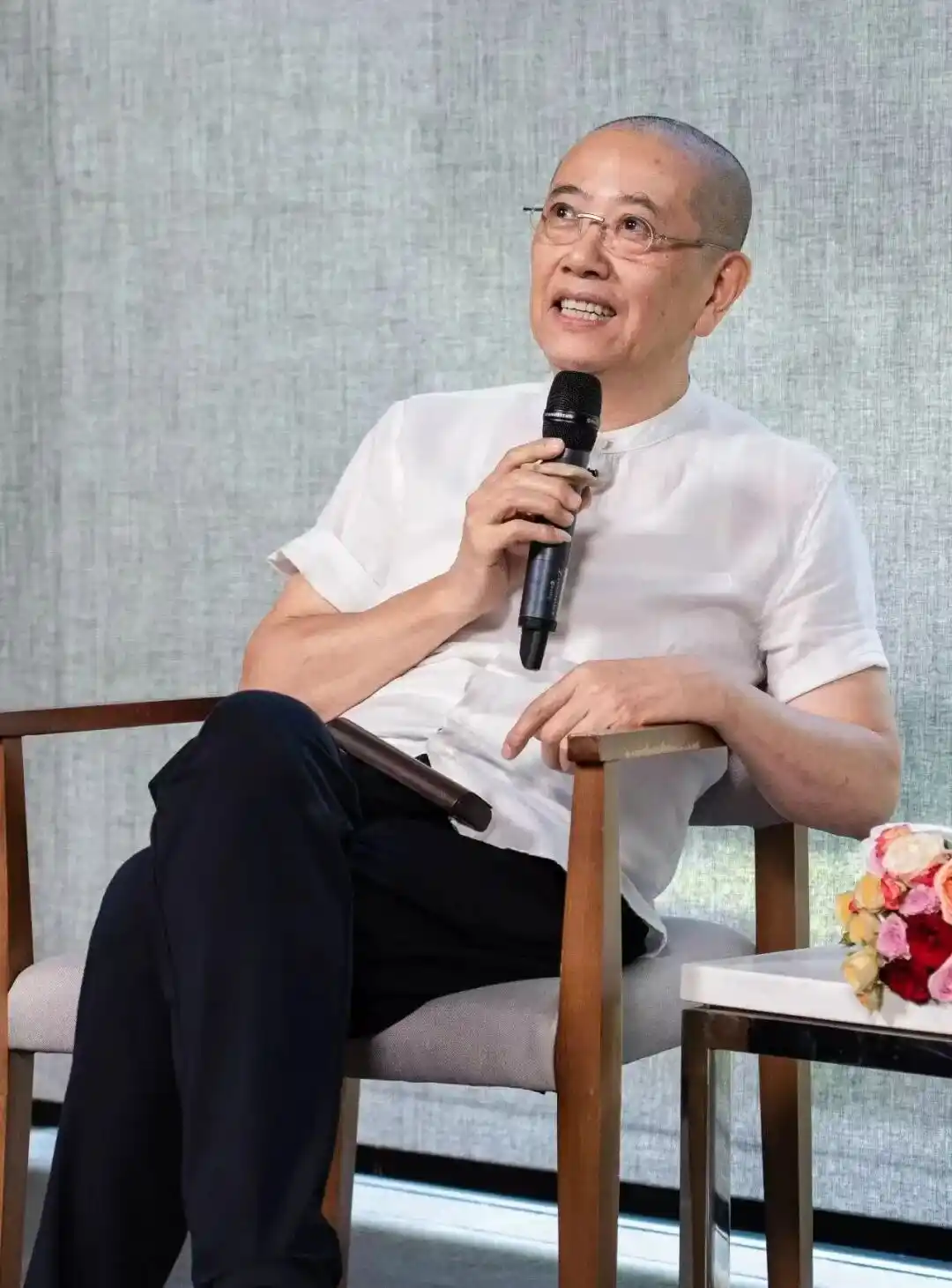
Chen Danqing at the sharing session for the documentary *Wind, Water, A Bridge*. (Photo / Provided by interviewee)
Over the past thirty years, the ecology of art museums has also changed. The present seems to be a "right moment," but also a "not-so-right moment." Art museums are more adequately prepared in terms of hardware and software than before. Traffic brings people to the museums, many focus on labels, check-ins, and their understanding of the content might be slightly lacking.
Meanwhile, the "niche track" of art has also seen various media content emerge. You cannot assert: people don't genuinely want to understand art.
There are many sharers, and Chen Danqing, who is "long out of the art circle," can still offer some fresh perspectives. Thus, he is repeatedly "pulled" and pushed onto the stage.
Before Shanxi's cultural tourism became as hot as it is today, he had already shared some perspectives on viewing Chinese sculpture with the audience. "Chinese sculpture from the 15th century is in no way inferior to Italian sculpture." Mentioning Chinese sculpture, people always seem to think of the Terracotta Army, the Tomb of Huo Qubing, Dunhuang. Chen Danqing shared the art in Shanxi's temples in a program: "When I suddenly saw these completely neglected Ming Dynasty sculptures, I felt that we already had our own mature, sophisticated set of modeling methods long ago, to express our own Chinese appearance."
Art also occasionally suffers misinterpretation during translation between East and West. The filming crew of the BBC documentary *Civilisations* once visited Wuzhen. "I was curious how Schama would interpret Chinese landscape painting from the Northern Song Dynasty onwards, using Mu Xin as the introduction in the 'Scenery' segment. The result, I'm sorry, was a bit off. Song and Yuan landscape painting is a visual system not easily understood by Westerners. I thus thought about the misinterpretations classical Chinese poetry might invite when translated into European languages. Cultural exchange is indeed based on countless misunderstandings. Conversely, I also reflected on how Western art has been misunderstood here." In the museum notes *You Are Still Here*, Chen Danqing reviewed.
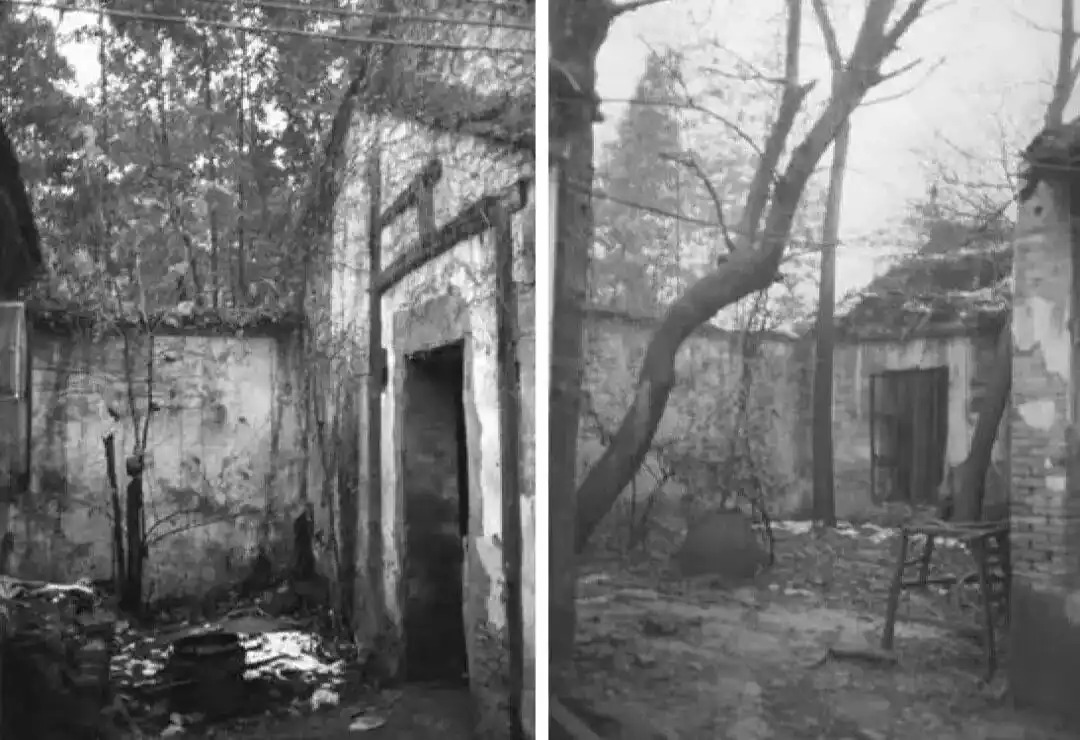
In January 1995, Mu Xin came to his long-separated home and took many photos.
But the point is: all misunderstandings begin with the desire to understand. The *Civilisations* team came to Wuzhen, China from the UK twice in the sweltering heat, which still moved Chen Danqing; the host Simon Schama was already the age Chen Danqing is now.
Operating outside the "art circle," in those years as an "outsider," Chen Danqing was still occasionally thrust into the spotlight, becoming the subject of news.
In 2021, *The Tibetan Series – Shepherd* sold for 161 million RMB at Beijing Poly's spring auction, setting a new auction record for Chinese contemporary art at the time. This painting was created in 1980, an early work by Chen Danqing, and had been sold as early as 2003. The later 160 million had nothing to do with him personally; that was a matter for the art market. But after being excerpted and fragmented by self-media, in the eyes of the public, he became deeply associated with "160 million."
He became one of the targets of gossip. AI arrived, robots arrived—Chen Danqing, who doesn't like browsing self-media, found himself again becoming material in rumors, with AI disguising itself as the voice of someone he knows, fabricating baseless gossip.
If Mu Xin were still here, how do you imagine he would comment? Chen Danqing answered: "Thank heavens, Mu Xin is gone. He couldn't stand this at all."
How do we imagine the meaning and possibilities of an art museum today? What changes have occurred in the content and dissemination of art over these thirty years? What does Chen Danqing think about the surging AI? Below is our written conversation with Chen Danqing.
I will not overestimate, nor dare underestimate, the public's passion
*New Weekly*: Art museums are not a "necessity" in people's lives. The Mu Xin Art Museum is located in a rural town. What is its special feature, or its inspiration for people's lives? How do you persuade people to enter an art museum?
Chen Danqing: The inspiration of this museum is that a town can build a decent art museum for its own people. Xizha is a scenic spot, tourists pour in, and they drop by for a look. There's no need to "persuade."
*New Weekly*: *Wind, Water, A Bridge* records the daily life of curating at the art museum. One episode mentions that you only grasped a bit of the knack for curating later on. What is this knack? From using paintings to tell stories, using *Partial* to tell stories, to using the art museum's space and exhibitions to tell stories, how can the story be told a bit better?
Chen Danqing: No knack, just moving from unfamiliarity to familiarity. Different media tell stories differently, with different effects. *Partial* and the art museum face the public. Whether the story is told well or not, we should ask the audience.
*New Weekly*: Recently, your museum held a special exhibition on Dostoevsky. I think a writer's universe is difficult to fully display in a physical space; displaying the psychological depth Dostoevsky excels at is even harder. In your view, how can you create a genuine connection between the writers you invite and the audience?
Chen Danqing: Yes, a writer's charm lies in their books, which are hard to exhibit. I only care that Dostoevsky actually appeared in Wuzhen—next year it's Kafka—I don't worry about a "genuine connection." I will not overestimate, nor dare underestimate, the public's passion for literature and writers. In my youth, there were no exhibitions at all. In a mountain valley, I secretly read Tolstoy. If an angel gave me a plane ticket and said, go see Tolstoy's former residence, I would have been ecstatic to the point of collapse.
*New Weekly*: The documentary also shows your moments of frustration—audiences come to the exhibition sharing session but don't ask about the exhibition, preferring to discuss their personal anxieties with you. Is this the norm? Are you afraid people treat this place merely as a tourist attraction?
Chen Danqing: Yes, there's no way. The human norm is to like talking about oneself. Fortunately, the art museum is situated in a tourist attraction. If our museum were located in Beijing or Shanghai, no one would come.
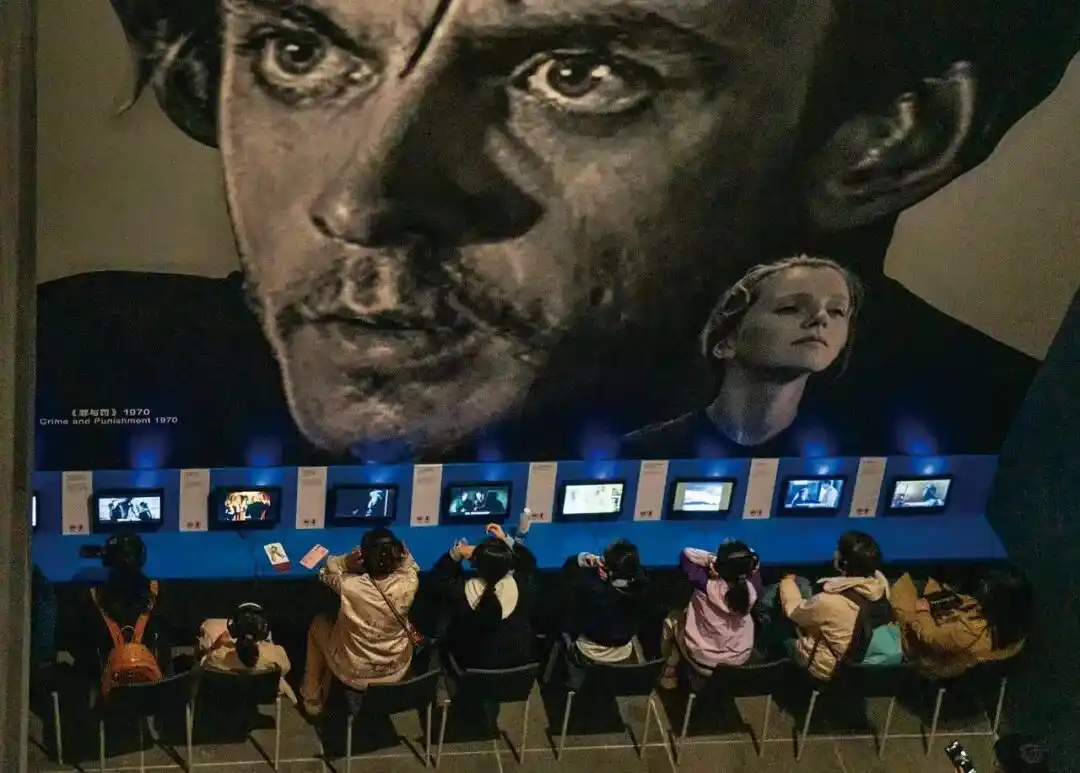
From April to August 2026, the Mu Xin Art Museum held the Dostoevsky Special Exhibition, themed "Dostoevsky: Man is a Riddle." (Photo / Provided by interviewee)
*New Weekly*: The livestream of the *My Brilliant Friend* sharing session was a rather wondrous moment for your museum? Over 2 million people watched the live stream. Did you anticipate such numbers? This also seems to be a rare phenomenon in art museum livestreams? Why Ferrante?
Chen Danqing: That time was due to the (COVID) pandemic, everyone was bored and helpless. It coincided with the popularity of Ferrante's TV drama at that time.
*New Weekly*: Recently, many women have been imitating *Lila in a Wedding Dress* (this image also appears in the special exhibition) to take graduation photos and upload them to social media. They may not be familiar with Lila's story, but want to express "Lila, I think you'd rather wear a graduation gown than a wedding dress" by imitating her. What is your view on this phenomenon?
Chen Danqing: No opinion. If I were a girl, I'd imitate too.
*New Weekly*: Taking it a step further, netizens may not understand art, but imitation itself may also imply an attitude. How do you view people imitating art?
Chen Danqing: Oscar Wilde said, life imitates art. This statement is far more profound than we understand. Wearing an item of Lila's clothing is trivial. Too many imitators of art have lost their lives because of it.
*New Weekly*: You like to say: "Shakespeare has arrived, Wilde has arrived, Woolf has arrived, Chopin has arrived, Repin has arrived, Tolstoy has arrived..." Do you have any ambitions regarding whom Mu Xin might have wanted to "invite" and whom you still want to "invite"?
Chen Danqing: The famous figures we have invited so far are only one percent of those mentioned in *The Literature Memoirs*. I have no ambition, only regret. You absolutely cannot invite half of China's ancient figures—Qu Yuan, Tao Yuanming, Du Fu, Cao Xueqin—not a single artifact remains. Furthermore, domestic museums absolutely refuse to lend us items for exhibition.
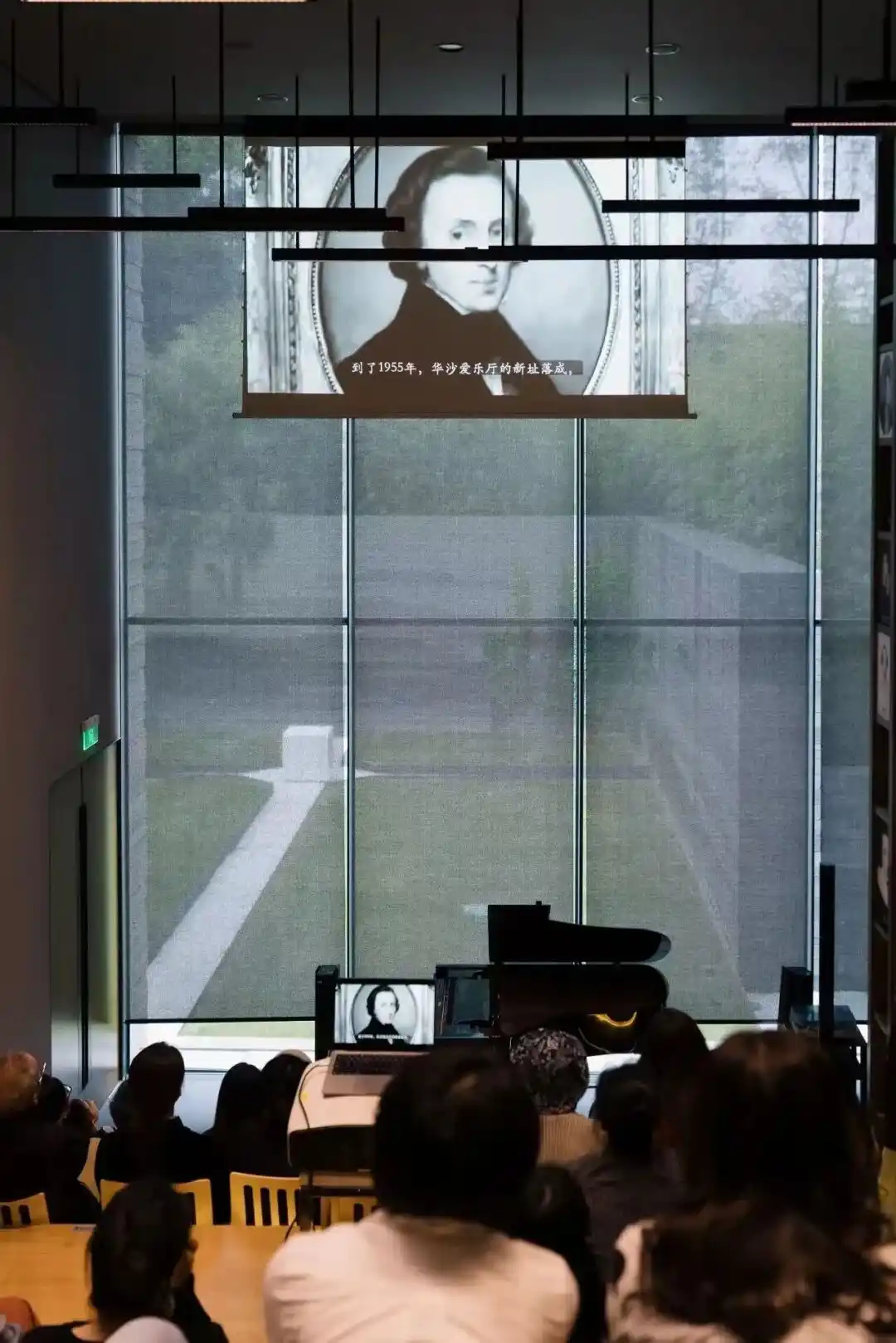
A screening of a documentary on Chopin at the Mu Xin Art Museum. (Photo / Provided by interviewee)
*New Weekly*: There are many lovely small-town/rural art museums in the world, like the Fondation Vincent van Gogh in Arles, the Musée Matisse in Nice. They restore part of the artist's life. Did the conception of the Mu Xin Art Museum refer to an ideal art museum? Or perhaps art museums don't need to be seriously distinguished by "positioning," the most important thing is that they are places for storytelling, for life?
Chen Danqing: My only association is the Morgan Library & Museum in New York, which has held many special exhibitions on world literary figures. There are all kinds of museums in the world—Coca-Cola cans, stamps, toys, dolls—anything you can think of, someone has turned it into a packed museum.
*New Weekly*: Currently, visitors "come for Mu Xin," citing stories fabricated by self-media or words you never said. Does this trouble you? If Mu Xin were still here, how do you imagine he would comment on this phenomenon?
Chen Danqing: It is troubling, but there's absolutely no solution. People like to hear gossip, to fabricate gossip. The era of equal rights, the era of self-media—these two arrived almost simultaneously—satisfying and stimulating a massive gossip discourse field. Thank heavens, Mu Xin is gone. He couldn't stand this at all.
Actually, there's no need for me to talk about art
*New Weekly*: After resigning in 2006, you shared your way of viewing through books and documentaries. *Partial* seems to be a re-viewing and supplement to art history, guiding people to feel the timeless charm of works, rather than a value defined by the market. In your view, is the future of public art education in China relatively optimistic, or far from sufficient?
Chen Danqing: *Partial* is an entertainment program, not an art history lecture, not "art education," let alone "supplementation." Compared to forty or fifty years ago, the changes and progress in the space for art dissemination in China are enormous. Actually, there's no need for me to talk about art. Everyone has a phone. As long as you love to watch and listen, it's overwhelming. There's too much information in the world. I also benefit endlessly.
*New Weekly*: In an interview eighteen years ago, you mentioned keywords for Chinese contemporary art—"ambition," "strength," "imagination." You said: "(From the 80s and 90s of the 20th century to the present), Western contemporary art has become cleaner, more beautiful, smarter, more diverse, but truly lacks wildness. Chinese contemporary art, a latecomer, therefore appears fierce and eye-catching." How do you look back on this comment? If you were to find keywords for art today, what would they be?
Chen Danqing: Things from eighteen years ago, treat them as from eighteen years ago. How popular *New Weekly* was eighteen years ago—who reads periodicals now?—As for contemporary artists, go ask them. They yearn for eighteen years ago, twenty-eight years ago, even thirty-eight years ago. "Yearning for it," that could probably be a keyword.
*New Weekly*: After the emergence of digital painting, what is the significance of hand-painted oil sketches today? If any.
Chen Danqing: Digital painting is digital painting. No opinion.
*New Weekly*: In 2019, after the solo exhibition "Retreat 1968-2019" was held in Beijing, you haven't held a new solo exhibition. Do you still paint these days? Does the title "Retreat" from the solo exhibition seven years ago also point to the distance between you and the art world itself—stepping back to observe?
Chen Danqing: I have been painting all along, but I don't want to hold exhibitions. Except for those few years of teaching, I have always been outside the "art world"; the movements within the circle, I know nothing about. The short videos about me on the phone are all for selling products, but are any of the endless art world activities on the phone about me?
*New Weekly*: In 2021, your work *The Tibetan Series – Shepherd* set an auction record of 161 million RMB. Later in an interview, you indicated that everyone misunderstood this information; some viewers tied your artistic value to the auction figure. It didn't seem to become good news, more like a burden. Did this affect your inner choices?
Chen Danqing: Choices? Choices about what? As mentioned earlier, I am one of the targets of gossip. Recently, AI impersonated the voices of Gao Xiaosong and Wang Shuo, one public account after another, some talking about me, all nonsense, ninth-rate fabrications.
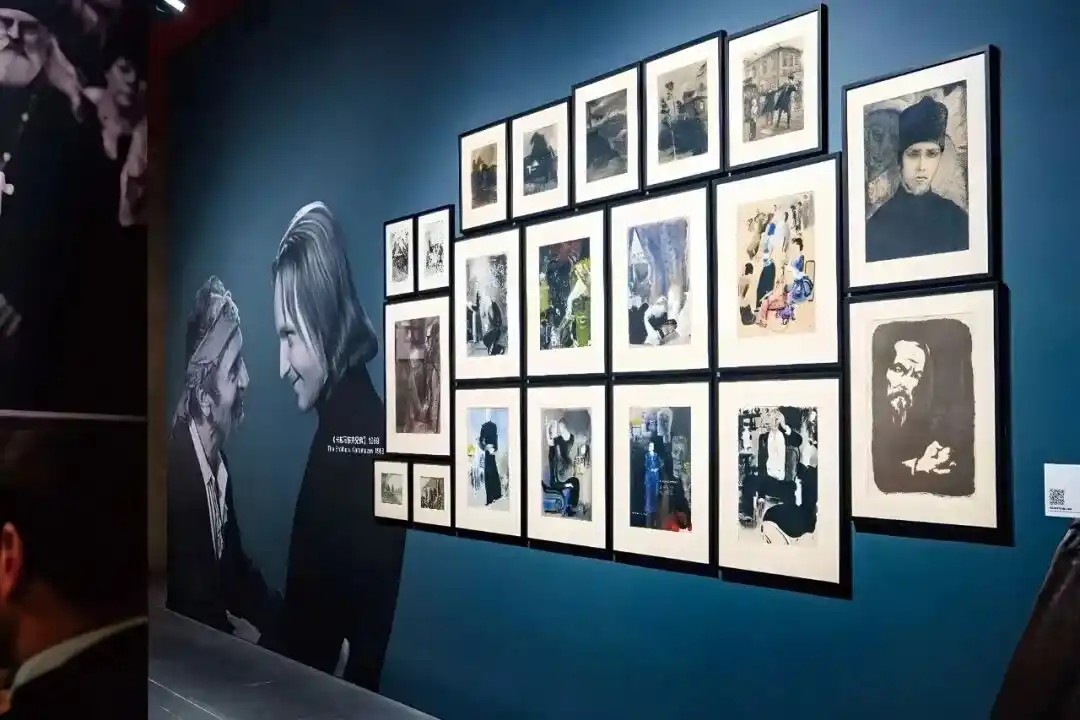
Series of illustrations for *The Brothers Karamazov*. (Photo / Provided by interviewee)
*New Weekly*: Over the past decade, has most of your time been spent on *Partial* and managing the art museum? Leaving the art circle to view purely, and leading others to view art, how does it feel? Have you ever doubted whether people truly need art?
Chen Danqing: *Partial* has long been discontinued. The art museum is my daily work. People certainly need art. In the era I grew up in, the exhibition halls of the National Art Exhibition were as crowded as the Beijing and Shanghai subways. People need something beyond daily life to distract themselves. At the very least, people love spectacles: art is considered a relatively high-level spectacle. Even in the middle of the night, do you know how many people are binge-watching dramas?
*New Weekly*: In the documentary sharing session, you said this might be the "right moment," but also a "not-right moment." Hardware and software are better, traffic has come, but people may lack understanding of the exhibition content itself. If one were to form a "right moment," what is lacking?
Chen Danqing: The country has become prosperous, but not yet prosperous enough to necessarily match art museums. But when real estate boomed, the "moment" was right, and art museums emerged. Now the "moment" is not right; real estate and art museums are declining simultaneously. This is a very Chinese thing.
*New Weekly*: You also pay attention to forgotten Chinese native art. You mentioned that "Chinese sculpture from the 15th century is in no way inferior to Italian sculpture." With the development of domestic cultural tourism, is it now a good time for the protection and re-viewing of Chinese native art? Are there still shortcomings? What other viewing clues are there?
Chen Danqing: It's still much more advanced than forty or fifty years ago. Shortcomings will always exist; take it slowly. Clues for viewing? Too many. Those Song Dynasty stone carvings that squat in the wheat fields of Henan all year round are too magnificent; there are many pushes on the phone.
*New Weekly*: In an article titled *Looking Back at Yuan Yunsheng*, you mentioned that in 1996, Yuan Yunsheng attempted to use the Chinese sculptural tradition to impact and subvert nearly a century of Western modeling basic education (copying Chinese sculptures and placing them in exhibition rooms of ancient Greek and Roman sculptures). This was considered an almost crazy effort at the time. Has the moment come for this "Don Quixote" to be understood?
Chen Danqing: Lao Yuan did the right thing. Han and Tang Dynasty sculptures' replicas should have been placed in all academies long ago. But this cannot change the current situation in any way. Drawing from Western plaster casts is no longer for so-called "basic education"; that's an industrial chain. Lao Yuan will not be understood. Don Quixote is a symbol of not being understood. Calling you "Mr. Quixote" means "Idiot! I don't want to understand you."
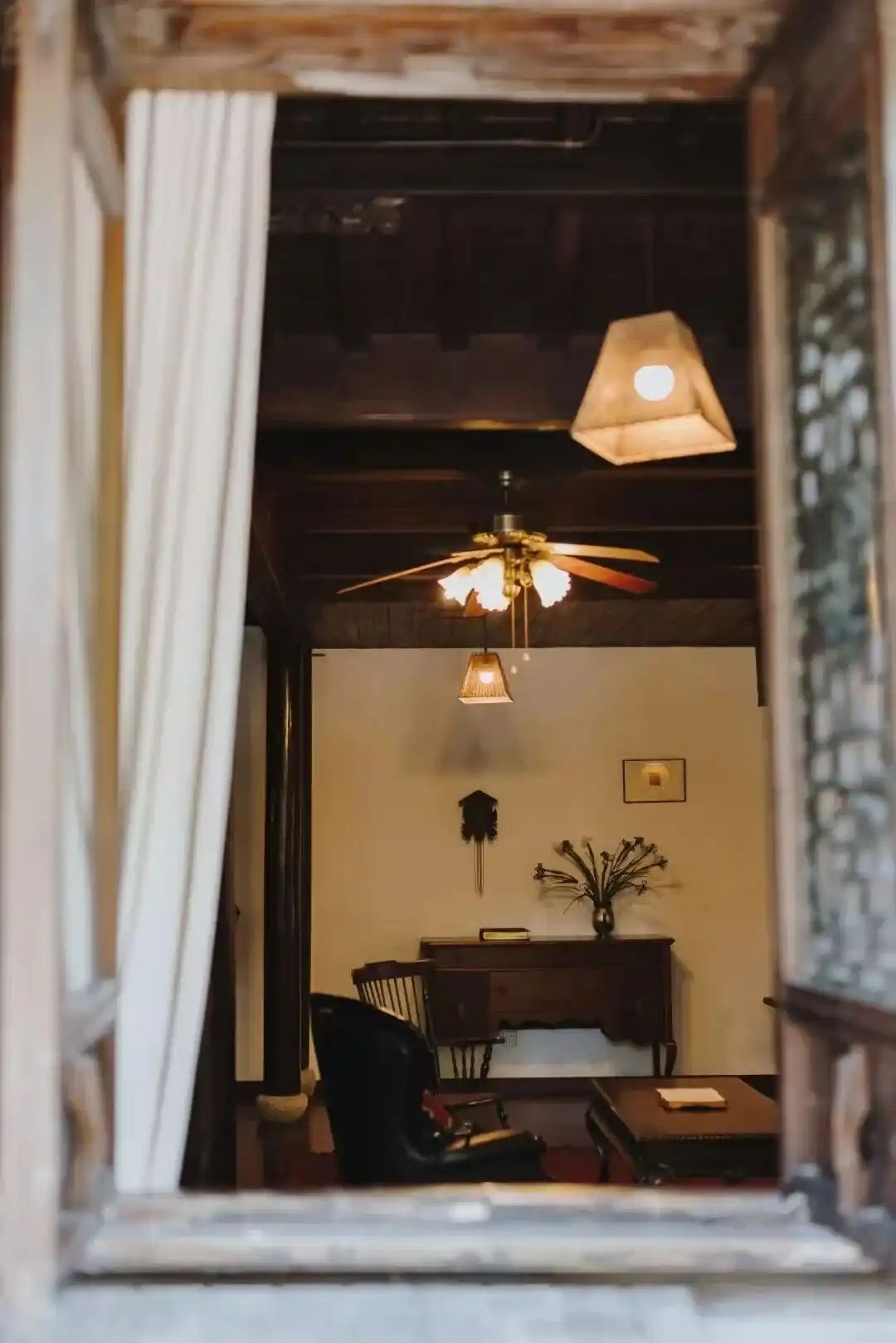
Mu Xin Former Residence Memorial. (Photo / Provided by interviewee)
Regarding AI, I am in no position to have an opinion
*New Weekly*: Assuming 2025 officially enters the "Era of Universal AI," what are your warnings and fears about this era (or changes in people)? In your conversation (with Zhong Shu), you mentioned that young people should either use their physical bodies to resist or quickly accept. If they choose the latter, what do you think will happen?
Chen Danqing: Did I say something like that? Whether young people choose or not, I have no opinion. Regarding AI, I am simply in no position to have an opinion. We haven't even seen its form clearly yet.
*New Weekly*: In a certain era, using one's body to collide with the world was a way of survival; the colors of fierce people were also the colors of the era. But now the environment has changed; a massive amount of information floods social media, conflicts become invisible in reality, and people becoming cautious seems to be a manifestation of rationalization and a form of self-protection. Two other colors of personality have emerged: one is called abstraction, the other is called escape. What is your view on these two colors?
Chen Danqing: One is abstraction (don't quite understand), the other is escape (also don't quite understand), and moreover, they are "colors"? Even less understood.
*New Weekly*: Recently, I saw your short video account "Chen Danqing Digressing." How did you decide to make short videos? Did you want to see if you could spread your own voice through short videos (instead of being maliciously edited)? Or were you "kidnapped" by young colleagues?
Chen Danqing: That's a short video account using my name, produced by "Idealist Media." For over twenty years, all the words I've written (those books), all the videos I've made (including *Partial*), have been acts of "kidnapping"—gentle, smiling, repeated "kidnapping." Struggle nine times, succumb once, and it becomes the situation you all see now.
*New Weekly*: Do you still not like browsing short video platforms? Do you use AI? Are you firmly opposed to using AI to assist in writing or artistic creation?
Chen Danqing: I won't let AI assist. Why give the joy of painting and writing to an assistant? The kids helped me download Doubao , I promptly forgot about it, and still haven't opened it to use it. This is the incurable state of an outdated "old-timer," not worth mentioning.
*New Weekly*: The emergence of AI has caused division in the art field. Some strongly oppose it, believing low-cost simulation is a derogation and insult to artists' work; some express that AI can be seen as a high-dimensional creative medium. What is your view?
Chen Danqing: No opinion.
*New Weekly*: What do you think AI can do to help art, culture, or artists and writers?
Chen Danqing: Sorry, looking at this entire interview, do you think I am Doubao ?
This article comes from the WeChat public account "New Weekly" (ID: new-weekly), author: Felicia, editor: You Lei