$2 Trillion: Countdown to AI's Largest IPO in History

marsbitXuất bản vào 2026-08-16Cập nhật gần nhất vào 2026-08-16

Tóm tắt

The countdown for the largest IPO in AI history, a potential $2 trillion listing for Anthropic, is underway for October. The staggering valuation, reportedly projected by several investors, contrasts with the company's own internal restraint on setting a public target. Founded five years ago by former OpenAI core members, Anthropic's growth has been meteoric. Annual recurring revenue (ARR) surged from ~$9B in late 2025 to $47B by May 2026, with Q2 2026 revenue of $11.5B marking a 14x year-over-year increase. Bank valuations are even based on internal 2028 revenue forecasts of $190-200B. A key growth driver is Claude Code, its AI coding assistant. Its ARR quintupled in five months to $2.5B by February 2026, now constituting nearly 20% of total revenue. Surveys indicate Anthropic commands roughly 40% of enterprise LLM spending, doubling OpenAI's share in programming-specific use. However, alongside this explosive growth, reports detail significant internal cultural strife. Critics describe a divisive "priesthood" of PhD executives, led by CEO Dario Amodei, who promote a "save humanity" narrative that some employees find cult-like and alienating. This has reportedly created a demoralized workforce and a covert "underground network" of dissent among engineers torn between lucrative pre-IPO equity and a toxic work environment. Anthropic now faces a pivotal paradox: pursuing its mission of "safe" AI requires immense capital for compute, yet that capital demands relentless comme...

There are less than two months left until October.

And Wall Street is waiting for a bell that might rewrite the history of technology.

If all goes according to plan, this fall, the global capital markets will welcome an unprecedented behemoth—Anthropic.

$2 trillion. The countdown to the largest IPO in AI history.
Anthropic Sprinting Towards IPO

Dario Achieves It in Just Five Years

SpaceX just set a record with its $1.77 trillion IPO in June, but that myth might not even last half a year.

Quite dramatically, this $2 trillion valuation was not set by Anthropic itself.

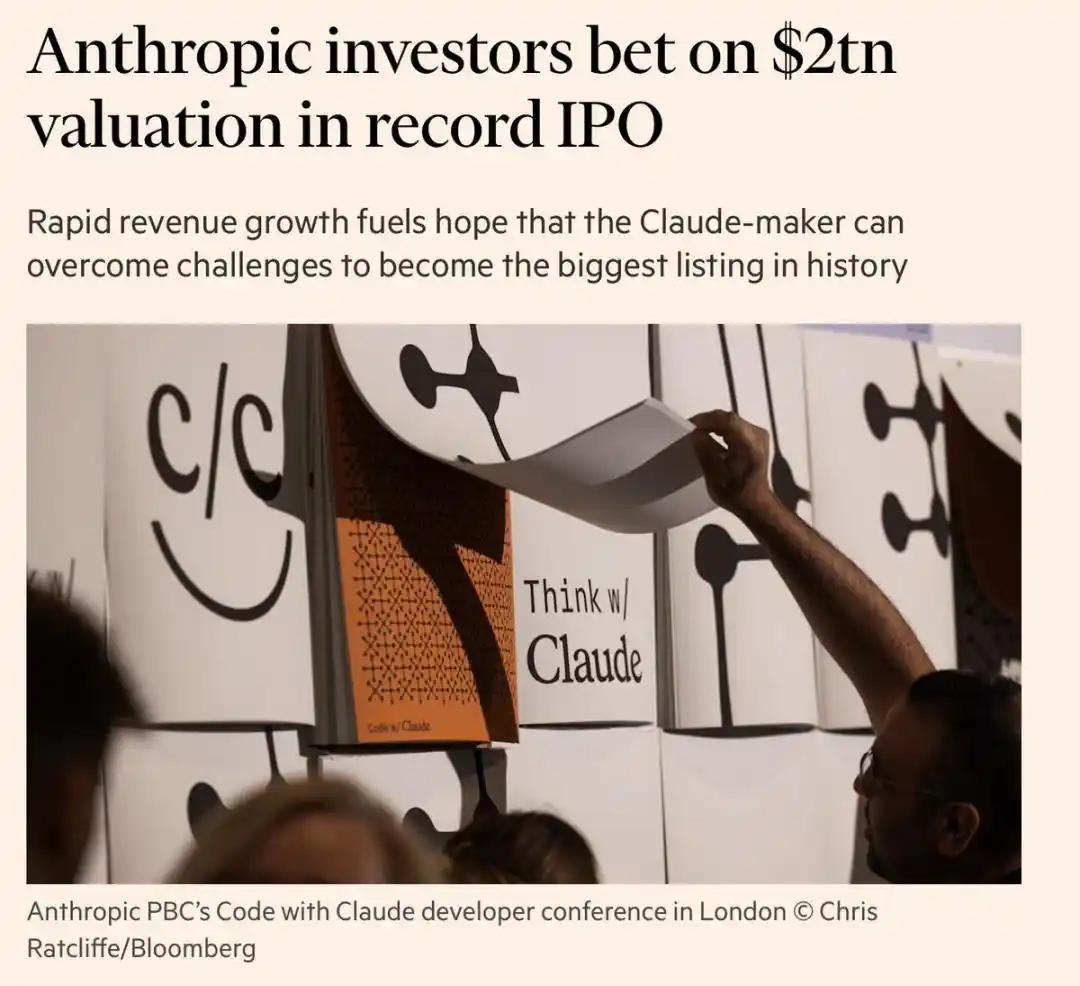
The FT revealed that six Anthropic investors each modeled and calculated this number—a valuation exceeding $2 trillion upon listing in October.

At least one of them calculated a figure over $3 trillion based on an 800% growth rate.

Meanwhile, internal company executives reportedly haven't even settled on a target price in private settings.

Founded by the Amodei siblings and a former core team from OpenAI, this company was crammed into a small office in San Francisco just five years ago.

Now, it has been pushed onto a "divine pedestal" by the spontaneous adulation of capital.

It took Anthropic 5 years to go from 0 to $2 trillion. Apple, an icon of its era, took a full 40 years from its IPO to reach a $2 trillion market cap.

14x Growth, Surging Unabated

Anthropic's own growth trajectory is, in itself, uncommon.

At the end of 2025, its Annualized Revenue (ARR) was about $9 billion. By May of this year, that number had surged to $47 billion.

Anthropic's Q2 2026 revenue exceeded $11.5 billion. In the same period last year, that number was $787 million—a year-on-year increase of 14 times.
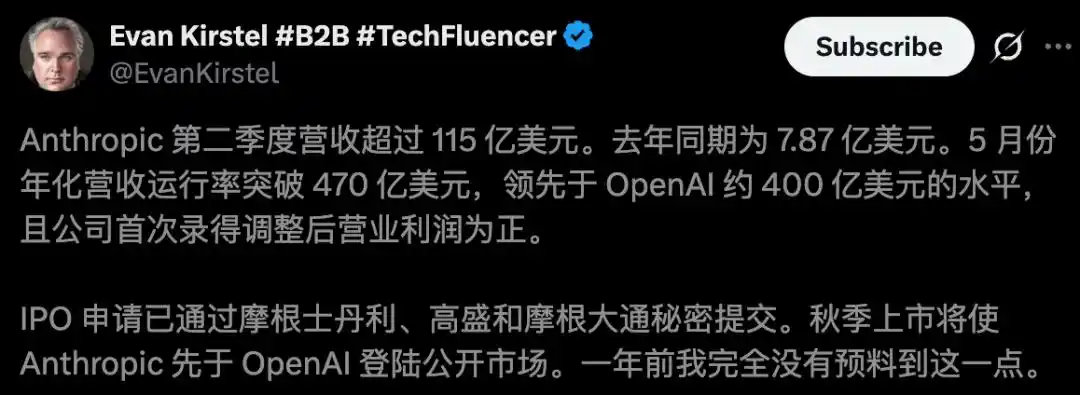
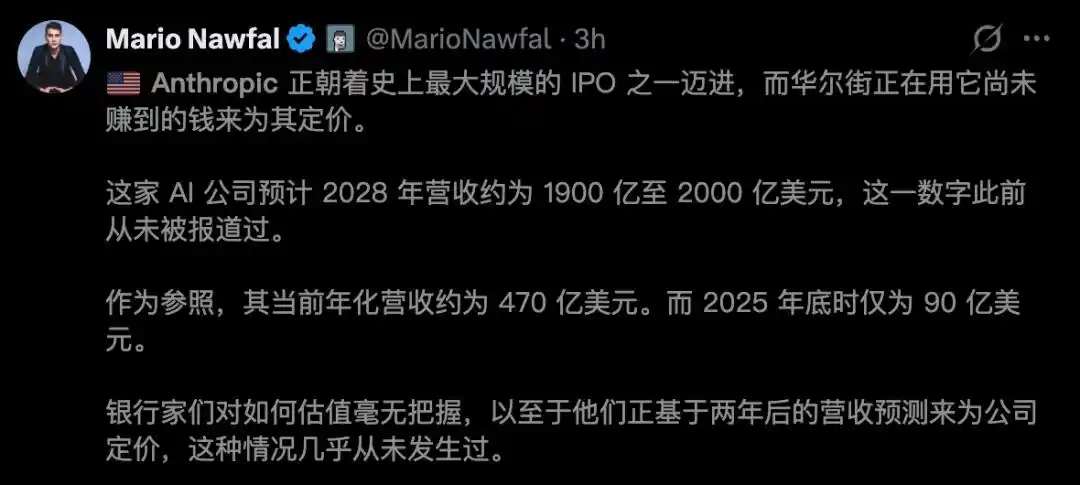
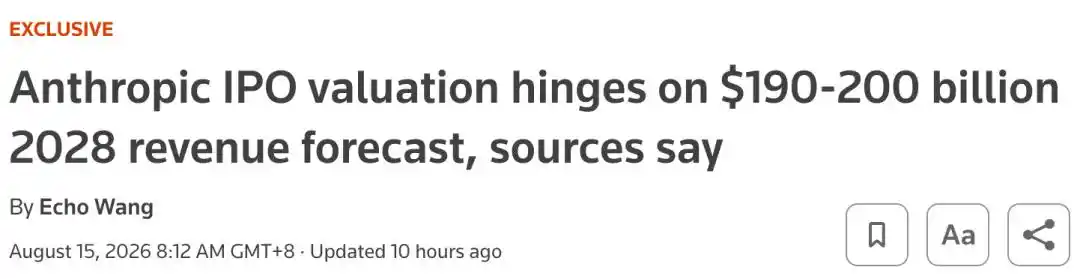
Also today, Reuters exclusively reported a previously undisclosed figure—

Anthropic internally forecasts its 2028 revenue will reach between $190 billion and $200 billion.

From $9 billion at the end of 2025, to $47 billion today, to $200 billion two years from now.

Wall Street investment banks have already run out of suitable yardsticks to measure Anthropic.
Thus, in this valuation exercise, banks and investors are using "Enterprise Value/Revenue multiples," directly applying the 2028 revenue forecast.

Valuing fast-growing, not-yet-profitable software companies based on revenue rather than profit is not uncommon.

But skipping 2026, skipping 2027, and anchoring the pricing point on a financial statement two years in the future that hasn't even materialized yet—that is uncommon.

Line by Line of Code, Building a $2 Trillion Valuation

Historically, the biggest divergence between Anthropic and OpenAI has been in their revenue structures.

Seventy to eighty percent of Anthropic's money comes from API and enterprise contracts, billed by the Token. It doesn't rely on retail subscriptions, but on the genuine daily usage volume fueled by corporate spending.

And the steepest segment on this curve is called Claude Code.
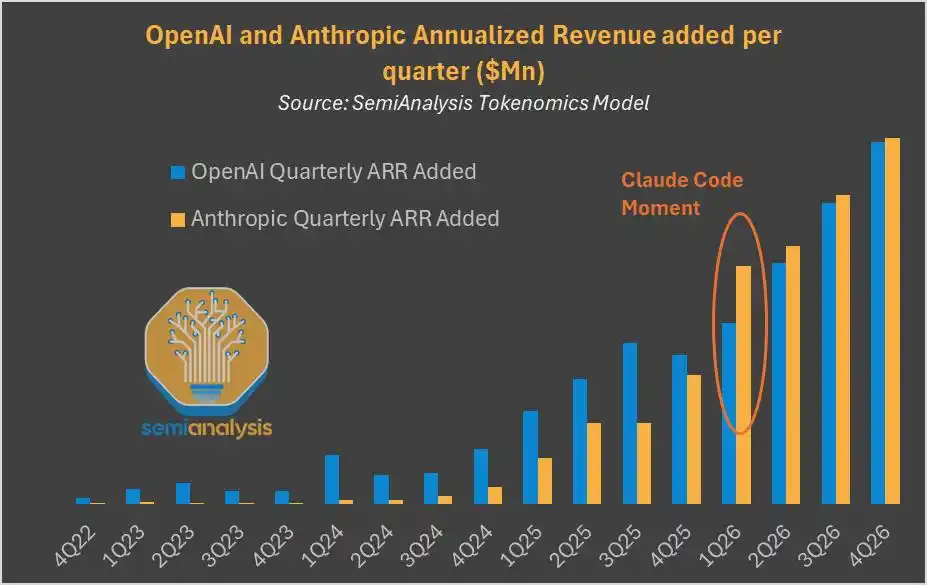
The ARR for this product line was only $500 million in September 2025, but had surged to $2.5 billion by February 2026. Five times growth in five months.

According to internal company sources, it now contributes nearly 20% of total revenue.

Data from the open-source community is even more telling. In public GitHub repositories, the proportion of commits written by Claude Code has steadily climbed from 4% to over 10%.

Uber's CTO once stated that the company's annual AI budget was exhausted in just four months, with the bulk going to Claude Code and Cursor.

The per-engineer monthly API consumption ranges between $500 and $2,000, and internal adoption of Claude Code has risen from 32% to 84%.

Data from the latest round of enterprise surveys by Menlo Ventures shows: Anthropic accounts for about 40% of enterprise LLM spending, compared to OpenAI's 27%; in the specific battleground of programming, Anthropic holds about 54%, more than double that of OpenAI (21%).

So, when you break it down, the $2 trillion figure isn't mysterious at all.

It's built line by line, by engineers worldwide, settled Token by Token.

Prisoners with Golden Handcuffs

The "Underground Resistance Network" of Genius Engineers

Recently, Anthropic was also exposed for internal rifts.

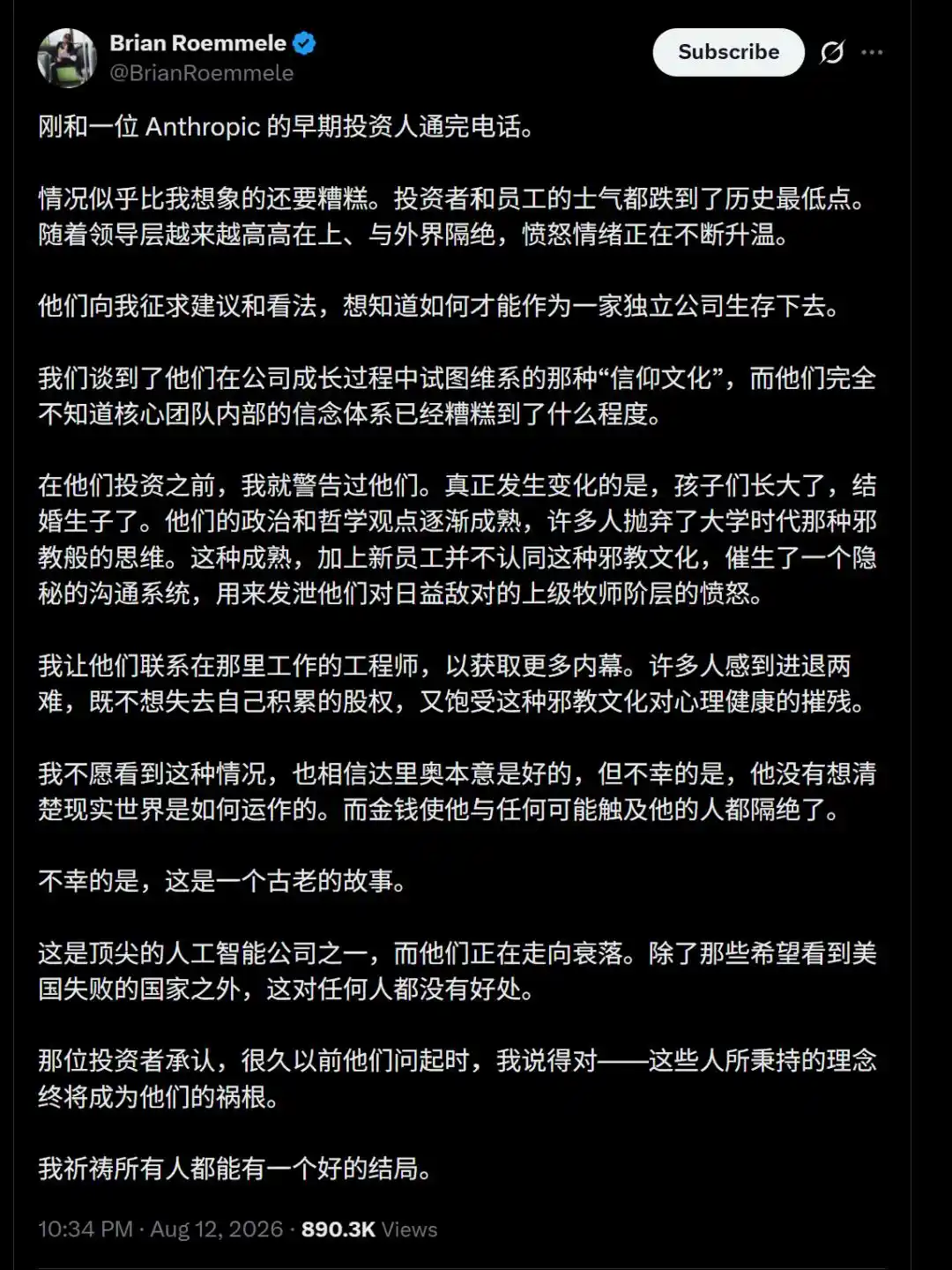
Anthropic's early investor and Silicon Valley whistleblower Brian Roemmele posted: "The situation is worse than I imagined. Investor and employee morale is at a historical low."

The root of all this is Anthropic's top leadership—a "priestly caste" composed of top PhDs.
Back when CEO Dario led a group of key members to defect from OpenAI, they carried with them an aura of "saving humanity."

Now, that halo has evolved into a "fanatical cult-like system."

Outlets like Wired have reported on a unique tradition within the company called "Dario's Vision Exploration."

During bi-weekly all-hands meetings, Dario doesn't discuss concrete business metrics. Instead, in a tone both compassionate and condescending, he preaches about the ultimate salvation of human civilization and the existential risks of AI.

"It doesn't feel like a company meeting; it feels like listening to a pastor's sermon," a former employee described in despair.

In the eyes of those arrogant executives, they are the saviors of the human mind, the sole prophets who understand how to prevent AI from destroying the world.

Young college graduates could still be brainwashed by this grand narrative, writing code for "human safety" day and night.

But as they marry, have children, and shoulder mortgages, they realize: these leaders, lost in their "savior" delusions, are becoming increasingly arrogant and hostile.

Meanwhile, new hires simply aren't buying this brainwashing package.

All of this has led to a rift within the company.

To evade oversight from the top brass, angry rank-and-file employees have built a covert underground network, furiously venting their dissatisfaction with the upper echelon's "PhD priestly caste."

These genius engineers are being painfully torn—

On one hand, the company is approaching a $2 trillion IPO. They hold lucrative stock options and really don't want to give up this chance at financial freedom.

The closer the IPO gets, the more valuable their stock becomes, and the higher the cost of leaving.

On the other hand, the company's extreme culture is tormenting their mental health. Staying could mean life-changing billions; leaving means giving up a massive lottery ticket for the sake of spiritual freedom.

Anthropic on a Tightrope, With No Way Back

The current Anthropic is like a behemoth force-fed massive steroids, facing an unsolvable paradox.

To build the safest AI, you need the most powerful models; to train the most powerful models, you need massive computational power; to buy that computational power, you need hundreds of billions in capital.

And once capital enters the game, it inevitably transforms into a bloodthirsty beast, demanding infinite growth and疯狂的回报 (frenzied returns).

Dario Amodei cannot, on one hand, accept Wall Street's $2 trillion check with a clear conscience, and on the other, claim with sanctimony that he is above commercial logic.

SpaceX, which set the record in June, saw its stock price plummet in the following two months, falling 38% from its high.

This seems like a dangerous omen: the dream of a $2 trillion valuation could shrink at any moment under the harsh blows of reality.

Anthropic is walking the thinnest, and highest, tightrope in the history of human technology.

Complex government regulation, burning computational costs, intensifying internal governance tensions.

The slightest breeze among these could be amplified into a hurricane capable of toppling the elephant after the October IPO.

But regardless of the internal fractures, there is no doubt that with the strongest coding capabilities in its hands, Anthropic has firmly entered the final round of the ASI race.

When the bell rings in October, everyone will be waiting for an outcome.

References:

https://www.reuters.com/business/anthropic-ipo-valuation-hinges-190-200-billion-2028-revenue-forecast-sources-say-2026-08-15/

https://www.bloomberg.com/news/articles/2026-08-14/anthropic-revenue-ahead-of-ipo-surges-over-14-fold-in-second-quarter

Editor: Taozi Aeneas

This article is from the WeChat public account "Xin Zhi Yuan" (New Wisdom Era), author: ASI Revelation.


Tiền kỹ thuật số thịnh hành

Câu hỏi Liên quan

QWhat is Anthropic's projected valuation for its upcoming IPO, and how does it compare to recent records?

AAnthropic's IPO valuation is projected to exceed $2 trillion, based on analyses by several of its investors. If achieved, this would surpass SpaceX's record-setting $1.77 trillion IPO from June 2026, making it the largest IPO in AI history and potentially the largest ever.

QWhat key revenue metric and growth rate does the article cite to illustrate Anthropic's explosive performance?

AThe article states that Anthropic's Q2 2026 revenue exceeded $11.5 billion, a 14-fold (approximately 1360%) increase compared to the $787 million reported for Q2 of the previous year. This surge is a primary driver behind its soaring valuation.

QWhat is the main driver of Anthropic's revenue, particularly its recent rapid growth, and how does it differ from OpenAI's model?

AThe main driver of Anthropic's revenue, contributing to its rapid growth, is its API and enterprise contracts, which account for 70-80% of its income. A significant product within this is 'Claude Code,' a coding assistant. This differs from OpenAI, which has a larger reliance on consumer subscription models (like ChatGPT Plus).

QAccording to the article, what significant internal cultural challenge is Anthropic reportedly facing as it approaches its IPO?

AThe article reports significant internal cultural strife. A faction of the company's leadership, described as a 'priesthood' of PhDs, is criticized for promoting a 'cult-like' atmosphere focused on AI safety and grand, apocalyptic narratives, which is causing low morale and creating a divide with more pragmatic, financially-motivated employees.

QWhat major risk or paradox does the article highlight for Anthropic as a company with a $2 trillion IPO ambition?

AThe article highlights a fundamental paradox: Anthropic's mission to build safe, powerful AI requires immense capital for computing power, which necessitates massive growth and returns to satisfy investors. This commercial pressure conflicts with its stated ethical, safety-focused principles, potentially compromising its founding ideals.

Nội dung Liên quan

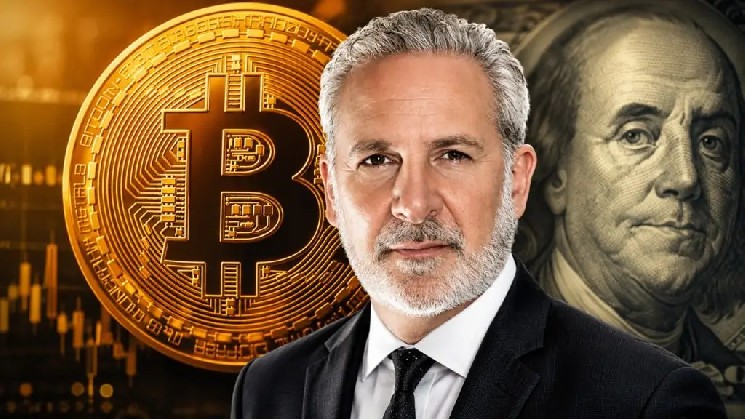
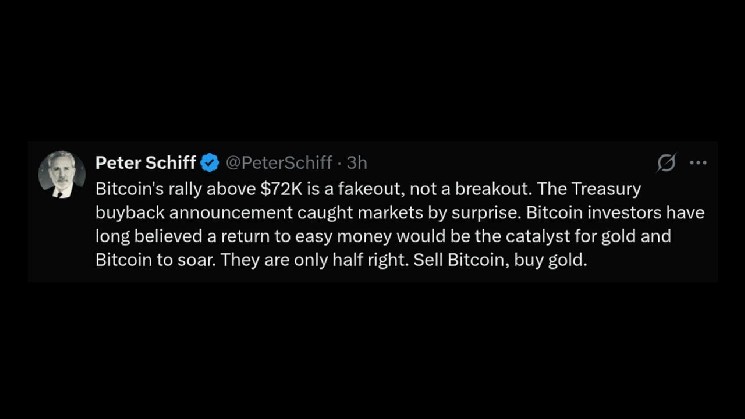
Schiff coi đà tăng của Bitcoin lên 72.000 USD là 'sóng tín hiệu giả', được kích hoạt bởi hành động của Bộ Tài chính

Chuyên gia ủng hộ vàng Peter Schiff nhận định đợt tăng vọt của Bitcoin lên 72.000 USD chỉ là một "đợt sóng tín hiệu giả", được kích hoạt bởi thông báo mua lại nợ của Bộ Tài chính Mỹ. Ông cho rằng động thái này đánh lừa thị trường, khiến các nhà đầu tư đổ tiền vào tài sản và đẩy giá Bitcoin từ dưới 65.000 USD lên hơn 71.000 USD, chấm dứt giai đoạn trì trệ. Schiff tin rằng các nhà đầu tư Bitcoin chỉ đúng một nửa khi kỳ vọng chính sách tiền tệ nới lỏng sẽ thúc đẩy giá tài sản. Ông khuyến nghị: "Hãy bán Bitcoin, mua vàng". Tuy nhiên, ông thừa nhận việc mua lại trái phiếu kho bạc có thể chưa đủ hiệu quả, và Cục Dự trữ Liên bang (Fed) có thể phải khởi động lại chương trình nới lỏng định lượng (QE) quy mô lớn hơn để hạ lãi suất thực sự. Dù Schiff liên hệ động thái này với việc giá vàng tăng mạnh, nhưng ông thừa nhận nó cũng có thể tiếp tục thúc đẩy giá Bitcoin, miễn là các nhà đầu tư vẫn xem Bitcoin là tài sản khan hiếm và phương tiện tích trữ giá trị đáng tin cậy, tương tự như vàng.

cryptonews.ru36 phút trước

Schiff coi đà tăng của Bitcoin lên 72.000 USD là 'sóng tín hiệu giả', được kích hoạt bởi hành động của Bộ Tài chính

cryptonews.ru36 phút trước

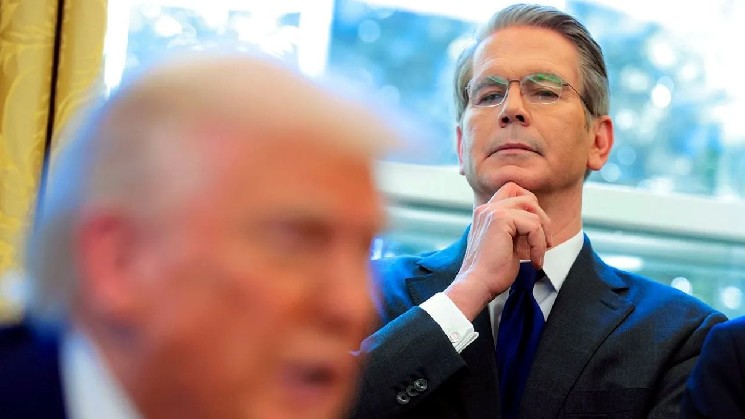
“Chúng tôi dự định tăng khối lượng mua lại”: Bộ trưởng Tài chính đặt mục tiêu về lợi suất trái phiếu

Bài viết thảo luận về động thái của Bộ Tài chính Mỹ nhằm tăng cường mua lại trái phiếu chính phủ dài hạn, với mức tối thiểu tăng từ 2 lên 4 tỷ USD mỗi lần từ ngày 9/9 đến ngày 4/11, để hỗ trợ thanh khoản thị trường. Bộ trưởng Tài chính Brian Bessent nhấn mạnh đây là một công cụ trong "bộ công cụ rộng lớn" và cảnh báo rằng lợi suất hiện tại không phản ánh đúng các chỉ số kinh tế cơ bản. Chương trình nhắm vào trái phiếu kỳ hạn 10-30 năm, mua lại các trái phiếu cũ ít thanh khoản và đồng thời phát hành trái phiếu mới để tài trợ thâm hụt. Sau thông báo, lợi suất trái phiếu dài hạn giảm nhẹ (khoảng 8-10 điểm cơ bản), trong khi Bitcoin tăng mạnh từ vùng 64.000 USD lên trên 72.000 USD. Việc lợi suất giảm khiến các tài sản không sinh lãi như Bitcoin và vàng trở nên hấp dẫn hơn, cùng với sự suy yếu của đồng USD và việc thanh lý các vị thế bán khống crypto. Tuy nhiên, tác động của chương trình bị giới hạn do quy mô nhỏ (4 tỷ USD/lần) so với thị trường trái phiếu kho bạc rộng lớn (khoảng 32 nghìn tỷ USD lưu hành) và không làm giảm tổng nợ công (đang trên 40 nghìn tỷ USD). Thị trường đang chờ đợi báo cáo tái cấp vốn hàng quý tiếp theo để biết thêm chi tiết về phạm vi mua lại trong tương lai và liệu động thái này có tạo ra đà giảm lợi suất lâu dài hay chỉ là tạm thời.

cryptonews.ru37 phút trước

“Chúng tôi dự định tăng khối lượng mua lại”: Bộ trưởng Tài chính đặt mục tiêu về lợi suất trái phiếu

cryptonews.ru37 phút trước

Đợt bán tháo sốt

Đêm 19/8, giá Bitcoin (BTC) tăng mạnh, kéo theo đà tăng vào ngày 20/8, giúp giá củng cố trên 72.000 USD và chạm mức cao nhất từ đầu tháng 6. Các tiền mã hóa khác như Ethereum (ETH) và Solana (SOL) cũng tăng trưởng mạnh. Đợt tăng giá này dẫn đến việc đóng cửa kỷ lục các vị thế bán khống, với tổng giá trị thanh lý vượt 1,6 tỷ USD trong hai ngày. Nguyên nhân chính của đợt bứt phá bao gồm dòng tiền mạnh vào các quỹ ETF Bitcoin, một phần do kỳ vọng vào đạo luật Clarity Act mà cựu Tổng thống Mỹ Donald Trump ủng hộ, nhằm tạo ra khuôn khổ pháp lý rõ ràng cho ngành công nghiệp tiền mã hóa. Tuy nhiên, các chuyên gia cảnh báo rằng đợt tăng này chủ yếu mang tính kỹ thuật và có thể chỉ là tạm thời, do được thúc đẩy bởi việc thanh lý vị thế bán khống ồ ạt hơn là nhu cầu đầu tư cơ bản mạnh mẽ. Nhu cầu thể chế đối với Bitcoin hiện vẫn ở mức thấp, và hoạt động của các nhà đầu tư bán lẻ cũng trầm lắng do yếu tố mùa vụ. Trong tương lai gần, yếu tố then chốt quyết định xu hướng giá sẽ là quyết định của Thượng viện Mỹ về Clarity Act và tín hiệu rõ ràng hơn từ Cục Dự trữ Liên bang (Fed) về việc cắt giảm lãi suất. Nếu đạo luật không được thông qua, áp lực bán có thể gia tăng.

cryptonews.ru38 phút trước

Đợt bán tháo sốt

cryptonews.ru38 phút trước

Giao dịch

Giao ngay

Bài viết Nổi bật

Làm thế nào để Mua F

Chào mừng bạn đến với HTX.com! Chúng tôi đã làm cho mua Synfutures (F) trở nên đơn giản và thuận tiện. Làm theo hướng dẫn từng bước của chúng tôi để bắt đầu hành trình tiền kỹ thuật số của bạn.Bước 1: Tạo Tài khoản HTX của BạnSử dụng email hoặc số điện thoại của bạn để đăng ký tài khoản miễn phí trên HTX. Trải nghiệm hành trình đăng ký không rắc rối và mở khóa tất cả tính năng. Nhận Tài khoản của tôiBước 2: Truy cập Mua Crypto và Chọn Phương thức Thanh toán của BạnThẻ Tín dụng/Ghi nợ: Sử dụng Visa hoặc Mastercard của bạn để mua Synfutures (F) ngay lập tức.Số dư: Sử dụng tiền từ số dư tài khoản HTX của bạn để giao dịch liền mạch.Bên thứ ba: Chúng tôi đã thêm những phương thức thanh toán phổ biến như Google Pay và Apple Pay để nâng cao sự tiện lợi.P2P: Giao dịch trực tiếp với người dùng khác trên HTX.Thị trường mua bán phi tập trung (OTC): Chúng tôi cung cấp những dịch vụ được thiết kế riêng và tỷ giá hối đoái cạnh tranh cho nhà giao dịch.Bước 3: Lưu trữ Synfutures (F) của BạnSau khi mua Synfutures (F), lưu trữ trong tài khoản HTX của bạn. Ngoài ra, bạn có thể gửi đi nơi khác qua chuyển khoản blockchain hoặc sử dụng để giao dịch những tiền kỹ thuật số khác.Bước 4: Giao dịch Synfutures (F)Giao dịch Synfutures (F) dễ dàng trên thị trường giao ngay của HTX. Chỉ cần truy cập vào tài khoản của bạn, chọn cặp giao dịch, thực hiện giao dịch và theo dõi trong thời gian thực. Chúng tôi cung cấp trải nghiệm thân thiện với người dùng cho cả người mới bắt đầu và người giao dịch dày dạn kinh nghiệm.

Tổng lượt xem 629Xuất bản vào 2024.12.21Cập nhật vào 2026.06.02

Làm thế nào để Mua F

Thảo luận

Chào mừng đến với Cộng đồng HTX. Tại đây, bạn có thể được thông báo về những phát triển nền tảng mới nhất và có quyền truy cập vào thông tin chuyên sâu về thị trường. Ý kiến ​​của người dùng về giá của F (F) được trình bày dưới đây.

活动图片