Korean Stocks Rally 22% in 10 Days, Enter Technical Bull Market, AI Chip Rally Back with a Vengeance?

marsbitXuất bản vào 2026-08-13Cập nhật gần nhất vào 2026-08-13

Tóm tắt

The South Korean benchmark KOSPI index has rebounded roughly 22% from its July 30 low, entering a technical bull market after a dramatic month. This surge follows a 22% crash in July—the worst monthly performance since the global financial crisis—triggered by forced liquidations of leveraged positions in chip stocks. The recovery is driven by major chipmakers Samsung Electronics and SK Hynix, buoyed by several key factors. Robust AI infrastructure spending from global tech giants continues to fuel demand for high-bandwidth memory. Favorable U.S. inflation data has eased fears of aggressive Federal Reserve rate hikes, and financial regulators have tightened rules on single-stock leveraged ETFs to curb excessive volatility. Additionally, strong market anticipation surrounds new shareholder return plans from Samsung and SK Hynix. Analysts estimate potential programs worth tens to hundreds of trillions of won, supported by significant projected free cash flows. This expectation has boosted investor sentiment. While foreign investors showed net buying interest recently, they remain net sellers year-to-date. Analysts caution that sustained market gains depend on the stability of the AI investment narrative and U.S. interest rates, suggesting the rally's continuity is not yet assured.

The South Korean benchmark KOSPI index rose 3.6% on Thursday, marking a cumulative rebound of about 22% from the low on July 30, officially entering a technical bull market.

Samsung Electronics and SK Hynix were the core drivers of this rally, with both heavyweight chip stocks surging close to or over 5% in a single day.
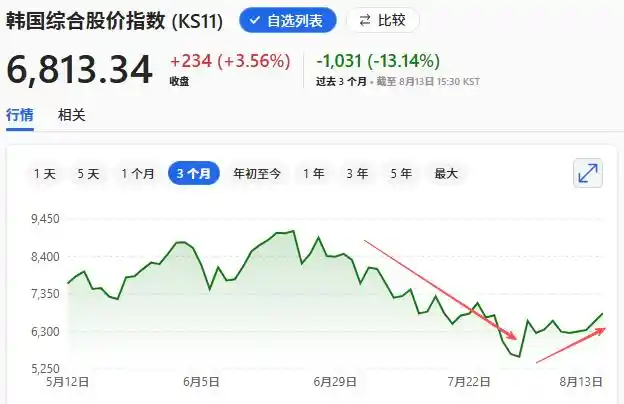
This rebound follows a period of extreme volatility. KOSPI plunged 22% in July alone, its worst monthly performance since the global financial crisis. Back then, forced liquidation of leveraged chip positions triggered chain-reaction trading halts, causing significant wealth losses for retail investors.

Behind this rally is a convergence of multiple positive factors: the latest earnings reports from global tech giants show persistently high AI capital expenditures, mild U.S. inflation data has eased market fears of further Fed rate hikes, regulators tightened rules on single-stock leveraged ETFs, and market expectations for upcoming shareholder return plans from Samsung and SK Hynix.

From Plunge to Bull: A Dramatic Reversal Within a Month

Just a month ago, the South Korean stock market was mired in a slump. KOSPI fell 22% in July alone, its worst monthly drop since the global financial crisis.

The trigger for the plunge was the forced liquidation of leveraged positions. Retail investors held large amounts of single-stock leveraged ETFs linked to chip stocks. When the tide turned, chain liquidations frequently caused intraday swings exceeding 5%, triggering exchange circuit breakers multiple times, wiping out billions of dollars in retail wealth in a short period.

Regulators stepped in quickly. Authorities tightened the minimum margin requirements for single-stock leveraged ETFs, significantly shrinking the daily trading volume of such products. Meanwhile, investors actively reduced leverage, and market volatility has fallen back to its lowest level since April.

Kang DaeKwun, CEO of Life Asset Management, said: "I believe the market became oversold during the liquidation of leveraged positions. As fund flows stabilize, the current rebound is a natural recovery."

AI Spending Remains Robust, Chip Demand Logic Intact

The fundamental support for this rally comes from the continued strength of AI demand.

The latest earnings reports from global tech giants show that investment in AI infrastructure has not slowed down, directly boosting expectations for demand for AI chips such as High Bandwidth Memory (HBM). Despite being driven mainly by retail investors, the South Korean stock market is still up over 60% year-to-date. However, even with this gain, KOSPI remains about 25% below its peak at the end of June.

Qian Zhang, an emerging markets equities specialist at Baillie Gifford, pointed out: "Due to the rise of AI agents and physical AI, memory demand has exploded, but we entered this phase with a fairly limited supply capability—the bottleneck is right here." "We are not saying the world will build data centers at this speed forever, but this is a real physical bottleneck, and there are only a few companies globally that can solve it."

Increased competitive threats from China had poured cold water on the strong momentum of memory stocks, but analysts believe the near-term demand outlook remains solid. The penetration of AI into more application scenarios and increased daily usage frequency continue to drive chip demand growth.

Shareholder Return Expectations Heat Up; Samsung, SK Hynix May Announce Trillion-Won Level Plans

Beyond the AI narrative, the upcoming shareholder return plans from the two chip giants have also become an important catalyst for recent market sentiment.

Samsung Electronics: During its Q2 earnings call, the company stated, "The board and management are actively discussing specific implementation plans, including special dividends, and the next phase of shareholder return policy." Its current three-year policy covering 2024-2026 expires this year.

According to calculations by DS Investment & Securities, Samsung Electronics' free cash flow (FCF) for this year is estimated at 263.2 trillion won. After deducting regular dividends, the additional return potential, corresponding to 50% of the cumulative three-year FCF, is about 131.8 trillion won.

KB Securities predicts that Samsung's annual shareholder return scale could be a minimum of 100 trillion won, up to a maximum of 200 trillion won—more than 10 times the current annual scale of 9.8 trillion won.

SK Hynix: The company has announced that it is "actively studying additional shareholder return plans, with specific details to be finalized and announced within Q3." Mirae Asset Securities expects SK Hynix's FCF to reach 180 trillion won this year, with net cash of 173 trillion won by year-end, estimating that funds available for returns amount to about 40 trillion won.

Daishin Securities believes that, if combining share buybacks for cancellation and special dividends, the return potential could reach up to 100 trillion won.

Mirae Asset Securities researcher Kim Young-gun noted that Samsung Electronics' "share price is down 39% from its peak; the current moment is a stage where the justification, yield, and perceived practical utility for advancing shareholder returns are all significantly enhanced."

He also stated that SK Hynix' "share price is down 51% from its peak, making it the optimal time for measures like buybacks, and the larger the return scale, the more the market will interpret it as the company's confidence in its future cash-generating ability."

Foreign Investor Sentiment Nuanced; Sustainability of Rally Uncertain

The moves of foreign investors warrant attention. Foreign investors were net buyers of Korean stocks on Thursday, but year-to-date, they remain net sellers, with cumulative withdrawals exceeding $100 billion—overheating and high valuations were the main reasons previously.

As this decline brought valuations down to more attractive levels, some overseas capital has begun to flow back.

However, whether the market can sustain its upward momentum remains uncertain. Kang DaeKwun said, "Until the AI narrative and US interest rates stabilize to some extent, it will be difficult for the market to maintain a continuous rise."

This article is from the WeChat public account "Wall Street News", author: Long Yue

Tiền kỹ thuật số thịnh hành

Câu hỏi Liên quan

QWhat is a technical bull market and what key condition did the KOSPI meet to enter one?

AA technical bull market is typically defined as a 20% or greater rise in a major index from a recent low. The KOSPI entered a technical bull market after rallying approximately 22% from its July 30 low.

QWhat were the two main drivers behind the recent strong rebound in the South Korean stock market, as highlighted in the article?

AThe two main drivers were: 1) Continued strong demand expectations for AI chips, fueled by high AI infrastructure spending from global tech giants, and 2) Market anticipation of significant shareholder return plans from the chip giants Samsung Electronics and SK Hynix.

QWhat event in July triggered the massive sell-off and circuit breakers in the KOSPI, and what was the regulatory response?

AThe massive sell-off in July was triggered by the forced liquidation of leveraged positions, primarily in single-stock leveraged ETFs tied to chip stocks held by retail investors. The regulatory response was to tighten the minimum margin requirements for single-stock leveraged ETFs, which significantly reduced their daily trading volume.

QAccording to analysts, what is the primary 'bottleneck' supporting the demand logic for AI memory chips like HBM, and which companies can address it?

AThe primary bottleneck is the limited global supply capacity for high-bandwidth memory (HBM) needed for AI. This demand has grown explosively with the rise of AI agents and embodied AI. The article states that only a few companies worldwide are capable of solving this supply bottleneck.

QDespite the recent rebound, what key uncertainty does the article mention that could challenge the sustainability of the market's upward trend?

AThe article mentions that sustaining the upward trend will be difficult until there is a degree of stabilization in both the AI investment narrative and U.S. interest rates. Additionally, foreign investor sentiment, which has been net sellers for the year, remains a variable.

Nội dung Liên quan

Grayscale: "Nếu các đề xuất được thông qua, giá của hai altcoin này có thể tăng"

Trưởng bộ phận nghiên cứu tại Grayscale, Zach Pandl, cho biết nếu các đề xuất thay đổi tokenomics trong cộng đồng Ethereum ($ETH) và Solana ($SOL) được thông qua, tốc độ tăng nguồn cung của cả hai tài sản crypto này có thể chậm lại đáng kể, từ đó tác động tích cực đến giá. Các thay đổi được đề cập nhằm giảm tỷ lệ lạm phát token hàng năm của $ETH và $SOL. Việc nguồn cung tăng chậm hơn có thể làm giảm lượng token mới lưu hành, làm tăng tính khan hiếm. Grayscale ước tính nếu được áp dụng, lạm phát nguồn cung hàng năm của Ethereum có thể giảm xuống khoảng 0.4% vào cuối năm 2031, gần với tốc độ tăng nguồn cung của Bitcoin. Dự kiến lạm phát nguồn cung hàng năm của Solana sẽ giảm xuống khoảng 1.1%. Tuy nhiên, việc giảm lạm phát token cũng có thể dẫn đến phần thưởng staking thấp hơn cho các nhà đầu tư, vì phần lớn thu nhập từ staking $ETH và $SOL đến từ việc phát hành token mới. Pandl lưu ý rằng việc tăng trưởng nguồn cung chậm lại có thể làm tăng tính khan hiếm, tạo áp lực tăng giá, đặc biệt có lợi cho những nhà đầu tư nắm giữ token mà không staking.

cryptonews.ru7 phút trước

Grayscale: "Nếu các đề xuất được thông qua, giá của hai altcoin này có thể tăng"

cryptonews.ru7 phút trước

Các chuyên gia chỉ ra nguyên nhân Bitcoin giảm sau khi lạm phát Mỹ hạ nhiệt

Các chuyên gia CryptoQuant cho rằng tin tốt về lạm phát Mỹ không thể hỗ trợ giá Bitcoin vì nhu cầu giao ngay yếu. Dữ liệu CPI và PPI tháng 7 của Mỹ đáp ứng hoặc vượt kỳ vọng, khiến lợi tức trái phiếu giảm và thị trường chứng khoán tăng, nhưng Bitcoin vẫn giao dịch quanh mức 63.000-64.000 USD. Nguyên nhân chính là dòng vốn đổ vào các ETF Bitcoin Mỹ vẫn thấp và chỉ số Coinbase Premium (phản ánh chênh lệch giá) âm từ tháng 5, cho thấy áp lực mua từ nhà đầu tư Mỹ hạn chế. Trong khi đó, vị thế trên thị trường tương lai vẫn cao, tạo ra sự mất cân bằng giữa nhu cầu giao ngay yếu, thanh khoản thấp và khối lượng vị thế ký quỹ lớn. Các chuyên gia cảnh báo trong điều kiện này, tin tích cực vĩ mô có thể không kích thích tăng giá. Nếu giá không phản ứng, các nhà giao dịch có thể đóng vị thế mua ký quỹ, gây thêm áp lực giảm. Mức kháng cự quan trọng là 68.700 USD - giá vốn trung bình của các nhà nắm giữ ngắn hạn. Theo CryptoQuant, để thị trường hồi phục mạnh mẽ cần: dòng tiền mạnh trở lại vào ETF Bitcoin Mỹ, chỉ số Coinbase Premium chuyển sang dương, khối lượng giao dịch giao ngay tăng và Bitcoin vượt vững chắc trên 68.700 USD.

cryptonews.ru58 phút trước

Các chuyên gia chỉ ra nguyên nhân Bitcoin giảm sau khi lạm phát Mỹ hạ nhiệt

cryptonews.ru58 phút trước

Giá Bitcoin giảm xuống 62.470 USD khi người bán thử thách lại ngưỡng hỗ trợ 63.000 USD

Giá Bitcoin giảm xuống 62.470 USD vào thứ Sáu, lần thứ hai liên tiếp phá vỡ ngưỡng 63.000 USD. Sau một thời gian củng cố quanh 63.400 USD, đợt bán tháo bắt đầu sau nửa đêm đã đẩy giá xuống đáy 62.470 USD trong phiên, trước khi phục hồi nhẹ lên trên 63.000 USD. Biến động mạnh dẫn đến việc thanh lý hàng loạt các vị thế mua ký quỹ, với tổng giá trị vị thế Bitcoin bị thanh lý trong 24h là 32 triệu USD. Áp lực bán càng gia tăng do dòng tiền ròng rút khỏi các Quỹ ETF Bitcoin, với mức rút hơn 131 triệu USD, đánh dấu ngày thứ hai liên tiếp có dòng tiền ra. Yếu tố khác gây lo ngại là đề xuất tiêu chí mới từ nhà cung cấp chỉ số MSCI, có thể dẫn đến việc loại các công ty nắm giữ tài sản kỹ thuật số như Bitcoin (ví dụ: MicroStrategy) ra khỏi các chỉ số chính. MicroStrategy đã phản đối mạnh mẽ đề xuất này, cho rằng các nhà cung cấp chỉ số không nên quyết định loại tài sản nào công ty được phép nắm giữ. Quyết định cuối cùng của MSCI dự kiến vào giữa tháng Mười, và nếu được thông qua, có thể kích hoạt đợt bán tháo từ các quỹ chỉ số từ tháng Mười một, gây thêm áp lực giảm cho thị trường Bitcoin.

cryptonews.ru59 phút trước

Giá Bitcoin giảm xuống 62.470 USD khi người bán thử thách lại ngưỡng hỗ trợ 63.000 USD

cryptonews.ru59 phút trước

Bí mật khai thác 1 BTC trên máy tính công ty: Nhân viên hãng tiền mã hóa đối mặt án tù

Christopher Renkin, 40 tuổi, từ bang Washington, đã nhận tội vì truy cập trái phép vào máy tính của một công ty khai thác bitcoin và đánh cắp tiền điện tử. Anh ta đã chuyển hướng khoảng 100 thiết bị sang nhóm khai thác (mining pool) riêng của mình và chiếm đoạt 1,0668 BTC. Theo công tố viên, Renkin bắt đầu làm việc tại công ty ở Niagara Falls, New York vào tháng 7/2021. Anh ta đã tự ý truy cập, khởi động lại máy tính công ty và chuyển chúng sang pool khai thác do mình tạo ra, sau đó chuyển bitcoin thu được vào ví tiền điện tử dưới sự kiểm soát của mình. Không chỉ vậy, Renkin còn chuyển máy tính sang chế độ "hiệu suất cao", gây thiệt hại cho phần cứng, làm giảm đáng kể tuổi thọ thiết bị và xâm phạm tính toàn vẹn, khả năng truy cập thông tin lưu trữ. Hành động này khiến công ty mất 1,06 BTC, trị giá 53.315 USD tại thời điểm phạm tội. Renkin bị kết tội truyền chương trình, thông tin, mã hoặc lệnh vào máy tính được bảo vệ và gây thiệt hại cho nó. Mức hình phạt tối đa có thể lên đến một năm tù và phạt 100.000 USD. Bản án dự kiến được tuyên vào ngày 17 tháng 11 năm 2026.

cryptonews.ru1 giờ trước

Bí mật khai thác 1 BTC trên máy tính công ty: Nhân viên hãng tiền mã hóa đối mặt án tù

cryptonews.ru1 giờ trước

Giao dịch

Giao ngay

Bài viết Nổi bật

Làm thế nào để Mua CHIP

Chào mừng bạn đến với HTX.com! Chúng tôi đã làm cho mua USD.AI (CHIP) trở nên đơn giản và thuận tiện. Làm theo hướng dẫn từng bước của chúng tôi để bắt đầu hành trình tiền kỹ thuật số của bạn.Bước 1: Tạo Tài khoản HTX của BạnSử dụng email hoặc số điện thoại của bạn để đăng ký tài khoản miễn phí trên HTX. Trải nghiệm hành trình đăng ký không rắc rối và mở khóa tất cả tính năng. Nhận Tài khoản của tôiBước 2: Truy cập Mua Crypto và Chọn Phương thức Thanh toán của BạnThẻ Tín dụng/Ghi nợ: Sử dụng Visa hoặc Mastercard của bạn để mua USD.AI (CHIP) ngay lập tức.Số dư: Sử dụng tiền từ số dư tài khoản HTX của bạn để giao dịch liền mạch.Bên thứ ba: Chúng tôi đã thêm những phương thức thanh toán phổ biến như Google Pay và Apple Pay để nâng cao sự tiện lợi.P2P: Giao dịch trực tiếp với người dùng khác trên HTX.Thị trường mua bán phi tập trung (OTC): Chúng tôi cung cấp những dịch vụ được thiết kế riêng và tỷ giá hối đoái cạnh tranh cho nhà giao dịch.Bước 3: Lưu trữ USD.AI (CHIP) của BạnSau khi mua USD.AI (CHIP), lưu trữ trong tài khoản HTX của bạn. Ngoài ra, bạn có thể gửi đi nơi khác qua chuyển khoản blockchain hoặc sử dụng để giao dịch những tiền kỹ thuật số khác.Bước 4: Giao dịch USD.AI (CHIP)Giao dịch USD.AI (CHIP) dễ dàng trên thị trường giao ngay của HTX. Chỉ cần truy cập vào tài khoản của bạn, chọn cặp giao dịch, thực hiện giao dịch và theo dõi trong thời gian thực. Chúng tôi cung cấp trải nghiệm thân thiện với người dùng cho cả người mới bắt đầu và người giao dịch dày dạn kinh nghiệm.

Tổng lượt xem 1.0kXuất bản vào 2026.04.21Cập nhật vào 2026.06.02

Làm thế nào để Mua CHIP

Thảo luận

Chào mừng đến với Cộng đồng HTX. Tại đây, bạn có thể được thông báo về những phát triển nền tảng mới nhất và có quyền truy cập vào thông tin chuyên sâu về thị trường. Ý kiến ​​của người dùng về giá của CHIP (CHIP) được trình bày dưới đây.

活动图片