Will Terrorist Durov Ban Russian Officials?

cryptonews.ruXuất bản vào 2026-07-31Cập nhật gần nhất vào 2026-07-31

Tóm tắt

Telegram founder Pavel Durov publicly reacted to being labeled a "terrorist" by Russian authorities, stating the designation came after he refused demands for mass surveillance and censorship on the platform. In a Telegram post, he highlighted that this status formally bans him from "publishing information online." Durov concluded with a statement widely circulated: Russian officials "clearly don't understand who can ban whom on the internet." This remark suggests Durov could potentially restrict official Russian government and officials' channels on Telegram, which continue to operate on the platform despite its formal blocking in Russia. The situation parallels previous, slow-moving state directives, like switching officials to domestic cars, contrasted with the current push to migrate all government communication to the Russian-made messenger MAX by 2030. However, reports indicate many officials still use Telegram via workarounds, fearing surveillance on MAX, while alternatives like BiP and KakaoTalk recently became inaccessible in Russia without a VPN. Durov has not specified any immediate actions against state channels. His statement is an initial response, with further developments depending on the authorities' reaction. The dynamic differs from 2020 when Russian regulators lifted a block on Telegram; now, Durov implies control from within the platform itself over the official accounts that persisted through that earlier blockade.

Pavel Durov has publicly responded to the decision of the Russian authorities for the first time. According to the founder of Telegram, the country declared him a "terrorist" precisely for refusing to comply with demands for mass surveillance and censorship on the messenger. The entrepreneur wrote about this in his Telegram channel.

The terrorist Durov drew attention to the wording of the accusation: according to Russian legislation, he is now prohibited from "publishing information on the internet"—this despite the fact that we are talking about the person who created one of the planet's largest messengers. The entrepreneur concluded his statement with a phrase that quickly spread among subscribers: Russian officials "clearly do not understand who can ban whom on the internet."

Earlier, Rosfinmonitoring added Durov to the list of terrorists and extremists. Formally, this entails the freezing of the entrepreneur's accounts and assets in Russia, a ban on most financial transactions, participation in elections, and work with the media. At the same time, the restrictions concern Durov personally, not the legal entity—the company Telegram does not fall under the article.

What Durov Might Have Meant

The phrase about "who can ban whom" does not look like just an emotional remark. Technically, it is the Telegram administration that determines which channels exist on the platform, including the verified accounts of Russian agencies and officials who continue to conduct official communication through the messenger despite its blocking in the country. Such rhetoric indicates the possibility of strict restrictions for state structures. Verified channels of Russian officials and state agencies, which actively use the platform to communicate with the public, could come under attack.

A Similar Story Already Happened—Only with Cars

The situation resembles another story with Russian officials—not about messengers, but about cars. Vladimir Putin stated back in 2023 that all officials and employees of state-owned companies should switch from foreign cars to domestic ones. Two years later, the president himself acknowledged that the order was far from fully implemented—some departments continued to purchase foreign equipment.

A similar scenario is unfolding with messengers, only the implementation speed is higher. The government obligated civil servants and public sector workers to completely switch to the domestic messenger MAX for work communication by 2030, abandoning foreign platforms. At the same time, sources reported that many officials, despite coercion, continue to use the blocked Telegram—they buy separate SIM cards and smartphones, fearing surveillance through MAX.

Parallelly, the number of alternatives for ordinary users is decreasing. At the end of July, the Turkish BiP and South Korean KakaoTalk stopped working without a VPN—both messengers had shown some of the highest growth rates in Russia in recent months precisely as a replacement for the blocked Telegram. No official explanations from Roskomnadzor regarding the outages were received.

The resulting picture is one where citizens are consistently limited in their choice of communication tools and pushed towards a single state platform, while officials themselves continue to use a foreign service, access to which is restricted for others.

Durov has not yet clarified whether he plans to take any action regarding the channels of Russian agencies. His statement remains the first public reaction to the assigned status—the further development of the situation will depend on how the Russian authorities themselves react to it.

AI Opinion

From the perspective of machine data analysis, Durov's current phrase echoes the rhetoric of 2020, when Roskomnadzor itself lifted access restrictions to Telegram, explaining the decision by the founder's willingness to counter terrorism and extremism. The agency then turned a blind eye to its own inconsistency: while the messenger was formally listed as blocked, state channels like RT and Vladimir Solovyov continued to operate in it, and RT's editor-in-chief Margarita Simonyan publicly commented on this with the phrase "if you can't block Telegram, don't block it."

Technically, the situation differs from 2020: back then, the state was fighting for access to the service from the outside, while now Durov is talking about control from within—over the same departmental channels that survived the blocking. This connection can now be severed not only by Roskomnadzor but also by the platform itself. Whether this phrase will remain rhetoric or turn into real restrictions for state channels will be seen in the coming weeks.


Tiền kỹ thuật số thịnh hành

Câu hỏi Liên quan

QWhy was Pavel Durov labeled a 'terrorist' by Russian authorities?

AAccording to Durov, Russian authorities labeled him a 'terrorist' for refusing to comply with demands for mass surveillance and censorship on the Telegram messenger.

QWhat did Pavel Durov imply with his statement 'who can ban whom on the internet'?

ADurov implied that as the administrator of Telegram, he technically has the power to block or ban channels and accounts on the platform, including those belonging to Russian officials and government agencies who use it for official communication.

QWhat are the potential consequences for Russian officials if Durov acts on his statement?

AThe verified channels of Russian officials and government agencies that actively use Telegram to communicate with the public could face restrictions or be banned from the platform.

QWhat is the Russian government's long-term plan for official communication platforms as mentioned in the article?

AThe Russian government has mandated that civil servants and public sector workers must fully transition to the domestic messenger 'MAX' for work communication by 2030, abandoning foreign platforms.

QHow does the current situation with Telegram differ from the 2020 incident mentioned in the article?

AIn 2020, the state was fighting for access to Telegram from the outside (attempting to block it). Now, Durov is talking about control from the inside—over the same government channels that survived the block—meaning the platform itself could potentially sever that connection.

Nội dung Liên quan

Michael Saylor tuyên bố, bản cập nhật Bitcoin mà ông phản đối đã không thể được thông qua!

Michael Saylor tuyên bố rằng về mặt toán học, BIP-110 không thể đạt ngưỡng hỗ trợ 55% từ các tình nguyện viên trong chu kỳ điều chỉnh độ khó khai thác Bitcoin hiện tại. Dữ liệu của ông cho thấy, trong tổng số 946 khối được tạo ra tính đến khối 960.561, chỉ 24 khối chứa tín hiệu ủng hộ BIP-110 trong trường phiên bản tiêu đề khối. Tất cả các tín hiệu này đều đến từ thợ đào DATUM chia sẻ phần thưởng thông qua nhóm khai thác OCEAN, và không có tín hiệu nào từ các thợ đào bên ngoài OCEAN. Saylor nhấn mạnh rằng trong tình huống này, BIP-110 sẽ không đạt được mức hỗ trợ tự nguyện 55% trong chu kỳ xem xét, và các tín hiệu hiện tại không thể được coi là sự đồng thuận chung của các thợ đào. BIP-110 là một đề xuất nhằm gây khó khăn cho việc thêm ảnh, văn bản hoặc các loại dữ liệu lớn khác vào mạng Bitcoin, ngoài giao dịch chuyển tiền. Người ủng hộ cho rằng Bitcoin chỉ nên được dùng để chuyển tiền và không nên làm tắc nghẽn mạng bằng dữ liệu không cần thiết. Tuy nhiên, Michael Saylor phản đối BIP-110. Ông lập luận rằng mạng Bitcoin không nên quyết định giao dịch nào là cần thiết, luật lệ không nên thay đổi theo ý muốn của một số ít người, và tỷ lệ hỗ trợ cao có thể không phản ánh đúng sự ủng hộ thực sự của thợ đào do một phần mềm tự động hóa quá trình báo hiệu.

cryptonews.ru15 phút trước

Michael Saylor tuyên bố, bản cập nhật Bitcoin mà ông phản đối đã không thể được thông qua!

cryptonews.ru15 phút trước

Số lượng bình luận tiêu cực về Bitcoin đạt mức cao nhất lịch sử: Điều này có nghĩa là gì?

Công ty phân tích tiền mã hóa Santiment thông báo rằng tình cảm tiêu cực đối với Bitcoin trên mạng xã hội đã đạt mức cao kỷ lục. Tỷ lệ bình luận tích cực/tiêu cực về Bitcoin trên các nền tảng như X, Reddit, Telegram đã giảm xuống mức thấp nhất kể từ khi công ty triển khai hệ thống giám sát hiện đại. Một lỗ hổng bảo mật trong phần sụn của ví cứng Coldcard được xác định là nguyên nhân chính gây lo ngại, làm dấy lên nghi ngờ về tính an toàn của phương pháp lưu trữ lạnh vốn được coi là an toàn nhất. Santiment lưu ý rằng, khác với các cuộc khủng hoảng lớn trước đây như sự sụp đổ của FTX hay Mt. Gox, cuộc thảo luận lần này tập trung vào rủi ro bảo mật phần cứng và ví lạnh nói chung, thay vì chỉ trích các sàn giao dịch tập trung. Theo dữ liệu, hiện chỉ có 0,58 bình luận tích cực cho mỗi bình luận tiêu cực về Bitcoin, cho thấy "nỗi sợ hãi" đang áp đảo "lòng tham" ở mức đáng kể. Mặc dù dữ liệu chỉ trong một ngày, mức độ hoảng loạn hiện tại được đánh giá là cao hơn cả đỉnh lo ngại về chiến tranh đầu năm và các cuộc khủng hoảng tiền mã hóa lớn trong quá khứ.

cryptonews.ru59 phút trước

Số lượng bình luận tiêu cực về Bitcoin đạt mức cao nhất lịch sử: Điều này có nghĩa là gì?

cryptonews.ru59 phút trước

SUI đang đứng trước ngưỡng cửa đột phá mới khi 'phe bò' nhắm mục tiêu tăng lên 20 USD

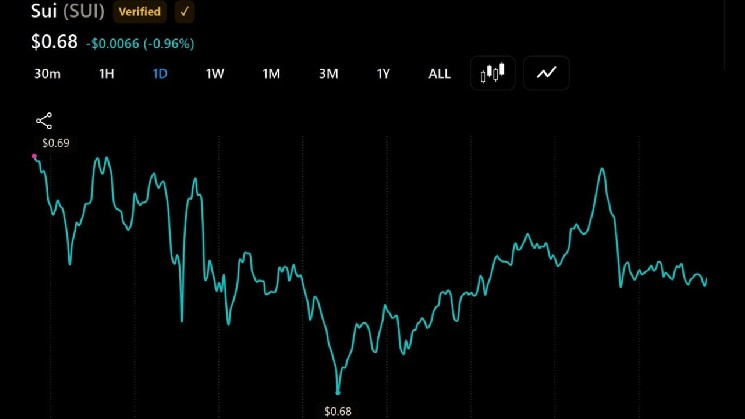
Ngày 1/8, mạng Sui đã mở khóa khoảng 13,72 triệu token SUI, trị giá khoảng 9,9 triệu USD, tương đương 0,34% nguồn cung lưu thông. Số token này được phân bổ cho quỹ dự trữ cộng đồng, người tham gia sớm và kho bạc của Mysten Labs. Khác với hình thức mở khóa ồ ạt, Sui áp dụng cơ chế giải phóng từ từ hàng ngày nhằm giảm áp lực bán. Nhà giao dịch nổi tiếng CryptoPatel nhận định vùng giá hiện tại của SUI (khoảng 0,68 USD) là khu vực tích lũy với mục tiêu dài hạn lần lượt là 5, 10 và 20 USD. Tuy nhiên, giá token đã giảm hơn 5% trong những phiên gần đây, và tâm lý thị trường ngắn hạn đang trở nên thận trọng. Về mặt cơ bản, mạng Sui ghi nhận một số phát triển tích cực: Quỹ đầu tư Mubadala Capital của Abu Dhabi đã phát hành phiên bản token hóa quỹ thị trường tư nhân trị giá 75 triệu USD trên nền tảng Sui, hướng đến các nhà đầu tư tổ chức. Ngoài ra, mạng thử nghiệm Hashi cho phép sử dụng Bitcoin làm tài sản thế chấp đã ra mắt, cùng với việc triển khai chuyển khoản ổn định miễn phí trong mạng. Việc giảm giá gần đây được cho là chủ yếu do áp lực từ đợt mở khóa token và điều kiện thị trường chung, không phải từ sự cố nào của chính giao thức Sui.

cryptonews.ru1 giờ trước

SUI đang đứng trước ngưỡng cửa đột phá mới khi 'phe bò' nhắm mục tiêu tăng lên 20 USD

cryptonews.ru1 giờ trước

Giao dịch

Giao ngay

Bài viết Nổi bật

Làm thế nào để Mua BAN

Chào mừng bạn đến với HTX.com! Chúng tôi đã làm cho mua Comedian (BAN) trở nên đơn giản và thuận tiện. Làm theo hướng dẫn từng bước của chúng tôi để bắt đầu hành trình tiền kỹ thuật số của bạn.Bước 1: Tạo Tài khoản HTX của BạnSử dụng email hoặc số điện thoại của bạn để đăng ký tài khoản miễn phí trên HTX. Trải nghiệm hành trình đăng ký không rắc rối và mở khóa tất cả tính năng. Nhận Tài khoản của tôiBước 2: Truy cập Mua Crypto và Chọn Phương thức Thanh toán của BạnThẻ Tín dụng/Ghi nợ: Sử dụng Visa hoặc Mastercard của bạn để mua Comedian (BAN) ngay lập tức.Số dư: Sử dụng tiền từ số dư tài khoản HTX của bạn để giao dịch liền mạch.Bên thứ ba: Chúng tôi đã thêm những phương thức thanh toán phổ biến như Google Pay và Apple Pay để nâng cao sự tiện lợi.P2P: Giao dịch trực tiếp với người dùng khác trên HTX.Thị trường mua bán phi tập trung (OTC): Chúng tôi cung cấp những dịch vụ được thiết kế riêng và tỷ giá hối đoái cạnh tranh cho nhà giao dịch.Bước 3: Lưu trữ Comedian (BAN) của BạnSau khi mua Comedian (BAN), lưu trữ trong tài khoản HTX của bạn. Ngoài ra, bạn có thể gửi đi nơi khác qua chuyển khoản blockchain hoặc sử dụng để giao dịch những tiền kỹ thuật số khác.Bước 4: Giao dịch Comedian (BAN)Giao dịch Comedian (BAN) dễ dàng trên thị trường giao ngay của HTX. Chỉ cần truy cập vào tài khoản của bạn, chọn cặp giao dịch, thực hiện giao dịch và theo dõi trong thời gian thực. Chúng tôi cung cấp trải nghiệm thân thiện với người dùng cho cả người mới bắt đầu và người giao dịch dày dạn kinh nghiệm.

Tổng lượt xem 721Xuất bản vào 2024.12.11Cập nhật vào 2026.06.02

Làm thế nào để Mua BAN

Thảo luận

Chào mừng đến với Cộng đồng HTX. Tại đây, bạn có thể được thông báo về những phát triển nền tảng mới nhất và có quyền truy cập vào thông tin chuyên sâu về thị trường. Ý kiến ​​của người dùng về giá của BAN (BAN) được trình bày dưới đây.

活动图片