Gate Research Institute: The 'Wall Street-ization' Wave of Crypto Financial Products – Competition or Integration?

marsbitXuất bản vào 2026-07-22Cập nhật gần nhất vào 2026-07-22

Tóm tắt

The article titled "Gate Research Institute: Are Crypto Financial Products Sparking a 'Wall Street' Wave—Competition or Convergence?" explores the evolving relationship between the crypto ecosystem and traditional finance (TradFi). The piece begins by reflecting on Bitcoin's original 2009 vision of decentralization, disintermediation, and moving away from banks. It then contrasts this with the 2024 landscape, where key crypto assets like Bitcoin are increasingly held through Wall Street products like ETFs issued by giants like BlackRock. The article questions whether this signifies that TradFi is systematically taking over the rights to issue, price, custody, and distribute crypto financial assets. The core argument is that this is not a zero-sum takeover but rather a bidirectional convergence where each side addresses the other's weaknesses. Crypto offers 24/7 global markets, programmable settlement, and open access but lacks compliant channels, institutional-grade custody, deep fiat liquidity, and mainstream distribution. TradFi possesses these but is constrained by legacy systems, limited operating hours, and slow settlement. Two primary convergence paths are highlighted: * **Path A (CEX to TradFi):** Exemplified by Gate, which has progressed from offering tokenized stocks and CFDs to providing direct, real stock trading (US, Hong Kong, South Korea) within its platform, using USDT. * **Path B (TradFi to Crypto):** Exemplified by Robinhood, which has integrated crypt...

In January 2009, Satoshi Nakamoto embedded a line in the Bitcoin genesis block: "The Times 03/Jan/2009 Chancellor on brink of second bailout for banks." This line served as a timestamp and is often seen as a critique of the bank bailout system following the 2008 financial crisis: Bitcoin aimed to establish a peer-to-peer value transfer system that didn't rely on banks or trusted third parties.

Yet, seventeen years later, one of the mainstream ways to hold Bitcoin is to buy a share of an ETF issued by BlackRock, the world's largest asset manager, or hold shares of related Bitcoin treasury companies. Does this mean the crypto market has strayed from its founding purpose? Is Wall Street systematically seizing the issuance, pricing, custody, and distribution rights of crypto-financial assets?

1. Is Wall Street Seizing the Issuance, Pricing, Custody, and Distribution Rights of Crypto Assets?

1.1 The Ideal: Bitcoin's Founding Intent in 2009

This goes back to Bitcoin's original intent. The Bitcoin whitepaper envisioned a financial order built around three "de-" principles:

• Decentralization: No central issuer, no headquarters, no servers that can be shut down. The ledger is maintained by a global network of nodes, with rules written into the code.

• Disintermediation: Peer-to-peer value transfer without the need for banks, brokerages, or clearinghouses to act as intermediaries or guarantors. "Private key equals ownership," with self-custody as the default.

• Debanking: Anyone can hold and transfer assets and participate in new coin issuance (through mining) without needing to open an account, undergo KYC, or have accredited investor status.

The core ethos of this ideal was to reclaim the four powers of finance—issuance, pricing, custody, and distribution—from the hands of a few institutions and distribute them among every participant in the network. This was both a direct response to the 2008 financial crisis and a benchmark, declaring to the market that if the centralized financial system could fail, then build a system that doesn't need it.

1.2 Reality: Are These Four Powers Being Seized?

However, this decentralized order seems to have lost its purity following the approval of spot Bitcoin ETFs in 2024. In other words, traditional finance is incorporating crypto technology into its own asset issuance, settlement, and distribution systems.

Asset management giants like BlackRock, Fidelity, and Franklin Templeton have packaged BTC and ETH into products that can be bought in traditional financial accounts. When BTC and ETH are packaged as ETFs, they transform from "on-chain assets requiring an understanding of wallets and private keys" into "financial products that can be bought in traditional securities accounts." As of May 2026, ETFs hold approximately 1.5 million Bitcoin. In just two years, ETFs represent about 7.14% of Bitcoin's total capped supply of 21 million.

A similar shift is happening in the derivatives market. CME's Bitcoin and Ethereum futures and options provide institutions with a regulated venue for trading, hedging, and integrating into risk models. Increasingly, institutions can gain crypto exposure without directly touching on-chain assets, through futures, options, ETFs, structured products, and fund shares.

RWA and tokenized government bonds further expand the boundaries of this "Wall Street-ization." The tokenized US Treasury market grew from about $380 million in early 2023 to over $11 billion by 2026, making it the fastest-growing segment in the entire RWA space. The list of issuers reads almost like a roll call of Wall Street: BlackRock's BUIDL, Franklin Templeton's Benji, JPMorgan's Kinexys, Ondo's tokenized Treasury products—all are moving traditional financial assets on-chain.

Institutions like Coinbase, Fidelity Digital Assets, and BNY Mellon handle custody, trading, and compliance infrastructure. Furthermore, in August 2025, a US executive order allowed cryptocurrencies, private equity, and other alternative assets into 401(k) retirement plans, opening the door to the approximately $12.5 trillion in retirement account funds. As more institutions participate, numerous brokerages and wealth managers are gradually incorporating parts of the distribution rights.

This is not just a change in product form; it's a change in power structure: asset managers handle issuance, brokerages and advisors handle distribution, compliant custodians handle safekeeping, market makers and authorized participants handle primary market creation/redemption, exchanges handle listing, and regulatory frameworks define the boundaries. Crypto assets are thus entering the language system of traditional finance.

2. A Two-Way Convergence: 1+1>2

But Wall Street's "centralization" is only one side of the coin. Zooming out, the other side is the two systems complementing each other's shortcomings. This is not a zero-sum game where one side swallows the other, but a two-way convergence of two systems.

The crypto-native system has permissionless openness, 24/7 global markets, and programmable on-chain settlement. However, it has always lacked four things: compliant issuance channels, institutional-grade custody trust, deep fiat liquidity, and distribution networks that can reach mainstream users. These four are precisely what Wall Street has in abundance.

Conversely, Wall Street has licenses, custody, trillion-dollar capital pools, and global distribution channels. But its assets are trapped in an archaic system: markets open only on weekdays, cross-border barriers are high, settlement takes T+2, and products cannot be freely combined. These limitations are precisely what the crypto rails can inherently solve. Thus, this 1+1>2 dynamic is not just a theoretical exercise.

Over the past year, crypto exchanges have successively launched real stock trading. This wave presents two completely opposite yet converging directions. One starts from crypto exchanges and moves towards traditional finance; the other starts from traditional finance and moves towards crypto. Gate and Robinhood are the clearest representatives of these two paths.

2.1 Path A: From CEX to Traditional Finance

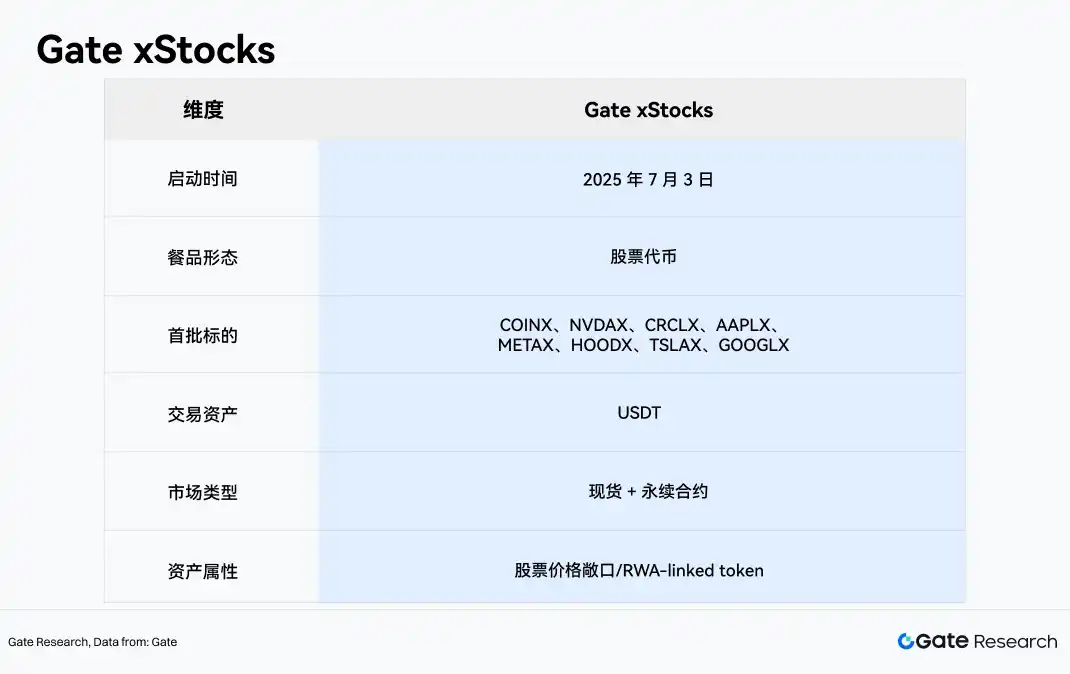
Gate's TradFi path can be divided into four stages. The first stage is the tokenization of traditional assets/stocks. Gate officially launched the xStocks Trading Section on July 3, 2025, becoming one of the earliest crypto exchanges to offer tokenized asset trading. Partnering with xStocks and Ondo, it allows users to trade spot and perpetual contracts for stocks like Apple, Tesla, and Meta directly with USDT, 24/7, without needing a traditional securities account. The core of this path is the "third-party compliant issuance + CEX distribution" model represented by xStocks. The underlying structure involves compliant Swiss entity Backed Finance holding the real underlying stocks 1:1 via an SPV structure under DLT law (purchased through brokers like Interactive Brokers and custodied at regulated custodians like InCore Bank). Tokens are issued on the Solana SPL standard, with Chainlink oracles synchronizing prices with off-chain markets at high frequency.
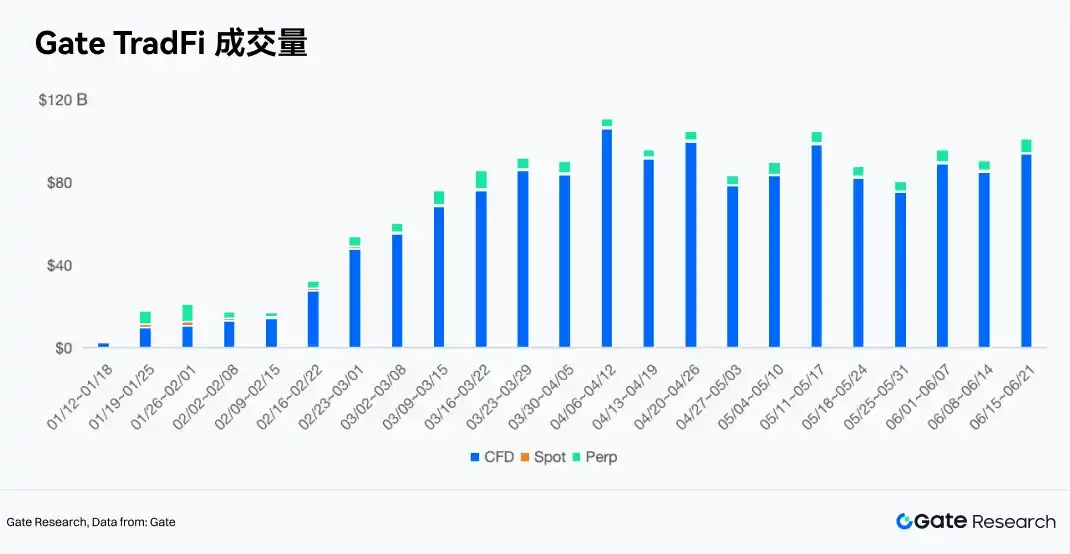
The second stage is the CFD-ization of traditional assets, providing price exposure to gold, forex, indices, commodities, and select stocks via contracts for difference. In January 2026, Gate expanded its TradFi CFD products to cover gold, forex, indices, commodities, and popular stocks, integrating the trading experience using USDx, an internal unit of account pegged to USDT. In this stage, the exchange acts as a price exposure gateway; users trade derivatives without directly holding the underlying stock assets.
The third stage is the launch of real stock trading in June 2026. On June 1, Gate officially launched real stock trading, currently supporting over 10,000 US stocks and ETFs, covering major markets like NYSE and Nasdaq. Users can trade directly using USDT. This means a native crypto trading platform is no longer content with offering spot, futures, Launchpad, copy trading, wallets, and on-chain tools to native users; it has begun to include stock, ETF, bond, forex, and fund traders into its trading ecosystem.

The difference from the previous CFD stage is that Gate emphasizes its connection to real securities markets through compliant brokerage infrastructure, not via stock tokens or synthetic assets. On June 3, Gate also announced a strategic partnership with Alpaca to expand access to real stock trading for eligible users. Alpaca is an SEC-registered clearing broker, and the partnership focuses on trade execution, clearing, and custody infrastructure. In other words, Gate isn't issuing stocks itself; it's acting as the front-end gateway between crypto accounts, stablecoin funds, and the traditional brokerage clearing system.
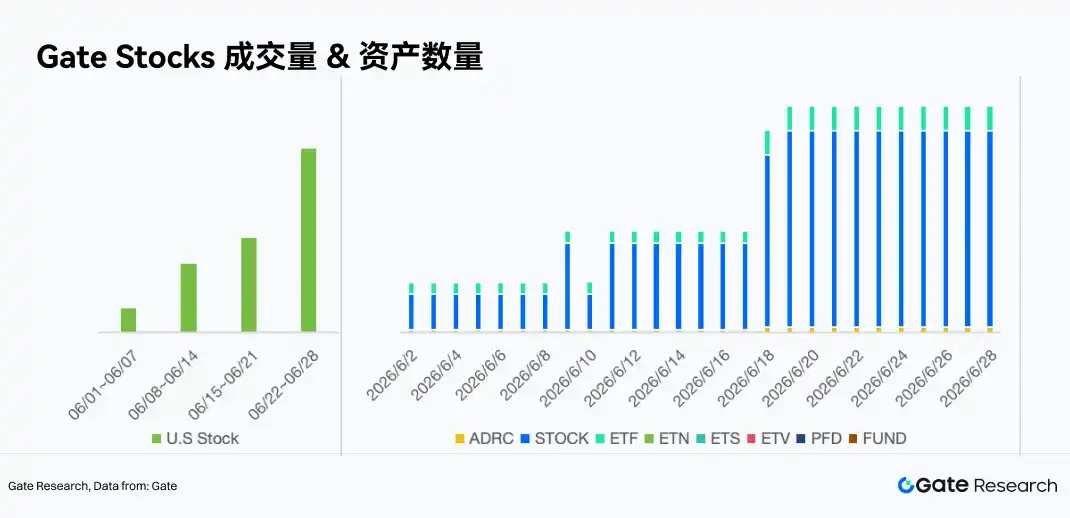
The fourth stage is geographical expansion in stock markets. Following US stocks, Gate launched Hong Kong stock trading on June 15, initially covering over 1,000 stocks listed on the Hong Kong Exchange. Users can trade assets like Tencent, HSBC, Xiaomi, Meituan, BYD, and China Mobile using USDT, sharing the same stock account system as for US stocks. On June 22, Gate further launched Korean stock trading, supporting stocks listed on the KRX exchange, initially covering the top 1,000 companies by market cap, including Samsung Electronics, SK Hynix, NAVER, Hyundai Motor, and Celltrion, covering both KOSPI and KOSDAQ markets. Within June, Gate rapidly deployed a "US-Hong Kong-Korean stocks" matrix, forming a multi-market product portfolio with USDT as the unified funding entry point and global stocks as the allocation targets.

These four stages reflect a shift in CEX growth logic. In the past, CEXs primarily relied on spot, futures, Launchpad, wealth management, and Web3 wallets to build user ecosystems. However, as crypto trading penetration increases, fee competition intensifies, and regulatory demands rise, growth space relying solely on crypto-to-crypto trading is narrowing. Traditional assets like stocks, ETFs, and commodities can expand the pool of tradable assets and improve user asset retention. For Gate, real stock trading not only serves the cross-asset allocation needs of crypto users but also helps attract traditional finance users into its account system.

2.2 Path B: From Traditional Finance to Crypto

Opposite to Gate's direction, traditional brokerages represented by Robinhood have been gradually penetrating the crypto market. The advantage of these traditional brokerages lies in their established retail brokerage user base, compliance frameworks, and experience in retail trading products. This allows them to integrate traditional finance products like stocks, ETFs, and options with crypto assets on the same trading platform at a relatively low customer acquisition cost. Traditional financial institutions not only incorporate crypto assets as a supplement to their traditional wealth management systems but also leverage characteristics like 24/7 trading and high volatility to explore new revenue streams and enhance platform competitiveness.

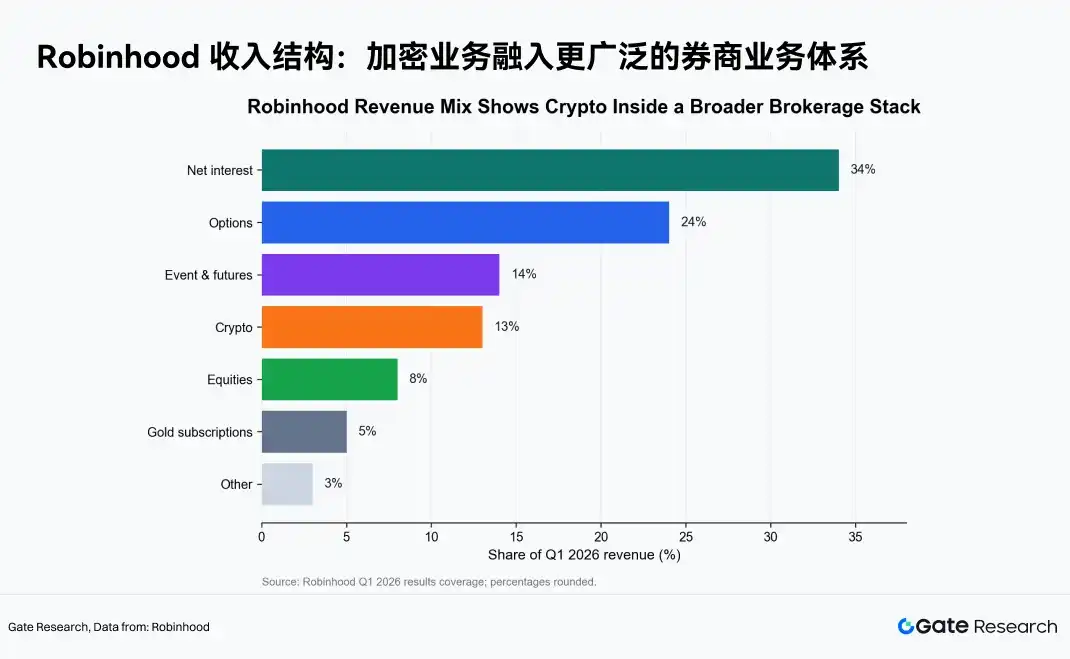
The most representative among traditional brokerages is Robinhood. Originally a typical retail brokerage and fintech platform starting with stocks, options, cash management, margin, and subscription services, crypto assets have become one of its growth engines in recent years. In Q4 2024, Robinhood's crypto trading revenue reached $358 million, a year-on-year increase of over 700%, driving a more than 200% increase in trading revenue. For the full year 2025, Robinhood's total revenue reached $4.5 billion, net deposits for the year reached $68 billion, and Gold subscription users reached 4.2 million, indicating its evolution from a single stock trading app into a comprehensive financial account.
Robinhood's crypto strategy is not limited to listing coins for trading. In June 2025, Robinhood completed its acquisition of Bitstamp, integrating Bitstamp's retail and institutional crypto trading businesses covering the EU, UK, US, and Asia, and strengthening its global crypto licensing and institutional capabilities. This shows Robinhood isn't simply adding crypto as another trading category within its stock app; it's acquiring crypto exchange capabilities, licenses, institutional clients, and global operations through M&A.

More importantly, it is working on moving traditional stock assets on-chain. On June 30, 2025, Robinhood announced the launch of Stock Tokens in Europe and disclosed plans to build the Robinhood Layer 2 to support real-world asset tokenization, 24/7 trading, cross-chain functionality, and self-custody. Its stock tokens were initially issued on Arbitrum, with plans to migrate to its own Layer 2 based on Arbitrum's tech stack. These Classic Stock Tokens are derivative contracts with Robinhood reflecting the price performance of the underlying stocks and ETPs.

This contrasts with Gate's path emphasizing real stock trading. Robinhood leans more towards encapsulating traditional stock exposure as on-chain or quasi-on-chain tokenized exposure, while Gate is connecting to real securities brokerage infrastructure starting from its CEX account.

2.3 The Common Goal of Both Paths: Competing for the Next-Generation Integrated Financial Account

For the average user, the financial classification behind an asset may not be that important. Most people don't care whether they're trading stocks, cryptocurrencies, ETFs, event contracts, or tokenized securities. What users truly care about is whether they can execute trades in the same account, enter and exit positions at low cost, see price changes in real-time, and quickly switch positions during market volatility.

And this is precisely the core motivation for traditional brokerages to embrace crypto assets. They don't simply want to become another Gate or CEX; they want to avoid the next generation of financial gateways being captured by crypto platforms.

Therefore, the key isn't whether a particular product succeeds in the short term, but that the direction of industry convergence is clear: Traditional brokerages want the trading speed, global liquidity, younger user base, and high-frequency trading behavior of the crypto market. Crypto platforms want the real assets, compliant identity, institutional trust, and broader asset supply of traditional finance.

Both sides are moving towards the most valuable parts of the other. The boundary between Crypto and TradFi is being broken at the product level. The core competition in the next phase will be around compliance capabilities, asset coverage, capital efficiency, user experience, and global account systems.

3. RWA and On-Chain Treasuries: The Middle Layer Unifying Capital Markets

The Gate and Robinhood examples mentioned above represent convergence at the user gateway level, while RWA and on-chain Treasuries represent convergence at the asset layer.

Historically, one of the biggest issues in the crypto market was the relatively closed supply of on-chain assets. Beyond native tokens, stablecoins, NFTs, and a few derivative assets, the on-chain world struggled to host a sufficiently rich, low-volatility, and institutionally suitable pool of real-yield assets.

On-chain Treasuries change this. When US Treasuries, money market funds, and short-term bond funds are tokenized, they become the on-chain world's approximation of "risk-free yield." They can serve as collateral, be integrated into DeFi compositions, facilitate institutional treasury management, and become the yield source backing stablecoins and other on-chain financial products.

However, this market is still nascent. Data from May 2026 shows the tokenized US Treasury market is around $15 billion, while the entire US Treasury market is approximately $30 trillion. There is a difference of over three orders of magnitude.
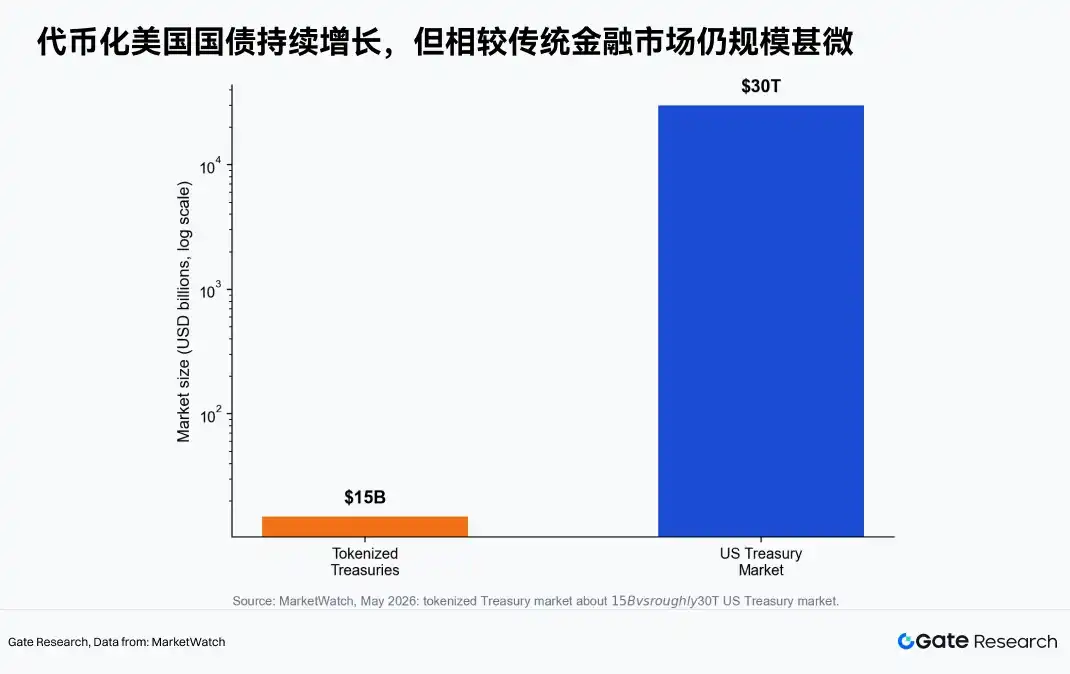
This gap indicates two things. First, RWA is not a completed market but a market just beginning its institutionalization. Second, its ceiling isn't determined by crypto-native users but by whether traditional financial assets can enter the on-chain environment in a compliant, auditable, settleable, and distributable manner. This is why traditional institutions like JPMorgan, BlackRock, Franklin Templeton, BNY, DTCC, and Nasdaq simultaneously appear in the tokenization narrative. In the long run, they are not creating a separate crypto product but testing the underlying settlement and asset registration methods for future capital markets.

And data proves this convergence is not a narrative bubble but a real structural trend. In H1 2026, while the broader crypto market fell 28% and DeFi TVL shrank over 25%, the RWA sector grew over 40% against the trend, surpassing $32 billion in scale. Tokenized stocks were the growth engine: the number of holding wallets grew 188% in six months, reaching about 350,000, making it the largest RWA category by wallet count, surpassing tokenized gold. This means many users already in the crypto world who wanted exposure to US stocks found an entry point without returning to traditional brokerages. Meanwhile, DTCC, US, and Japanese banks plan to enter in 2026–2027, aiming to "infrastructure-ize" tokenized stocks.

4. The Logical Endpoint: Stocks, Crypto, RWA, On-Chain Treasuries Trading Side-by-Side

4.1 Unified Capital Markets and the "Super Account"

In the old financial system, different assets were segregated into different accounts: stocks in brokerage accounts, funds in asset management accounts, bonds in institutional systems, deposits in bank accounts, crypto on exchanges or wallets, and on-chain assets in self-custody addresses. Each asset class had its own trading hours, settlement cycles, custody rules, compliance requirements, and user interfaces. But the new generation of platforms is attempting to compress these divisions into a single account.

Crypto exchanges are expanding from coins to stocks, ETFs, RWA, payments, and on-chain yield. Traditional brokerages are expanding from stocks to crypto, tokenized securities, prediction markets, stablecoins, and 24/7 trading. Asset managers are expanding from funds to ETFs, tokenized funds, and on-chain distribution. Banks are expanding from deposits and settlement to tokenized deposits, on-chain payments, and institutional clearing networks.

On the surface, they offer different products. In reality, they are all competing for the same thing: the default entry point for the next-generation multi-asset account. Whoever controls this gateway controls distribution; whoever controls distribution can influence liquidity, pricing, custody, and asset issuance.

The future taking shape likely involves users trading BTC, ETH, Apple stock, Nvidia stock, S&P ETFs, on-chain US Treasuries, money market funds, gold, RWA, prediction market contracts, and even tokenized shares of private companies—all within the same interface. Stablecoins may become the cross-market funding layer, on-chain Treasuries may serve as collateral and yield base, ETFs and tokenized funds may become bridges for traditional assets to enter crypto accounts, and the boundaries between brokerage apps and crypto exchange apps will increasingly blur.

This market will likely not be fully decentralized nor fully controlled by Wall Street. A hybrid structure is more probable. Asset issuance will remain regulated, custody will require compliant institutions, securities trading will still have geographic and investor suitability restrictions, but the trading interface, fund flow, settlement speed, and asset composition methods will increasingly resemble the crypto market.

The competition for the next generation of capital markets isn't between crypto exchanges and stock exchanges; it's about who can compress the most assets, deepest liquidity, most trustworthy custody, and smoothest user experience into the same account.

4.2 Conclusion: Wall Street Hasn't Conquered Crypto, and Crypto Hasn't Bypassed Wall Street

The "Wall Street-ization" of crypto financial products should not be interpreted as the crypto market being taken over by traditional finance. More accurately, it is a mutual transformation. Future industry competition may no longer be point-to-point between CEXs and brokerages, but among financial super-gateways. CEXs will continue expanding into stocks, ETFs, bonds, funds, gold, forex, payments, and wealth management. Traditional brokerages will continue expanding into crypto spot, staking, tokenized assets, stablecoin payments, and on-chain settlement. What end-users eventually see might not be a "crypto exchange" or a "stock brokerage," but a unified account containing BTC, ETH, USDT, US stocks, ETFs, gold, on-chain yield products, and more.

Long-term, asset categories will remain important, regulatory boundaries will persist, but the user experience will become far less fragmented than today. Stocks, crypto, RWA, and on-chain Treasuries will no longer belong to separate worlds but will be repriced within the same funding layer, the same account system, and the same trading interface.

Wall Street hasn't simply conquered crypto. Crypto hasn't bypassed Wall Street. They are jointly reshaping capital markets into another form.

Returning to that line in Satoshi's genesis block. Seventeen years ago, Bitcoin aimed to bypass Wall Street and build its own financial order. Seventeen years later, Bitcoin and Wall Street are co-building a new track. The decentralized ideal hasn't faded; it continues operating at the protocol's foundational layer. And at the application layer accessible to ordinary people, a more efficient, more global, and freer unified capital market is quietly taking shape at the intersection of these two converging paths.

Data Sources

• Gate, https://www.gate.com

• CryptoTimes, https://www.cryptotimes.io/insights/how-etfs-are-driving-bitcoin-in-2026-big-players-shaping-the-trend/

• InvestaX, https://investax.io/blog/q1-2026-real-world-asset-tokenization-market-report

• RWA.xyz, https://app.rwa.xyz/

• CoinGape, https://coingape.com/best-crypto-exchanges-to-trade-real-world-assets/

• Eco, https://eco.com/support/en/articles/15083160-robinhood-tokenized-stocks-what-s-live-and-how-it-works

• Eco, https://eco.com/support/en/articles/15254023-tokenized-equities-2026-backed-dinari-robinhood

• CEX.IO, https://blog.cex.io/ecosystem/tokenized-stocks-q2-2026-trends-35636

Gate Research Institute is a comprehensive blockchain and cryptocurrency research platform, providing readers with in-depth content including technical analysis, hot topic insights, market reviews, industry research, trend forecasts, and macroeconomic policy analysis.

Disclaimer

Investing in cryptocurrency markets involves high risks. Users are advised to conduct independent research and fully understand the nature of the assets and products they purchase before making any investment decisions. Gate assumes no responsibility for any losses or damages arising from such investment decisions.

Tiền kỹ thuật số thịnh hành

Câu hỏi Liên quan

QWhat were the original three 'de-' principles of Bitcoin's creation as described in the article?

AThe original three 'de-' principles of Bitcoin's creation were: decentralization (no central issuer, global node maintenance), de-intermediation (peer-to-peer value transfer without banks or brokers), and de-banking (anyone can hold, transfer, and issue new coins without needing a bank account, KYC, or accredited investor status).

QHow is the 'Wall Street-ization' of crypto assets manifested according to the article?

AThe 'Wall Street-ization' of crypto assets is manifested through several key developments: the approval and growth of Bitcoin and Ethereum ETFs managed by giants like BlackRock and Fidelity, the rise of regulated derivatives on CME, the rapid expansion of tokenized real-world assets (RWA) like U.S. Treasuries, and the integration of crypto assets into traditional retirement accounts like 401(k)s. This shifts control over issuance, pricing, custody, and distribution towards traditional financial institutions.

QWhat are the two opposite but converging paths described for the fusion of crypto and traditional finance (TradFi)?

AThe two converging paths are: Path A, where a crypto-native exchange (CEX) like Gate expands into traditional finance by offering tokenized stocks, CFDs, and eventually direct access to real stock trading. Path B, where a traditional brokerage like Robinhood expands into crypto by integrating crypto trading, acquiring crypto exchanges (e.g., Bitstamp), and tokenizing traditional stocks on-chain. Both aim to create a comprehensive, multi-asset financial account.

QWhat role do Real-World Assets (RWA) and tokenized Treasuries play in the fusion of financial markets?

ARWA and tokenized Treasuries act as a unifying middle layer or 'risk-free yield proxy' for the on-chain world. They bring low-volatility, yield-generating traditional assets onto the blockchain, serving as collateral in DeFi, a source of yield for stablecoins, and meeting institutional demand. Their growth, especially in tokenized equities, provides crypto users exposure to traditional assets without leaving the crypto ecosystem, while attracting traditional financial infrastructure providers to build on-chain.

QWhat is the article's conclusion about the relationship between Wall Street and crypto, and the likely future of capital markets?

AThe article concludes that the relationship is not a zero-sum game where one conquers the other. Instead, it's a process of mutual transformation and convergence. The future likely holds a hybrid structure where a 'unified capital market' emerges. Users will access a 'super account' or unified interface to trade diverse assets—like crypto, stocks, ETFs, RWA, and tokenized Treasuries—seamlessly. Competition will shift to who can build the best multi-asset platform with deep liquidity, strong custody, and smooth user experience, blurring the lines between crypto exchanges and traditional brokerages.

Nội dung Liên quan

Sau ba quý liên tiếp suy giảm, thị trường tiền điện tử có thể đón cửa sổ ổn định trong quý III?

Thị trường tiền mã hóa vừa trải qua quý tồi tệ nhất kể từ năm 2022, với vốn hóa giảm 12.6% xuống 2.1 nghìn tỷ USD, khối lượng giao dịch sụt giảm và dòng tiền rút mạnh khỏi các quỹ ETF Bitcoin. Bitcoin và Ethereum lần lượt giảm 14.2% và 25.4% trong quý, đánh dấu sự đảo ngược so với mối tương quan trước đây với các tài sản rủi ro như Nasdaq. Dòng vốn ETF chứng khoán Mỹ ghi nhận dòng ròng rút khoảng 46.7 tỷ USD trong quý II, báo hiệu áp lực bán. Tuy nhiên, dấu hiệu tích cực ban đầu xuất hiện khi các nhà đầu tư dài hạn bắt đầu tích lũy trở lại và dòng ETF có đợt thu hút ngắn hạn. Toàn bộ thị trường hiện tập trung vào cuộc họp của Cục Dự trữ Liên bang Mỹ (FOMC) vào cuối tháng 7. Các tín hiệu chính sách tiền tệ sẽ quyết định xu hướng: tín hiệu ôn hòa có thể đẩy Bitcoin lên vùng 68,000-84,000 USD, trong khi lập trường cứng rắn có thể kéo giá về vùng 50,000-56,000 USD. Tiến trình pháp lý của Đạo luật CLARITY gần như đình trệ, làm giảm kỳ vọng và gia tăng phí rủi ro cho toàn ngành. Trong bối cảnh ảm đạm, hai lĩnh vực nổi bật là thị trường dự đoán (tăng trưởng 48.7%) và bộ sưu tập kỹ thuật số được mã hóa (tăng ~143%), cho thấy sự chuyển dịch nhu cầu thực tế. Nhìn chung, thị trường thiếu động lực cho một đợt tăng trưởng mạnh dựa trên tâm lý. Các quyết định giao dịch trong quý III sẽ chủ yếu xoay quanh diễn biến giá, lựa chọn chính sách và kỳ vọng lãi suất.

marsbit15 giờ trước

Sau ba quý liên tiếp suy giảm, thị trường tiền điện tử có thể đón cửa sổ ổn định trong quý III?

marsbit15 giờ trước

Giao Dịch SpaceX, Đã Mở Khóa: SPCXON Được Giao Dịch Trên WEEX

SpaceX đã thực hiện đợt IPO lớn nhất lịch sử vào tháng 6/2026, nhưng nhiều nhà giao dịch không thể tiếp cận do các rào cản như hạn chế môi giới và khu vực. Sàn giao dịch tiền điện tử WEEX đã giới thiệu SPCXON/USDT, một công cụ token hóa cho phép tiếp cận biến động giá của SpaceX thông qua tài khoản crypto được quyết toán bằng USDT, mà không cần môi giới Mỹ hay tài khoản ngân hàng. Sản phẩm này, xây dựng trên nền tảng cổ phiếu token hóa của Ondo, dành cho các nhà giao dịch bên ngoài Hoa Kỳ. Trường hợp đầu tư dựa trên đà tăng doanh thu Starlink và các cột mốc Starship, trong khi các yếu tố cần thận trọng bao gồm định giá cao, lượng cổ phiếu lưu hành công chúng ít và sự kiện mở khóa cổ phiếu nội bộ sắp tới. Lưu ý quan trọng: SPCXON cung cấp mức tiếp xúc với hiệu quả kinh tế, không phải quyền sở hữu cổ phiếu trực tiếp, và có thể giao dịch ở mức cao hơn hoặc thấp hơn giá trị tài sản ròng. WEEX tích hợp SPCXON cùng các sản phẩm TradFi token hóa khác như MicroStrategy (MSTRON) và Micron (MUON) vào một tài khoản thống nhất, cho phép luân chuyển giữa crypto và cổ phiếu dễ dàng. Sàn cũng đang chạy chiến dịch TradFi Trading Challenge với quỹ thưởng $50,000.

TheNewsCrypto15 giờ trước

Giao Dịch SpaceX, Đã Mở Khóa: SPCXON Được Giao Dịch Trên WEEX

TheNewsCrypto15 giờ trước

BIT Trading Hours: BTC Vẫn Chịu Áp Lực Từ Đường MA 200 Tuần, Bị Từ Chối Có Thể Tái Khởi Động Đợt Giảm, Ngành Lưu Trữ và Bán Dẫn Tăng Mạnh Đêm Qua Bắt Đầu Giảm Trong Khung Giờ Giao Dịch Ban Đêm

Bitcoin (BTC) hiện giao dịch quanh mức $66,000, đối mặt với vùng kháng cự mạnh gần $68,000 - nơi tập trung nhiều lệnh mua trước đó có thể chốt lời. Về mặt kỹ thuật, BTC đang nằm giữa đường trung bình động 200 tuần (MA ~$63,333) và đường trung bình động hàm mũ 200 tuần (EMA ~$68,328). Việc không thể vượt qua mức $68,000 có thể kéo giá về kiểm tra lại vùng hỗ trợ $63,000. Thị trường hiện có tính thanh khoản thấp và được xem là đang trong đợt phục hồi nhẹ. Trên thị trường chứng khoán Mỹ, các chỉ số tương lai giảm nhẹ. Nhóm cổ phiếu bán dẫn và lưu trữ, vốn tăng mạnh vào đêm trước, đã điều chỉnh giảm trong phiên giao dịch ngoài giờ. Tuy nhiên, Super Micro Computer (SMCI) tăng mạnh sau báo cáo doanh thu và đơn đặt hàng tích cực. Dầu thô tăng (trên $91) và lợi suất trái phiếu kho bạc Mỹ tăng cao tiếp tục gây áp lực lên thị trường cổ phiếu và làm dấy lên lo ngại lạm phát. Tại châu Á, thị trường Hàn Quốc phục hồi nhẹ cùng với cổ phiếu công nghệ, trong khi Nhật Bản thận trọng do đồng Yên yếu kỷ lục. Các sự kiện quan trọng sắp tới bao gồm báo cáo thu nhập từ các gã khổng lồ công nghệ như Alphabet, Tesla, IBM; sự kiện AI của AMD; và cuộc họp chính sách tiền tệ của Ngân hàng Trung ương châu Âu.

marsbit15 giờ trước

BIT Trading Hours: BTC Vẫn Chịu Áp Lực Từ Đường MA 200 Tuần, Bị Từ Chối Có Thể Tái Khởi Động Đợt Giảm, Ngành Lưu Trữ và Bán Dẫn Tăng Mạnh Đêm Qua Bắt Đầu Giảm Trong Khung Giờ Giao Dịch Ban Đêm

marsbit15 giờ trước

Chủ tịch CFTC cũ, Chủ tịch Circle Tarbert: Một mặt khuyên bạn chủ nghĩa dài hạn, mặt kia tự mình thoái vốn 30 triệu USD

Tác giả: Zen, PANews Trước tình cảnh cổ phiếu Circle (CRCL) giảm 70% so với đỉnh và bị hạ xếp hạng, Chủ tịch Heath Tarbert - cựu Chủ tịch CFTC - trong một cuộc phỏng vấn ngày 14/7 đã kêu gọi các nhà đầu tư kiên nhẫn và tập trung vào tầm nhìn dài hạn của công ty. Tuy nhiên, hành động của ông lại trái ngược hoàn toàn. Kể từ khi Circle IPO, Tarbert đã không ngừng bán cổ phiếu CRCL thông qua kế hoạch giao dịch 10b5-1 được lập trước, thu về tổng cộng khoảng 30 triệu USD. Ông chưa từng mua lại cổ phiếu trên thị trường mở, ngay cả khi giá cổ phiếu lao dốc. Bài viết nêu bật sự mâu thuẫn giữa lời nói "chủ nghĩa dài hạn" và hành động "thoái vốn" mạnh tay của Tarbert. Sự nghiệp của ông được mô tả là điển hình của "cánh cửa xoay" chính trị-thương mại Mỹ: từ các vị trí cấp cao tại Bộ Tài chính và CFTC, ông nghỉ hưu chỉ 27 ngày trước khi gia nhập Citadel Securities - một nhà tạo lập thị trường lớn - vào thời điểm công ty này đang đối mặt với cuộc điều tra của Quốc hội sau sự kiện GameStop. Sau đó, ông chuyển sang Circle, nơi ông được cho là đã sử dụng kinh nghiệm và quan hệ quản lý để giúp công ty vượt qua các rào cản pháp lý và niêm yết thành công. Bài báo đặt câu hỏi liệu Tarbert có thực sự tin vào tương lai dài hạn của Circle hay không, khi mà ông liên tục chốt lời trong khi lại khuyên các cổ đông nhỏ lẻ giữ vị thế. Nó gợi ý rằng mô hình của ông là tận dụng tối đa kiến thức về chu kỳ chính sách và cơ hội thị trường để biến các nguồn lực và uy tín tích lũy được thành lợi thế nghề nghiệp và tài chính cá nhân, trong khi rủi ro dài hạn được chuyển sang cho các nhà đầu tư tin tưởng vào những tường thuật công khai của ông.

marsbit15 giờ trước

Chủ tịch CFTC cũ, Chủ tịch Circle Tarbert: Một mặt khuyên bạn chủ nghĩa dài hạn, mặt kia tự mình thoái vốn 30 triệu USD

marsbit15 giờ trước

Gate Research: Làn sóng "phố Wall hóa" trong các sản phẩm tài chính tiền điện tử - Cạnh tranh hay Hội tụ?

Gate Research Institute: Sự hòa hợp hay cạnh tranh trong làn sóng "phố Wall hóa" các sản phẩm tài chính tiền mã hóa? Từ tầm nhìn ban đầu về một hệ thống tài chính phi tập trung, loại bỏ trung gian của Bitcoin, thị trường tiền mã hóa đang chứng kiến sự hội tụ mạnh mẽ với tài chính truyền thống (TradFi). Các quỹ ETF Bitcoin, tài sản thế giới thực được mã hóa (RWA) và trái phiếu chính phủ trên chuỗi cho thấy các tổ chức như BlackRock, Fidelity đang đưa tài sản mã hóa vào hệ thống phát hành, định giá, lưu ký và phân phối truyền thống. Tuy nhiên, đây không phải là một trò chơi tổng bằng không. Xu hướng này thể hiện sự bổ sung lẫn nhau: TradFi cung cấp khung pháp lý, mạng lưới phân phối rộng và sự tin cậy, trong khi Crypto mang lại tính mở, thanh khoản toàn cầu 24/7 và khả năng thanh toán lập trình được. Hai hướng đi tiêu biểu minh chứng cho sự hội tụ hai chiều: các sàn giao dịch tiền mã hóa (CEX) như Gate mở rộng sang giao dịch cổ phiếu thực, ETF thông qua cơ sở hạ tầng môi giới truyền thống; trong khi các công ty môi giới truyền thống như Robinhood tích hợp tài sản mã hóa và phát triển tài sản mã hóa (như cổ phiếu mã hóa) để thu hút người dùng. Mục tiêu chung của cả hai hướng là tranh giành "tài khoản tài chính tổng hợp" thế hệ tiếp theo - một điểm vào duy nhất nơi người dùng có thể giao dịch đa dạng tài sản từ cổ phiếu, tiền mã hóa đến RWA. Sự tăng trưởng mạnh mẽ của thị trường RWA, đặc biệt là cổ phiếu mã hóa, bất chấp xu hướng thị trường giảm, cho thấy đây là một xu hướng cấu trúc thực sự. Kết luận, "phố Wall hóa" không có nghĩa là thị trường tiền mã hóa bị TradFi thôn tính. Thay vào đó, đây là một sự chuyển đổi hai chiều, nơi cả hai hệ thống đang cùng nhau định hình lại thị trường vốn thành một cấu trúc hỗn hợp hiệu quả và toàn cầu hơn, với trải nghiệm người dùng liền mạch cho nhiều loại tài sản khác nhau.

marsbit15 giờ trước

Gate Research: Làn sóng "phố Wall hóa" trong các sản phẩm tài chính tiền điện tử - Cạnh tranh hay Hội tụ?

marsbit15 giờ trước

Giao dịch

Giao ngay

Bài viết Nổi bật

BITCOIN là gì

Hiểu về HarryPotterObamaSonic10Inu (ERC-20) và Vị Trí của Nó trong Không Gian Crypto Trong những năm gần đây, thị trường tiền điện tử đã chứng kiến sự gia tăng mạnh mẽ về sự phổ biến của các đồng meme, thu hút sự quan tâm không chỉ của các nhà giao dịch mà còn của những người tìm kiếm sự gắn kết cộng đồng và giá trị giải trí. Trong số các token độc đáo này là HarryPotterObamaSonic10Inu (ERC-20), một dự án thú vị kết hợp các tham chiếu văn hóa vào cấu trúc tiền điện tử. Bài viết này đi sâu vào các khía cạnh chính của HarryPotterObamaSonic10Inu, khám phá cơ chế, tinh thần hướng tới cộng đồng và sự tương tác của nó với bối cảnh crypto rộng lớn hơn. HarryPotterObamaSonic10Inu (ERC-20) là gì? Như tên gọi của nó, HarryPotterObamaSonic10Inu là một đồng meme được xây dựng trên blockchain Ethereum, được phân loại theo tiêu chuẩn ERC-20. Khác với các tiền điện tử truyền thống có thể nhấn mạnh vào công dụng thực tiễn hoặc tiềm năng đầu tư, token này phát triển dựa trên giá trị giải trí và sức mạnh của cộng đồng. Dự án nhằm mục đích tạo ra một môi trường nơi người dùng gắn bó có thể tập hợp lại, chia sẻ ý tưởng và tham gia vào các hoạt động được truyền cảm hứng từ các hiện tượng văn hóa đa dạng. Một đặc điểm nổi bật của HarryPotterObamaSonic10Inu là không có thuế trên các giao dịch. Yếu tố hấp dẫn này nhằm khuyến khích việc giao dịch và sự tham gia của cộng đồng, không có các khoản phí bổ sung có thể răn đe các nhà giao dịch quy mô nhỏ. Tổng cung của đồng tiền này được đặt ở mức một tỷ token, một con số đánh dấu ý định duy trì sự lưu thông đáng kể trong cộng đồng. Người sáng lập HarryPotterObamaSonic10Inu (ERC-20) Nguồn gốc của HarryPotterObamaSonic10Inu phần nào bị bao trùm trong sự bí ẩn; các thông tin cụ thể về người sáng lập vẫn chưa được biết đến. Sự phát triển của token này thiếu một đội ngũ xác định hoặc một kế hoạch rõ ràng, điều này không phải là hiếm trong lĩnh vực đồng meme. Thay vào đó, dự án đã xuất hiện một cách tự nhiên, với tiến trình phụ thuộc nặng nề vào sự nhiệt tình và tham gia của cộng đồng. Nhà đầu tư của HarryPotterObamaSonic10Inu (ERC-20) Về các khoản đầu tư và hỗ trợ bên ngoài, HarryPotterObamaSonic10Inu cũng vẫn mơ hồ. Token này không liệt kê bất kỳ quỹ đầu tư nào nổi tiếng hoặc sự hỗ trợ tổ chức đáng kể. Thay vào đó, nguồn sống của dự án là cộng đồng cơ sở, điều này định hình sự phát triển và tính bền vững thông qua hành động tập thể và sự tham gia trong không gian crypto. HarryPotterObamaSonic10Inu (ERC-20) hoạt động như thế nào? Với tư cách là một đồng meme, HarryPotterObamaSonic10Inu chủ yếu hoạt động bên ngoài các khuôn khổ truyền thống thường chi phối giá trị tài sản. Có một số khía cạnh đặc biệt định nghĩa cách thức hoạt động của dự án: Giao dịch không thuế: Với không có phí thuế cho các giao dịch, người dùng có thể tự do mua và bán token mà không lo ngại về các khoản chi phí ẩn. Gắn kết cộng đồng: Dự án phát triển dựa trên sự tương tác trong cộng đồng, tận dụng các nền tảng mạng xã hội để tạo ra sự chú ý và thúc đẩy sự tham gia. Các cuộc thảo luận, chia sẻ nội dung và tương tác là những yếu tố quan trọng giúp mở rộng tầm với và tạo sự trung thành giữa các người ủng hộ. Không có tính hữu dụng thực tiễn: Cần lưu ý rằng HarryPotterObamaSonic10Inu không cung cấp giá trị hữu hình nào trong hệ sinh thái tài chính. Thay vào đó, nó được phân loại chủ yếu là một token dành cho giải trí và các hoạt động cộng đồng. Tham chiếu văn hóa: Token này khôn ngoan tích hợp các yếu tố từ văn hóa đại chúng để thu hút sự quan tâm, kết nối với những người yêu thích meme và những người theo dõi crypto. HarryPotterObamaSonic10Inu là một ví dụ về cách mà các đồng meme hoạt động khác biệt so với các dự án tiền điện tử truyền thống hơn, gia nhập thị trường như những cấu trúc xã hội sáng tạo thay vì các tài sản hữu ích. Lịch sử HarryPotterObamaSonic10Inu (ERC-20) Lịch sử của HarryPotterObamaSonic10Inu nổi bật với một số cột mốc đáng chú ý: Sự ra đời: Token này xuất hiện từ một meme lan truyền, thu hút trí tưởng tượng của nhiều người đam mê crypto. Ngày tạo ra cụ thể không có sẵn, điều này nhấn mạnh sự gia tăng tự nhiên của nó. Niêm yết trên các sàn giao dịch: HarryPotterObamaSonic10Inu đã xuất hiện trên nhiều sàn giao dịch khác nhau, tạo điều kiện thuận lợi cho việc truy cập và giao dịch của cộng đồng. Các sáng kiến gắn kết cộng đồng: Các hoạt động liên tục nhằm nâng cao sự tương tác trong cộng đồng, bao gồm các cuộc thi, chiến dịch truyền thông xã hội và tạo nội dung từ người hâm mộ và những người ủng hộ. Kế hoạch mở rộng tương lai: Lộ trình của dự án bao gồm việc ra mắt bộ sưu tập NFT, hàng hóa và một trang thương mại điện tử liên quan đến các chủ đề văn hóa của nó, thu hút thêm sự gắn bó của cộng đồng và cố gắng thêm nhiều khía cạnh cho hệ sinh thái của nó. Các điểm chính về HarryPotterObamaSonic10Inu (ERC-20) Tính chất hướng tới cộng đồng: Dự án ưu tiên sự tham gia và sáng tạo của tập thể, đảm bảo rằng sự tham gia của người dùng là trung tâm trong sự phát triển của nó. Phân loại đồng meme: Nó đại diện cho biểu tượng của tiền điện tử dựa trên giải trí, khác biệt so với các phương tiện đầu tư truyền thống. Không có mối liên hệ trực tiếp với Bitcoin: Dù có sự tương đồng trong tên ký hiệu, HarryPotterObamaSonic10Inu là một thực thể độc lập và không có mối quan hệ nào với Bitcoin hay các tiền điện tử đã được thành lập khác. Tập trung vào sự hợp tác: HarryPotterObamaSonic10Inu được thiết kế để tạo ra một không gian cho sự hợp tác và chia sẻ văn hóa giữa các nhà giữ, cung cấp một con đường cho sự sáng tạo và sự gắn kết trong cộng đồng. Triển vọng tương lai: Tham vọng mở rộng vượt ra ngoài ý tưởng ban đầu vào NFT và hàng hóa vạch ra một con đường cho dự án để có khả năng gia nhập các phương diện chính thống hơn trong văn hóa kỹ thuật số. Khi các đồng meme tiếp tục thu hút trí tưởng tượng của cộng đồng tiền điện tử, HarryPotterObamaSonic10Inu (ERC-20) nổi bật nhờ vào mối liên hệ văn hóa và cách tiếp cận tập trung vào cộng đồng của nó. Trong khi nó có thể không phù hợp với khuôn mẫu điển hình của một token dựa trên tiện ích, bản chất của nó nằm trong niềm vui và tình bạn được duy trì giữa các người ủng hộ, làm nổi bật bản chất đang tiến hóa của tiền điện tử trong một thời đại ngày càng số hóa. Khi dự án tiếp tục phát triển, sẽ rất quan trọng để theo dõi cách mà động lực cộng đồng ảnh hưởng đến hướng đi của nó trong bối cảnh công nghệ blockchain đang thay đổi.

Tổng lượt xem 2.1kXuất bản vào 2024.04.01Cập nhật vào 2024.12.03

BITCOIN là gì

Làm thế nào để Mua BTC

Chào mừng bạn đến với HTX.com! Chúng tôi đã làm cho mua Bitcoin (BTC) trở nên đơn giản và thuận tiện. Làm theo hướng dẫn từng bước của chúng tôi để bắt đầu hành trình tiền kỹ thuật số của bạn.Bước 1: Tạo Tài khoản HTX của BạnSử dụng email hoặc số điện thoại của bạn để đăng ký tài khoản miễn phí trên HTX. Trải nghiệm hành trình đăng ký không rắc rối và mở khóa tất cả tính năng. Nhận Tài khoản của tôiBước 2: Truy cập Mua Crypto và Chọn Phương thức Thanh toán của BạnThẻ Tín dụng/Ghi nợ: Sử dụng Visa hoặc Mastercard của bạn để mua Bitcoin (BTC) ngay lập tức.Số dư: Sử dụng tiền từ số dư tài khoản HTX của bạn để giao dịch liền mạch.Bên thứ ba: Chúng tôi đã thêm những phương thức thanh toán phổ biến như Google Pay và Apple Pay để nâng cao sự tiện lợi.P2P: Giao dịch trực tiếp với người dùng khác trên HTX.Thị trường mua bán phi tập trung (OTC): Chúng tôi cung cấp những dịch vụ được thiết kế riêng và tỷ giá hối đoái cạnh tranh cho nhà giao dịch.Bước 3: Lưu trữ Bitcoin (BTC) của BạnSau khi mua Bitcoin (BTC), lưu trữ trong tài khoản HTX của bạn. Ngoài ra, bạn có thể gửi đi nơi khác qua chuyển khoản blockchain hoặc sử dụng để giao dịch những tiền kỹ thuật số khác.Bước 4: Giao dịch Bitcoin (BTC)Giao dịch Bitcoin (BTC) dễ dàng trên thị trường giao ngay của HTX. Chỉ cần truy cập vào tài khoản của bạn, chọn cặp giao dịch, thực hiện giao dịch và theo dõi trong thời gian thực. Chúng tôi cung cấp trải nghiệm thân thiện với người dùng cho cả người mới bắt đầu và người giao dịch dày dạn kinh nghiệm.

Tổng lượt xem 4.8kXuất bản vào 2024.12.12Cập nhật vào 2026.06.02

Làm thế nào để Mua BTC

$BITCOIN là gì

VÀNG KỸ THUẬT SỐ ($BITCOIN): Phân Tích Toàn Diện Giới thiệu về VÀNG KỸ THUẬT SỐ ($BITCOIN) VÀNG KỸ THUẬT SỐ ($BITCOIN) là một dự án dựa trên blockchain hoạt động trên mạng Solana, nhằm kết hợp các đặc điểm của kim loại quý truyền thống với sự đổi mới của công nghệ phi tập trung. Mặc dù nó chia sẻ tên với Bitcoin, thường được gọi là “vàng kỹ thuật số” do được coi là một kho lưu trữ giá trị, VÀNG KỸ THUẬT SỐ là một token riêng biệt được thiết kế để tạo ra một hệ sinh thái độc đáo trong bối cảnh Web3. Mục tiêu của nó là định vị mình như một tài sản kỹ thuật số thay thế khả thi, mặc dù các chi tiết về ứng dụng và chức năng của nó vẫn đang được phát triển. VÀNG KỸ THUẬT SỐ ($BITCOIN) là gì? VÀNG KỸ THUẬT SỐ ($BITCOIN) là một token tiền điện tử được thiết kế rõ ràng để sử dụng trên blockchain Solana. Trái ngược với Bitcoin, vốn cung cấp một vai trò lưu trữ giá trị được công nhận rộng rãi, token này có vẻ tập trung vào các ứng dụng và đặc điểm rộng hơn. Những khía cạnh đáng chú ý bao gồm: Hạ tầng Blockchain: Token được xây dựng trên blockchain Solana, nổi tiếng với khả năng xử lý các giao dịch nhanh và chi phí thấp. Động lực Cung cấp: VÀNG KỸ THUẬT SỐ có tổng cung tối đa được giới hạn ở 100 triệu triệu token (100P $BITCOIN), mặc dù các chi tiết về nguồn cung lưu hành hiện tại chưa được công bố. Tiện ích: Mặc dù các chức năng chính xác chưa được nêu rõ, có những dấu hiệu cho thấy token có thể được sử dụng cho nhiều ứng dụng khác nhau, có thể liên quan đến các ứng dụng phi tập trung (dApps) hoặc các chiến lược token hóa tài sản. Ai là Người sáng tạo VÀNG KỸ THUẬT SỐ ($BITCOIN)? Hiện tại, danh tính của những người sáng tạo và đội ngũ phát triển đứng sau VÀNG KỸ THUẬT SỐ ($BITCOIN) vẫn không rõ. Tình huống này là điển hình trong nhiều dự án đổi mới trong không gian blockchain, đặc biệt là những dự án liên quan đến tài chính phi tập trung và hiện tượng đồng meme. Mặc dù sự ẩn danh như vậy có thể thúc đẩy một văn hóa cộng đồng, nhưng nó cũng làm gia tăng mối quan ngại về quản trị và trách nhiệm. Ai là Nhà đầu tư của VÀNG KỸ THUẬT SỐ ($BITCOIN)? Thông tin hiện có cho thấy VÀNG KỸ THUẬT SỐ ($BITCOIN) không có bất kỳ nhà đầu tư tổ chức nào hoặc các khoản đầu tư vốn mạo hiểm nổi bật. Dự án dường như hoạt động theo mô hình ngang hàng tập trung vào sự hỗ trợ và chấp nhận của cộng đồng hơn là các con đường tài trợ truyền thống. Hoạt động và tính thanh khoản của nó chủ yếu nằm trên các sàn giao dịch phi tập trung (DEXs), chẳng hạn như PumpSwap, thay vì các nền tảng giao dịch tập trung đã được thiết lập, càng làm nổi bật cách tiếp cận từ cơ sở của nó. Cách VÀNG KỸ THUẬT SỐ ($BITCOIN) Hoạt động Cơ chế hoạt động của VÀNG KỸ THUẬT SỐ ($BITCOIN) có thể được giải thích dựa trên thiết kế blockchain và các thuộc tính mạng lưới của nó: Cơ chế Đồng thuận: Bằng cách tận dụng bằng chứng lịch sử (PoH) độc đáo của Solana kết hợp với mô hình bằng chứng cổ phần (PoS), dự án đảm bảo xác thực giao dịch hiệu quả, góp phần vào hiệu suất cao của mạng lưới. Tokenomics: Mặc dù các cơ chế giảm phát cụ thể chưa được mô tả chi tiết, tổng cung token tối đa khổng lồ cho thấy rằng nó có thể phục vụ cho các giao dịch vi mô hoặc các trường hợp sử dụng ngách vẫn chưa được xác định. Tính tương tác: Có tiềm năng tích hợp với hệ sinh thái rộng lớn hơn của Solana, bao gồm nhiều nền tảng tài chính phi tập trung (DeFi). Tuy nhiên, các chi tiết về các tích hợp cụ thể vẫn chưa được xác định. Thời gian của các sự kiện quan trọng Dưới đây là một thời gian biểu nổi bật các cột mốc quan trọng liên quan đến VÀNG KỸ THUẬT SỐ ($BITCOIN): 2023: Việc triển khai ban đầu của token diễn ra trên blockchain Solana, được đánh dấu bằng địa chỉ hợp đồng của nó. 2024: VÀNG KỸ THUẬT SỐ trở nên nổi bật khi nó có sẵn để giao dịch trên các sàn giao dịch phi tập trung như PumpSwap, cho phép người dùng giao dịch nó với SOL. 2025: Dự án chứng kiến hoạt động giao dịch không thường xuyên và sự quan tâm tiềm năng từ các hoạt động do cộng đồng dẫn dắt, mặc dù chưa có các quan hệ đối tác đáng chú ý hoặc tiến bộ kỹ thuật nào được ghi nhận cho đến nay. Phân tích quan trọng Điểm mạnh Khả năng mở rộng: Hạ tầng Solana hỗ trợ khối lượng giao dịch cao, điều này có thể nâng cao tiện ích của $BITCOIN trong nhiều kịch bản giao dịch khác nhau. Khả năng tiếp cận: Giá giao dịch tiềm năng thấp cho mỗi token có thể thu hút các nhà đầu tư bán lẻ, tạo điều kiện cho sự tham gia rộng rãi hơn nhờ cơ hội sở hữu phân đoạn. Rủi ro Thiếu minh bạch: Việc thiếu các nhà đầu tư, nhà phát triển hoặc quy trình kiểm toán công khai có thể tạo ra sự hoài nghi về tính bền vững và độ tin cậy của dự án. Biến động thị trường: Hoạt động giao dịch phụ thuộc nhiều vào hành vi đầu cơ, điều này có thể dẫn đến sự biến động giá đáng kể và sự không chắc chắn cho các nhà đầu tư. Kết luận VÀNG KỸ THUẬT SỐ ($BITCOIN) nổi lên như một dự án thú vị nhưng mơ hồ trong hệ sinh thái Solana đang phát triển nhanh chóng. Mặc dù nó cố gắng tận dụng câu chuyện “vàng kỹ thuật số”, sự khác biệt của nó so với vai trò đã được thiết lập của Bitcoin như một kho lưu trữ giá trị nhấn mạnh sự cần thiết phải phân biệt rõ hơn về tiện ích và cấu trúc quản trị của nó. Sự chấp nhận và áp dụng trong tương lai có thể sẽ phụ thuộc vào việc giải quyết tình trạng không minh bạch hiện tại và xác định rõ hơn các chiến lược hoạt động và kinh tế của nó. Lưu ý: Báo cáo này bao gồm thông tin tổng hợp có sẵn tính đến tháng 10 năm 2023, và có thể đã có những phát triển xảy ra ngoài khoảng thời gian nghiên cứu.

Tổng lượt xem 228Xuất bản vào 2025.05.13Cập nhật vào 2025.05.13

$BITCOIN là gì

Thảo luận

Chào mừng đến với Cộng đồng HTX. Tại đây, bạn có thể được thông báo về những phát triển nền tảng mới nhất và có quyền truy cập vào thông tin chuyên sâu về thị trường. Ý kiến ​​của người dùng về giá của BTC (BTC) được trình bày dưới đây.

活动图片