White House Concession Removes Ethical Hurdle, Clarity Act Races Against Final Window Before Recess?

Odaily星球日报Xuất bản vào 2026-07-21Cập nhật gần nhất vào 2026-07-21

Tóm tắt

On July 21st, industry sources reported that the Trump administration has agreed to include an ethics provision in the "Clarity Act" (Digital Asset Market Clarity Act of 2025). This concession addresses the long-standing conflict-of-interest concerns regarding government officials and the crypto industry, potentially removing the final major obstacle to the bill's progress. Additionally, Patrick Witt, the executive director of the White House's Digital Asset Advisory Committee, confirmed he will remain in his role to help finalize the bill, alleviating previous concerns about his potential departure. The Clarity Act aims to establish a unified federal regulatory framework for the U.S. digital asset market. Its core objective is to resolve regulatory ambiguity by defining different types of digital assets (digital commodities, investment contract assets, and permitted payment stablecoins) and clarifying the respective oversight roles of the SEC and CFTC. This would end the long-running jurisdictional dispute between the two agencies and provide clearer compliance paths for the industry. With the ethics issue moving toward resolution, the most urgent challenge now is time. The U.S. Congress is set to begin its August recess in mid-August, leaving only a few working weeks to finalize the text and advance the bill through the Senate. Industry advocates, like the Blockchain Association's Kristin Smith, stress that this is a critical moment. If negotiations conclude successfully ...

Original | Odaily Planet Daily (@OdailyChina)

Author | Azuma (@azuma_eth)
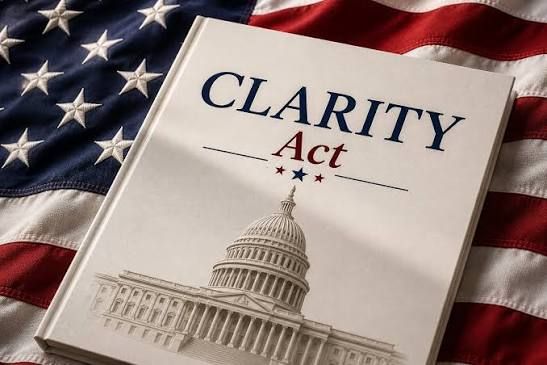
Beijing time, July 21st - Multiple industry sources have revealed that the Trump administration has agreed to include an ethics provision in the "Clarity Act" (Digital Asset Market Structure Bill), and the relevant text has been submitted to some Republican senators. Although the specific details of the provision are not yet fully public, industry participants generally believe this progress could clear the way for an updated version of the bill text (expected to be released in the coming days) and subsequent Senate voting.

Over the past year, negotiations surrounding the "Clarity Act" have progressed slowly. After parties gradually reached compromises on earlier disagreements such as stablecoin yields and DeFi regulation, the biggest remaining controversy was how to handle potential conflicts of interest between U.S. government officials and the crypto industry. With the White House expressing willingness to concede on the ethics provision, the last major obstacle that has long hindered the bill's progress is showing signs of possible resolution.

In addition to progress on the ethics provision, another positive signal regarding the "Clarity Act"'s push emerged this morning: Patrick Witt, Executive Director of the White House Digital Asset Advisory Committee responsible for driving the bill's passage, has confirmed he will remain in his position to help the bill through its final sprint. Previous reports suggested Witt might leave his post before the "Clarity Act" entered a critical Senate phase due to training obligations with the U.S. Army National Guard, which had sparked industry concerns about the bill's pace. Witt has now confirmed that his training mission will be postponed, allowing him to continue participating in the bill's passage process.
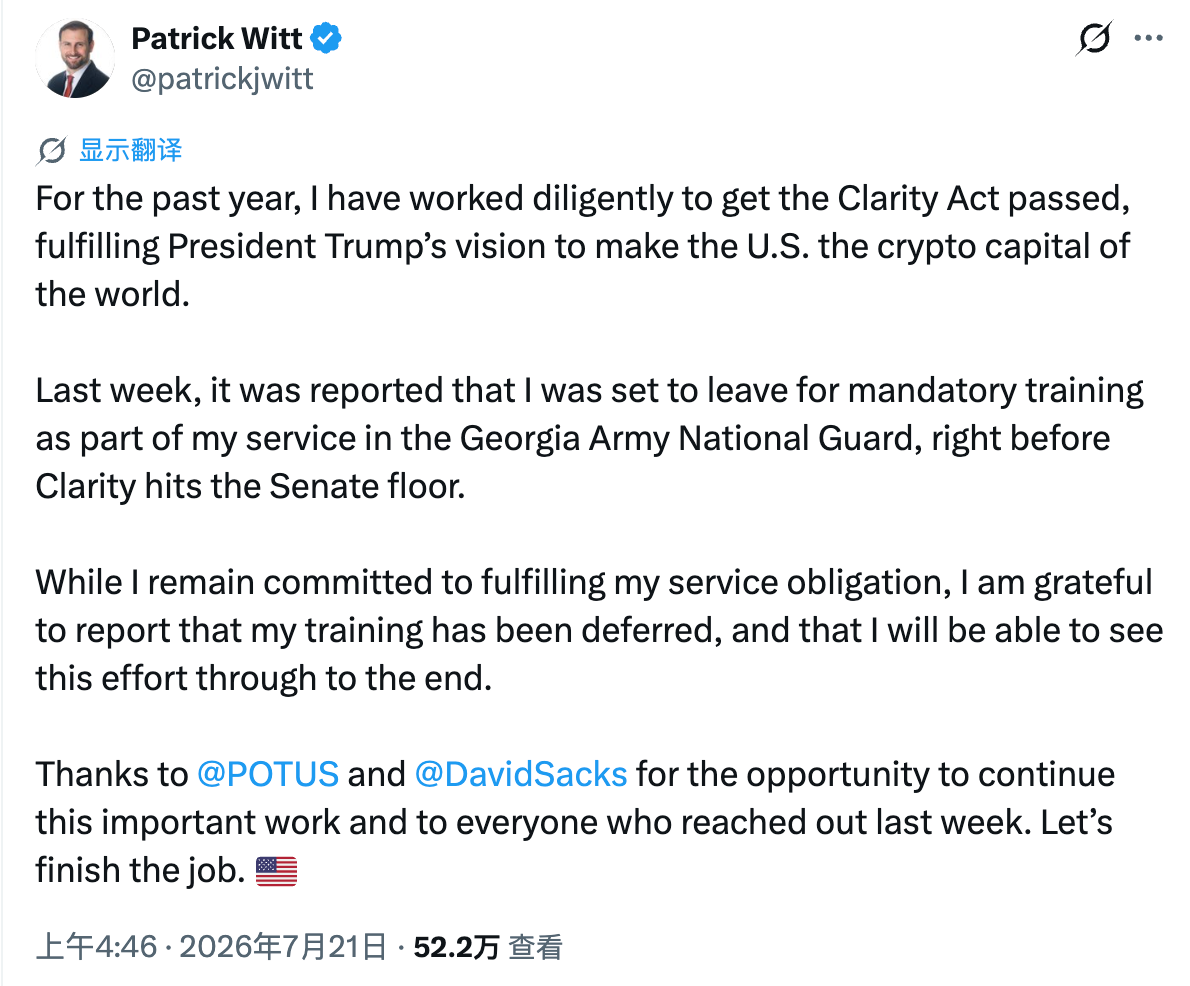
For the entire cryptocurrency industry, the latest developments may indicate that this nearly year-long regulatory standoff has finally reached its most critical turning point.

Content and Significance of the Clarity Act (Skip if Familiar)

As one of the core legislative pieces of the Trump administration's push for the U.S. to become a "global crypto hub," the full name of the "Clarity Act" is the *Digital Asset Market Clarity Act of 2025*. It aims to establish a unified federal regulatory framework for the U.S. digital asset market.

The core objective of this bill is to address the long-standing regulatory ambiguity faced by the U.S. crypto industry in recent years — clarifying the legal attributes of different digital assets and redefining the regulatory responsibilities between the U.S. Securities and Exchange Commission (SEC) and the Commodity Futures Trading Commission (CFTC).

Specifically, the Clarity Act attempts to establish a digital asset classification system, categorizing assets into digital commodities, investment contract assets, and permitted payment stablecoins. Among these, digital commodities with blockchain network functionality would be primarily regulated by the CFTC; investment contract assets involving fundraising and issuance would remain under SEC jurisdiction; stablecoin issuers would mainly be regulated by banking authorities.

The significance of this framework lies in ending the years-long turf war between the SEC and CFTC over digital asset regulatory authority, providing the industry with a clearer compliance path. In the past, under former SEC Chairman Gary Gensler, the SEC tended to classify a large number of digital assets as securities based on the Howey Test, expanding its regulatory scope through enforcement actions; meanwhile, the CFTC argued that some highly decentralized digital assets were closer to commodities and should fall under its purview. This long-standing conflict over regulatory boundaries has kept U.S. crypto businesses, trading platforms, and developers in an uncertain environment.

If the Clarity Act ultimately passes, the U.S. crypto industry may usher in its first comprehensive market structure regulatory framework. For the market, its short-term impact might be boosting sentiment through improved policy expectations, but the longer-term significance lies in reducing regulatory uncertainty and providing a clearer institutional basis for traditional financial institutions and long-term capital to enter the digital asset space.

The Final Disagreement: The Ethics Controversy

The Clarity Act's journey to this point has not been easy. On July 17th last year, the Clarity Act passed the U.S. House of Representatives with a vote of 294 to 134, securing support far exceeding the simple majority requirement. However, unlike the GENIUS Act, which progressed smoothly around the same time and was eventually signed by Trump, the Clarity Act encountered more complex political maneuvering after moving to the Senate.

Compared to the House, while Republicans still hold a majority in the Senate, the Clarity Act, as a major regulatory legislation affecting the entire digital asset market structure, still requires a degree of bipartisan support to proceed to a final vote. This means the bill faces a complex negotiation in the Senate centered on regulatory direction, industry interests, and political demands.

Over the past year, disagreements surrounding the Clarity Act have mainly focused on three areas — stablecoin yield rules, DeFi regulatory boundaries, and potential conflicts of interest between the Trump administration and the crypto industry. Now, the first two major disagreements have gradually cooled as negotiations progressed. Regarding stablecoin yields, once the most contentious issue, parties have reached a compromise solution: "prohibiting yield purely for holding stablecoins, but allowing rewards based on actual activities."

Now, the only issue remaining on the negotiation table is the final disagreement: the ethics issue. Over the past year of negotiations, Congressional members and the White House have spent significant time negotiating ethical clauses aimed at restricting the President, Vice President, members of Congress, and other federal officials from profiting from digital assets during their terms (refer to *Trump's 'Pay Stub' Exposed: Cryptocurrency Generates $1.4 Billion, Stock Trades Exceed 22,000*). With the latest developments this morning, it indicates a potential breakthrough in the last political battle surrounding the "Clarity Act."

More Pressing Than Content Disagreement: Time

However, compared to disputes over the bill's content, an even more pressing problem facing the "Clarity Act" now is time. The U.S. Congress typically enters its August recess in mid-August, leaving only about a dozen working days for both parties to complete text coordination and push for Senate consideration.

Kristin Smith, CEO of the Blockchain Association, which has played a significant lobbying role in the "Clarity Act" process, stated bluntly yesterday: "This is the most critical moment."
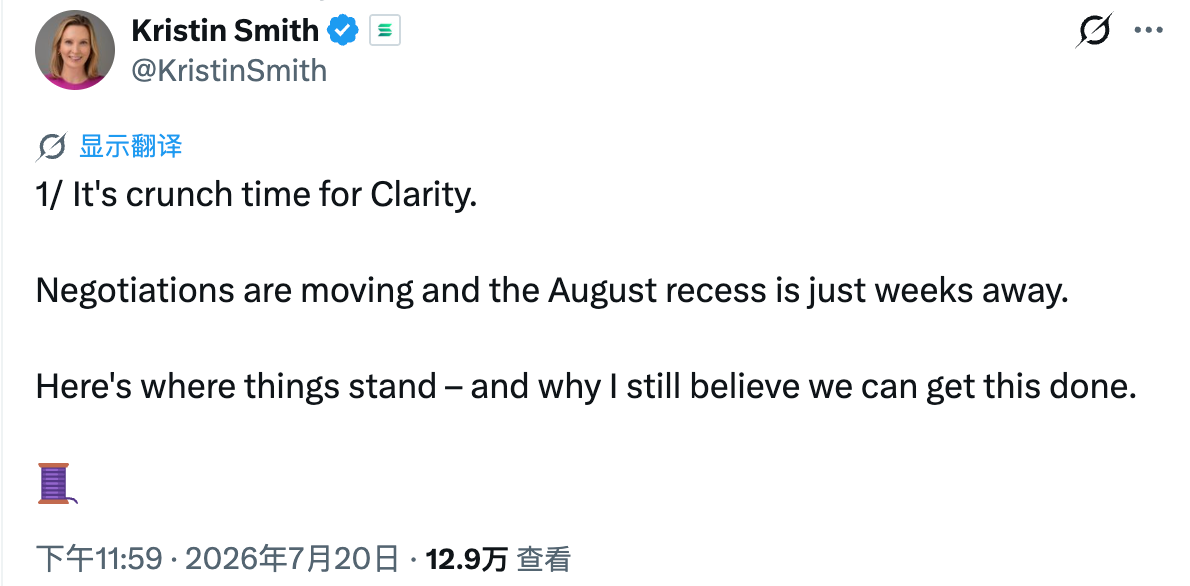
Smith said the "Clarity Act" has gone through a long process, and the current version already includes stronger illegal finance oversight provisions, more comprehensive consumer protection measures, and enhanced regulatory requirements for spot trading platforms. This is one of the most comprehensive digital asset market structure frameworks she has seen. If both sides can resolve the ethics-related disputes in the coming weeks, the "Clarity Act" might have a chance to complete a key breakthrough before the Congressional recess; but if negotiations stall again, this crypto regulatory framework, which has been in the works for over a year, may have to wait for a new political window.

A Historic Turning Point for Crypto Regulation?

Of course, there is still one final step before the "Clarity Act" truly becomes law. Even if the White House has agreed to accept the ethics provision, uncertainties remain regarding the subsequent text release, Senate consideration, and final bipartisan coordination. However, judging from the signals released so far, this digital asset market structure bill, which has undergone over a year of struggle, is getting closer to the finish line.

If the "Clarity Act" can achieve a breakthrough before the August 10th recess, it could become an important turning point in the history of cryptocurrency regulation in the United States and globally. Over the past few years, one of the biggest challenges for the global crypto industry has not been a lack of market demand, but the absence of a sufficiently clear, stable, and predictable regulatory framework. Different jurisdictions have vast differences regarding digital asset attributes, trading platform responsibilities, and issuance rules, forcing businesses and capital to navigate constantly changing regulatory environments.

The significance of the "Clarity Act" lies precisely in its attempt to establish a clearer rule system for digital assets through legislation. Once implemented, this framework could provide an important reference model for global markets. For trading platforms, it means a clearer registration and operation path; for developers, a more predictable innovation environment; and for traditional financial institutions, clearer compliance foundations for entering the digital asset space.

This is not just an upgrade of the U.S. regulatory system itself; it represents the global digital asset market gradually transitioning from the early stage of regulatory exploration to a more mature, institutionalized development phase.

Recommended Reading:

CLARITY Act Countdown: 25 Days Left – How Will the Crypto Market Respond if It Fails Before August Recess?


Tiền kỹ thuật số thịnh hành

Câu hỏi Liên quan

QWhat is the Clarity Act and what is its main purpose?

AThe Clarity Act, short for the Digital Asset Market Clarity Act of 2025, is a piece of legislation aimed at establishing a unified federal regulatory framework for the US digital asset market. Its main purpose is to resolve long-standing regulatory ambiguity by clearly defining the legal status of different digital assets (e.g., digital commodities, investment contract assets, stablecoins) and re-delineating the regulatory jurisdictions between the SEC and the CFTC.

QWhat was the most significant remaining obstacle to the Clarity Act's progress as described in the article?

AThe most significant remaining obstacle was the ethics provision. This involved handling potential conflicts of interest between US government officials and the cryptocurrency industry, specifically aiming to restrict federal officials from profiting from digital assets during their tenure. The article indicates recent progress, with the Trump administration agreeing to include such a provision.

QWhy is time considered a particularly urgent factor for the Clarity Act's passage?

ATime is urgent because the US Congress typically enters its August recess in mid-August. The article states there are only about a dozen working days left for both parties to finalize the bill's text and push it through Senate consideration before this recess. Missing this window could delay the bill until a new political opportunity arises.

QWho is Patrick Witt and what was the significance of him staying in his role?

APatrick Witt is the Executive Director of the White House Digital Asset Advisory Council, responsible for driving the bill's enactment. The significance of him confirming he would stay on is that it removes a potential disruption to the bill's final push. There were concerns he might leave for military training, but his training was postponed, allowing him to continue assisting the bill's passage.

QAccording to the article, what could be the broader global significance if the Clarity Act is passed?

AIf passed, the Clarity Act could represent a major turning point in global crypto regulation. It would provide a clearer, more stable, and predictable regulatory framework. This could serve as a key reference model for other jurisdictions, potentially helping the global digital asset market transition from an early exploratory regulatory phase to a more mature and institutionalized stage of development.

Nội dung Liên quan

Vụ ly hôn của Choi Tae-won chính thức kết thúc: Tiết lộ tuyến kế thừa ẩn sau đế chế nghìn tỷ SK Hynix

Vào tháng 11/2024, trong một sự kiện kỷ niệm, Chủ tịch SK Group Choi Tae-won đã cho các con xem hình ảnh AI tái hiện người cha quá cố của mình, nhấn mạnh về việc kế thừa di sản. Trong bối cảnh SK Hynix trở thành tài sản trị giá nhất Hàn Quốc, câu chuyện kế thừa thế hệ thứ ba của tập đoàn này lại không đi theo kịch bản truyền thống. Choi Yun-jung (sinh 1989), trưởng nữ, được coi là ứng viên kế thừa rõ ràng nhất. Cô có nền tảng học thuật về sinh học, từng làm tư vấn, hiện đang học tiến sĩ và giữ chức vụ lãnh đạo tại SK Bioscience và bộ phận hỗ trợ tăng trưởng của SK Inc. Cuộc hôn nhân của cô với một doanh nhân khởi nghiệp AI cũng phản ánh sự thay đổi trong các mối liên kết giữa các giới tinh hoa. Choi Min-jung (sinh 1991), con gái thứ, có hành trình khác biệt: học đại học tại Bắc Kinh, tình nguyện gia nhập Hải quân Hàn Quốc và từng làm việc tại SK Hynix ở Washington về các vấn đề chính sách quốc tế. Cô hiện là nhà sáng lập một công ty chăm sóc sức khỏe AI và kết hôn với một cựu sĩ quan Thủy quân Lục chiến Mỹ, cho thấy mạng lưới toàn cầu và an ninh chuỗi cung ứng ngày càng quan trọng đối với các tập đoàn bán dẫn. Choi In-geun (sinh 1995), con trai trưởng, có lộ trình học vấn tương đồng với cha (vật lý) và đang làm việc tại McKinsey sau thời gian ở SK E&S. Dù mang hình mẫu người kế thừa truyền thống, anh lại là người ít lộ diện công khai nhất. Cuộc chiến ly hôn kéo dài giữa Choi Tae-won và vợ cũ Roh So-young, với giá trị tài sản tranh chấp lên tới hàng nghìn tỷ won, là bối cảnh phức tạp mà thế hệ thứ ba phải đối mặt. Cả ba người con đều đã đệ đơn lên tòa án trong vụ việc này, dù nội dung không được tiết lộ. Tóm lại, trong kỷ nguyên AI khi SK Hynix trở thành tài sản địa chính trị toàn cầu, việc kế thừa tại SK Group không còn là chuyện nội bộ gia đình hay chỉ xoay quanh cổ phần và quyền trưởng nam. Thế hệ thứ ba được định vị thông qua năng lực chuyên môn, mạng lưới quốc tế và khả năng giải quyết những thách thức của thời đại công nghệ và địa chính trị mới.

marsbit8 phút trước

Vụ ly hôn của Choi Tae-won chính thức kết thúc: Tiết lộ tuyến kế thừa ẩn sau đế chế nghìn tỷ SK Hynix

marsbit8 phút trước

Các ngân hàng phản đối thỏa thuận lợi suất stablecoin – Liệu Đạo luật CLARITY có thể giành được 60 phiếu?

Viện Chính sách Ngân hàng Hoa Kỳ (BPI) đã phản đối dự thảo Đạo luật CLARITY mới, chỉ ra những thiếu sót về quy định lợi suất stablecoin và chống tài trợ bất hợp pháp. Ngành ngân hàng muốn cấm hoàn toàn mọi hình thức khuyến khích từ stablecoin, trong khi dự thảo hiện tại chỉ cho phép dựa trên hoạt động tài khoản, không phải số dư nhàn rỗi. Sự phản đối này ảnh hưởng đến cơ hội thông qua đạo luật tại Thượng viện, nơi cần 60 phiếu. Sự ủng hộ từ đảng Cộng hòa có thể giảm xuống còn 49 phiếu nếu các Thượng nghị sĩ John Curtis và John Cornyn rút lại hỗ trợ, đòi hỏi 11 phiếu từ đảng Dân chủ. Tuy nhiên, một số nhà lập pháp Dân chủ ủng hộ tiền mã hóa cũng phản đối dự luật do lo ngại về đạo đức và chống rửa tiền. Lãnh đạo đa số Thượng viện John Thune tỏ ra hoài nghi về khả năng thông qua dự luật trước kỳ nghỉ tháng Tám, chỉ còn hai tuần. Cố vấn trưởng về Tiền mã hóa của Nhà Trắng, Patrick Witt, kêu gọi tiến hành bỏ phiếu ngay. Kỳ vọng thị trường về việc thông qua đạo luật trong năm 2026 đã giảm xuống còn 32%.

ambcrypto15 phút trước

Các ngân hàng phản đối thỏa thuận lợi suất stablecoin – Liệu Đạo luật CLARITY có thể giành được 60 phiếu?

ambcrypto15 phút trước

Giá trị gia tăng từ 88 tỷ lên 680 tỷ chỉ sau 2 tháng! OpenRouter, trạm trung chuyển AI lớn nhất sắp được mua lại

Theo tờ Wall Street Journal và The Information, Stripe - nền tảng thanh toán hàng đầu - đang đàm phán mua lại startup AI OpenRouter với giá khoảng 10 tỷ USD. Chỉ hai tháng trước, định giá của OpenRouter là 1,3 tỷ USD, tức giá chào mua cao hơn gần 7 lần. Thương vụ có thể được công bố trong vòng một tháng nhưng vẫn có nguy cơ đổ vỡ. OpenRouter hoạt động như một "trung tâm chuyển tiếp" AI, cung cấp một API duy nhất để các nhà phát triển truy cập vào hơn 400 mô hình lớn (như GPT, Claude). Nó tự động lựa chọn mô hình phù hợp dựa trên độ phức tạp, chi phí và tốc độ, giúp các ứng dụng AI tối ưu hóa hiệu quả chi phí. Được đồng sáng lập bởi Alex Atallah (cựu đồng sáng lập OpenSea), OpenRouter hiện có hơn 1 triệu nhà phát triển và doanh thu hàng năm đạt 50 triệu USD, tăng gấp 5 lần trong nửa năm. Đây là bước đi chiến lược tiếp theo của Stripe trong việc mở rộng sang hạ tầng AI, sau khi họ mua lại nền tảng định giá theo lượng sử dụng Metronome vào cuối năm 2025. Mục tiêu của Stripe là kết hợp khả năng định tuyến mô hình của OpenRouter với hệ thống thanh toán và đo lường sử dụng hiện có, để trở thành "trung tâm điều phối và thu ngân" toàn diện cho nền kinh tế AI. Điều này cho phép doanh nghiệp quản lý toàn bộ việc sử dụng và hóa đơn AI qua một nhà cung cấp duy nhất.

链捕手17 phút trước

Giá trị gia tăng từ 88 tỷ lên 680 tỷ chỉ sau 2 tháng! OpenRouter, trạm trung chuyển AI lớn nhất sắp được mua lại

链捕手17 phút trước

Từ OpenSea Đến OpenRouter: Kịch Bản “Chốt Lời Đỉnh Cao” Của Alex Atallah Lại Lặp Lại?

Tác giả: Nancy, PANews Hơn bốn năm trước, Alex Atallah rời đi trước đỉnh bong bóng NFT; giờ đây, anh lại tỏa sáng trong cơn sốt AI và chuẩn bị bán nền tảng tổng hợp mô hình AI OpenRouter với giá cao. Ngày 23/7, theo Wall Street Journal, gã khổng lồ thanh toán Stripe đang đàm phán mua lại OpenRouter, với định giá giao dịch có thể lên tới gần 100 tỷ USD. Nếu thành công, đây sẽ là lần thứ hai Alex Atallah xây dựng một công ty trị giá hàng trăm tỷ USD, sau sàn giao dịch NFT OpenSea. OpenRouter, được mô tả là "Stripe của lĩnh vực AI", đã kết nối hơn 400 mô hình AI, có khoảng 10 triệu người dùng và xử lý hơn 200 nghìn tỷ token mỗi tháng. Tuy nhiên, mô hình kinh doanh chủ yếu dựa vào phí dịch vụ nền tảng (5%-5.5%) từ việc gọi API, với doanh thu hàng năm khoảng 50 triệu USD (tính đến tháng 4/2026). Đây là một mô hình kênh dẫn có quy mô lớn nhưng biên lợi nhuận hạn chế, dễ bị ảnh hưởng bởi sự cạnh tranh, mô hình nguồn mở và áp lực giảm giá. Giá trị thực sự của OpenRouter đối với các nhà mua tiềm năng như Stripe có thể nằm ở kho dữ liệu sử dụng AI thực tế khổng lồ mà nó tích lũy được, cung cấp insights quý giá về hiệu suất mô hình, sở thích nhà phát triển và quan hệ thay thế trên thị trường. Từ NFT đến AI, Alex Atallah hai lần bắt đúng xu hướng thời đại. Việc OpenRouter được định giá 100 tỷ USD đặt ra câu hỏi: đây là sự định giá lại giá trị cơ sở hạ tầng AI hay một tín hiệu đỉnh chu kỳ mới? Thời gian sẽ trả lời.

链捕手33 phút trước

Từ OpenSea Đến OpenRouter: Kịch Bản “Chốt Lời Đỉnh Cao” Của Alex Atallah Lại Lặp Lại?

链捕手33 phút trước

Pons V2 mang đến các cặp giao dịch RWA khi Robinhood Chain mở rộng tham vọng

Pons, một launchpad được xây dựng trên Robinhood Chain, đã ra mắt bản nâng cấp V2 với các thay đổi nhằm cải thiện thanh khoản, loại bỏ hạn chế giao dịch và hỗ trợ tài sản thực được mã hóa (RWA). Bản cập nhật này diễn ra trong bối cảnh Robinhood Chain tiếp tục tăng trưởng nhanh, vượt 300 triệu USD tổng giá trị bị khóa và nổi lên như một trong những mạng Lớp 2 Ethereum sôi động nhất cho giao dịch đầu cơ. Pons V2 giải quyết các phàn nàn chính của người dùng về thanh khoản bằng cách giới thiệu đường cong liên kết định danh bằng ETH, đồng thời cho phép hầu hết ví giao dịch tự do. Cấu trúc phí cũng được thiết kế lại để nhà phát triển có thể nhận phí bằng ETH mặc định. Robinhood Chain đã thu hút sự chú ý của thị trường, với khối lượng DEX tích lũy vượt 9 tỷ USD, trong đó 80% đến từ memecoin rủi ro cao. Tuy nhiên, lợi nhuận tập trung vào số ít, với 63% nhà giao dịch thua lỗ. Việc Pons V2 bổ sung các cặp giao dịch RWA tùy chỉnh trực tiếp hỗ trợ trọng tâm phát triển tài sản thực của Robinhood Chain, có thể thúc đẩy việc áp dụng mạng lưới một cách hữu cơ trong tương lai.

ambcrypto52 phút trước

Pons V2 mang đến các cặp giao dịch RWA khi Robinhood Chain mở rộng tham vọng

ambcrypto52 phút trước

Giao dịch

Giao ngay

Bài viết Nổi bật

Làm thế nào để Mua HOUSE

Chào mừng bạn đến với HTX.com! Chúng tôi đã làm cho mua Housecoin (HOUSE) trở nên đơn giản và thuận tiện. Làm theo hướng dẫn từng bước của chúng tôi để bắt đầu hành trình tiền kỹ thuật số của bạn.Bước 1: Tạo Tài khoản HTX của BạnSử dụng email hoặc số điện thoại của bạn để đăng ký tài khoản miễn phí trên HTX. Trải nghiệm hành trình đăng ký không rắc rối và mở khóa tất cả tính năng. Nhận Tài khoản của tôiBước 2: Truy cập Mua Crypto và Chọn Phương thức Thanh toán của BạnThẻ Tín dụng/Ghi nợ: Sử dụng Visa hoặc Mastercard của bạn để mua Housecoin (HOUSE) ngay lập tức.Số dư: Sử dụng tiền từ số dư tài khoản HTX của bạn để giao dịch liền mạch.Bên thứ ba: Chúng tôi đã thêm những phương thức thanh toán phổ biến như Google Pay và Apple Pay để nâng cao sự tiện lợi.P2P: Giao dịch trực tiếp với người dùng khác trên HTX.Thị trường mua bán phi tập trung (OTC): Chúng tôi cung cấp những dịch vụ được thiết kế riêng và tỷ giá hối đoái cạnh tranh cho nhà giao dịch.Bước 3: Lưu trữ Housecoin (HOUSE) của BạnSau khi mua Housecoin (HOUSE), lưu trữ trong tài khoản HTX của bạn. Ngoài ra, bạn có thể gửi đi nơi khác qua chuyển khoản blockchain hoặc sử dụng để giao dịch những tiền kỹ thuật số khác.Bước 4: Giao dịch Housecoin (HOUSE)Giao dịch Housecoin (HOUSE) dễ dàng trên thị trường giao ngay của HTX. Chỉ cần truy cập vào tài khoản của bạn, chọn cặp giao dịch, thực hiện giao dịch và theo dõi trong thời gian thực. Chúng tôi cung cấp trải nghiệm thân thiện với người dùng cho cả người mới bắt đầu và người giao dịch dày dạn kinh nghiệm.

Tổng lượt xem 664Xuất bản vào 2025.04.27Cập nhật vào 2026.06.02

Làm thế nào để Mua HOUSE

Thảo luận

Chào mừng đến với Cộng đồng HTX. Tại đây, bạn có thể được thông báo về những phát triển nền tảng mới nhất và có quyền truy cập vào thông tin chuyên sâu về thị trường. Ý kiến ​​của người dùng về giá của HOUSE (HOUSE) được trình bày dưới đây.

活动图片













