Aave Withdrawal, TVL Plunges: Where is MegaETH's Valuation Anchor?

marsbitXuất bản vào 2026-07-13Cập nhật gần nhất vào 2026-07-13

Tóm tắt

MegaETH, once a highly anticipated new blockchain, has seen a dramatic decline in its Total Value Locked (TVL) and token price. According to DefiLlama data, its TVL plummeted nearly 60% in 24 hours, falling to just over $30 million from a May peak, with the Aave V3 protocol withdrawing 80% of its liquidity. The MEGA token price dropped to around $0.048, with a market cap of ~$54 million and a fully diluted valuation (FDV) of ~$480 million. The analysis identifies three key mismatches between MegaETH's valuation and its fundamentals. First, its high FDV contrasts with minimal real usage: low protocol revenue (~$90k/30 days) and few daily active addresses. Second, its DeFi narrative is contradicted by its revenue structure, where a collectible card game (Monster) generates most income, not major DeFi protocols like Aave. Third, initial hype from VC backing and airdrop farming has faded without sustained user adoption or clear applications. The TVL was heavily concentrated in Aave and largely driven by cyclical arbitrage strategies involving stablecoins like USDm and USDe. As the yield for these strategies diminished, funds rapidly exited. The departure of this speculative capital has exposed a lack of substantial, organic ecosystem activity. While the sharp drop could be seen as a correction from inflated expectations, the article suggests MegaETH's valuation lacks a solid foundation. Future price movements may rely on short-term market sentiment rather than genuine improvem...

Author: Zhou, ChainCatcher

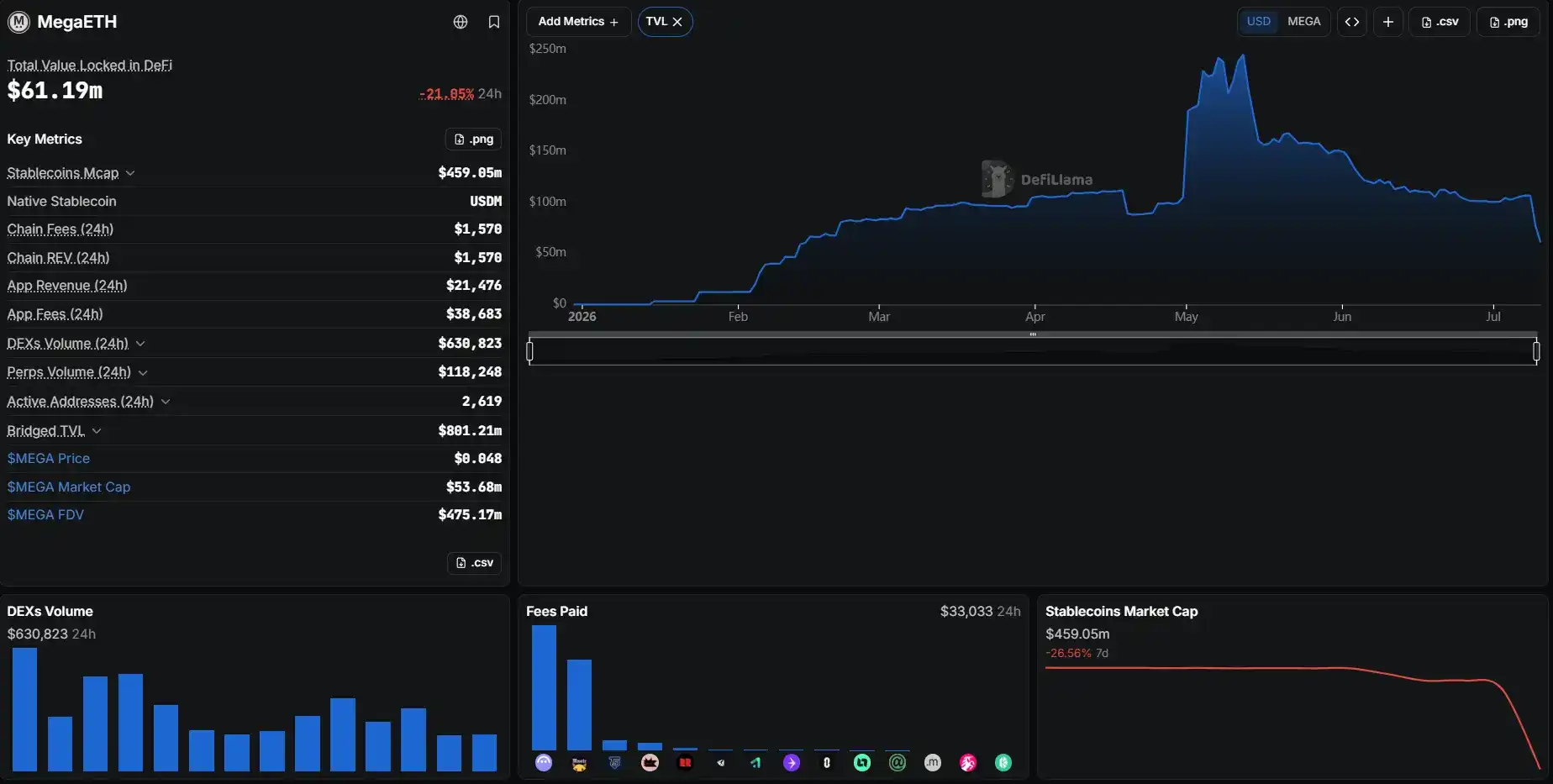
According to the latest data fromDefiLlama, MegaETH's full-chain TVL experienced violent fluctuations from July 9 to 10, once falling to just over $30 million, a 24-hour drop of nearly 60%, and evaporating about 70% compared to its peak in May. The on-chain top protocol Aave V3withdrew 80% of its liquiditywithin a day.

In terms of market performance,the price of MEGA fell to around $0.048, with a market capitalization of only about $54 million and an FDV of approximately $4.8 billion.
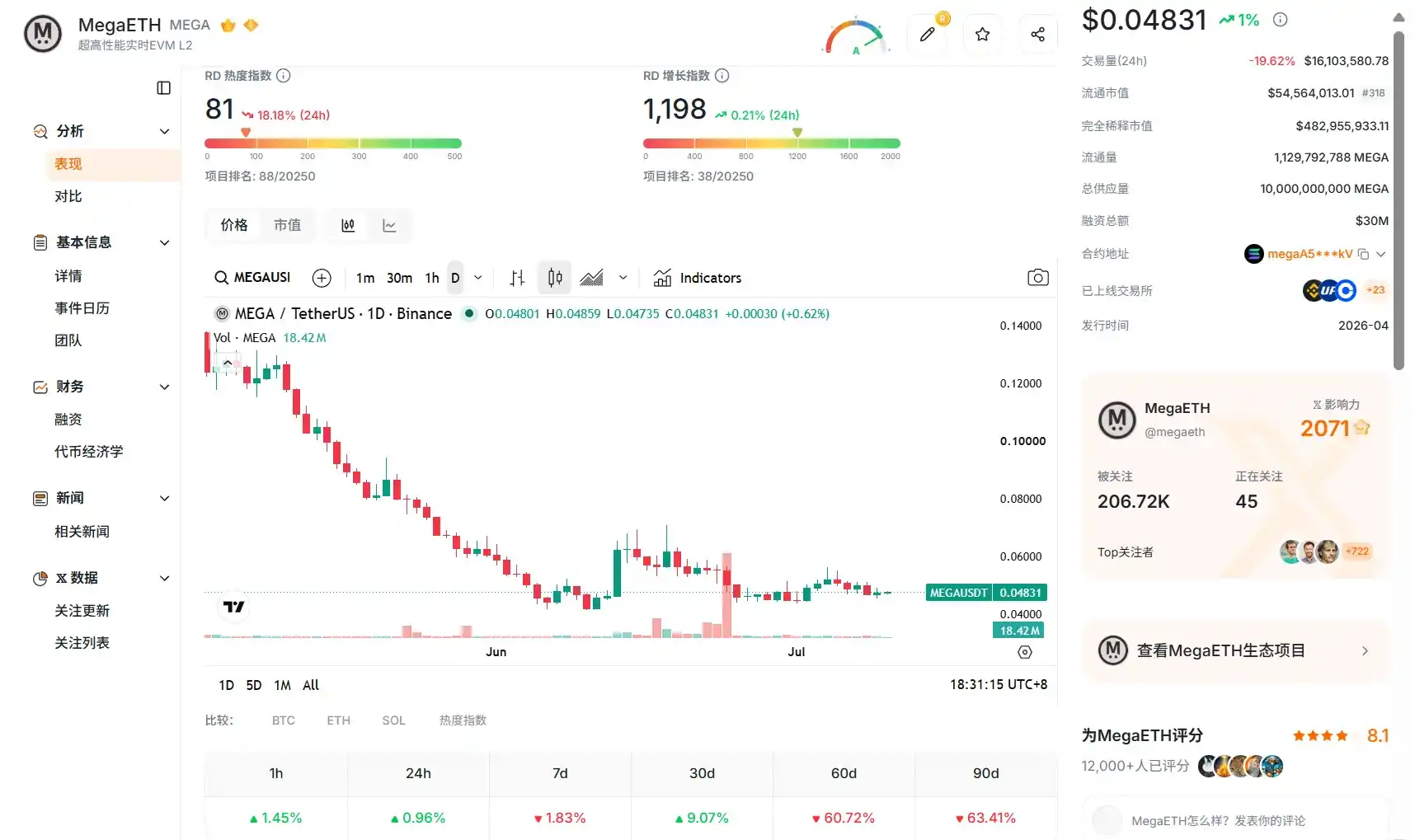
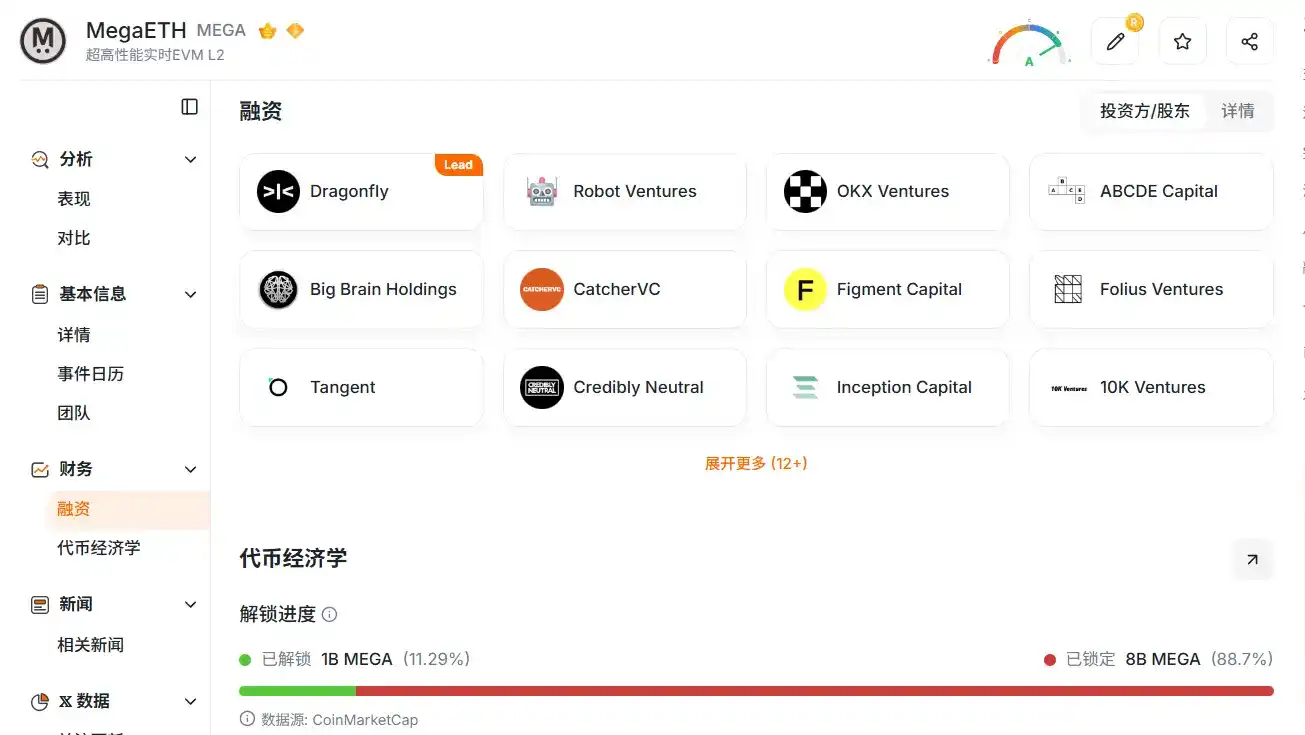
MegaETH was once one of the most anticipated new public chains in this cycle. It launched right into a market hotspot, backed by a luxurious VC lineup and KOL enthusiasm for new listings, with its token FDV once soaring to about $20 billion. In May of this year, its DeFi TVL reached $245 million, once squeezing into the top 11 public chains by TVL ranking.

From a widely viewed star public chain to experiencing sharp TVL retraction in a short time, MegaETH took only a few months. With the capital base supporting its valuation loosening, has its price already bottomed out? Or, after the paper prosperity fades, does its valuation still lack support.

TVL Highly Dependent on a Single Protocol and Circular Strategies

In MegaETH's ecosystem, at its peak, Aave once contributed about ninety percent of the chain's TVL.Currently, the total TVL fluctuates around $60 million, of which Aave still accounts for about 65%.
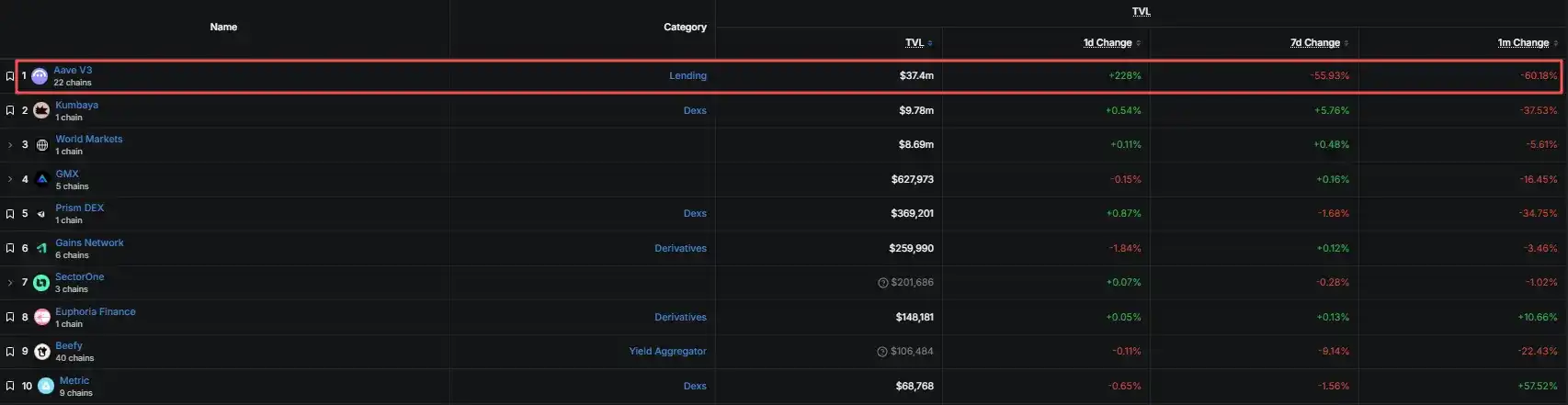
In fact,just over two months ago, the biggest source of TVL on MegaETH was someone else. On the day of the token's listing, the native DEX protocol Kumbaya accounted for $59.03 million out of the $98.43 million total TVL, about sixty percent.

At the same time, projects like Aave V3, GMX, and Chainlink Scale integrated and launched on the chain. After that, the dominant TVL contributor gradually became Aave.

Risk assessment firm LlamaRisk previously pointed out that MegaETH's TVL is highly dependent on Aave, while its stablecoin structure is highly concentrated in USDm and USDe. In its view, after excluding native assets, the proportion of external assets entering MegaETH through third-party and specific asset channels is relatively high, with highly concentrated funding sources, asset types, and protocol methods, raising stability concerns.

Specifically regarding the gameplay, the market generally questions that a large part of this volume comes from Ethena-related stablecoin circular strategies, which involve repeatedly collateralizing, borrowing, and re-collateralizing stablecoins, artificially inflating the books through leveraged stacking.

This means that when the yield of USDe falls below Aave's borrowing cost, this arbitragemechanismloses its interest rate spread space, the circular positions start unwinding, and funds withdraw accordingly.

Whether it's points incentives during the launch period or the interest rate spread profits in circular strategies, this type of capital essentially comes for returns. Once the expected returns disappear, they will leave. This is common commercial behavior in DeFi and is not surprising in itself.

What truly alerted the market is what remains on the MegaETH chain after this disproportionately large capital is withdrawn, and whether what remains can support its current valuation.

Valuation and Fundamentals, Separated by Three Layers of Mismatch

The first layer of mismatch occurs between valuation and real usage

As of writing, MEGA's market capitalization is about $54 million, and its FDV is about $470 million. According to RootData, currently 88.7% of MEGA tokens are not in circulation, and a large number of holders cannot exit due to a one-year lockup arrangement, meaning there is still a batch of potential sell pressure in the future.
Now, look at how much real usage the current valuation corresponds to. Data shows that the 30-day real revenue of all protocols on MegaETH is less than $900,000, annualized at about $10 million, with only 2,619 daily active addresses.

Averaged per daily active address, MegaETH carries an FDV of about $180,000, while the real protocol revenue contributed by each address in a month is less than $350.

Clearly, its price is not anchored to the current scale of real economic activity, but to the market's imagination of its future. And this expectation is crumbling step by step.
The second layer of mismatch is between token narrative and ecosystem quality

The market buys MEGA, buying the story of a high-performance DeFi public chain. However, looking at the revenue structure, there is a certain degree of contrast.

DefiLlama data shows that the highest-earning protocol on MegaETH is Monster, which is a physical collectible card game, with a 30-day revenue of about $670,000, accounting for nearly eighty percent of the chain's protocol revenue.

Aave, which carries the DeFi narrative and accounted for about ninety percent of the chain's TVL at its peak, had a revenue of only about $90,000 during the same period.

The same misalignment is also reflected in stablecoins. The supply of the native stablecoin USDM on the MegaETH chain is about $460 million, while DEX daily volume is only about $630,000, and perpetual contracts volume per day is only about $120,000. Moreover, this supply is also draining, with USDM's market cap dropping over 26% in the past 7 days, indicating real capital is leaving, even more so than the TVL decline.

A long-term participant@OlricOnlyfornftpointed out that MegaETH once had a very strong community early on, but the team has long been more focused on technology and applications, with insufficient communication with the community. Many promising projects ultimately migrated to other chains. Nowadays, there are not many applications that can be clearly identified as success cases, and only a few are still persisting in building.

This kind of view may not be enough to form a conclusion alone, but it indicates that after the market hype fades, MegaETH still needs clearer application examples to prove the quality of its ecosystem.

The third layer of mismatch lies between short-term expectations and long-term delivery

MegaETH carried excessively high expectations at launch: TGE, blue-chip integration, KOL participation in new listings, TVL surge, all together formed the early valuation anchor. Looking back a few months later, the chain's delivery capability has consistently failed to catch up.

In February of this year, Uniswap deployed v2, v3, and v4 on MegaETH. As of writing, Uniswap's TVL on MegaETH is less than $20,000, evaporating about 97% in the past 7 days. In the last day, Aave V3's TVL once rebounded over 240% in a single day, but over a 7-day period, it still declined over 50%.

The dramatic inflows and outflows of capital precisely indicate that this portion of TVL is driven by arbitrage capital, not stable, settled real demand.

It's worth noting that MEGA's situation is not an isolated case. Another star new public chain highly valued in this cycle, Monad's token MON, has also been declining. MON is currently around $0.022, down more than 50% from its high in November 2025, with a current market cap of about $2.69 billion.
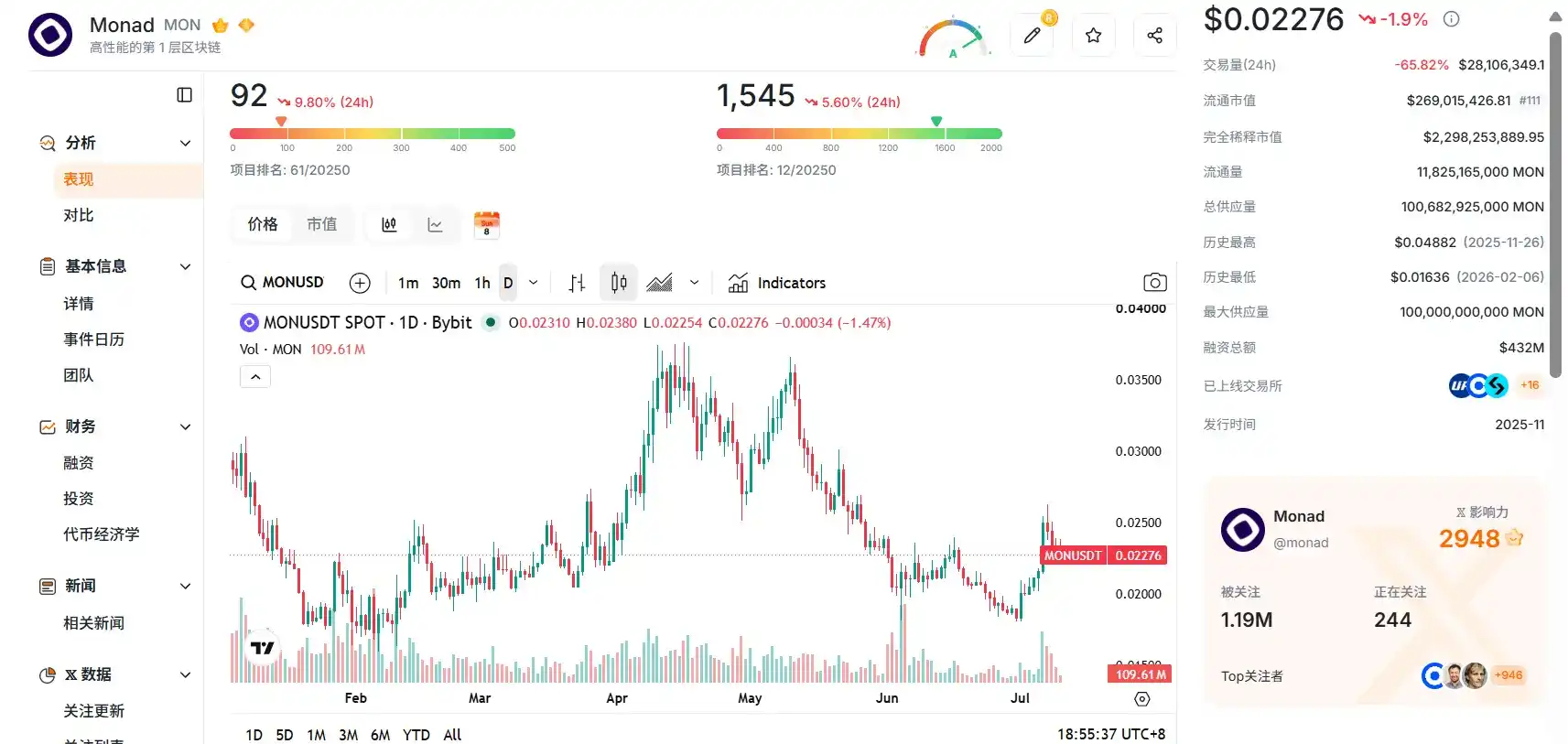
Although Monad's recent TVL has rebounded due to fund inflows into lending protocols, the market reaction has been tepid. This points to the same judgment as MegaETH's situation: when pricing this type of public chain, the market increasingly does not recognize paper TVL but looks at real value support.

In other words, this round of adjustment may not just be MegaETH's single-point slowdown, but more like the market starting to reduce the premium for paper TVL and star narratives,转而 demanding clearer transactions, revenue, and ecosystem capacity as support.

Moreover, competition in the public chain track is still intensifying, with new players including Robinhood continuously entering, continuously diverting market attention and capital.

For MEGA, although the decline has been huge, if a rebound occurs, it is more likely to come from short-term market sentiment repair rather than a genuine improvement in fundamentals.

Paper Prosperity Fades, MEGA is Still Waiting for a Value Anchor Point

Looking at these mismatches together, the conclusion becomes gradually clear.

When the paper prosperity propped up by incentive and arbitrage capital recedes, what is missing between MEGA's current market capitalization and its real on-chain fundamentals is precisely a solid value anchor point.

Market sentiment has also clearly shifted towards caution. One view holds that this is a normal valuation regression after incentive capital recedes. Points incentives stop, the interest rate spread for circular arbitrage disappears, capital leaving is an inevitable result. MegaETH simply leveraged this play higher, hence the exceptionally severe retraction.

At the community level, many users have persistently questioned the team's communication and transparency, pointing out that Discord has closed community discussions, Telegram is only open to users holding large amounts of tokens, and the team's public appearances are far fewer than before the launch.

However, these claims are mostly one-sided user statements and have not been officially confirmed. As of writing, the MegaETH team has not publicly responded to the relevant criticisms.

For MEGA, whether it is viewed as still in the process of returning to fundamentals or having already fallen into a significant mismatch between valuation and fundamentals, the follow-up focus falls on the same thing: whether the team can convert short-term liquidity into real usage and turn the massive funds previously raised into tangible ecosystem results.

Before these deliveries appear, aside from short-term rebounds driven by market sentiment, it seems there isno other solid reason yet seen for the valuation to firmly stabilize again.


Tiền kỹ thuật số thịnh hành

Câu hỏi Liên quan

QWhat major event triggered the sharp decline in MegaETH's Total Value Locked (TVL) and price?

AThe sharp decline was triggered by a massive withdrawal of liquidity, where the leading on-chain protocol Aave V3 pulled out 80% of its liquidity from MegaETH in a single day. This led to a 60% drop in TVL within 24 hours, causing the MEGA token price to fall significantly.

QAccording to the article, what are the three main mismatches affecting MegaETH's valuation?

AThe three main mismatches are: 1) Between valuation and real usage, where the FDV is high but real protocol revenue and active addresses are low. 2) Between token narrative and ecosystem quality, where the top revenue-generating protocol is a card game, not a DeFi application. 3) Between short-term hype and long-term delivery, as initial high expectations from integrations like Uniswap and Aave have not translated into sustained, stable TVL and usage.

QWhy was MegaETH's TVL considered fragile and unsustainable, according to risk assessments?

ARisk assessments considered the TVL fragile because it was highly dependent on a single protocol (Aave) and specific assets (USDm and USDe). Furthermore, a significant portion of the TVL was believed to be driven by leveraged cyclical arbitrage strategies involving Ethena's stablecoin, rather than stable, long-term user demand.

QHow does MegaETH's current situation reflect a broader trend in the market's evaluation of new Layer 1 blockchains?

AIt reflects a market trend where investors are becoming less willing to pay a premium based solely on high TVL numbers or 'star project' narratives. Instead, the market is increasingly demanding clearer evidence of real transaction volume, protocol revenue, and sustainable ecosystem growth as the foundation for valuation, as seen with similar chains like Monad.

QWhat does the article suggest is needed for MegaETH's valuation to find a stable footing in the future?

AThe article suggests that MegaETH's team needs to convert the short-term, incentive-driven liquidity into genuine, sustained usage. They must deliver on their promised ecosystem developments with the funds raised and build real value-adding applications. Until such tangible results are achieved, any price recovery is likely to be driven only by short-term market sentiment, not fundamental improvement.

Nội dung Liên quan

Vụ ly hôn của Choi Tae-won chính thức kết thúc: Tiết lộ tuyến kế thừa ẩn sau đế chế nghìn tỷ SK Hynix

Vào tháng 11/2024, trong một sự kiện kỷ niệm, Chủ tịch SK Group Choi Tae-won đã cho các con xem hình ảnh AI tái hiện người cha quá cố của mình, nhấn mạnh về việc kế thừa di sản. Trong bối cảnh SK Hynix trở thành tài sản trị giá nhất Hàn Quốc, câu chuyện kế thừa thế hệ thứ ba của tập đoàn này lại không đi theo kịch bản truyền thống. Choi Yun-jung (sinh 1989), trưởng nữ, được coi là ứng viên kế thừa rõ ràng nhất. Cô có nền tảng học thuật về sinh học, từng làm tư vấn, hiện đang học tiến sĩ và giữ chức vụ lãnh đạo tại SK Bioscience và bộ phận hỗ trợ tăng trưởng của SK Inc. Cuộc hôn nhân của cô với một doanh nhân khởi nghiệp AI cũng phản ánh sự thay đổi trong các mối liên kết giữa các giới tinh hoa. Choi Min-jung (sinh 1991), con gái thứ, có hành trình khác biệt: học đại học tại Bắc Kinh, tình nguyện gia nhập Hải quân Hàn Quốc và từng làm việc tại SK Hynix ở Washington về các vấn đề chính sách quốc tế. Cô hiện là nhà sáng lập một công ty chăm sóc sức khỏe AI và kết hôn với một cựu sĩ quan Thủy quân Lục chiến Mỹ, cho thấy mạng lưới toàn cầu và an ninh chuỗi cung ứng ngày càng quan trọng đối với các tập đoàn bán dẫn. Choi In-geun (sinh 1995), con trai trưởng, có lộ trình học vấn tương đồng với cha (vật lý) và đang làm việc tại McKinsey sau thời gian ở SK E&S. Dù mang hình mẫu người kế thừa truyền thống, anh lại là người ít lộ diện công khai nhất. Cuộc chiến ly hôn kéo dài giữa Choi Tae-won và vợ cũ Roh So-young, với giá trị tài sản tranh chấp lên tới hàng nghìn tỷ won, là bối cảnh phức tạp mà thế hệ thứ ba phải đối mặt. Cả ba người con đều đã đệ đơn lên tòa án trong vụ việc này, dù nội dung không được tiết lộ. Tóm lại, trong kỷ nguyên AI khi SK Hynix trở thành tài sản địa chính trị toàn cầu, việc kế thừa tại SK Group không còn là chuyện nội bộ gia đình hay chỉ xoay quanh cổ phần và quyền trưởng nam. Thế hệ thứ ba được định vị thông qua năng lực chuyên môn, mạng lưới quốc tế và khả năng giải quyết những thách thức của thời đại công nghệ và địa chính trị mới.

marsbit11 giờ trước

Vụ ly hôn của Choi Tae-won chính thức kết thúc: Tiết lộ tuyến kế thừa ẩn sau đế chế nghìn tỷ SK Hynix

marsbit11 giờ trước

Các ngân hàng phản đối thỏa thuận lợi suất stablecoin – Liệu Đạo luật CLARITY có thể giành được 60 phiếu?

Viện Chính sách Ngân hàng Hoa Kỳ (BPI) đã phản đối dự thảo Đạo luật CLARITY mới, chỉ ra những thiếu sót về quy định lợi suất stablecoin và chống tài trợ bất hợp pháp. Ngành ngân hàng muốn cấm hoàn toàn mọi hình thức khuyến khích từ stablecoin, trong khi dự thảo hiện tại chỉ cho phép dựa trên hoạt động tài khoản, không phải số dư nhàn rỗi. Sự phản đối này ảnh hưởng đến cơ hội thông qua đạo luật tại Thượng viện, nơi cần 60 phiếu. Sự ủng hộ từ đảng Cộng hòa có thể giảm xuống còn 49 phiếu nếu các Thượng nghị sĩ John Curtis và John Cornyn rút lại hỗ trợ, đòi hỏi 11 phiếu từ đảng Dân chủ. Tuy nhiên, một số nhà lập pháp Dân chủ ủng hộ tiền mã hóa cũng phản đối dự luật do lo ngại về đạo đức và chống rửa tiền. Lãnh đạo đa số Thượng viện John Thune tỏ ra hoài nghi về khả năng thông qua dự luật trước kỳ nghỉ tháng Tám, chỉ còn hai tuần. Cố vấn trưởng về Tiền mã hóa của Nhà Trắng, Patrick Witt, kêu gọi tiến hành bỏ phiếu ngay. Kỳ vọng thị trường về việc thông qua đạo luật trong năm 2026 đã giảm xuống còn 32%.

ambcrypto11 giờ trước

Các ngân hàng phản đối thỏa thuận lợi suất stablecoin – Liệu Đạo luật CLARITY có thể giành được 60 phiếu?

ambcrypto11 giờ trước

Giá trị gia tăng từ 88 tỷ lên 680 tỷ chỉ sau 2 tháng! OpenRouter, trạm trung chuyển AI lớn nhất sắp được mua lại

Theo tờ Wall Street Journal và The Information, Stripe - nền tảng thanh toán hàng đầu - đang đàm phán mua lại startup AI OpenRouter với giá khoảng 10 tỷ USD. Chỉ hai tháng trước, định giá của OpenRouter là 1,3 tỷ USD, tức giá chào mua cao hơn gần 7 lần. Thương vụ có thể được công bố trong vòng một tháng nhưng vẫn có nguy cơ đổ vỡ. OpenRouter hoạt động như một "trung tâm chuyển tiếp" AI, cung cấp một API duy nhất để các nhà phát triển truy cập vào hơn 400 mô hình lớn (như GPT, Claude). Nó tự động lựa chọn mô hình phù hợp dựa trên độ phức tạp, chi phí và tốc độ, giúp các ứng dụng AI tối ưu hóa hiệu quả chi phí. Được đồng sáng lập bởi Alex Atallah (cựu đồng sáng lập OpenSea), OpenRouter hiện có hơn 1 triệu nhà phát triển và doanh thu hàng năm đạt 50 triệu USD, tăng gấp 5 lần trong nửa năm. Đây là bước đi chiến lược tiếp theo của Stripe trong việc mở rộng sang hạ tầng AI, sau khi họ mua lại nền tảng định giá theo lượng sử dụng Metronome vào cuối năm 2025. Mục tiêu của Stripe là kết hợp khả năng định tuyến mô hình của OpenRouter với hệ thống thanh toán và đo lường sử dụng hiện có, để trở thành "trung tâm điều phối và thu ngân" toàn diện cho nền kinh tế AI. Điều này cho phép doanh nghiệp quản lý toàn bộ việc sử dụng và hóa đơn AI qua một nhà cung cấp duy nhất.

链捕手11 giờ trước

Giá trị gia tăng từ 88 tỷ lên 680 tỷ chỉ sau 2 tháng! OpenRouter, trạm trung chuyển AI lớn nhất sắp được mua lại

链捕手11 giờ trước

Từ OpenSea Đến OpenRouter: Kịch Bản “Chốt Lời Đỉnh Cao” Của Alex Atallah Lại Lặp Lại?

Tác giả: Nancy, PANews Hơn bốn năm trước, Alex Atallah rời đi trước đỉnh bong bóng NFT; giờ đây, anh lại tỏa sáng trong cơn sốt AI và chuẩn bị bán nền tảng tổng hợp mô hình AI OpenRouter với giá cao. Ngày 23/7, theo Wall Street Journal, gã khổng lồ thanh toán Stripe đang đàm phán mua lại OpenRouter, với định giá giao dịch có thể lên tới gần 100 tỷ USD. Nếu thành công, đây sẽ là lần thứ hai Alex Atallah xây dựng một công ty trị giá hàng trăm tỷ USD, sau sàn giao dịch NFT OpenSea. OpenRouter, được mô tả là "Stripe của lĩnh vực AI", đã kết nối hơn 400 mô hình AI, có khoảng 10 triệu người dùng và xử lý hơn 200 nghìn tỷ token mỗi tháng. Tuy nhiên, mô hình kinh doanh chủ yếu dựa vào phí dịch vụ nền tảng (5%-5.5%) từ việc gọi API, với doanh thu hàng năm khoảng 50 triệu USD (tính đến tháng 4/2026). Đây là một mô hình kênh dẫn có quy mô lớn nhưng biên lợi nhuận hạn chế, dễ bị ảnh hưởng bởi sự cạnh tranh, mô hình nguồn mở và áp lực giảm giá. Giá trị thực sự của OpenRouter đối với các nhà mua tiềm năng như Stripe có thể nằm ở kho dữ liệu sử dụng AI thực tế khổng lồ mà nó tích lũy được, cung cấp insights quý giá về hiệu suất mô hình, sở thích nhà phát triển và quan hệ thay thế trên thị trường. Từ NFT đến AI, Alex Atallah hai lần bắt đúng xu hướng thời đại. Việc OpenRouter được định giá 100 tỷ USD đặt ra câu hỏi: đây là sự định giá lại giá trị cơ sở hạ tầng AI hay một tín hiệu đỉnh chu kỳ mới? Thời gian sẽ trả lời.

链捕手11 giờ trước

Từ OpenSea Đến OpenRouter: Kịch Bản “Chốt Lời Đỉnh Cao” Của Alex Atallah Lại Lặp Lại?

链捕手11 giờ trước

Pons V2 mang đến các cặp giao dịch RWA khi Robinhood Chain mở rộng tham vọng

Pons, một launchpad được xây dựng trên Robinhood Chain, đã ra mắt bản nâng cấp V2 với các thay đổi nhằm cải thiện thanh khoản, loại bỏ hạn chế giao dịch và hỗ trợ tài sản thực được mã hóa (RWA). Bản cập nhật này diễn ra trong bối cảnh Robinhood Chain tiếp tục tăng trưởng nhanh, vượt 300 triệu USD tổng giá trị bị khóa và nổi lên như một trong những mạng Lớp 2 Ethereum sôi động nhất cho giao dịch đầu cơ. Pons V2 giải quyết các phàn nàn chính của người dùng về thanh khoản bằng cách giới thiệu đường cong liên kết định danh bằng ETH, đồng thời cho phép hầu hết ví giao dịch tự do. Cấu trúc phí cũng được thiết kế lại để nhà phát triển có thể nhận phí bằng ETH mặc định. Robinhood Chain đã thu hút sự chú ý của thị trường, với khối lượng DEX tích lũy vượt 9 tỷ USD, trong đó 80% đến từ memecoin rủi ro cao. Tuy nhiên, lợi nhuận tập trung vào số ít, với 63% nhà giao dịch thua lỗ. Việc Pons V2 bổ sung các cặp giao dịch RWA tùy chỉnh trực tiếp hỗ trợ trọng tâm phát triển tài sản thực của Robinhood Chain, có thể thúc đẩy việc áp dụng mạng lưới một cách hữu cơ trong tương lai.

ambcrypto12 giờ trước

Pons V2 mang đến các cặp giao dịch RWA khi Robinhood Chain mở rộng tham vọng

ambcrypto12 giờ trước

Giao dịch

Giao ngay

Bài viết Nổi bật

Làm thế nào để Mua AAVE

Chào mừng bạn đến với HTX.com! Chúng tôi đã làm cho mua Aave Protocol (AAVE) trở nên đơn giản và thuận tiện. Làm theo hướng dẫn từng bước của chúng tôi để bắt đầu hành trình tiền kỹ thuật số của bạn.Bước 1: Tạo Tài khoản HTX của BạnSử dụng email hoặc số điện thoại của bạn để đăng ký tài khoản miễn phí trên HTX. Trải nghiệm hành trình đăng ký không rắc rối và mở khóa tất cả tính năng. Nhận Tài khoản của tôiBước 2: Truy cập Mua Crypto và Chọn Phương thức Thanh toán của BạnThẻ Tín dụng/Ghi nợ: Sử dụng Visa hoặc Mastercard của bạn để mua Aave Protocol (AAVE) ngay lập tức.Số dư: Sử dụng tiền từ số dư tài khoản HTX của bạn để giao dịch liền mạch.Bên thứ ba: Chúng tôi đã thêm những phương thức thanh toán phổ biến như Google Pay và Apple Pay để nâng cao sự tiện lợi.P2P: Giao dịch trực tiếp với người dùng khác trên HTX.Thị trường mua bán phi tập trung (OTC): Chúng tôi cung cấp những dịch vụ được thiết kế riêng và tỷ giá hối đoái cạnh tranh cho nhà giao dịch.Bước 3: Lưu trữ Aave Protocol (AAVE) của BạnSau khi mua Aave Protocol (AAVE), lưu trữ trong tài khoản HTX của bạn. Ngoài ra, bạn có thể gửi đi nơi khác qua chuyển khoản blockchain hoặc sử dụng để giao dịch những tiền kỹ thuật số khác.Bước 4: Giao dịch Aave Protocol (AAVE)Giao dịch Aave Protocol (AAVE) dễ dàng trên thị trường giao ngay của HTX. Chỉ cần truy cập vào tài khoản của bạn, chọn cặp giao dịch, thực hiện giao dịch và theo dõi trong thời gian thực. Chúng tôi cung cấp trải nghiệm thân thiện với người dùng cho cả người mới bắt đầu và người giao dịch dày dạn kinh nghiệm.

Tổng lượt xem 564Xuất bản vào 2024.12.11Cập nhật vào 2026.06.02

Làm thế nào để Mua AAVE

Thảo luận

Chào mừng đến với Cộng đồng HTX. Tại đây, bạn có thể được thông báo về những phát triển nền tảng mới nhất và có quyền truy cập vào thông tin chuyên sâu về thị trường. Ý kiến ​​của người dùng về giá của AAVE (AAVE) được trình bày dưới đây.

活动图片