Chain Gaming Giant YGG Capitulates, Losing $15 Billion in Value Over 5 Years

Foresight NewsXuất bản vào 2026-07-07Cập nhật gần nhất vào 2026-07-07

Tóm tắt

The leading blockchain gaming guild Yield Guild Games (YGG) is shutting down its publishing arm, YGG Play, announced on July 6th by its official account and co-founder Gabby Dizon. The platform and its supported games will be phased out by July 31st. While YGG Play successfully validated a market for casual, crypto-native mobile games—generating over $9M in total revenue, including $876,000 in Q1 2026—Dizon stated the closure was a market-driven decision. He cited insufficient liquidity and declining user confidence in the macroeconomic environment, making the business commercially unsustainable. Founded in 2020, YGG rose to prominence during the Play-to-Earn (P2E) boom, particularly with Axie Infinity, organizing players and managing assets. Its token price soared above $10 during the 2021 bull market. However, the 2022 crypto downturn exposed the fragility of P2E economic models. YGG attempted to pivot in 2025 with the YGG Play publishing initiative, focusing on short-session casual games. The shutdown reflects broader struggles in the Web3 gaming sector. An April 2026 report highlighted a "structural mismatch" between speculative financial designs and genuine player entertainment needs, leading to an estimated $15 billion in destroyed capital. The report noted that 93% of roughly 3,200 tracked blockchain game projects are now "functionally dead," with token prices down an average of 95% from 2022 peaks. YGG itself is now pivoting its strategy entirely towards the AI Data...


By Ma He, Foresight News


On July 6th, both the official account of Yield Guild Games (YGG) and its co-founder Gabby Dizon simultaneously announced the decision to shut down its game publishing division, YGG Play. The team will gradually phase out the platform and certain games by July 31st according to plan, with 35 employees receiving an additional 8 weeks of salary compensation. Some games, like GIGACHADBAT, will be transferred to the developer Delabs for continued operation. Others, such as LOL Land and Waifu Sweeper, will be officially retired. Games published by YGG Play have generated cumulative revenue exceeding $9 million, with a single quarter in Q1 2026 contributing $876,000.
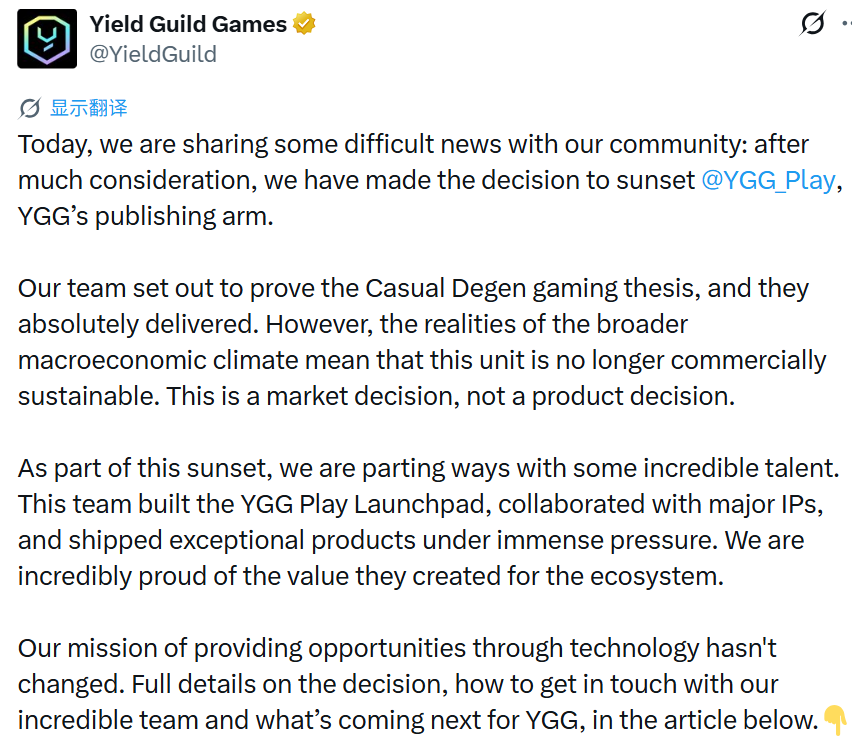


In the statement, Gabby Dizon stated: This is a market decision, not a product decision. Although the team successfully validated the casual gaming segment—short sessions, high engagement, and rapid feedback loops for crypto-native users—the lack of liquidity and declining user confidence in the macroeconomic environment have rendered this business commercially unsustainable.


Alongside shutting down YGG Play, YGG also announced a full pivot to the AI Data Economy, aiming to capture the multibillion-dollar market for AI training datasets, initially focusing on building B2B pipelines around gaming datasets.


The Chain Game Publishing Platform YGG Play


Launched by YGG in 2025, YGG Play was its Web3 game publishing arm, dedicated to serving the casual player community in the crypto space. It targeted short, quick, mobile-friendly games with a touch of social interaction and rewards, helping independent studios quickly go on-chain for distribution and acquire and operate users through YGG's community network. These games accumulated significant revenue during 2025-2026, proving that specific vertical segments could still generate genuine revenue even at the tail end of a bear market.


However, revenue peaked around October 2025. The large-scale liquidation event in October's crypto market further dampened the payment willingness and retention of target users. The closure of YGG Play marks a strategic contraction for YGG, moving away from the dual-engine drive of "guild operations + publishing."


To understand the weight of this closure, one must trace YGG's complete trajectory.


In 2020, veteran Philippine gaming industry figures Gabby Dizon, Beryl Li, and anonymous partner Owl of Moistness co-founded YGG. This was during the peak of the COVID-19 pandemic when many service industry workers in the Philippines were unemployed. Axie Infinity, the hottest Play-to-Earn (P2E) game at the time, was enabling players to borrow Axie NFTs for free to battle and share earnings through its "scholarship" model.


YGG seized this window, starting as a small guild, raising funds to purchase Axie assets, organizing and training players, and rapidly becoming one of the largest and most scalable guilds within the Axie ecosystem.
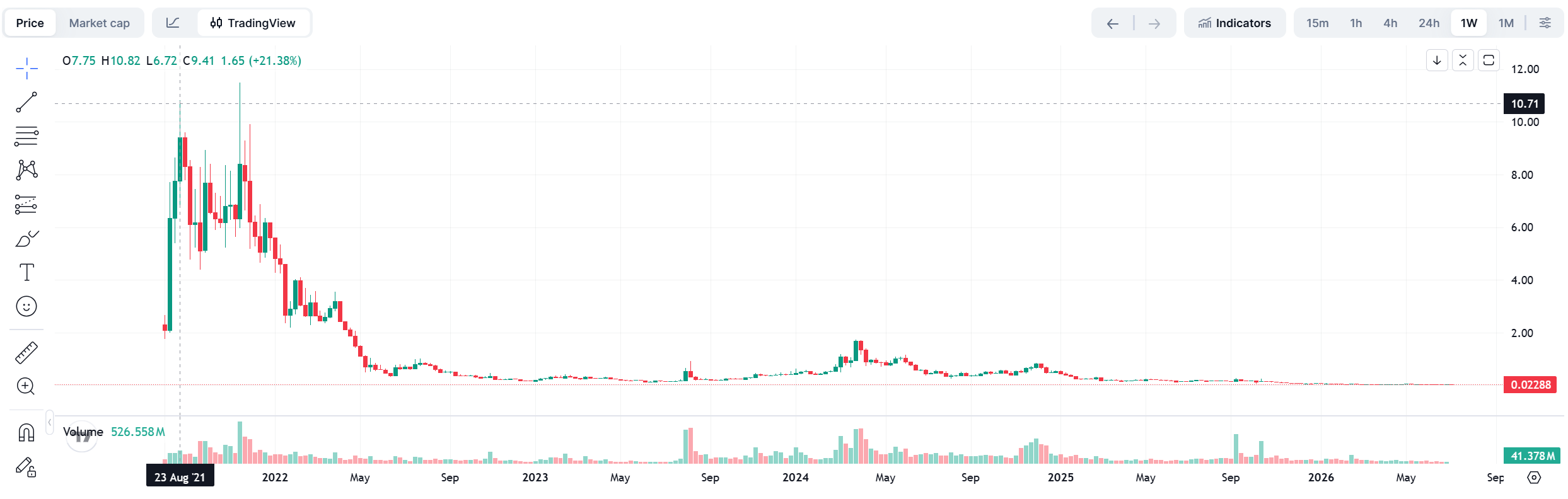


2021 was YGG's peak year. Driven by both the bull market and the P2E narrative, its token price soared, exceeding $10 at its highest. YGG expanded from a single Axie guild into a global network covering dozens of regional sub-guilds and partnered with over 80 blockchain games and infrastructure projects. It moved beyond mere asset lending, helping players maximize earnings through quests, events, and community operations. In places like the Philippines, the real economic phenomenon of "playing games as work" emerged, and YGG became a benchmark for the P2E model.


At its peak, YGG's model was widely replicated: guilds became crucial intermediaries connecting players, assets, and games, with DAO governance and token incentives allowing participants to share in growth benefits. YGG evolved from a simple "asset manager" into an investment, content, and community platform.


When the crypto bear market arrived in 2022, the fragility of Axie Infinity's economic model was laid bare—new user inflow slowed, token prices crashed, and player churn was severe. Many guilds and P2E projects vanished outright, and the entire industry entered a deep trough. YGG did not collapse but began a long adaptation. In 2025, YGG bet on a new direction: launching YGG Play and formally entering the game publishing arena, as heavy P2E was no longer viable, while crypto users naturally gravitated towards high-frequency, instant-feedback casual experiences.


This shutdown comes barely a year after that last pivot.


A Microcosm of the Chain Gaming Industry


The closure of YGG Play can be seen as a concentrated reflection of the chain gaming industry's development trajectory over the past five years.


In April this year, the crypto quantitative trading and market-making firm Caladan reviewed the five-year journey of the Web3 gaming sector from frenzied explosion to comprehensive collapse. Its core conclusion was that the decline of Web3 games is not a normal cyclical downturn but stems from a fundamental "structural misalignment" between the underlying speculative financial design and the genuine entertainment needs of players, leading to a staggering $15 billion in capital being obliterated.


Examples abound: Pixelmon, which raised $70 million but failed to launch public beta in 4 years; Ember Sword, which burned through $18 million and was liquidated; and Hamster Kombat, which lost 96% of its users within 6 months.


As of April 2026, in the roughly 3,200 chain gaming projects tracked by the report, 93% have been categorized as "practically dead" or have completely lost activity. The average decline in the crypto token prices for the entire gaming sector compared to the 2022 all-time highs reached 95%.


The prosperity of chain gaming was entirely built upon the Ponzi-like dividend logic of "Play-to-Earn." This model is inherently an unsustainable speculative financial closed loop: the earnings of early players and token prices entirely depend on a constant influx of new players buying tokens or NFTs to sustain the system. Once new user growth slows and external capital inflow decreases, the token's severe inflation rapidly breaches economic equilibrium, triggering a "death spiral" of token crashes, shrinking earnings, and a mass exodus of users.


YGG Play was not a failure in terms of product delivery or revenue figures but was defeated by "market timing."


The story of chain gaming may be nearing its end.

Tiền kỹ thuật số thịnh hành

Câu hỏi Liên quan

QWhy did YGG decide to shut down its YGG Play division?

AYGG decided to shut down its YGG Play division due to market conditions, specifically insufficient market liquidity and declining user confidence in the macroeconomic environment, which made the business commercially unsustainable, despite having validated the casual gaming niche.

QWhat was the original core business model of Yield Guild Games (YGG) at its peak?

AAt its peak during the 2021 bull market, YGG's core model was operating as a major guild within the Play-to-Earn (P2E) ecosystem, most notably for Axie Infinity. It provided asset lending (scholarships), player training, and community management to help players maximize earnings, evolving into a global network and a platform for investment, content, and community.

QWhat new strategic direction has YGG announced alongside the closure of YGG Play?

AAlongside the closure of YGG Play, YGG announced a full-scale pivot into the AI Data Economy, aiming to capture a share of the multi-billion dollar AI training dataset market, with an initial focus on building B2B pipelines around gaming datasets.

QAccording to the article, what is the fundamental structural flaw of most Web3/blockchain games as identified by Caladan's report?

AAccording to Caladan's report cited in the article, the fundamental structural flaw of most Web3 games is a 'structural misalignment' between their underlying speculative financial design and genuine player entertainment needs. Their models rely on an unsustainable Ponzi-like financial loop where early player returns depend on constant new user inflow to buy tokens/NFTs, leading to a 'death spiral' when growth slows.

QWhat statistics does the article provide to illustrate the scale of failure in the blockchain gaming sector over the past five years?

AThe article provides several statistics illustrating the sector's failure: a collective loss of $150 billion in capital, 93% of tracked projects (~3200) being 'effectively dead' or inactive by April 2026, and an average token price decline of 95% from the 2022 highs for the gaming sector. It also cites specific failed projects like Pixelmon and Ember Sword.

Nội dung Liên quan

Arthur Hayes Phỏng Vấn Dài Hàng Vạn Chữ: ETH Lên 3 Mỹ Kim; FLOP Sẽ Vượt Qua ETH

Arthur Hayes, người sáng lập BitMEX, đã chia sẻ quan điểm của mình về thị trường tiền điện tử và dự án mới của mình trong một cuộc phỏng vấn. **Vĩ mô & Thanh khoản:** Hayes nhấn mạnh các vấn đề nợ công Mỹ và lo ngại về việc kiểm soát đường cong lợi suất (YCC). Ông cho rằng các động thái của Bộ Tài chính Mỹ (như mua lại trái phiếu) sẽ bơm thêm thanh khoản, có lợi cho tài sản khan hiếm như Bitcoin và tiền điện tử, lặp lại kịch bản năm 2008. **Dự báo thị trường:** - **Bitcoin (BTC):** Hayes dự đoán có thể đạt 126.000 USD vào cuối năm và thậm chí 500.000 USD nếu Cục Dự trữ Liên bang Mỹ (Fed) mở rộng mạnh bảng cân đối kế toán. - **Ethereum (ETH):** Ông đặc biệt lạc quan về ETH, coi đây là tài sản lớn bị bỏ rơi và có thể chạm mốc 20.000 - 30.000 USD, trở thành động lực chính làm giảm tỷ trọng thống trị của Bitcoin. - **Quan điểm giao dịch:** Hayes tập trung vào "cảm quan thị trường" và thanh khoản vĩ mô hơn là phân tích kỹ thuật. Ông coi chiến tranh hoặc sự sụp đổ trật tự xã hội là rủi ro lớn nhất. **Dự án mới - Flop Network:** Hayes giới thiệu Flop Network, một blockchain tập trung vào AI Agent. - **Mục tiêu:** Tạo ra một thị trường giao ngay (spot) để định giá và giao dịch sức mạnh tính toán (đơn vị Flop), trở thành đồng tiền cơ bản cho nền kinh tế AI Agent trong tương lai. - **Cơ chế:** Sử dụng cơ chế đồng thuận "Proof of Useful Inference", thưởng cho thợ đào cung cấp tài nguyên tính toán. - **Tokenomics:** Không có bán trước cho VC. 20% tổng cung trong 10 năm sẽ được airdrop cho cộng đồng tham gia thử nghiệm và sử dụng mạng lưới. Mục tiêu là tạo ra một đồng tiền có thể dễ dàng chuyển đổi thành năng lượng tính toán cho AI. - **Tầm nhìn:** Hayes đặt cược FLOP có thể trở thành đồng tiền số hai thị trường, chỉ sau Bitcoin, nếu trở thành phương tiện thanh toán chính trong nền kinh tế AI Agent. **Quan điểm về quy định:** Ông coi Đạo luật Rõ ràng (Clarity Act) của Mỹ là không quan trọng và có hại cho đổi mới thực sự, cho rằng động lực thị trường chính đến từ chính sách tiền tệ chứ không phải quy định.

Odaily星球日报16 phút trước

Arthur Hayes Phỏng Vấn Dài Hàng Vạn Chữ: ETH Lên 3 Mỹ Kim; FLOP Sẽ Vượt Qua ETH

Odaily星球日报16 phút trước

Báo cáo phân tích Goldman Sachs: Cổ tức cho cổ đông Samsung Electronics thấp hơn kỳ vọng, FCF tăng trưởng hỗ trợ phục hồi định giá

Báo cáo của Goldman Sachs cho biết kế hoạch trả cổ tức của Samsung Electronics đã không đáp ứng kỳ vọng ngắn hạn của thị trường. Công ty thông báo hồ bơi trả cổ tức dự kiến cho năm 2026 trong khoảng 90-110 nghìn tỷ won, thấp hơn so với dự báo 150 nghìn tỷ won từ một số phương tiện truyền thông. Tuy nhiên, Goldman Sachs nhấn mạnh rằng yếu tố then chốt hỗ trợ việc phục hồi định giá là dòng tiền tự do (FCF) mở rộng bền vững và cơ chế trả cổ tức ổn định, chứ không phải quy mô một lần. Samsung không công bố kế hoạch trả cổ tức quy mô lớn một lần như một số đối thủ, nhưng đã nêu rõ kế hoạch trả cổ tức theo từng giai đoạn, bao gồm cổ tức tiền mặt khoảng 30 nghìn tỷ won vào quý 3. Goldman Sachs tính toán tổng lợi nhuận cho cổ đông từ 2024 đến 2026 vào khoảng 135 nghìn tỷ won, phù hợp với hướng dẫn của công ty. Cơ cấu trả cổ tức được dự báo sẽ nghiêng nhiều hơn về cổ tức so với mua lại cổ phiếu. Báo cáo dự báo FCF của Samsung sẽ tăng trưởng đáng kể trong những năm tới (2027: 179 nghìn tỷ won, 2028: 232 nghìn tỷ won), hỗ trợ khả năng trả cổ tức tiếp tục mở rộng và có thể vượt mặt các đối thủ. Goldman Sachs duy trì xếp hạng "Mua" cho cổ phiếu phổ thông với mục tiêu giá 490.000 won, cho thấy tiềm năng tăng 74%, dựa trên tỷ lệ thu nhập rủi ro hấp dẫn và kỳ vọng định giá được cải thiện nhờ chính sách trả cổ tức bền vững. Các rủi ro bao gồm nhu cầu bán dẫn giảm, biên lợi nhuận điện thoại thông minh sụt giảm.

marsbit26 phút trước

Báo cáo phân tích Goldman Sachs: Cổ tức cho cổ đông Samsung Electronics thấp hơn kỳ vọng, FCF tăng trưởng hỗ trợ phục hồi định giá

marsbit26 phút trước

Giao dịch

Giao ngay

Bài viết Nổi bật

Làm thế nào để Mua YGG

Chào mừng bạn đến với HTX.com! Chúng tôi đã làm cho mua Yield Guild Games (YGG) trở nên đơn giản và thuận tiện. Làm theo hướng dẫn từng bước của chúng tôi để bắt đầu hành trình tiền kỹ thuật số của bạn.Bước 1: Tạo Tài khoản HTX của BạnSử dụng email hoặc số điện thoại của bạn để đăng ký tài khoản miễn phí trên HTX. Trải nghiệm hành trình đăng ký không rắc rối và mở khóa tất cả tính năng. Nhận Tài khoản của tôiBước 2: Truy cập Mua Crypto và Chọn Phương thức Thanh toán của BạnThẻ Tín dụng/Ghi nợ: Sử dụng Visa hoặc Mastercard của bạn để mua Yield Guild Games (YGG) ngay lập tức.Số dư: Sử dụng tiền từ số dư tài khoản HTX của bạn để giao dịch liền mạch.Bên thứ ba: Chúng tôi đã thêm những phương thức thanh toán phổ biến như Google Pay và Apple Pay để nâng cao sự tiện lợi.P2P: Giao dịch trực tiếp với người dùng khác trên HTX.Thị trường mua bán phi tập trung (OTC): Chúng tôi cung cấp những dịch vụ được thiết kế riêng và tỷ giá hối đoái cạnh tranh cho nhà giao dịch.Bước 3: Lưu trữ Yield Guild Games (YGG) của BạnSau khi mua Yield Guild Games (YGG), lưu trữ trong tài khoản HTX của bạn. Ngoài ra, bạn có thể gửi đi nơi khác qua chuyển khoản blockchain hoặc sử dụng để giao dịch những tiền kỹ thuật số khác.Bước 4: Giao dịch Yield Guild Games (YGG)Giao dịch Yield Guild Games (YGG) dễ dàng trên thị trường giao ngay của HTX. Chỉ cần truy cập vào tài khoản của bạn, chọn cặp giao dịch, thực hiện giao dịch và theo dõi trong thời gian thực. Chúng tôi cung cấp trải nghiệm thân thiện với người dùng cho cả người mới bắt đầu và người giao dịch dày dạn kinh nghiệm.

Tổng lượt xem 368Xuất bản vào 2024.12.13Cập nhật vào 2026.06.02

Làm thế nào để Mua YGG

Thảo luận

Chào mừng đến với Cộng đồng HTX. Tại đây, bạn có thể được thông báo về những phát triển nền tảng mới nhất và có quyền truy cập vào thông tin chuyên sâu về thị trường. Ý kiến ​​của người dùng về giá của YGG (YGG) được trình bày dưới đây.

活动图片