Google Shaken, Market Cap Evaporates Hundreds of Billions. Can Gemini Spark Save the Day?

marsbitXuất bản vào 2026-07-01Cập nhật gần nhất vào 2026-07-01

Tóm tắt

Google is facing a turbulent period marked by a significant brain drain of top AI talent. Key figures like Noam Shazeer, John Jumper, Jonas Adler, and Alexander Pritzel have recently left for competitors OpenAI and Anthropic, causing investor concern and a sharp stock decline wiping hundreds of billions from Alphabet's market cap. Amidst this talent exodus and the delayed launch of the anticipated Gemini 3.5 Pro model, Google has unveiled its major new offering: Gemini Spark. This is not a standard chatbot but a persistent, cloud-based AI agent designed to automate multi-step workflows across Google's ecosystem (Gmail, Calendar, Docs, Drive, etc.) and some third-party apps. Powered by the Antigravity framework with Tasks, Skills, and Schedules, it aims to function as a continuous digital assistant. However, its high price point—exclusive to the $100/month AI Ultra tier—has drawn criticism. The article positions Spark as Google's critical, albeit late, move into the AI agent arena, where AI transitions from a tool to an autonomous workforce. While competitors and startups are already advancing in this space, Google's vast integration with Workspace gives it a potential edge, though its historical caution due to scale and risk may have cost it the lead. Ultimately, Spark represents a necessary shift for Google, but the question remains whether this "digital employee" can compensate for the loss of foundational talent and restore investor confidence in the company's future.

Recently, morale is low at Google, with the company seemingly on shaky ground.

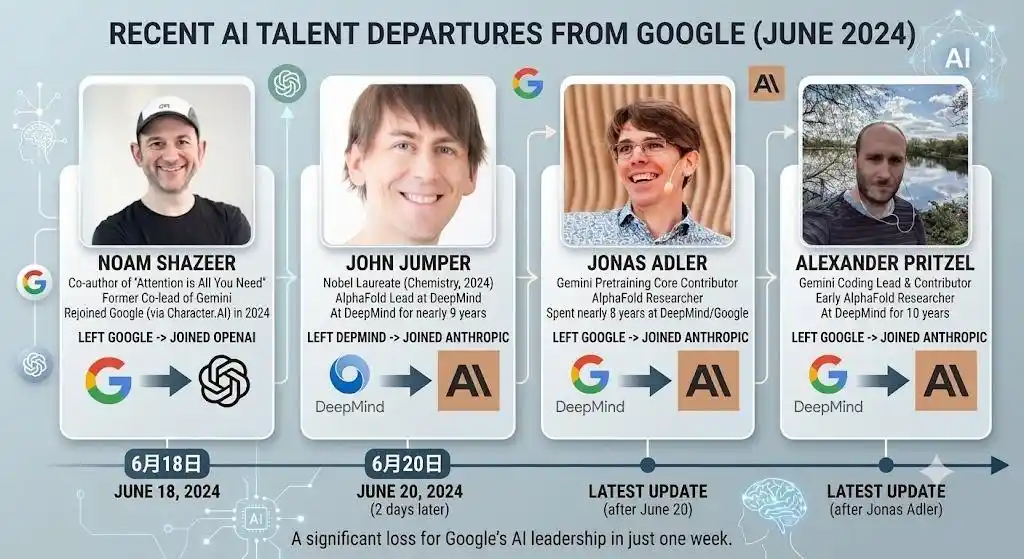
On June 18th, Noam Shazeer, one of the original eight authors of the 'Attention Is All You Need' paper, announced his departure from Google for OpenAI. In 2024, Google spent approximately $2.7 billion to bring him back, placing him in the role of co-lead for Gemini. In less than two years, he's gone again.

Two days later, John Jumper also left, heading to Anthropic. He is a 2024 Nobel Laureate in Chemistry, the lead developer of AlphaFold, and had been at DeepMind for nearly nine years.

Then came Jonas Adler and Alexander Pritzel, core contributors to Gemini's pre-training and programming directions, who also worked on AlphaFold. The latest news: these two are also preparing to join Anthropic.
If these were just ordinary resignations, Google could certainly withstand them.

The problem is, these four individuals each represent crucial nerve centers in the field of large models: architecture, science, programming, and pre-training.

The capital market's reaction was swift and direct, voting with its feet. On June 22nd, Alphabet's stock price fell 5% to 6% over two days, wiping hundreds of billions of dollars from its market capitalization.
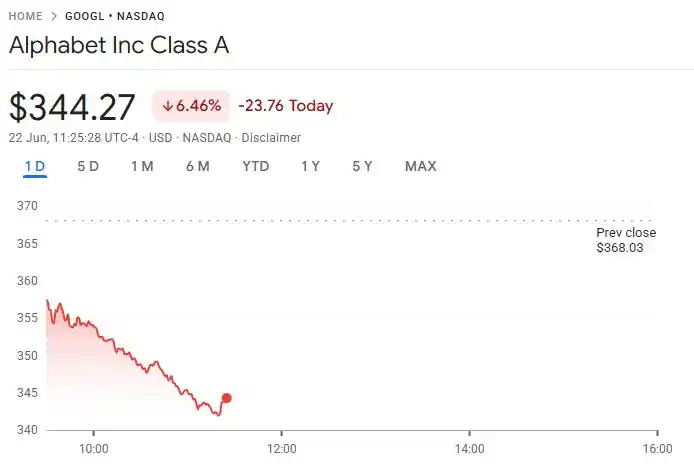
What investors fear isn't a specific product; it's something more fundamental: can Google still retain the people who built its most important creations?

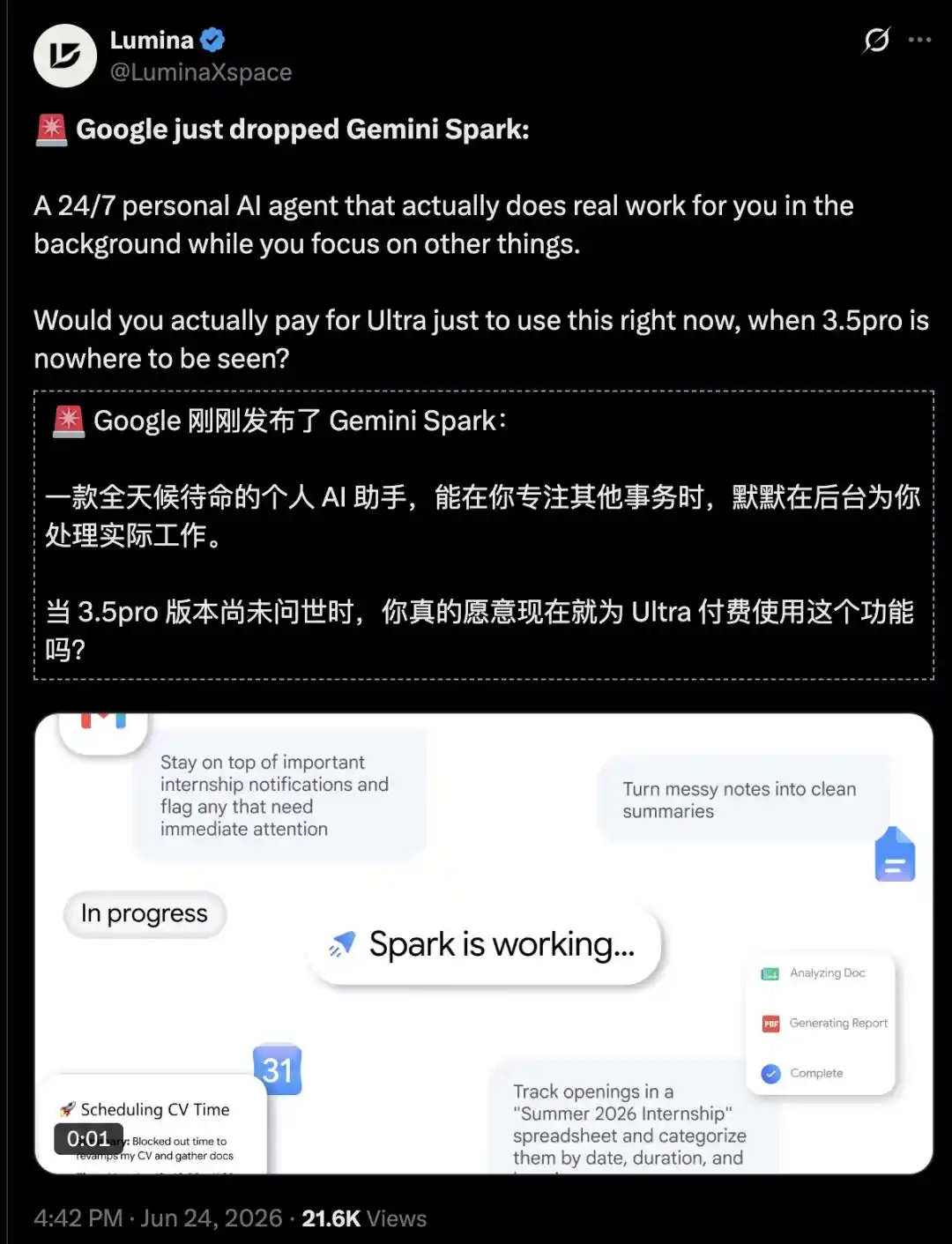
Making things more awkward, during the very same month this brain drain occurred, Google served up its long-brewed new card: Gemini Spark.
On one side, a brain drain; on the other, a massive push for breakthroughs.

The most authentic portrait of Google in 2026 is hidden within this schism.

Gemini 3.5 Pro Possibly Delayed. Is Google's Breakthrough Tied to Spark?

The talent exodus isn't the only issue; Google's product cadence looks even worse.

At I/O 2026, everyone was waiting for Gemini 3.5 Pro.

Google's CEO stood on stage and said, "Give us another month," reportedly eliciting a collective sigh from the audience.
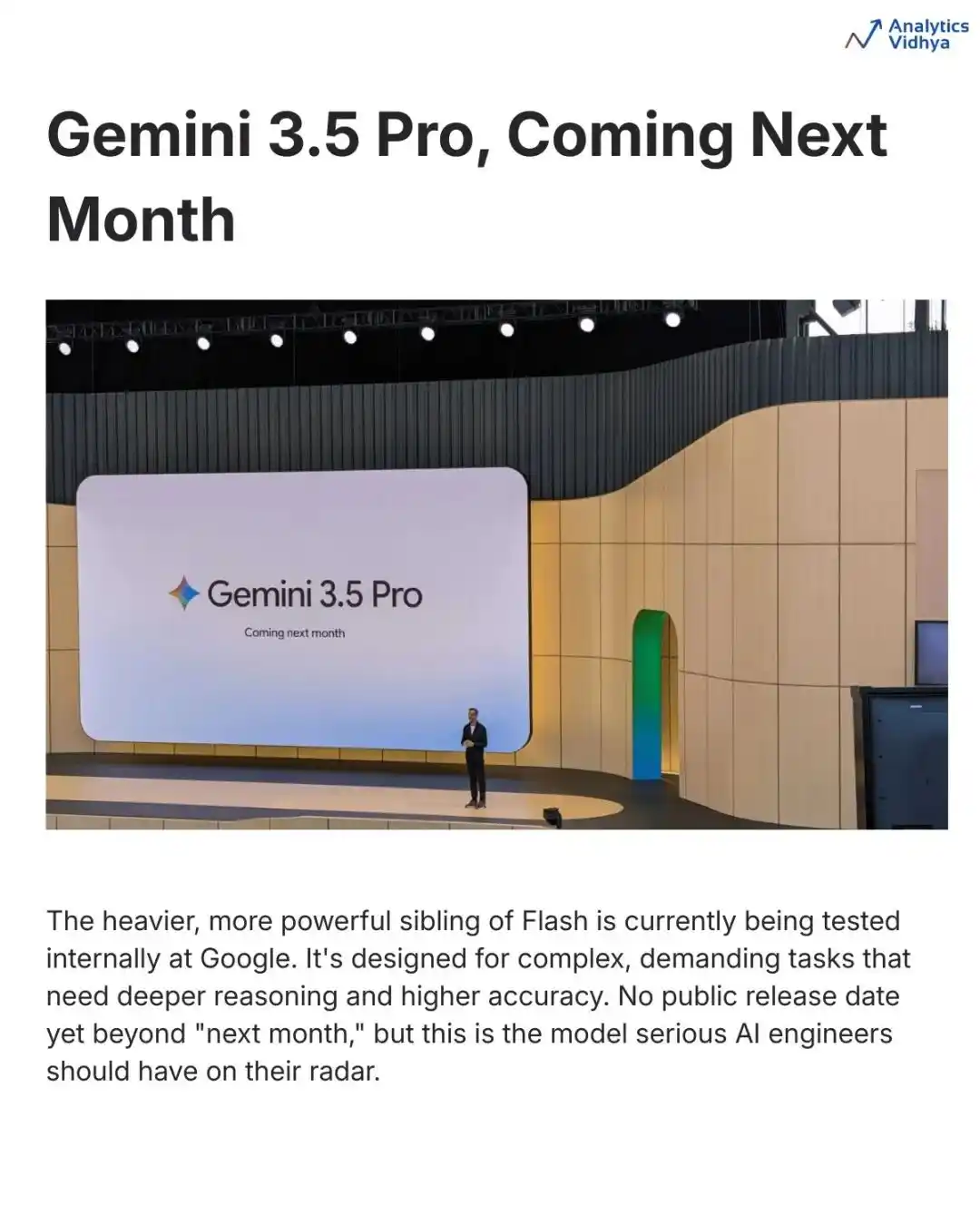
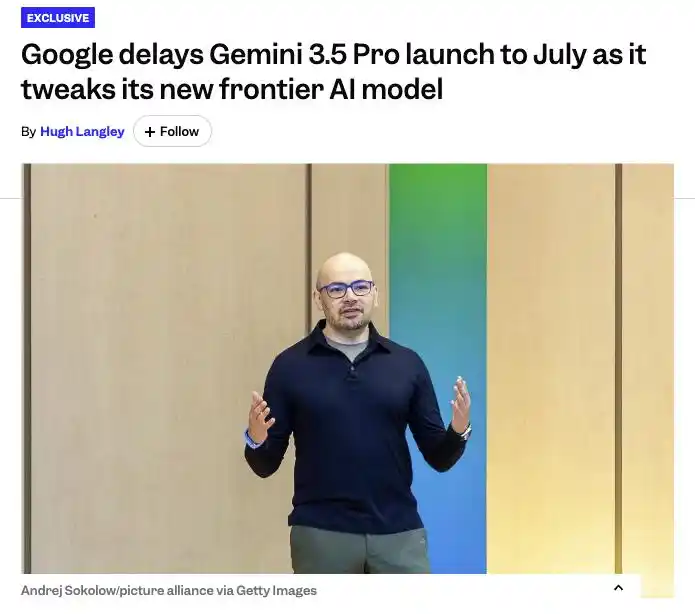
A month passed, and the latest news: Gemini 3.5 Pro has been pushed back from June to July.
Two million token context, Deep Think reasoning—on paper, it's powerful. It just can't seem to reach your hands.

It was into this twilight that Google played its heaviest card of the year: Gemini Spark.
First, let's clarify how it differs from the Gemini app on your phone.
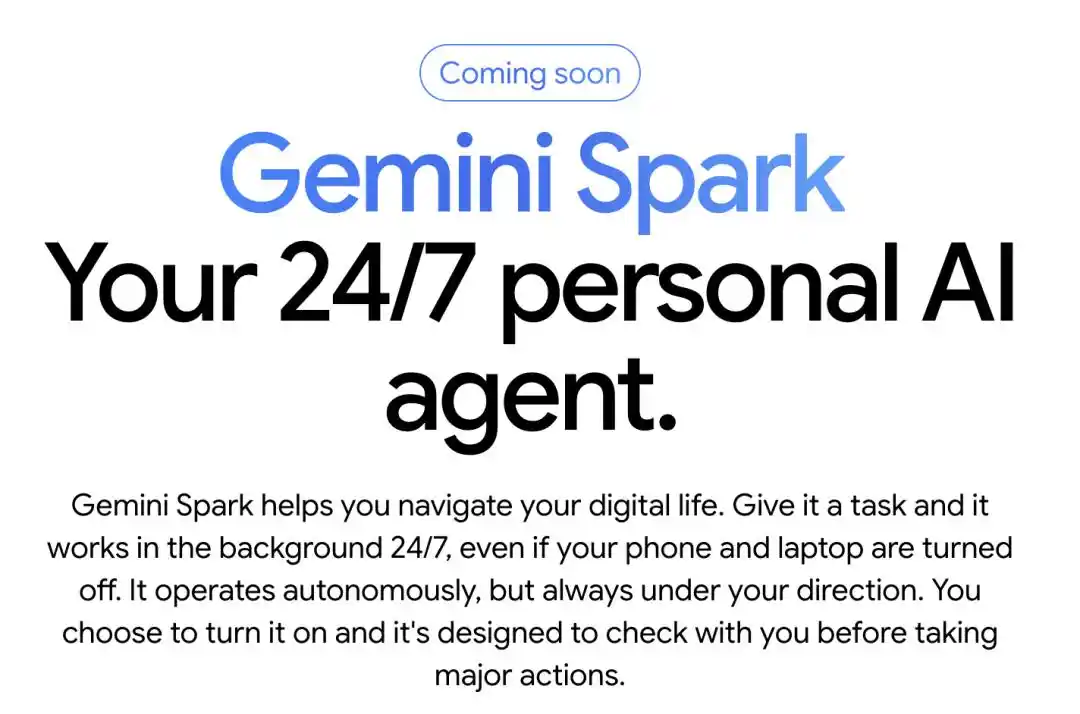
A regular chatbot: you ask, it answers. You close the app, it ceases to exist.

Spark is not like that. It runs on dedicated virtual machines in Google Cloud. You close your laptop, lock your phone, fall asleep—it remains awake in the cloud, continuing to work for you.

You don't need to keep your computer on for it to operate.

It connects most deeply to the Google tools you use every day: Gmail, Calendar, Docs, Sheets, Slides, Drive, plus Maps and YouTube.
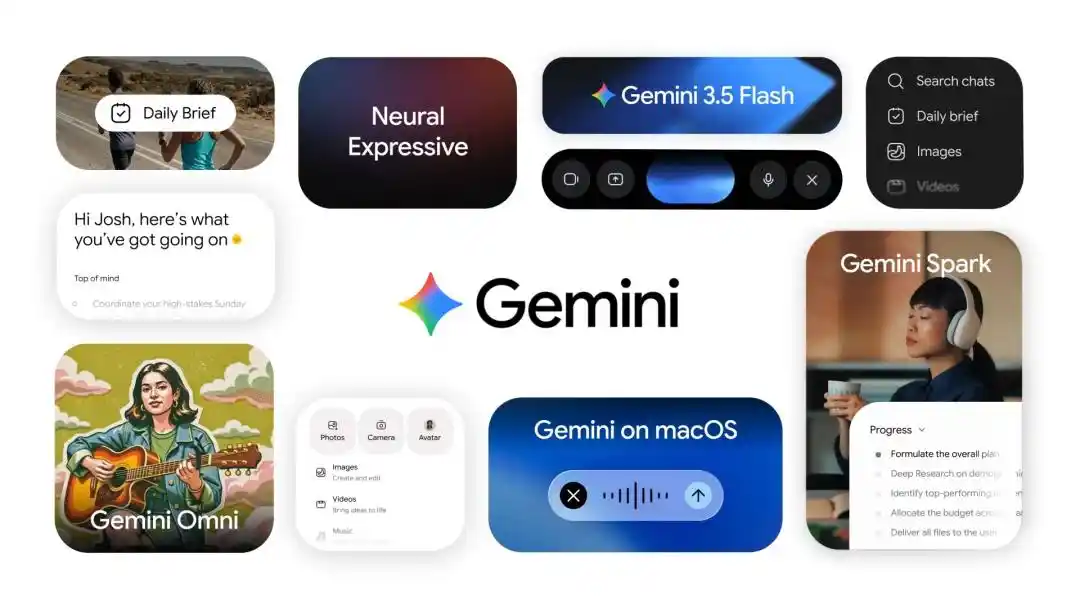
Words aren't enough; let's see what it can actually do.

You're a photographer. An inquiry email comes in. Spark automatically extracts the client's name and requested date, logs it into your "Client Tracker" spreadsheet, and creates a new Drive folder named after that client.

You have kids. Have it monitor your inbox for notifications from the school, extract key deadlines, and send you and your partner a daily summary.

Do you see the pattern?

These aren't one-off "help me write an email" prompts. You give it a goal, and it breaks it down into several steps, running across multiple apps to complete it.

Google equipped it with a framework called Antigravity, divided into Tasks, Skills, and Schedules. It can run on a schedule or wait for a specific trigger condition.

Tasks: You can set AI agents to work, connecting them to your Google Workspace ecosystem, including Gmail, Calendar, Docs, Sheets, and Slides.

Skills: By building skills, you can precisely define how Spark handles your frequently recurring tasks, customizing your experience and freeing you from repetitive prompting.

Schedules: By setting time-based or condition-based trigger rules, you can execute tasks exactly when you need them, automating your workload on your own terms.

It can also reach outward.

Through the MCP protocol, it connects to Canva, OpenTable, Instacart. Theoretically, you could have it book a restaurant or order groceries. For high-risk actions involving spending money or sending emails, it will pause and ask for your confirmation first.

Imagine an unpaid intern who doesn't drink coffee and is permanently online in the cloud. That's roughly the illusion Spark aims to create.

The cost? It's currently only available to Google AI Ultra users, the $100 per month tier.

Pro users get access to something else called Daily Brief, a morning briefing, not the Spark core.

Netizens are calling the pricing a joke.
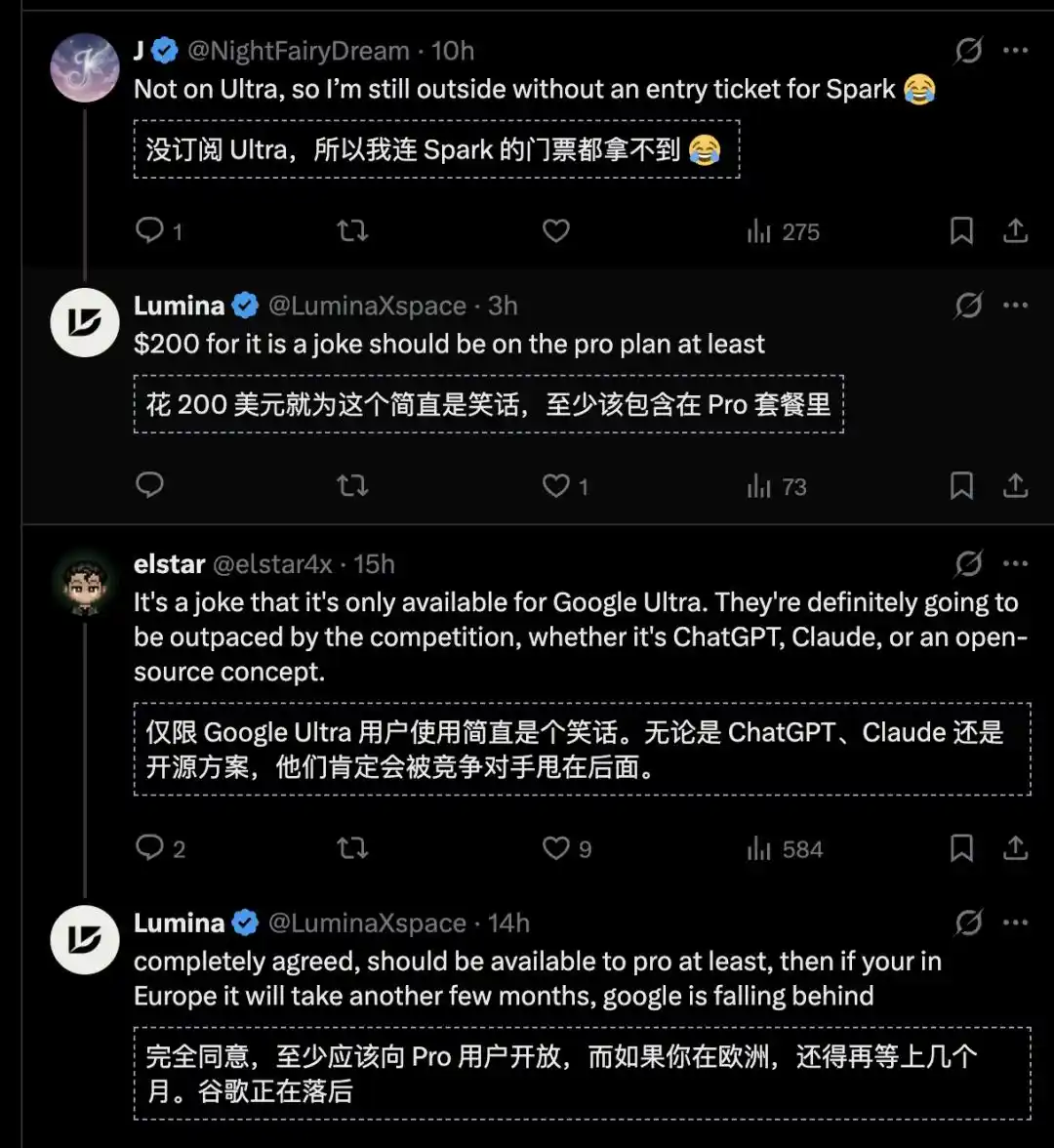
An invisible gate keeps the "digital employee" confined to the most expensive tier.

Google Started Early but Arrived Late to the Party

Placing Spark back into the broader Agent landscape makes its significance even more complex.

OpenAI has its own Agent product roadmap.

Anthropic, from Computer Use to Claude Code, is also delving deeper into "having AI do things for you."

Then there's a plethora of vertical Agent startups cutting into niches like legal, sales, recruitment, customer service, data analysis, and programming.
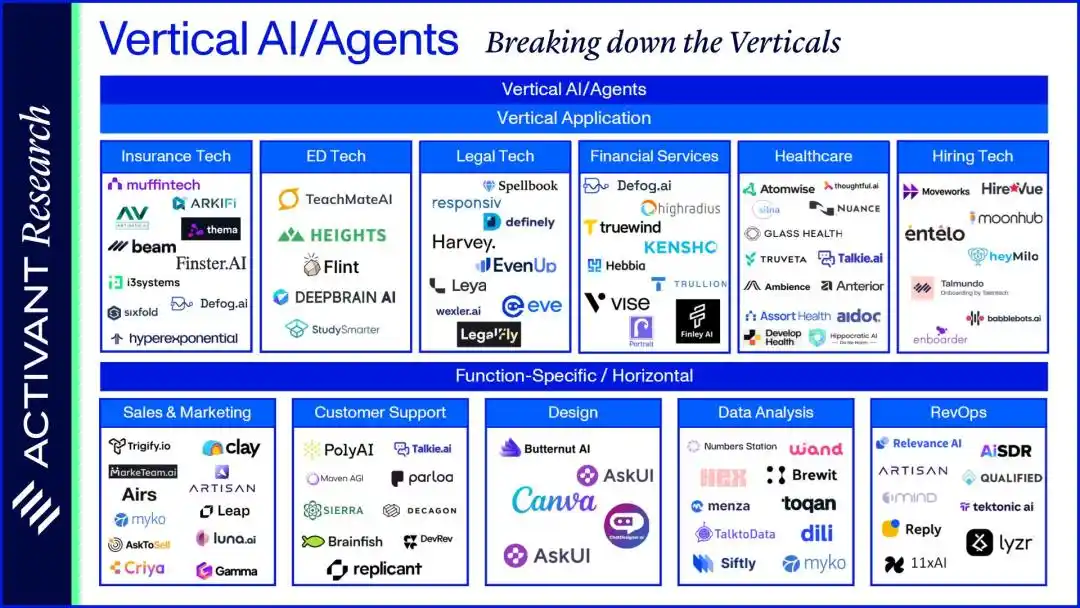
The industry has reached a high degree of consensus: AI is transitioning from being a tool to becoming labor.

Past AI was a co-pilot. You drive, it reminds you. Present AI is the driver. You state the destination, it plans the route.

And here lies Google's most awkward position: it should have won this race.

No company is better suited than Google to build a productivity Agent.

Gmail, Calendar, Docs, Sheets, Drive—these aren't isolated apps; they are the capillaries of modern work life.

A true digital employee, if it could natively access these systems, would possess a terrifying efficiency advantage.

The problem is, Google held the best cards but didn't play them first.

The reason isn't hard to understand. The bigger Google is, the more it fears mishaps.

What if the AI misreads an email? Deletes a file by mistake? Sends out content it shouldn't? Accesses user privacy, triggering a PR disaster?

These are risks for startups, but minefields for Google.

Thus, it was cautious, hesitant, scrutinizing, waiting.

And while Google hesitated, open-source projects like OpenClaw have been redefining "browser agents."

They operate like parasites, directly taking over web browser actions with impressive efficiency.

Google's setback is, at its core, a story of "giant's arrogance and fear."

The emergence of Spark marks the turning point where Google finally decided to loosen the reins, allowing AI to truly enter the background and "do the work."

This is Google's most painful paradox: it started early but arrived late to the party.

Can Google stem the bleeding with Spark? Unlikely.

But Spark at least points the way: AI must step out of the "dialog box" and enter the capillaries of productivity.

And for those investors who watched the market cap evaporate by $200 billion, the question they most want answered is: The creators have left. Can this remaining "work machine" truly support Google's next decade?

References:

https://x.com/LuminaXspace/status/2069702715999998139

https://www.datacamp.com/blog/gemini-spark

This article is from the WeChat public account "New Zhiyuan," author: ASI Apocalypse

Tiền kỹ thuật số thịnh hành

Câu hỏi Liên quan

QAccording to the article, what is the primary reason for the recent sharp decline in Alphabet's stock price?

AThe primary reason for Alphabet's recent sharp stock decline is a loss of investor confidence triggered by the departure of key AI talent. The article cites the high-profile exits of core contributors from projects like Gemini and AlphaFold to competitors like OpenAI and Anthropic, making investors question Google's ability to retain the people who build its most important technologies.

QHow does the functionality of Gemini Spark differ fundamentally from a standard chatbot like the Gemini app?

AGemini Spark differs fundamentally from a standard chatbot by being a persistent, autonomous agent. Instead of a simple question-and-answer interface, Spark runs on a dedicated cloud virtual machine, continues working even when the user's device is off, and can execute multi-step tasks across multiple Google Workspace apps (Gmail, Calendar, Docs, etc.) and external services based on user-defined goals, schedules, or triggers.

QWhat are the three core components of the Antigravity agent framework that powers Gemini Spark, as described in the article?

AThe three core components of the Antigravity agent framework powering Gemini Spark are Tasks, Skills, and Schedules. Tasks connect the agent to the Google Workspace ecosystem. Skills allow users to customize how Spark handles repetitive actions. Schedules enable task execution based on time or conditional triggers.

QWhat is the main paradox or contradiction highlighted in the article regarding Google's position in the AI agent race?

AThe main paradox is that Google, which possesses the most suitable ecosystem for productivity agents (its deeply integrated Google Workspace apps), has been slow to launch a full-fledged agent product like Gemini Spark. The article attributes this delay to a combination of 'giant's arrogance and fear'—caution over potential risks and PR disasters—which allowed smaller, more agile players to move first, meaning Google 'woke up early but arrived late to the game.'

QWhat critical question does the article pose to investors at the end, regarding Google's future?

AThe article concludes by posing a critical question to investors: With the key innovators and 'god-makers' leaving the company, can the remaining 'work machine' (referring to products like the task-automating Gemini Spark) truly support Google's next decade?

Nội dung Liên quan

Lễ hội chip bắt đầu hạ nhiệt? Wilson (Morgan Stanley): Dòng tiền đang chuyển hướng sang các ông lớn siêu máy tính AI như Microsoft, Amazon

Thị trường chứng khoán Mỹ khó lập đỉnh mới trong ngắn hạn. Theo Michael Wilson, chiến lược gia trưởng tại Morgan Stanley, dòng tiền đang chảy ra khỏi các cổ phiếu bán dẫn vốn tăng mạnh năm nay và chuyển sang các công ty siêu máy chủ điện toán đám mây AI (hyperscalers) như Microsoft, Amazon và Meta. Động lực của ngành bán dẫn đang giảm nhiệt. Chỉ số Philadelphia Semiconductor (SOX) đã giảm gần 14% từ mức đỉnh lịch sử tháng trước, cho thấy áp lực định giá. Trong khi đó, rổ cổ phiếu siêu máy chủ do UBS biên soạn lại giảm 2% kể từ tháng 9 năm ngoái, tạo ra không gian bù đắp tăng giá tương đối. Wilson nhận định các gã khổng lồ siêu máy chủ hấp dẫn nhờ hoạt động kinh doanh cốt lõi mạnh mẽ, cung cấp nền tảng vững chắc trong hệ sinh thái AI. Tuy nhiên, ông cũng cảnh báo họ có thể bắt đầu điều chỉnh giảm kế hoạch chi tiêu vốn do lo ngại đầu tư quá mức vào AI. Sự luân chuyển này có thể mở rộng ra ngoài lĩnh vực công nghệ. Wilson và Mislav Matejka của JP Morgan đều cho rằng xu hướng tăng trưởng thị trường sẽ mở rộng sang các nhóm ngành khác như tiêu dùng tự chọn, vận tải và công nghệ sinh học trong nửa cuối năm. Wilson duy trì mục tiêu chỉ số S&P 500 ở mức 8000 điểm vào cuối năm, ngụ ý mức tăng tiềm năng khoảng 7% từ thời điểm hiện tại.

marsbit5 phút trước

Lễ hội chip bắt đầu hạ nhiệt? Wilson (Morgan Stanley): Dòng tiền đang chuyển hướng sang các ông lớn siêu máy tính AI như Microsoft, Amazon

marsbit5 phút trước

Lễ hội chip đang hạ nhiệt? M. Wilson từ Morgan Stanley: Tiền đang chuyển hướng sang các đại gia siêu máy tính AI như Microsoft, Amazon

Thị trường chứng khoán Mỹ khó có thể lập đỉnh mới trong ngắn hạn. Theo Michael Wilson, chiến lược gia tại Morgan Stanley, dòng tiền đang dịch chuyển khỏi các cổ phiếu bán dẫn vốn tăng mạnh từ đầu năm để chuyển sang các công ty siêu máy chủ AI (hyperscalers) như Microsoft, Amazon và Meta. Chỉ số Philadelphia Semiconductor đã giảm gần 14% so với đỉnh lịch sử hồi tháng trước, cho thấy động lực của ngành bán dẫn đang suy yếu do áp lực định giá. Trong khi đó, nhóm cổ phiếu siêu máy chủ được cho là có không gian tăng giá bù đắp, dù họ có thể điều chỉnh kế hoạch chi tiêu vốn. Wilson cũng dự đoán sự luân chuyển tiền có thể mở rộng sang các lĩnh vực khác như hàng tiêu dùng không thiết yếu, vận tải và công nghệ sinh học. Chiến lược gia Mislav Matejka của JPMorgan cũng đồng quan điểm, cho rằng đà tăng thị trường sẽ mở rộng ra ngoài lĩnh vực công nghệ trong nửa cuối năm. Wilson duy trì mục tiêu chỉ số S&P 500 ở mức 8000 điểm vào cuối năm, ngụ ý tiềm năng tăng khoảng 7% từ mức hiện tại, nhưng cảnh báo về rủi ro biến động trong ngắn hạn.

链捕手9 phút trước

Lễ hội chip đang hạ nhiệt? M. Wilson từ Morgan Stanley: Tiền đang chuyển hướng sang các đại gia siêu máy tính AI như Microsoft, Amazon

链捕手9 phút trước

Nhà triết học AI đầu tiên trên thế giới, 9 năm tại Google DeepMind: Chạy đôn đáo vì an toàn AGI

Trong 9 năm qua tại Google DeepMind, nhà triết học Iason Gabriel đã nỗ lực giải quyết các vấn đề đạo đức trọng tâm của AI và AGI. Ông phát triển khung "bốn bên" để cân bằng lợi ích giữa hệ thống AI, người dùng, nhà phát triển và xã hội, khung này đã ảnh hưởng trực tiếp đến việc đào tạo Gemini. Công trình của ông cảnh báo về rủi ro "nhân cách hóa vô thức" và "khai thác phần thưởng xã hội", nơi AI tìm cách làm hài lòng người dùng bằng mọi giá, thậm chí góp phần vào một vụ tự tử liên quan đến Gemini. Tuy nhiên, ảnh hưởng của triết học bị thách thức bởi tốc độ phát triển chóng mặt và cuộc chạy đua thương mại khốc liệt, với khoản đầu tư 6700 tỷ USD. Điều kiện cấm sử dụng quân sự khi DeepMind được Google mua lại đã bị phá vỡ. Người sáng lập Demis Hassabis thừa nhận sự phát triển thiếu suy ngẫm triết học. Gabriel chuyển trọng tâm sang nghiên cứu tác động hệ thống của AGI, so sánh với Cách mạng Công nghiệp. Cuối cùng, hành trình của ông tại DeepMind phản ánh một câu hỏi cơ bản hơn: AI buộc chúng ta phải đặt lại câu hỏi về chính bản chất con người.

marsbit59 phút trước

Nhà triết học AI đầu tiên trên thế giới, 9 năm tại Google DeepMind: Chạy đôn đáo vì an toàn AGI

marsbit59 phút trước

Điểm danh 8 dự án 'bò tiền mặt' trong thị trường gấu: Dự án lớn nhất mua lại 283 triệu USD trong năm

Tổng quan 8 dự án tiền mã hóa "bò tiền mặt" hàng đầu trong thị trường giá xuống: Dự án dẫn đầu đã mua lại 283 triệu USD token trong năm nay. Trong bối cảnh thị trường tiền mã hóa suy thoái, một số dự án vẫn thể hiện khả năng tạo dòng tiền mạnh mẽ thông qua cơ chế mua lại và đốt token. Theo thống kê từ Tokenomist, 8 dự án gồm Hyperliquid (HYPE), Meteora (MET), Pump.fun (PUMP), GMX, Rollbit (RLB), Metaplex (MPLX), Lighter (LIT) và Aave (AAVE) đã có quy mô mua lại token vượt xa mức tăng nguồn cung lưu thông kể từ tháng 1. Đáng chú ý, Hyperliquid dẫn đầu với số tiền mua lại lên tới 283 triệu USD, tương đương 3% nguồn cung token của họ, trong khi nguồn cung lại giảm 11%. Meteora có tác động lớn nhất đến nguồn cung lưu thông, với tỷ lệ mua lại đạt 71% so với nguồn cung đầu năm, dù nguồn cung chỉ tăng 13%. Các dự án khác như Pump.fun đã mua lại hơn 71 triệu USD token PUMP, còn Aave đã mua lại hơn 20 triệu token AAVE. Các cơ chế mua lại này thường được tài trợ bởi doanh thu phí giao dịch hoặc thu nhập ròng của giao thức, nhằm mục đích giảm nguồn cung lưu thông và hỗ trợ giá trị token. Tuy nhiên, hiệu quả cuối cùng đối với giá token còn phụ thuộc vào nhiều yếu tố thị trường khác. Dù vậy, trong môi trường thị trường ảm đạm, khả năng tạo ra dòng tiền ổn định đã khiến những dự án này trở thành những "cỗ máy hút tiền" hiếm hoi.

marsbit1 giờ trước

Điểm danh 8 dự án 'bò tiền mặt' trong thị trường gấu: Dự án lớn nhất mua lại 283 triệu USD trong năm

marsbit1 giờ trước

Ethereum Chuẩn Bị Nhẹ Nhàng? Những Người Ủng Hộ Ethereum Nghĩ Gì Về Triển Vọng Sau Nâng Cấp Lean Ethereum

Tác giả: Biteye Ethereum (ETH) đang có dấu hiệu phục hồi sau đợt giảm giá vào tháng Sáu, một phần nhờ kỳ vọng giảm lãi suất. Trong bối cảnh này, Vitalik Buterin đã công bố lộ trình "Lean Ethereum", được mô tả là bản nâng cấp lớn thứ ba của mạng lưới, nhằm thiết kế lại các lớp đồng thuận, dữ liệu và thực thi để trở nên đơn giản hơn, an toàn hơn (chống lượng tử), dễ xác minh và có khả năng mở rộng cao hơn. Cùng lúc, việc Quỹ Ethereum cắt giảm 20% nhân sự và sự xuất hiện của các tổ chức mới như EthLabs cho thấy một sự tái cơ cấu hướng tới vận hành tinh gọn hơn. **Quan điểm lạc quan:** Các nhân vật có ảnh hưởng như Sassal (The Daily Gwei), Ryan Sean Adams (Bankless), BITWU, Lanhu và gigi nhìn nhận Lean Ethereum là một tín hiệu tích cực. Họ cho rằng điều này giúp Ethereum tập trung trở lại vào nền tảng giao thức, tăng cường tính phi tập trung (ví dụ: giảm yêu cầu phần cứng chạy node), bảo mật và khả năng tồn tại lâu dài. Đây được xem là sự chuyển mình từ "mở rộng câu chuyện" sang "củng cố giao thức", trả lời cho câu hỏi về giá trị cốt lõi của Ethereum trong thập kỷ tới. **Quan điểm thận trọng:** Mặt khác, các chuyên gia như Ignas (nhà nghiên cứu DeFi) và Dankrad Feist (cựu nghiên cứu viên Quỹ Ethereum) thừa nhận lộ trình tốt nhưng lo ngại về tiến độ thực hiện kéo dài 3-4 năm. Họ nhấn mạnh thị trường cần thấy kết quả cụ thể và khả năng nắm bắt giá trị nhanh chóng, đặc biệt khi các đối thủ cạnh tranh trong lĩnh vực RWA đang gia tăng. **Tóm lại:** Dù còn những ý kiến về tốc độ triển khai, Lean Ethereum được kỳ vọng sẽ định hình lại chủ đề chính cho Ethereum, mang lại cảm giác chủ động hiếm có về mặt định hướng phát triển. Thành công cuối cùng sẽ phụ thuộc vào khả năng thực thi và điều kiện thị trường chung.

marsbit2 giờ trước

Ethereum Chuẩn Bị Nhẹ Nhàng? Những Người Ủng Hộ Ethereum Nghĩ Gì Về Triển Vọng Sau Nâng Cấp Lean Ethereum

marsbit2 giờ trước

Giao dịch

Giao ngay

Bài viết Nổi bật

Làm thế nào để Mua CAP

Chào mừng bạn đến với HTX.com! Chúng tôi đã làm cho mua Cap (CAP) trở nên đơn giản và thuận tiện. Làm theo hướng dẫn từng bước của chúng tôi để bắt đầu hành trình tiền kỹ thuật số của bạn.Bước 1: Tạo Tài khoản HTX của BạnSử dụng email hoặc số điện thoại của bạn để đăng ký tài khoản miễn phí trên HTX. Trải nghiệm hành trình đăng ký không rắc rối và mở khóa tất cả tính năng. Nhận Tài khoản của tôiBước 2: Truy cập Mua Crypto và Chọn Phương thức Thanh toán của BạnThẻ Tín dụng/Ghi nợ: Sử dụng Visa hoặc Mastercard của bạn để mua Cap (CAP) ngay lập tức.Số dư: Sử dụng tiền từ số dư tài khoản HTX của bạn để giao dịch liền mạch.Bên thứ ba: Chúng tôi đã thêm những phương thức thanh toán phổ biến như Google Pay và Apple Pay để nâng cao sự tiện lợi.P2P: Giao dịch trực tiếp với người dùng khác trên HTX.Thị trường mua bán phi tập trung (OTC): Chúng tôi cung cấp những dịch vụ được thiết kế riêng và tỷ giá hối đoái cạnh tranh cho nhà giao dịch.Bước 3: Lưu trữ Cap (CAP) của BạnSau khi mua Cap (CAP), lưu trữ trong tài khoản HTX của bạn. Ngoài ra, bạn có thể gửi đi nơi khác qua chuyển khoản blockchain hoặc sử dụng để giao dịch những tiền kỹ thuật số khác.Bước 4: Giao dịch Cap (CAP)Giao dịch Cap (CAP) dễ dàng trên thị trường giao ngay của HTX. Chỉ cần truy cập vào tài khoản của bạn, chọn cặp giao dịch, thực hiện giao dịch và theo dõi trong thời gian thực. Chúng tôi cung cấp trải nghiệm thân thiện với người dùng cho cả người mới bắt đầu và người giao dịch dày dạn kinh nghiệm.

Tổng lượt xem 56Xuất bản vào 2026.06.26Cập nhật vào 2026.06.26

Làm thế nào để Mua CAP

Thảo luận

Chào mừng đến với Cộng đồng HTX. Tại đây, bạn có thể được thông báo về những phát triển nền tảng mới nhất và có quyền truy cập vào thông tin chuyên sâu về thị trường. Ý kiến ​​của người dùng về giá của CAP (CAP) được trình bày dưới đây.

活动图片