The Token Itself Is an Asset: Three Types of Tokenized Stocks, Which One Suits You?

marsbitXuất bản vào 2026-06-29Cập nhật gần nhất vào 2026-06-29

Tóm tắt

"Tokenized Stocks: Three Types, Which One Fits You? For investors outside the US, buying stocks like SpaceX or Nvidia is difficult, requiring brokers, cross-border transfers, and often accredited investor status. Blockchain offers an alternative through tokenized stocks, a term encompassing three distinct products with vastly different ownership, voting, and profit rights. 1. **Full Real Ownership**: Companies like Superstate register native equity directly on-chain (e.g., Solana). Holders are on the official shareholder registry, with full voting rights, dividends, and legal ownership. This offers maximum rights but potentially less DeFi flexibility. 2. **SPV-Backed Tokens (Surrendered Ownership for DeFi Composability)**: Issuers like Backed (xStocks) and Ondo use offshore Special Purpose Vehicles (SPVs) to hold underlying shares 1:1 and issue tracking tokens. Investors get price exposure and dividends (reinvested as more tokens) but hold a claim on the SPV, not direct stock ownership. This enables use as collateral in DeFi protocols (Kamino, Morpho) and 24/7 minting/redemption, but carries SPV counterparty risk (highlighted by the PreStocks collapse). 3. **Perpetual Futures (Pure Price Speculation)**: Platforms like TradeXYZ (on Hyperliquid) and Ostium offer perpetual contracts. These are synthetic derivatives with no underlying stock ownership, using funding rates to track spot prices. They require only a price oracle, allowing extremely fast listing (e.g., SpaceX p...

Author: Prathik Desai

Compiled by: Saoirse, Foresight News

If you are overseas and want to buy SpaceX or NVIDIA stock, it's not easy. You need a brokerage that supports account opening for residents of your country, compliant cross-border transfer channels, and often must meet the qualifications of an accredited investor. The vast majority of ordinary people cannot directly trade US stocks.

Blockchain offers an alternative: you can now gain exposure to US companies through tokenized stocks. But 'tokenized stock' is just an umbrella term; it actually includes three completely different products.

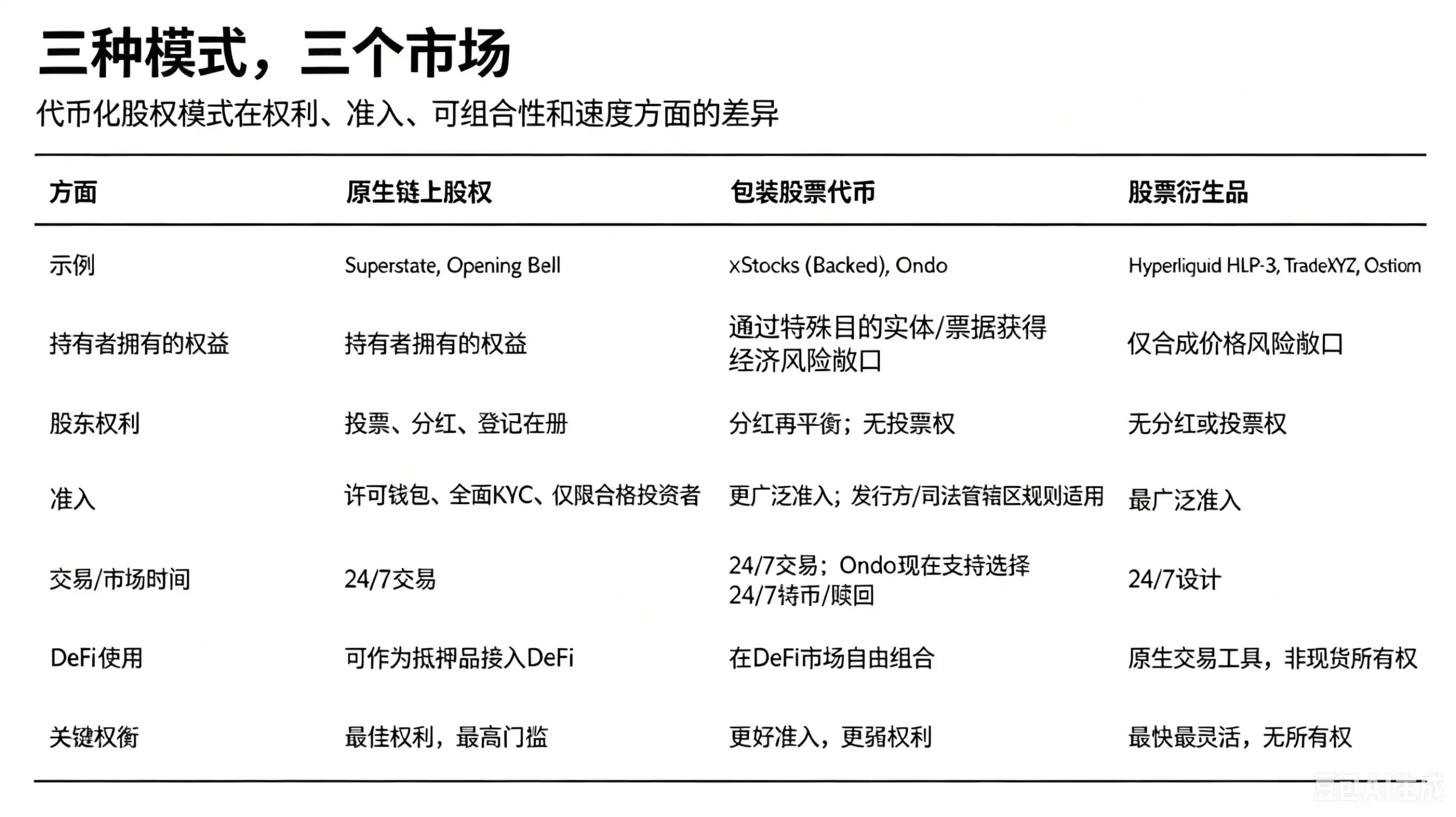
The first is native equity registered on-chain by the stock issuer itself. The second is a backed token representing real shares held 1:1 by an offshore entity. The third is a perpetual futures contract with no underlying stock support whatsoever. The ownership, voting rights, and price appreciation rights enjoyed by holders of these three types of products are vastly different.

Currently, NVIDIA has all three types of token products. The first two types combined have over 650,000 real shares as underlying backing. Yet the trading volume of the perpetual contracts, which are completely unbacked by stock, is 4 to 5 times that of the other two spot token types.

Last week, Vaidik outlined some industry background: since 1973, most stocks (whether tokenized or not) have operated under the same custodial structure. He also explained a core fact—most people who nominally 'hold stocks' do not actually own the corresponding shares. For details, see "Who Really Holds Your US Stocks? 83% of the Market's Stocks Are Nominally Held by This Institution".

In this article, I will deconstruct the ownership structures of different on-chain stock tokens and analyze the underlying logic of why the market is still willing to trade these tokens, even when investors are completely detached from real equity.

What Are Tokenized Stocks

Tokenized stocks are a digital representation of corporate shares on the blockchain. These tokens are programmable, can be freely transferred between wallets, traded 24/7, and integrated into various DeFi protocols. The economic attributes of stocks—such as share price, dividends, and corporate payouts—are embedded within the token's mechanisms.

The market size for tokenized stocks is no longer what it used to be: over the past year, the total market capitalization of the sector has surged nearly fivefold, from $327 million to $1.5 billion.

One of the most noteworthy aspects of this tokenization wave is the participation of traditional giants in experimentation. DTCC, the clearing, settlement, and custodian institution for the vast majority of US and global securities trading, announced last month that it will launch a tokenized securities pilot project in October 2026. The New York Stock Exchange also revealed earlier this year that it is building a 24/7 tokenized stock trading platform. These established institutions, with decades of experience in securities infrastructure, are reevaluating the existing trading system.

Currently, various stock tokenization solutions have emerged. Different on-chain products make trade-offs in terms of ownership, redemption mechanisms, DeFi composability, and price appreciation rights. Let's break them down one by one.

Trade-offs in Rights for Tokenized Products

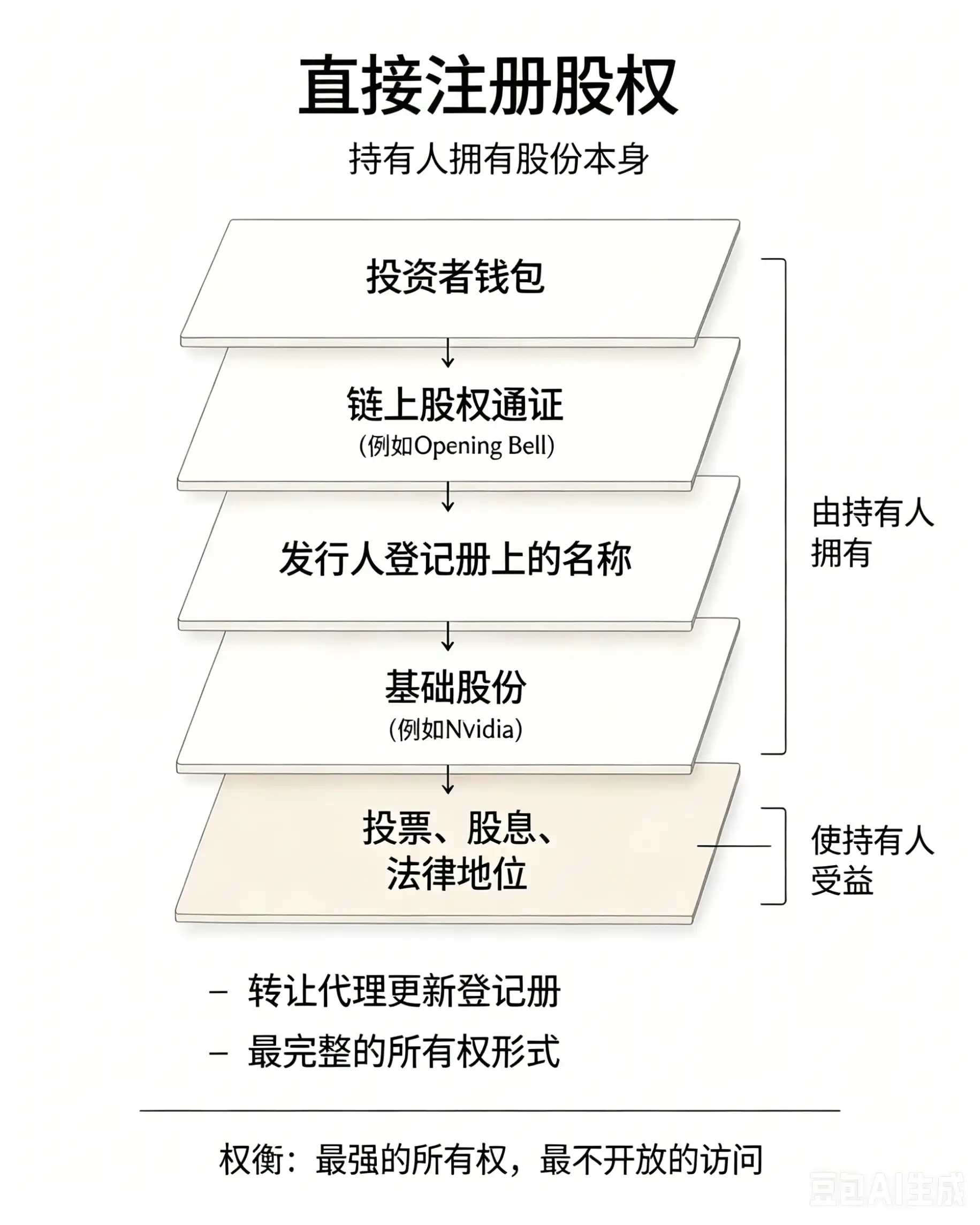
Model 1: Complete Real Equity, Holders Enjoy Full Ownership

The SEC-registered transfer agent Superstate registers equity directly on the Solana public blockchain. The holder's name is recorded in the company's official shareholder register, granting full voting rights, dividend eligibility, and legal shareholder status.

In May 2026, Galaxy adopted this model to complete equity tokenization and achieved on-chain proxy voting through Broadridge. As early as December 2025, Superstate's compliant equity tokens were listed on Kamino, becoming the first registered equity usable as collateral in DeFi protocols.
Model 2: Surrendering Full Ownership for DeFi Composability

Backed's xStocks issues tracking certificates through a Jersey special purpose vehicle (SPV), covering over 160 stocks, with underlying shares matched 1:1. Ondo issues total return notes through a British Virgin Islands SPV, supporting over 200 types of tokenized stocks, with the total value locked surpassing $1 billion in just 8 months after launch. Both products allow investors to benefit from stock price appreciation and dividends, but dividends are not paid in cash; they are automatically added to your token balance.

The biggest advantage of this model is its high composability: xStocks can be used as collateral for lending on Kamino and Morpho. Less than 24 hours before this article's publication, Ondo opened round-the-clock minting and redemption channels for its mainstream tokenized stocks, enabling a 24/7 primary market.
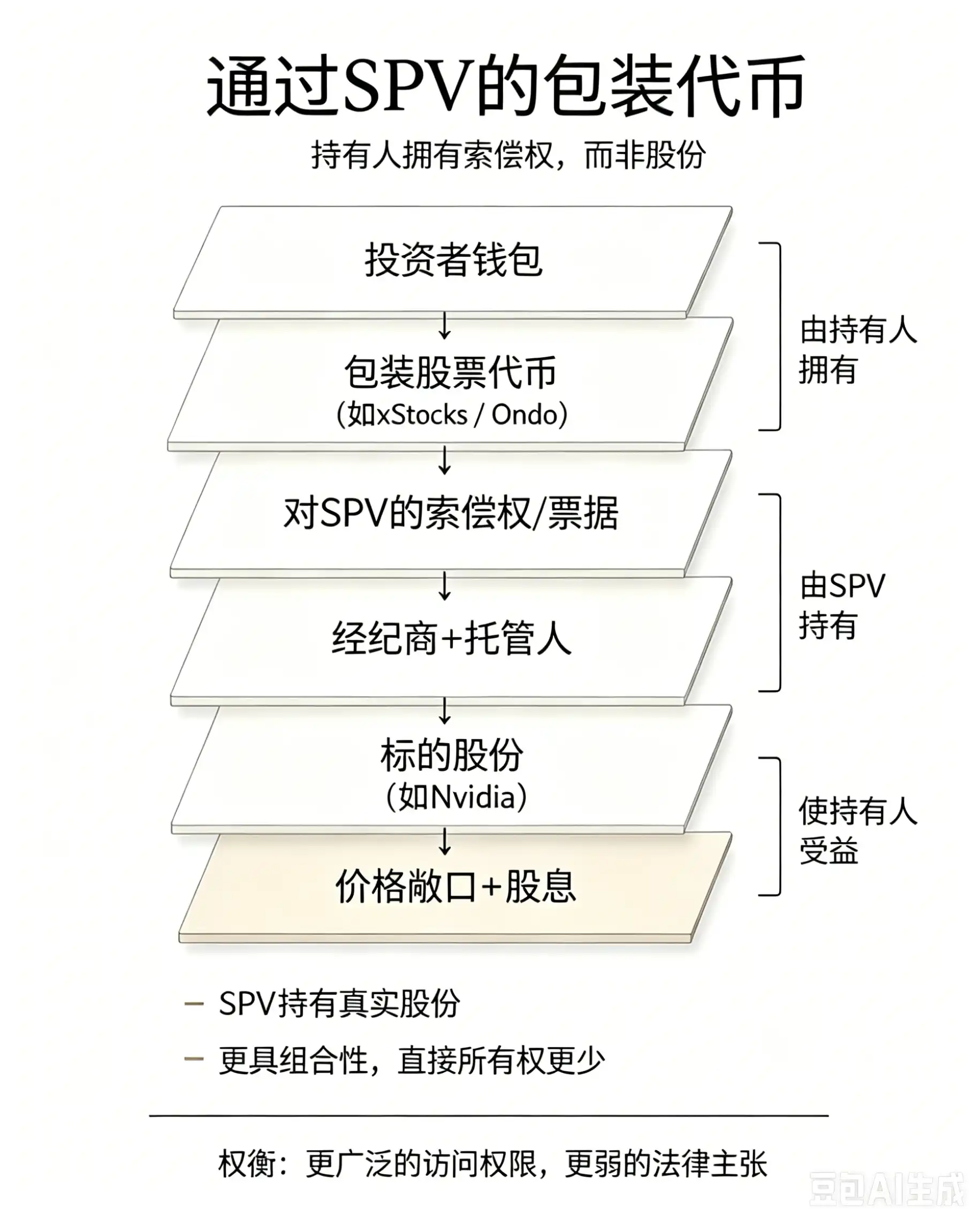
But the risks are equally prominent: you only hold a claim against the SPV, not direct ownership of the underlying shares. The PreStocks crash serves as a cautionary tale: in May 2026, the transfer of its underlying shares was deemed invalid. With only $23 million in real stock backing tokens valued at $1.3 trillion, the product ultimately collapsed. Although Backed and Ondo mitigate risks through segregated custody and proof-of-reserves, the risk is not eliminated; it's merely transferred from the corporate entity to the SPV wrapper layer.

Model 3: Completely Abandoning Equity Ownership, a Pure Price Speculation Tool

Hyperliquid's HIP-3 framework allows anyone to build perpetual contract markets, requiring only a price oracle and a liquidity pool to operate. The leading project, TradeXYZ, accounts for over 90% of the open interest within the HIP-3 framework, offering perpetuals for NVIDIA, Tesla, Google, Amazon, and the Nasdaq 100 index. Ostium, deployed on Arbitrum, has also launched similar products.

The platform charges a funding rate hourly to balance long and short positions, thereby anchoring the perpetual contract price to the stock's spot price.
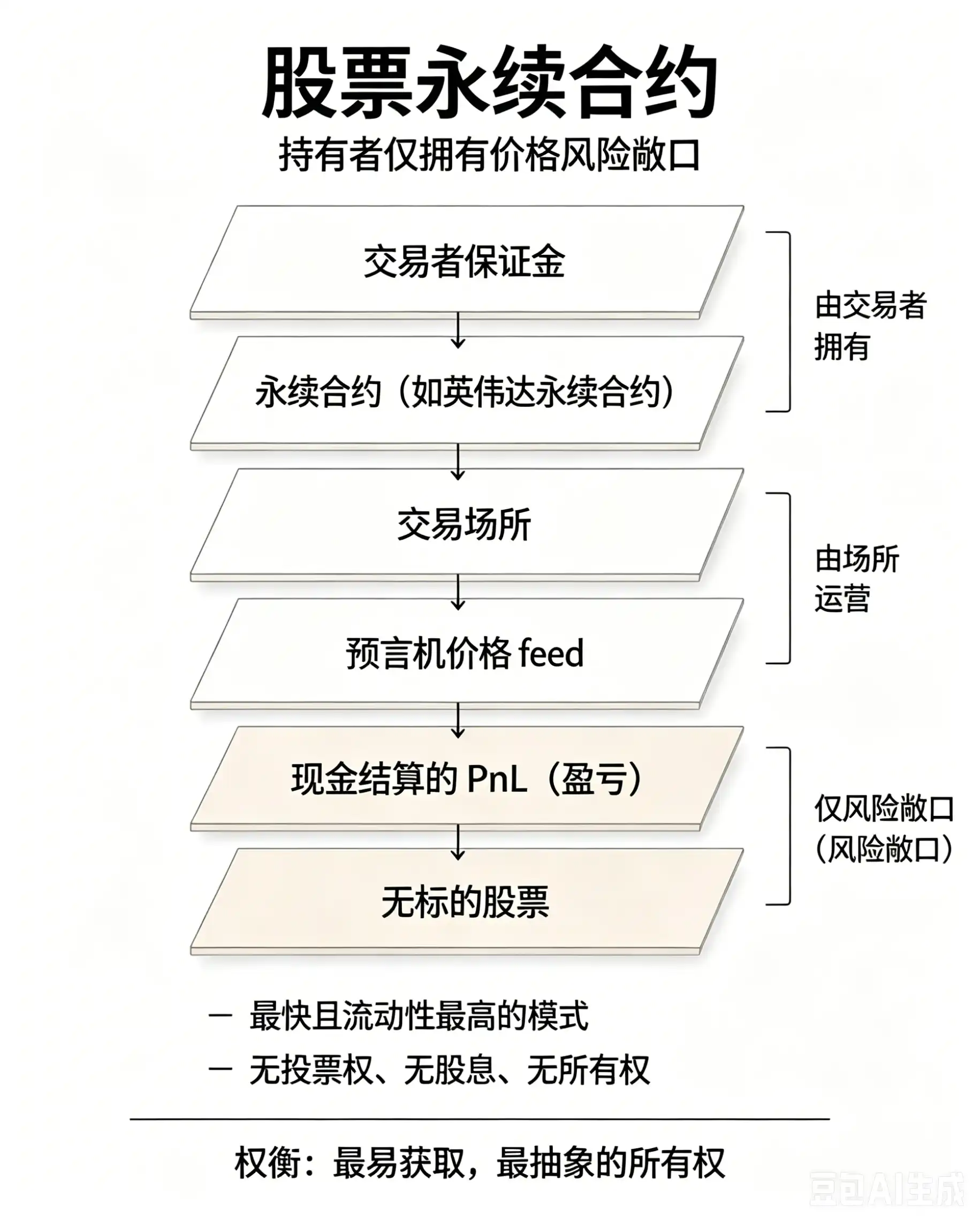
The trading volume of perpetual contracts far exceeds that of spot tokens for a practical reason: building a spot token market requires a complete supporting system including SPVs, brokerages, custodians, and proof-of-reserves. Launching a perpetual contract only requires connecting to a price data source. TradeXYZ even launched a SpaceX perpetual contract *before* the company filed its S-1 IPO prospectus, with open interest directly reaching $50 million. Spot tokens relying on SPVs simply cannot achieve this speed, as physical institutions cannot quickly and sufficiently purchase the corresponding underlying shares.
The Core Value of Tokens: They Don't Need to Be Tied to Real Shares

The vast majority of retail investors never exercise their voting rights. Research data from the Harvard Law School Forum shows that, on average, only about 12% of retail accounts in a company participate in shareholder meeting votes. For global traders looking to gain exposure to blue-chip stocks like NVIDIA, Google, SpaceX, and Tesla, giving up a voting right they will never use is largely inconsequential.

Tokens themselves possess independent asset value; they do not need to be completely equivalent to native shares. The three types of tokenized products cater to three types of investment needs: institutional long-term capital seeking full shareholder rights, on-chain users valuing DeFi collateral and liquidity, and short-term speculators preferring high leverage and round-the-clock trading. Tokenization is not a replacement for traditional stocks; it is a new type of financial instrument that adapts to different needs across various layers.


Tiền kỹ thuật số thịnh hành

Câu hỏi Liên quan

QWhat are the three main types of tokenized stocks discussed in the article, and what is the key difference between them?

AThe article discusses three types: 1) Native Equity on-chain (full ownership/voting rights), 2) Backed Tokens via SPVs (price exposure & yield, no direct ownership), and 3) Perpetual Futures (no underlying stock, pure price speculation). The key difference lies in the level of ownership, voting rights, and price exposure they provide to the holder.

QAccording to the article, why is the trading volume for perpetual futures contracts for stocks like NVIDIA much higher than for tokenized stock 'spot' tokens?

APerpetual futures have much higher volume because they are easier and faster to launch. They only require a price oracle and liquidity pool, while spot tokens need a full infrastructure of SPVs, brokers, custodians, and proof-of-reserves. Futures can also be launched for companies like SpaceX even before an IPO, which spot tokens cannot.

QWhat is the primary advantage and the associated risk for tokenized stocks using the SPV (Special Purpose Vehicle) model, as exemplified by Backed and Ondo?

AThe primary advantage is high DeFi composability (e.g., using the tokens as collateral in lending protocols). The key risk is that investors do not own the underlying stock; they hold a claim against the SPV. This introduces counterparty and structural risk, as seen in the PreStocks collapse where tokens were massively over-leveraged against the actual stock holdings.

QWhat core argument does the article make about the value of a token, in relation to the traditional concept of stock ownership?

AThe article argues that a token's core value is that it does not need to be fully equivalent to a native stock share. It can function as an independent asset class that serves different investor needs (full ownership, DeFi utility, or pure price speculation), making tokenization a new type of layered financial tool rather than a simple replacement for traditional stocks.

QWhich traditional financial infrastructure giants are mentioned as exploring tokenized securities, and what are their respective initiatives?

ATwo giants are mentioned: The Depository Trust & Clearing Corporation (DTCC) plans to launch a tokenized securities pilot in October 2026. The New York Stock Exchange (NYSE) is building an around-the-clock trading platform for tokenized stocks.

Nội dung Liên quan

Các Nhà Phân Tích Nhìn Thấy XRP Và BNB Đuổi Theo Vị Thế Vốn Hóa Thị Trường 100 Tỷ USD Vào Cuối Năm 2026

**TL;DR** Các nhà phân tích dự đoán XRP và BNB có thể gia nhập hoặc tái gia nhập câu lạc bộ vốn hóa thị trường 100 tỷ USD vào nửa cuối năm 2026. Dự báo này dựa trên phân tích biểu đồ lịch sử và cơ bản dự án, không phải là kết quả tài chính được đảm bảo. **Tóm tắt** Một báo cáo từ Finbold chỉ ra XRP và BNB là những ứng cử viên chính để đạt mốc vốn hóa 100 tỷ USD vào cuối năm 2026. Thông tin này đóng vai trò như một thước đo tâm lý thị trường, cho thấy nơi mà sự thèm ăn rủi ro có thể đang dịch chuyển. Tuy nhiên, cần nhấn mạnh đây là suy đoán từ các nhà phân tích, không phải sự đảm bảo. Thị trường tiền điện tử thường biến một điểm dữ liệu nhỏ thành một câu chuyện lan rộng. Bài viết lưu ý rằng câu chuyện này không chỉ ảnh hưởng đến riêng XRP hay BNB. Nó có thể tác động lan tỏa đến các giao dịch liên quan, tâm lý altcoin và định vị của các tổ chức, đặc biệt trong bối cảnh thanh khoản mỏng. Điều quan trọng tiếp theo là theo dõi liệu các luồng dữ liệu tiếp theo (như số liệu on-chain, lãi suất mở) có củng cố xu hướng này hay không, hay nó sẽ chỉ là một tín hiệu ngắn hạn. Cần đọc thông tin này cùng với các điều kiện thị trường rộng hơn về thanh khoản, vĩ mô và phái sinh.

bitcoinist1 giờ trước

Các Nhà Phân Tích Nhìn Thấy XRP Và BNB Đuổi Theo Vị Thế Vốn Hóa Thị Trường 100 Tỷ USD Vào Cuối Năm 2026

bitcoinist1 giờ trước

Vốn Hóa Thị Trường Altcoin Quay Về Gần 900 Ngày Khi Nhà Phân Tích Chỉ Ra Vùng Hỗ Trợ Chính

Nhà phân tích Michaël van de Poppe chỉ ra rằng vốn hóa thị trường altcoin đã mất gần như toàn bộ mức tăng trưởng tích lũy trong gần **900 ngày**, quay trở lại vùng giá đột phá từ cuối năm 2023. Điều này cho thấy một đợt điều chỉnh mạnh, khiến tâm lý thị trường trở nên tiêu cực vì nhiều altcoin về cơ bản không có lãi sau một thời gian dài. Mặt tích cực là đợt điều chỉnh sâu này đưa thị trường về một vùng hỗ trợ quan trọng. Vùng giá đột phá trước đây thường thu hút sự chú ý của những người mua dài hạn và có thể trở thành khu vực tích lũy, tạo nền tảng cho đợt tăng tiếp theo nếu được giữ vững. Tuy nhiên, đây cũng là một điểm quyết định: nếu vùng hỗ trợ này thất bại, triển vọng sẽ ảm đạm hơn. Altcoin rất nhạy cảm với thanh khoản và mức độ ưa thích rủi ro. Do đó, các nhà giao dịch cần theo dõi tín hiệu phục hồi bền vững của vốn hóa thị trường altcoin từ vùng này, đi kèm với khối lượng giao dịch được cải thiện và sự tham gia rộng rãi trên nhiều lĩnh vực (L1, DeFi, cơ sở hạ tầng, token AI...), chứ không chỉ các đợt bơm giá riêng lẻ. Tóm lại, thị trường altcoin đang ở thời điểm cần chứng minh bản thân: giữ được hỗ trợ sẽ mở ra cơ hội tích lũy, ngược lại sẽ làm trầm trọng thêm câu chuyện "gần 900 ngày không có tiến triển".

bitcoinist1 giờ trước

Vốn Hóa Thị Trường Altcoin Quay Về Gần 900 Ngày Khi Nhà Phân Tích Chỉ Ra Vùng Hỗ Trợ Chính

bitcoinist1 giờ trước

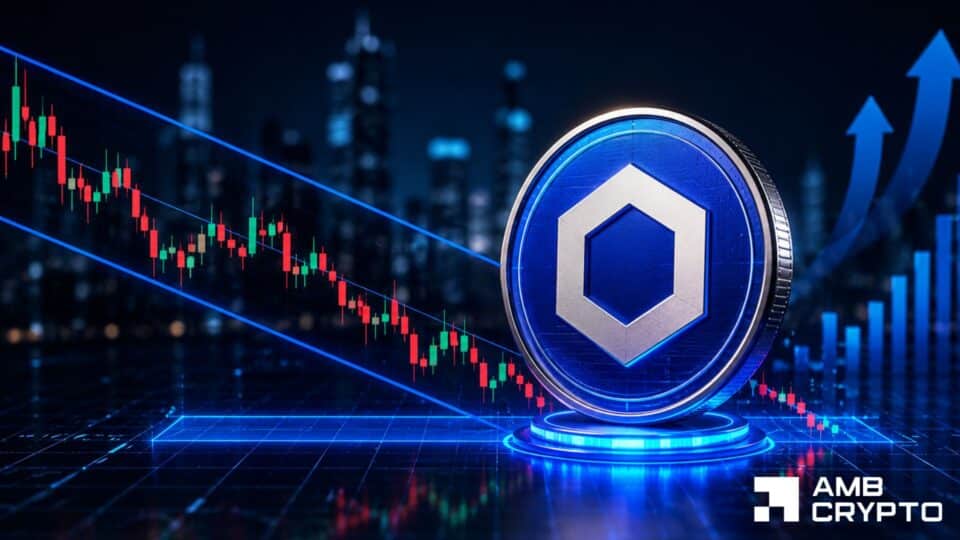
Chainlink tăng 8,000 chủ sở hữu mới – LINK có thể phá vỡ xu hướng giảm của nó không?

Chainlink (LINK) đã chứng kiến sự gia tăng mạnh về số lượng ví nắm giữ, với hơn 8.000 ví mới trong 5 ngày, nâng tổng số lên 892.8K ví. Điều này cho thấy sự áp dụng mạng lưới tiếp tục mở rộng bất chấp giá cả còn yếu, có thể nhờ vào sự quan tâm xung quanh token hóa tài sản thực và các sáng kiến blockchain thể chế. Hoạt động trên sàn giao dịch cho thấy dòng tiền ròng rút ra chiếm ưu thế, phản ánh việc giảm nguồn cung bán ngay lập tức khi nhà đầu tư chuyển token vào ví lưu trữ dài hạn, một dấu hiệu của việc tích lũy. Về mặt kỹ thuật, LINK vẫn giao dịch trong một kênh giảm giá, nhiều lần phòng thủ thành công vùng hỗ trợ quan trọng quanh mức 7.00 USD nhưng chưa đủ sức thử thách vùng kháng cự phía trên. Chỉ số RSI cho thấy áp lực bán đã giảm nhưng sức mua vẫn còn yếu. Đáng chú ý, tỷ lệ tài trợ (Funding Rate) vẫn duy trì ở vùng tích cực, cho thấy nhà giao dịch phái sinh vẫn giữ niềm tin vào triển vọng tăng giá trong tương lai. Tóm lại, mặc dù xu hướng giảm giá vẫn chiếm ưu thế, Chainlink đang xây dựng nền tảng vững chắc với sự gia tăng người nắm giữ, dấu hiệu tích lũy và tâm lý phái sinh lạc quan. Sự phục hồi mạnh mẽ hơn có thể xảy ra nếu nhu cầu mua spot tăng cường, giúp LINK thoát khỏi kênh giảm giá hiện tại.

ambcrypto1 giờ trước

Chainlink tăng 8,000 chủ sở hữu mới – LINK có thể phá vỡ xu hướng giảm của nó không?

ambcrypto1 giờ trước

Giao dịch

Giao ngay

Bài viết Nổi bật

Làm thế nào để Mua ONE

Chào mừng bạn đến với HTX.com! Chúng tôi đã làm cho mua Harmony (ONE) trở nên đơn giản và thuận tiện. Làm theo hướng dẫn từng bước của chúng tôi để bắt đầu hành trình tiền kỹ thuật số của bạn.Bước 1: Tạo Tài khoản HTX của BạnSử dụng email hoặc số điện thoại của bạn để đăng ký tài khoản miễn phí trên HTX. Trải nghiệm hành trình đăng ký không rắc rối và mở khóa tất cả tính năng. Nhận Tài khoản của tôiBước 2: Truy cập Mua Crypto và Chọn Phương thức Thanh toán của BạnThẻ Tín dụng/Ghi nợ: Sử dụng Visa hoặc Mastercard của bạn để mua Harmony (ONE) ngay lập tức.Số dư: Sử dụng tiền từ số dư tài khoản HTX của bạn để giao dịch liền mạch.Bên thứ ba: Chúng tôi đã thêm những phương thức thanh toán phổ biến như Google Pay và Apple Pay để nâng cao sự tiện lợi.P2P: Giao dịch trực tiếp với người dùng khác trên HTX.Thị trường mua bán phi tập trung (OTC): Chúng tôi cung cấp những dịch vụ được thiết kế riêng và tỷ giá hối đoái cạnh tranh cho nhà giao dịch.Bước 3: Lưu trữ Harmony (ONE) của BạnSau khi mua Harmony (ONE), lưu trữ trong tài khoản HTX của bạn. Ngoài ra, bạn có thể gửi đi nơi khác qua chuyển khoản blockchain hoặc sử dụng để giao dịch những tiền kỹ thuật số khác.Bước 4: Giao dịch Harmony (ONE)Giao dịch Harmony (ONE) dễ dàng trên thị trường giao ngay của HTX. Chỉ cần truy cập vào tài khoản của bạn, chọn cặp giao dịch, thực hiện giao dịch và theo dõi trong thời gian thực. Chúng tôi cung cấp trải nghiệm thân thiện với người dùng cho cả người mới bắt đầu và người giao dịch dày dạn kinh nghiệm.

Tổng lượt xem 578Xuất bản vào 2024.12.12Cập nhật vào 2026.06.02

Làm thế nào để Mua ONE

Thảo luận

Chào mừng đến với Cộng đồng HTX. Tại đây, bạn có thể được thông báo về những phát triển nền tảng mới nhất và có quyền truy cập vào thông tin chuyên sâu về thị trường. Ý kiến ​​của người dùng về giá của ONE (ONE) được trình bày dưới đây.

活动图片