0.7nm Process Chip Emerges, Moore's Law Lives On

marsbitXuất bản vào 2026-06-26Cập nhật gần nhất vào 2026-06-26

Tóm tắt

IBM has unveiled the world's first sub-1-nanometer (0.7nm) chip technology, integrating nearly 100 billion transistors into an area the size of a fingernail. This breakthrough doubles the transistor density of current 2nm chips and promises a 50% performance gain or a 70% improvement in power efficiency. The achievement is powered by IBM's "NanoStack" architecture, a pioneering 3D design featuring vertically stacked nanosheet transistors. This evolution from FinFET and Gate-All-Around (GAA) technologies offers superior electrostatic control. IBM has demonstrated the technology's viability with functional CMOS inverters and a 40% area reduction in SRAM, crucial for AI chip data bandwidth. Addressing the critical power consumption challenges in AI computing, this advancement extends the roadmap for chip miniaturization. While IBM does not manufacture chips itself, it licenses its process technology to partners. The company projects that NanoStack-based chips could enter production within the next five years, potentially sustaining Moore's Law for another decade.

Is Moore's Law saved?

IBM unveiled the world's first 0.7 nanometer chip process node, integrating nearly 100 billion transistors on a chip the size of a fingernail, achieving a density double that of 2nm chips.

Previously, TSMC's most advanced process was 2nm, which had been difficult to advance beyond for years.

NVIDIA CEO Jensen Huang had repeatedly declared Moore's Law dead, but now there is finally a turning point.
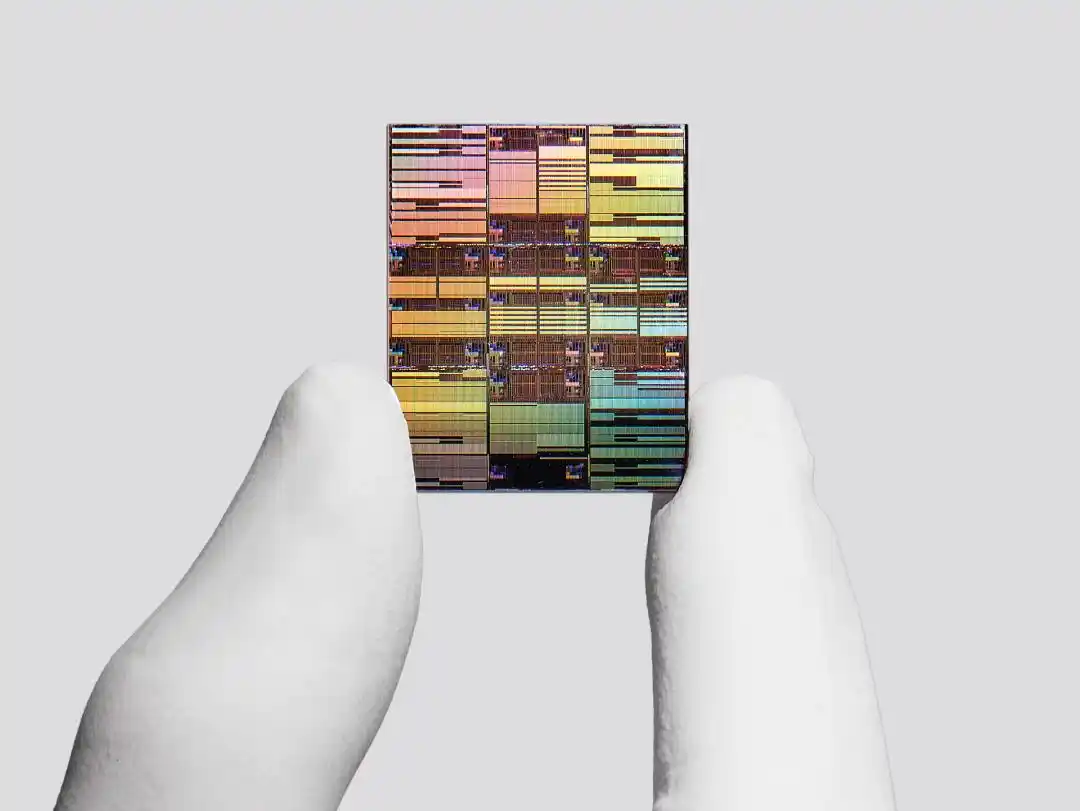
0.7 nanometers, or 7 angstroms, marks the first time human-made transistors have broken through the 1 nanometer threshold, approaching the scale of individual atoms (0.1-0.5 nanometers).

Compared to the 2nm process, it can deliver either a 50% performance improvement or a 70% increase in power efficiency; one or the other.

NanoStack Architecture Arrives

The core of this breakthrough is IBM's "NanoStack" architecture, the industry's first 3D vertically stacked transistor design based on nanosheets.

To understand NanoStack, one must first review the path chip architecture has taken in recent years.

In the 7nm and 10nm era, the mainstream solution was FinFET (Fin Field-Effect Transistor) with the gate wrapping around the channel on three sides to control current. Below 5nm, FinFET's leakage issues became increasingly severe and unsustainable.

In 2017, IBM introduced the Gate-All-Around (GAA) nanosheet technology, where the gate completely surrounds the horizontally stacked nanosheet channel on all four sides, significantly enhancing electrostatic control. This became the technical foundation for its 2nm chip and was subsequently adopted by mainstream manufacturers like TSMC and Samsung.

At the end of 2021, IBM and Samsung jointly announced the VTFET (Vertical-Transport Field-Effect Transistor), which changed the current flow direction from horizontal to vertical. Simulation data showed it could either double performance or reduce power consumption by 85% compared to a similarly sized FinFET solution.

This NanoStack is a further extension of the above roadmap.

Its method is:

Take two wafers with nanosheet transistors, invert one and place it on top of the other, bonding them via an ultrathin dielectric bonding layer to form a vertically interconnected 3D structure. Each layer can use different material combinations, allowing n-type and p-type transistors to be independently optimized without interference.
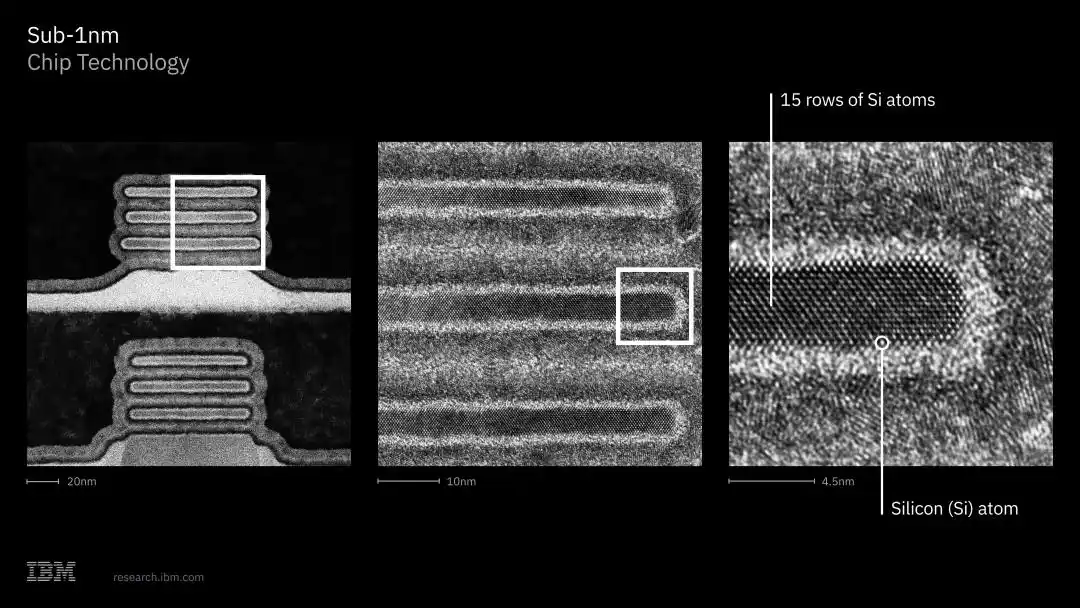
IBM has already completed validation in the lab, demonstrating CMOS integration, dual-channel engineering capabilities, and a fully functional CMOS inverter with switching performance meeting expectations, confirming that this technology can be manufactured and support real computation.

At the VLSI 2026 symposium, IBM further showcased NanoStack's performance on SRAM: a 40% area reduction. SRAM is a core component of on-chip cache, which has long been extremely difficult to scale down. This progress is particularly crucial for the high-bandwidth data pathways required by AI chips.

"Nobody Wants to Pay the Electricity Bill"

Huiming Bu, vice president of chip research at IBM Research, stated: Everyone wants higher performance, but nobody wants to pay the electricity bill.

This is the reality facing the current AI computing power race. The energy consumption of AI chips has evolved from a technical issue to an infrastructure problem, with some data center projects experiencing construction delays due to insufficient power supply.

The 70% power efficiency improvement offered by the 0.7nm technology directly addresses this demand.

However, IBM itself no longer manufactures or sells chips. It develops manufacturing process technologies at its research center in Albany, New York, and then licenses them to chip manufacturers.

Past licensees have included Samsung and the newly formed Japanese semiconductor company Rapidus. Huiming Bu declined to disclose potential customers for the 0.7nm technology.

Regarding competing solutions, the Belgian research institute Imec is advancing another 3D architecture scheme, building transistor structures through layer-by-layer stacking, which has attracted attention from several chip manufacturers.

For mass production, IBM's given timeline is: NanoStack technology could achieve mass production within the next five years at the earliest.

IBM's semiconductor roadmap predicts that with the NanoStack architecture, chip scaling can continue for at least another decade.

References:

[1]https://newsroom.ibm.com/2026-06-25-ibm-debuts-worlds-first-sub-1-nanometer-chip-technology

This article is from the WeChat public account "QbitAI", author: Meng Chen

Tiền kỹ thuật số thịnh hành

Câu hỏi Liên quan

QWhat is the name of the new architecture that enabled IBM's 0.7nm chip breakthrough?

AThe new architecture is called 'NanoStack'. It is the industry's first three-dimensional, vertically stacked transistor design based on nanosheets.

QAccording to the article, what is a key challenge that the improved energy efficiency of the 0.7nm process aims to solve?

AIt aims to address the growing AI compute power consumption, which is evolving from a technical issue into an infrastructure problem. This is because some data center projects face construction delays due to insufficient power supply, and users want higher performance without significantly higher electricity bills.

QHow does IBM's 0.7nm chip compare to a 2nm chip in terms of performance or energy efficiency?

ACompared to a 2nm process, the 0.7nm technology offers a choice: it can provide either a 50% performance improvement or a 70% increase in energy efficiency.

QWhat significant milestone does the 0.7nm (7 Angstrom) transistor represent in semiconductor manufacturing?

AIt represents the first time a human-made transistor has broken the 1-nanometer threshold, bringing its scale close to that of individual atoms (0.1-0.5 nanometers).

QWhat is IBM's estimated timeline for the NanoStack technology to reach mass production?

AIBM's timeline suggests that the NanoStack technology could enter mass production as early as within the next five years.

Nội dung Liên quan

Arthur Hayes Đưa Cuộc Tranh Luận Về Tiện Ích Của Cardano Và XRP Trở Lại Tâm Điểm

Arthur Hayes - đồng sáng lập BitMEX, đã đặt lại câu hỏi về tính hữu dụng thực tế của Cardano và XRP, thách thức các cộng đồng này chứng minh giá trị thông qua nhu cầu giao dịch cụ thể thay vì chỉ dựa vào lòng trung thành và hiệu ứng tài sản. Bài phê bình nhấn mạnh một xu hướng thị trường crypto ngày càng khắt khe: các mạng lưới giờ đây cần có bằng chứng sử dụng đo lường được - như hoạt động người dùng, phí, thanh khoản hay khối lượng thanh toán - chứ không chỉ là niềm tin cộng đồng. XRP thường được biện minh bởi tiện ích trong thanh toán xuyên biên giới và giải pháp thanh khoản của Ripple, trong khi Cardano được cộng đồng chỉ ra các điểm mạnh về staking, quản trị phi tập trung và phát triển có nghiên cứu. Tuy nhiên, cả hai đều đối mặt với yêu cầu chung: chuyển đổi lòng trung thành thành tiện ích hữu hình và tăng trưởng có thể định lượng. Dù Cardano và XRP đều có cơ sở hạ tầng và lịch sử lâu dài, lập luận của Hayes chạm vào vấn đề cốt lõi: khoảng cách giữa tầm nhìn và bằng chứng thực tế. Thách thức cho hai hệ sinh thái này là phải cho thấy số liệu và mức độ sử dụng rõ ràng, vượt ra ngoài nhóm người ủng hộ hiện tại, để đáp ứng các tiêu chuẩn ngày càng cao của thị trường.

bitcoinist33 phút trước

Arthur Hayes Đưa Cuộc Tranh Luận Về Tiện Ích Của Cardano Và XRP Trở Lại Tâm Điểm

bitcoinist33 phút trước

Giá Bitcoin đã thực sự chạm đáy chưa?

Giá Bitcoin (BTC) đã giảm 3,4% trong 24 giờ qua, dẫn đến thanh lý 104,38 triệu USD, chủ yếu là các vị thế mua (91,66 triệu USD) khi giá xuống dưới 60.000 USD. Phân tích kỹ thuật từ CryptoRover chỉ ra mô hình tam giác giảm dần lặp lại từ chu kỳ 2021-2022, dự báo đáy thị trường có thể cần thời gian hình thành trước khi bứt phá, với khả năng chuyển sang xu hướng tăng vào Q4/2026. Tuy nhiên, sự tích lũy từ cá voi hiện chưa đủ mạnh để xác nhận sự đảo chiều. Chỉ số MVRV của nhà nắm giữ dài hạn đã giảm xuống 1,24, mức thấp nhất trong ba năm, cho thấy thị trường đang tiến gần các mức đáy lịch sử. Cần giảm sâu hơn vào vùng "Rất thấp" để xác nhận đáy. Mức giá trung bình mua vào của nhóm này là 48,4k USD; việc phá vỡ ngưỡng này có thể báo hiệu sự đầu hàng. Phân tích về chu kỳ 4 năm từ Benjamin Cohen cho thấy đường trung bình động 200 tuần đã bị phá vỡ vào tháng 6/2026, tương đồng với tháng 6/2022. Đồng thời, tỷ lệ Long/Short cao hiện tại cho thấy nhiều nhà giao dịch đang mở vị thế mua, có thể dẫn đến các đợt thanh lý tiếp theo và đẩy giá xuống thêm. **Tóm lại:** Bitcoin đang tiến gần các điều kiện hình thành đáy theo chu kỳ lịch sử nhưng chưa hoàn toàn đạt tới. Khả năng giá tiếp tục giảm trong vài tháng tới là có thể xảy ra trước khi thị trường tìm được đáy thực sự.

ambcrypto37 phút trước

Giá Bitcoin đã thực sự chạm đáy chưa?

ambcrypto37 phút trước

Giao dịch

Giao ngay

Bài viết Nổi bật

Làm thế nào để Mua CHIP

Chào mừng bạn đến với HTX.com! Chúng tôi đã làm cho mua USD.AI (CHIP) trở nên đơn giản và thuận tiện. Làm theo hướng dẫn từng bước của chúng tôi để bắt đầu hành trình tiền kỹ thuật số của bạn.Bước 1: Tạo Tài khoản HTX của BạnSử dụng email hoặc số điện thoại của bạn để đăng ký tài khoản miễn phí trên HTX. Trải nghiệm hành trình đăng ký không rắc rối và mở khóa tất cả tính năng. Nhận Tài khoản của tôiBước 2: Truy cập Mua Crypto và Chọn Phương thức Thanh toán của BạnThẻ Tín dụng/Ghi nợ: Sử dụng Visa hoặc Mastercard của bạn để mua USD.AI (CHIP) ngay lập tức.Số dư: Sử dụng tiền từ số dư tài khoản HTX của bạn để giao dịch liền mạch.Bên thứ ba: Chúng tôi đã thêm những phương thức thanh toán phổ biến như Google Pay và Apple Pay để nâng cao sự tiện lợi.P2P: Giao dịch trực tiếp với người dùng khác trên HTX.Thị trường mua bán phi tập trung (OTC): Chúng tôi cung cấp những dịch vụ được thiết kế riêng và tỷ giá hối đoái cạnh tranh cho nhà giao dịch.Bước 3: Lưu trữ USD.AI (CHIP) của BạnSau khi mua USD.AI (CHIP), lưu trữ trong tài khoản HTX của bạn. Ngoài ra, bạn có thể gửi đi nơi khác qua chuyển khoản blockchain hoặc sử dụng để giao dịch những tiền kỹ thuật số khác.Bước 4: Giao dịch USD.AI (CHIP)Giao dịch USD.AI (CHIP) dễ dàng trên thị trường giao ngay của HTX. Chỉ cần truy cập vào tài khoản của bạn, chọn cặp giao dịch, thực hiện giao dịch và theo dõi trong thời gian thực. Chúng tôi cung cấp trải nghiệm thân thiện với người dùng cho cả người mới bắt đầu và người giao dịch dày dạn kinh nghiệm.

Tổng lượt xem 472Xuất bản vào 2026.04.21Cập nhật vào 2026.06.02

Làm thế nào để Mua CHIP

Thảo luận

Chào mừng đến với Cộng đồng HTX. Tại đây, bạn có thể được thông báo về những phát triển nền tảng mới nhất và có quyền truy cập vào thông tin chuyên sâu về thị trường. Ý kiến ​​của người dùng về giá của CHIP (CHIP) được trình bày dưới đây.

活动图片