Chips, Open-Source Models, and $50 Trillion: Joe Tsai Reassesses Alibaba Once Again

marsbitXuất bản vào 2026-06-22Cập nhật gần nhất vào 2026-06-22

Tóm tắt

Alibaba Executive Chairman Joe Tsai recently outlined the company's comprehensive AI strategy in a public discussion. He believes AI represents a massive opportunity, estimating its potential economic impact at up to $50 trillion, stemming from the automation of human intelligence and productivity. Tsai detailed Alibaba's four-layer investment approach across the AI stack: starting from the chip level, moving to cloud infrastructure (Alibaba Cloud), then the model layer with its open-source Qwen model, and finally applications within its vast digital ecosystem (e-commerce, logistics, etc.). The company avoids the energy layer due to China's efficient infrastructure. This broad strategy is designed to ensure Alibaba captures value regardless of where it ultimately concentrates in the AI value chain. He dismissed concerns about an AI investment bubble, pointing to the enormous $50 trillion opportunity. While acknowledging U.S. cloud giants' higher capital expenditure, he argued Chinese firms, including Alibaba (funded by its cash-generative e-commerce core), need to invest more in AI infrastructure. A key theme was technological sovereignty. Tsai positioned open-source models like Qwen as a solution for companies, especially in Europe, seeking independence from proprietary U.S. models and greater data privacy control. He contrasted this with the trend of U.S. giants keeping their models closed-source. Tsai highlighted Alibaba's collaborations with European manufacturers lik...

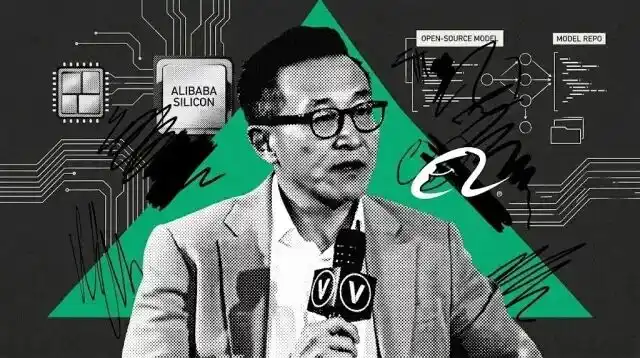
Alibaba Group Chairman Joe Tsai. Image processed via AI.

At this year's VivaTech conference, Alibaba Chairman Joe Tsai systematically outlined the company's long-term AI vision during a "fireside chat." This marks his second public reassessment of Alibaba following a summit at Yale University in late May.

"From a macro perspective, we are going all-in on AI. The logic is simple."

Tsai stated that global GDP exceeds $100 trillion, with at least half coming from human intelligence and productivity contributions. "This $50 trillion is the total addressable market for AI, far larger than any company's IT budget or the software market."

Everyone is talking about going all-in on AI, and Tsai is no exception. He summarized Alibaba's strategic approach as covering almost all layers except the energy layer, encompassing chips, cloud infrastructure, models, and applications.

"We are primarily investing in four layers, but we are not touching the bottommost energy layer because China's energy efficiency is high and costs are relatively low."

In Tsai's view, this near-full-stack strategy stems from future uncertainty, as no one can accurately predict where the ultimate value will settle—whether in chips, cloud infrastructure, or the model layer. "We choose to participate comprehensively, so no matter where the value ultimately lands, we are present."

Compared to Alibaba, U.S. cloud giants are even more aggressive, investing across the entire infrastructure stack, with a combined capital expenditure of $800 billion by 2027, which short-sellers have criticized as a "bubble." Tsai not only disagrees with the bubble theory but also emphasizes that Chinese companies need to increase their infrastructure investments.

"The investment numbers are indeed staggering," Tsai said. "But we need to go back to that $50 trillion total market. That's the reason for optimism."

Discussing open source, Tsai first mentioned the recent suspension of Anthropic's most advanced model by the Trump administration, bluntly stating this is the consequence of "putting all your eggs in one basket." In his view, models from Google, OpenAI, and Anthropic are now all closed-source, while the open-source path is currently being pursued by Chinese companies.

"You truly cannot base trust on the assumption that a third-party government will never act against your interests."

Below is an edited version of Joe Tsai's interview:

01. The $50 Trillion "Market"

Q: Alibaba has changed significantly over the years, with achievements like its open-source large model. But many still see you primarily as a B2B/B2C platform. Can you talk about the group's evolution?

Joe Tsai: When Alibaba started in 1999, it was indeed a B2B platform. The idea was simple: to bring small Chinese manufacturers and trading companies online, helping them wholesale products globally. Later, we entered the B2C space with Taobao, now China's largest consumer e-commerce platform.

Q: How many consumers does this serve?

Joe Tsai: 820 million Chinese consumers. Moreover, this platform helps European companies and brands sell approximately €30 billion worth of goods to Chinese consumers annually. But the story doesn't end there. We are heavily investing in AI and cloud.

We started investing in cloud technology 17 years ago, but out of necessity. Our e-commerce business was generating massive amounts of data daily. If we kept relying on others' database and storage technologies, eventually all our profits would go to the tech vendors. So we decided to build our own proprietary technology to manage this data, and that's how our cloud business began.

From a macro perspective, we are now going all-in on AI, and the logic is simple.

If you ask me how big the AI market is, I'd say it's far larger than any company's IT budget or the software market. Because AI is essentially about producing human intelligence and productivity. Global GDP today is over $100 trillion, with at least half ($50 trillion) related to human productivity and intelligence. That's the total AI market. So we must go all-in.

Q: Do you really believe AI can boost productivity? Many have invested heavily without seeing results yet.

Joe Tsai: Many CEOs will tell you that engineers are consuming a huge number of tokens, and costs are rising. But I'd say we are on the cusp of a real productivity explosion.

Take our company. Some engineers are super-users of AI. They not only use programming tools for their core work but also explore new uses. Give engineers a toy, and they'll find more ways to play with it, sometimes without realizing the company is paying for these usage costs. That's the current reality.

But I am deeply convinced—it's more like a belief, a conviction that artificially produced intelligence units can add value to human intelligence. It's close to a kind of faith. I don't want to try to convince you this will definitely happen, but we ourselves firmly believe it.

02. The Logic of Going All-In on AI

Q: Returning to Alibaba's layout, which AI layer do you invest the most in? Infrastructure, models, or cloud services?

Joe Tsai: We primarily invest in four layers, but we skip the bottommost energy layer because China's energy efficiency is high and costs are low.

We really started at the chip layer—that's the first layer. The second is the infrastructure layer, corresponding to our cloud business. The third is the model layer, like Qwen, which is now one of the world's hottest open-source models. The fourth is the application layer, where we have a complete digital life ecosystem—e-commerce, food delivery, local services, travel, maps, etc. These are all scenarios where AI capabilities can be directly embedded to serve users.

The advantage of this approach is that we are not betting on a single track.

Today, pure model companies have high valuations, making it seem like all the value is in the model layer. But looking five or ten years ahead, no one can say for sure whether the value will settle in chips, cloud infrastructure, models, or applications. We choose comprehensive participation so that, no matter where the value ultimately lands, we are there.

Q: Speaking of AI infrastructure, when you see such massive investments, do you think there's a bubble? Do we really need this much computing power? Some models are more efficient and don't require as many resources.

Joe Tsai: I don't think it's a bubble. The investment numbers are indeed staggering. Just looking at the U.S. hyperscale cloud providers, the combined capital expenditure of the top four or five companies next year exceeds $800 billion, potentially over a trillion the year after. Investments at this scale naturally raise concerns about overcapacity.

But we must return to that $50 trillion total market. That's the reason for optimism.

Moreover, in China, our investment in AI infrastructure and the supply chain is actually insufficient. Theoretically, all Chinese companies should increase their investments. Of course, we won't reach the investment level of the U.S. hyperscale players, but our investment intensity is already quite substantial.

Q: Why can't you reach U.S. levels?

Joe Tsai: Sometimes there are funding constraints, depending on how much free cash flow you can generate. Fortunately, Alibaba is one of the few companies with a core e-commerce business that generates about $25 billion in annual free cash flow, which can support our AI investments. So we are in a relatively good position.

Q: Currently, does the e-commerce platform business still account for 80% to 85% of Alibaba's total revenue?

Joe Tsai: Yes, e-commerce platform revenue still accounts for over 80%. This generates stable cash flow, allowing us to invest in the future, primarily in AI and cloud.

03. Open Source and the Second Basket

Q: Qwen is an open-source model. Who are your main customers, and how do you help them?

Joe Tsai: In recent weeks in Europe, I've spoken with many company executives, CEOs, and scientists. One word that came up most frequently was "sovereignty."

But what is sovereignty?

Ask ten Europeans, and you might get twelve different answers. For me, the core is two things.

First, technological independence. Everyone is worried about the risk of a "one-click shutdown," the fear of relying too heavily on technology from a single country that could flip a switch at any time. We just saw a vivid example of this in recent days.

Second is data privacy. People want to use AI technology but want their data to belong entirely to them, used within their own environment, with a firewall to protect it.

I believe open source addresses both these issues. It is essentially free software; you can download it to your own data center, even onto a laptop. At that point, it has little to do with the original manufacturer—we can't even figure out how to charge for it. That achieves independence.

More importantly, with an open-source model, you can use your own data for further training, fine-tuning, or post-training. The entire process and all data remain entirely confidential within your firewall. This point is crucial for European companies.

But I want to emphasize that open source is not a panacea or the only path, but it is a practical route to achieving a certain degree of sovereignty.

Interestingly, the open-source movement today is largely being driven by Chinese companies, while the major U.S. players have closed their models. They want you to call them via APIs; you have no idea where the data goes. When you converse with a chatbot, your most private questions and thoughts enter their data pool to further train the model. The data flow is completely opaque to you.

Q: Honestly, European sovereignty is a huge concern right now. We've just realized we were too dependent on U.S. technology. I acknowledge the benefits of open source, but I still worry about the risk of future access being cut off to models. That's a significant risk for Europe.

Joe Tsai: You're right; that concern cannot be completely eliminated. Simply put, you truly cannot base trust on the assumption that a third-party government will never act against your interests. But the problem is, right now, all your eggs are in one basket.

Why not choose a second basket and put some eggs there? Even if Europe might develop its own basket in the long term, at least for now, you have two baskets.

04. AI in the Factory

Q: That's true. How do you cooperate with German companies and what do you help them do?

Joe Tsai: These German manufacturing companies are very interesting. In the Chinese market, they are all Alibaba Cloud customers. We collaborate with them in manufacturing, covering areas like design, testing, and quality control.

I believe this will be a very important field in the future. Because most AI applications today are either consumer products like ChatGPT or tools for programmers and knowledge workers like Copilot. But in the future, these manufacturing companies will be extremely valuable because they accumulate their own unique, high-quality data from the production process, which can be used to train proprietary models to improve manufacturing processes.

We have collaborations with companies like BMW, Siemens, and Bosch. Last week, I attended the Bosch ConnectedWorld conference. They are using AI to develop driver assistance and autonomous driving technologies, requiring massive computing power.

A lot of interesting things are happening in manufacturing.

Q: Can I understand it this way: The U.S. export controls on high-end chips have actually created an opportunity for you?

Joe Tsai: You could put it that way. There are two paths here:

First, they directly adopt our open-source model and deploy it on their own infrastructure, like a data center. But our infrastructure is developed in tight integration with our models, achieving high efficiency and helping customers train models. If they use our open-source model, they can also procure computing power from us. The model and infrastructure have a symbiotic relationship. That's one path.

The other path is the emergence of inference platform companies that can offer users multiple model choices. You don't necessarily have to use Qwen. As long as there is an agreement between the model provider and the platform to open the weights in a private environment, customers can use models on these platforms.

05. AI, Agents, and Humanity

Q: A more philosophical question. What's your view on the balance between AI, large language models, and humanity, even the future of human nature? What state will humanity be in ten years from now?

Joe Tsai: Earlier today, I was chatting with colleagues at our Paris office. We just moved into a new office on the upper floors of a beautiful building. I looked out the window; there was a café outside. The weather was nice, people were sitting outdoors drinking coffee, enjoying life.

I pointed to the scene and told my colleagues, "This is the future of AI."

You might think they're just drinking coffee, having fun, seemingly not working. But in reality, they have already deployed agents to work for them. While you sleep, agents are working for you. Think about that productivity boost—having "someone" working for you 24/7.

Q: This sounds similar to some ideas in Silicon Valley, where many people might not need to work, as agents and robots will do it for them.

Joe Tsai: I believe this will definitely free up human time to enjoy life, spend time with family, and engage in more entertainment. That's also why I place great importance on live entertainment. When people spend less time in the office, where will they go? They won't just stay at home; they'll want to go to concerts, watch football, watch basketball games.

Q: The Chinese are known for their diligence. Chinese engineers, even with agents and AI, still work very long hours.

Joe Tsai: There will always be people who work harder than others. But I believe most people, deep down, wish to enjoy life a bit more and spend more time with their families.

This article is from WeChat public account "Tencent Technology," author: Su Yang.

Tiền kỹ thuật số thịnh hành

Câu hỏi Liên quan

QAccording to Joseph Tsai, what is the total market opportunity he sees for AI, and why?

AJoseph Tsai sees a total market opportunity of 50 trillion dollars for AI. He argues that global GDP exceeds 100 trillion dollars, and at least half of it comes from human intelligence and productivity contributions. Since AI essentially produces human-like intelligence and productivity, its total addressable market is this 50 trillion dollar share of global GDP.

QWhat are the four layers of AI that Alibaba is investing in, according to Joseph Tsai?

AAccording to Joseph Tsai, Alibaba is investing in four layers of AI: 1) The chip layer, 2) The infrastructure/cloud layer, 3) The model layer (e.g., the Qwen open-source model), and 4) The application layer (integrating AI into Alibaba's digital ecosystem like e-commerce, food delivery, and travel). He stated they do not invest in the foundational energy layer due to China's high energy efficiency and low costs.

QWhy does Joseph Tsai argue that open-source models, like Alibaba's Qwen, are crucial for technological sovereignty, particularly in Europe?

AJoseph Tsai argues open-source models address two core aspects of technological sovereignty: 1) Independence from a single-point-of-failure or 'kill switch' risk, as companies can download and run the model independently, and 2) Data privacy, as companies can train, fine-tune, and use the model entirely within their own secure firewalls. He contrasts this with closed-source models from US companies, where data flows opaquely to the provider's servers.

QHow does Joseph Tsai respond to concerns about a potential bubble in massive AI infrastructure investments by cloud giants?

AJoseph Tsai does not believe it is a bubble. While acknowledging the staggering scale of investment (e.g., US hyperscalers planning $800 billion+ in capex), he argues it must be viewed in the context of the massive 50 trillion dollar AI opportunity. He further states that Chinese companies, including Alibaba, actually need to invest more in AI infrastructure and supply chains, though likely not reaching US levels due to different free cash flow realities.

QWhat is Joseph Tsai's vision for how AI will change human life and work in the future?

AJoseph Tsai envisions AI, particularly intelligent agents, will liberate human time. He believes agents will work continuously, even while people sleep, dramatically boosting productivity. This will free people to enjoy life more, spend time with family, and engage in entertainment and leisure activities like attending live sports or concerts, shifting the balance from work to life enjoyment.

Nội dung Liên quan

Quỹ Đẩy Lùi, Ethlabs Tiến Lên: Ethereum Đón Cuộc Tái Cấu Trúc Lớn Nhất Lịch Sử

Ngày 23/6, hệ sinh thái Ethereum chứng kiến hai động thái quan trọng. Tổ chức phi lợi nhuận độc lập Ethlabs được thành lập bởi các cựu nhà nghiên cứu của Ethereum Foundation, với nguồn tài trợ chính từ các tổ chức nắm giữ ETH lớn như Bitmine và SharpLink. Ethlabs tập trung vào các nhu cầu then chốt để thu hút thể chế quy mô lớn, như tốc độ giải quyết giao dịch, phát hành tài sản gốc, mở rộng dung lượng mạng chính. Đồng thời, Ethereum Foundation (EF) thông báo kết thúc đợt tái cấu trúc kéo dài, cắt giảm 20% nhân sự và định vị lại mình là đơn vị duy trì, quản trị giao thức nhẹ nhàng hơn, thay vì là lực lượng xây dựng chính. Sự kiện này đánh dấu bước chuyển trong quản trị Ethereum: EF chủ động lùi lại, nhường chỗ cho các tổ chức trong hệ sinh thái như Ethlabs đảm nhận nhiều chức năng thực thi hơn. Ethlabs ra đời để giải quyết khoảng trống giữa nghiên cứu và áp dụng thị trường, hướng đến các vấn đề thực tế như tài chính thể chế. Đáng chú ý, Vitalik Buterin không nằm trong danh sách ủng hộ Ethlabs, có thể nhằm tránh tạo ra sự bảo trợ cá nhân quá mạnh. Động thái này được xem như phản ứng trước những chỉ trích về tính hiệu quả tổ chức và khả năng huy động của Ethereum. Mục tiêu là chuyển từ mô hình phụ thuộc vào nền tảng và người sáng lập sang mạng lưới đa tổ chức. EF sẽ duy trì sự "đúng đắn" về mặt trung lập và giao thức, trong khi Ethlabs cần chứng minh tính "hiệu quả" trong việc thúc đẩy áp dụng thị trường và giá trị cho ETH. Dù tiềm ẩn lo ngại về tập trung quyền lực mới, đây được coi là bước đi cần thiết để Ethereum duy trì sức cạnh tranh.

链捕手4 giờ trước

Quỹ Đẩy Lùi, Ethlabs Tiến Lên: Ethereum Đón Cuộc Tái Cấu Trúc Lớn Nhất Lịch Sử

链捕手4 giờ trước

Bitbase World Trading Clash (BWTC) 2026 Đã Chính Thức Bắt Đầu — Đăng Ký Mở Cửa Đến Hết Tháng 7

Bitbase đã mở đăng ký cho BWTC 2026 (Bitbase World Trading Clash), một cuộc thi giao dịch toàn cầu diễn ra trên nền tảng của họ. Đăng ký bắt đầu từ ngày 22/6 và kéo dài đến hết ngày 23/7. Cuộc thi có hai hạng mục song song: Futures Team Pro (thi đấu theo đội) và Trophy Picks (thi đấu cá nhân). Điểm đặc biệt là hạng mục đội được chấm điểm dựa trên cả tổng khối lượng giao dịch và tỷ suất sinh lời trên vốn, khuyến khích việc sử dụng vốn hiệu quả thay vì chỉ giao dịch nhiều. Giải thưởng được rút từ Quỹ Khuyến Mãi (Promotion Pool) lên tới 1.000.000 USDT, quy mô quỹ này sẽ mở khóa động theo số lượng người tham gia xác thực. Chỉ trong 36 giờ đầu tiên, đã có hơn 2.000 nhà giao dịch đăng ký tham gia. Bên cạnh cuộc thi chính, một chương trình giới thiệu (scout program) cũng được triển khai để thưởng cho người dùng mời được người mới tham gia hợp lệ. Hầu hết giải thưởng được chi trả bằng tín dụng dùng thử hợp đồng tương lai USDT (có thời hạn), ngoại trừ giải thưởng dành cho đội trưởng xuất sắc nhất được trả bằng tiền mặt. Bitbase nhấn mạnh cuộc thi tuân thủ phương châm "Xây dựng niềm tin xuyên suốt mọi chu kỳ" của họ, với các điều khoản và điều kiện giải thưởng được công bố rõ ràng ngay từ đầu. *Lưu ý rủi ro: Tài sản tiền mã hóa có tính biến động cao và giao dịch chúng tiềm ẩn rủi ro đáng kể, bao gồm mất vốn gốc.*

TheNewsCrypto6 giờ trước

Bitbase World Trading Clash (BWTC) 2026 Đã Chính Thức Bắt Đầu — Đăng Ký Mở Cửa Đến Hết Tháng 7

TheNewsCrypto6 giờ trước

Hậu Bán Mùa Chính Sách Tiền Mã Hóa tại Mỹ: Dự Luật CLARITY Tranh 60 Phiếu, CFTC "Ủy Viên Độc Thân" Là Biến Số Lớn Nhất

Tại Mỹ, nửa sau của năm 2024 đánh dấu giai đoạn quan trọng trong hành trình pháp lý cho ngành công nghiệp tiền mã hóa, với Dự luật CLARITY đang tìm cách vượt qua ngưỡng 60 phiếu tại Thượng viện. Thách thức lớn nằm ở việc thu hút sự ủng hộ từ cả hai đảng và từ Tòa Bạch Ốc. Bối cảnh lập pháp trở nên căng thẳng do lịch trình còn lại rất hạn hẹp, chỉ khoảng hơn 40 ngày làm việc. Ngoài CLARITY, nhiều đề xuất thuế từ Dự luật PARITY mới cũng đang chờ được đưa vào các dự luật lớn hơn để thông qua. Cùng lúc, các cuộc thảo luận về quyền tài phán đối với thị trường dự đoán và việc thiếu hụt ủy viên tại CFTC - hiện chỉ còn một người - tạo thêm nhiều biến số. Ngành công nghiệp cũng sẽ chứng kiến sự ra đi của hai nhân vật ủng hộ chủ chốt: Ủy viên SEC Hester M. Peirce và Thượng nghị sĩ Cynthia Lummis, điều dự báo sẽ có những tác động đáng kể. Các chuyên gia trong ngành nhận định rằng cơ hội thông qua CLARITY trong Quốc hội khóa này là không cao do thời gian hạn hẹp và áp lực bầu cử. Thay vào đó, SEC và CFTC có thể phải đóng vai trò chủ động hơn trong việc cung cấp sự rõ ràng. Về luật thuế, khả năng cao các điều khoản sẽ được đính kèm vào các dự luật tài chính hoặc ngân sách lớn hơn thay vì được thông qua riêng lẻ. Nhìn chung, cánh cửa cơ hội cho các kết quả pháp lý thực chất trong năm 2024 vẫn mở, nhưng đòi hỏi nỗ lực vận động thực tế và liên tục từ ngành công nghiệp để đạt được bước tiến vào năm 2026.

marsbit7 giờ trước

Hậu Bán Mùa Chính Sách Tiền Mã Hóa tại Mỹ: Dự Luật CLARITY Tranh 60 Phiếu, CFTC "Ủy Viên Độc Thân" Là Biến Số Lớn Nhất

marsbit7 giờ trước

Dan Koe Bài Mới: Thoát Khỏi Số Phận Làm Công, Sống Sót Thế Nào Trong Làn Sóng AI Thay Thế?

Tác giả Dan Koe tranh luận rằng mối đe dọa thực sự không phải là AI mà là tâm lý ỷ lại vào người khác cho sự an toàn và hạnh phúc của bản thân. Để tồn tại trong làn sóng AI và thoát khỏi số phận "công cụ kiếm tiền", con đường duy nhất là xây dựng sự nghiệp của riêng mình. Bài viết chỉ ra năm yếu tố cốt lõi để thành công: Chủ động (tự mình hành động), Gu thẩm mỹ (nhận biết giá trị), Khả năng thuyết phục, Sự kiên trì và Khả năng lặp lại (tinh chỉnh dựa trên phản hồi). Những kỹ năng này chỉ được rèn luyện bằng cách thực sự bắt tay vào làm việc của chính mình. Giải pháp là trở thành "người không thể bị thuê" bằng cách: 1. Thay đổi môi trường sống và thông tin nạp vào để thay đổi tư duy từ gốc. 2. Chọn một phương tiện (như sáng tạo nội dung) cung cấp phản hồi chân thực từ thực tế. 3. Ưu tiên làm chủ kỹ năng "truyền thông/sáng tạo nội dung" hơn là chỉ biết viết mã, vì giá trị nội dung mang tính chủ quan và cần sự nhạy bén mà AI khó thay thế. Để bắt đầu, hãy dành 15 phút trả lời các câu hỏi then chốt: (1) Khám phá kiến thức và đam mê gốc của bản thân. (2) Xác định quan điểm độc đáo, "trái chiều" của bạn về một lĩnh vực. (3) Xuất bản ý tưởng đầu tiên ngay ngày mai. Hành động thực tế và học hỏi từ phản hồi là chìa khóa.

marsbit8 giờ trước

Dan Koe Bài Mới: Thoát Khỏi Số Phận Làm Công, Sống Sót Thế Nào Trong Làn Sóng AI Thay Thế?

marsbit8 giờ trước

Phân tích báo cáo nghiên cứu: MS giải thích về SNDK, sự thật về quyền định giá trung tâm dữ liệu đám mây và lợi ích suy luận AI

Báo cáo phân tích của Morgan Stanley (cập nhật ngày 22/6) đã nâng mục tiêu giá cổ phiếu SanDisk (SNDK) từ 1.100 USD lên 1.750 USD, duy trì đánh giá "Overweight". Lý do chính: nhu cầu AI suy luận (AI inference) đang thay đổi cấu trúc thị trường NAND, đặc biệt từ các trung tâm dữ liệu đám mây. Những khách hàng này sẵn sàng trả giá cao cho bộ nhớ KV Cache và lưu trữ cửa sổ ngữ cảnh, và ký các hợp đồng dài hạn với giá cố định, mang lại cho SanDisk quyền định giá và khả năng dự báo lợi nhuận tốt hơn. SanDisk đã giới thiệu mô hình kinh doanh mới (NBM), khóa hơn 1/3 sản lượng bit đến năm tài chính 2027. Các hợp đồng này, có thời hạn 3-5 năm, được thiết kế để duy trì biên lợi nhuận gộp khoảng 80% ngay cả ở mức giá sàn. Điều này giúp công ty giảm thiểu rủi ro chu kỳ. Morgan Stanley dự báo giá bán trung bình (ASP) sẽ tiếp tục tăng đến giữa năm 2027. Tăng trưởng doanh thu chủ yếu đến từ phân khúc kinh doanh đám mây lợi nhuận cao, với mục tiêu tăng trưởng bit hàng năm 15-19% thông qua cải tiến công nghệ. Các yếu tố rủi ro bao gồm tăng trưởng ngành chậm hơn dự kiến, đối thủ cạnh tranh tăng chi tiêu vốn, hoặc mất thị phần vào tay các nhà sản xuất như YMTC. Báo cáo nhấn mạnh logic đầu tư dựa trên sự thay đổi cấu trúc nhu cầu từ AI, sự bảo vệ biên lợi nhuận từ NBM và tình trạng nguồn cung NAND tiếp tục thắt chặt.

marsbit8 giờ trước

Phân tích báo cáo nghiên cứu: MS giải thích về SNDK, sự thật về quyền định giá trung tâm dữ liệu đám mây và lợi ích suy luận AI

marsbit8 giờ trước

Giao dịch

Giao ngay
Hợp đồng Tương lai

Bài viết Nổi bật

Làm thế nào để Mua JOE

Chào mừng bạn đến với HTX.com! Chúng tôi đã làm cho mua TraderJoe (JOE) trở nên đơn giản và thuận tiện. Làm theo hướng dẫn từng bước của chúng tôi để bắt đầu hành trình tiền kỹ thuật số của bạn.Bước 1: Tạo Tài khoản HTX của BạnSử dụng email hoặc số điện thoại của bạn để đăng ký tài khoản miễn phí trên HTX. Trải nghiệm hành trình đăng ký không rắc rối và mở khóa tất cả tính năng. Nhận Tài khoản của tôiBước 2: Truy cập Mua Crypto và Chọn Phương thức Thanh toán của BạnThẻ Tín dụng/Ghi nợ: Sử dụng Visa hoặc Mastercard của bạn để mua TraderJoe (JOE) ngay lập tức.Số dư: Sử dụng tiền từ số dư tài khoản HTX của bạn để giao dịch liền mạch.Bên thứ ba: Chúng tôi đã thêm những phương thức thanh toán phổ biến như Google Pay và Apple Pay để nâng cao sự tiện lợi.P2P: Giao dịch trực tiếp với người dùng khác trên HTX.Thị trường mua bán phi tập trung (OTC): Chúng tôi cung cấp những dịch vụ được thiết kế riêng và tỷ giá hối đoái cạnh tranh cho nhà giao dịch.Bước 3: Lưu trữ TraderJoe (JOE) của BạnSau khi mua TraderJoe (JOE), lưu trữ trong tài khoản HTX của bạn. Ngoài ra, bạn có thể gửi đi nơi khác qua chuyển khoản blockchain hoặc sử dụng để giao dịch những tiền kỹ thuật số khác.Bước 4: Giao dịch TraderJoe (JOE)Giao dịch TraderJoe (JOE) dễ dàng trên thị trường giao ngay của HTX. Chỉ cần truy cập vào tài khoản của bạn, chọn cặp giao dịch, thực hiện giao dịch và theo dõi trong thời gian thực. Chúng tôi cung cấp trải nghiệm thân thiện với người dùng cho cả người mới bắt đầu và người giao dịch dày dạn kinh nghiệm.

Tổng lượt xem 266Xuất bản vào 2024.12.11Cập nhật vào 2026.06.02

Làm thế nào để Mua JOE

Thảo luận

Chào mừng đến với Cộng đồng HTX. Tại đây, bạn có thể được thông báo về những phát triển nền tảng mới nhất và có quyền truy cập vào thông tin chuyên sâu về thị trường. Ý kiến ​​của người dùng về giá của JOE (JOE) được trình bày dưới đây.

活动图片