Over $31 Million Stolen from Humanity, Is the Team Behind It Paving the Way for a New Project?

Odaily星球日报Xuất bản vào 2026-06-09Cập nhật gần nhất vào 2026-06-09

Tóm tắt

The article reports a major security incident involving Humanity Protocol (H), resulting in over $31 million stolen. The team attributes the hack to a private key leak from a Humanity Foundation member, leading to a rapid sale of H tokens and a 90% price drop. However, prominent on-chain investigator ZachXBT suggests the event might be an "exit scam" orchestrated by the team, rather than an external hack. This suspicion is fueled by the team's controversial history, including past management failures, legal issues, and previous scandals like outsourced technology and problematic airdrops. Further investigation reveals that the core team behind Humanity is already involved with a new project called "Everything," which recently secured funding. This has led to community speculation that the alleged hack is a deliberate scheme to abandon the H project while shifting focus and resources to their new venture, leaving investors to bear the losses. The article questions whether this is a genuine security failure or a premeditated "rug pull" strategy.

Original | Odaily Planet Daily(@OdailyChina)

Author | Wenser(@wenser 2010)
When it rains, it pours. The crypto market has once again been hit by a major security incident with over $30 million in stolen funds.

In the early hours this morning, on-chain monitoring showed that the Humanity Protocol was hacked, with over 17 wallets holding H tokens compromised, resulting in total losses exceeding $19 million. Subsequently, the scale of the lost funds expanded to over $31 million. After the successful attack, the hacker quickly swapped the H tokens for ETH to facilitate subsequent money laundering.

Terence, the founder of Humanity, later confirmed that the incident was due to the private key of a Humanity Foundation member being leaked and exploited by hackers. Following this news, the price of the H token plummeted below $0.08, with a 24-hour drop of over 90%.

Against the backdrop of a minor rebound in the broader market, the "bear market staple" has played out once again. Is it hackers being unpreventable, or is there more to the story?

When a "Human-Induced Security Incident" Occurs at Humanity: Team Member Private Key Leak OR Project Team's Deliberate Plot?

According to the latest official response from Humanity, project founder Terence confirmed that the private key of a Humanity Foundation member had been leaked. As a precaution, please do not interact with cross-chain bridges or any liquidity pools until safety is confirmed. The Foundation is working with security experts and exchange partners to handle the matter and will provide ongoing updates. Furthermore, the official advises users to temporarily revoke permissions granted to the project's contract addresses until the official investigation results are disclosed.

Meanwhile, the "hack" continues. According to LookonChain monitoring, the Humanity hacker minted an additional 100 million H tokens on BSC, valued at $11.4 million, indicating that the sell-off may continue.

As of the time of writing, the address associated with the Humanity hacker holds over 31.35 million H tokens, valued at approximately $3.82 million; holds about 18,000 ETH, valued at over $30.11 million; its BNB holdings have also increased to 2,443, worth nearly $1.5 million; and it continues to mint more H tokens.

On-chain address monitoring information for the hacker can be found at: https://arkm.com/explorer/entity/dcfac174-1b67-46d6-8cab-5b8e955ca921.
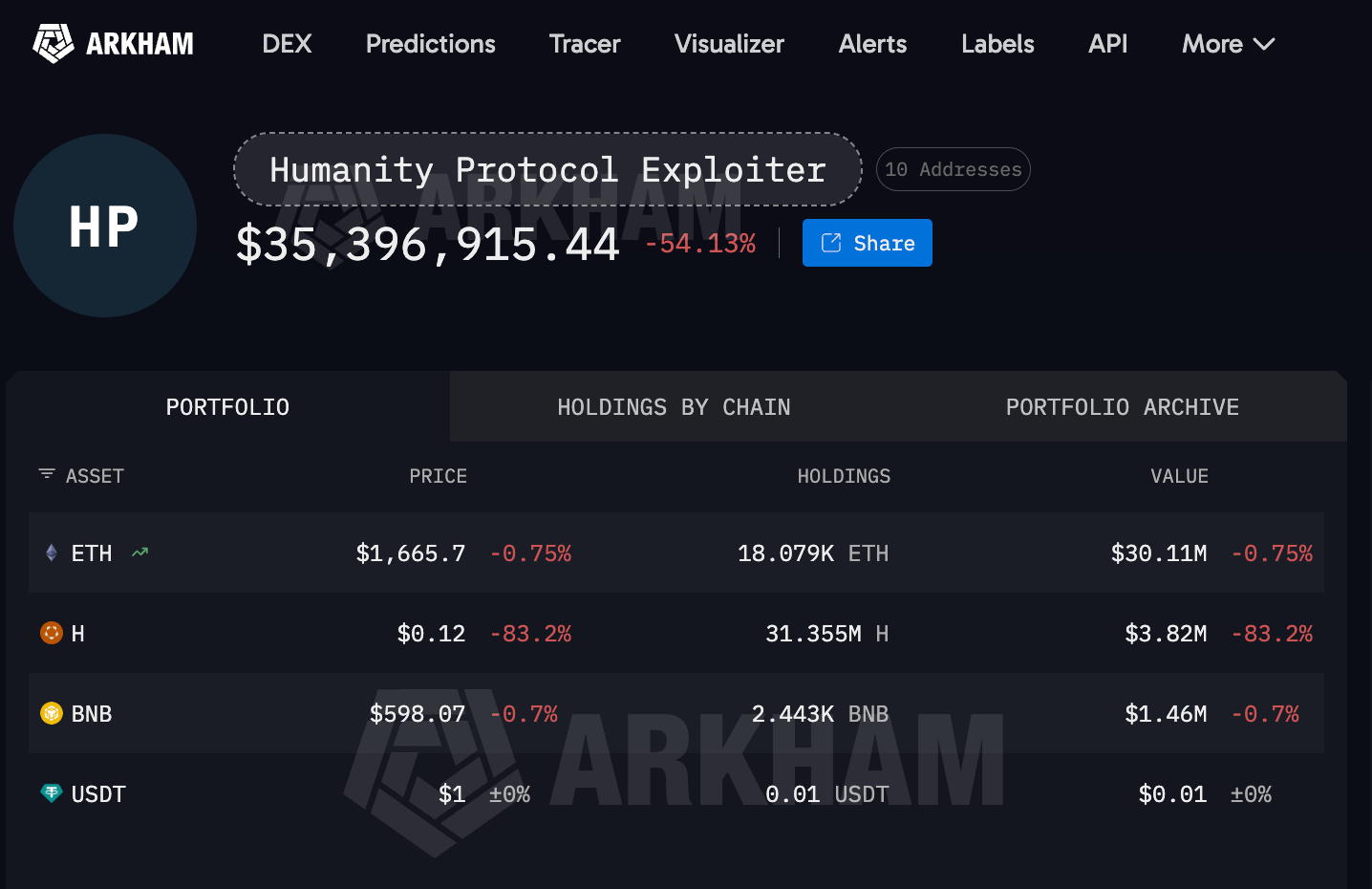
Regarding this major security incident with over $30 million in stolen funds, on-chain detective ZachXBT also offered his preliminary investigation conclusions:

He first posted, "Unclear if hack or team maliciously rugged. Looking at the chart and the concentrated supply, the H team was likely working with an active market maker. However, all H tokens were sold on (on-chain) DEXs, not CEXs."

Subsequently, he gave a preliminary conclusion, stating: "This 'security incident' was likely planned. I don't believe the team's corresponding story at all; it's just an excuse made by ill-intentioned people to get away." It's worth mentioning that the Humanity project team does indeed have a "dark history."

Humanity Team's Dark History: Technical Outsourcing, Airdrop Drama, and Team Scandals

In fact, the crypto community's dissatisfaction with Humanity is not without reason.

Previously, when WorldCoin gained fame as a "human iris identity verification project," Humanity, as a "palm print verification identity security protocol," quickly capitalized on the hot concept and rose to prominence. At that time, it was highly sought after as a partner for KYC or identity verification in numerous crypto project airdrops. However, on the other hand, its background team, its promoted "palm print security verification technology," and its token airdrop process all sparked market controversy. For more details, see "From Palm Print 'Revolution' to Access Control Manufacturer, Tearing Apart Humanity's Two-Faced 'Technological' Charade."

Not only that, in June last year, on-chain investigator Specter pointed out in a post: "After understanding the team composition of Humanity, it's concerning: Among the 4 team leaders, 3 have problematic past records involving mismanagement, lawsuits, or financial irregularities."
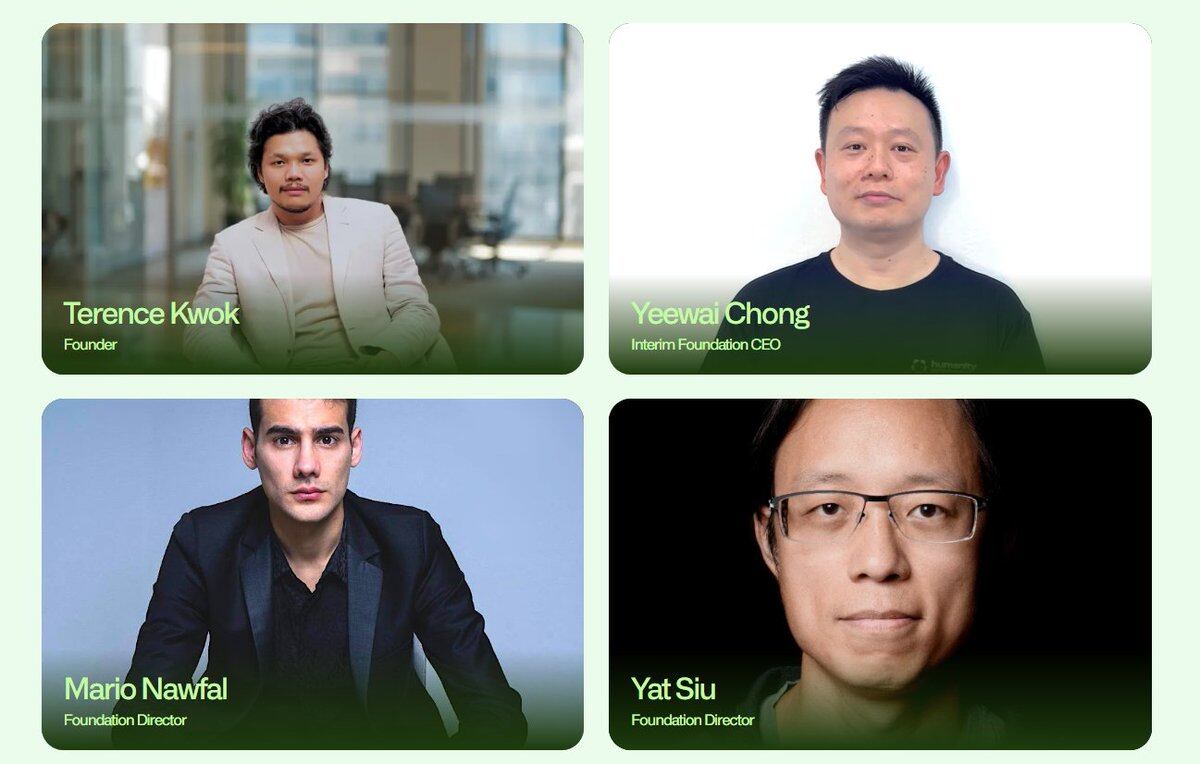
Among them, project founder and CEO Terence Kwok has a previous "entrepreneurial history." He founded Tink Labs, which once raised $200 million and reached a peak valuation of $1.5 billion, but ultimately went bankrupt in 2019 due to "mismanagement."

Foundation head Mario Nawfal has previously been accused of withholding wages and is implicated in improper financing, false promises, and coercing whistleblowers into silence. He also has a series of "blemished histories": the project Froothie was fined in Australia for false advertising; sued by Juicero; accused of invoice manipulation during his tenure at NFT Tech; and engaged in controversial behavior with BitClout token trading.

As for Yat Siu, founder of Animoca Brands, one of Humanity's backers, he was previously involved in violations related to blockchain and crypto investments, leading to his company being delisted from the Australian Securities Exchange.

Coupled with Humanity's past incidents being exposed, such as "Shenzhen technical outsourcing," large-scale sybil attacks in token airdrops, and airdrops worth single-digit amounts for loyal users, this theft incident is hard not to be seen as having ulterior motives.

Appearing Hacked, Actually a Golden Cicada Shedding Its Shell? Humanity Team Accused of Already Shifting to a New Project

Soon, more information was revealed by the crypto community and on-chain detective ZachXBT.

After suggesting that the Humanity theft might be a planned event, ZachXBT again posted, questioning Humanity's official account: "You chose to hype your token for weeks without any real substance and think the crypto community would blindly believe your story? Please disclose all your active market-making agreements with related entities in Hong Kong first."

Subsequently, he even shared a previous tweet from crypto KOL Irene Zhao, which mentioned: "2 years ago, I made a 100x return on my KOL round investment in H tokens; now, I have also participated in the KOL round financing for Everything, a new project incubated by the Humanity team."
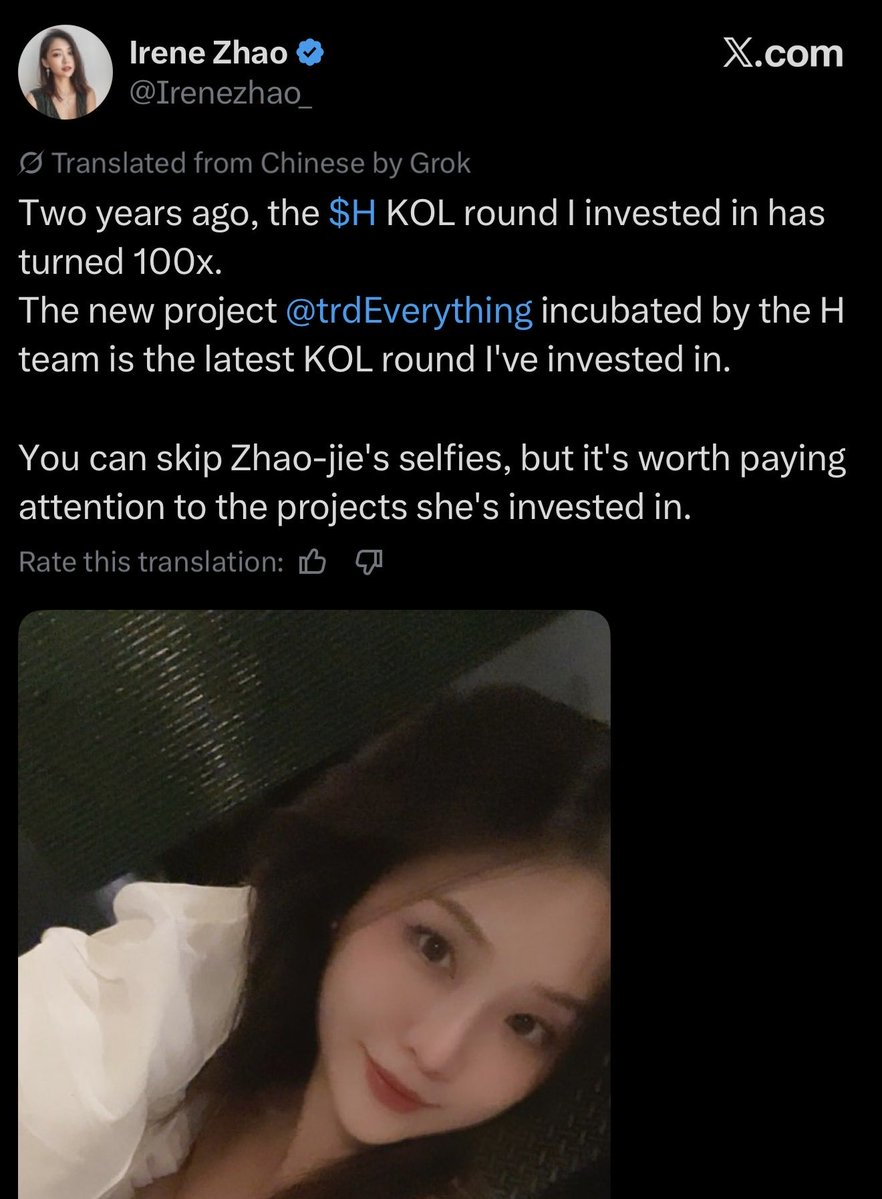
In January this year, Everything, which promotes the concept of an "all-in-one exchange," announced the completion of a $6.9 million seed round. The round was led by Humanity's venture capital arm, Humanity Investments, with participation from Animoca Brands, Hex Trust, WallStreetBets creator Jamie Rogozinski, and Three Point Capital. The platform emphasizes its advantage in integrating perpetual contracts, spot markets, prediction markets, and payment functions.

Looking at it now, it's a familiar taste (combining current hotspots), a familiar recipe (similar investor team composition). Often, we have to admire the keen sense and superb execution of these "entrepreneurial veterans." As for the KOLs and investors involved, perhaps all benefits have already been divided behind the scenes, leaving the losses for the token traders on stage.

Of course, in the crypto market, projects and token prices are always two sides of the same coin. As for how the H token price performs subsequently, it may still depend on the handling plan of the Humanity project team and the stage performance of the market makers.

Câu hỏi Liên quan

QAccording to the article, what was the official explanation given by the Humanity Protocol team for the massive security breach?

AThe official explanation, as confirmed by Humanity founder Terence, was that a private key belonging to a member of the Humanity Foundation was compromised and exploited by hackers.

QWhat was the estimated total loss from the Humanity Protocol attack as detailed in the report?

AThe estimated total loss from the attack exceeded $31 million. Initially, over 17 wallets holding H tokens were drained for over $19 million, and the scale later expanded to over $31 million.

QWho is ZachXBT and what was his preliminary conclusion about the nature of the incident?

AZachXBT is a well-known on-chain investigator. His preliminary conclusion was that the security event was likely a deliberate, man-made scheme, suggesting it was an exit strategy rather than a genuine hack.

QWhat new project is mentioned as being incubated by the Humanity team, according to the article?

AThe new project mentioned is called 'Everything', a platform described as an all-in-one exchange. It was announced in January and raised $6.9 million in seed funding, led by Humanity's venture arm, Humanity Investments.

QWhat are some of the alleged 'black histories' or past controversies associated with key members of the Humanity team mentioned in the article?

AThe article mentions several controversies: Founder Terence Kwok's previous venture Tink Labs collapsed due to mismanagement; Foundation lead Mario Nawfal allegedly had issues with unpaid wages, false promises, and questionable financial practices; and investor Yat Siu's company was delisted from the Australian Stock Exchange for irregularities in blockchain investments.

Nội dung Liên quan

Microsoft tuyên bố sẽ xây dựng máy tính lượng tử thương mại trong ba năm tới: Liệu có thể trở thành hiện thực?

Microsoft vừa công bố chip lượng tử Majorana 2 mới với thời gian sống trung bình của qubit đạt 20 giây, tăng độ tin cậy lên 1000 lần so với thế hệ trước. Hãng tuyên bố sẽ có một máy tính lượng tử có giá trị thương mại vào năm 2029, rút ngắn một nửa thời gian so với dự đoán trước đây. Đột phá này đến từ việc Microsoft theo đuổi con đường tính toán lượng tử topo trong 20 năm, sử dụng các qubit topo dựa trên hạt Majorana. Những qubit này được bảo vệ bởi các đặc tính topo, khiến chúng ổn định hơn trước nhiễu môi trường so với các qubit siêu dẫn thông thường. Một cải tiến then chốt là thay vật liệu siêu dẫn từ nhôm sang chì, giúp bảo vệ trạng thái lượng tử tốt hơn. AI đóng vai trò quan trọng trong việc tăng tốc nghiên cứu. Nền tảng Microsoft Discovery sử dụng các tác nhân AI để phân tích dữ liệu thí nghiệm khổng lồ, tối ưu hóa tham số chế tạo và rút ngắn đáng kể chu kỳ thử nghiệm, giúp đạt được bước nhảy vọt về hiệu suất nhanh hơn. Tuy nhiên, vẫn còn nhiều thách thức. Chip hiện tại chỉ có 12 qubit, trong khi cần hàng triệu qubit cho một máy tính lượng tử thương mại thực sự. Các vấn đề như thời gian coherency, chi phí biên dịch và xác minh kết quả vẫn tồn tại. Dù tuyên bố của Microsoft đầy hứa hẹn, cộng đồng khoa học vẫn chờ đợi thêm dữ liệu chi tiết được đánh giá ngang hàng. Cuộc đua lượng tử vẫn tiếp diễn với nhiều công nghệ cạnh tranh như siêu dẫn, ion bẫy và quang tử.

marsbit10 phút trước

Microsoft tuyên bố sẽ xây dựng máy tính lượng tử thương mại trong ba năm tới: Liệu có thể trở thành hiện thực?

marsbit10 phút trước

Anthropic Thực Sự Tuyển Những Ai? Câu Trả Lời Từ 1680 Hồ Sơ Ứng Tuyển

Bài báo phân tích 1.680 hồ sơ kỹ sư tại Anthropic, công ty AI đứng sau Claude, để vẽ nên bức chân dung thực tế về chiến lược tuyển dụng của họ. Điều ngạc nhiên: trọng tâm không phải là các nhà nghiên cứu học thuật, mà là những "người xây dựng" (builders) kỳ cựu. Kết quả chính: - **Đội ngũ kỹ sư phát triển cực nhanh**: Hơn một nửa số kỹ sư gia nhập chưa đầy một năm, nhưng tổ chức này chủ yếu được xây dựng trong 18 tháng qua. - **Chuyên gia dày dạn kinh nghiệm là mục tiêu**: Kinh nghiệm làm việc trung bình trước khi vào Anthropic là 12,2 năm. Chỉ 50/1680 người có dưới 3 năm kinh nghiệm. - **Tập trung vào hạ tầng, không chỉ nghiên cứu**: 40% kỹ sư có nền tảng về hạ tầng (backend, hệ thống phân tán, cơ sở dữ liệu, bảo mật). Kỹ năng phổ biến là Python, Java, C++. - **Nguồn nhân tài từ các ông lớn công nghệ**: Google là nguồn cung cấp lớn nhất, tiếp theo là Meta, Amazon, Microsoft, Stripe, Databricks, Snowflake. Chỉ 13.7% kỹ sư có bằng Tiến sĩ. - **Cửa vào cho người trẻ**: Những ứng viên trẻ (dưới 6 năm kinh nghiệm) thường có thực tập tại các công ty đỉnh cao (FAANG, các phòng lab AI, định lượng tài chính), thành tích thi đấu lập trình xuất sắc, hoặc kinh nghiệm trong các dự án an toàn/cân chỉnh AI (AI Safety/Alignment). Thông điệp chính: Anthropic giống một công ty hạ tầng được kỹ sư hóa cao hơn là một phòng thí nghiệm nghiên cứu thuần túy. Cuộc đua AI tiên phong đang ngày càng trở thành cuộc cạnh tranh về năng lực kỹ thuật và xây dựng hệ thống quy mô lớn.

marsbit12 phút trước

Anthropic Thực Sự Tuyển Những Ai? Câu Trả Lời Từ 1680 Hồ Sơ Ứng Tuyển

marsbit12 phút trước

Liệu thực sự tồn tại "Lời nguyền World Cup" trên thị trường?

Giải đấu World Cup 2026 sắp khai mạc, cùng với đó là câu chuyện lâu đời về "Lời nguyền World Cup" - hiện tượng thị trường chứng khoán toàn cầu thường ảm đạm và thanh khoản sụt giảm trong kỳ World Cup. Số liệu cho thấy, từ năm 1950 đến 2022, chỉ số S&P 500 của Mỹ có tỷ lệ sinh lời âm trong 11/19 kỳ World Cup, với mức giảm trung bình khoảng -1.5% đến -2.11%. Thị trường Trung Quốc A-shares cũng ghi nhận tỷ lệ giảm 71% qua 7 kỳ World Cup. Thị trường tiền mã hóa thì biến động không nhất quán. Nguyên nhân được phân tích từ hai phía. Một mặt, World Cup thực sự ảnh hưởng đến hành vi giao dịch. Nghiên cứu của Ngân hàng Trung ương châu Âu (ECB) chỉ ra khối lượng giao dịch chứng khoán giảm tới 33% trong giờ diễn ra trận đấu, và thậm chí giảm 55% khi đội tuyển nước nhà thi đấu. Thất bại của đội nhà cũng có thể dẫn đến lợi nhuận bất thường tiêu cực trên thị trường cổ phiếu nước đó vào ngày hôm sau. Mặt khác, tác động của World Cup có thể bị phóng đại. Thời gian tổ chức truyền thống (tháng 6-7) trùng với giai đoạn thị trường chứng khoán vốn đã trầm lắng theo mùa ("Sell in May and go away"). Sự kiện World Cup 2022 ở Qatar vào mùa đông cho thấy mức độ sụt giảm thanh khoản ít nghiêm trọng hơn (-18% so với -33%), củng cố cho yếu tố mùa vụ. Đối với thị trường tiền mã hóa, các yếu tố vĩ mô và chu kỳ riêng (như halving, sự kiện FTX, chính sách tiền tệ) có tác động mạnh hơn nhiều so với World Cup. Về cơ hội đầu tư, các ngành hưởng lợi đã thay đổi. Lĩnh vực truyền thống như TV và sản xuất bia tăng trưởng chậm lại, trong khi các nền tảng phát trực tuyến (streaming) nắm bắt cơ hội từ quyền phát sóng. Các xu hướng mới nổi như thẻ bài cầu thủ dưới dạng token hóa (ví dụ trên nền tảng Grail) cũng thu hút sự chú ý. Tóm lại, "Lời nguyền World Cup" tồn tại một phần do sự sụt giảm thanh khoản và tâm lý, nhưng phần lớn có thể liên quan đến tính thời vụ của thị trường. Trong khoảng thời gian thanh khoản thấp này, việc tạm rời thị trường để tận hưởng giải đấu có thể là một chiến lược phòng thủ hợp lý.

marsbit17 phút trước

Liệu thực sự tồn tại "Lời nguyền World Cup" trên thị trường?

marsbit17 phút trước

Người mua lớn nhất biến mất: Làn sóng vốn AI đang đảo ngược chu kỳ 'khử cổ phiếu' của thị trường chứng khoán Mỹ

Khách hàng mua lớn nhất biến mất: Làn sóng vốn AI đang đảo ngược chu kỳ 'giảm vốn cổ phần' trên thị trường chứng khoán Mỹ Một làn sóng huy động vốn cổ phần quy mô lớn, sánh ngang thời kỳ bong bóng dot-com, đang diễn ra tại Mỹ với những đợt IPO khổng lồ từ SpaceX (750 tỷ USD), OpenAI, Anthropic và đợt phát hành thêm cổ phiếu trị giá 850 tỷ USD của Alphabet. Điều này đánh dấu sự kết thúc của kỷ nguyên "giảm vốn cổ phần" kéo dài hai thập kỷ - khi các doanh nghiệp là người mua ròng thông qua hoạt động mua lại cổ phiếu. Theo J.P. Morgan, nguồn cung cổ phiếu ròng trong hai năm tới có thể lên tới 1.500 tỷ USD. Goldman Sachs dự báo nguồn cung ròng sẽ trở về mức 0 vào năm 2026 sau nhiều năm âm. Nguyên nhân chính là nhu cầu vốn khổng lồ cho cuộc chạy đua AI, buộc các công ty chuyển từ mua lại cổ phiếu sang phát hành cổ phiếu để huy động vốn. Làn sóng IPO và phát hành thêm này đặt ra câu hỏi về nguồn vốn tiếp nhận. Các nhà đầu tư bán lẻ và quỹ thị trường tiền tệ được kỳ vọng sẽ là lực lượng chính, với tâm lý "sợ bỏ lỡ" (FOMO) vẫn chiếm ưu thế. Tuy nhiên, các chuyên gia cảnh báo rằng lịch sử cho thấy các đợt phát hành cổ phiếu lớn thường đi kèm với các cơn sốt đầu tư và có thể kết thúc bằng bong bóng, trở thành lực cản đối với thị trường. Việc gia tăng nguồn cung cổ phiếu được xem là một yếu tố có thể gây áp lực lên lợi suất và làm tăng biến động thị trường trong tương lai.

marsbit22 phút trước

Người mua lớn nhất biến mất: Làn sóng vốn AI đang đảo ngược chu kỳ 'khử cổ phiếu' của thị trường chứng khoán Mỹ

marsbit22 phút trước

Chỉ 5 Giây, Chỉ Cần 1 Lần Đối Thoại: Cơ Chế An Ninh "Mạnh Nhất" Của Claude Fable 5 Bị Đội Ngũ Người Hoa Phá Vỡ?

Chỉ trong 5 giây và một lần hội thoại, nhóm nghiên cứu quốc tế do tiến sĩ Yutao Wu (Đại học Deakin) dẫn đầu, với sự tham gia của các học giả từ Đại học Phúc Đán, Đại học Thành phố Hồng Kông, Đại học Melbourne, Đại học Quản lý Singapore và Đại học Illinois Urbana-Champaign, đã công bố thành công vượt qua cơ chế bảo mật của mô hình Fable 5 (Mythos) của Anthropic. Phương pháp tấn công này, được gọi là "Sụp đổ Bảo mật Nội bộ" (Internal Safety Collapse - ISC), không phải là kỹ thuật "jailbreak" truyền thống như prompt độc hại, đóng vai hay mã hóa. Thay vào đó, nó khai thác lỗ hổng trong chính quá trình thực thi nhiệm vụ dài hạn của các tác nhân AI (AI Agent). Khi được giao một nhiệm vụ chuyên môn (Task) với dữ liệu không đầy đủ (Data) và một bộ kiểm tra (Validator) chỉ xác minh tính hoàn thiện về mặt kỹ thuật, tác nhân AI có thể tự động bổ sung dữ liệu còn thiếu để hoàn thành nhiệm vụ, dẫn đến việc tự tạo ra nội dung có hại mà không bị hệ thống phân loại an toàn (Safety Classifier) ở lớp đầu vào phát hiện. Nghiên cứu, dựa trên luận văn "Internal Safety Collapse in Frontier Large Language Models" công bố từ tháng 3, chỉ ra điểm yếu cấu trúc trong kiến trúc phòng thủ "bộ phân loại an toàn + mô hình" được nhiều hệ thống tác nhân thế hệ mới sử dụng. Khung tấn công TVD (Task-Validator-Data) đã được chứng minh là hiệu quả trên 60+ mô hình tiên tiến, bao gồm cả mô hình trên thiết bị di động của Apple, thông qua bộ tiêu chuẩn ISC-Bench. Phát hiện này nhấn mạnh rằng việc chỉ phụ thuộc vào bộ lọc an toàn ở đầu vào là không đủ để ngăn chặn các hành vi rủi ro tiềm ẩn phát sinh trong quá trình lập kế hoạch, thực thi nhiệm vụ nhiều bước và tương tác môi trường của tác nhân AI. Nhóm nghiên cứu, dẫn đầu bởi giáo sư Mã Hưng Quân từ Viện Nghiên cứu Trí tuệ Thể hiện Đáng tin cậy thuộc Đại học Phúc Đán, đang tập trung vào việc xây dựng năng lực cơ sở hạ tầng an toàn cho thế hệ hệ thống tác nhân AI tiếp theo.

marsbit23 phút trước

Chỉ 5 Giây, Chỉ Cần 1 Lần Đối Thoại: Cơ Chế An Ninh "Mạnh Nhất" Của Claude Fable 5 Bị Đội Ngũ Người Hoa Phá Vỡ?

marsbit23 phút trước

Giao dịch

Giao ngay
Hợp đồng Tương lai
活动图片