Claude Opus 4.8 Finds a $4.5 Billion Bug: The AI Era is Mass-Producing Hackers

marsbitXuất bản vào 2026-06-06Cập nhật gần nhất vào 2026-06-06

Tóm tắt

A researcher discovered a critical "infinite mint" vulnerability in the Zcash cryptocurrency's Orchard protocol using Claude Opus 4.8, leading to a swift fix but also a 50% market drop, erasing billions in value. This incident highlights a new era where powerful, accessible AI models are dramatically lowering the barrier to finding software vulnerabilities. Previously, the security community feared specialized models like Claude Mythos Preview, capable of finding decades-old zero-day exploits. The Zcash case, however, involved a publicly available, general-purpose model. This shift makes advanced security auditing—and attack capabilities—accessible to far more people, not just experts. The mass democratization of vulnerability discovery brings a dual challenge: a flood of low-quality, AI-generated false reports that overwhelm maintainers, and the real, rapid uncovering of deep, dangerous bugs. Open-source projects, often understaffed and unfunded, are particularly vulnerable to this "attention DDoS." The article cites examples like curl shutting down its bug bounty program due to the unsustainable workload. Our perceived digital safety has often been luck, relying on the high cost and effort required to find deeply hidden flaws in complex systems, as seen with historical vulnerabilities like Heartbleed or Baron Samedit. AI changes this cost structure, effectively "mass-producing flashlights" to illuminate every corner of our codebase. While large companies operate extensi...

Text | Sleepy

Someone used Claude Opus 4.8 to find a bug that erased $4.5 billion from a cryptocurrency's market value.

The starting point was a security audit. Zcash is an established privacy network that uses zero-knowledge proofs to protect transaction information; Orchard is the core arena for its privacy transaction capabilities.

On May 29, during a protocol audit commissioned by Shielded Labs, security researcher Taylor Hornby discovered a critical vulnerability in Orchard. It could allow an attacker to create tokens out of thin air that shouldn't exist—essentially, "infinite minting."

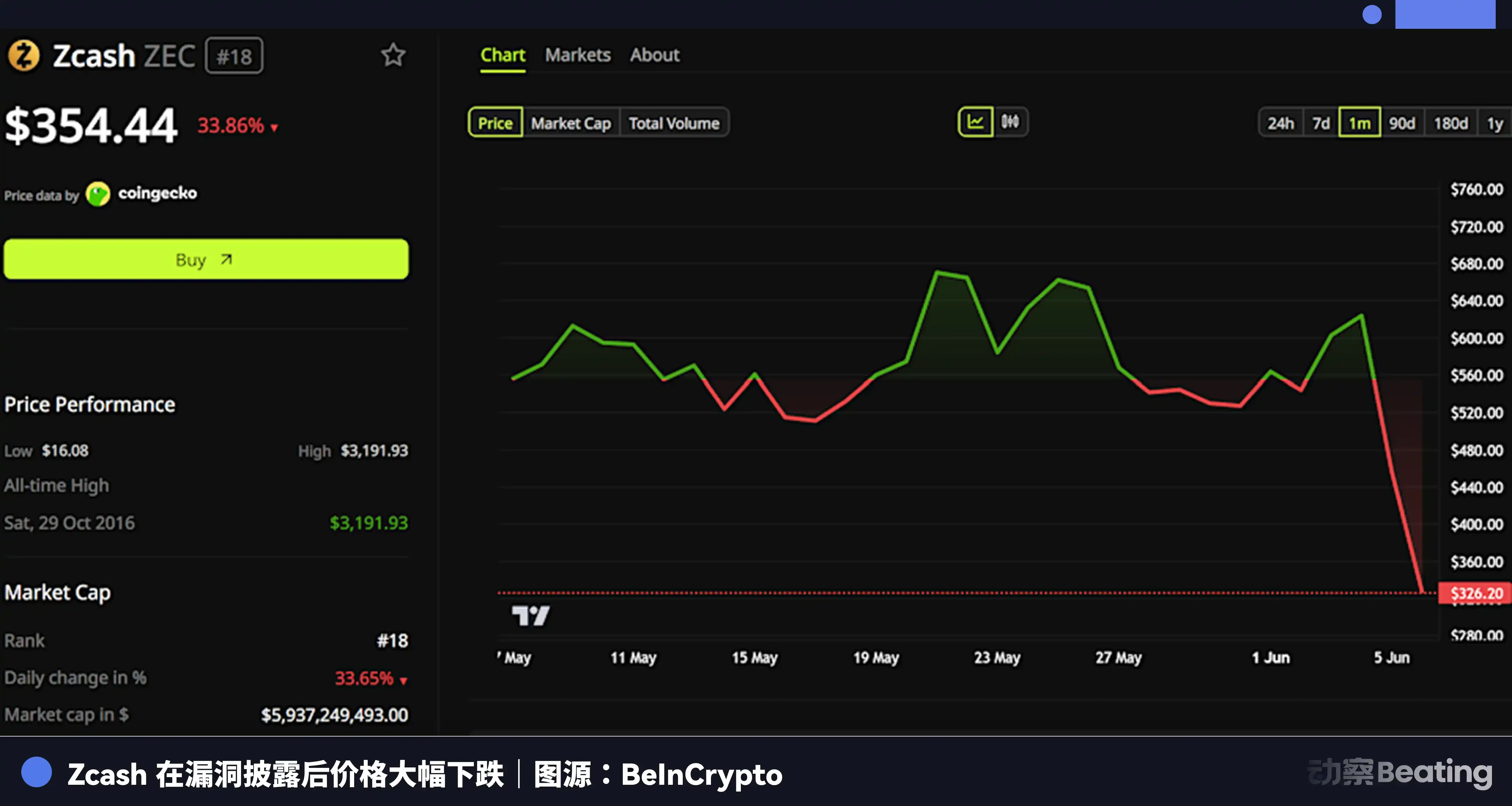
Zcash completed an emergency upgrade within days. The official team confirmed the vulnerability existed but could not confirm whether it had already been exploited to mint tokens. After the official statement was released on June 5, Zcash plunged by 50%.

Anthropic's Opus 4.8 was released on May 28. The next day, this vulnerability was found.

Not Mythos, but Opus

What's terrifying about the Zcash incident isn't that AI is powerful, but that it was powerful in such an ordinary way this time.

Before this, what truly frightened the security industry was Anthropic's Claude Mythos Preview. In April 2026, Anthropic released a cybersecurity capability assessment, stating that Mythos Preview was able to identify and exploit zero-day vulnerabilities in mainstream operating systems and browsers during testing. Some vulnerabilities were extremely obscure, lying dormant for over a decade; one OpenBSD bug could even be traced back 27 years.

The assessment also claimed that an engineer without a security background could task Mythos Preview to search for remote code execution vulnerabilities overnight and wake up the next day to a complete, usable exploit code.

This means a capability that only a handful of people could master over the long term in the past is becoming a service anyone can invoke at any time. This capability itself has no stance; the difference lies only in who uses it and for what purpose.

Anthropic understands this too. That's why they initiated Project Glasswing, initially giving Mythos Preview to a select few organizations for defensive security work. They also admitted that models of this caliber require stronger safeguards and stricter usage constraints before being made available to everyone.
Yet, in the Zcash incident, the tool the technical staff used wasn't that still-locked-away Mythos, but Opus 4.8—already released, already available, already integrated into the workflows of ordinary people.

AI entering the security field gives small teams the audit capabilities of large teams. It allows maintainers to find bugs faster, and also allows attackers to understand systems faster.

Moreover, the most dangerous one might not be the strongest model, but the one that is powerful enough, cheap enough, and common enough.

The more ordinary the model, the more people can pick it up. So the question is no longer *can* AI find vulnerabilities, but: when *everyone* can look, what happens?

When Bug Hunting Becomes a Mass Movement

After AI makes vulnerability discovery cheaper, two things will emerge.

One is fake: a flood of security reports that look plausible but don't hold up under scrutiny. The other is real: vulnerabilities that used to be hidden deep within systems, requiring experts weeks or even months to find, also start being uncovered faster.

The former will overwhelm maintainers; the latter will breach systems. The more troublesome part is, they will arrive simultaneously.

Cybersecurity once had an ideal narrative: white hats discover vulnerabilities, disclose them responsibly, vendors fix them, users benefit.

For a long time, the world did operate somewhat according to this narrative. But when AI lowers the threshold for "finding vulnerabilities," when everyone can use public models to look for bugs, what floods in are masses of people wanting to cash in on bounties or boost their reputation. Many among them simply copy a prompt, have the model generate a report that looks quite convincing. The report isn't necessarily true.

But whether true or false, maintainers have to take it seriously.
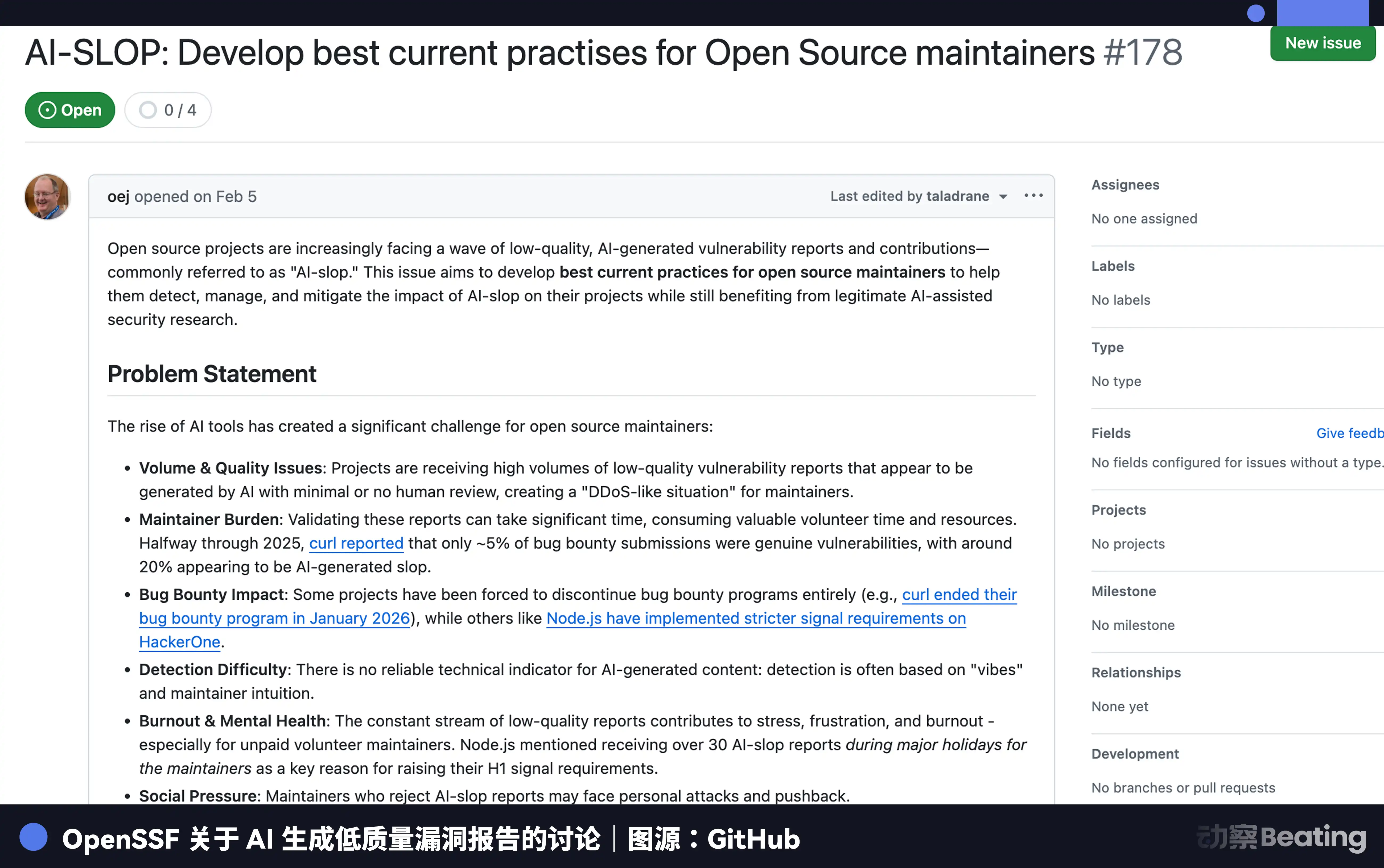
In February 2026, OpenSSF held a discussion on "AI-generated Spam Reports," specifically studying how open-source maintainers should deal with low-quality, AI-generated vulnerability reports. curl reported that by mid-2025, only about 5% of bounty submissions were genuine vulnerabilities, and about 20% seemed like AI-generated low-quality content. OpenSSF said such reports are like DDoS attacks, except they target human attention.

Open-source maintainers are not customer service centers. Many of them have no salary, no security team, no shift schedule. Yet a project might support countless commercial systems worldwide; companies saving massive costs by using open source might not pay the maintainers a single cent; but once something goes wrong, they all turn back and ask why you didn't fix it sooner.

curl later shut down its bug bounty program because people couldn't sustain it anymore. Security reports were supposed to be part of the defense line, but when the line gets flooded with garbage, it starts consuming the very people defending behind it.

AI gave more people the ability to submit vulnerability reports, but it didn't give more people the ability to judge their authenticity. Being able to have a model generate a report doesn't mean understanding it; being able to run verification code doesn't mean being able to articulate its true impact.

And what's even more critical is that we actually live in a world where AI *can* find countless vulnerabilities for real.

Our Past Peace Was Good Luck

The biggest illusion the internet creates is that if something works, it must be reliable.

Phones can make payments, subway scanners work, hospital appointments can be booked; a cloud drive might even hold a photo you took ten years ago, long forgotten by you but not by it. These things work every day, so we default to thinking they have no problems at all. People's trust in technology is often not trust, but laziness to doubt.

But code is like an old building constantly being added onto. Underneath lie old protocols, old libraries; stacked on top are temporary requirements and "just ship it first"; piled at the very top is legacy code nobody dares to delete. The lights in the building are on, the elevator still goes up and down, and the property management says everything's fine. But nobody knows if there are cracks in the walls.
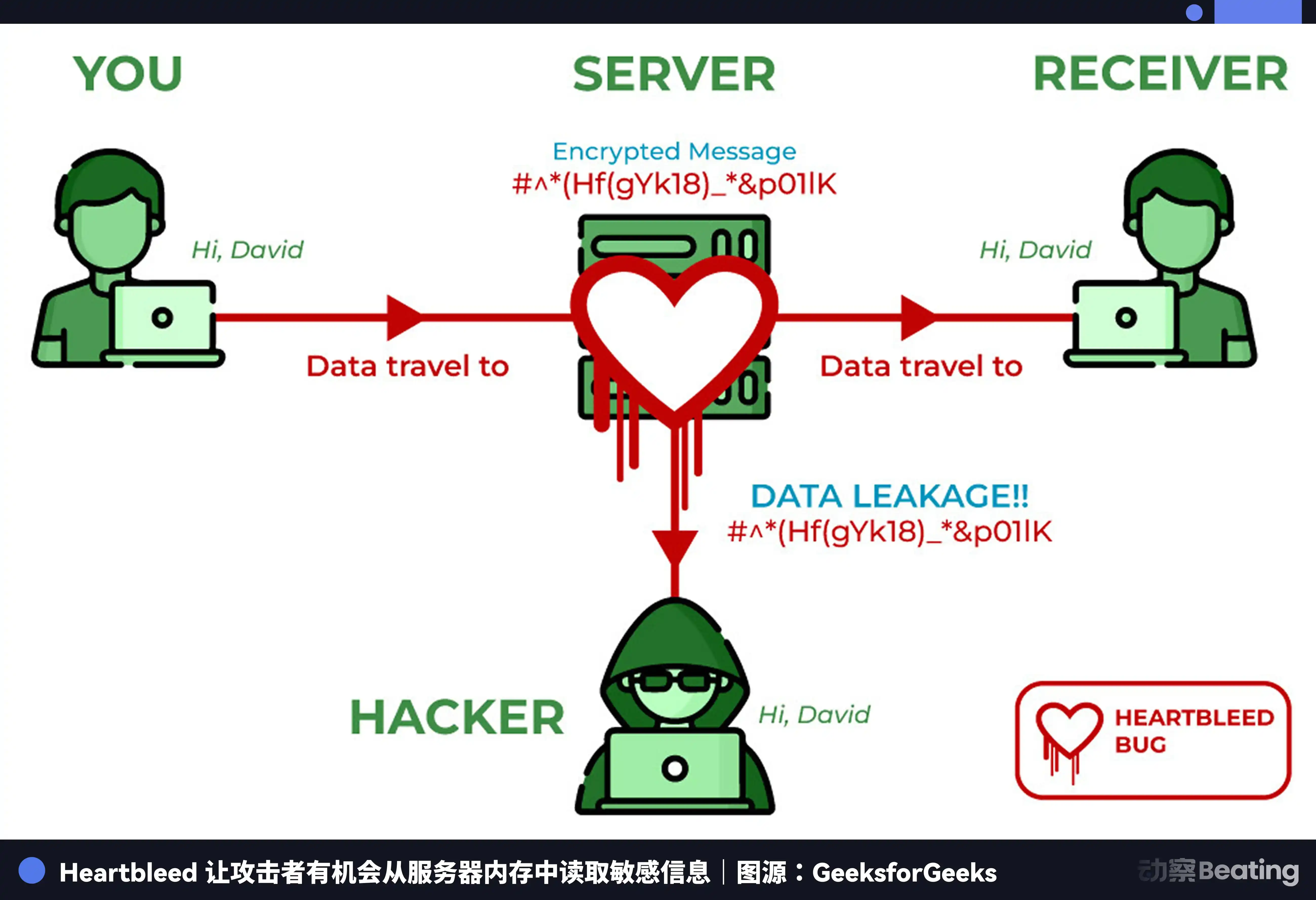
Heartbleed is a classic example. A vulnerability in OpenSSL allowed attackers to read private keys and passwords from server memory. It wasn't discovered and fixed until 2014. Before that, it had been dormant for over two years, during which time over 60% of the world's active websites ran on affected servers. For two years, most of the internet was practically naked, and nobody knew.

Then there's sudo's Baron Samedit. When Qualys disclosed it in 2021, they pointed out this vulnerability had existed in sudo for nearly a decade, and sudo is one of the most commonly used privilege tools in the Unix/Linux world.

There are many similar examples. Looking at them together, one suddenly realizes: it's actually quite lucky we've been surfing the internet safely until today.

Why weren't these vulnerabilities discovered for so long?

The answer is simple: the cost of finding vulnerabilities was too high.

The cost isn't just money, but time and patience. You have to read code, set up environments, understand protocols, reproduce edge cases, write verification code, assess impact scope, and also distinguish false positives. Sometimes you run a program all night with no results, follow a path to the end only to find it leads nowhere. In reality, security researchers and hackers often torture themselves with fragmented details.

Many vulnerabilities could hide for so long in the past not because they were mysterious, but because there were too few people willing, capable, and persistent enough to keep looking.

What AI changes is precisely this cost structure.

In the past, there were too many nooks and crannies, and too few flashlights. Now flashlights are being mass-produced.

But the same flashlight that illuminates cracks also shows where to strike. The moment it makes "discovery" cheaper, it also makes "attack" cheaper. Someone using it today to submit a low-quality report to an open-source project could use the same method tomorrow to scan a company's systems; someone thinking about bug bounties today might be thinking about on-chain funds tomorrow.

Behind Normal Internet Browsing

We don't feel the existence of "internet security" until something really goes wrong.

You open Alipay, scan, pay, the money arrives—the whole process maybe takes less than three seconds. You don't think about how many risk control rules, device fingerprints, behavioral recognition systems, anti-black-market operations, vulnerability responses, and emergency plans are behind it.

In May 2026, Ant Security Response Center (AntSRC) launched a "Hunter Action" bug bounty program. The test scope covered businesses including Alipay, Huabei, Jiebei, Ant Fortune, MYbank, Ant Digital, and Ant International. For high-risk and critical vulnerabilities in payment transaction, fund-related, and billing-related products, rewards were up to 5 times higher, reaching up to 71,500 RMB.

Big tech companies also know they can't rely solely on internal teams to find all problems, so they must integrate external white hats into formal processes. Security is more like a long collaborative chain: someone discovers an attack, someone verifies, classifies, fixes, releases, and someone must specifically watch not to accidentally harm normal users. Break any link in this chain, and it fails.

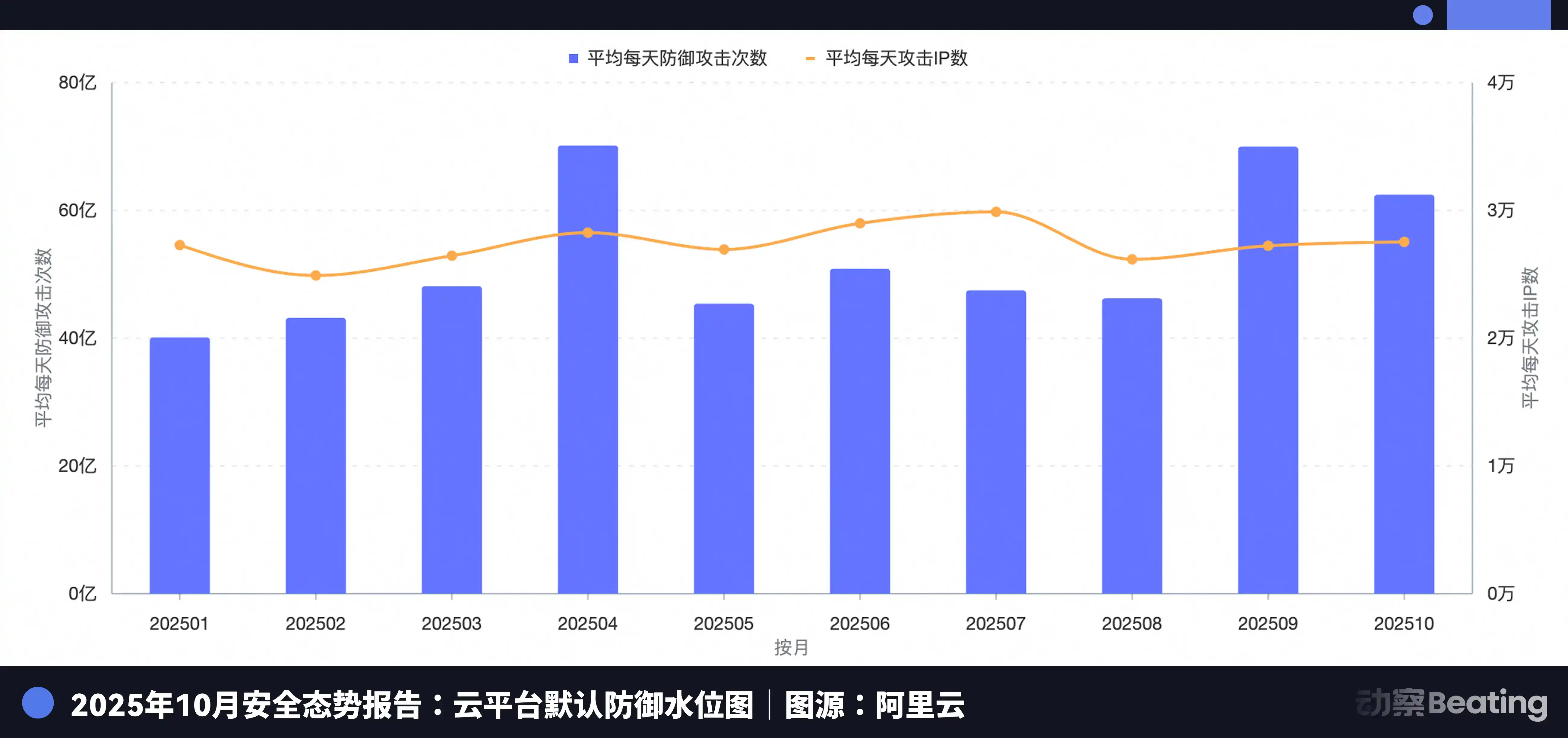
In Alibaba Cloud's security posture report from October 2025, it stated that the cloud platform defends an average of 6.245 billion attacks for customers daily, blocks 27,500 malicious IPs; that month, it monitored and intercepted 102,800 DDoS attacks, with a peak of 2100 Gbps.
What we usually call "normal internet browsing" is actually a narrow path security engineers carved out for us from a sea of anomalies. The internet has never been quiet.

Open-source maintainers have no budget, no shift schedules, no emergency teams; big companies can buy these things. But even big companies can only rely on a long, fragile chain of human collaboration to suppress anomalies to a level ordinary users don't notice.

And this long, fragile collaborative chain was already operating at full capacity even before AI intervened on a large scale. Now you pour in multiplied vulnerabilities and reports; are there enough people on the defensive side?

After Finding a Vulnerability, Who Fixes It?

ISC2's 2024 Cybersecurity Workforce Report estimates there are about 5.5 million cybersecurity professionals actively working globally, with a talent gap of 4.8 million, a year-on-year increase of 19%. It specifically explains this "gap" is not the number of job postings, but the difference between the personnel organizations believe they need to be adequately protected and the realistically available personnel.

These numbers mean one simple thing: there are many vulnerabilities, and not enough people.

And it's not just a headcount shortage; it's a shortage of people who can handle complex tasks. ISC2 also mentions that 67% of respondents said their organization has a cybersecurity staffing shortage, and 58% believe this shortage poses significant risk to their organization. 31% said their security team has no entry-level employees, 15% said they have no junior employees with 1–3 years of experience. Many organizations not only lack people now but also lack the pipeline to cultivate the next generation.

This is more troublesome than being unable to hire. Not being able to hire is today's problem; having no junior employees means you won't be able to hire in the future either.
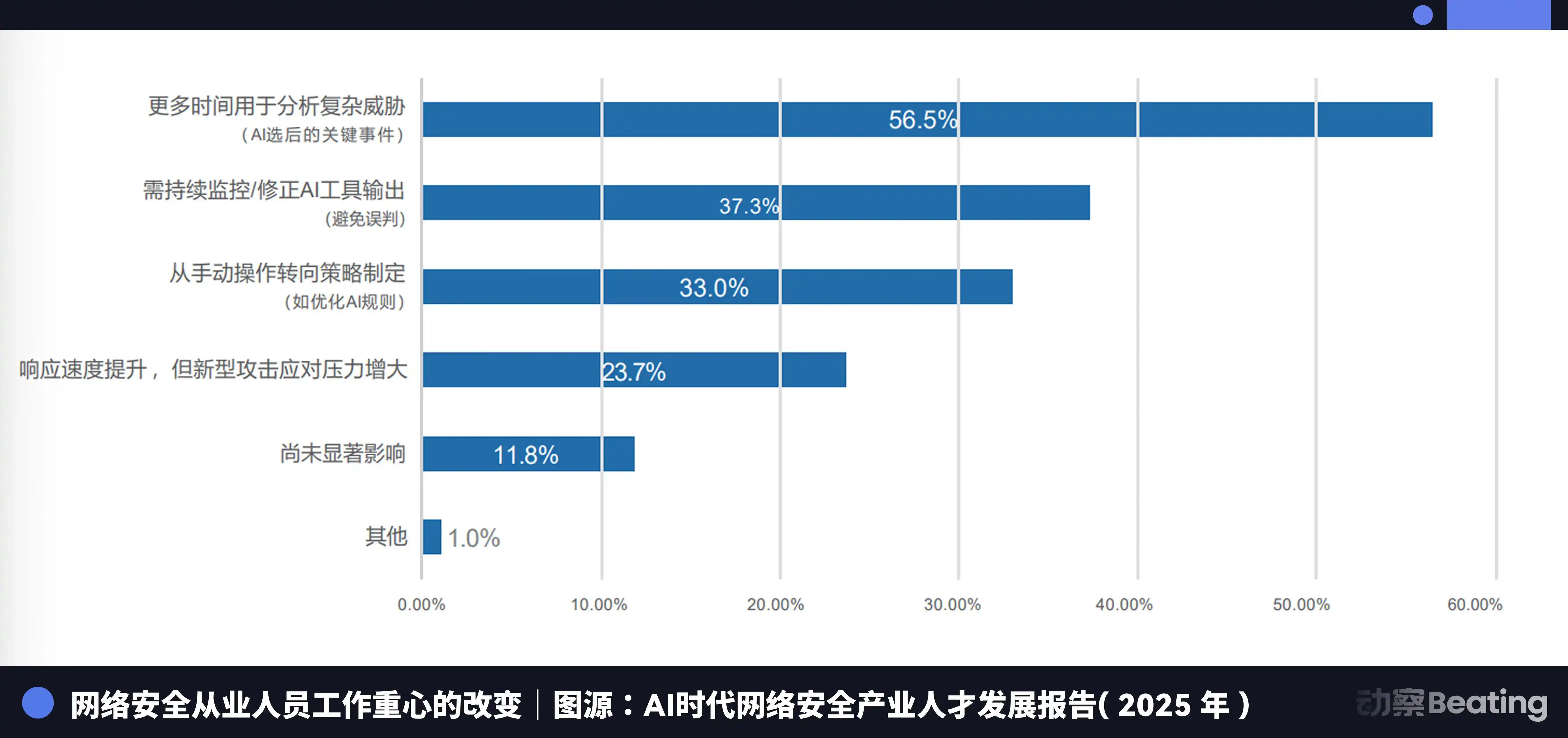
A domestic report, the "AI Era Cybersecurity Industry Talent Development Report," also provides a set of data: in 2025, among surveyed practitioners, 46.2% had a pre-tax annual salary between 200,000 and 300,000 RMB. The market is willing to pay for core talent because people who can truly handle complex threats and make judgments during incidents are extremely scarce. The report also shows that 56.5% of practitioners said AI has shifted more of their focus to analyzing complex threats, and 33.0% indicated they are moving from execution roles to strategy formulation.

This point is crucial.

What we lack most right now are the people who can understand a vulnerability in the middle of the night, judge its impact, coordinate upstream and downstream, and write a patch. Security has never been an industry relying on flashes of inspiration; it's dirty, hard work. Dissect the term "cybersecurity," and inside you'll only find false positives, blame, endless patches, endless meetings, and that phone call that wakes you up at 3 AM.

The Plague Bacillus Never Disappears

Camus wrote a novel called *The Plague*.

The story takes place in an ordinary small city in North Africa. A plague suddenly breaks out, the city gates are closed, everyone is trapped inside. Daily life shatters overnight. People panic, then become numb, and eventually get used to it. Until the plague finally recedes, the gates reopen, and laughter returns to the streets.

At the end of the novel, Camus writes: "According to medical records, the plague bacillus never dies or disappears; it can lie dormant for decades in furniture, clothing, bedding; it waits patiently in rooms, cellars, suitcases, handkerchiefs, and wastepaper. Perhaps the day will come when, for the bane and enlightenment of men, the plague will rouse its rats again and send them to die in some well-contented city."

I've always felt this passage is well-suited to describing network vulnerabilities.

They aren't born on the day they are discovered. They have been lying in the code all along; in the past, nobody heard them breathing, so we mistook silence for safety.

The daily routines we've grown so accustomed to that we no longer question—they all run on code. Code carries old debts. Those debts weren't urgent to repay in the past because there were few debt collectors. After AI arrived, debt collectors suddenly multiplied.

The scary part isn't just that there will be more hackers. On the other side of the system, the people who handle problems haven't multiplied proportionally.

This is the most agonizing aspect of the AI security era. Capabilities diffuse on their own; responsibility does not. Finding a vulnerability becomes increasingly cheap, but fixing it still costs as much as before. Destruction can be replicated countless times by scripts, but trust can only be rebuilt slowly, system by system, team by team.

AI won't destroy the internet overnight. What it does is more like turning on the lights. We finally see that digital life has never been a self-operating natural order, but rather the daily work of people suppressing risks to a level we don't feel.

In the future, what will truly be expensive isn't finding vulnerabilities. It's whether there will still be enough people willing to fix them, one by one.


Câu hỏi Liên quan

QWhat vulnerability was discovered in the Zcash protocol, and what was its potential impact?

AA vulnerability was discovered in Zcash's Orchard protocol, which is the core of its private transaction capabilities. This vulnerability was a 'critical bug' that allowed an attacker to create tokens that should not have existed out of thin air, effectively enabling 'unlimited minting' of the cryptocurrency. This flaw had the potential to severely undermine the value and trust in Zcash.

QWhich AI model was used to discover the Zcash vulnerability, and why is this concerning according to the article?

AThe vulnerability was discovered using Claude Opus 4.8, released by Anthropic. This is concerning because it's not the highly advanced and restricted 'Mythos' model, but a powerful, publicly available, and relatively affordable model. The article argues that the most dangerous models are not necessarily the strongest, but those that are 'sufficiently strong, cheap, and widespread,' as they put this advanced capability into the hands of many more people, lowering the barrier to finding critical vulnerabilities.

QHow is AI affecting the landscape of vulnerability reporting and maintenance, according to the article?

AAI is flooding the system with both high-quality and low-quality reports. It lowers the cost of *finding* vulnerabilities, leading to a surge in reports. Many are low-quality, AI-generated submissions (referred to as 'AI junk reports') that overwhelm maintainers, similar to a DDoS attack on human attention. Meanwhile, genuine, deeply hidden vulnerabilities are also being found faster. This creates a crisis where maintainers (especially unpaid open-source ones) are overwhelmed by noise while simultaneously facing more serious threats. The cost of *finding* a bug has plummeted, but the human cost of *verifying* and *fixing* it remains high.

QWhat fundamental problem does the article highlight regarding the response to increased vulnerabilities in the AI era?

AThe core problem is a severe and growing imbalance between offense and defense. The capability to *discover* and potentially *exploit* vulnerabilities is being democratized and scaled by AI, becoming cheaper and more accessible. However, the human capacity on the defensive side—the skilled professionals needed to analyze, verify, prioritize, coordinate fixes, and deploy patches—is not scaling at the same rate. There is a massive global shortage of cybersecurity professionals, and the existing teams are already operating at full capacity. This imbalance means systems are becoming more exposed as the flood of vulnerabilities increases.

QWhat analogy from literature does the article use to describe the nature of software vulnerabilities, and what is its implication?

AThe article uses an analogy from Albert Camus's novel *The Plague*. It compares software vulnerabilities to the plague bacillus, which 'never dies or disappears... and bides its time in bedrooms, cellars, trunks, and bookshelves.' The implication is that vulnerabilities are not created when discovered; they have always been lurking hidden within the code. Our past sense of security was partly due to the high cost and difficulty of finding them. AI, by making discovery cheaper and easier, is like 'turning on the lights,' revealing the latent risks that have always been present in the digital infrastructure we depend on.

Nội dung Liên quan

43 phút của Trump: Cốt truyện người mạnh mất kiểm soát, chiến tranh truyền thông leo thang

Trong bài diễn văn kéo dài 43 phút sau hơn một tuần vắng bóng công chúng, Tổng thống Mỹ Donald Trump đã cố gắng thể hiện hình ảnh một nhà lãnh đạo mạnh mẽ và kiểm soát. Tuy nhiên, phần lớn thời gian được dành cho các chủ đề phụ như hồ phản chiếu trên National Mall, so sánh quy mô đám đông với Martin Luther King Jr., cùng những lời công kích nhắm vào phóng viên, đảng Dân chủ và các thành phố lớn. Ông còn ký sắc lệnh hành pháp hủy bỏ các biện pháp bảo vệ việc làm cho hàng nghìn công chức cấp cao liên bang, một động thái có thể gia tăng sự phụ thuộc vào lòng trung thành cá nhân hơn là năng lực chuyên môn trong chính phủ. Bài viết nêu bật trạng thái cá nhân đầy lo lắng và phòng thủ của Trump, thể hiện qua việc ông đột ngột kết thúc sự kiện và nhân viên nhanh chóng dọn dẹp hiện trường. Tác giả cũng phân tích cuộc tấn công của Trump vào nữ phóng viên CNN, Kaitlan Collins, coi đó là một phần của nỗ lực làm mất uy tín giới truyền thông. Bài báo cảnh báo về áp lực ngày càng lớn từ quyền lực chính trị và lợi ích thương mại lên các cơ quan báo chí chính thống, dẫn đến cuộc khủng hoảng về tính độc lập biên tập, như trường hợp Scott Pelley của CBS. Thông điệp chính kêu gọi công chúng ủng hộ các nhà báo và phương tiện truyền thông độc lập, những người được coi là lực lượng quan trọng duy trì sự thật khi các thể chế khác bị xâm phạm. Bài viết kết thúc với viễn cảnh lạc quan khi đề cập đến việc Hạ viện, với sự ủng hộ của một số thành viên đảng Cộng hòa, đã thông qua nghị quyết yêu cầu chấm dứt hành động quân sự ở Iran, cho thấy sự bất đồng ngày càng tăng ngay trong nội bộ đảng của Trump.

marsbit1 giờ trước

43 phút của Trump: Cốt truyện người mạnh mất kiểm soát, chiến tranh truyền thông leo thang

marsbit1 giờ trước

Kalshi, MTS và tham vọng của a16z

Trí tuệ thị trường dự đoán và tham vọng "Truyền thông Mới" của a16z Bài viết phân tích sự trỗi dậy của thị trường dự đoán (prediction markets), đặc biệt là công ty Kalshi được định giá 220 tỷ USD, dưới góc nhìn chiến lược đầu tư và truyền thông của quỹ mạo hiểm a16z. Tác giả điểm lại lịch sử tư tưởng của thị trường dự đoán, từ học thuyết của Hayek về việc thị trường tổng hợp tri thức phân tán, đến cơ chế khuyến khích của Robin Hanson (LMSR) và ý tưởng chính phủ dựa trên dự đoán (Futarchy). Trọng tâm bài viết nằm ở việc a16z, sau khi đầu tư vào Kalshi, đã định vị lại giá trị cốt lõi của thị trường dự đoán không chỉ là sòng bạc hay sàn giao dịch, mà là một phương tiện truyền thông mới mang lại "cảm giác hiện diện" (presence). Trong một thế giới ngày càng bị che khuất và bất lực, việc dùng tiền thật để đặt cược vào các sự kiện toàn cầu giúp cá nhân tái khẳng định vai trò "người quan sát tối thượng", can thiệp và diễn giải thực tại. Kalshi, theo logic này, sẽ trở thành nơi định đoạt tính xác thực và tầm quan trọng của sự kiện. Bài viết liên kết điều này với tầm nhìn "Truyền thông Mới" của a16z – một hệ thống truyền thông toàn diện từ định hình luận điệu, tài trợ, phát hành sản phẩm đến thu hút khách hàng với tốc độ và cường độ chưa từng có, nhằm "tiếp quản dòng thời gian". Ví dụ điển hình là MTS (Monitoring The Situation), một hãng truyền thông chuyên phát sóng tin tức 24/7 trên Twitter. Kết luận cho rằng sức hút thực sự của Kalshi và lý do định giá khổng lồ của nó nằm ở "trường lực bẻ cong hiện thực" – khả năng tạo ra một thực tại thay thế có sức thuyết phục cao nhờ vào khối lượng giao dịch bằng tiền thật, từ đó trở thành một mảnh ghép quyền lực trong đế chế truyền thông mới của a16z.

marsbit3 giờ trước

Kalshi, MTS và tham vọng của a16z

marsbit3 giờ trước

Bất Ngờ: Cựu Nhân Sự Trụ Cột Trong Dự Án Chip Của OpenAI Gia Nhập Anthropic

Chuyên gia chip "nhân viên số 002" của OpenAI, Clive Chan, vừa thông báo rời OpenAI để gia nhập Anthropic. Anh là một trong những thành viên sớm nhất của đội ngũ phát triển chip tự thiết kế của OpenAI, tham gia từ giai đoạn hình thành đến nay. Dù đánh giá cao đội ngũ chip tại OpenAI, Clive Chan chia sẻ anh luôn có mong muốn "chinh phục một ngọn núi mới từ chân núi", đó là lý do anh chuyển sang Anthropic. Tại Anthropic, anh ấn tượng với năng lực, giá trị cốt lõi và tham vọng của đội ngũ, đồng thời trải nghiệm cường độ làm việc rất cao. Khi được hỏi về tiến độ dự án chip của OpenAI, Clive Chan đề cập đến thông tin hợp tác công khai giữa OpenAI và Broadcom, với kế hoạch triển khai bắt đầu từ nửa cuối năm 2026. Clive Chan có kinh nghiệm làm việc tại nhiều công ty công nghệ hàng đầu như Tesla, Google, SpaceX trước khi gia nhập OpenAI vào đầu năm 2024. Việc chuyển đổi của anh là một ví dụ nữa cho thấy dòng chảy nhân tài đáng chú ý giữa OpenAI và Anthropic, sau sự kiện nhà nghiên cứu nổi tiếng Andrej Karpathy chuyển sang Anthropic hồi tháng 5. Động thái này càng thu hút sự chú ý khi Anthropic vừa hoàn thành vòng gọi vốn với định giá gần 1.000 tỷ USD.

marsbit3 giờ trước

Bất Ngờ: Cựu Nhân Sự Trụ Cột Trong Dự Án Chip Của OpenAI Gia Nhập Anthropic

marsbit3 giờ trước

a16z chuyển hướng toàn cầu hóa: VC đang trở thành "động lực thúc đẩy" của liên minh công nghệ Mỹ

Biên tập: Thông báo của Ben Horowitz cho thấy một bước chuyển quan trọng trong chiến lược toàn cầu hóa của a16z: họ không chỉ tìm kiếm dự án ở nước ngoài hay mở rộng đầu tư quốc tế, mà còn đặt mình vào khuôn khổ cạnh tranh công nghệ và hợp tác đồng minh rộng lớn hơn. Trong bối cảnh AI, robot, công nghệ quốc phòng, an ninh mạng và tái cấu trúc chuỗi cung ứng trở thành trọng tâm cạnh tranh quốc gia, con đường quốc tế hóa của startup trở nên phức tạp hơn. A16z đang phản ứng với sự thay đổi này thông qua việc thành lập văn phòng Tokyo, bổ nhiệm Anne Neuberger phụ trách các vấn đề toàn cầu, và nâng cấp nhóm quan hệ nhà đầu tư thành nhóm đối tác toàn cầu. Tín hiệu quan trọng nhất là a16z gắn kết mạng lưới toàn cầu của mình với năng lực lãnh đạo công nghệ của "Mỹ và các đồng minh". Đối với a16z, mạng lưới đầu tư mạo hiểm trong tương lai không chỉ giúp nhà sáng lập gọi vốn, tuyển dụng, bán hàng mà còn hỗ trợ họ tiếp cận thị trường trọng điểm, kết nối với chính phủ và các tổ chức chiến lược, cũng như hiểu rõ môi trường chính sách và quy định của các quốc gia khác nhau. Điều này có nghĩa vai trò của các tổ chức đầu tư mạo hiểm hàng đầu đang được định nghĩa lại. Họ không còn chỉ là trung gian vốn, mà là người tổ chức kết nối công ty khởi nghiệp, năng lực quốc gia, nguồn lực ngành, hệ thống đồng minh và vốn toàn cầu. Chiến lược toàn cầu hóa lần này của a16z có thể được xem như một sự chủ động định vị của vốn Silicon Valley trong cuộc cạnh tranh công nghệ toàn cầu mới.

marsbit3 giờ trước

a16z chuyển hướng toàn cầu hóa: VC đang trở thành "động lực thúc đẩy" của liên minh công nghệ Mỹ

marsbit3 giờ trước

Kalshi, MTS và Tham vọng của a16z

Bài viết phân tích tầm quan trọng của thị trường dự đoán (prediction markets), tập trung vào Kalshi, và tầm nhìn của quỹ đầu tư mạo hiểm a16z trong việc xây dựng một đế chế truyền thông mới. Tác giả điểm qua lịch sử tư tưởng đằng sau thị trường dự đoán, từ lý thuyết của Hayek về việc thị trường tổng hợp tri thức phân tán, đến cơ chế khuyến khích của Robin Hanson (LMSR) và ý tưởng "Futarchy". Trọng tâm bài viết là việc a16z đầu tư mạnh vào Kalshi (định giá 220 tỷ USD) và cách họ diễn giải giá trị cốt lõi của nó: mang lại "cảm giác hiện diện" (presence). Trong một thế giới mà con người ngày càng thụ động và xa cách với thực tại, thị trường dự đoán cho phép họ tham gia tích cực bằng cách dùng tiền thật để đặt cược vào các sự kiện, từ đó cảm thấy mình là người quan sát và dự báo lịch sử. a16z coi đây là mảnh ghép quan trọng cho tham vọng "truyền thông mới" của họ - một hệ thống toàn diện từ định hình narrative, tài trợ sản phẩm, đến tiếp cận khách hàng với tốc độ cực cao, nhằm "tiếp quản dòng thời gian". Công ty truyền thông MTS (Monitoring The Situation) là một ví dụ điển hình cho triết lý này. Bài viết kết luận rằng sức mạnh thực sự của Kalshi và thị trường dự đoán nằm ở "trường lực bẻ cong hiện thực" - khả năng định nghĩa tính xác thực và tầm quan trọng của sự kiện thông qua khối lượng giao dịch bằng tiền thật, từ đó giành được quyền giải thích tối cao về tương lai, một thứ quyền lực hiếm khi nằm trong tay một công ty tư nhân.

链捕手3 giờ trước

Kalshi, MTS và Tham vọng của a16z

链捕手3 giờ trước

Giao dịch

Giao ngay
Hợp đồng Tương lai

Bài viết Nổi bật

Làm thế nào để Mua ERA

Chào mừng bạn đến với HTX.com! Chúng tôi đã làm cho mua Caldera (ERA) trở nên đơn giản và thuận tiện. Làm theo hướng dẫn từng bước của chúng tôi để bắt đầu hành trình tiền kỹ thuật số của bạn.Bước 1: Tạo Tài khoản HTX của BạnSử dụng email hoặc số điện thoại của bạn để đăng ký tài khoản miễn phí trên HTX. Trải nghiệm hành trình đăng ký không rắc rối và mở khóa tất cả tính năng. Nhận Tài khoản của tôiBước 2: Truy cập Mua Crypto và Chọn Phương thức Thanh toán của BạnThẻ Tín dụng/Ghi nợ: Sử dụng Visa hoặc Mastercard của bạn để mua Caldera (ERA) ngay lập tức.Số dư: Sử dụng tiền từ số dư tài khoản HTX của bạn để giao dịch liền mạch.Bên thứ ba: Chúng tôi đã thêm những phương thức thanh toán phổ biến như Google Pay và Apple Pay để nâng cao sự tiện lợi.P2P: Giao dịch trực tiếp với người dùng khác trên HTX.Thị trường mua bán phi tập trung (OTC): Chúng tôi cung cấp những dịch vụ được thiết kế riêng và tỷ giá hối đoái cạnh tranh cho nhà giao dịch.Bước 3: Lưu trữ Caldera (ERA) của BạnSau khi mua Caldera (ERA), lưu trữ trong tài khoản HTX của bạn. Ngoài ra, bạn có thể gửi đi nơi khác qua chuyển khoản blockchain hoặc sử dụng để giao dịch những tiền kỹ thuật số khác.Bước 4: Giao dịch Caldera (ERA)Giao dịch Caldera (ERA) dễ dàng trên thị trường giao ngay của HTX. Chỉ cần truy cập vào tài khoản của bạn, chọn cặp giao dịch, thực hiện giao dịch và theo dõi trong thời gian thực. Chúng tôi cung cấp trải nghiệm thân thiện với người dùng cho cả người mới bắt đầu và người giao dịch dày dạn kinh nghiệm.

Tổng lượt xem 523Xuất bản vào 2025.07.17Cập nhật vào 2026.06.02

Làm thế nào để Mua ERA

Thảo luận

Chào mừng đến với Cộng đồng HTX. Tại đây, bạn có thể được thông báo về những phát triển nền tảng mới nhất và có quyền truy cập vào thông tin chuyên sâu về thị trường. Ý kiến ​​của người dùng về giá của ERA (ERA) được trình bày dưới đây.

活动图片