ByteDance Adopts Arm CPUs, Jensen Huang: So Sad I Didn't Buy Arm

marsbitXuất bản vào 2026-06-04Cập nhật gần nhất vào 2026-06-04

Tóm tắt

**Summary:** At Computex 2026, Arm CEO Rene Haas announced that ByteDance and Oracle have adopted Arm's self-designed Arm AGI data center CPU. The company expects significant revenue growth from this product, projecting $20 billion in demand for the 2027/2028 fiscal years. Haas noted that restricting AI-capable CPUs from the US to China is nearly impossible due to their widespread applications. Arm's stock has surged dramatically this year, notably rising 16% after NVIDIA's Arm-based Vera CPU and RTX Spark announcements. A highlight was the informal, humorous on-stage conversation between Haas and NVIDIA CEO Jensen Huang. Huang joked about NVIDIA's failed attempt to acquire Arm and playfully lamented selling his Arm shares. Both executives showed a clear sense of camaraderie and shared regret over the missed merger. Key technical topics were discussed: 1. **AI PC Design:** Huang explained NVIDIA's RTX Spark superchip (with a 20-core Arm CPU) is designed for future AI agents that will autonomously run and use tools on PCs, blending local and cloud processing. 2. **Agent vs. OS:** Huang emphasized the operating system remains crucial, as AI agents rely on its APIs and tools to function. 3. **Growth Constraints:** He identified the shift to "useful AI" that generates profitable tokens as a primary driver for immense, almost limitless, computational demand. Haas outlined Arm's strategy across PC and data centers. For PCs, Arm collaborates with partners like NVIDIA and Medi...

Chip World, June 3rd report, Arm CEO Rene Haas delivered a keynote speech during Computex 2026 yesterday, announcing that ByteDance and Oracle have adopted Arm's self-developed data center CPU chip, Arm AGI.
Last month, Arm doubled its demand forecast for the Arm AGI CPU, expecting it to reach $20 billion (approximately RMB 135 billion) in fiscal years 2027 and 2028, while also projecting the product will generate $150 billion (approximately RMB 1,016 billion) in annual revenue in about five years.

In an interview with foreign media yesterday, Rene Haas stated that it's 'almost impossible' for the U.S. to block AI CPU exports to China because AI CPUs are widely used, making it difficult to determine which CPUs are specifically for AI, unlike AI chips where specific performance thresholds and memory bandwidth limits can be set.

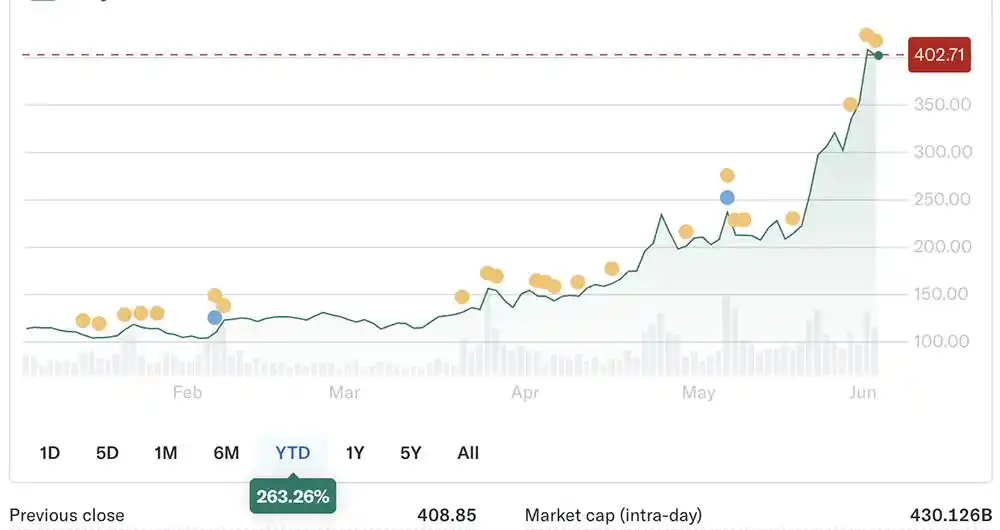
On Monday, NVIDIA released the Arm-based RTX Spark superchip and Vera data center CPU. Arm's stock price surged that night, closing Tuesday with a 16% gain. So far this year, Arm's stock price has accumulated a 263% increase.
NVIDIA founder and CEO Jensen Huang also popped into Rene Haas's Tuesday speech. Taking the stage, he joked, 'Look at his stock price. Every time I release a product, his stock goes up, while mine does nothing.'
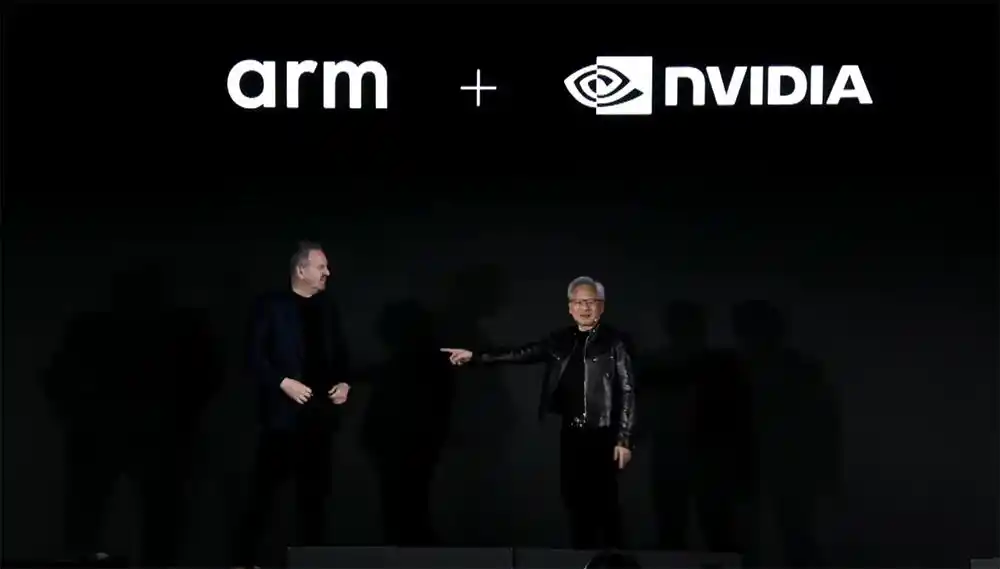
Rene Haas cleverly retorted, 'You were a shareholder, and then you sold your shares.'

Jensen Huang immediately took the bait, 'Yes, yes, oh man, I needed cash.'

The two, evidently old friends, chatted warmly for 15 minutes, frequently improvising comedic sketches, throwing and catching jokes that had the audience roaring with laughter, both often laughing wide enough to show all their teeth.
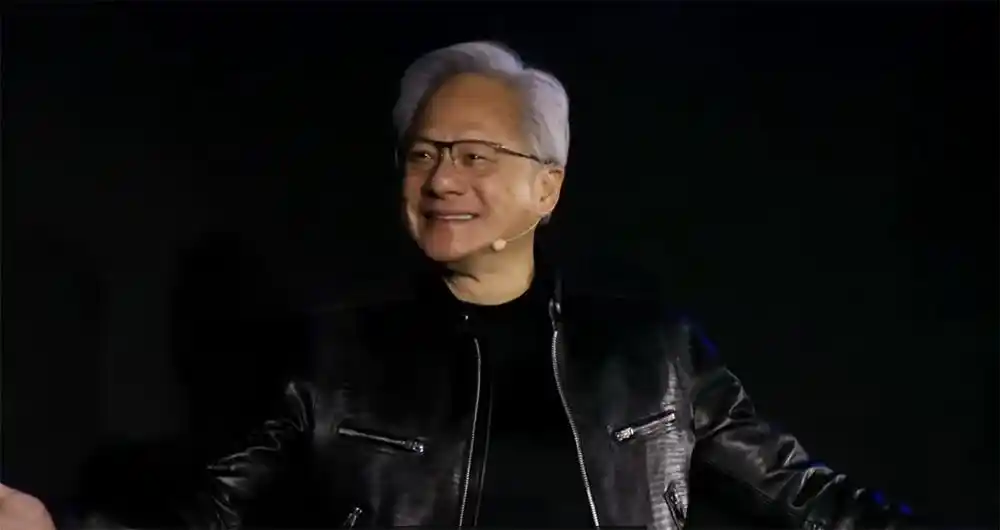
This was truly the liveliest atmosphere I've seen in a recent tech industry conversation.

For example, after lavishing praise on Arm CPUs, Jensen Huang summarized, 'The keywords are 'Arm is perfect.'

Rene Haas responded, 'Another keyword is 'thank you.''

Jensen Huang immediately switched to Mandarin, 'Nǎlǐ, nǎlǐ, bùyào kèqi la.' (Meaning 'Not at all, not at all, don't be polite.')

Then Rene Haas quipped, 'Now this competition is unfair.' (Implying it's unfair for Jensen to speak Mandarin)

Jensen Huang then considerately added in English, 'You're welcome.'
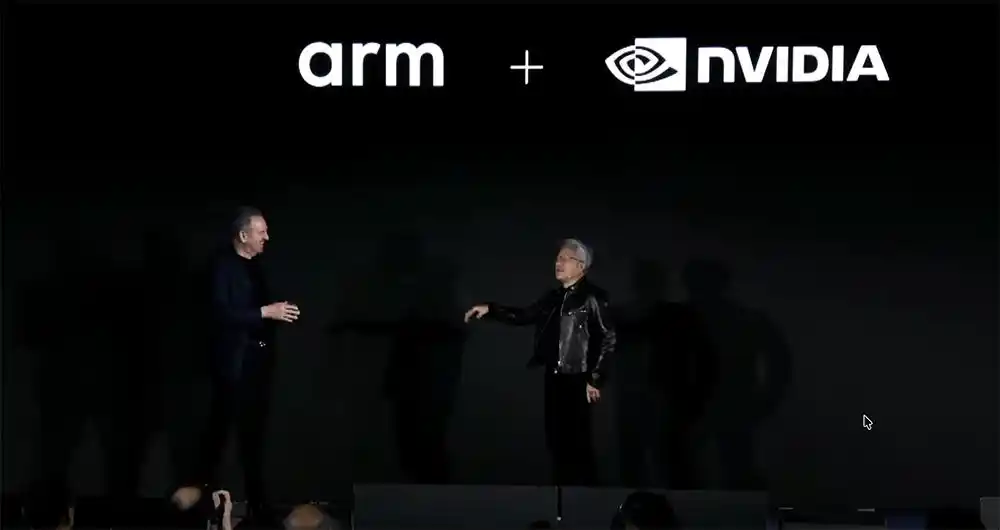
Jensen Huang also joked that 'One of Arm's greatest advantages is not having to worry about supply chain issues.' The supply chain for IP is electrons, and you can have as many electrons as you want.

'So I love their business model,' Jensen Huang began reminiscing. 'You know, I tried. I tried to become Arm. Rene and I worked together before, and then we tried to partner again, but that's no big deal. I'm still very sad.'

Rene Haas said, 'If the two companies merged, we would become the world's largest company.'

'I like that,' Jensen Huang laughed. 'That's a great idea.'

It seems both are full of regret about NVIDIA's failed acquisition of Arm.

Finally, during the gift-giving segment, Rene Haas played a 'nostalgia card,' giving Jensen Huang a Microsoft Surface RT laptop equipped with an NVIDIA Tegra 3 chip, even mimicking Jensen Huang's signature on it.

The NVIDIA Tegra 3 was the world's first Arm mobile quad-core processor launched by NVIDIA years ago.

Jensen Huang pointed at the photo on the big screen and boasted, 'What happened when we were young? I have to say, I think I look younger. Do you agree? I think I've aged rather well.'
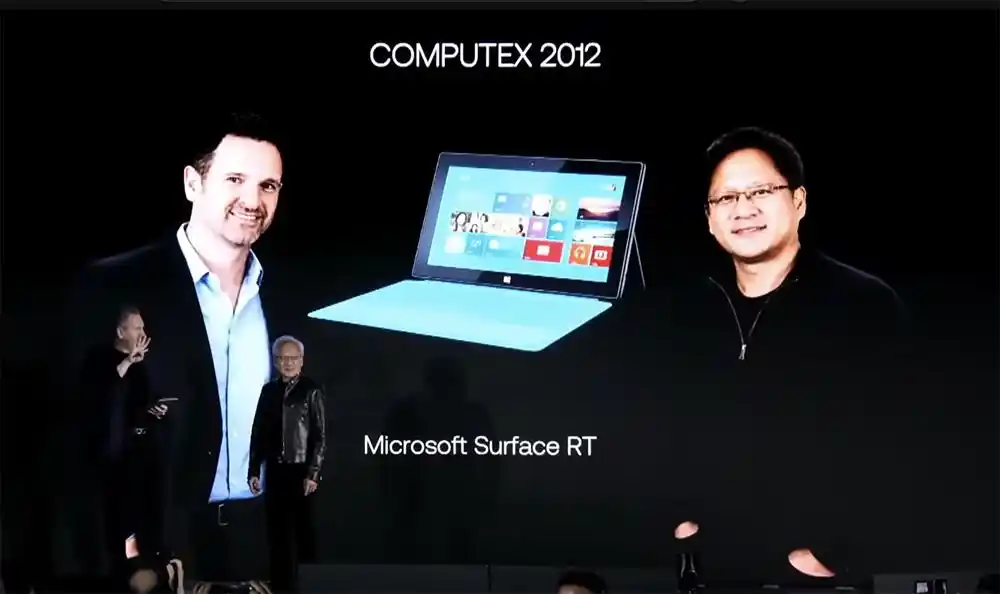
Rene Haas laughed until his image blurred.

Then Jensen Huang snatched the gift, his tone rising, 'This is for me? If I sign it and give it back, it becomes a treasure.'

Rene Haas said, 'No, you sign it and give it back to me, there's a contract, an invoice here, we can't do that. We know that game.'
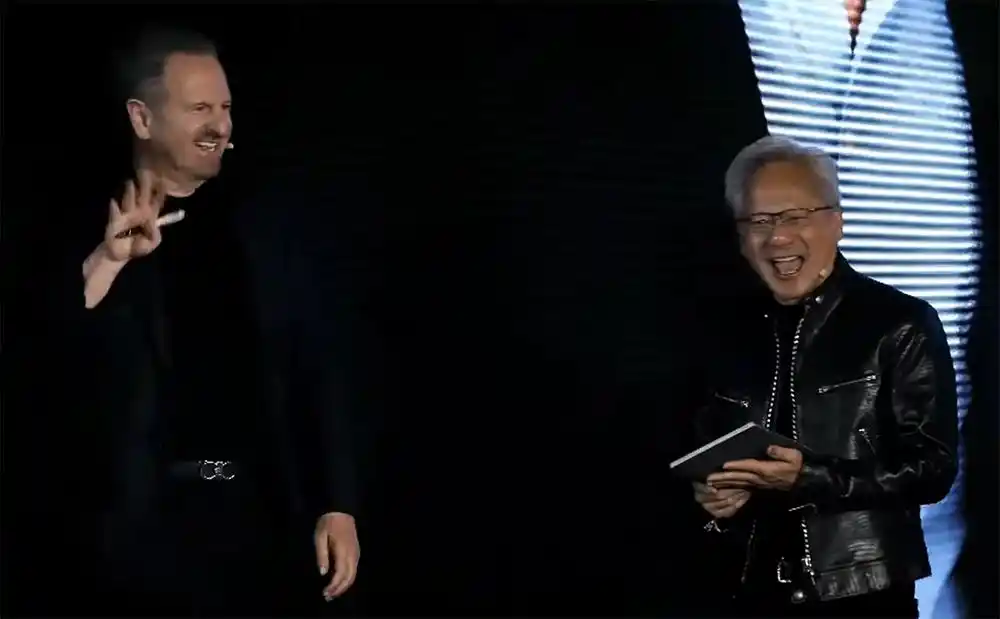
Returning to serious industry topics, during this speech, Rene Haas asked Jensen Huang several key questions:

1. Why make the RTX Spark?

2. How to balance local agents and cloud agents?

3. Can agents truly work independently, detached from the underlying OS?

4. What does Jensen Huang see as growth constraints in the coming years?

Jensen Huang also painted a grand picture for market development: currently, the computer industry is limited by the number of people using computers. With agents that can autonomously use computers, we will no longer have a billion people using computers, but tens of billions, possibly even more agents, robots, and autonomous vehicles using computers than humans.

So the question is, how big can the computer product scale become?

'I feel that, by now, the outcome is decided. This multi-trillion-dollar industry might be ten times larger; we are on our way.' Jensen Huang said.

Rene Haas also shared the latest progress and future plans for Arm in the Agent PC and data center CPU fields.

He mentioned in passing that he chatted with TSMC Chairman and CEO C.C. Wei and Senior Vice President & COO C.J. Chou this week, and they said they have never seen the semiconductor industry cycle so prosperous for four consecutive years.

01. Jensen Huang's Mini-Lecture: How to Design Agent PCs?

Jensen Huang answered Rene Haas's key questions one by one. These insights are quite instructive for the upcoming development of AI PCs and chip design thinking.

1. Why make the RTX Spark product?

PCs and operating systems have existed for 40 years. Manual programming will be replaced by agent applications that will use tools on the PC. So, how should we restructure the architecture, change the OS, and reinvent the computer in the future?

NVIDIA realized that agent systems need excellent CPUs, which is why Arm was adopted.

The RTX Spark superchip comes with a 20-core CPU, excellent single-thread performance, and memory needs to store many parameters.

So, NVIDIA created a new data format called NVFP4 to compress the massive language, build as many models as possible, and integrate very intelligent AI into the system memory.

NVIDIA also wanted to combine CUDA and CUDA Tile for accelerated computing, integrating tensor core processing into a single processor.

2. How to balance locally running agents and cloud-running agents?

These Arm PCs will become autonomous agents that run continuously.

Today, if you leave your laptop at home or in a hotel, you can't use it.

But in the future, you can just pick up your phone, remotely talk to your PC, and command the agent to work.

Jensen Huang said, 'The essence of personal computing devices is that you can do anything with that device without spending time.'

If you need to use some cloud APIs, just call the cloud APIs. Whatever can be done locally, do it on the computer.

3. Is the operating system important for running agents? If we view the agent as the OS, can it truly work independently and not heavily rely on the underlying OS?

The importance of the operating system is not diminished at all; it might even be more important than before.

This is also a controversial point often mentioned when AI appears—'software is dead.' Jensen Huang thinks nothing could be further from the truth.

People might only know 10-20% of many tool functions.

But now, you can tell the agent what you want.

The agent knows very well how to use these tools because it has read the Skills file. Skills essentially involve reading the user manual for that tool, so it now uses the MCP or CLI connected to this tool, unlocking all these tools to meet your needs.

These tools will be more valuable than ever. They run on an OS, so we need Windows, we need these APIs and tools for a long time to come.

4. What are the constraints on growth in the coming years?

'We see constraints in almost every direction.' Jensen Huang said NVIDIA planned ahead, did supply chain planning well, grew nearly 100% year-over-year this year, will achieve very rapid growth next year, and the supply chain can support NVIDIA's growth.

But demand is actually higher.

Jensen Huang talked about how the new computing application paradigm truly requires a new architecture. Now, a major breakthrough is that agents can produce practical AI, which is why everyone's growth is so incredible.

When AI becomes practical, the tokens generated can bring profit. When token generation is profitable, everyone wants to generate trillions more tokens.

Now, AI is not just a chatbot that can answer questions; it can think, use tools, read, continue thinking, plan, try—the number of tokens that need to be generated has increased massively. The profitability of tokens is driving compute demand, creating a compounding effect.

02. Arm PC Chips: Apple, Google, Qualcomm All Say Good, Close Collaboration with NVIDIA and MediaTek

In the PC field, Google, Apple, NVIDIA, Qualcomm, etc., have developed PC chips based on the Arm architecture. Arm has collaborated with Apple, Google, Microsoft, and others for decades.
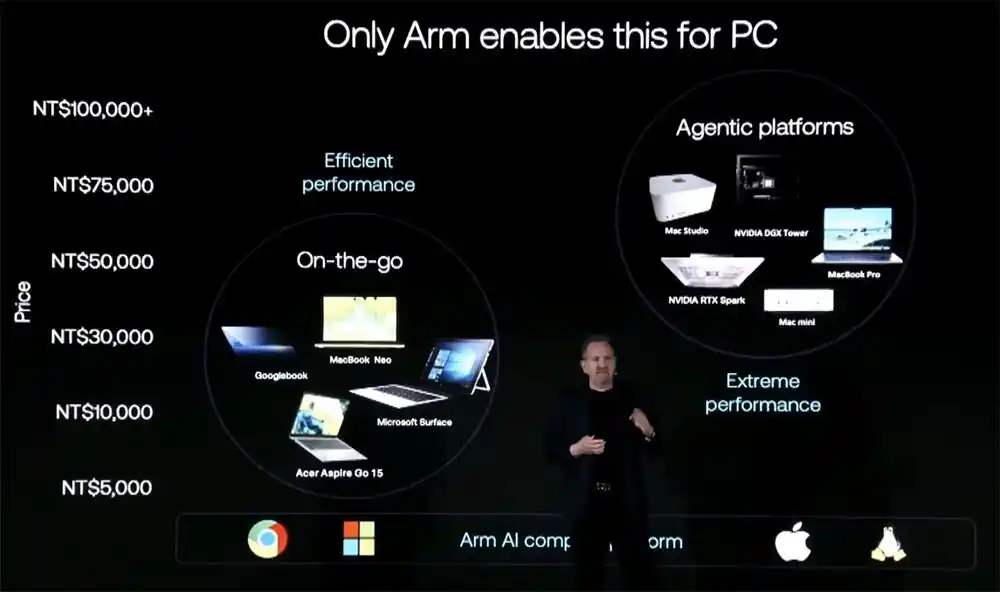
Rene Haas discussed that Arm is honored to collaborate with NVIDIA on developing the Arm-based RTX Spark superchip. The custom Grace CPU in this chip has 20 cores, each based on the Arm architecture.

'I believe this is the highest number of CPU cores in any laptop on the market today.' Rene Haas said that when you pair it with the Blackwell GPU, this chip achieves 1 PFLOPS of FP4 AI performance, along with 128GB of unified memory capacity, full native support for the Arm platform's Windows OS.
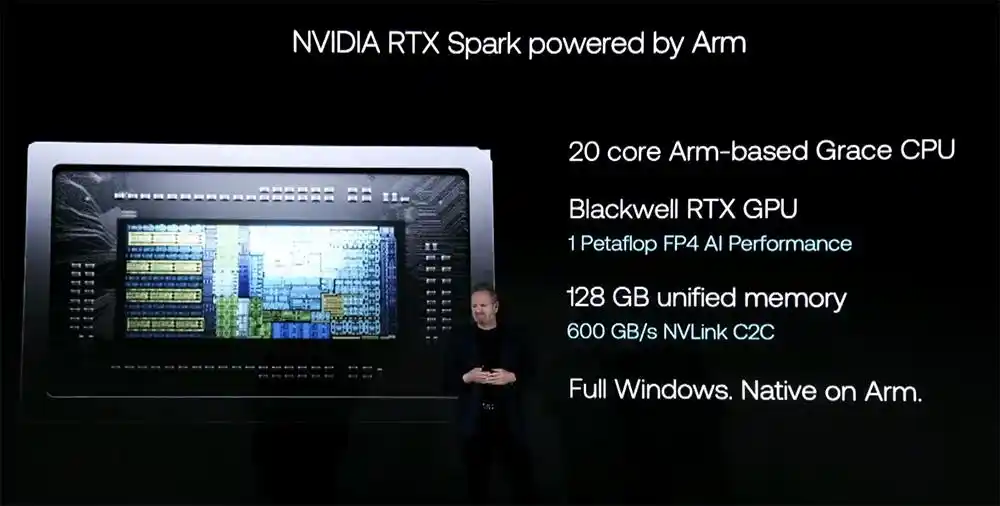
Arm's role here is to closely collaborate with NVIDIA and MediaTek using Arm's Compute Subsystem (CSS) strategy.

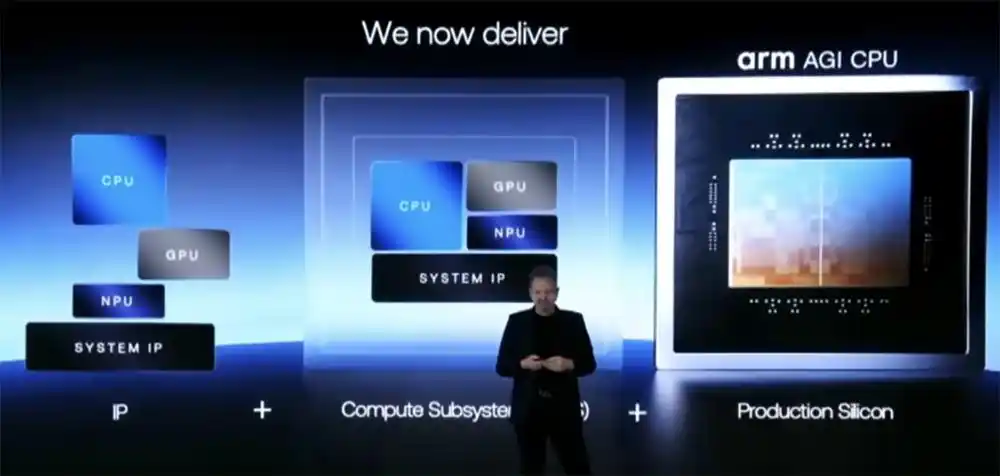
The Compute Subsystem combines all the components needed to build a custom SoC (CPU, GPU, system IP, memory controller) to form a complete end-solution system.

Arm collaborated with MediaTek to accomplish this, and MediaTek can provide the complete solution.

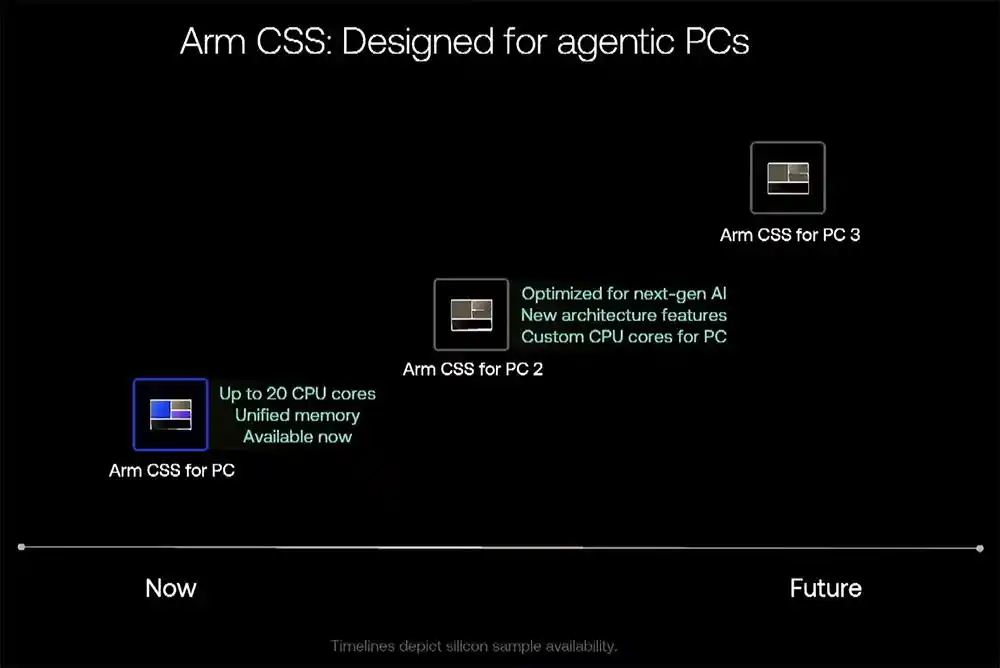
Rene Haas also displayed Arm's CSS roadmap for Agent PCs. The next generation will optimize custom CPU cores specifically designed for PCs.
03. Arm's Self-Developed Agent CPU: OpenAI, ByteDance Are Partners

Rene Haas said over 25 billion Arm chips have been made in Taiwan. The Arm AGI, Arm's first self-developed CPU launched in March this year, is produced by Taiwan's TSMC.
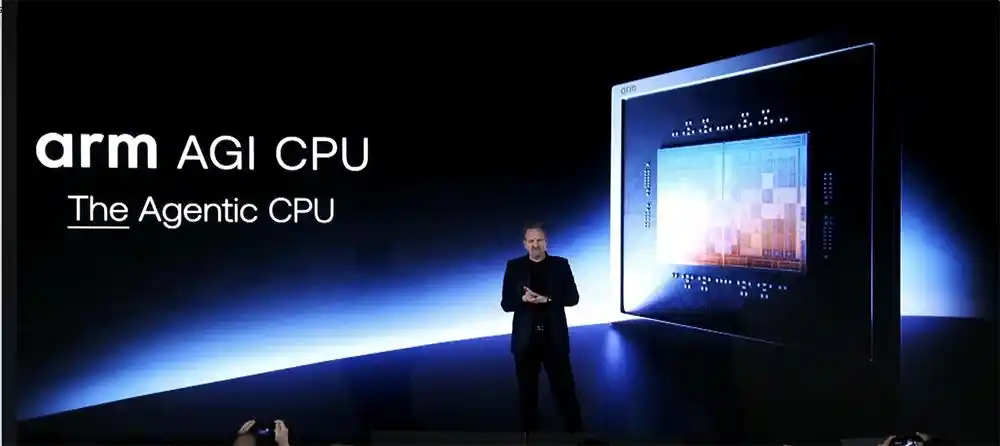
The Arm AGI CPU is specifically built for AI agent infrastructure. It uses TSMC's 3nm process, a dual-chiplet design, with a single CPU integrating 136 high-performance Arm Neoverse V3 cores, equipped with 2MB L2 cache per core, supporting up to 3.7 GHz frequency, providing 6GB/s memory bandwidth per core, memory latency below 100ns, featuring 96 lanes of PCIe Gen 6 interface, supporting CXL 3.0 protocol, with a TDP of 300W.

Arm AGI CPU partners include OpenAI, Meta, Cerebras, SAP, SK telecom, Rebellions, etc. Rene Haas announced that market demand for this chip is stronger than at launch, with Oracle and ByteDance also joining the family, validating that the Arm AGI CPU can solve real-world problems.

Of course, not all companies want to buy the Arm AGI CPU. For companies interested in developing their own chips, Arm offers a variety of IP and Compute Subsystems (CSS), committed to providing any solution customers would like to see succeed.
In the data center, the Axion CPU connected to Google's latest AI chips TPU 8t and TPU 8i is a chip using Arm Neoverse technology, reducing power consumption by up to 60% compared to x86 CPUs with equivalent performance.

Amazon's self-developed CPU, Graviton, also uses Arm architecture. Amazon CEO Andy Jassy once revealed, 'Two large customers asked if they could buy all our Graviton instances for 2026.'

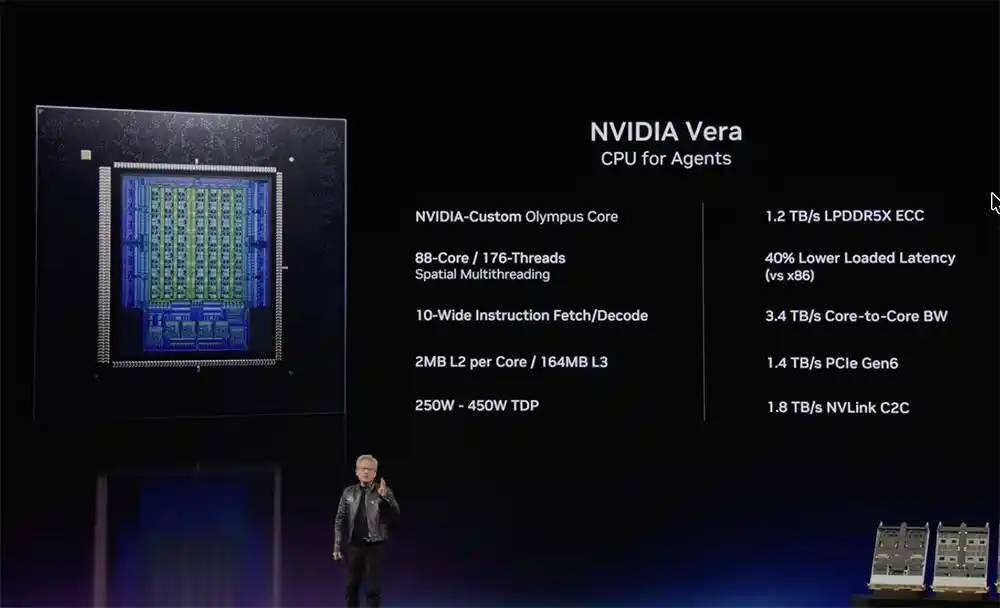
NVIDIA also just released the new Vera CPU based on Arm this week.
Arm plans to make self-developed CPUs a long-term endeavor and displayed a three-year roadmap.
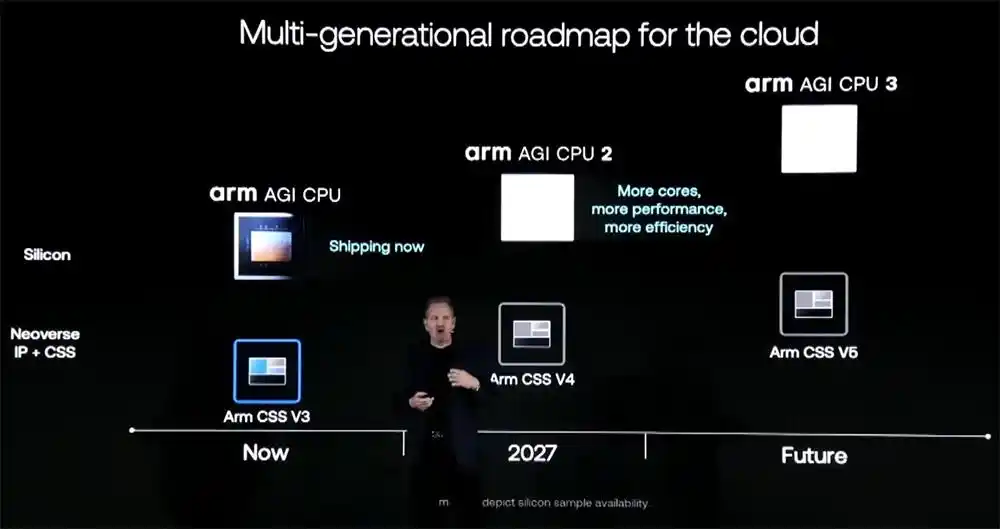
The second-generation Arm AGI CPU is already in development, featuring more cores, higher energy efficiency, and better performance than the previous generation.

The third-generation Arm AGI CPU is also coming soon.

All of these are based on the Compute Subsystem Arm intends to deliver alongside the chips.

04. Conclusion: After Agent Explosion, Compute Competition Spotlight Turns to CPU

This week's speeches by chip industry leaders like Jensen Huang, Lip-Bu Tan, and Rene Haas reflect some common trends in the CPU industry—agents are changing computing logic, opening a brand new door of market opportunities for CPUs.

In recent years, the focus of compute competition has mainly been on GPUs, indispensable for AI training. However, with the explosion of agent applications this year, agent inference demand is booming, requiring massive state management, tool calling, and process orchestration—these are CPU-intensive tasks.

Intel and AMD continue to consolidate x86 processors' advantages in the data center. Emerging players, including Amazon, Google, NVIDIA, etc., are largely betting on the Arm CPU route. Even Arm made a decision 'against its ancestors,' formally entering the data center CPU market this year.

A very interesting phenomenon is the formation of a new vertical integration trend in the chip industry.

Chip giants with rich product lines like NVIDIA, Intel, and AMD are increasingly emphasizing their full-stack nature. The advantages they tout for their solutions also converge: higher energy efficiency, having everything you need, and saving more money.

Leading companies across industries are also 'crossing boundaries': cloud giants extend downwards to self-develop chips, chip companies extend upwards to make system solutions, and semiconductor IP companies extend upwards to develop chips.

In the context where tokens become the new competitive currency and compute demand grows explosively, how to generate more effective compute per watt will be the main theme of chip competition going forward.

This article is from the WeChat public account 'Chip World' (芯东西), author: ZeR0, editor: Mo Ying

Câu hỏi Liên quan

QWhich two major companies have adopted Arm's self-developed data center CPU chip Arm AGI, as announced by Arm CEO Rene Haas?

AByteDance and Oracle.

QWhat humorous exchange did Jensen Huang and Rene Haas have regarding Arm's stock price and NVIDIA's potential acquisition of Arm?

AJensen Huang joked that every time he releases a new product, Arm's stock price rises while his (NVIDIA's) does nothing. Rene Haas responded by noting that Huang was once a shareholder but sold his shares. Huang quipped back, "Yes, yes, well, I needed the cash," indicating mutual regret over NVIDIA's failed attempt to acquire Arm.

QWhat are the four key questions Rene Haas asked Jensen Huang during their conversation?

A1. Why did NVIDIA create RTX Spark? 2. How to balance local agents and cloud agents? 3. Can agents truly work independently, without relying on the underlying operating system? 4. What does Jensen Huang see as the constraints on growth in the coming years?

QWhat is the strategic significance of Arm entering the data center CPU market with its self-developed Arm AGI CPU, according to the article?

AThe article suggests that the explosion of AI agent applications has shifted the focus of computing competition. While GPUs were central for AI training, agent inference requires significant state management, tool invocation, and process orchestration, which are CPU-intensive tasks. Arm's entry into the data center CPU market, alongside other players like NVIDIA, Amazon, and Google betting on Arm architecture, highlights a new vertical integration trend and a key industry focus on maximizing effective computation per watt.

QWhat are some of the technical specifications of the first-generation Arm AGI CPU mentioned in the article?

AThe Arm AGI CPU is manufactured using TSMC's 3nm process, features a dual-chiplet design, integrates 136 Arm Neoverse V3 high-performance cores, has 2MB L2 cache per core, supports a 3.7GHz clock speed, provides 6GB/s memory bandwidth per core, has memory latency below 100ns, uses a 96-lane PCIe Gen 6 interface, supports CXL 3.0 protocol, and has a TDP of 300W.

Nội dung Liên quan

43 phút của Trump: Cốt truyện người mạnh mất kiểm soát, chiến tranh truyền thông leo thang

Trong bài diễn văn kéo dài 43 phút sau hơn một tuần vắng bóng công chúng, Tổng thống Mỹ Donald Trump đã cố gắng thể hiện hình ảnh một nhà lãnh đạo mạnh mẽ và kiểm soát. Tuy nhiên, phần lớn thời gian được dành cho các chủ đề phụ như hồ phản chiếu trên National Mall, so sánh quy mô đám đông với Martin Luther King Jr., cùng những lời công kích nhắm vào phóng viên, đảng Dân chủ và các thành phố lớn. Ông còn ký sắc lệnh hành pháp hủy bỏ các biện pháp bảo vệ việc làm cho hàng nghìn công chức cấp cao liên bang, một động thái có thể gia tăng sự phụ thuộc vào lòng trung thành cá nhân hơn là năng lực chuyên môn trong chính phủ. Bài viết nêu bật trạng thái cá nhân đầy lo lắng và phòng thủ của Trump, thể hiện qua việc ông đột ngột kết thúc sự kiện và nhân viên nhanh chóng dọn dẹp hiện trường. Tác giả cũng phân tích cuộc tấn công của Trump vào nữ phóng viên CNN, Kaitlan Collins, coi đó là một phần của nỗ lực làm mất uy tín giới truyền thông. Bài báo cảnh báo về áp lực ngày càng lớn từ quyền lực chính trị và lợi ích thương mại lên các cơ quan báo chí chính thống, dẫn đến cuộc khủng hoảng về tính độc lập biên tập, như trường hợp Scott Pelley của CBS. Thông điệp chính kêu gọi công chúng ủng hộ các nhà báo và phương tiện truyền thông độc lập, những người được coi là lực lượng quan trọng duy trì sự thật khi các thể chế khác bị xâm phạm. Bài viết kết thúc với viễn cảnh lạc quan khi đề cập đến việc Hạ viện, với sự ủng hộ của một số thành viên đảng Cộng hòa, đã thông qua nghị quyết yêu cầu chấm dứt hành động quân sự ở Iran, cho thấy sự bất đồng ngày càng tăng ngay trong nội bộ đảng của Trump.

marsbit4 giờ trước

43 phút của Trump: Cốt truyện người mạnh mất kiểm soát, chiến tranh truyền thông leo thang

marsbit4 giờ trước

Kalshi, MTS và tham vọng của a16z

Trí tuệ thị trường dự đoán và tham vọng "Truyền thông Mới" của a16z Bài viết phân tích sự trỗi dậy của thị trường dự đoán (prediction markets), đặc biệt là công ty Kalshi được định giá 220 tỷ USD, dưới góc nhìn chiến lược đầu tư và truyền thông của quỹ mạo hiểm a16z. Tác giả điểm lại lịch sử tư tưởng của thị trường dự đoán, từ học thuyết của Hayek về việc thị trường tổng hợp tri thức phân tán, đến cơ chế khuyến khích của Robin Hanson (LMSR) và ý tưởng chính phủ dựa trên dự đoán (Futarchy). Trọng tâm bài viết nằm ở việc a16z, sau khi đầu tư vào Kalshi, đã định vị lại giá trị cốt lõi của thị trường dự đoán không chỉ là sòng bạc hay sàn giao dịch, mà là một phương tiện truyền thông mới mang lại "cảm giác hiện diện" (presence). Trong một thế giới ngày càng bị che khuất và bất lực, việc dùng tiền thật để đặt cược vào các sự kiện toàn cầu giúp cá nhân tái khẳng định vai trò "người quan sát tối thượng", can thiệp và diễn giải thực tại. Kalshi, theo logic này, sẽ trở thành nơi định đoạt tính xác thực và tầm quan trọng của sự kiện. Bài viết liên kết điều này với tầm nhìn "Truyền thông Mới" của a16z – một hệ thống truyền thông toàn diện từ định hình luận điệu, tài trợ, phát hành sản phẩm đến thu hút khách hàng với tốc độ và cường độ chưa từng có, nhằm "tiếp quản dòng thời gian". Ví dụ điển hình là MTS (Monitoring The Situation), một hãng truyền thông chuyên phát sóng tin tức 24/7 trên Twitter. Kết luận cho rằng sức hút thực sự của Kalshi và lý do định giá khổng lồ của nó nằm ở "trường lực bẻ cong hiện thực" – khả năng tạo ra một thực tại thay thế có sức thuyết phục cao nhờ vào khối lượng giao dịch bằng tiền thật, từ đó trở thành một mảnh ghép quyền lực trong đế chế truyền thông mới của a16z.

marsbit5 giờ trước

Kalshi, MTS và tham vọng của a16z

marsbit5 giờ trước

Bất Ngờ: Cựu Nhân Sự Trụ Cột Trong Dự Án Chip Của OpenAI Gia Nhập Anthropic

Chuyên gia chip "nhân viên số 002" của OpenAI, Clive Chan, vừa thông báo rời OpenAI để gia nhập Anthropic. Anh là một trong những thành viên sớm nhất của đội ngũ phát triển chip tự thiết kế của OpenAI, tham gia từ giai đoạn hình thành đến nay. Dù đánh giá cao đội ngũ chip tại OpenAI, Clive Chan chia sẻ anh luôn có mong muốn "chinh phục một ngọn núi mới từ chân núi", đó là lý do anh chuyển sang Anthropic. Tại Anthropic, anh ấn tượng với năng lực, giá trị cốt lõi và tham vọng của đội ngũ, đồng thời trải nghiệm cường độ làm việc rất cao. Khi được hỏi về tiến độ dự án chip của OpenAI, Clive Chan đề cập đến thông tin hợp tác công khai giữa OpenAI và Broadcom, với kế hoạch triển khai bắt đầu từ nửa cuối năm 2026. Clive Chan có kinh nghiệm làm việc tại nhiều công ty công nghệ hàng đầu như Tesla, Google, SpaceX trước khi gia nhập OpenAI vào đầu năm 2024. Việc chuyển đổi của anh là một ví dụ nữa cho thấy dòng chảy nhân tài đáng chú ý giữa OpenAI và Anthropic, sau sự kiện nhà nghiên cứu nổi tiếng Andrej Karpathy chuyển sang Anthropic hồi tháng 5. Động thái này càng thu hút sự chú ý khi Anthropic vừa hoàn thành vòng gọi vốn với định giá gần 1.000 tỷ USD.

marsbit5 giờ trước

Bất Ngờ: Cựu Nhân Sự Trụ Cột Trong Dự Án Chip Của OpenAI Gia Nhập Anthropic

marsbit5 giờ trước

a16z chuyển hướng toàn cầu hóa: VC đang trở thành "động lực thúc đẩy" của liên minh công nghệ Mỹ

Biên tập: Thông báo của Ben Horowitz cho thấy một bước chuyển quan trọng trong chiến lược toàn cầu hóa của a16z: họ không chỉ tìm kiếm dự án ở nước ngoài hay mở rộng đầu tư quốc tế, mà còn đặt mình vào khuôn khổ cạnh tranh công nghệ và hợp tác đồng minh rộng lớn hơn. Trong bối cảnh AI, robot, công nghệ quốc phòng, an ninh mạng và tái cấu trúc chuỗi cung ứng trở thành trọng tâm cạnh tranh quốc gia, con đường quốc tế hóa của startup trở nên phức tạp hơn. A16z đang phản ứng với sự thay đổi này thông qua việc thành lập văn phòng Tokyo, bổ nhiệm Anne Neuberger phụ trách các vấn đề toàn cầu, và nâng cấp nhóm quan hệ nhà đầu tư thành nhóm đối tác toàn cầu. Tín hiệu quan trọng nhất là a16z gắn kết mạng lưới toàn cầu của mình với năng lực lãnh đạo công nghệ của "Mỹ và các đồng minh". Đối với a16z, mạng lưới đầu tư mạo hiểm trong tương lai không chỉ giúp nhà sáng lập gọi vốn, tuyển dụng, bán hàng mà còn hỗ trợ họ tiếp cận thị trường trọng điểm, kết nối với chính phủ và các tổ chức chiến lược, cũng như hiểu rõ môi trường chính sách và quy định của các quốc gia khác nhau. Điều này có nghĩa vai trò của các tổ chức đầu tư mạo hiểm hàng đầu đang được định nghĩa lại. Họ không còn chỉ là trung gian vốn, mà là người tổ chức kết nối công ty khởi nghiệp, năng lực quốc gia, nguồn lực ngành, hệ thống đồng minh và vốn toàn cầu. Chiến lược toàn cầu hóa lần này của a16z có thể được xem như một sự chủ động định vị của vốn Silicon Valley trong cuộc cạnh tranh công nghệ toàn cầu mới.

marsbit6 giờ trước

a16z chuyển hướng toàn cầu hóa: VC đang trở thành "động lực thúc đẩy" của liên minh công nghệ Mỹ

marsbit6 giờ trước

Kalshi, MTS và Tham vọng của a16z

Bài viết phân tích tầm quan trọng của thị trường dự đoán (prediction markets), tập trung vào Kalshi, và tầm nhìn của quỹ đầu tư mạo hiểm a16z trong việc xây dựng một đế chế truyền thông mới. Tác giả điểm qua lịch sử tư tưởng đằng sau thị trường dự đoán, từ lý thuyết của Hayek về việc thị trường tổng hợp tri thức phân tán, đến cơ chế khuyến khích của Robin Hanson (LMSR) và ý tưởng "Futarchy". Trọng tâm bài viết là việc a16z đầu tư mạnh vào Kalshi (định giá 220 tỷ USD) và cách họ diễn giải giá trị cốt lõi của nó: mang lại "cảm giác hiện diện" (presence). Trong một thế giới mà con người ngày càng thụ động và xa cách với thực tại, thị trường dự đoán cho phép họ tham gia tích cực bằng cách dùng tiền thật để đặt cược vào các sự kiện, từ đó cảm thấy mình là người quan sát và dự báo lịch sử. a16z coi đây là mảnh ghép quan trọng cho tham vọng "truyền thông mới" của họ - một hệ thống toàn diện từ định hình narrative, tài trợ sản phẩm, đến tiếp cận khách hàng với tốc độ cực cao, nhằm "tiếp quản dòng thời gian". Công ty truyền thông MTS (Monitoring The Situation) là một ví dụ điển hình cho triết lý này. Bài viết kết luận rằng sức mạnh thực sự của Kalshi và thị trường dự đoán nằm ở "trường lực bẻ cong hiện thực" - khả năng định nghĩa tính xác thực và tầm quan trọng của sự kiện thông qua khối lượng giao dịch bằng tiền thật, từ đó giành được quyền giải thích tối cao về tương lai, một thứ quyền lực hiếm khi nằm trong tay một công ty tư nhân.

链捕手6 giờ trước

Kalshi, MTS và Tham vọng của a16z

链捕手6 giờ trước

Giao dịch

Giao ngay
Hợp đồng Tương lai

Bài viết Nổi bật

Làm thế nào để Mua CHIP

Chào mừng bạn đến với HTX.com! Chúng tôi đã làm cho mua USD.AI (CHIP) trở nên đơn giản và thuận tiện. Làm theo hướng dẫn từng bước của chúng tôi để bắt đầu hành trình tiền kỹ thuật số của bạn.Bước 1: Tạo Tài khoản HTX của BạnSử dụng email hoặc số điện thoại của bạn để đăng ký tài khoản miễn phí trên HTX. Trải nghiệm hành trình đăng ký không rắc rối và mở khóa tất cả tính năng. Nhận Tài khoản của tôiBước 2: Truy cập Mua Crypto và Chọn Phương thức Thanh toán của BạnThẻ Tín dụng/Ghi nợ: Sử dụng Visa hoặc Mastercard của bạn để mua USD.AI (CHIP) ngay lập tức.Số dư: Sử dụng tiền từ số dư tài khoản HTX của bạn để giao dịch liền mạch.Bên thứ ba: Chúng tôi đã thêm những phương thức thanh toán phổ biến như Google Pay và Apple Pay để nâng cao sự tiện lợi.P2P: Giao dịch trực tiếp với người dùng khác trên HTX.Thị trường mua bán phi tập trung (OTC): Chúng tôi cung cấp những dịch vụ được thiết kế riêng và tỷ giá hối đoái cạnh tranh cho nhà giao dịch.Bước 3: Lưu trữ USD.AI (CHIP) của BạnSau khi mua USD.AI (CHIP), lưu trữ trong tài khoản HTX của bạn. Ngoài ra, bạn có thể gửi đi nơi khác qua chuyển khoản blockchain hoặc sử dụng để giao dịch những tiền kỹ thuật số khác.Bước 4: Giao dịch USD.AI (CHIP)Giao dịch USD.AI (CHIP) dễ dàng trên thị trường giao ngay của HTX. Chỉ cần truy cập vào tài khoản của bạn, chọn cặp giao dịch, thực hiện giao dịch và theo dõi trong thời gian thực. Chúng tôi cung cấp trải nghiệm thân thiện với người dùng cho cả người mới bắt đầu và người giao dịch dày dạn kinh nghiệm.

Tổng lượt xem 398Xuất bản vào 2026.04.21Cập nhật vào 2026.06.02

Làm thế nào để Mua CHIP

Thảo luận

Chào mừng đến với Cộng đồng HTX. Tại đây, bạn có thể được thông báo về những phát triển nền tảng mới nhất và có quyền truy cập vào thông tin chuyên sâu về thị trường. Ý kiến ​​của người dùng về giá của CHIP (CHIP) được trình bày dưới đây.

活动图片