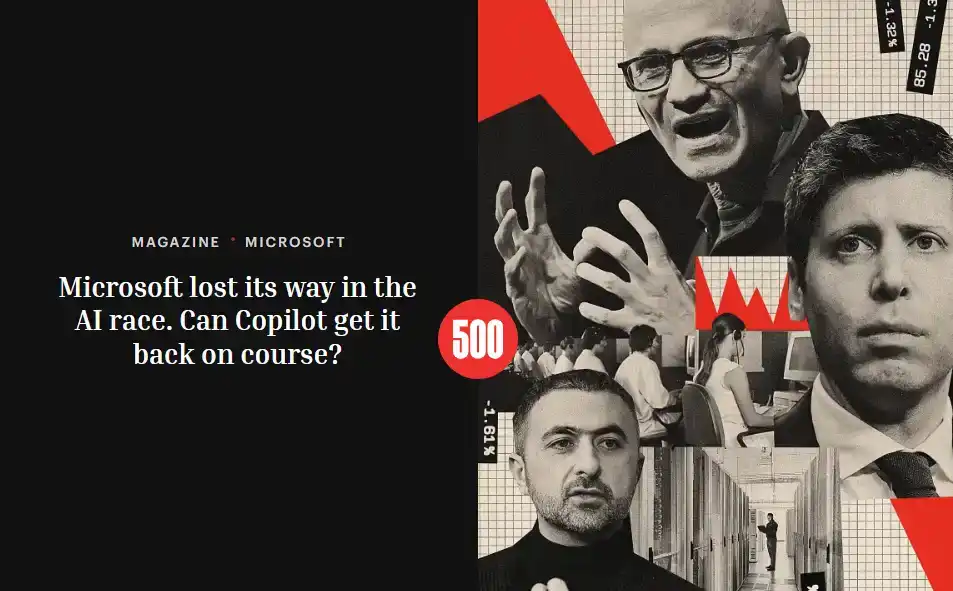
Has Microsoft Lost Its Way in the AI Race, and Can Copilot Bring It Back on Track?

marsbitXuất bản vào 2026-05-23Cập nhật gần nhất vào 2026-05-23

Tóm tắt

Microsoft, once seen as an early AI frontrunner due to its investment in OpenAI, is navigating a strategic shift amid increased competition. Its initial reliance on OpenAI’s GPT models has been complicated by OpenAI’s growing ambitions as a direct competitor, rapid advancements from rivals like Claude and Gemini, and the disruptive rise of AI agents, which challenge its traditional SaaS business model. These factors contributed to stock declines and slower-than-expected adoption of its flagship Copilot products. In response, CEO Satya Nadella has taken a hands-on role in product development, signaling the urgency of change. Microsoft is pivoting from a model-centric strategy to a "model-agnostic" enterprise platform approach. It aims to become the foundational layer connecting various AI models—from OpenAI, Anthropic, or its own new "Superintelligence" team—with enterprise workflows, data, security, and cloud services. Recent organizational changes merged consumer and enterprise Copilot teams to accelerate innovation, exemplified by new products like Copilot Tasks and Copilot Cowork. However, this transformation comes at a high cost. Microsoft faces massive capital expenditures, potentially reaching ~$190 billion by 2026, to support AI infrastructure. While its platform strategy shows early signs of traction with growing Azure AI revenue, it must balance startup-like agility with the reliability expected by enterprise clients. The core challenge is no longer being the sole ...

Editor's Note: Microsoft was once one of the first tech giants to place a winning bet on OpenAI in the generative AI wave. Thanks to its investment in OpenAI and exclusive cloud partnership, Microsoft was initially seen as the most certain winner of the AI era: Azure gained model advantages, and its Office, Bing, GitHub, and enterprise software lines were fully integrated with Copilot. Satya Nadella, like he did leading Microsoft's shift to the cloud, was expected to orchestrate another platform-level migration.

But two years later, Microsoft's advantages have become more complicated. OpenAI is no longer just Microsoft's technology supplier, but also a direct competitor vying for enterprise customers. Models like Claude and Gemini have rapidly caught up, diminishing the sense of lead brought by GPT's exclusivity. The emergence of AI Agents further challenges the long-term SaaS business model that Microsoft relies on. Stock price pullbacks, slower-than-expected Copilot paid adoption rates, and GitHub Copilot being overtaken by Cursor and Claude Code have forced Microsoft to re-evaluate its AI strategy.

The most noteworthy aspect of this article is not whether Microsoft can catch up to OpenAI, Anthropic, or Google in model capabilities, but that Microsoft is attempting to redefine its position: it is no longer betting entirely on a single model, but shifting towards an "model-agnostic" enterprise AI platform strategy. In other words, Microsoft wants to become the foundational layer connecting models, data, security, workflows, cloud computing, and enterprise software. Models can come from OpenAI, Anthropic, or even in the future from Microsoft's own Superintelligence team. What truly stays within Microsoft's ecosystem is the enterprise customer's work platform, data assets, development environment, and security framework.

This is also the context for Nadella personally getting involved in Copilot product development. For Microsoft, the AI competition is no longer just a model race between labs, but a systematic competition about organizational speed, product form, customer relationships, and capital expenditure. Claude Code and Claude Cowork have shown that AI Agents could reshape software development and office workflows; open-source projects like OpenClaw indicate that an "always-on" AI assistant is moving from concept to reality. What Microsoft must do is package these more radical AI-native experiences within the security, compliance, and governance frameworks acceptable to enterprise clients.

However, the cost of this path is not low. To catch up with cutting-edge models and support agent-based products, Microsoft is pushing the AI competition towards "gigawatt-scale" infrastructure investment: more data centers, larger chip clusters, higher capital expenditure. By 2026, Microsoft's capital expenditure is expected to reach about $190 billion. In other words, Microsoft in the AI era must both experiment rapidly like a startup and sustain heavy asset investments like a cloud computing giant.

The real problem Microsoft faces is not whether it can remain the sole winner of the AI era, but whether it can continue to hold the core gateway to enterprise software amid rapidly commoditizing models and ongoing disruption of software business models by Agents. For Nadella, this may not be an ordinary product adjustment, but more like Microsoft's second startup phase during this AI platform migration.

The following is the original text:
Mid-January 2026, Redmond, Washington. The weather was cold, gray, and dark, the kind of morning perfect for hitting the snooze button. But inside Building 92 on Microsoft's sprawling campus, a team of engineers had already arrived early.

They were fighting a tough battle, and they were already behind.

This team was developing a new AI product. It was more of a personal assistant, capable of helping users book flights, reply to emails, even find a reliable local plumber. The team members were well aware that other tech companies were developing similar products. Right at that moment, Microsoft CEO Satya Nadella arrived on the scene. He wanted to show them something.

Nadella opened his laptop and launched an application. It was a system for directing and controlling multiple AI Agents, which he called a "Chain of Debate." Nadella demonstrated it while explaining to the engineers. Team members exchanged knowing glances, like seasoned basketball players suddenly realizing a new teammate actually knew how to play.

Because this application wasn't something Nadella had asked someone else to build for him; he had written it himself using an AI tool called "vibe coding."

"It really set the tone for how hard the team was going to push over the coming weeks," recalls Jacob Andreou, Microsoft Executive Vice President in charge of Copilot design. Nadella was in the same room with them, almost standing behind the engineers, opening his own laptop and participating.

Seeing the CEO so excited about building a new product hands-on energized the team. By late February, the sprint concluded, and Microsoft launched Copilot Tasks—an AI tool that acts as a personal assistant capable of using a computer. The prototype Nadella had built also served as a reference model for a feature called "model council" within Copilot and other components.

But the fact that Nadella is diving this deeply and frequently into AI product teams, even personally building prototypes, itself speaks to Microsoft's current situation. After all, this is a $3 trillion tech giant, not a scrappy startup where the CEO frequently codes alongside developers during sprints.

Nadella's concern about Microsoft's AI strategy is evident enough. Last October, he announced he would step back from some commercial duties to focus more on AI research, product innovation, and AI data center construction.

This concern is not unfounded. Microsoft's stock had gone through a tough period. After hitting an all-time high last October, over the next five months, Microsoft's stock price fell by about 34%. Meanwhile, AI-related revenue for Microsoft's cloud platform Azure more than doubled over the past year.

Microsoft also became a poster child for the so-called "SaaSpocalypse" (SaaS Armageddon sell-off). The emergence of AI coding Agents triggered a collective sell-off of software stocks. Many investors began to believe such products meant companies would no longer buy AI products from SaaS vendors like Microsoft in the future, and might not even buy off-the-shelf software at all.

Between October 28, 2025, and March 27, 2026, Microsoft's stock price fell by 34%. Sales of Microsoft's enterprise Copilot product were also slower than the company expected. Among the 450 million users of the Microsoft 365 office suite, less than 4.5% currently pay for Copilot features. Meanwhile, usage of the consumer-facing Copilot chatbot also lags far behind ChatGPT, Gemini, and Claude. The once-leading AI coding assistant GitHub Copilot was also overtaken by AI startups Cursor and Anthropic's Claude Code.

Two years ago, Microsoft looked like one of the earliest winners of the AI era. Thanks to Nadella's foresighted bet on OpenAI, Microsoft gained exclusive access to the models of this rapidly growing AI startup and could integrate them into its own product suite. If enterprises wanted to use OpenAI's technology, the only cloud service provider they could choose was Microsoft Azure. Microsoft even once believed OpenAI gave it its best chance in years to challenge Google Search.

At that time, Nadella had been at Microsoft's helm for a decade. He had led Microsoft's platform migration from desktop software to the cloud, and now seemed poised to replicate that success in the AI era.

But AI changes too fast. Two years is already a long cycle. The story that follows is how Microsoft missed its early AI lead, and how it is trying to regain the initiative.

What Went Wrong

Microsoft's initial position at the forefront of the AI race was precisely due to its partnership with OpenAI; but what partly put it on the back foot was also this same partnership.

Microsoft spotted this young San Francisco company early, first investing $1 billion in 2019, with total committed investment in OpenAI reaching $13 billion later. Microsoft used OpenAI's technology to launch a series of AI products branded as Copilot across its consumer and enterprise software lines.

But after ChatGPT's release in late 2022, OpenAI's explosive growth and rapidly expanding ambitions quickly strained the relationship. The two companies clashed on multiple issues: on computing resources, OpenAI always wanted more; on intellectual property, Microsoft believed OpenAI wasn't fulfilling contractual obligations to share technological innovations promptly enough; on customer relationships, OpenAI began directly pitching AI models to the same enterprise customers Microsoft was also selling Copilot to; and when OpenAI sought restructuring, they disagreed over how much equity Microsoft should receive in the new for-profit company.

Nadella knew betting Microsoft's AI strategy on a single, not-yet-fully-proven startup was inherently risky. In November 2023, that risk was laid bare: the non-profit board controlling OpenAI's for-profit business fired CEO Sam Altman for "not being consistently candid," notifying Nadella only minutes before announcing the decision publicly.

Nadella had to quickly reassure investors, emphasizing Microsoft still had access to OpenAI's technology; simultaneously, he collaborated with Altman to pressure the board to reverse its decision. Nadella announced Microsoft was prepared to hire Altman and any OpenAI employees willing to follow him to Microsoft. The threat of a mass exodus ultimately forced the board to relent and reinstate Altman.

Within OpenAI, this five-day crisis later became known as "the blip." But according to people familiar with Nadella's thinking, it shook him deeply. He had to find a hedge for Microsoft's AI bets.

"When Nadella joined an AI engineer team's sprint, it really set the tone for how hard the team was going to push over the coming weeks." —Jacob Andreou, Microsoft Copilot Executive Vice President

Microsoft's Plan B was Mustafa Suleyman.

Suleyman is a co-founder of Google DeepMind who later left to start his own AI startup, Inflection. In March 2024, Microsoft hired Suleyman and Inflection's technical team in a $650 million deal, also licensing its technology. Suleyman was then appointed CEO of Microsoft's new AI division, abbreviated as MAI. Its responsibilities were twofold: first, building Microsoft's own cutting-edge models as a hedge against OpenAI risk; second, expanding the user base of Microsoft's Copilot chatbot.

But this step didn't go smoothly. Microsoft's partnership agreement with OpenAI prohibited it from training models beyond a certain size. Suleyman told Fortune: "We were essentially limited to training Microsoft's own native models, and only up to the scale of SLMs, or small language models."

MAI's first publicly tested general-purpose language model, named MAI-1 preview, launched in August 2025 but ranked quite low on various performance leaderboards and was never widely released.

MAI also failed to turn the Copilot chatbot into a consumer hit. According to media reports, a year after Suleyman took over, Copilot usage stagnated at around 20 million weekly active users, while ChatGPT's user base soared, eventually approaching 900 million. In 2025, Microsoft attempted a major upgrade of Copilot to make it more like a personal assistant capable of performing tasks, but this upgrade did not reignite growth. As for the new AI-powered version of Bing search, it also barely dented Google's share of the search market.

Meanwhile, Plan A also began to encounter trouble.

In 2023, OpenAI's GPT models led the industry by a wide margin. But by early 2025, Anthropic's Claude was often topping AI leaderboards, and many enterprises preferred it for complex tasks. Google's Gemini also became increasingly competitive in visual tasks. Yet Microsoft's Copilot products were still entirely powered by GPT. The engine that once underpinned Microsoft's AI strategy was starting to feel like a heavy burden.

Microsoft Commercial CEO Judson Althoff admits the company made several mistakes. First, naming both consumer and enterprise products "Copilot" was inherently confusing. Althoff, who holds a private pilot's license, quipped: "The only thing worse than not having a copilot is having more than one copilot."

Microsoft also incentivized sales reps to promote both free and premium versions of the enterprise M365 Copilot, but only the premium version truly delivered value for enterprise clients. "We got that wrong," he said.

Microsoft was also struggling to keep pace with the speed of AI evolution. A key turning point came in 2025 when Anthropic released Claude Code. Developers simply describe what they want, and it can autonomously write complete programs. This was no longer a "copilot," but "autopilot." Within six months, it reshaped software development.

Then in January this year, Anthropic launched Claude Cowork. This is an Agent capable of using software, including Microsoft productivity tools like Excel and PowerPoint, and autonomously completing tasks.

Claude Cowork poses a serious challenge to M365 Copilot and the AI Agents Microsoft has been pushing clients to adopt. In fact, it threatens not just Microsoft, but most commercial software. It was this realization that triggered the so-called "SaaSpocalypse" software stock sell-off. Ultimately, over $2 trillion was wiped from tech market value, including a single-day $357 billion plunge in Microsoft's market cap.

How Microsoft is Correcting Course

By the fall of 2025, Nadella realized Microsoft had to reboot its AI strategy. Since then, the company's actions reflect a difficult balancing act: on one hand, it must innovate quickly like an AI startup; on the other, it must still reliably serve investors and enterprise clients like the steady Microsoft of old.

Nadella handed off many commercial and day-to-day operational duties to Microsoft veteran Althoff so he could focus on AI product development. Althoff says he handles "Horizon Zero and Horizon One," while Nadella handles "Horizon Two and Horizon Three." Meanwhile, Nadella began breaking down internal silos, making Microsoft faster, flatter, and more agile.

In March this year, Nadella merged the consumer and enterprise Copilot teams. Suleyman no longer oversees consumer AI products, instead leading a renamed model development project: the Superintelligence team. Suleyman says the name reflects the team's ambition and helps attract top researchers.

Jacob Andreou joined Microsoft in 2025, previously at Snap and venture firm Greylock. He now oversees both consumer and enterprise Copilot Experience and reports directly to Nadella. Joining Suleyman and Andreou on the Copilot leadership team are three other Microsoft Executive Vice Presidents: Charles Lamanna, responsible for Copilot, AI Agents, and platform; Ryan Roslansky, responsible for Microsoft Office and LinkedIn; Perry Clarke, serving as Applications Chief Technology Officer.

Lamanna says: "We want it to be a back end, a brain, driving both the consumer side and the work side." Nadella himself attends the Copilot leadership team's weekly stand-up and participates in a dedicated Teams channel discussing Copilot development progress.

Microsoft faces a delicate balance: it must innovate fast enough to catch up with AI rivals like Anthropic and Google, yet must remain a reliable partner in the eyes of large enterprise customers.

Andreou points to two new products as evidence the unified Copilot team is operating as Nadella envisioned: one is Copilot Tasks for consumers, the product Nadella personally helped prototype in January; the other is Copilot Cowork for enterprise clients.

He says: "Both of those are basically frontier-level experiences, one for consumers, one for enterprise users. And they were both put together by our team pulling resources together and building them in a matter of weeks."

Microsoft has also agreed to OpenAI's long-pending restructuring, with significantly less restrictive terms. The software giant received a 27% equity stake in OpenAI. If OpenAI goes public as widely expected, this provides potential upside. But the exclusivity arrangements in the old agreement have been abandoned: OpenAI can now partner with other cloud providers, and Microsoft can use models from other AI companies.

Suleyman says the new agreement finally allows Microsoft to build larger, more capable frontier AI models and ultimately achieve self-sufficiency. But he adds it will still take Microsoft two to three years to catch up with top AI labs.

The reshaped partnership also allows Microsoft to embrace OpenAI's main rival, Anthropic. Last November, Microsoft pledged up to $5 billion in investment in Anthropic and began offering its models on Azure. The ability to power Copilot with Claude has proven popular with enterprise clients and helped Microsoft build Copilot Cowork.

"You've got to give credit: OpenAI and Anthropic are helping us go faster." —Judson Althoff, Microsoft Commercial CEO

But Microsoft isn't simply swapping dependence on one loss-making AI startup for another. The investment in Anthropic reflects Microsoft's judgment about industry direction: AI models will become increasingly commoditized. At least in the enterprise market, the real value won't concentrate solely in the AI "brain," but will shift to the tools, data, security, cloud computing, and workflow systems surrounding that brain.

This is precisely where Microsoft believes it can win.

It already possesses many key assets: software tools, security systems, data warehouses, and cloud computing capabilities. Microsoft has also built a series of products branded with "IQ" to help companies create customized workflows, aggregate their own data, and build, deploy, and monitor Agents running those workflows based on any AI model from any supplier.

Althoff says: "We don't believe enterprises will change their information work platform, their development environment, their security environment every time a new model drops."

This strategic pivot also brings a new business model.

Previously, Microsoft typically charged per-user licensing fees, such as $30 per user per month for Copilot. Customers liked this model because budgets were easier to plan. But if the AI Agents within these products use models Microsoft doesn't own, Microsoft must pay corresponding token usage fees to the AI supplier.

Therefore, Microsoft has begun shifting to a hybrid pricing model: a base portion still charged per user license, including a limited token quota; any excess is billed per token. This is to avoid the "model-agnostic" strategy eroding profit margins.

For cost control, Microsoft has also started streamlining its workforce. In April this year, Microsoft announced its first-ever voluntary employee severance program, primarily targeting its longest-tenured employees. The company said about 7% of its U.S. workforce, roughly 8,750 employees, were eligible for the program, with an expected cost of $900 million.

There are signs Microsoft's adjusted enterprise strategy is working. As of the end of March, Azure revenue grew 40% year-over-year, and Microsoft's overall AI business reached $37 billion in annualized sales, up 123% year-over-year. Currently, 20 million M365 users pay for Copilot, a quarter of whom signed up in the first four months of 2026. Althoff says adoption is accelerating.

UBS analyst Karl Keirstead says more Microsoft customers are telling him they're starting to see Copilot's value. But overall user numbers remain unsatisfactory. He says: "I don't think they're at a penetration rate yet that Wall Street would be happy with."

Microsoft's "model-agnostic" strategy may also have a vulnerability: what if those high-profile AI startups also begin building Microsoft-style enterprise tools and connective systems?

This is no longer hypothetical. In February this year, OpenAI launched its Frontier platform for enterprises, offering many capabilities Microsoft is building into its new tools. Anthropic is also moving in this direction, launching Claude Managed Agents service.

Microsoft's argument is that decades of enterprise customer relationships, reputation for reliability and security, and deep integration with customers' existing software systems give it an advantage. Althoff says he welcomes the competition. "You've got to give credit: OpenAI and Anthropic are helping us go faster," he says.

But some question whether a company of Microsoft's size can truly match the agility of AI-native startups. UBS's Keirstead says: "Microsoft, and frankly all software companies, are facing something they haven't faced in over a decade: highly innovative, brand-new competitors. Expecting a large incumbent like Microsoft to pivot as quickly as OpenAI and Anthropic is probably asking too much."

Bank of America analyst Tal Liani sides with "Team Nadella." He believes AI companies are unlikely to build the full suite of products Microsoft offers. This means Microsoft doesn't necessarily have to win the AI race; it just needs to not lose it.

He says: "It doesn't have to be the best, as long as it's good enough, and when you bundle it you get a high value, that's really Microsoft's value proposition."

Yet, even just "not losing" comes at a high cost.

Like other hyperscale cloud providers, Microsoft is spending huge sums on data centers and specialized chips. In fiscal year 2025, Microsoft's capital expenditure reached $88.2 billion, roughly on par with peers like Google Cloud and Amazon AWS. But in hindsight, this was still too conservative. Surging demand left Microsoft short on computing power and unable to recognize signed AI revenue as actual revenue at the expected pace.

"I thought we would catch up," CFO Amy Hood admitted on last October's earnings call. "We have not."

Now, Microsoft is doubling down. The company expects capital expenditure in 2026 could reach about $190 billion, more than triple its 2024 spending. Wall Street, once nervous about such spending levels, now seems willing to tolerate these massive investments. But if investor sentiment reverses, Microsoft will be more exposed to risk than ever before.

In November 2025, an independent developer named Peter Steinberger released OpenClaw. This is a free, open-source system that can turn any AI model into a long-running, autonomous, always-on Agent: it can develop software, act as a virtual executive assistant, even manage inventory for an online store.

OpenClaw became popular among developers and AI power users. Reportedly, Nadella is one of them.

But OpenClaw, while popular, has a clear problem: to truly function, it needs access to systems, data, payment information, and passwords, making it extremely risky. It also consumes tokens at a staggering rate.

Nadella said at a tech conference in San Francisco in March: "I can't launch OpenClaw at Microsoft. I don't have the authority to do that, because it would be considered Microsoft releasing a virus. But at the same time, it is an incredible innovation."

Nadella has tasked the unified Copilot team with building Microsoft's version of OpenClaw: one that retains the fun and ease-of-use of a consumer-grade product while having the security and governance capabilities enterprises require. Andreou sees this as a test for the new organization: "That's what we call winning here."

Lamanna believes this could be the key to igniting Copilot growth. He says: "The hardest problem has always been: how do you help people change the way they work?"

If a perpetually running AI assistant is truly feasible, it will make that change easier to happen. It also means the basic unit of AI will shift from "model" to "always-on Agent." This is precisely the kind of paradigm shift that will test whether Microsoft's "connective tissue" strategy can hold when the core form factor changes. Lamanna says an enterprise-grade Microsoft version of OpenClaw is not far off.

"Gigawatt" Scale

The week of March 30, Suleyman gathered the new Superintelligence team in Miami for a three-day offsite. The team, about 500 people from around the world, met to chart a roadmap for achieving "gigawatt-scale" AI training runs. Training at this scale would enable Microsoft to compete directly with OpenAI, Anthropic, Google DeepMind, Meta, and xAI.

Suleyman says this is crucial for Microsoft to achieve self-sufficiency by 2030. Microsoft will lose access to OpenAI's technology in 2032.

The entire team gathered in a large ballroom to hear keynote speeches from Suleyman and Nadella and participate in an "Ask Me Anything" session. According to Suleyman, Nadella described this moment as Microsoft's "refounding of the company" in response to the AI platform shift.

This is a telling statement.

After the keynote, the meeting broke into different workstreams. Teams huddled around 40 whiteboards placed around the ballroom, brainstorming and planning eight-week sprints. Nadella didn't leave; he stayed.

For the next three hours, he moved from table to table, talking with researchers, offering suggestions, sharing ideas.

If this is truly a "refounding," then Nadella is playing the role of startup CEO. He takes no advantage for granted. He knows Microsoft could lose everything, and still has everything to fight for.

Câu hỏi Liên quan

QWhat was Microsoft's initial strategy in the generative AI race, and why has it become complicated?

AMicrosoft's initial strategy was to leverage its exclusive partnership and investment in OpenAI, integrating GPT models into its product suite (Azure, Office, Bing, GitHub) under the Copilot brand. This positioned it as an early leader. However, the advantage became complicated because OpenAI started competing directly for enterprise clients, rival models like Claude and Gemini closed the capability gap, and the rise of AI Agents began to challenge Microsoft's core SaaS business model.

QHow is Microsoft redefining its AI strategy to address current challenges?

AMicrosoft is shifting from a model-centric strategy to a 'model-agnostic' enterprise AI platform strategy. It aims to become the foundational layer connecting models, data, security, workflows, and cloud services. The value proposition is no longer just the AI 'brain' (which can be sourced from OpenAI, Anthropic, or its own teams) but the secure, integrated platform where enterprise work, data, and applications reside.

QWhat key challenges and setbacks did Microsoft's Copilot products face according to the article?

AKey challenges and setbacks include: less than 4.5% of Microsoft 365's 450 million users paying for Copilot; consumer Copilot usage lagging far behind ChatGPT, Gemini, and Claude; GitHub Copilot being overtaken by competitors like Cursor and Claude Code; and the broader 'SaaSpocalypse' market sell-off triggered by AI Agents threatening traditional SaaS business models.

QWhat is the significance of Microsoft's increased capital expenditure, particularly the projection for 2026?

AThe projected capital expenditure of approximately $190 billion in 2026 (triple the 2024 spend) signifies the immense cost of staying competitive in the AI era. This 'gigawatt-scale' investment is for data centers and specialized chips needed to train frontier AI models and support agent-based products. It reflects a dual challenge: innovating like a startup while maintaining the massive infrastructure investments of a cloud giant.

QHow does Satya Nadella's direct involvement in AI product development reflect Microsoft's current situation?

ASatya Nadella's hands-on involvement, including personally coding prototypes (like the 'Chain of Debate' system) and participating in engineering sprints, signals a high level of strategic urgency. It reflects that Microsoft is in a fight to catch up and reinvent itself, requiring startup-like speed and agility that is unusual for a $3 trillion corporation. His shift in focus from commercial duties to AI innovation underscores the pivotal nature of this platform transition for the company's future.

Nội dung Liên quan

CEO của Bit Digital: Tại sao tôi vẫn đang mua thêm ETH

Tác giả Sam Tabar, CEO của Bit Digital, giải thích lý do ông tiếp tục mua thêm ETH. Ông nhấn mạnh đây không phải là quyết định dựa trên chu kỳ thị trường hay các câu chuyện đầu cơ, mà là kết quả của việc phân tích dữ liệu và nhận thấy tài sản này đang bị định giá sai lệch. Ông cho rằng việc đánh giá ETH dưới góc độ "tiền tệ" là một sai lầm. Trong khi Bitcoin tập trung vào cuộc chơi đồng thuận tiền tệ, Ethereum đã lựa chọn tính hữu dụng - trở thành một lớp thanh toán có thể lập trình, nơi cả thế giới đang xây dựng. Giá trị của ETH đã hiện hữu thực tế: nó là nền tảng để phát hành stablecoin, token hóa trái phiếu kho bạc Mỹ và xử lý giao dịch cho các tác nhân AI. Đây chính là cơ sở hạ tầng thanh toán và giải quyết giao dịch mà tài chính truyền thống cần khi chuyển lên chuỗi. Theo tác giả, chất xúc tác thực sự cho việc định giá lại ETH sẽ đến từ nhu cầu thể chế, xuất hiện khi khung pháp lý, hệ thống lưu ký và môi trường quản lý đã sẵn sàng - một khoảnh khắc đang đến gần hơn so với những gì giá cả phản ánh hiện tại. Lý do cuối cùng cho việc mua vào là ETH tạo ra lợi nhuận (như lợi nhuận gộp 94,7% từ hoạt động staking trong quý I), bảo mật cho nền tảng hợp đồng thông minh hàng đầu xử lý hàng nghìn tỷ USD giao dịch mỗi năm, và đang được giao dịch ở mức chiết khấu đáng kể so với giá trị thực của cơ sở hạ tầng mà nó vận hành. Tác giả không cần ETH trở thành tiền dự trữ toàn cầu; chỉ cần nó duy trì hoạt động như hiện tại, điều đó đã đủ để ông mua và nắm giữ.

marsbit1 giờ trước

CEO của Bit Digital: Tại sao tôi vẫn đang mua thêm ETH

marsbit1 giờ trước

Sự Phát Triển Của Hệ Sinh Thái Cardano (ADA) Thúc Đẩy Hoạt Động Staking Tăng Mạnh

Sự tự tin và mối quan tâm của các nhà đầu tư vào Cardano (ADA) và khả năng mạng lưới của nó đang tăng mạnh, đặc biệt trong lĩnh vực staking. Trong khi giá tiếp tục chịu áp lực giảm, hoạt động staking ADA lại gia tăng đáng kể, một xu hướng góp phần tạo nên một blockchain an toàn hơn. Hoạt động staking trên Cardano đang tăng tốc. Theo dữ liệu từ nhà cung cấp cơ sở hạ tầng staking Everstake, hơn 21,75 tỷ ADA trong tổng nguồn cung 37,01 tỷ ADA hiện đang được staked, tương đương gần 58%. Con số này phản ánh mức độ tham gia lớn từ cộng đồng Cardano và là dấu hiệu vững chắc về sự gắn kết lâu dài trong hệ sinh thái. Sự gia tăng này trùng khớp với việc mở rộng cơ sở hạ tầng và hệ sinh thái của Cardano, cho thấy sự phát triển vẫn đang diễn ra mạnh mẽ. Song song đó, các "cá voi" ADA (ví giữ ít nhất 1 triệu ADA) đang tích lũy trở lại. Dữ liệu on-chain từ Santiment cho thấy các ví này hiện nắm giữ hơn 25,11 tỷ ADA, mức cao nhất kể từ tháng 12/2017, chiếm tới 67% nguồn cung ADA. Hành động tích lũy của các bên liên quan chủ chốt này thường được coi là dấu hiệu của sự tự tin và có thể là tín hiệu tăng giá trong dài hạn. Tóm lại, bất chấp biến động giá, Cardano đang chứng kiến sự tham gia staking mạnh mẽ và sự tích lũy gia tăng từ các nhà đầu tư lớn, cho thấy niềm tin vào tương lai phát triển của mạng lưới.

bitcoinist2 giờ trước

Sự Phát Triển Của Hệ Sinh Thái Cardano (ADA) Thúc Đẩy Hoạt Động Staking Tăng Mạnh

bitcoinist2 giờ trước

Claude Opus4.8 phát hành, Anthropic bắt đầu biến 'sự tin cậy' thành điểm bán hàng của sản phẩm

Claude Opus 4.8 chính thức ra mắt, giữ nguyên giá và đạt vị trí dẫn đầu trong năm trên sáu bài kiểm tra chuẩn mực. Điểm nổi bật của bản phát hành này không nằm ở việc tăng hiệu suất đơn thuần, mà nằm ở việc Anthropic bắt đầu định vị "độ tin cậy" là ưu tiên cốt lõi của mô hình tiên phong. Đáng chú ý, tỷ lệ báo cáo thiếu về lỗi của chính mô hình trong các tác vụ mã đã giảm mạnh từ 19.7% xuống còn 3.7%. Claude Code giờ đây tích hợp luồng công việc động, cho phép điều phối nhiều tác nhân con và thực hiện kiểm tra đối kháng tự động trước khi giao kết quả. Những cải tiến này nhằm giải quyết nỗi lo ngại thực tế: khi AI chuyển từ cửa sổ trò chuyện sang quy trình công việc thực, nguy cơ lớn nhất thường là nó đưa ra câu trả lời trông có vẻ hoàn chỉnh nhưng lại sai. Ngoài ra, Opus 4.8 có những cải thiện đáng kể trong các bài kiểm tra trách nhiệm, toán học và xử lý ngữ cảnh dài. Mặc dù vậy, báo cáo hệ thống cũng ghi nhận một số điểm yếu so với phiên bản trước, như khả năng kháng prompt injection và hiệu suất trong một số bài kiểm tra chuyên môn. Bản phát hành này đánh dấu sự chuyển hướng trong cuộc đua mô hình: từ việc chỉ theo đuổi điểm số chuẩn mực sang việc tranh giành độ tin cậy, khả năng xác minh và thừa nhận sai sót. Điều này là tiền đề để các Agent AI thực sự trở nên hữu dụng. Anthropic cũng xác nhận một mô hình cấp độ "Mythos" mạnh hơn nhiều, hiện đang bị hạn chế truy cập, sẽ được ra mắt trong vài tuần tới, với Opus 4.8 đóng vai trò là bước đệm công khai hướng tới nó.

marsbit3 giờ trước

Claude Opus4.8 phát hành, Anthropic bắt đầu biến 'sự tin cậy' thành điểm bán hàng của sản phẩm

marsbit3 giờ trước

Giao dịch

Giao ngay
Hợp đồng Tương lai

Bài viết Nổi bật

GROK AI là gì

Grok AI: Cách mạng hóa Công nghệ Đối thoại trong Kỷ nguyên Web3 Giới thiệu Trong bối cảnh trí tuệ nhân tạo đang phát triển nhanh chóng, Grok AI nổi bật như một dự án đáng chú ý kết nối các lĩnh vực công nghệ tiên tiến và tương tác người dùng. Được phát triển bởi xAI, một công ty do doanh nhân nổi tiếng Elon Musk dẫn dắt, Grok AI nhằm định nghĩa lại cách chúng ta tương tác với trí tuệ nhân tạo. Khi phong trào Web3 tiếp tục phát triển mạnh mẽ, Grok AI hướng tới việc tận dụng sức mạnh của AI đối thoại để trả lời các câu hỏi phức tạp, mang đến cho người dùng một trải nghiệm không chỉ thông tin mà còn giải trí. Grok AI là gì? Grok AI là một chatbot AI đối thoại tinh vi được thiết kế để tương tác với người dùng một cách linh hoạt. Khác với nhiều hệ thống AI truyền thống, Grok AI chấp nhận một loạt các câu hỏi rộng hơn, bao gồm những câu hỏi thường được coi là không phù hợp hoặc ngoài các phản hồi tiêu chuẩn. Các mục tiêu cốt lõi của dự án bao gồm: Lập luận đáng tin cậy: Grok AI nhấn mạnh lập luận theo lẽ thường để cung cấp các câu trả lời hợp lý dựa trên sự hiểu biết về ngữ cảnh. Giám sát có thể mở rộng: Việc tích hợp công cụ hỗ trợ đảm bảo rằng các tương tác của người dùng được theo dõi và tối ưu hóa về chất lượng. Xác minh chính thức: An toàn là điều tối quan trọng; Grok AI tích hợp các phương pháp xác minh chính thức để nâng cao độ tin cậy của các đầu ra của nó. Hiểu biết về ngữ cảnh dài: Mô hình AI xuất sắc trong việc giữ lại và nhớ lại lịch sử cuộc trò chuyện dài, tạo điều kiện cho các cuộc thảo luận có ý nghĩa và nhận thức về ngữ cảnh. Khả năng chống lại các cuộc tấn công: Bằng cách tập trung vào việc cải thiện khả năng phòng thủ chống lại các đầu vào bị thao túng hoặc độc hại, Grok AI nhằm duy trì tính toàn vẹn của các tương tác của người dùng. Nói tóm lại, Grok AI không chỉ là một thiết bị truy xuất thông tin; nó là một đối tác đối thoại hấp dẫn khuyến khích cuộc trò chuyện năng động. Người sáng tạo Grok AI Bộ óc đứng sau Grok AI không ai khác chính là Elon Musk, một cá nhân gắn liền với sự đổi mới trong nhiều lĩnh vực, bao gồm ô tô, du hành vũ trụ và công nghệ. Dưới sự bảo trợ của xAI, một công ty tập trung vào việc phát triển công nghệ AI theo những cách có lợi, tầm nhìn của Musk nhằm định hình lại cách hiểu về các tương tác AI. Sự lãnh đạo và tinh thần nền tảng bị ảnh hưởng sâu sắc bởi cam kết của Musk trong việc thúc đẩy các ranh giới công nghệ. Các nhà đầu tư của Grok AI Mặc dù các chi tiết cụ thể về các nhà đầu tư hỗ trợ Grok AI vẫn còn hạn chế, nhưng đã được công nhận công khai rằng xAI, vườn ươm của dự án, được thành lập và hỗ trợ chủ yếu bởi chính Elon Musk. Các dự án và tài sản trước đây của Musk cung cấp một nền tảng vững chắc, tăng cường thêm độ tin cậy và tiềm năng phát triển của Grok AI. Tuy nhiên, tính đến thời điểm hiện tại, thông tin về các quỹ đầu tư hoặc tổ chức bổ sung hỗ trợ Grok AI vẫn chưa dễ dàng tiếp cận, đánh dấu một lĩnh vực có thể khám phá trong tương lai. Grok AI hoạt động như thế nào? Cơ chế hoạt động của Grok AI sáng tạo không kém gì khung khái niệm của nó. Dự án tích hợp một số công nghệ tiên tiến giúp tạo ra các chức năng độc đáo của nó: Hạ tầng mạnh mẽ: Grok AI được xây dựng bằng Kubernetes cho việc điều phối container, Rust cho hiệu suất và an toàn, và JAX cho tính toán số hiệu suất cao. Bộ ba này đảm bảo rằng chatbot hoạt động hiệu quả, mở rộng hiệu quả và phục vụ người dùng kịp thời. Truy cập kiến thức theo thời gian thực: Một trong những tính năng nổi bật của Grok AI là khả năng truy cập dữ liệu theo thời gian thực thông qua nền tảng X—trước đây được biết đến với tên gọi Twitter. Khả năng này cho phép AI truy cập thông tin mới nhất, giúp nó cung cấp các câu trả lời và khuyến nghị kịp thời mà các mô hình AI khác có thể bỏ lỡ. Hai chế độ tương tác: Grok AI cung cấp cho người dùng sự lựa chọn giữa “Chế độ Vui” và “Chế độ Thông thường.” Chế độ Vui cho phép một phong cách tương tác vui tươi và hài hước hơn, trong khi Chế độ Thông thường tập trung vào việc cung cấp các câu trả lời chính xác và đúng đắn. Sự linh hoạt này đảm bảo một trải nghiệm được cá nhân hóa phù hợp với sở thích của từng người dùng. Nói tóm lại, Grok AI kết hợp hiệu suất với sự tương tác, tạo ra một trải nghiệm vừa phong phú vừa giải trí. Thời gian phát triển của Grok AI Hành trình của Grok AI được đánh dấu bởi các cột mốc quan trọng phản ánh các giai đoạn phát triển và triển khai của nó: Phát triển ban đầu: Giai đoạn nền tảng của Grok AI diễn ra trong khoảng hai tháng, trong đó việc đào tạo và tinh chỉnh ban đầu của mô hình được thực hiện. Phát hành Beta Grok-2: Trong một bước tiến quan trọng, beta Grok-2 đã được công bố. Phiên bản này giới thiệu hai phiên bản của chatbot—Grok-2 và Grok-2 mini—mỗi phiên bản đều có khả năng trò chuyện, lập trình và lập luận. Truy cập công khai: Sau khi phát triển beta, Grok AI đã trở thành có sẵn cho người dùng nền tảng X. Những người có tài khoản được xác minh bằng số điện thoại và hoạt động ít nhất bảy ngày có thể truy cập phiên bản giới hạn, giúp công nghệ có sẵn cho một đối tượng rộng lớn hơn. Thời gian này tóm tắt sự phát triển có hệ thống của Grok AI từ lúc khởi đầu đến khi công khai, nhấn mạnh cam kết của nó đối với việc cải tiến liên tục và tương tác người dùng. Các tính năng chính của Grok AI Grok AI bao gồm một số tính năng chính góp phần vào bản sắc đổi mới của nó: Tích hợp kiến thức theo thời gian thực: Truy cập thông tin hiện tại và liên quan phân biệt Grok AI với nhiều mô hình tĩnh, cho phép một trải nghiệm người dùng hấp dẫn và chính xác. Phong cách tương tác đa dạng: Bằng cách cung cấp các chế độ tương tác khác nhau, Grok AI phục vụ cho sở thích đa dạng của người dùng, khuyến khích sự sáng tạo và cá nhân hóa trong việc trò chuyện với AI. Cơ sở công nghệ tiên tiến: Việc sử dụng Kubernetes, Rust và JAX cung cấp cho dự án một khung vững chắc để đảm bảo độ tin cậy và hiệu suất tối ưu. Xem xét về đạo đức trong đối thoại: Việc bao gồm chức năng tạo hình ảnh thể hiện tinh thần đổi mới của dự án. Tuy nhiên, nó cũng đặt ra các vấn đề đạo đức liên quan đến bản quyền và việc thể hiện tôn trọng các nhân vật dễ nhận biết—một cuộc thảo luận đang diễn ra trong cộng đồng AI. Kết luận Như một thực thể tiên phong trong lĩnh vực AI đối thoại, Grok AI khái quát tiềm năng cho những trải nghiệm người dùng chuyển đổi trong kỷ nguyên số. Được phát triển bởi xAI và được thúc đẩy bởi cách tiếp cận tầm nhìn của Elon Musk, Grok AI tích hợp kiến thức theo thời gian thực với khả năng tương tác tiên tiến. Nó cố gắng mở rộng ranh giới của những gì trí tuệ nhân tạo có thể đạt được trong khi vẫn giữ trọng tâm vào các vấn đề đạo đức và an toàn cho người dùng. Grok AI không chỉ thể hiện sự tiến bộ công nghệ mà còn thể hiện một mô hình đối thoại mới trong bối cảnh Web3, hứa hẹn sẽ thu hút người dùng bằng cả kiến thức sâu sắc và sự tương tác vui tươi. Khi dự án tiếp tục phát triển, nó đứng như một minh chứng cho những gì giao thoa giữa công nghệ, sáng tạo và tương tác giống như con người có thể đạt được.

Tổng lượt xem 625Xuất bản vào 2024.12.26Cập nhật vào 2024.12.26

GROK AI là gì

ERC AI là gì

Euruka Tech: Tổng Quan về $erc ai và Những Tham Vọng trong Web3 Giới thiệu Trong bối cảnh công nghệ blockchain và ứng dụng phi tập trung đang phát triển nhanh chóng, các dự án mới thường xuyên xuất hiện, mỗi dự án đều có những mục tiêu và phương pháp độc đáo. Một trong những dự án đó là Euruka Tech, hoạt động trong lĩnh vực tiền điện tử và Web3 rộng lớn. Mục tiêu chính của Euruka Tech, đặc biệt là token $erc ai của nó, là cung cấp các giải pháp sáng tạo nhằm khai thác những khả năng đang phát triển của công nghệ phi tập trung. Bài viết này nhằm cung cấp một cái nhìn tổng quan về Euruka Tech, khám phá các mục tiêu, chức năng, danh tính của người sáng lập, các nhà đầu tư tiềm năng và tầm quan trọng của nó trong bối cảnh rộng lớn hơn của Web3. Euruka Tech, $erc ai là gì? Euruka Tech được mô tả như một dự án tận dụng các công cụ và chức năng mà môi trường Web3 cung cấp, tập trung vào việc tích hợp trí tuệ nhân tạo trong các hoạt động của nó. Mặc dù các chi tiết cụ thể về khung của dự án vẫn còn mơ hồ, nhưng nó được thiết kế để nâng cao sự tham gia của người dùng và tự động hóa các quy trình trong không gian tiền điện tử. Dự án nhằm tạo ra một hệ sinh thái phi tập trung không chỉ tạo điều kiện cho các giao dịch mà còn tích hợp các chức năng dự đoán thông qua trí tuệ nhân tạo, do đó tên gọi của token, $erc ai. Mục tiêu là cung cấp một nền tảng trực quan giúp tạo ra các tương tác thông minh hơn và xử lý giao dịch hiệu quả hơn trong lĩnh vực Web3 đang phát triển. Ai là Người Sáng Lập Euruka Tech, $erc ai? Hiện tại, thông tin về người sáng lập hoặc đội ngũ sáng lập đứng sau Euruka Tech vẫn chưa được xác định và có phần mờ mịt. Sự thiếu hụt dữ liệu này gây ra lo ngại, vì kiến thức về nền tảng của đội ngũ thường rất quan trọng để thiết lập độ tin cậy trong lĩnh vực blockchain. Do đó, chúng tôi đã phân loại thông tin này là không rõ cho đến khi có các chi tiết cụ thể được công bố trong lĩnh vực công cộng. Ai là Các Nhà Đầu Tư của Euruka Tech, $erc ai? Tương tự, việc xác định các nhà đầu tư hoặc tổ chức hỗ trợ cho dự án Euruka Tech không được cung cấp dễ dàng qua các nghiên cứu hiện có. Một khía cạnh quan trọng đối với các bên liên quan tiềm năng hoặc người dùng đang xem xét tham gia vào Euruka Tech là sự đảm bảo đến từ các quan hệ đối tác tài chính đã được thiết lập hoặc sự hỗ trợ từ các công ty đầu tư uy tín. Thiếu thông tin về các mối quan hệ đầu tư, rất khó để rút ra những kết luận toàn diện về sự an toàn tài chính hoặc độ bền vững của dự án. Theo thông tin đã tìm thấy, phần này cũng đang ở trạng thái không rõ. Euruka Tech, $erc ai hoạt động như thế nào? Mặc dù thiếu các thông số kỹ thuật chi tiết cho Euruka Tech, nhưng điều quan trọng là phải xem xét những tham vọng đổi mới của nó. Dự án tìm cách tận dụng sức mạnh tính toán của trí tuệ nhân tạo để tự động hóa và nâng cao trải nghiệm người dùng trong môi trường tiền điện tử. Bằng cách tích hợp AI với công nghệ blockchain, Euruka Tech nhằm cung cấp các tính năng như giao dịch tự động, đánh giá rủi ro và giao diện người dùng cá nhân hóa. Bản chất đổi mới của Euruka Tech nằm ở mục tiêu tạo ra một kết nối liền mạch giữa người dùng và những khả năng rộng lớn mà các mạng phi tập trung mang lại. Thông qua việc sử dụng các thuật toán học máy và AI, nó nhằm giảm thiểu những thách thức mà người dùng lần đầu gặp phải và tinh giản trải nghiệm giao dịch trong khuôn khổ Web3. Sự cộng sinh giữa AI và blockchain nhấn mạnh tầm quan trọng của token $erc ai, đứng như một cầu nối giữa các giao diện người dùng truyền thống và các khả năng tiên tiến của công nghệ phi tập trung. Thời Gian của Euruka Tech, $erc ai Thật không may, do thông tin hạn chế hiện có về Euruka Tech, chúng tôi không thể trình bày một thời gian biểu chi tiết về các phát triển chính hoặc cột mốc trong hành trình của dự án. Thời gian biểu này, thường rất quý giá trong việc vạch ra sự tiến triển của một dự án và hiểu được quỹ đạo phát triển của nó, hiện không có sẵn. Khi thông tin về các sự kiện đáng chú ý, quan hệ đối tác hoặc các bổ sung chức năng trở nên rõ ràng, các cập nhật chắc chắn sẽ nâng cao sự hiện diện của Euruka Tech trong lĩnh vực tiền điện tử. Làm rõ về Các Dự Án “Eureka” Khác Điều đáng lưu ý là nhiều dự án và công ty chia sẻ một tên gọi tương tự với “Eureka.” Nghiên cứu đã xác định các sáng kiến như một đại lý AI từ NVIDIA Research, tập trung vào việc dạy robot thực hiện các nhiệm vụ phức tạp bằng các phương pháp sinh tạo, cũng như Eureka Labs và Eureka AI, cải thiện trải nghiệm người dùng trong giáo dục và phân tích dịch vụ khách hàng, tương ứng. Tuy nhiên, những dự án này là khác biệt với Euruka Tech và không nên bị nhầm lẫn với các mục tiêu hoặc chức năng của nó. Kết luận Euruka Tech, cùng với token $erc ai của nó, đại diện cho một người chơi hứa hẹn nhưng hiện tại còn mờ mịt trong bối cảnh Web3. Trong khi chi tiết về người sáng lập và các nhà đầu tư vẫn chưa được công bố, tham vọng cốt lõi của việc kết hợp trí tuệ nhân tạo với công nghệ blockchain vẫn là một điểm thu hút sự chú ý. Các phương pháp độc đáo của dự án trong việc thúc đẩy sự tham gia của người dùng thông qua tự động hóa tiên tiến có thể giúp nó nổi bật khi hệ sinh thái Web3 tiến triển. Khi thị trường tiền điện tử tiếp tục phát triển, các bên liên quan nên theo dõi chặt chẽ những tiến bộ xung quanh Euruka Tech, vì sự phát triển của các đổi mới đã được ghi chép, các quan hệ đối tác hoặc một lộ trình rõ ràng có thể mang lại những cơ hội đáng kể trong tương lai gần. Hiện tại, chúng tôi đang chờ đợi những hiểu biết sâu sắc hơn có thể tiết lộ tiềm năng của Euruka Tech và vị trí của nó trong bối cảnh cạnh tranh của tiền điện tử.

Tổng lượt xem 629Xuất bản vào 2025.01.02Cập nhật vào 2025.01.02

ERC AI là gì

DUOLINGO AI là gì

DUOLINGO AI: Tích hợp Học ngôn ngữ với Web3 và Đổi mới AI Trong một kỷ nguyên mà công nghệ định hình lại giáo dục, việc tích hợp trí tuệ nhân tạo (AI) và các mạng blockchain báo hiệu một biên giới mới cho việc học ngôn ngữ. Giới thiệu DUOLINGO AI và đồng tiền điện tử liên quan của nó, $DUOLINGO AI. Dự án này mong muốn kết hợp sức mạnh giáo dục của các nền tảng học ngôn ngữ hàng đầu với những lợi ích của công nghệ Web3 phi tập trung. Bài viết này đi sâu vào các khía cạnh chính của DUOLINGO AI, khám phá các mục tiêu, khung công nghệ, sự phát triển lịch sử và tiềm năng tương lai trong khi duy trì sự rõ ràng giữa tài nguyên giáo dục gốc và sáng kiến tiền điện tử độc lập này. Tổng quan về DUOLINGO AI Cốt lõi của DUOLINGO AI là thiết lập một môi trường phi tập trung nơi người học có thể kiếm được phần thưởng mã hóa cho việc đạt được các cột mốc giáo dục trong khả năng ngôn ngữ. Bằng cách áp dụng hợp đồng thông minh, dự án nhằm tự động hóa các quy trình xác minh kỹ năng và phân bổ token, tuân thủ các nguyên tắc Web3 nhấn mạnh tính minh bạch và quyền sở hữu của người dùng. Mô hình này khác biệt so với các phương pháp truyền thống trong việc tiếp cận ngôn ngữ bằng cách dựa nhiều vào cấu trúc quản trị do cộng đồng điều hành, cho phép những người nắm giữ token đề xuất cải tiến nội dung khóa học và phân phối phần thưởng. Một số mục tiêu đáng chú ý của DUOLINGO AI bao gồm: Học tập gamified: Dự án tích hợp các thành tựu blockchain và token không thể thay thế (NFT) để đại diện cho các cấp độ thành thạo ngôn ngữ, thúc đẩy động lực thông qua các phần thưởng kỹ thuật số hấp dẫn. Tạo nội dung phi tập trung: Nó mở ra cơ hội cho các nhà giáo dục và những người yêu thích ngôn ngữ đóng góp khóa học của họ, tạo điều kiện cho một mô hình chia sẻ doanh thu có lợi cho tất cả các bên đóng góp. Cá nhân hóa dựa trên AI: Bằng cách sử dụng các mô hình học máy tiên tiến, DUOLINGO AI cá nhân hóa các bài học để thích ứng với tiến trình học tập của từng cá nhân, tương tự như các tính năng thích ứng có trong các nền tảng đã được thiết lập. Người sáng lập dự án và Quản trị Tính đến tháng 4 năm 2025, đội ngũ đứng sau $DUOLINGO AI vẫn giữ bí danh, một thực tiễn phổ biến trong lĩnh vực tiền điện tử phi tập trung. Sự ẩn danh này nhằm thúc đẩy sự phát triển tập thể và sự tham gia của các bên liên quan thay vì tập trung vào các nhà phát triển cá nhân. Hợp đồng thông minh được triển khai trên blockchain Solana ghi chú địa chỉ ví của nhà phát triển, điều này thể hiện cam kết về tính minh bạch liên quan đến các giao dịch mặc dù danh tính của các nhà sáng lập vẫn chưa được biết đến. Theo lộ trình của nó, DUOLINGO AI dự định phát triển thành một Tổ chức Tự trị Phi tập trung (DAO). Cấu trúc quản trị này cho phép những người nắm giữ token bỏ phiếu về các vấn đề quan trọng như triển khai tính năng và phân bổ ngân quỹ. Mô hình này phù hợp với tinh thần trao quyền cho cộng đồng có trong nhiều ứng dụng phi tập trung, nhấn mạnh tầm quan trọng của việc ra quyết định tập thể. Nhà đầu tư và Đối tác chiến lược Hiện tại, không có nhà đầu tư tổ chức hoặc nhà đầu tư mạo hiểm nào được xác định công khai liên quan đến $DUOLINGO AI. Thay vào đó, tính thanh khoản của dự án chủ yếu đến từ các sàn giao dịch phi tập trung (DEX), đánh dấu một sự tương phản rõ rệt với các chiến lược tài trợ của các công ty công nghệ giáo dục truyền thống. Mô hình cơ sở này cho thấy một cách tiếp cận do cộng đồng điều hành, phản ánh cam kết của dự án đối với sự phi tập trung. Trong tài liệu trắng của mình, DUOLINGO AI đề cập đến việc hình thành các hợp tác với các “nền tảng giáo dục blockchain” không xác định nhằm làm phong phú thêm các khóa học của mình. Mặc dù các đối tác cụ thể vẫn chưa được công bố, những nỗ lực hợp tác này gợi ý về một chiến lược kết hợp đổi mới blockchain với các sáng kiến giáo dục, mở rộng quyền truy cập và sự tham gia của người dùng qua nhiều con đường học tập khác nhau. Kiến trúc công nghệ Tích hợp AI DUOLINGO AI tích hợp hai thành phần chính dựa trên AI để nâng cao các đề xuất giáo dục của mình: Công cụ học tập thích ứng: Công cụ tinh vi này học từ các tương tác của người dùng, tương tự như các mô hình độc quyền từ các nền tảng giáo dục lớn. Nó điều chỉnh độ khó của bài học một cách linh hoạt để giải quyết các thách thức cụ thể của người học, củng cố các lĩnh vực yếu thông qua các bài tập có mục tiêu. Đại lý hội thoại: Bằng cách sử dụng chatbot được hỗ trợ bởi GPT-4, DUOLINGO AI cung cấp một nền tảng cho người dùng tham gia vào các cuộc hội thoại mô phỏng, thúc đẩy một trải nghiệm học ngôn ngữ tương tác và thực tiễn hơn. Hạ tầng Blockchain Được xây dựng trên blockchain Solana, $DUOLINGO AI sử dụng một khung công nghệ toàn diện bao gồm: Hợp đồng thông minh xác minh kỹ năng: Tính năng này tự động trao token cho người dùng đã vượt qua các bài kiểm tra thành thạo, củng cố cấu trúc khuyến khích cho các kết quả học tập thực sự. Huy hiệu NFT: Những token kỹ thuật số này biểu thị các cột mốc khác nhau mà người học đạt được, chẳng hạn như hoàn thành một phần của khóa học hoặc thành thạo các kỹ năng cụ thể, cho phép họ giao dịch hoặc trưng bày thành tích của mình một cách kỹ thuật số. Quản trị DAO: Các thành viên cộng đồng nắm giữ token có thể tham gia vào quản trị bằng cách bỏ phiếu về các đề xuất chính, tạo điều kiện cho một văn hóa tham gia khuyến khích đổi mới trong các đề xuất khóa học và tính năng của nền tảng. Dòng thời gian lịch sử 2022–2023: Khái niệm Công việc chuẩn bị cho DUOLINGO AI bắt đầu với việc tạo ra một tài liệu trắng, nêu bật sự phối hợp giữa những tiến bộ AI trong học ngôn ngữ và tiềm năng phi tập trung của công nghệ blockchain. 2024: Ra mắt Beta Một phiên bản beta giới hạn giới thiệu các đề xuất trong các ngôn ngữ phổ biến, thưởng cho người dùng sớm bằng các phần thưởng token như một phần của chiến lược tham gia cộng đồng của dự án. 2025: Chuyển đổi DAO Vào tháng 4, một lần ra mắt mainnet đầy đủ diễn ra với sự lưu thông của các token, thúc đẩy các cuộc thảo luận trong cộng đồng về khả năng mở rộng sang các ngôn ngữ châu Á và các phát triển khóa học khác. Thách thức và Hướng đi tương lai Khó khăn kỹ thuật Mặc dù có những mục tiêu tham vọng, DUOLINGO AI phải đối mặt với những thách thức đáng kể. Khả năng mở rộng vẫn là một mối quan tâm liên tục, đặc biệt là trong việc cân bằng chi phí liên quan đến xử lý AI và duy trì một mạng lưới phi tập trung phản hồi. Ngoài ra, việc đảm bảo chất lượng tạo nội dung và quản lý trong bối cảnh cung cấp phi tập trung đặt ra những phức tạp trong việc duy trì tiêu chuẩn giáo dục. Cơ hội chiến lược Nhìn về phía trước, DUOLINGO AI có tiềm năng tận dụng các quan hệ đối tác cấp chứng chỉ vi mô với các tổ chức học thuật, cung cấp các xác nhận kỹ năng ngôn ngữ được xác minh bằng blockchain. Hơn nữa, việc mở rộng chuỗi chéo có thể cho phép dự án tiếp cận các cơ sở người dùng rộng hơn và các hệ sinh thái blockchain bổ sung, nâng cao khả năng tương tác và phạm vi tiếp cận của nó. Kết luận DUOLINGO AI đại diện cho một sự kết hợp đổi mới giữa trí tuệ nhân tạo và công nghệ blockchain, cung cấp một lựa chọn tập trung vào cộng đồng thay thế cho các hệ thống học ngôn ngữ truyền thống. Mặc dù sự phát triển bí danh và mô hình kinh tế mới nổi của nó mang lại một số rủi ro, cam kết của dự án đối với học tập gamified, giáo dục cá nhân hóa và quản trị phi tập trung mở ra một con đường phía trước cho công nghệ giáo dục trong lĩnh vực Web3. Khi AI tiếp tục phát triển và hệ sinh thái blockchain tiến hóa, các sáng kiến như DUOLINGO AI có thể định hình lại cách người dùng tương tác với giáo dục ngôn ngữ, trao quyền cho cộng đồng và thưởng cho sự tham gia thông qua các cơ chế học tập đổi mới.

Tổng lượt xem 662Xuất bản vào 2025.04.11Cập nhật vào 2025.04.11

DUOLINGO AI là gì

Thảo luận

Chào mừng đến với Cộng đồng HTX. Tại đây, bạn có thể được thông báo về những phát triển nền tảng mới nhất và có quyền truy cập vào thông tin chuyên sâu về thị trường. Ý kiến ​​của người dùng về giá của AI (AI) được trình bày dưới đây.

活动图片