Telegram Takes Direct Control of TON, Social Traffic Rewrites the Public Chain Narrative

marsbitXuất bản vào 2026-05-11Cập nhật gần nhất vào 2026-05-11

Tóm tắt

Telegram founder Pavel Durov announced that Telegram will replace the TON Foundation as the core driver and largest validator of The Open Network (TON). Key initiatives include a sixfold reduction in transaction fees, performance upgrades, and improved developer tools within the next few weeks. This marks a strategic shift from Telegram merely providing user access to deeply integrating TON into its platform's core infrastructure. The goal is to transform Telegram's massive social traffic into sustainable on-chain activity. While viral mini-apps like Notcoin have demonstrated Telegram's ability to drive user adoption, TON aims to support frequent, low-value transactions inherent to social platforms—such as tipping, in-app payments, and game rewards. Ultra-low fees and sub-second finality (0.6 seconds) are crucial to making blockchain interactions seamless and nearly invisible within the Telegram user experience. However, Telegram's increased central role raises questions about network decentralization. Durov argues that Telegram's participation will attract more large validators, thereby enhancing decentralization. TON also offers high annual staking rewards (18.8%), aiming to retain capital within its ecosystem. The fundamental challenge for TON is no longer leveraging Telegram's user base, but becoming an indispensable, seamless infrastructure layer for Telegram's everyday applications—moving from an adjacent chain to an embedded utility.

Author | Asher(@Asher_ 0210)
On May 4th, Telegram founder Pavel Durov announced on platform X that TON network transaction fees have been reduced by 6 times, nearing zero. More crucially, he stated that Telegram will replace the TON Foundation, becoming the new core driving force of the TON network and its largest validator. TON's focus will now shift to technological advantages, including a new ton.org, new developer tools, and performance upgrades, with a timeframe of the next 2 to 3 weeks.
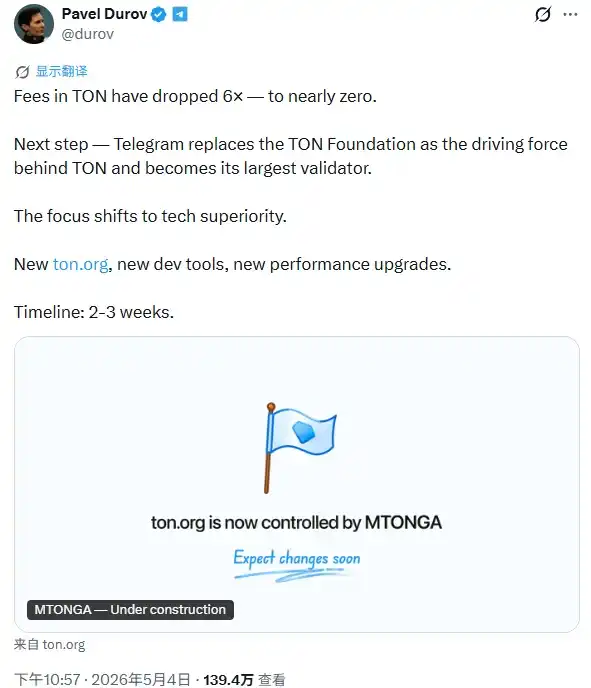
Telegram Founder: TON Fees Reduced by 6x, Telegram to Become Largest Validator

In the past, the relationship between TON and Telegram was more like a strong binding with weak leadership. Telegram provided the gateway, while the Foundation and community were responsible for advancement, with a layer of distance always between them. But this time, Telegram isn't just continuing to bring users to TON; it's beginning to enter more foundational positions such as validator, technical roadmap, and development tools. TON is no longer just a chain adjacent to the Telegram ecosystem but is being reintegrated into Telegram's product system.

TON Doesn't Lack a Gateway; It Lacks Turning the Gateway into Use Cases

Past market discussions about TON often revolved around Telegram's user scale. But for a public chain, having a gateway doesn't equal having an ecosystem, and having user reach doesn't equal having long-term usage. TON's unique aspect is its inherent attachment to a high-frequency social platform, where Mini Apps, wallets, channels, bots, games, and payments already exist within Telegram. This allows TON to avoid having to find users from scratch like most Layer1s. However, if these scenarios cannot solidify into sustained on-chain interactions, Telegram's traffic can only bring waves of short-term hype.

Projects like Notcoin and Dogs have proven that Telegram can quickly generate viral spreads. Simple gameplay combined with social relationship chains can indeed attract a large number of users into crypto applications in a short time. But such explosions come and go quickly. TG mini-games and airdrops can bring attention but can hardly alone sustain a long-term ecosystem.

Therefore, the fee reduction, speed increase, developer tools, and validator role emphasized by Pavel Durov this time point not to a single technological upgrade, but to TON addressing its most critical missing link—transforming Telegram's gateway into sustainable use cases. Only when fees are low enough, confirmation speeds are fast enough, and developer integration is simple enough can scenarios like channel tipping, Mini Apps tasks, game rewards, creator revenue, ad revenue sharing, bot calls, and group micropayments potentially evolve from product features into on-chain activities.

TON no longer needs to repeat the story of "backed by Telegram." What it truly needs to prove is whether the high-frequency behaviors within Telegram can be effectively borne by TON.

Fee Reduction and Speed Increase Aim to Enable Smaller, Higher-Frequency Transactions

The fee reduction by TON this time shouldn't be understood merely as cost optimization typical of public chains. Viewed within the context of Telegram, it actually solves the problem of whether small-amount, high-frequency interactions can become viable.

Most potential on-chain behaviors within Telegram are not large transfers but more fragmented daily operations. Individual transaction amounts are low, but occurrence frequency is high. If users have to perceive fees, wait for confirmations, and repeatedly handle wallet interactions with every button click, these scenarios can hardly truly take off.

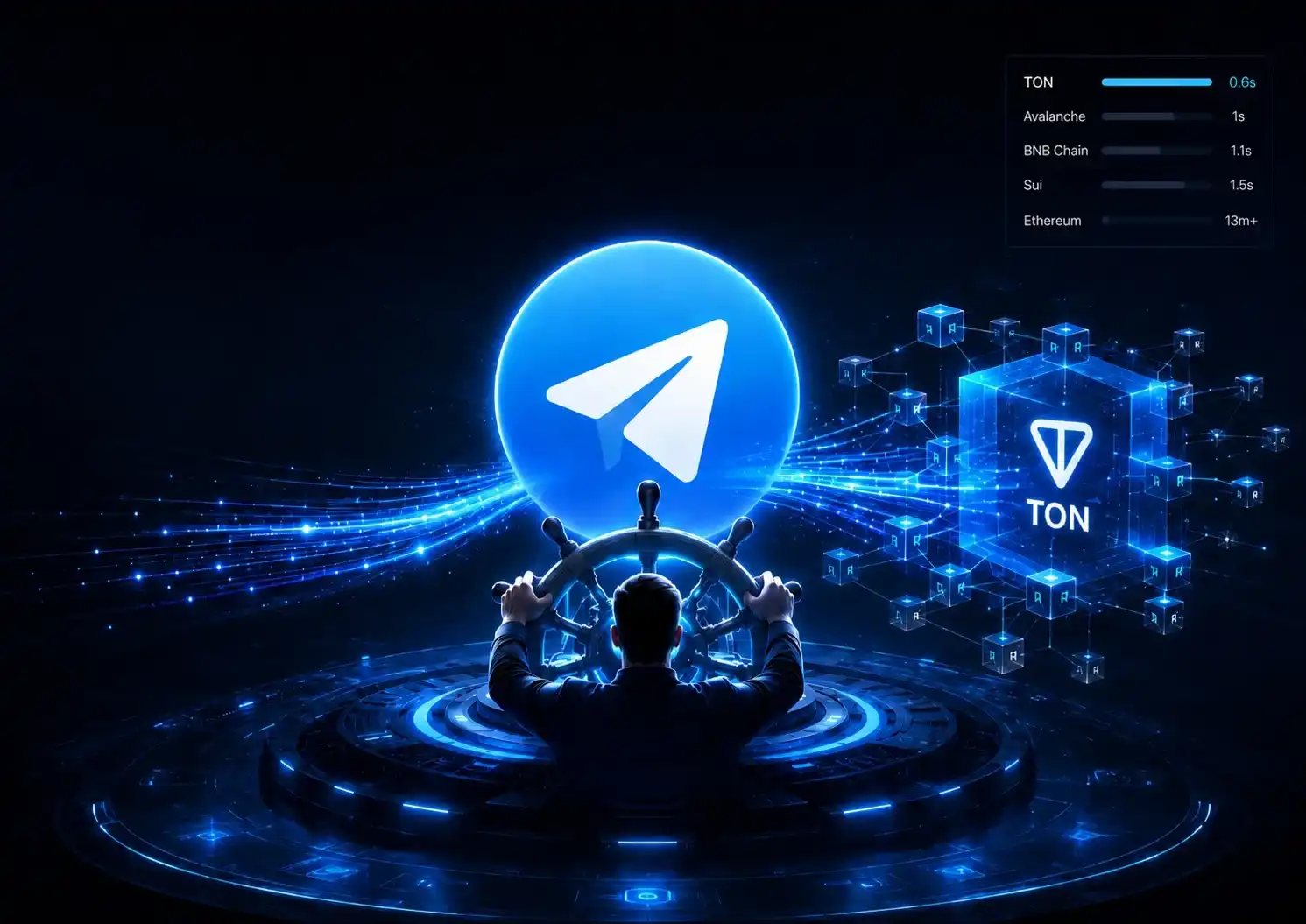
Therefore, fee reduction and speed increase must be considered together. Fees approaching zero lower the usage barrier; reducing finality time to 0.6 seconds lowers the perception of waiting. For Telegram, the chain shouldn't become an extra layer perceived by users but should be hidden as much as possible behind product actions like sending messages, clicking buttons, and viewing balance changes.
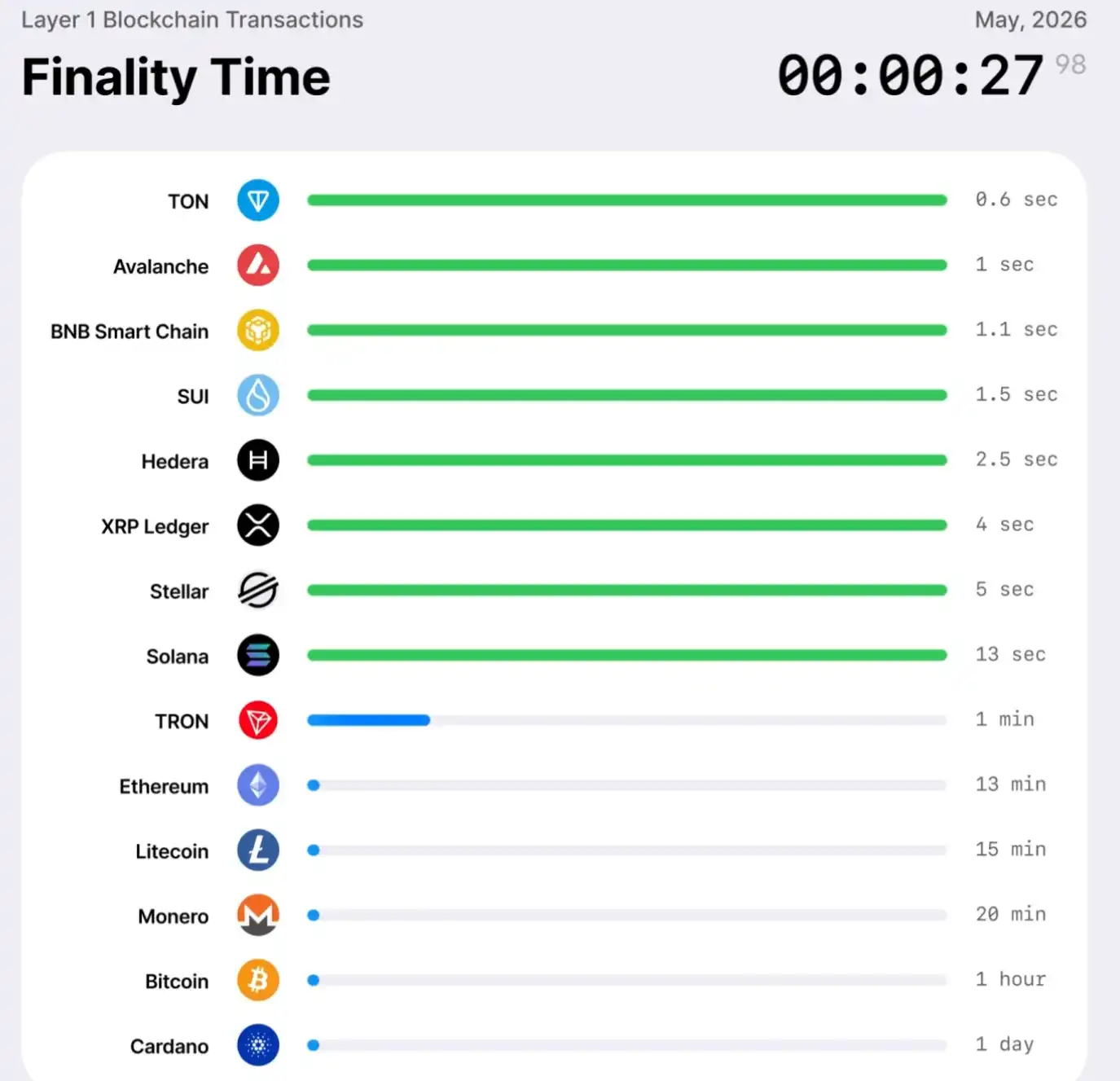
Comparison of "Finality Time" Among Mainstream Public Chains

This also distinguishes TON from many other Layer1s. Its goal isn't solely to make DeFi trades faster or transfers cheaper; it aims to embed the chain into Telegram's daily use. Only when cost, waiting time, and wallet operations are minimized enough can TON potentially evolve from a Telegram-related public chain into the underlying network directly invoked by Telegram's application layer.

From Gateway to Validator, Telegram Begins Penetrating TON's Core

Telegram becoming TON's largest validator is the most significant step in this change. It means Telegram is no longer just providing TON with a gateway and brand endorsement but is entering the network's security and operational mechanisms. Previously, TON was driven by the Foundation and community, which offered greater openness but a relatively decentralized pace. Now, with Telegram directly involved, its products, wallet, Mini Apps, payments, and developer tools have the opportunity to be realigned.

Efficiency may increase, but controversy will also grow. Telegram replacing the TON Foundation as the main driving force and becoming the largest validator will inevitably lead to renewed external discussions about TON's centralization risks. In response, Pavel Durov stated that Telegram's participation would attract more large-scale participants into the validator pool, thereby enhancing decentralization. This logic is not without merit, but the final judgment will depend on results, not statements.

The truly important aspects going forward are whether the validator structure can become more diverse, whether governance information is sufficiently transparent, whether the Foundation and community retain independent space, and whether ecosystem projects can continue developing without relying on Telegram's will.

Therefore, Telegram's return is not a simple positive but a trade-off. For TON to enter the mainstream application layer, it needs Telegram's strong execution capabilities; but the more prominent Telegram's role, the more TON needs to prove it is not merely an internal settlement chain serving Telegram.

High Staking Rewards Retain More Tokens for TON

Pavel Durov subsequently emphasized that TON ranks first in annual staking rewards among the top 50 cryptocurrencies by market cap, with a high rate of 18.8%. Compared to fee reduction and speed increase, high staking rewards are more likely to mobilize capital sentiment and provide TON with another layer of holding rationale in the market's eyes.
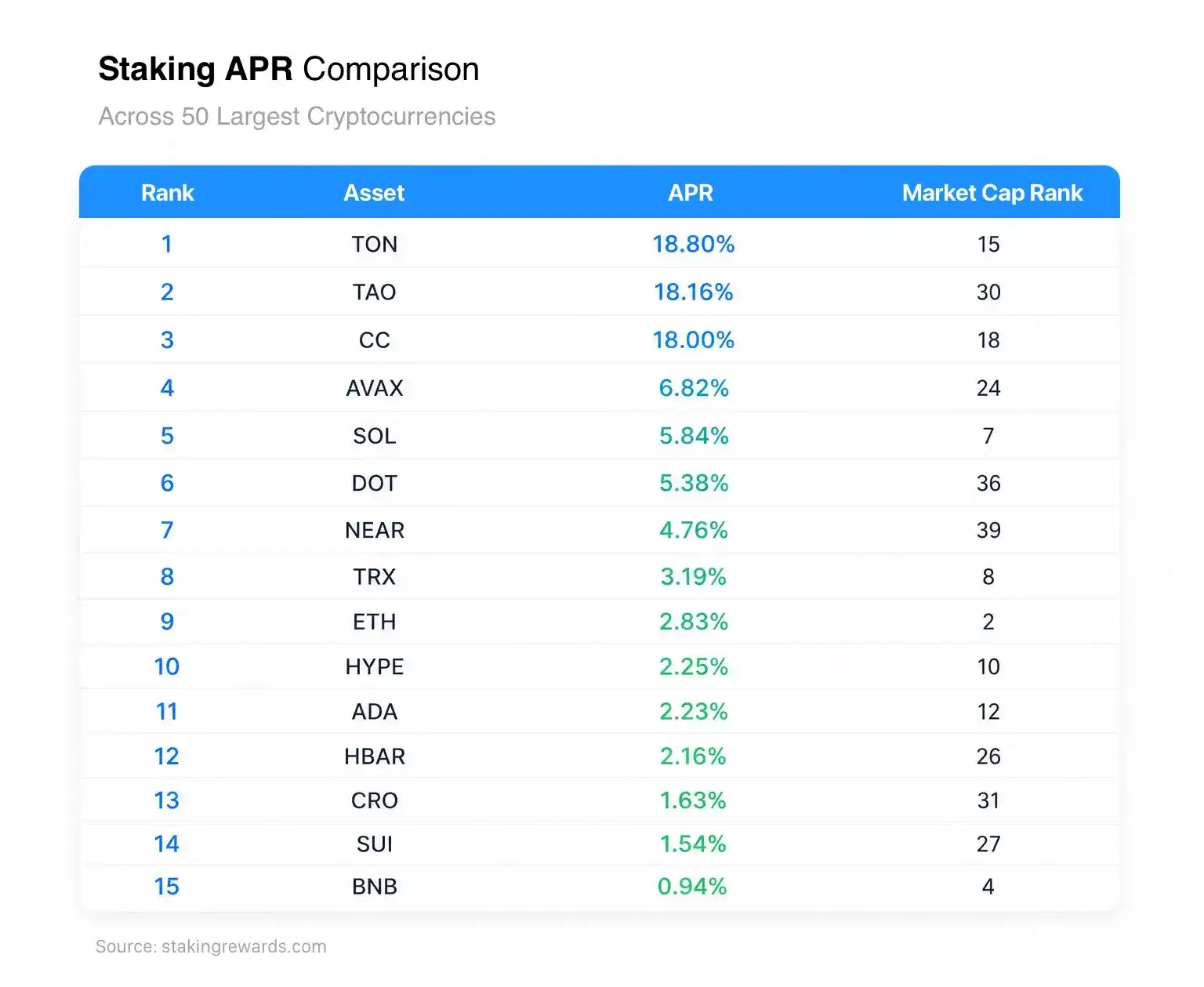
TON Annual Staking Rewards Rank First Among Top 50 Cryptocurrencies

This also makes TON's narrative somewhat more complete. It's not just relying on Telegram's user gateway to attract attention or improving experience through technical upgrades; it's also using staking rewards to keep capital within its ecosystem. The simultaneous presence of gateway, performance, validators, and rewards makes this change more substantial than a single positive factor.

Of course, high yield itself is not the end goal; it's more like buying TON a longer observation period. As long as subsequent developer tools and performance upgrades are delivered, and more capital is locked into the network, a positive feedback loop with real usage may form. For TON, the value of staking rewards isn't just about increasing holding returns but making the market willing to continue waiting for it to truly convert Telegram's gateway advantage.

TON's Return to Telegram Is Not the Finish Line, But a Tougher Challenge

The key for TON going forward is not to continue leveraging Telegram for traffic, but to truly become part of Telegram's application ecosystem. If Telegram's chat, payments, applications, creator economy, and automated interactions are gradually undertaken by TON, then TON's competitors will not just be other Layer1s, but all networks attempting to become the next-generation application infrastructure.

TON isn't just repeating the social traffic story; it's beginning to attempt to turn social traffic into on-chain order. The gateway is just the beginning; usage is the answer. Telegram can push TON to the forefront, but whether it stays there ultimately depends on whether TON can become the layer of infrastructure that operates behind user perception, within the functioning of applications.

If the past TON was still proving how close it is to Telegram, now it must prove how deeply integrated it can be within Telegram's daily use. True mainstream adoption isn't about making users aware they are using a chain, but about making the chain part of the application experience.

TON's opportunity lies here, and so does its pressure.

Câu hỏi Liên quan

QAccording to the article, what is the new role that Telegram will assume in the TON network, as announced by Pavel Durov?

ATelegram will become the new core driver of the TON network, replacing the TON Foundation. It will also become the network's largest validator.

QWhat is identified as the key challenge TON needs to overcome, beyond just having access to Telegram's large user base?

ATON needs to transform its access and user reach into sustainable, long-term usage scenarios. It must convert Telegram's high-frequency social interactions into persistent on-chain activities.

QWhy are the reductions in transaction fees and improvements in speed particularly important for TON within the Telegram context?

ALow fees (approaching zero) and fast finality (0.6 seconds) are crucial to enable the small, frequent, and fragmented transactions typical of Telegram's daily use cases. They lower the barrier and reduce user friction, allowing the blockchain to operate seamlessly in the background of the app experience.

QWhat potential downside or concern is raised regarding Telegram becoming the core driver and largest validator of TON?

AThe move raises concerns about increased centralization risk and questions regarding the future independence of the TON Foundation and community projects. It represents a trade-off between stronger execution from Telegram and the need for TON to maintain network decentralization.

QHow does the article frame the high annual staking reward offered by TON, and what purpose does it serve?

AThe high staking reward (18.8% annually, ranked first among top 50 cryptocurrencies) is seen as a mechanism to attract and lock in capital within the TON ecosystem. It provides an additional incentive for holding TON and buys time for the network to realize its potential in converting Telegram's user base into active usage.

Nội dung Liên quan

Thợ săn trở thành con mồi, MEV Bot kiếm nhiều tiền nhất bị hack

Tài khoản MEV Bot nổi tiếng Jaredfromsubway.eth vừa bị tấn công có chủ đích trên chuỗi, thiệt hại ước tính hơn 7,5 triệu USD. Đây không phải là lỗ hổng hợp đồng thông thường mà là một cuộc tấn công "bẫy mật ngược MEV" được thiết kế đặc biệt để khai thác logic hoạt động của bot MEV. Kẻ tấn công đã dành vài tuần để triển khai 66 hợp đồng token và nhóm thanh khoản giả mạo, ngụy trang chúng thành các tài sản chính như WETH, USDC. Chúng tạo ra tín hiệu chênh lệch giá ảo để thu hút bot. Khi bot Jaredfromsubway.eth phát hiện và thực hiện giao dịch "kiếm lời", nó đã vô tình cấp quyền cho một hợp đồng phụ do kẻ tấn công kiểm soát. Do quyền này không bị thu hồi kịp thời, kẻ tấn công đã có thể lợi dụng để chuyển đi toàn bộ ETH, USDC, USDT của bot chỉ trong một giao dịch. Jaredfromsubway.eth được biết đến là một trong những bot MEV hoạt động tích cực và kiếm lời nhiều nhất trên mạng Ethereum, chuyên thực hiện các chiến lược như "tấn công kẹp sandwich" để khai thác lợi nhuận từ việc sắp xếp giao dịch. Ước tính, bot này đã thu về hàng chục triệu USD lợi nhuận MEV. Sự kiện này báo động về việc các mối đe dọa bảo mật trong crypto ngày càng tinh vi, khi ngay cả những "kẻ săn mồi" hàng đầu trên chuỗi cũng có thể trở thành mục tiêu bị khai thác bởi những kế hoạch phức tạp được thiết kế dài hạn. Sau vụ việc, một tài khoản X giả mạo Jaredfromsubway.eth đã xuất hiện với tuyên bố thưởng 1 triệu USD để thu hồi tiền, các nhà phát triển cảnh báo đây có thể là chiêu trò lừa đảo mới.

marsbit31 phút trước

Thợ săn trở thành con mồi, MEV Bot kiếm nhiều tiền nhất bị hack

marsbit31 phút trước

Thợ săn bị vây bắt, MEV Bot kiếm tiền giỏi nhất bị hack

Bài viết gốc từ Odaily Planet Daily, tác giả Azuma, báo cáo về vụ tấn công lớn nhắm vào MEV Bot nổi tiếng Jaredfromsubway.eth trên mạng Ethereum. Địa chỉ này đã bị thiệt hại hơn 7,5 triệu USD do một cuộc tấn công "bẫy ngược MEV" được thiết kế đặc biệt. Thay vì khai thác lỗ hổng thông thường, kẻ tấn công đã triển khai một chiến dịch kéo dài hàng tuần, tạo ra 66 hợp đồng token và nhóm thanh khoản giả mạo để bắt chước các tài sản chính như WETH, USDC, USDT. Chúng tạo ra tín hiệu chênh lệch giá có vẻ có lợi nhuận để dụ bot MEV tự động nhận diện và thực hiện giao dịch. Trong quá trình này, bot đã cấp quyền cho một hợp đồng phụ trợ do kẻ tấn công kiểm soát. Việc ủy quyền không bị thu hồi kịp thời đã tạo ra lỗ hổng, cho phép kẻ tấn công trong một giao dịch duy nhất đã chuyển đi toàn bộ ETH, USDC, USDT của bot. Jaredfromsubway.eth là một trong những MEV Bot hoạt động mạnh nhất và gây tranh cãi nhất trên Ethereum, chuyên thực hiện các chiến lược như "tấn công kẹp" (sandwich attack) để kiếm lợi nhuận từ việc sắp xếp giao dịch. Ước tính nó đã kiếm được hàng chục triệu USD. Ngay cả một người sáng lập Ethereum là Vitalik Buterin cũng từng bị bot này "chèn" giao dịch. Sự kiện này gióng lên hồi chuông cảnh báo về sự gia tăng của các mối đe dọa bảo mật trong crypto. Ngay cả những "kẻ săn mồi" hàng đầu như MEV Bot cũng có thể trở thành mục tiêu của các cuộc tấn công tinh vi được thiết kế dựa trên chính logic hoạt động của chúng. Sau vụ việc, một tài khoản X giả mạo đã đổi tên thành Jaredfromsubway.eth và tuyên bố treo thưởng 1 triệu USD để lấy lại tiền, nhưng các nhà phát triển cảnh báo đây là tài khoản lừa đảo, không phải chính chủ, và người dùng cần hết sức cảnh giác.

Odaily星球日报38 phút trước

Thợ săn bị vây bắt, MEV Bot kiếm tiền giỏi nhất bị hack

Odaily星球日报38 phút trước

Thực trạng thanh toán ở Mỹ Latinh khác xa những gì bạn nghĩ

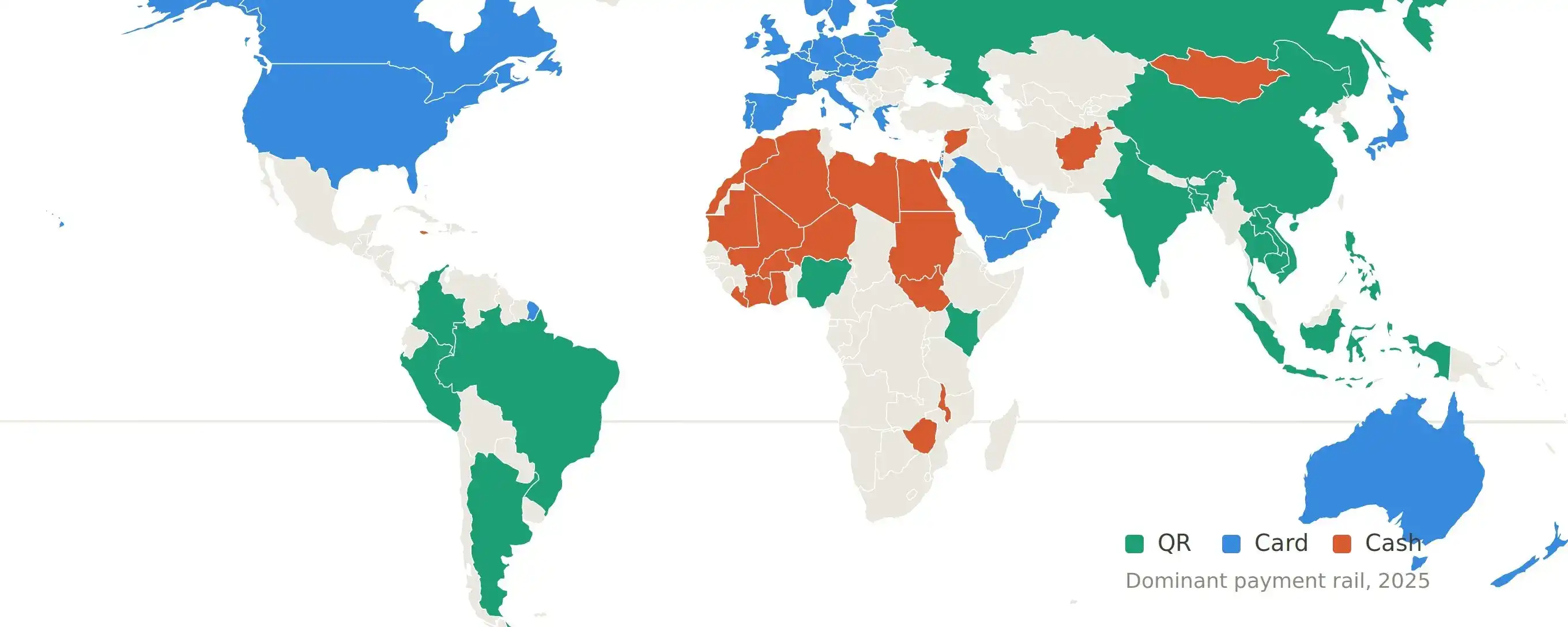
Tình hình thanh toán tại Mỹ Latinh đang thay đổi nhanh chóng, khác biệt với nhiều nhận định phổ biến. Dựa trên hành trình thực địa hơn 500 giờ, bài viết đúc kết 10 điểm chính: 1. **Thẻ crypto:** Khối lượng giao dịch thực tế đến từ các chuyên gia dùng USD/USDT nhận lương và rút tiền qua Pix, không phải từ giao dịch nhỏ lẻ. 2. **Mã QR thống trị:** Thanh toán bằng mã QR (Pix ở Brazil, UPI ở Ấn Độ...) đang chiếm lĩnh các thị trường mới nổi, trong khi thẻ vẫn phổ biến ở các nước giàu. Xu hướng này đang định hình lại cơ sở hạ tầng. 3. **Cơ hội lớn:** Thiếu sự tương tác quốc tế giữa các hệ thống thanh toán tức thời nội địa (như Pix, UPI). Đây là cơ hội chưa được khai thác để kết nối các quốc gia. 4. **Cạnh tranh bằng giải ngân:** Các công ty thanh toán hàng đầu đang tìm cách sở hữu ngân hàng để kiểm soát việc giải ngân và AML, thay vì chỉ dùng bên thứ ba. 5. **Mỹ Latinh không đồng nhất:** Mỗi quốc gia (Brazil, Argentina, Mexico...) có thị trường, quy định và nhu cầu ngoại hối riêng biệt, cần chiến lược riêng. 6. **Chuyển đổi ngoại tệ thành hàng hóa:** Tỷ giá chuyển đổi stablecoin đang giảm mạnh, hướng tới 0%. Lợi nhuận sẽ đến từ các dịch vụ giá trị gia tăng trên nền tảng này. 7. **Mở rộng xuyên biên giới:** Mô hình công ty thanh toán thành công mới cần có thương hiệu và công nghệ có thể mở rộng quốc tế ngay từ đầu. 8. **Tìm kiếm thị trường mới:** Brazil và Mexico đã bão hòa. Các hành lang nhỏ hơn như "5 quốc gia bị lãng quên" (Dominican, Guatemala...) hoặc Colombia - Châu Âu có ít cạnh tranh hơn và tiềm năng lớn. 9. **Tiếp thị đúng phân khúc:** Cần phân chia người dùng (khách du lịch, cư dân nước ngoài, công dân số...) và có chiến lược tiếp cận riêng cho từng luồng tiền và nhu cầu cụ thể của họ. 10. **Môi trường pháp lý tiến bộ:** Quy định về tiền mã hóa và fintech ở nhiều nước Mỹ Latinh (Brazil, Mexico, Colombia...) rõ ràng và thực tế hơn so với Mỹ, nhiều nơi đã có khung pháp lý đầy đủ. Bài học lớn nhất: Cơ hội không nằm ở việc cạnh tranh trên các đường ray thanh toán cũ, mà ở việc xây dựng dịch vụ giá trị gia tăng trên các xu hướng mới nổi và giải quyết khoảng trống kết nối quốc tế.

marsbit41 phút trước

Thực trạng thanh toán ở Mỹ Latinh khác xa những gì bạn nghĩ

marsbit41 phút trước

Làm Nhạc Trong Thị Trường Gấu: Một Cuộc Thử Nghiệm Sinh Tồn Của Một Ban Nhạc Bitcoin

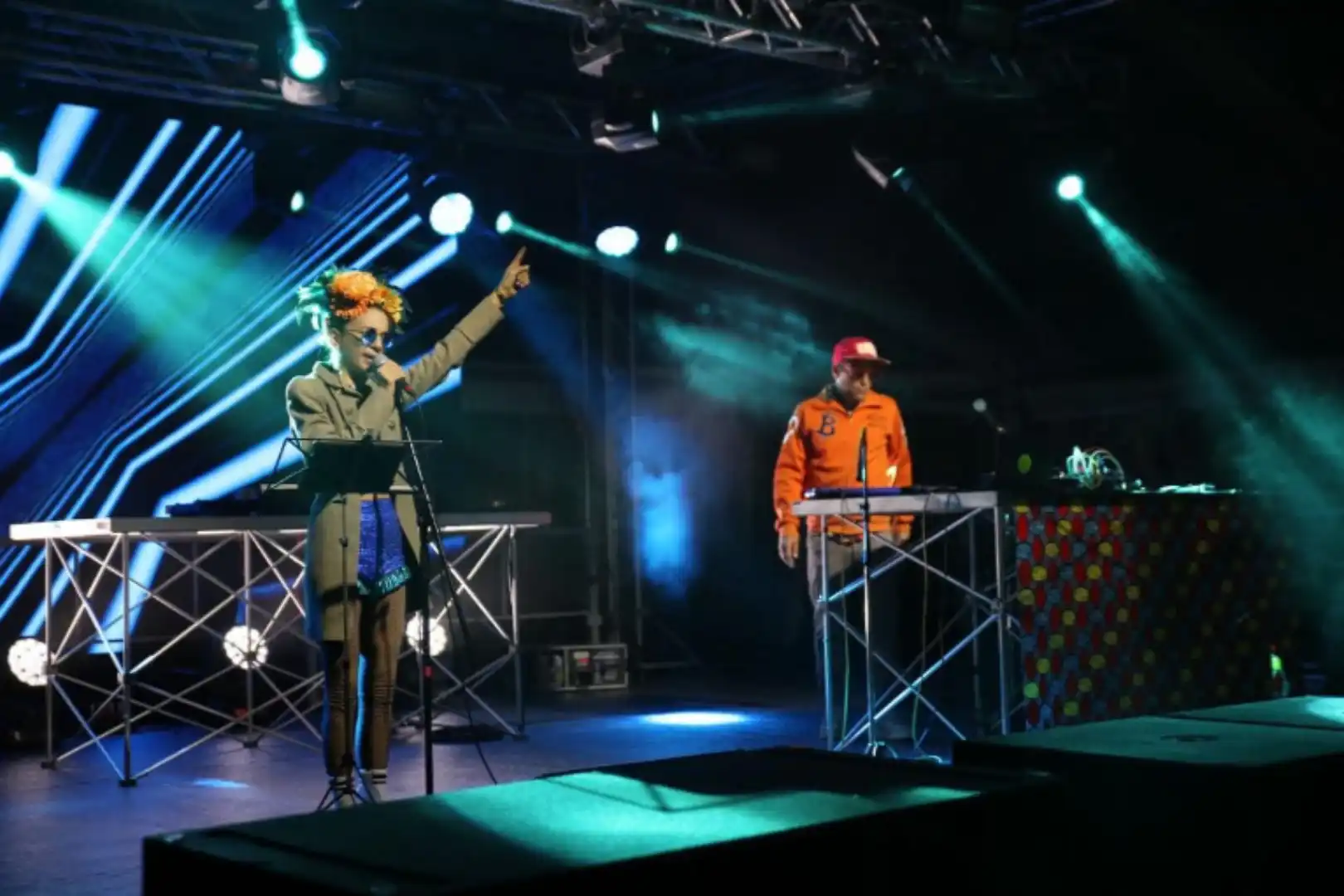
Vào thời kỳ thị trường crypto suy thoái, ban nhạc Orange Pill Jam vẫn tiếp tục sáng tác và thu âm, thực hiện một thử nghiệm sống còn chống lại thuật toán. Ban nhạc này, chịu ảnh hưởng từ văn hóa Bitcoin, tạo ra âm nhạc đề cập đến chủ quyền tài chính, quyền riêng tư và sự tha hóa của các thể chế hiện đại. Họ chấp nhận thanh toán bằng Bitcoin và hoạt động theo mô hình Copyleft, cho phép chia sẻ và phối lại nhạc tự do. Ban nhạc hình thành sau một buổi biểu diễn ngẫu hứng của ca sĩ chính Mermaid tại hội nghị Plan B Forum ở Lugano năm 2022. Cô cùng nhà sản xuất/nhạc công Michi và người đồng sáng lập Martino phát triển âm nhạc từ những phác thảo ban đầu. Quy trình sáng tác kết hợp giữa ca từ đầy ý nghĩa của Mermaid và khả năng biến ý tưởng thành nhịp điệu cảm xúc của Michi. Các bài hát như "Cypherpunks' Manifesto" và "Free Fire" truyền tải thông điệp mạnh mẽ về quyền riêng tư, bẫy "miễn phí" và cảm giác được chấp nhận. Trước sự trỗi dậy của AI trong sáng tạo âm nhạc, họ tin rằng máy móc không thể thay thế được sự sáng tạo thực sự bắt nguồn từ ý định và bản năng của con người. Dù đối mặt với thách thức về doanh thu trong thị trường giá xuống và khó khăn trong việc tiếp cận khán giả trên các nền tảng phát nhạc hàng loạt, Orange Pill Jam vẫn kiên trì. Họ đại diện cho niềm tin vào Bitcoin vượt trên giá cả và vào giá trị không thể thay thế của sự sáng tạo cụ thể, không thể sao chép của con người trong thời đại kỹ thuật số.

marsbit52 phút trước

Làm Nhạc Trong Thị Trường Gấu: Một Cuộc Thử Nghiệm Sinh Tồn Của Một Ban Nhạc Bitcoin

marsbit52 phút trước

Sự ra đi liên tiếp của nhân tài AI tại Google: Áp lực thử nghiệm hay dự báo "tử chiến"?

Các tài năng AI hàng đầu của Google như Noam Shazeer (đồng tác giả Transformer), John Jumper (AlphaFold) và Daniel De Freitas (Character.AI) lần lượt rời đi để gia nhập OpenAI và Anthropic, gây ra những lo ngại về làn sóng chảy máu chất xám. Tuy nhiên, góc nhìn khác cho rằng đây là cuộc chiến tranh giành nhân tài điển hình trước thềm IPO của các đối thủ, và việc họ nhắm vào Google chứng tỏ đây vẫn là nguồn nhân lực AI dồi dào bậc nhất. Thay vì một "cáo phó", đây là bài kiểm tra áp lực dành cho Google. Công ty không chỉ cạnh tranh ở mặt mô hình (Gemini) mà còn có lợi thế toàn diện: cơ sở hạ tầng (TPU, Google Cloud), hệ sinh thái sản phẩm với hàng tỷ người dùng (Search, YouTube, Android), và nguồn thu ổn định. Đáng chú ý, Google còn là đối tác cung cấp hạ tầng đám mây cho chính các đối thủ như Anthropic và OpenAI, vừa cạnh tranh vừa hợp tác. Dù phải đối mặt với thách thức chuyển đổi từ kinh doanh tìm kiếm cốt lõi và sự nhanh nhẹn của các startup, Google với nguồn lực khổng lồ, khả năng tích hợp AI sâu rộng vào các sản phẩm hiện có và tham vọng dài hạn trong AI cho khoa học (như AlphaFold) vẫn được xem là một trong số ít công ty có khả năng vượt qua giai đoạn chuyển đổi này và định hình tương lai AI.

marsbit57 phút trước

Sự ra đi liên tiếp của nhân tài AI tại Google: Áp lực thử nghiệm hay dự báo "tử chiến"?

marsbit57 phút trước

Giao dịch

Giao ngay
Hợp đồng Tương lai
活动图片