Telegram Takes Direct Control of TON, Social Traffic Reshapes Public Chain Narrative

Odaily星球日报Xuất bản vào 2026-05-11Cập nhật gần nhất vào 2026-05-11

Tóm tắt

Telegram's founder, Pavel Durov, has announced a major shift in the development of The Open Network (TON). Telegram will now become the core driver of TON, replacing the TON Foundation and becoming its largest validator. The focus will be on technical upgrades over the next few weeks, including slashing network fees by six times to near-zero and improving finality time to 0.6 seconds. This move signifies a deeper integration between Telegram and TON, moving beyond just providing a user base. The goal is to transform Telegram's vast social traffic and built-in features—like Mini Apps, payments, and bots—into sustainable, on-chain usage scenarios. The reduced fees and faster speeds are crucial for enabling the small, frequent transactions typical of social interactions. While this promises stronger execution and product alignment, it raises questions about centralization. Durov argues Telegram's involvement will attract more validators, enhancing decentralization, but the outcome remains to be seen. Additionally, TON's high annual staking reward of 18.8% aims to retain capital within the ecosystem. The key challenge for TON is no longer just leveraging Telegram's entry point, but becoming an invisible, seamless infrastructure layer within Telegram's daily use. Its success hinges on converting viral attention into lasting, embedded utility.

Original | Odaily Planet Daily(@OdailyChina)

Author | Asher(@Asher_ 0210)
On May 4th, Pavel Durov, the founder of Telegram, stated on platform X that TON network fees have been reduced sixfold, now nearly zero. More crucially, he announced that Telegram will replace the TON Foundation to become the new core driver of the TON network and its largest validator. TON's upcoming focus will shift to technical advantages, including a new ton.org, new developer tools, and performance upgrades, all within the next 2 to 3 weeks.
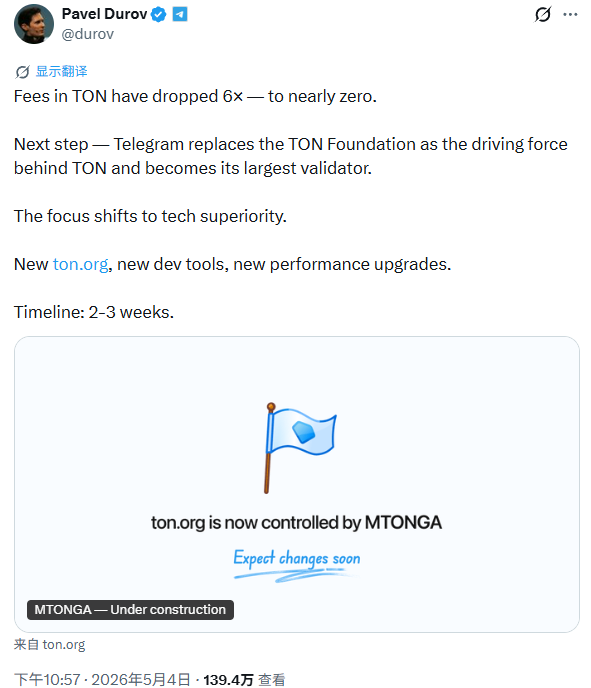
Telegram Founder: TON Fees Reduced 6x, Telegram to Become Largest Validator

Previously, the relationship between TON and Telegram was more like a strong binding with weak leadership. Telegram provided the entry point, while the Foundation and community were responsible for driving progress, maintaining a certain distance. But this time, Telegram is not just continuing to bring users to TON; it's starting to enter more fundamental positions like validator, technical roadmap, and development tools. TON is no longer just a chain adjacent to the Telegram ecosystem; it's being reintegrated into Telegram's product system.

TON Never Lacked an Entry Point; It Lacked Turning That Entry into Usage Scenarios

Past market discussions about TON often revolved around Telegram's user scale. But for a public chain, having an entry point does not equal having an ecosystem, and having user reach does not equal having long-term usage. The unique aspect of TON is its inherent connection to a high-frequency social platform, where Mini Apps, wallets, channels, bots, games, and payments already exist within Telegram. This means TON doesn't have to start from scratch to find users like most Layer1s. However, if these scenarios cannot translate into sustained on-chain interactions, Telegram's traffic can only bring waves of short-term hype.

Projects like Notcoin and Dogs have already proven that Telegram can quickly generate viral spread. Simple gameplay combined with social connections can indeed attract a massive number of users into crypto applications in a short time. But such explosions come and go quickly. TG mini-games and airdrops can bring attention but can hardly sustain a long-term ecosystem alone.

Therefore, the fee reduction, speed improvements, developer tools, and validator role emphasized by Pavel Durov this time point not to a single technical upgrade, but to TON addressing its most crucial missing piece — turning Telegram's entry point into sustainable usage scenarios. When fees are low enough, confirmation speeds are fast enough, and developer integration is simple enough, actions like channel tipping, Mini App tasks, game rewards, creator revenue, ad revenue sharing, bot calls, and small group payments have the potential to evolve from product features into on-chain activities.

TON doesn't need to repeat the story of "backed by Telegram." What it truly needs to prove is whether the high-frequency behaviors within Telegram can be supported by TON.

Fee Reduction and Speed Boost Are for Smaller, Higher-Frequency Transactions

The fee reduction by TON this time cannot be understood merely as a regular public chain cost optimization. Viewed within the context of Telegram, it genuinely addresses whether small, high-frequency interactions can be viable.

Potential on-chain behaviors within Telegram are mostly not large transfers but more fragmented daily operations. The amount per transaction is small, but the frequency is high. If users have to perceive fees, wait for confirmations, and repeatedly handle wallet interactions with every button click, such scenarios would struggle to truly take off.

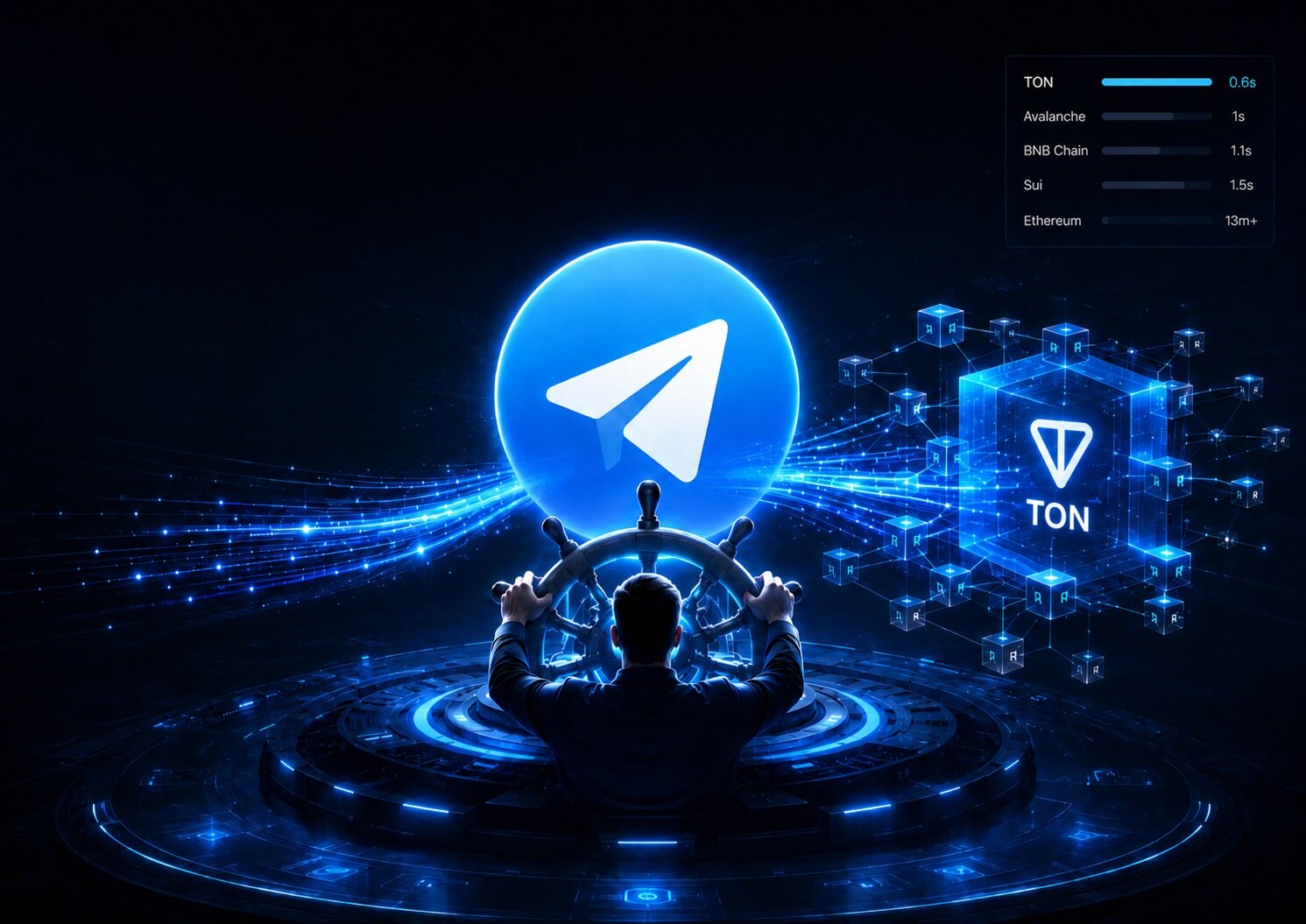
Therefore, fee reduction and speed improvement must be considered together. Near-zero fees lower the barrier to entry; reducing final confirmation time to 0.6 seconds lowers the perception of waiting. For Telegram, the chain shouldn't be an extra layer perceived by users; it should be hidden behind product actions like sending messages, clicking buttons, and balance changes as much as possible.
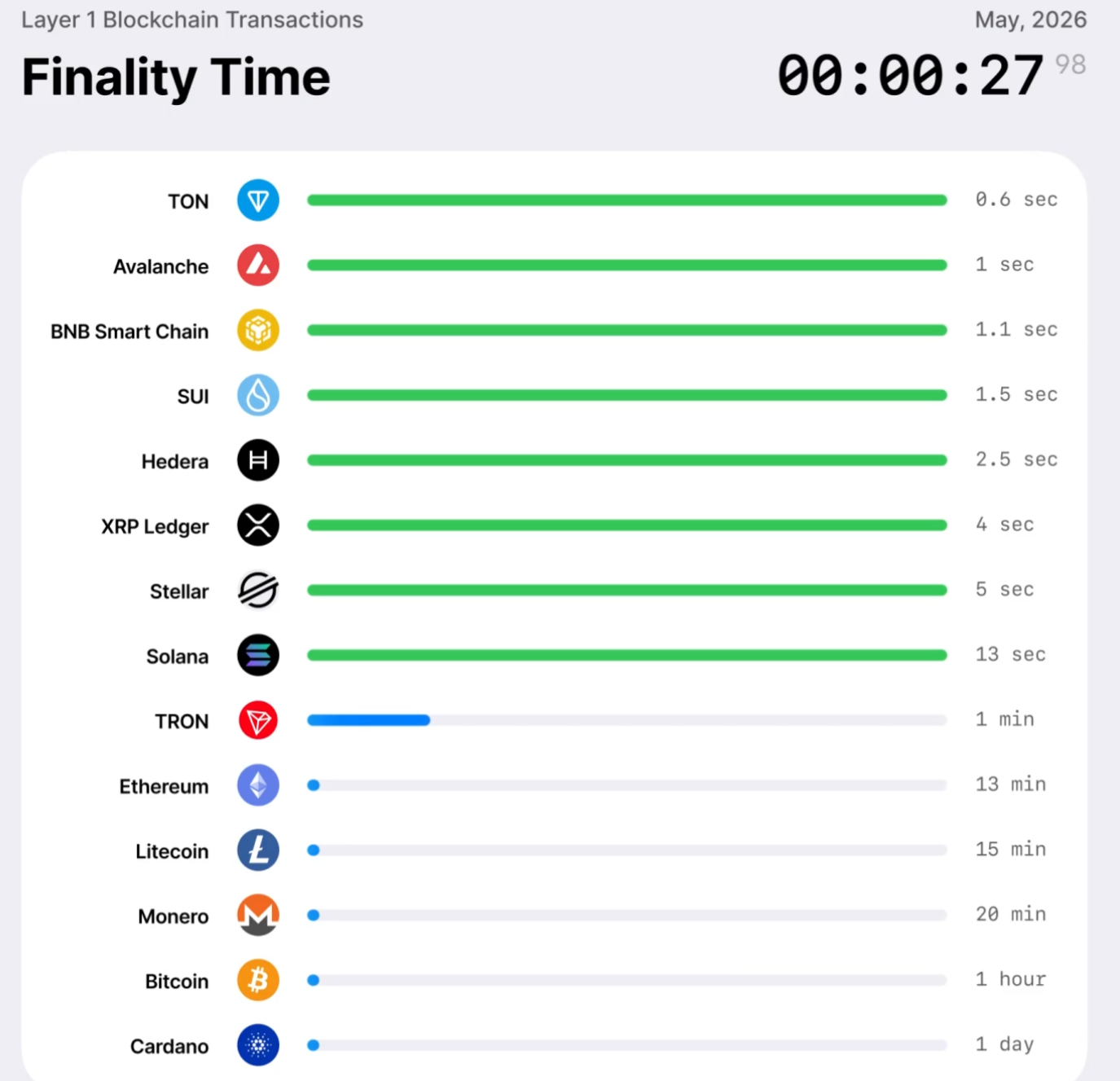
Comparison of "Finality Time" Among Mainstream Public Chains

This is also where TON differs from many Layer1s. It's not solely about making DeFi transactions faster or transfers cheaper; it's about embedding the chain into Telegram's daily usage. Only when costs, wait times, and wallet operations are sufficiently minimized can TON potentially evolve from a Telegram-related public chain into an underlying network directly accessible by the Telegram application layer.

From Entry Point to Validator, Telegram Begins Delving into TON's Core

Telegram becoming TON's largest validator is the most significant step in this change. It signifies that Telegram is no longer just providing TON with an entry point and brand endorsement; it's entering the network's security and operational mechanisms. Previously, TON was driven by the Foundation and community, which offered greater openness but a more dispersed pace. Now, with Telegram directly involved, products, wallets, Mini Apps, payments, and developer tools have the opportunity to be realigned under a single vision.

Efficiency will increase, but so will controversy. Telegram replacing the TON Foundation as the primary driving force and becoming the largest validator will inevitably lead to renewed discussions about TON's centralization risks. In response, Pavel Durov stated that Telegram's participation would attract more large-scale participants into the validator pool, thereby enhancing decentralization. This logic isn't unfounded, but the outcome matters more than the statement.

The truly important aspects going forward are whether the validator structure can become more diverse, whether governance information is sufficiently transparent, whether the Foundation and community still have independent space, and whether ecosystem projects can continue to develop without depending on Telegram's will.

Therefore, Telegram's return isn't purely positive news; it's a trade-off. For TON to enter the mainstream application layer, it needs Telegram's strong execution capability. But the more prominent Telegram becomes, the more TON needs to prove it's not merely an internal settlement chain serving Telegram.

High Staking Rewards Retain More Value for TON

Pavel Durov subsequently emphasized that TON ranks first in annual staking rewards among the top 50 cryptocurrencies by market cap, with a high rate of 18.8%. Compared to fee reductions and speed improvements, high staking rewards are more likely to stir capital sentiment, giving TON an additional reason for holding in the eyes of the market.
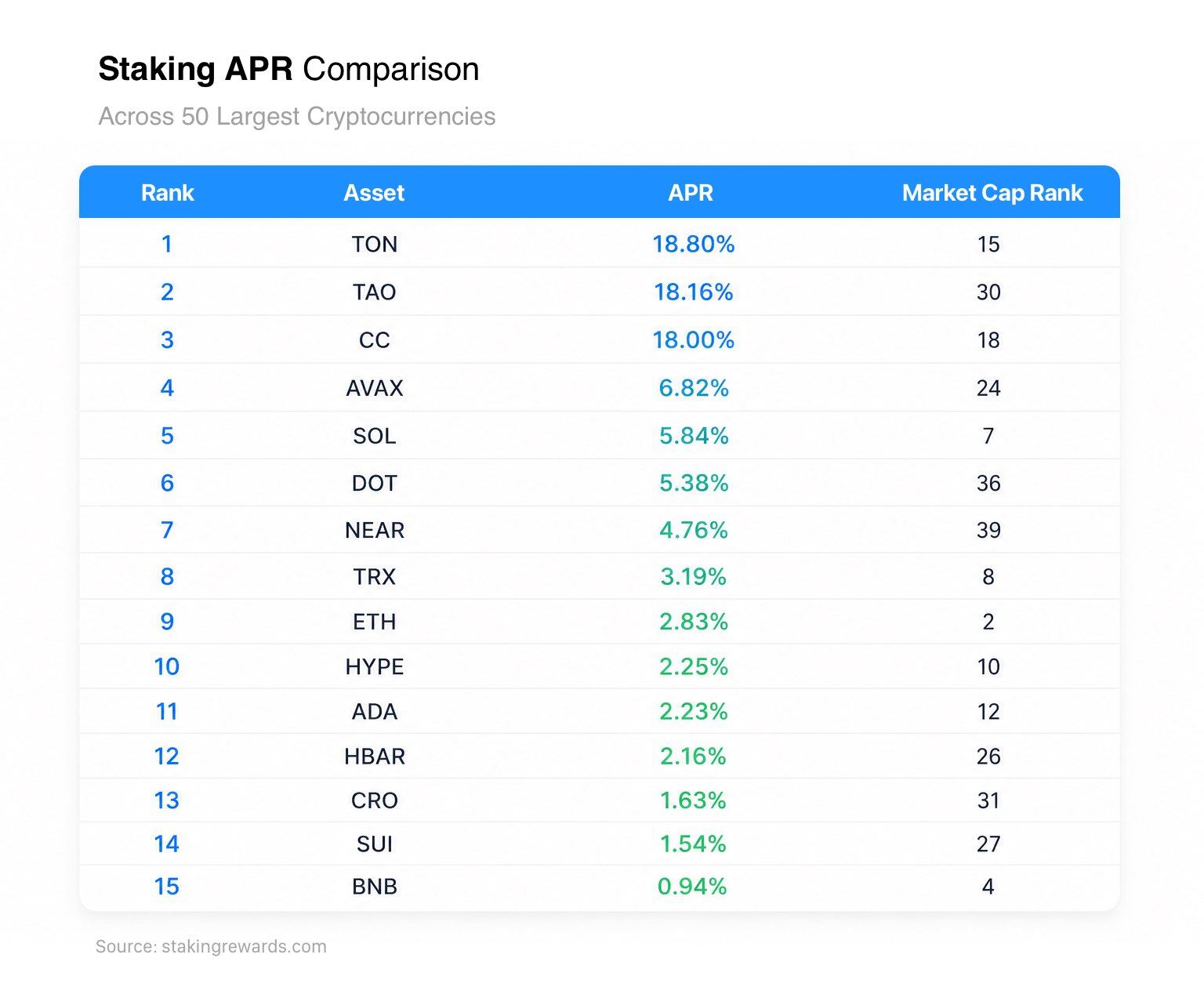
TON Annual Staking Reward Ranks First Among Top 50 Cryptocurrencies

This also makes TON's story somewhat more complete. It doesn't just rely on Telegram's user entry to attract attention or improve experience through technical upgrades; it's also using staking rewards to keep capital within the ecosystem. The simultaneous emergence of entry point, performance, validator role, and yield gives this change more weight than a single positive factor.

Of course, high yield itself is not the end goal; it's more like buying TON a longer observation period. If subsequent developer tools and performance upgrades are delivered, and more capital is locked into the network, it could form a positive feedback loop with real usage. For TON, the value of staking rewards isn't just about increasing holding returns; it's about making the market willing to continue waiting for it to truly convert Telegram's entry advantage.

TON Returning to Telegram Is Not the Finish Line, But a More Difficult Hurdle

The key for TON going forward is not to continue leveraging Telegram for traffic, but to truly become part of Telegram's application ecosystem. If Telegram's chatting, payments, applications, creator economy, and automated interactions are gradually handled by TON, then TON's competitors would not just be other Layer1s, but all networks attempting to become the next-generation application infrastructure.

TON isn't just retelling the social traffic story; it's beginning to attempt to turn social traffic into on-chain order. The entry point is just the beginning; usage is the answer. Telegram can bring TON to the forefront, but whether it stays depends ultimately on TON's ability to become that layer of infrastructure operating behind user perception, within application mechanics.

If past TON was proving how close it was to Telegram, now it must prove how deeply it can integrate into Telegram's daily usage. True mainstream adoption isn't making users aware they're using a chain; it's making the chain an integral part of the application experience.

TON's opportunity lies here, and so does its pressure.

Câu hỏi Liên quan

QWhat are the key changes announced by Telegram regarding the TON network according to the article?

AThe article states that Telegram founder Pavel Durov announced that TON network fees have been reduced sixfold, to near-zero levels. Crucially, Telegram will replace the TON Foundation as the network's core driver and become its largest validator. The focus will shift to technical advantages like a new ton.org, new developer tools, and performance upgrades over the next 2-3 weeks.

QHow does the article explain the previous relationship between TON and Telegram, and what is the significance of the new change?

APreviously, the relationship was described as 'strongly bound but weakly led.' Telegram provided the entry point, while the Foundation and community drove development, with a layer of separation. The new change signifies that Telegram is moving beyond just providing users and is now entering more foundational layers like validation, technical direction, and development tools. TON is being reintegrated into Telegram's product system.

QAccording to the article, why are the fee reduction and speed increase on TON particularly important in the context of Telegram?

AThe fee reduction and speed increase are crucial for enabling small-scale, high-frequency transactions within Telegram's ecosystem. Potential on-chain activities in Telegram, such as tipping, mini-app rewards, and group payments, involve small, frequent amounts. Near-zero fees lower the usage barrier, and a faster finality time (0.6 seconds) reduces the perception of waiting, allowing the blockchain to operate seamlessly behind user actions.

QWhat potential concern does the article raise about Telegram becoming the largest validator for TON?

AThe article raises concerns about increased centralization risk. Telegram replacing the TON Foundation as the main driving force and becoming the largest validator could lead to debates about TON's decentralization. While Pavel Durov argued this would attract more large participants to the validator pool, the article emphasizes the need to judge by results—such as validator diversity, transparent governance, and the independent space for the community—rather than just statements.

QWhat is the 'harder challenge' TON faces now, as described in the article's conclusion?

AThe article concludes that the harder challenge is for TON to move beyond leveraging Telegram for traffic and truly become an integral part of Telegram's application ecosystem. It must prove it can integrate deeply into daily Telegram use—like chat, payments, apps, and automated interactions—becoming the underlying infrastructure for application experience. True mainstream adoption means users don't perceive they are using a blockchain; the chain is just part of the app.

Nội dung Liên quan

Khi các tập đoàn lớn tặng cổ phiếu cho "Tài khoản Trump", những mã chứng khoán nào sẽ hưởng lợi?

Ngày 4/7, Bộ Tài chính Mỹ chính thức công bố "Tài khoản Trump" đã đi vào hoạt động, cho phép phụ huynh và trẻ em Mỹ mở tài khoản đầu tư trì hoãn thuế (530A) dành cho trẻ vị thành niên. Tài khoản nhận tài trợ ban đầu từ chính phủ, cá nhân (như vợ chồng tỷ phú Michael Dell) và gia đình, số tiền sẽ được đầu tư vào các quỹ ETF theo dõi thị trường chứng khoán Mỹ. Trong sự kiện ra mắt, Tổng thống Trump đích thân gióng chuồng khai trường tại NYSE và Nasdaq, đồng thời công khai khen ngợi và kêu gọi ủng hộ Dell, khiến cổ phiếu này tăng mạnh. Điều này cho thấy việc doanh nghiệp tham gia tài trợ sớm có thể nhận được sự ủng hộ và quảng bá từ tổng thống. Bộ Tài chính cũng đã mở kênh quyên góp bằng cổ phiếu. SpaceX, thông qua Chủ tịch Gwynne Shotwell, đã công bố quyên góp cổ phần trị giá khoảng 325 triệu USD cho tài khoản của hơn 2 triệu trẻ em. Về góc độ đầu tư, ba nhóm đối tượng có thể hưởng lợi từ "Tài khoản Trump" bao gồm: 1. **Chỉ số S&P 500**: Toàn bộ vốn trong tài khoản sẽ được đầu tư vào các quỹ ETF theo dõi chỉ số này, tạo ra một dòng tiền mới tiềm năng lên đến hàng chục tỷ USD trong dài hạn. 2. **Đối tác tiếp cận**: Ngân hàng BNY Mellon và đặc biệt là nền tảng môi giới Robinhood - đơn vị phát triển ứng dụng, sẽ nắm giữ lối vào tiếp cận hàng triệu khách hàng tiềm năng trong nhiều thập kỷ. 3. **Các công ty tài trợ sớm**: Những doanh nghiệp tham gia quyên góp sớm có cơ hội nhận được sự ủng hộ và quảng bá thương hiệu trực tiếp từ Tổng thống Trump. Về lâu dài, nếu được duy trì, "Tài khoản Trump" có thể trở thành một cổng tích lũy tài sản quan trọng cho thế hệ trẻ Mỹ, định hình lại mối liên hệ giữa người tiêu dùng tương lai, thị trường vốn và các định chế tài chính.

Odaily星球日报14 phút trước

Khi các tập đoàn lớn tặng cổ phiếu cho "Tài khoản Trump", những mã chứng khoán nào sẽ hưởng lợi?

Odaily星球日报14 phút trước

Giải mã báo cáo Goldman Sachs: Circle và USDC đang vượt ra khỏi thế giới tiền điện tử, thanh toán xuyên biên giới và AI Agent trở thành chiến trường mới

Báo cáo phân tích của Goldman Sachs: Circle và USDC đang vươn ra ngoài thế giới tiền mã hóa, thanh toán xuyên biên giới và AI Agent thành mặt trận mới. Ngày 5/7, Goldman Sachs công bố biên bản cuộc họp với ban lãnh đạo Circle Internet Group (CRCL.US). Thông điệp chính là stablecoin đang chuyển từ công cụ ngoại vi của crypto thành cơ sở hạ tầng cho tài chính truyền thống và nền kinh tế AI. Các trường hợp sử dụng USDC đang mở rộng nhanh chóng, từ giao dịch crypto sang thanh toán xuyên biên giới, thương mại điện tử tiêu dùng, thanh toán thị trường vốn, và thậm chí là thanh toán cho AI Agent. Circle nhấn mạnh sự tăng trưởng của stablecoin đã tách khỏi chu kỳ thị trường crypto, nhờ vào sự đa dạng hóa các trường hợp sử dụng, bao gồm: (1) hệ sinh thái crypto, (2) thanh toán xuyên biên giới & quản lý ngân quỹ, (3) thương mại điện tử tiêu dùng, (4) thị trường vốn (làm tài sản thế chấp, thanh toán), và (5) thanh toán cho AI Agent (ví dụ: chiếm ~99% giao dịch trên giao thức x402). Lợi thế cạnh tranh chính của USDC là hiệu ứng mạng lưới từ hệ thống phân phối rộng, tính thanh khoản toàn cầu sâu và cơ sở hạ tầng tuân thủ quy định. Circle phân biệt USDC với tiền gửi được mã hóa (tokenized deposit), coi stablecoin là hệ thống mở, không có rủi ro tín dụng ngân hàng. Ba sản phẩm chiến lược của Circle nhằm biến stablecoin thành hệ điều hành tài chính: Arc (L1 blockchain), Circle Payments Network (thanh toán xuyên biên giới) và Agentic Stack (dành cho AI Agent). Circle coi quy định là chất xúc tác tăng trưởng, không phải ràng buộc, đặc biệt nếu Đạo luật CLARITY được thông qua. Goldman Sachs đánh giá Trung lập với mục tiêu giá 96 USD cho Circle. Báo cáo cũng nêu lên một số điểm cần lưu ý: hào rào cạnh tranh so với USDT, sự phụ thuộc vào thu nhập lãi từ tài sản dự trữ có thể là rủi ro khi lãi suất giảm.

marsbit40 phút trước

Giải mã báo cáo Goldman Sachs: Circle và USDC đang vượt ra khỏi thế giới tiền điện tử, thanh toán xuyên biên giới và AI Agent trở thành chiến trường mới

marsbit40 phút trước

Token cổ phiếu Robinhood bạn mua thực chất chỉ là khoản nợ từ Jersey

Robinhood vừa ra mắt token cổ phiếu trên blockchain riêng, nhưng thực chất đây không phải là cổ phiếu thực sự. Người dùng mua token của các công ty như NVIDIA hay Apple chỉ được theo dõi biến động giá, không có quyền biểu quyết, nhận cổ tức hay quyền đòi tài sản khi công ty phá sản. Thay vào đó, họ đang nắm giữ một công cụ nợ (chứng khoán nợ) được phát hành bởi Robinhood Assets (Jersey) Limited - một công ty vỏ bọc tại đảo Jersey. Nếu công ty này phá sản, nhà đầu tư chỉ là chủ nợ thông thường trong quá trình thanh lý. Cấu trúc phức tạp này giúp Robinhood tránh các quy định chặt chẽ của Ủy ban Chứng khoán Mỹ (SEC). SEC phân loại sản phẩm này là "chứng khoán liên kết", một dạng công cụ nợ mang rủi ro đối tác mà nhà đầu tư tự gánh chịu. Sản phẩm không khả dụng cho người dùng Mỹ, Canada hay Anh, mà nhắm vào hơn 120 quốc gia khác. Động lực của Robinhood bắt nguồn từ sự cố GameStop năm 2021, khi nền tảng phải hạn chế giao dịch do thiếu hụt ký quỹ. Blockchain với khả năng thanh toán ngay lập tức được kỳ vọng sẽ giải quyết vấn đề này. Trong khi đó tại châu Âu, Robinhood lại cung cấp token cổ phiếu tuân thủ MiFID II với cổ phiếu thật được ủy thác 1:1, cho thấy lựa chọn mô hình Jersey là có chủ đích. Các rủi ro khác bao gồm sự phụ thuộc vào oracle để định giá, nguy cơ thao túng giá và rủi ro đối tác trong các sản phẩm cho vay sinh lời. Mô hình này có vẻ là một giải pháp tạm thời để chiếm thị phần trong khi chờ đợi khung pháp lý rõ ràng hơn, đặc biệt khi các đối thủ như Ondo đã ra mắt token cổ phiếu tuân thủ đầy đủ tại Mỹ.

Foresight News1 giờ trước

Token cổ phiếu Robinhood bạn mua thực chất chỉ là khoản nợ từ Jersey

Foresight News1 giờ trước

Đối tác của Blockchain Capital: AI đang viết lại đơn vị cơ bản của lao động

Bài viết của Kinjal Shah, đối tác tại Blockchain Capital, phân tích sự biến đổi sâu sắc của lao động dưới tác động của AI và blockchain. Tác giả cho rằng, nỗi sợ AI cướp việc làm bỏ qua một vấn đề cấu trúc quan trọng hơn: đơn vị cơ bản của lao động đang thay đổi. Lịch sử cho thấy mỗi lần chi phí phối hợp giảm (từ thợ thủ công đến nhà máy, rồi nền kinh tế gig và sáng tạo), ranh giới công ty lại dịch chuyển. Các "tầng lớp cầu nối" như nền kinh tế gig đã chứng minh tính khả thi của việc phân mảnh công việc, nhưng vẫn phụ thuộc vào nền tảng trung gian. Bước ngoặt tiếp theo được thúc đẩy bởi hai yếu tố: **lao động có thể lập trình** (các tác nhân AI hoạt động không giới hạn thời gian, mở rộng quy mô theo sức mạnh tính toán) và **tiền tệ có thể lập trình** (stablecoin). Khi kết hợp, chúng tạo ra khả năng có một dây chuyền sản xuất không có thực thể tổ chức, nơi các nhiệm vụ được phân phối, định giá và thanh toán ngay lập tức với tốc độ máy móc, không cần trung gian. Các ví dụ thực tế như Poncho của Merit Systems (cung cấp ví cho AI để thanh toán vi mô) hay các động thái từ Meta và AWS cho thấy stablecoin đang trở thành tầng thanh toán cho hoạt động kinh tế thế hệ mới. Điều này cho phép định giá chính xác theo từng nhiệm vụ, thay vì các gói đăng ký rộng. Trong tương lai, công ty sẽ ít là nơi chứa lao động hơn, mà giống một "lớp thông minh" được đặt trên thị trường lao động toàn cầu có thể lập trình. Vai trò của con người là người tổ chức - thiết kế hệ thống, xác định nhiệm vụ, đánh giá chất lượng và kết hợp đầu ra của các tác nhân AI để tạo ra giá trị tổng thể lớn hơn. Giá trị nằm ở khả năng đóng gói lại lao động, biết nên ủy thác điều gì, đánh giá ra sao và kết hợp chúng thế nào để tạo ra lợi thế cạnh tranh.

marsbit1 giờ trước

Đối tác của Blockchain Capital: AI đang viết lại đơn vị cơ bản của lao động

marsbit1 giờ trước

Giao dịch

Giao ngay
活动图片