Amid the crisis of external attacks and a vacuum in the top leadership, and under pressure from the Islamic Revolutionary Guard Corps (IRGC), Iran's Assembly of Experts has appointed Mojtaba Khamenei, the son of the late Supreme Leader Ali Khamenei, who was assassinated, as the third Supreme Leader of Iran.
Those unfamiliar with Iranian politics may have never heard of Mojtaba, which is not surprising. Even within Iran, he has long remained outside the public eye. He has never been elected or formally appointed to any government position, and has consistently maintained a mysterious and low-profile demeanor. Since the deaths of his father and wife, this figure, seen by the outside world as a frontrunner for the Supreme Leader position, has not made any public appearances.
US President Donald Trump is clearly dissatisfied with Iran's new Supreme Leader. He had previously stated that while Mojtaba was the most likely successor, this outcome was unacceptable to him. Trump also dismissively remarked, "They are wasting their time; Khamenei's son is a nobody." He further claimed that if this candidate was not approved by him in advance, the new leader would not remain in power for long.
Perhaps in the face of US and Israeli military pressure, Mojtaba may not be the decisive variable. But within Iran, this man who has long avoided the spotlight has actually been at the center of power.
Furthermore, an investigation published by Bloomberg earlier this year brought Mojtaba's hidden business empire into the open: a purported cross-border real estate network spanning London, Dubai, Frankfurt, and Mallorca, allegedly operated through intermediaries, with cryptocurrency becoming a crucial medium for its fund flows.
Mojtaba: From Behind the Scenes to Center Stage
Mojtaba Khamenei was born in 1969 in Mashhad, Iran, and is the second son of Iranian Supreme Leader Ali Khamenei. As the son of the Supreme Leader, Mojtaba's public identity is that of a mid-level cleric who has long maintained a low profile, rarely appearing or speaking publicly.
On the surface, Mojtaba's life has been spent outside government departments, never holding any official position. However, he has in fact maintained close ties with the center of power, or rather, he has long been at the heart of power.
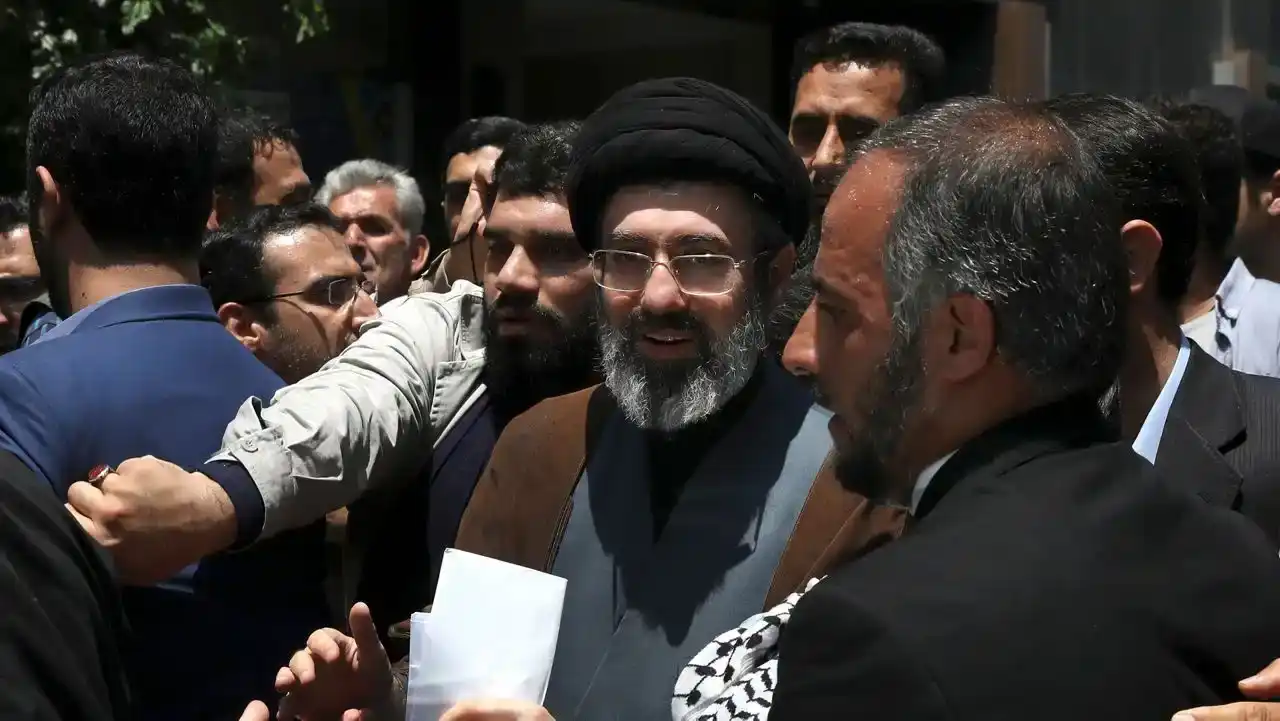
In 2019, the US Treasury Department announced sanctions against Mojtaba, stating that he had never been elected or appointed to a government position but acted in an official capacity on behalf of the Supreme Leader. The statement also mentioned that Mojtaba was entrusted by Khamenei with some leadership responsibilities and cooperated closely with the commander of the IRGC Quds Force (IRGC-QF) and the Basij Resistance Force.
Iran International reported that for at least the past two decades, Mojtaba has been Khamenei's closest advisor, effectively controlling the Office of the Supreme Leader. As Iran's highest authority, the Office of the Supreme Leader combines the model of the traditional religious institution "Beyt" (the office of the religious authority "Marja") and a bureaucratic apparatus, controlling the nation's lifeblood: key security, political, and financial levers. Mojtaba has been lurking within the Office of the Supreme Leader, acting as a gatekeeper and power broker for his father.
During the Iran-Iraq War in the 1980s, Mojtaba served in the Habib Battalion affiliated with the Islamic Revolutionary Guard Corps. Many of his comrades later rose to become senior officials in Iran's security and intelligence agencies. These wartime relationships also helped lay the foundation for the long-term connections Mojtaba established within Iran's security apparatus.
As a core figure in Tehran's power structure, Mojtaba, who has always operated behind the scenes, has close ties to the Islamic Revolutionary Guard Corps (IRGC), through which he has consolidated his influence within the regime's power structure. In 2009, Mojtaba orchestrated election fraud to help then-President Mahmoud Ahmadinejad secure re-election, which sparked prolonged protests that eventually evolved into a nationwide movement against the government and the Supreme Leader. Subsequently, Mojtaba led the crackdown on the post-election protests known as the "Green Movement."
For many years, Mojtaba has been considered a potential successor to Khamenei. The imprisoned former Iranian Prime Minister Mir-Hossein Mousavi stated in a collection of writings released in 2022: "Rumors about the son conspiring to inherit his father's throne have been circulating for thirteen years. If this isn't true, why has no one denied it?" Following this, former Iranian President Ebrahim Raisi, who was once rumored to be in the "final round" alongside Mojtaba, died in a helicopter accident in 2024.
Therefore, for Iran in a state of war, especially for the core circle of the regime composed of hardline politicians and security agencies, elevating Mojtaba, who possesses both legitimacy and control, to power is a natural progression.
Building a Global Real Estate Empire
While Mojtaba has built strong influence within Iran's political, security, and religious institutions, his control and command over financial networks are even more隐秘 (secretive).
In January of this year, Israel's Channel 14 claimed, citing a source familiar with the economic activities of the Iranian Revolutionary Guard Corps, that Iranian leaders transferred $1.5 billion in cryptocurrency to escrow accounts in Dubai over two days, and Mojtaba was one of the individuals involved in these transfers.
The Khamenei family has been officially portrayed as living a simple and pious life, with no signs of extravagance. However, according to a year-long investigation by Bloomberg, Mojtaba's隐秘 (hidden) vast wealth is incongruous with the proclaimed image of piety. As one of the most powerful figures in Iran and the Middle East, Mojtaba possesses a vast investment empire.
It is estimated that despite US sanctions imposed on him in 2019, Khamenei has funneled billions of dollars into Western markets through his extensive business network. Informed sources reveal that Mojtaba's financial reach encompasses assets ranging from Persian Gulf shipping to Swiss bank accounts, to upscale European hotels and luxury UK real estate valued at over £100 million (approximately $138 million). Funds for acquiring these assets primarily came from Iranian oil sales, according to知情人士 (informed sources).
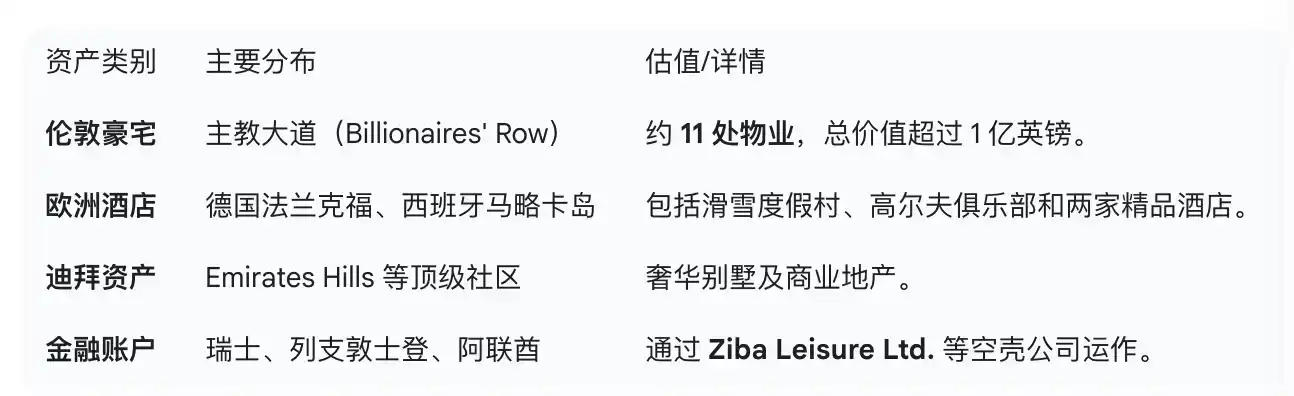
However, a review of all documents by Bloomberg found that these assets are not registered under Mojtaba's name but were purchased and held by an Iranian businessman named Ali Ansari. "Analyzing his (Mojtaba's) financial network, you find that Ali Ansari is his primary account holder. This makes Ansari one of the most influential oligarchs in Iran today," said Farzin Nadimi, a senior fellow at the Washington Institute for Near East Policy who has studied the Khamenei family's financial empire.
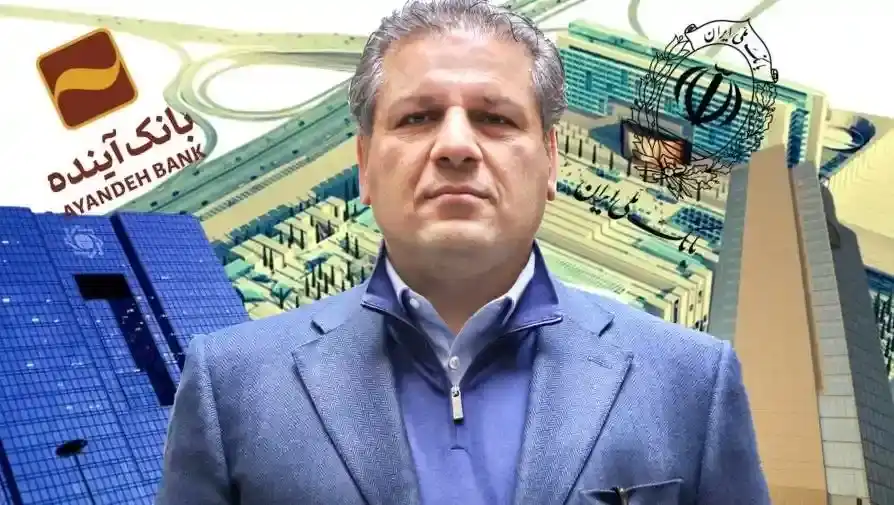
The 57-year-old Ansari was identified last year by British authorities as a "corrupt Iranian banker and businessman" and sanctioned for "funding" the activities of the Islamic Revolutionary Guard Corps (IRGC). Within Iran, Ansari's vast business network布局 (layout) makes him one of the most prominent private entrepreneurs.
It is said that in his youth, Ansari's father joined a reconstruction committee funded by the Office of the Supreme Leader, responsible for renovating religious sites. This work brought Ansari's father into contact with senior clerics, including members of Khamenei's inner circle. Additionally, Ansari enlisted near the end of the Iran-Iraq War, forging a "comradeship in arms" with Mojtaba, the son of then-President Khamenei. At his father's funeral in June 2025, the attendance of the Supreme Leader's family and senior advisors highlighted the ongoing close relationship between the Ansari family and the Iranian leadership.
After the Iran-Iraq War, Ansari gradually began to emerge as a rising entrepreneur in Iran. He founded TAT Bank in 2009, and later merged it to form Ayandeh Bank in 2013. According to Ansari's vision, the bank officially began construction in 2018 on a luxury shopping mall called "Iran Mall." Iran Mall is touted as the world's largest shopping mall and set a Guinness record for the longest continuous concrete pour during its initial construction phase.
Last year, Ayandeh Bank collapsed due to heavy debt, internal lending and Ponzi scheme allegations, and controversy stemming from close political ties with officials, and was merged into the Iranian National Bank. Publicly, Ansari was the main shareholder of Ayandeh Bank. But informed sources reveal that Mojtaba was the central figure in the bank's operations and the mall project. It is said Ansari would hold private meetings with Mojtaba in upscale residential areas of Tehran and frequently used Ayandeh offices for secret talks.
According to知情人士 (informed sources), as Ansari's domestic business empire expanded, his role as Mojtaba's financial conduit overseas became increasingly significant—he established banking relationships across Europe and transferred oil export profits through a complex network of companies in the UAE. According to US officials and知情人士 (informed sources), sanctions have forced most of the National Iranian Oil Company's (NIOC) crude oil trading into opaque channels involving shell companies, intermediaries, and informal traders.
Following the complex corporate network, the Ansari Group布局 (laid out) a vast real estate business empire overseas. Bloomberg tracked this network to over a dozen properties in London alone, as well as several five-star hotels in the German financial center Frankfurt and Spain, among other locations.
"The Iranian government is trying to gain a foothold in the German financial system," said Nargess Eskandari-Grünberg, Vice Mayor of Frankfurt, born in Tehran and a long-time critic of the Islamic Republic's leadership: "They are abusing our system."
The Supreme Leader Position Intensifies Iran's Power Struggle
From political and military influence to布局 (laying out) financial networks, Mojtaba has secretly made all preparations to inherit the power of the Supreme Leader.
However, the long-invisible Mojtaba also faces dissent. According to Iran International, a group of opponents contacted the head of the National Assembly and members of the leadership council last Wednesday, warning that Mojtaba's succession could raise public concerns about hereditary leadership and the Islamic Republic becoming like a monarchy.
One assembly member, in a call with the chairman and the assembly leadership, stated: "Ayatollah Ali Khamenei did not approve of the idea of his son assuming a leadership position and never allowed the issue to be raised during his lifetime." Additionally, other members stated that Mojtaba lacks an established, public religious and jurisprudential status; therefore, selecting him as the country's Supreme Jurist (Vali-ye Faqih) lacks religious legitimacy. These opposing representatives called for Mojtaba to withdraw, otherwise the election process might be deemed "invalid."
Amid increasing reports of分歧 (divisions) and僵局 (deadlock), Iran's Expediency Discernment Council decided to suspend the operations of the Assembly of Experts (the body constitutionally responsible for selecting the Supreme Leader) and transfer power to a temporary leadership body. According to Article 111 of the Iranian Constitution, this shift elevated the status of Iranian President Masoud Pezeshkian to that of the Supreme Leader, granting him many of the Supreme Leader's powers, including command of the armed forces.
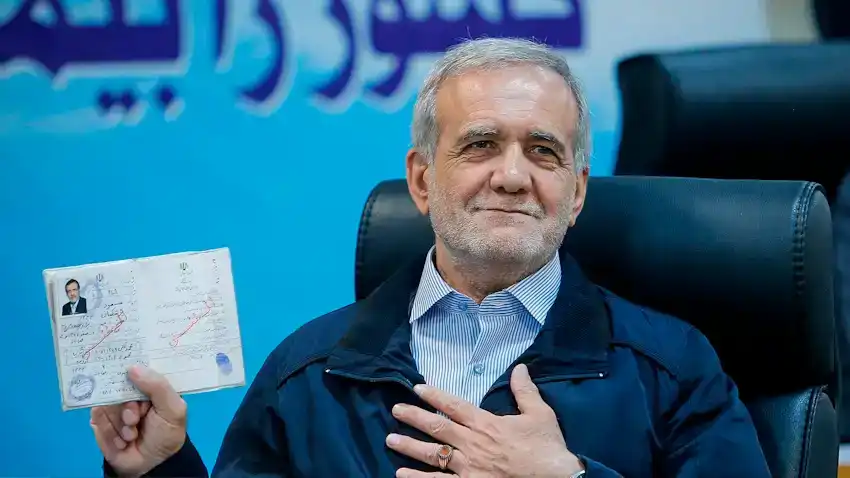
But Pezeshkian显然 (clearly) lacks the ability to control the situation. On March 7, the Iranian President claimed that the interim leadership council had approved not to launch attacks or missile strikes against neighboring countries. However, several Gulf states were still hit by drone strikes. Pezeshkian also retracted an apology statement after criticism from other hardline Iranian leaders.
Clearly, the Iranian Revolutionary Guard Corps continues to play a central role in the war and domestic politics, and is deeply involved in the selection and decision-making regarding the power successor. Despite constitutional sensitivities and resistance from some religious institutions, the organization firmly supports Mojtaba. According to消息人士 (sources), Guard commanders have been directly contacting and lobbying members, applying威胁压力 (threatening pressure), trying to persuade opposing representatives.
For Mojtaba, starting from the ruins of his father's era, this new leader who has long presented a hardline face. Having experienced the deaths of both his father and wife in airstrikes, it might make it even harder for him to reach any compromise.
However, since Israel and the US view a threatening successor as a "clear target for elimination," Mojtaba would face greater risks if he insists on the Islamic law of "qisas" (retribution in kind); but accepting Trump's demands for a policy shift would mean abandoning his father's 37-year political legacy.
Now, the Islamic Republic of Iran, deeply embroiled in war and economic crisis, is at a crossroads.