From the Wild Path to the Table: Why Compliance is the Inevitable Route

比推Xuất bản vào 2026-02-09Cập nhật gần nhất vào 2026-02-09

Tóm tắt

The article "From the Fringes to the Main Table: Why Compliance is the Inevitable Path" discusses the critical shift toward regulatory compliance in the cryptocurrency and blockchain industry, using key players like Binance, Coinbase, and Hyperliquid as case studies. It highlights how Binance leveraged regulatory arbitrage to become a global leader by 2017 but faced increasing pressure from regulators, leading to its compliance efforts in jurisdictions like Abu Dhabi (ADGM) by 2025. Meanwhile, Coinbase capitalized on U.S. regulatory frameworks under evolving policies, though its growth in derivatives markets remained limited. Hyperliquid emerged as a significant player by exploiting gaps left by larger exchanges, capturing about 15% of Binance's market share through derivatives and ventures into non-traditional areas like precious metals and prediction markets—yet its long-term sustainability hinges on eventual compliance. The piece argues that compliance is no longer optional but essential for scalability and legitimacy, especially as Real-World Assets (RWA)—such as tokenized stocks, bonds, and stablecoins—gain traction. Regulatory clarity, particularly from the U.S. and China, is reshaping the landscape, forcing once-"underground" economies to formalize or risk exclusion from major markets. The conclusion underscores that while regulatory arbitrage offers short-term advantages, the future of crypto and DeFi depends on integrating into established financial systems und...

Written by: Zuo Ye

Original Title: Compliance is the Coming-of-Age Ceremony for the Underground Economy


In 2017, Binance rapidly became the world's number one through regulatory arbitrage, but in 2025, the more liberal Hyperliquid could only capture 15% of Binance's market share. Does RWA, as a source of underlying assets for DeFi, have the space for regulatory arbitrage and a scalable future?

Compliance has become the main theme of 2026. The offshore exchange Binance officially went onshore in the UAE's ADGM, Coinbase scored two major wins with the Talent Act and the Clarity Act, and even the Eastern power has "in principle" tested the waters of RWA regulation.

We are at a clear inflection point. Blockchain will not replace the internet, Web3 is just a self-righteous scam, the listing effect ended with Binance's purchase of Bitcoin. However, Hyperliquid is making strides in precious metals and prediction markets, while the tokenization of RWA—represented by currencies (stablecoins), stocks (U.S. stocks), bonds (U.S. bonds, subprime bonds), and funds (hedge, active)—is happening now.

Against this backdrop, compliance has evolved beyond the symbolic role of "holding a small country's license to arbitrage a large country's regulations" into a real framework separating trading, clearing, and custody. When the industry breaks through scale limitations, regulatory benefits will become profitable.

In the quiet moments, compliance not only signifies the end of the last era of reckless expansion, but also, amidst the rumbling thunder, there will always be tracks with arbitrage space for development in exchange for scale.

Let's start with exchanges to glimpse the economic considerations beyond compliance.

Civilized Wall Street, Crazy Barbarians

Barbarian conquerors are, by an eternal law of history, themselves conquered by the superior civilization of their subjects.

In 2022, FTX collapsed dramatically. Wall Street once harbored ambitions to dominate the exchange赛道. Citadel Securities, Fidelity, and Charles Schwab collaborated to launch EDX Markets in Singapore, operating under the Singapore MAS compliance framework based on the principle of separating trading and custody.

With Gary Gensler's SEC relentlessly pursuing Binance, Coinbase and Kraken were confined to the U.S. spot market,迟迟 unable to venture into高端 markets like futures and options. At that time, the market also had high hopes for EDX Markets.

If nothing unexpected happened, we should have witnessed Binance's fall, similar to BitMEX after the March 12, 2020 crash. But history never repeats itself. Hyperliquid was the real winner. The weakened Binance and the still U.S.-confined Coinbase were surprisingly not the protagonists of the next act.

To understand the winner's experience, one must first understand the loser's lessons.

After its establishment in 2017, Binance did at least two things right:

  • While actively embracing going overseas, it continued to accept users from mainland China, creating a seesaw effect between trading volume刷量 and user scale;

  • In 2019, it launched IEO (Initial Exchange Offering), creating real wealth effects before DeFi Summer.

After the September 4 ban, providing trading services to users in mainland China entered a "gray area." The third regulation directly targeted trading platforms, requiring them not to provide services like quotation, matching, and clearing. If we refer to He Yi's response to Cathie Wood, Binance would respond by "not providing services to users in mainland China."

From 2017 to 2019, Binance secured its position as the world's number one offshore exchange. From 2020 to 2022, Binance filled the futures market gap left by BitMEX. From 2022 to 2024, Binance dominated the global altcoin market, where the listing effect was equivalent to the "listed on Binance" effect.

Entering 2025, Binance officially came under the compliance framework of Abu Dhabi's ADGM in the UAE, dividing itself into three entities: trading, clearing, and over-the-counter, but this still retained Binance's characteristic arbitrage.

Especially since compliance did not stop Binance's listing team from adding Meme coins. Secondly, ADGM and the entire UAE financial system simply lack the capacity to regulate a behemoth like Binance. One can refer to the Bahamas' helplessness regarding FTX's global站.
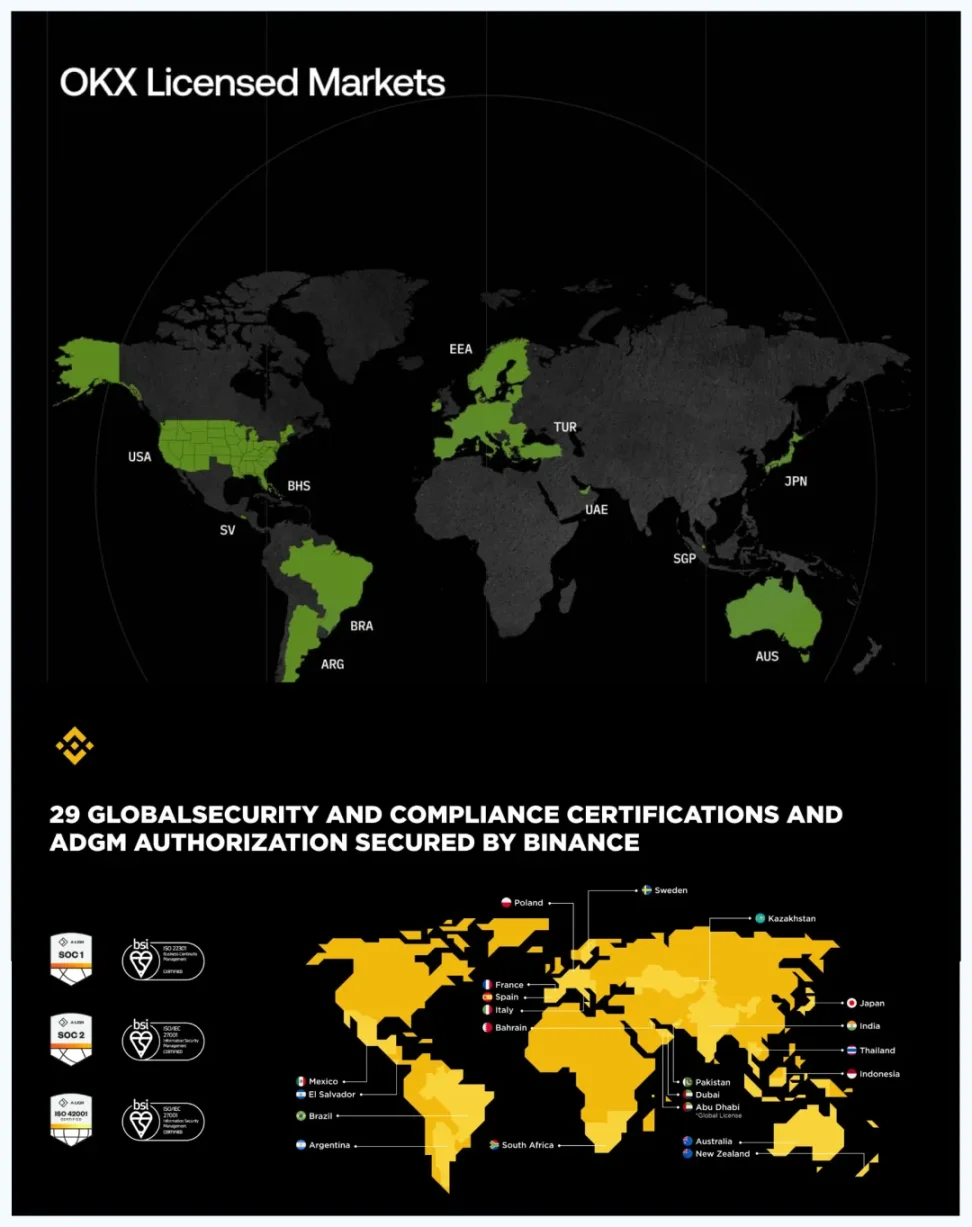
Image Caption: "Passing the Civil Service Exam" to go ashore, Image Source: @binance @okx

Coinbase was the most compliant after FTX's collapse, but this compliance stemmed from Trump's post-election restructuring of the SEC, CFTC, and OCC, demanding they adopt more crypto-friendly regulatory measures.

Roughly, the SEC is responsible for reviewing whether a token meets the definition of a security, the CFTC oversees derivatives trading, and the OCC manages banking licenses for custody services. The U.S. does not have a license类似 ADGM's "crypto exchange license"; it only has regulatory scopes divided by business type.
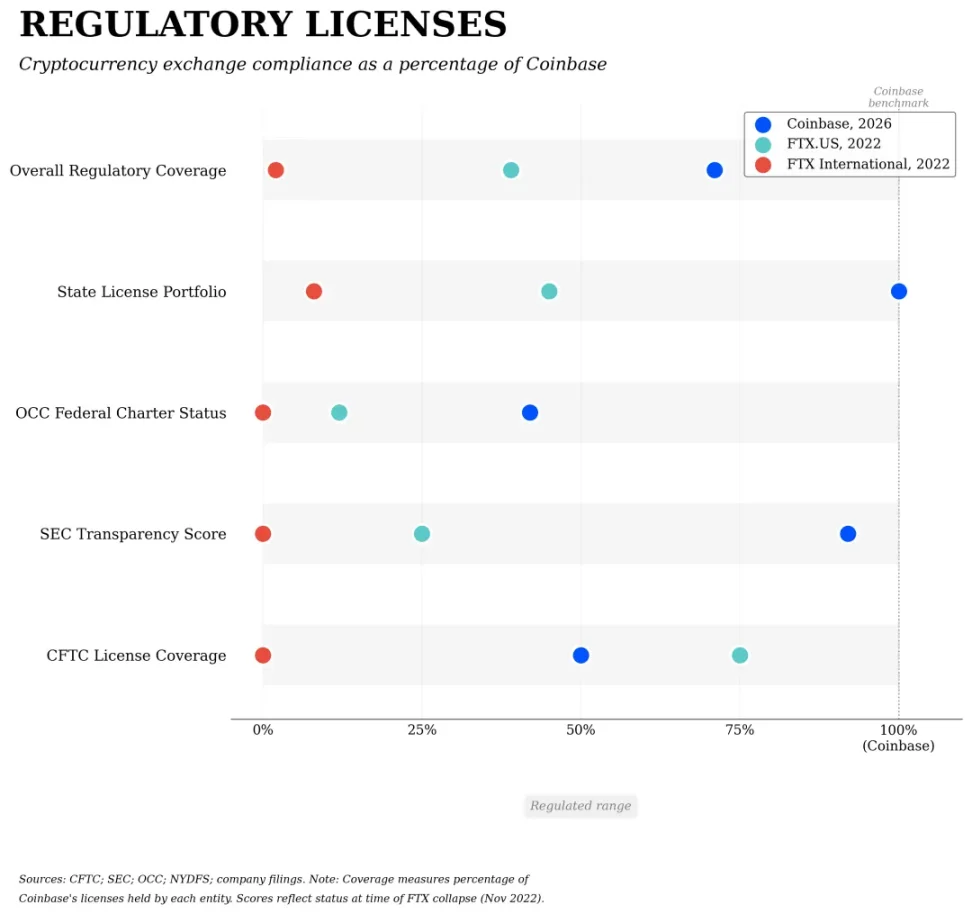
Image Caption: Regulatory Progress, Image Source: @zuoyeweb3

The construction of this regulatory framework is still ongoing, but it's certain that Coinbase will shape the U.S. compliance framework, covering listing (spot, futures), trading (spot, futures), custody (retail, institutional), clearing/settlement (fiat, crypto), audit (technical, asset)/insurance (fiat, crypto) aspects.

Binance's licensing under ADGM and Coinbase's licensing in the U.S. are completely different concepts. The latter's licensing will actually fall under the management of regulatory agencies.

Regulation is about clarifying rules, not protecting retail interests. For example, institutional clients enjoy bankruptcy isolation protection in Coinbase's custody business, corresponding to the entity Coinbase Custody Trust Company.

However, funds deposited by ordinary retail users into Coinbase correspond to the entity Coinbase Inc. If it's fiat currency, it might be protected by the corresponding bank's FDIC deposit insurance, but crypto assets could very well meet the same fate as FTX.

For instance, purchasers of the FTX token FTT were deemed equity owners and were not strictly protected in claims. Coinbase is similar. The only good news is that Coinbase has not faced a run on its funds.

Hyperliquid Enters the RWA Field "Unlicensed"

Human progress will no longer be like the terrible pagan idol, who would not drink the nectar but from the skulls of the slain.

Regulatory arbitrage still exists. In the crypto asset trading field, EDX's American compatriot Hyperliquid also started in Singapore and is蚕食 (eroding) Binance's global market and Coinbase's U.S. market.

This can be called "second-order arbitrage": Binance arbitrages global regulations, Hyperliquid arbitrages Binance.
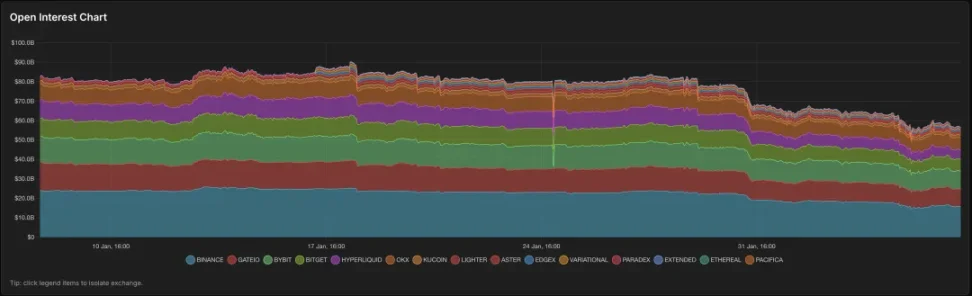
Image Caption: CEX and DEX are hard to distinguish, Image Source: @LorisTools

Hyperliquid blocks U.S. IP addresses, but this block has no practical effect. Compare this to the fact that U.S. users can almost never open an account on Binance Global站, only on Binance US.

Coinbase just began allowing futures business for U.S. users, but its business volume is almost negligible. Thus, in a bizarre space, Hyperliquid captured some European and American users outside of Binance and Coinbase, engaging in derivatives business.

But note, Hyperliquid's arbitrage cannot replicate Binance's growth miracle, nor can it learn from Coinbase to capture the U.S. compliant market. It can probably only capture about 15% of Binance's market share.

As Hyperliquid expands into non-traditional businesses like precious metals and prediction markets, its impact on the global financial market is gradually strengthening. If the U.S. can regulate Binance and Tornado Cash, then action against Hyperliquid would not meet resistance from Singapore either.

Ultimately, most "underground economy" models cannot enter the realm of scale. Take USDT as an example; it has become increasingly strict in its issuance reserves and circulation bans. The Bybit hacker放过 (spared) USDT and the freezing of black USDT after the Huione case are clear evidence.

  • Huione can support the entire underground economy of Cambodia and even Southeast Asia, but Cambodia cannot bear the cost of being placed on FATF's money laundering "grey list."

  • Binance can support the BNB chain economy dominated by altcoins, but the squeeze between China and the U.S. prevents Binance from accessing higher-quality trading assets.

This is essentially due to the U.S.'s advantage of low regulatory costs. The core of U.S. external economic sanctions is not the dollar and the U.S. military. The U.S. is the world's largest single consumer market and the most important financial market. Once Cambodia and Binance are cut off from the U.S., their fate would be like North Korea's.

This is why Binance pays a high price to become compliant, and why Hyperliquid's compliance is only a matter of time.

This leads to an extended discussion: can RWA replicate the trajectory of the crypto asset trading赛道, i.e., preserve itself through regulatory arbitrage and develop its volume within a compliance framework?

This is based on the dual premise that Hyperliquid, in the crypto asset trading field, almost certainly cannot surpass Binance, and in terms of compliance, almost certainly cannot surpass Coinbase.

If we were in 2017, CZ himself might not have believed that CEX was the future. Looking back, stamp coins, P2P, O2O, ofo were all fleeting. Looking forward, DeFi mining, NFT, GameFi, SocialFi all ended without result.

So Binance and BNB should be understood as project-based. Their光环 (halo) is constantly extended by wealth effects. They should have ended hastily, like one financial bubble after another.

But under network effects, the network effect of trading breaks free from the constraints of crypto assets and enters all financial fields, thus meeting RWA in a broad sense. Yield-bearing stablecoins冲击 (impact) CBDC, and asset-based securitization will迟早 (sooner or later) be tokenized.

For example, the recent regulatory guidelines from the Eastern power are essentially an overflow of the U.S. impact in the financial field, which will rewrite on-chain finance in a peculiar way.
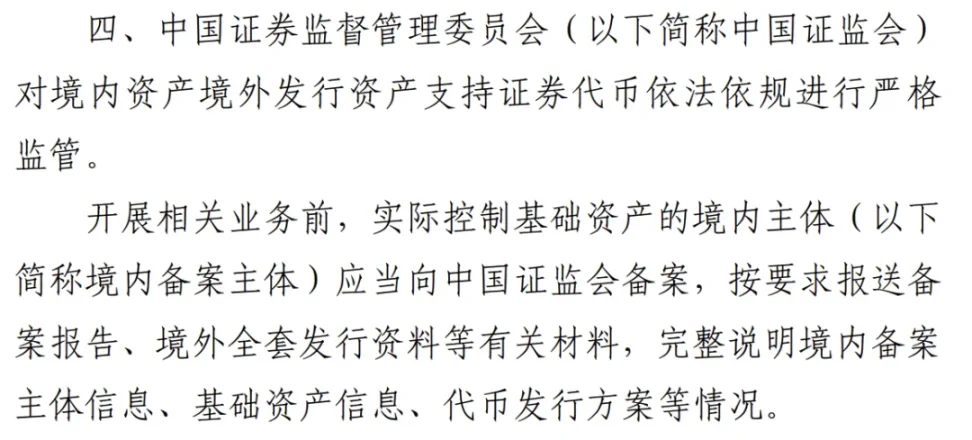
Image Caption: The flower blooms inside the wall, but its fragrance is enjoyed outside

Regarding the new regulatory measures from the Eastern power, Caixin's interpretation divides them into four categories: foreign debt, equity, asset securitization, and others. But in my view, the only meaningful aspect is the opening for security tokenization, aligning with the reform direction of "securitizing all assets." Regarding this:

  • Clearly identifies the CSRC as the competent authority

  • Requires CSRC approval for issuance

  • Only allows issuance from within the territory to outside the territory

Furthermore, these security tokenization guidelines clearly state that both rights and收益 (profits) must be compliant. This corresponds to the SEC's encouragement of the evolution of native "stock tokenization." Overseas RMB stablecoins, foreign debt, and funds are more特殊 (special cases).

  • Overseas offshore RMB stablecoin business has always existed, and Tether, the issuer of USDT, is also involved, but it lacks practical use, and the business volume is very small;

  • Overseas bond issuance and fund tokenization are already happening de facto, completely isolated from domestic assets and issued to overseas clients, unrelated to these guidelines.

This regulation involves the overseas issuance of domestic assets, essentially emphasizing this isolation: what is overseas belongs overseas, what is domestic belongs domestic. Only when the two交叉 (intersect) is there a need to enter the regulatory process.

In the current RWA field, China and the U.S. are already de facto engaged in a land grab. This liquidity溢出 (spillover) onto the chain is enough to rewrite the current financial landscape.

Conclusion

The destiny of an industry depends, of course, on self-striving, but also on the course of history.

CZ might not even believe CEX is the future himself. Even Bitcoin is just a stage of a new form of pyramid scheme, quickly becoming a historical term that vanishes with the wind, like P2P, high-interest loans.

But no one expected CEX to survive until 2026. Hyperliquid is charging into new forms like precious metals and prediction markets, but it still hasn't Flipped Binance.

If we add RWA to Hyperliquid, can it reach the other shore this time?


Twitter:https://twitter.com/BitpushNewsCN

Bitpush TG Discussion Group:https://t.me/BitPushCommunity

Bitpush TG Subscription: https://t.me/bitpush

Original Link:https://www.bitpush.news/articles/7610212

Câu hỏi Liên quan

QWhat are the two key factors that contributed to Binance's rapid growth according to the article?

AAccording to the article, Binance did two things right: 1) It continued to accept users from Mainland China while actively expanding overseas, creating a seesaw effect between trading volume and user scale. 2) It launched IEO (Initial Exchange Offering) in 2019, creating a real wealth effect before the DeFi Summer.

QHow does the article differentiate between Binance's licensing in ADGM and Coinbase's licensing in the US?

AThe article states that Binance's licensing under the ADGM framework and Coinbase's licensing in the US are completely different concepts. Binance's licensing involves dividing itself into trading, clearing, and over-the-counter entities but retains its characteristic arbitrage, and the ADGM lacks the capacity to regulate a behemoth like Binance. In contrast, Coinbase's licensing in the US will place it under the actual management scope of US regulators, shaping a comprehensive US compliance framework covering listing, trading, custody, clearing/settlement, and auditing/insurance.

QWhat is the 'second-order arbitrage' mentioned in the context of Hyperliquid?

AThe 'second-order arbitrage' refers to Hyperliquid arbitraging Binance's position. While Binance arbitraged global regulations to become a top exchange, Hyperliquid is now arbitraging the opportunity created by Binance's restrictions, capturing a segment of users (including some from Europe and the US) that are not fully served by the compliant but limited Coinbase or the restricted Binance, particularly in derivatives trading.

QWhat is the core reason cited in the article for why entities like Binance and Cambodia's Huione Pay ultimately seek compliance, despite operating in 'grey areas'?

AThe core reason is the immense economic power of the United States. The US possesses a low regulatory cost advantage and is the world's largest single consumer market and most important financial market. The threat of being cut off from the US financial system and facing consequences like being placed on the FATF 'grey list' for money laundering is a powerful incentive for these entities to seek compliance to maintain global market access.

QAccording to the article's analysis, what is the significant aspect of the new Eastern power's (implied to be China) regulatory guidance on RWA?

AThe significant aspect is that it provides an opening for the securitization of tokens, aligning with a broader reform direction of 'securitizing all assets.' It mandates that the China Securities Regulatory Commission (CSRC) is the competent authority, requires CSRC approval for issuance, and only allows domestic-to-overseas issuance, emphasizing the separation between onshore and offshore activities for cross-border tokenized securities.

Nội dung Liên quan

Báo cáo Tuần của Wintermute: Chiến tranh Iran kết thúc, lạm phát đúng kỳ vọng, BTC phục hồi về mốc thấp 60k nhưng đừng vội mua vào

Báo cáo thị trường của Wintermute: Xung đột Iran kết thúc, lạm phát đúng kỳ vọng, BTC phục hồi về vùng thấp 60k nhưng đừng vội mua vào. Thị trường tuần này phục hồi nhờ dữ liệu lạm phát CPI của Mỹ đúng kỳ vọng và thỏa thuận chấm dứt xung đột với Iran do Tổng thống Trump công bố. Giá dầu lao dốc kéo theo lợi suất trái phiếu và USD giảm, thúc đẩy tài sản rủi ro như chứng khoán và tiền mã hóa. BTC tăng 1.9%, thoát khỏi vùng đáy 60k USD, trong khi altcoin tăng mạnh hơn. Tuy nhiên, đợt tăng này được xem là phục hồi kỹ thuật trong bối cảnh thị trường giảm mạnh hai tuần trước. Cần thận trọng vì chưa có sự cải thiện cấu trúc về dòng tiền thực sự chảy vào. Ba kênh thanh khoản chính - stablecoin, ETF và quỹ tài chính số (DAT) - đều chưa cho thấy dấu hiệu dòng tiền ròng chuyển sang tích cực bền vững. ETF Bitcoin tiếp tục ghi nhận dòng tiền rút ròng. Thị trường có khả năng tiếp tục dao động trong mùa hè. Điểm quyết định cho một xu hướng tăng thực sự sẽ là khi dòng tiền thể chế quay trở lại ổn định. Trước mắt, bài phát biểu của Chủ tịch Fed Warsh vào thứ Tư và lễ ký kết thỏa thuận Iran vào thứ Sáu sẽ là các yếu tố tác động ngắn hạn. Lời khuyên là không nên vội vàng mua vào ở các đợt bật tăng và cần theo dõi sát các chỉ báo dòng tiền thay vì chỉ giá cả.

marsbit2 phút trước

Báo cáo Tuần của Wintermute: Chiến tranh Iran kết thúc, lạm phát đúng kỳ vọng, BTC phục hồi về mốc thấp 60k nhưng đừng vội mua vào

marsbit2 phút trước

Càng tăng càng nguy hiểm? Rủi ro hệ thống đằng sau mức định giá phi mã của SpaceX

Biên tập viên: Sau khi vốn hóa thị trường của SpaceX vượt 3 nghìn tỷ USD, bài viết đặt ra một câu hỏi sắc bén hơn việc định giá: Khi một công ty có thể tăng hàng nghìn tỷ giá trị vốn hóa chỉ trong một ngày nhờ sự kết hợp giữa số lượng cổ phiếu lưu hành hạn chế, giao dịch quyền chọn và tâm lý thị trường, thì thị trường vốn đang thực hiện chức năng phát hiện giá hay đã biến thành một cỗ máy đầu cơ tự củng cố? Trọng tâm bài viết không phủ nhận triển vọng kinh doanh của SpaceX - vẫn có thể là một trong những công ty cơ sở hạ tầng vũ trụ quan trọng nhất với tiềm năng dài hạn lớn. Điều đáng lo ngại là cơ chế thị trường: nếu giá cổ phiếu chủ yếu được đẩy bởi dòng tiền mua quyền chọn mua (call options), hoạt động phòng ngừa rủi ro (hedging) của nhà tạo lập thị trường, sự đuổi theo của dòng tiền theo động lượng và phân bổ vốn thụ động, thì định giá không còn "phản ánh giá trị" mà bắt đầu "tạo ra giá trị". Bản thân việc giá tăng trở thành lý do để lạc quan, còn yếu tố cơ bản bị đẩy xuống thứ yếu. Hiện tượng "gamma squeeze" (vòng phản hồi khi nhà tạo lập thị trường buộc phải mua cổ phiếu để phòng ngừa rủi ro từ quyền chọn, đẩy giá lên cao hơn) là then chốt. Cơ chế tương tự từng xảy ra với Tesla, một số meme stock và cổ phiếu công nghệ có động lượng cao. Tác giả lo ngại nếu SpaceX lặp lại lộ trình này, với sức hút từ câu chuyện kinh doanh, số cổ phiếu lưu hành hạn chế và ảnh hưởng cá nhân của Elon Musk, nó có thể từ một cổ phiếu định giá cao biến thành một biến số hệ thống của toàn thị trường. Rủi ro hệ thống nằm ở sự chỉ số hóa và đầu tư thụ động. Khi một công ty đủ lớn, nó sẽ được đưa vào các chỉ số chính, được nắm giữ thụ động bởi ETF, quỹ hưu trí, tài khoản hưu trí, quỹ đầu tư quốc gia và danh mục thể chế. Khi đó, bong bóng không còn là cuộc mạo hiểm của một số ít nhà giao dịch, mà thâm nhập vào phân bổ tài sản dài hạn của nhà đầu tư phổ thông. Công ty càng tăng giá, thị trường càng không thể bỏ qua nó; và càng không thể bỏ qua, dòng tiền lại càng có khả năng chảy về nó. Bài viết thảo luận về nghịch lý cấu trúc của thị trường vốn hiện đại: khi cơ chế thị trường có thể phóng đại câu chuyện, đòn bẩy và thanh khoản đến mức áp đảo yếu tố cơ bản, thì liệu chức năng "phát hiện giá" có còn tồn tại? SpaceX chỉ là một trường hợp cực đoan, nhưng vấn đề nó phơi bày mang tính phổ biến hơn — trong thị trường chứng khoán Mỹ ngày nay, rủi ro hệ thống đôi khi không bắt đầu từ những công ty tồi, mà từ những công ty được yêu thích và không thể bị phớt lờ nhất.

marsbit8 phút trước

Càng tăng càng nguy hiểm? Rủi ro hệ thống đằng sau mức định giá phi mã của SpaceX

marsbit8 phút trước

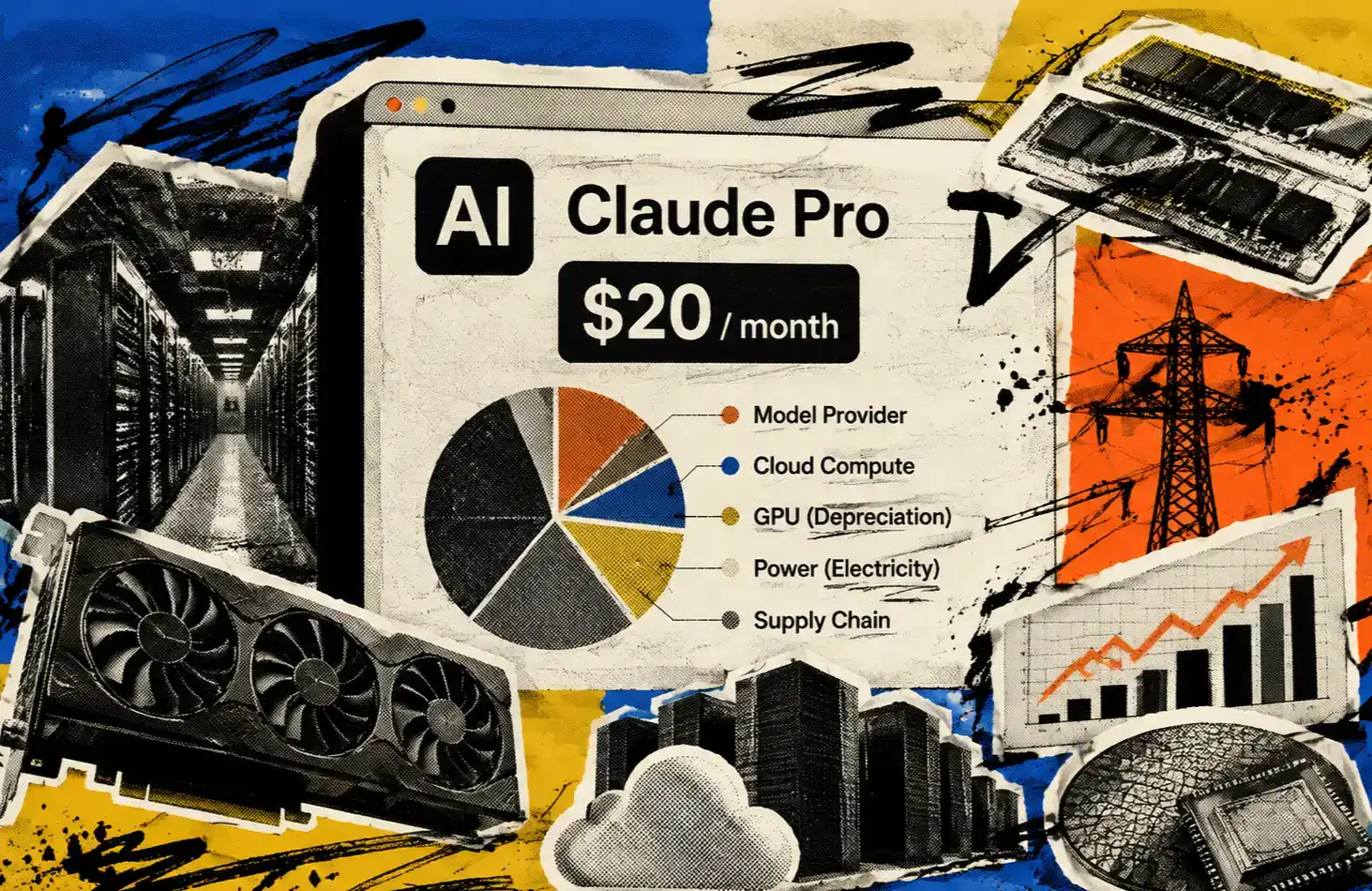
Khoản phí đăng ký bạn trả cho Claude, các công ty module quang có thể nhận được bao nhiêu?

Bản tóm tắt: Một bức tranh ước tính phân bổ 20 USD phí đăng ký Claude Pro hàng tháng của Mỹ cho công ty mô hình, điện toán đám mây, khấu hao GPU, điện năng và chuỗi cung ứng đang khiến các nhà đầu tư thảo luận lại về cách định giá doanh thu ứng dụng AI. Khác với SaaS truyền thống có chi phí biên gần bằng 0, mỗi lần người dùng gọi mô hình AI (suy luận) đều tiêu tốn tài nguyên tính toán, tạo ra mâu thuẫn giữa thuê bao cố định và chi phí biến đổi. Hiện tại, sự tăng trưởng về mức độ sử dụng AI chủ yếu chảy về cơ sở hạ tầng (GPU, HBM, điện, trung tâm dữ liệu), nơi có doanh thu xác định hơn và được định giá cao. Các công ty mô hình cần chứng minh họ có thể cải thiện hiệu quả đủ nhanh (thông qua tối ưu hóa mô hình, bộ nhớ đệm, chip tự nghiên cứu...) để giảm chi phí suy luận trên mỗi đơn vị, vượt qua sự gia tăng về mức độ sử dụng và độ phức tạp tác vụ, từ đó khôi phục cấu trúc lợi nhuận cao như phần mềm. Giá trị của bức tranh này là cảnh báo định giá: nhà đầu tư cần thận trọng với giả định "doanh thu ứng dụng AI bằng doanh thu SaaS", và tập trung vào dữ liệu về tỷ suất lợi nhuận gộp được gia quyền theo mức độ sử dụng thay vì chỉ số người đăng ký.

marsbit18 phút trước

Khoản phí đăng ký bạn trả cho Claude, các công ty module quang có thể nhận được bao nhiêu?

marsbit18 phút trước

Mô hình định giá pre-IPO của OpenAI trên Hyperliquid: Tại sao chỉ tồn tại được nửa năm?

Bài báo phân tích sự thất bại của nền tảng Ventuals, chuyên cung cấp hợp đồng phái sinh giá trước niêm yết (pre-IPO) cho các công ty như OpenAI và Anthropic trên Hyperliquid, chỉ sau 9 tháng hoạt động. Trong khi đó, Trade.xyz, một đối thủ ẩn danh, lại thành công lớn với hợp đồng SpaceX. Sự khác biệt chính nằm ở việc lựa chọn tài sản cơ sở. Trade.xyz chọn SpaceX – một công ty có ngày niêm yết xác định, cung cấp "mức giá thật" để định hướng và kiểm chứng giá trên sàn. Ngược lại, Ventuals chọn OpenAI và Anthropic – những công ty chưa có lịch IPO rõ ràng. Giá hợp đồng của Ventuals phụ thuộc vào một cơ chế oracle thiếu sót: một nửa dựa trên giao dịch cổ phần nội bộ kín và một nửa dựa trên chính đường trung bình giá của hợp đồng, tạo ra một vòng lặp tự tham chiếu đẩy giá lên cao một cách giả tạo, không phản ánh đúng cung cầu thực. Khi đóng cửa, Ventuals định giá thanh lý cuối cùng cho OpenAI là 1.341,80 USD/cổ phiếu và Anthropic là 1.618,90 USD, những con số bị nghi ngờ về độ chính xác. Điều trớ trêu là ngay cả nhân viên và nhà đầu tư của các công ty này lại tham khảo giá này. Sự thất bại của Ventuals làm lộ rõ điểm yếu then chốt của mô hình định giá pre-IPO: thiếu một thị trường công khai, minh bạch để điều chỉnh và xác định giá trị thực. Dù nhu cầu giao dịch tài sản khan hiếm này là có thật và các sàn lớn như Coinbase đang tham gia, thách thức cơ bản về tính hợp lệ của giá cả vẫn tồn tại cho đến khi các công ty này chính thức lên sàn.

marsbit34 phút trước

Mô hình định giá pre-IPO của OpenAI trên Hyperliquid: Tại sao chỉ tồn tại được nửa năm?

marsbit34 phút trước

Giao dịch

Giao ngay
Hợp đồng Tương lai

Bài viết Nổi bật

Làm thế nào để Mua ROUTE

Chào mừng bạn đến với HTX.com! Chúng tôi đã làm cho mua Router Protocol (ROUTE) trở nên đơn giản và thuận tiện. Làm theo hướng dẫn từng bước của chúng tôi để bắt đầu hành trình tiền kỹ thuật số của bạn.Bước 1: Tạo Tài khoản HTX của BạnSử dụng email hoặc số điện thoại của bạn để đăng ký tài khoản miễn phí trên HTX. Trải nghiệm hành trình đăng ký không rắc rối và mở khóa tất cả tính năng. Nhận Tài khoản của tôiBước 2: Truy cập Mua Crypto và Chọn Phương thức Thanh toán của BạnThẻ Tín dụng/Ghi nợ: Sử dụng Visa hoặc Mastercard của bạn để mua Router Protocol (ROUTE) ngay lập tức.Số dư: Sử dụng tiền từ số dư tài khoản HTX của bạn để giao dịch liền mạch.Bên thứ ba: Chúng tôi đã thêm những phương thức thanh toán phổ biến như Google Pay và Apple Pay để nâng cao sự tiện lợi.P2P: Giao dịch trực tiếp với người dùng khác trên HTX.Thị trường mua bán phi tập trung (OTC): Chúng tôi cung cấp những dịch vụ được thiết kế riêng và tỷ giá hối đoái cạnh tranh cho nhà giao dịch.Bước 3: Lưu trữ Router Protocol (ROUTE) của BạnSau khi mua Router Protocol (ROUTE), lưu trữ trong tài khoản HTX của bạn. Ngoài ra, bạn có thể gửi đi nơi khác qua chuyển khoản blockchain hoặc sử dụng để giao dịch những tiền kỹ thuật số khác.Bước 4: Giao dịch Router Protocol (ROUTE)Giao dịch Router Protocol (ROUTE) dễ dàng trên thị trường giao ngay của HTX. Chỉ cần truy cập vào tài khoản của bạn, chọn cặp giao dịch, thực hiện giao dịch và theo dõi trong thời gian thực. Chúng tôi cung cấp trải nghiệm thân thiện với người dùng cho cả người mới bắt đầu và người giao dịch dày dạn kinh nghiệm.

Tổng lượt xem 289Xuất bản vào 2024.12.11Cập nhật vào 2026.06.02

Làm thế nào để Mua ROUTE

Thảo luận

Chào mừng đến với Cộng đồng HTX. Tại đây, bạn có thể được thông báo về những phát triển nền tảng mới nhất và có quyền truy cập vào thông tin chuyên sâu về thị trường. Ý kiến ​​của người dùng về giá của ROUTE (ROUTE) được trình bày dưới đây.

活动图片