- Under Garlinghouse’s leadership since 2016, Ripple evolved from a lesser-known blockchain startup into a global financial tech leader.
- As of July 2025, Garlinghouse’s net worth is estimated at $10 billion, primarily from his stake in Ripple and personal XRP holdings.
- Garlinghouse played a central role in Ripple’s legal battle with the SEC and has become a key voice calling for clearer U.S. crypto regulations.
Ripple CEO Brad Garlinghouse is recognized for guiding Ripple through its high-profile SEC lawsuit and for his constant fight for clearer regulation in the blockchain space.
Under his leadership, Ripple continues to focus on integrating blockchain technology into real-world financial systems, as he continues his self-proclaimed childhood goal of “changing the world.”
As of July 10, 2025, Brad Garlinghouse’s net worth is estimated at around $10 billion, according to industry estimates.
Brad Garlinghouse Net Worth
On March 20, 2025, Fox News journalist Charles Gasparino wrote on X that Garlinghouse’s net worth had reached $10 billion after the surge in XRP.
Much of his wealth is derived from equity in Ripple Labs and his personal holdings of XRP, which he has confirmed in past interviews.
As of 2018, Garlinghouse owned a 6.3% stake in Ripple, according to Forbes .
Garlinghouse’s Rise to Riches
Brad Garlinghouse was born in 1971 in Topeka, Kansas.
After falling in love with the world of computing, Garlinghouse went to college to study economics. Following graduation, the budding CEO obtained an MBA from Harvard Business School in 1997.
Garlinghouse claims that he always knew he wanted to do something that would really change the world and society.
“Long before joining Ripple, I knew I wanted to be a part of something that could change the world,” he told Kansas University’s KU College Stories in 2016.
“I never wanted to work somewhere that was focused on doing things the way they’ve always been done,” he added. “I discovered that I always want to be looking for the next thing, rather than getting comfortable in what I’m doing today,” he stated.
Peanut Butter Manifesto
After graduating, Garlinghouse made the tough decision to move to Silicon Valley to chase a career that could make a difference.
At the time, computing and the internet were in their infancy, and Silicon Valley didn’t carry the giant power it does today.
Following business school, Garlinghouse held executive roles at several tech companies, including DialPad and Ventures.
His first real statement was during his tenure as Senior Vice President at Yahoo! from 2003 to 2008.
It was here that he famously penned the “Peanut Butter Manifesto”—a bold internal memo criticizing the company’s lack of focus and diluted strategy.
The Peanut Butter Manifesto called for the organization to focus on its core offerings, rather than spreading itself too thin like peanut butter.
The memo became something of a legend in Silicon Valley and cemented Garlinghouse’s reputation as a straight-shooter unafraid to challenge the status quo.
Joining Ripple
Brad Garlinghouse joined Ripple in 2015 and became CEO a year later.
Under his leadership, Ripple has grown from a relatively obscure blockchain firm to one of the most prominent companies in the crypto space, primarily due to its focus on cross-border payment solutions using XRP.
Garlinghouse prioritizes making crypto useful in everyday life, stating he is pushing the vision of the “internet of value.”
In a recent interview on CNBC’s Squawk Box on Wednesday, July 9, Garlinghouse reiterated that Ripple believes the key thing for crypto is “building bridges between traditional finance and DeFi.”
“The world isn’t going to be taken over by crypto,” he told CNBC. “Instead, we think about ‘do we take the best of what crypto brings in facilitating faster, cheaper transactions and bring it to traditional finance?’”
Under Garlinghouse, Ripple aggressively pursued partnerships with banks, payment providers, and financial institutions around the world.
Deals with institutions such as Santander and SBI Holdings in Japan have transformed the firm into a key player in global financial infrastructure.
However, Garlinghouse’s biggest legacy so far may be his role during Ripple’s historic lawsuit with the U.S. Securities and Exchange Commission (SEC).
Ripple vs. SEC
In 2020, the SEC filed a complaint alleging that Ripple Labs, along with Garlinghouse and Executive Chairman Chris Larsen, had conducted an unregistered securities offering by selling XRP.
According to the agency, Ripple had raised over $1.3 billion through these sales since 2013 without registering the token as a security.
From the outset, Ripple chose to fight rather than fold, backed by Garlinghouse’s staunch stance on crypto’s place in the economic landscape.
Garlinghouse and his legal team framed the lawsuit as regulatory overreach, arguing that XRP was fundamentally different from securities.
They contended that XRP functioned as a currency and a utility token, not as an investment contract, and pointed out that the SEC had failed to offer clear guidelines to crypto companies prior to taking legal action.
On May 8, 2025, Ripple and the SEC reached a final $50 million settlement.
After almost five years of legal back and forth, many in the crypto industry, including Ripple, have celebrated a significant win.
Garlinghouse’s Push for Regulation
Since the SEC filed its lawsuit in 2020, the Ripple case has come to symbolize the murky legal terrain facing the crypto industry in the U.S., and Garlinghouse has led the calls for regulatory clarity.
Speaking at a U.S. Senate hearing on Wednesday, July 9, Garlinghouse called for stronger regulations across the crypto industry.
“For the past decade, legal and regulatory uncertainty around crypto in the U.S. has blocked meaningful progress,” he said.
“At Ripple, we saw firsthand how unclear rules can be weaponized to target good actors,” he added.
“This drives technology, jobs, and tax dollars offshore, reducing oversight and increasing risks for consumers. It’s harmed American businesses, investors, and consumers alike,” Garlinghouse said.
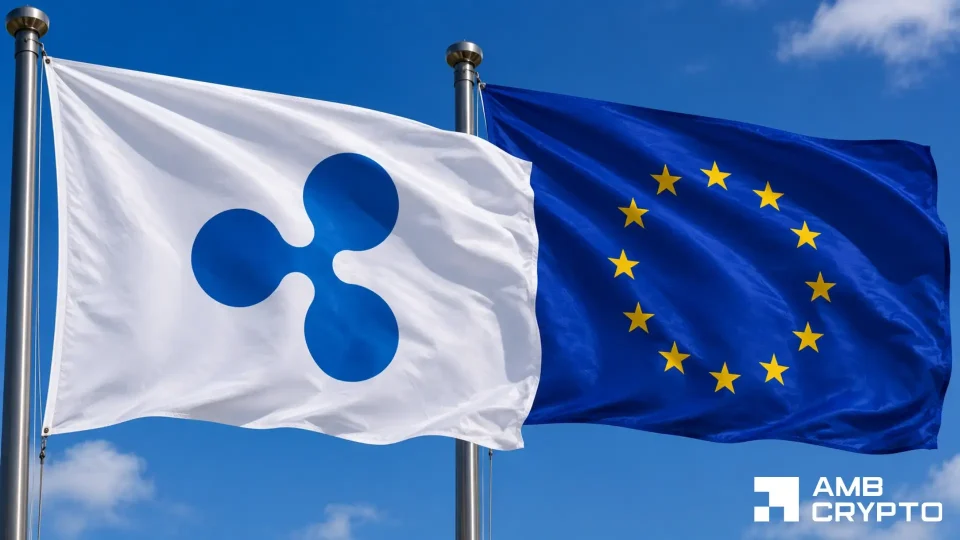
Garlinghouse has also praised jurisdictions like the U.K. and the EU for crafting clear, forward-looking digital asset frameworks.
In Garlinghouse’s Own Words
- “If you own a security, it gives you ownership of a company . If Ripple goes away, XRP’s going to keep trading.”
- “Many countries around the world – the UK, Japan, Switzerland, Singapore – they all have clarity and certainty that XRP is not a security. In fact, the United States is the only country on the planet that has suggested that XRP is a security.”
- “Long before joining Ripple, I knew I wanted to be a part of something that could change the world.”