2026 Crypto Market Off to a Strong Start: A Cautiously Bullish New Beginning

marsbitXuất bản vào 2026-01-07Cập nhật gần nhất vào 2026-01-07

Tóm tắt

The cryptocurrency market started 2026 on a strong note, with Bitcoin reaching $94,000 and the total market capitalization nearing $3.3 trillion. Despite geopolitical tensions, institutional interest returned as spot ETFs saw net inflows of approximately $400 million on January 5. Large Bitcoin holders reduced selling pressure, while retail investors continued accumulating. Derivatives markets indicated cautious optimism, with significant Bitcoin call open interest at the $100,000 strike and Ethereum calls at $3,500 for January expiries. Futures open interest also rebounded, though funding rates remained moderate. Meme coins like PEPE and BONK outperformed, alongside privacy-focused tokens and DeFi assets with clear revenue models. Stablecoin flows turned positive again in January, supporting further upside potential. However, ongoing tensions between the U.S. and Venezuela remain a short-term risk for global markets.

· At the beginning of 2026, the cryptocurrency market regained its upward momentum. Despite heightened geopolitical uncertainty, Bitcoin's price rose to $94,000, and the total market capitalization of cryptocurrencies approached $3.3 trillion.

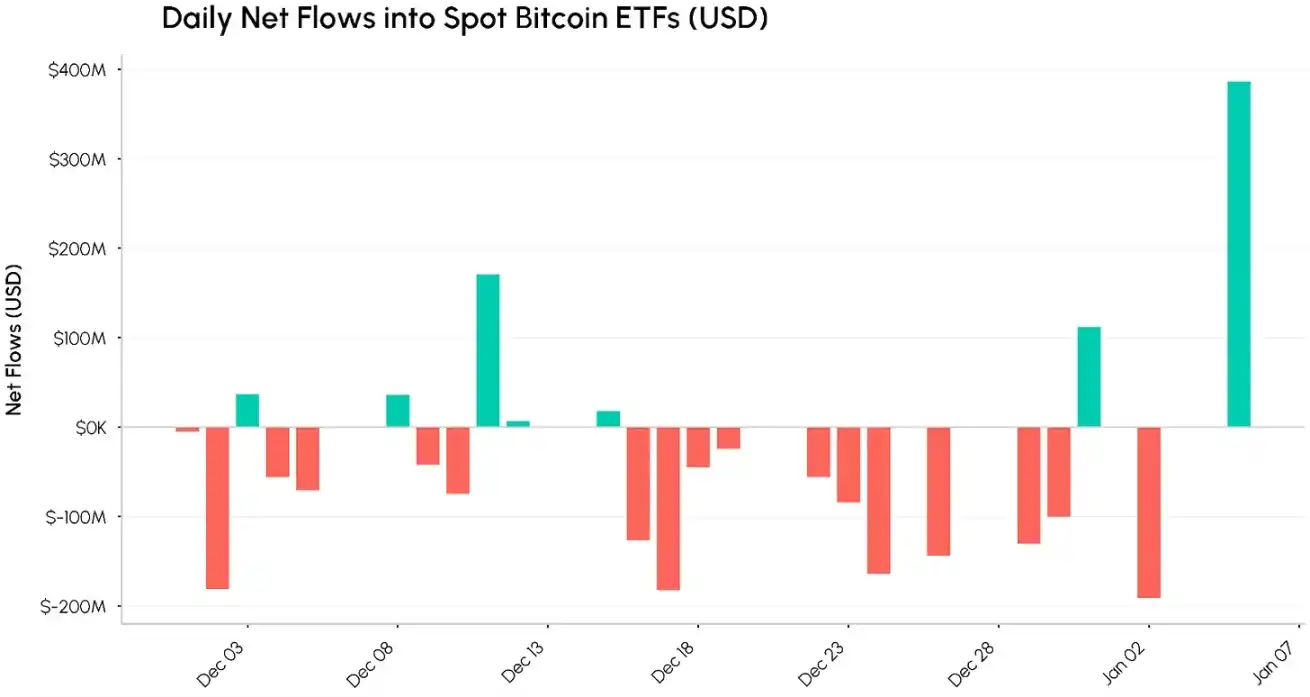
· Spot Bitcoin ETFs reversed the year-end outflow trend on January 5, with a net inflow of approximately $400 million; whale selling activity moderated, while retail investors actively accumulated positions.

· Derivative market positions indicate a cautiously bullish stance. Among the options contracts expiring at the end of January, Bitcoin call open interest is concentrated at the $100,000 strike price, while Ethereum call open interest is concentrated at the $3,500 strike price.

A Green Start to 2026

After several weeks of range-bound trading during the holiday season, the cryptocurrency market started the new year on a strong note. Bitcoin's price surged to $94,000, and the total market capitalization of cryptocurrencies approached $3.3 trillion.

Despite the escalation of geopolitical tensions due to U.S. military action against Venezuela, the cryptocurrency market remained resilient. As year-end prices for precious metals like gold and silver soared, crypto assets gradually recouped their losses. Additionally, the strength of some altcoins signaled a rise in market risk appetite. However, influenced by the evolution of the geopolitical situation, global markets may still experience significant volatility in the short term.
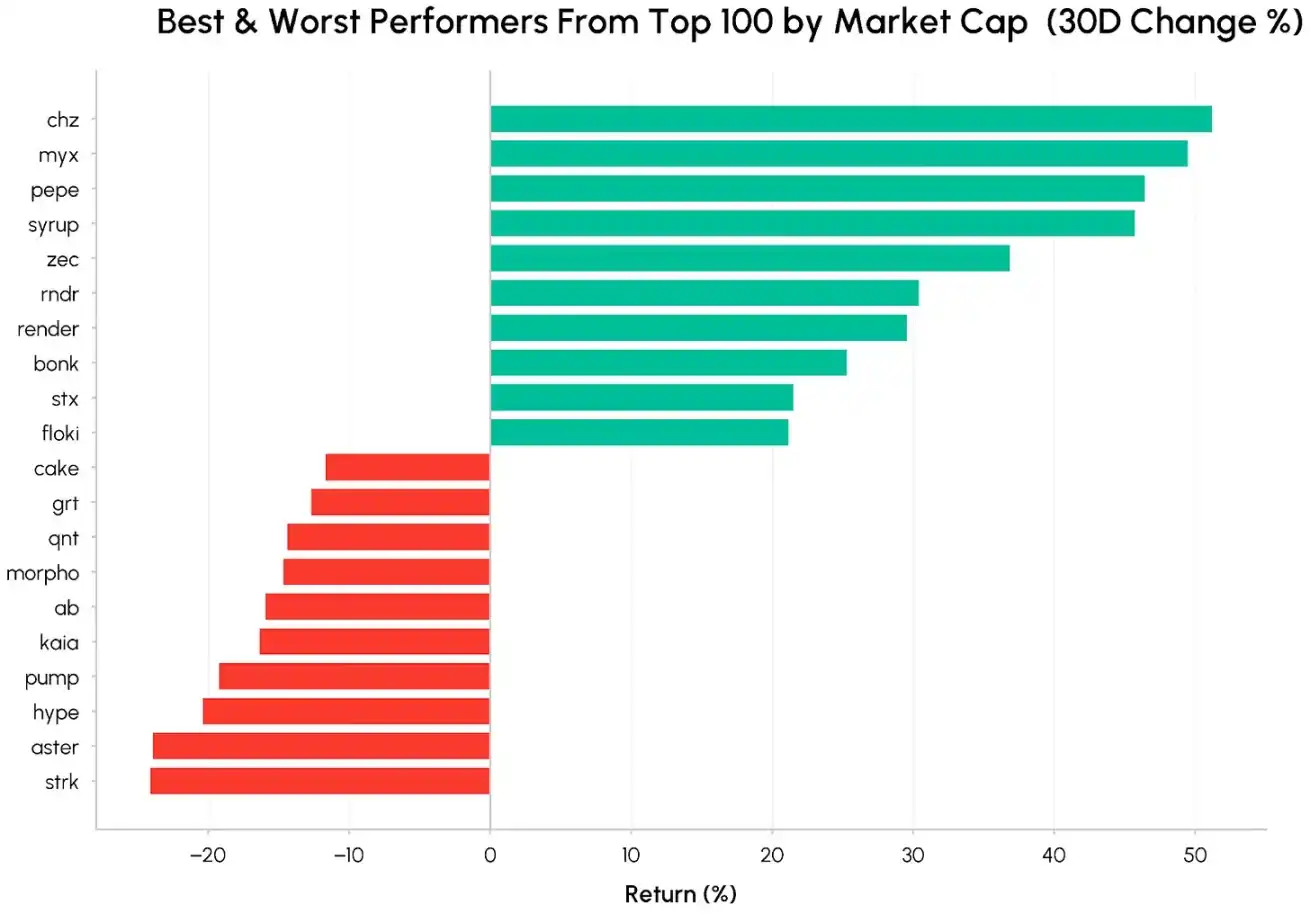
Over the past month, standout performers included Memecoins like PEPE and BONK, privacy-focused Zcash (ZEC), and the institutional credit platform Maple Finance (SYRUP). This trend indicates a resurgence of interest in Memecoins, privacy tokens, and DeFi tokens with clear profit-sharing mechanisms and visible cash flow growth.

In contrast, Hyperliquid (HYPE) and Aster (ASTER) underperformed. The reason lies in the diversion of market attention within the decentralized perpetual contract trading platform sector following the token airdrop by Lighter (LIT), a platform based on zero-knowledge Rollup technology. The decentralized lending protocol Aave (AAVE) also declined during this period due to intense community debate and multiple governance votes regarding token holder rights, profit distribution models, and the role of Aave Labs in the decentralized autonomous organization. This controversy reflects a broader trend across the DeFi industry: leading protocols like Uniswap and Aave are re-evaluating how value flows back to token holders.

Institutional Funds Return, Whale Selling Cools

Spot Bitcoin ETFs reversed the year-end outflow trend, with a single-day net inflow of over $350 million on January 5, marking the return of institutional funds to the crypto market. Around the New Year, spot Bitcoin ETFs had recorded net outflows exceeding $320 million. This reversal suggests a resurgence of institutional investor allocation interest as the first quarter of 2026 begins.

Institutional crypto asset reserves continue to expand: the U.S. Strategic Bitcoin Reserve added 1,287 Bitcoin, bringing its total holdings to 673,783; Bitmine increased its Ethereum reserves to 4.14 million, accounting for approximately 3.4% of Ethereum's total supply.
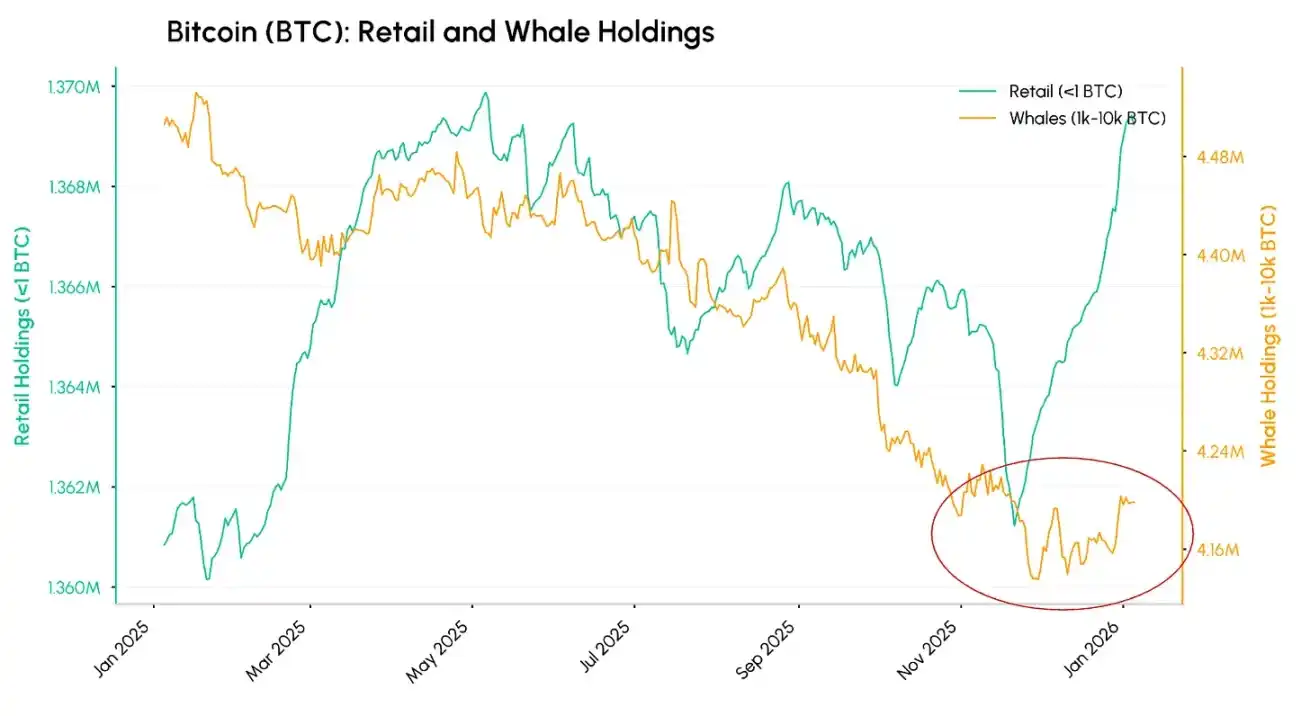
On-chain data shows that since the beginning of January, token selling by whale addresses holding 1,000-10,000 Bitcoin has significantly moderated, indicating reduced selling pressure from this group. Meanwhile, retail investors holding less than 1 Bitcoin have been accelerating their accumulation since mid-November last year. As cryptocurrency prices retreated from highs and consolidated, retail investors bought the dip. The combination of reduced whale selling and sustained retail buying creates a favorable market structure.
Derivatives Market Signals Cautious Optimism

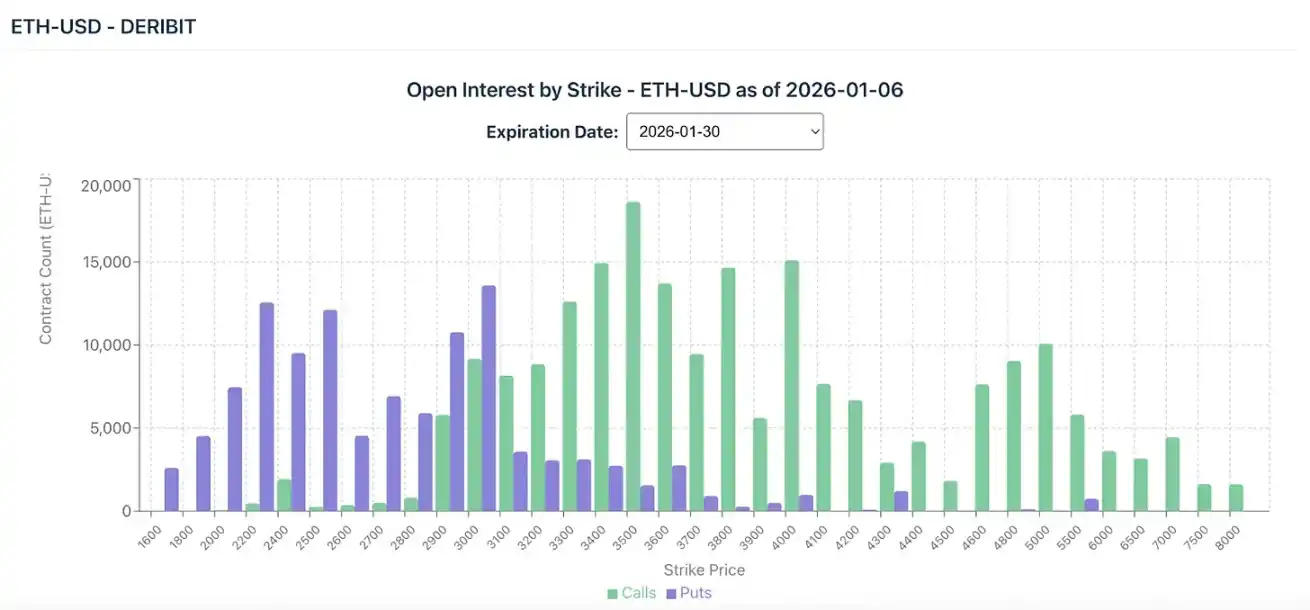
Derivatives market positions indicate a cautiously optimistic view of the Q1 2026 trajectory. The two charts below show the open interest by strike price for Bitcoin and Ethereum options contracts expiring on January 30, 2026, on the Deribit platform, visually reflecting option traders' bets on short-term market direction.
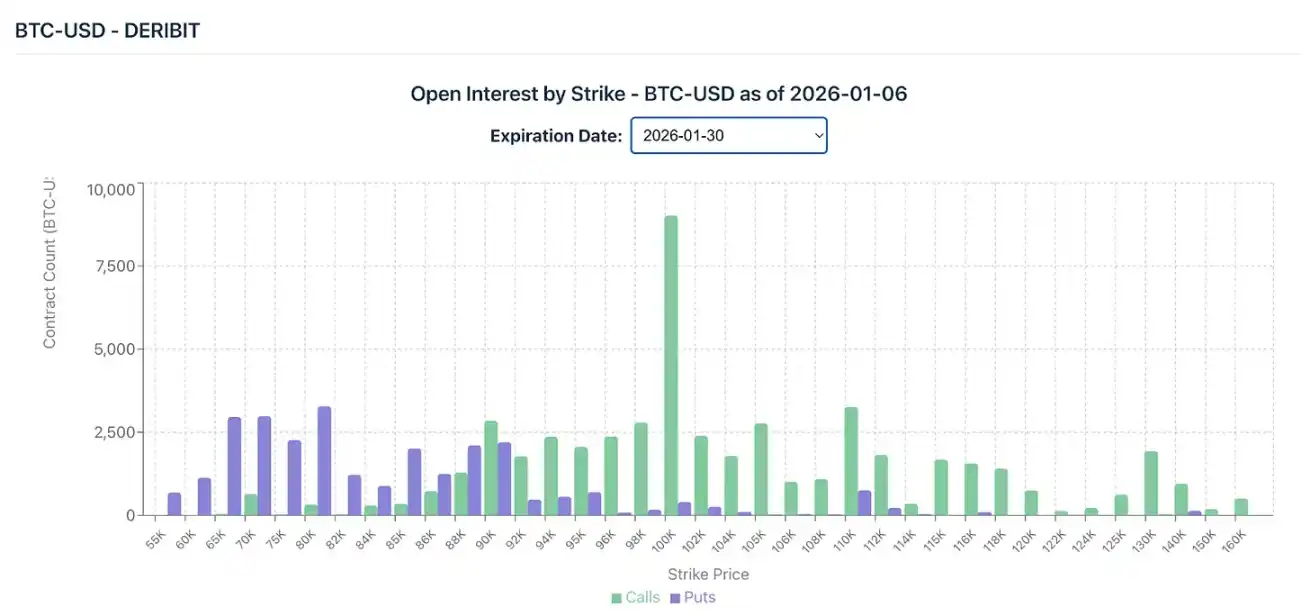
Options market data shows that for contracts expiring on January 30, Bitcoin call open interest is heavily concentrated around the $100,000 strike price, while Ethereum call open interest is concentrated around the $3,500 strike price. This indicates traders are betting on short-term upside potential but are not exhibiting excessive euphoria. Downside protection is also in effect: Bitcoin put open interest is notable in the $70,000 to $90,000 range, though the overall open interest structure remains skewed towards the long side.
The futures market conveys a similar signal. Year-end, Bitcoin and Ethereum futures open interest saw a slight pullback but quickly rebounded in January, with the nominal open interest on major exchanges nearing the highs of last December. In late December, influenced by broad market deleveraging, the funding rates for Bitcoin and Ethereum perpetual contracts briefly turned negative. However, they have since recovered to positive territory, with Ethereum's funding rate significantly stronger than Bitcoin's. Overall, the market is in a cautiously bullish state, not yet showing signs of being overextended.

Stablecoin Flows and On-Chain Activity

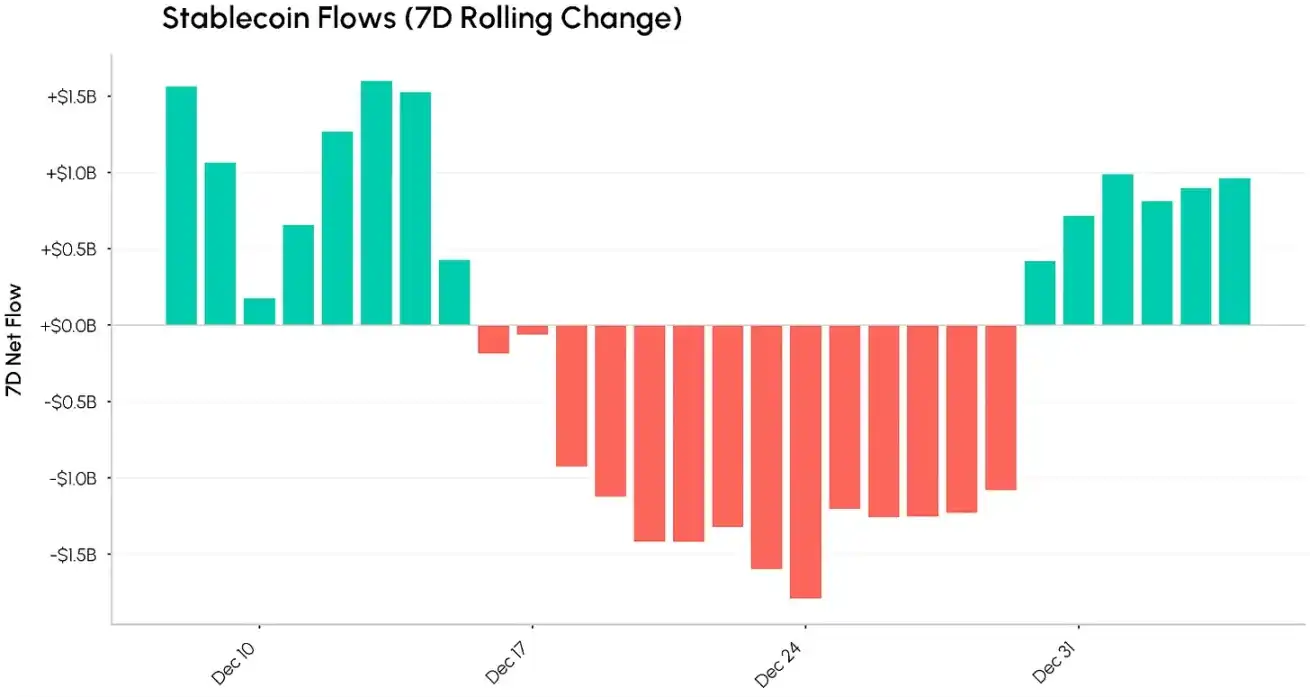
Stablecoin flow is a key indicator for observing capital movements into and out of the crypto market. In early December last year, the stablecoin market recorded sustained net inflows, but towards year-end, flows turned negative, with a single-week net outflow exceeding $1 billion. Entering January 2026, stablecoin flows stabilized and turned net positive again. If this trend continues, it will provide strong support for the sustained rise of the crypto market.
On-chain activity data further corroborates the positive market outlook. Following the implementation of the Ethereum Fusaka upgrade in December, Ethereum mainnet daily transaction volume hit a record high of 2.23 million, and the number of active addresses approached all-time peaks. Concurrently, stablecoin on-chain transfer volume also set a new record in December, indicating that capital flowing into the crypto market is not sitting idle but is actively circulating within the ecosystem.

Conclusion

Market data from the first week of 2026 paints a picture of cautious optimism, with the cryptocurrency market gradually finding its footing. The return of institutional funds, cooling whale selling, optimistic signals from the derivatives market, coupled with high on-chain activity and the return of net inflows into stablecoins, collectively support the market's upward movement. However, it is crucial to remain vigilant, as the geopolitical developments between the U.S. and Venezuela remain a potential risk factor that could trigger global market volatility in the short term.


Câu hỏi Liên quan

QWhat was the price of Bitcoin and the total market capitalization of the cryptocurrency market at the beginning of 2026?

AThe price of Bitcoin rose to $94,000, and the total cryptocurrency market capitalization approached $3.3 trillion.

QWhat trend reversal was observed in the spot Bitcoin ETF on January 5th, and what did it signify?

AThe spot Bitcoin ETF reversed its year-end outflow trend with a net inflow of approximately $400 million on January 5th, signaling a renewed interest in crypto asset allocation from institutional investors.

QAccording to the options market, what are the key strike prices where call option open interest is concentrated for Bitcoin and Ethereum expiring at the end of January?

AFor Bitcoin, call option open interest is concentrated around the $100,000 strike price. For Ethereum, it is concentrated around the $3,500 strike price.

QWhat on-chain behavior suggests that selling pressure from large holders (whales) has decreased?

AOn-chain data shows that token selling behavior from whale wallets holding 1,000 to 10,000 Bitcoin has noticeably收敛 (converged/subdued), indicating reduced selling pressure from this group.

QWhat is identified as a potential risk factor that could cause volatility in global markets in the short term?

AThe geopolitical situation between the United States and Venezuela is identified as a potential risk factor that could cause volatility in global markets in the short term.

Nội dung Liên quan

Sự phân bổ giá trị của stablecoin

Tác giả phân tích sự phân phối giá trị trong ngành stablecoin, chia thành 4 tầng: 1. **Lớp phát hành** (như Tether, Circle): Đúc stablecoin, nắm tài sản dự trữ, hưởng chênh lệch lãi suất. 2. **Lớp cơ sở hạ tầng** (như Bridge, BVNK): Kết nối stablecoin với hệ thống tài chính thực - xử lý nạp/rút tiền pháp định, đối ngân hàng, tuân thủ, quản lý tài sản. Đây là công việc phức tạp, tạo ra rào cản cạnh tranh. 3. **Lớp thu nhận/phân phối** (như Stripe, Coinbase): Tích hợp stablecoin vào hệ thống doanh nghiệp, quản lý thanh toán. 4. **Lớp ứng dụng**: Người dùng và doanh nghiệp cuối cùng. Lớp phát hành thu lợi nhuận lớn nhất. Tuy nhiên, tác giả nhấn mạnh tầm quan trọng tiềm năng của **lớp cơ sở hạ tầng**. Khó khăn thực sự không nằm ở chuyển tiền trên blockchain, mà ở việc kết nối nó với thế giới thực: đối ngân hàng, xử lý quy định, tích hợp vào quy trình nghiệp vụ doanh nghiệp. Các công ty như Stripe (mua lại Bridge) và Mastercard (mua lại BVNK) đang tranh giành để trở thành cổng kết nối mặc định này. Lớp cơ sở hạ tầng hiện ở giai đoạn đầu, vất vả, cần vốn, và bị kẹt giữa các tầng khác. Nhưng một khi stablecoin trở thành phương thức tài chính phổ biến, những công ty đã xây dựng được mạng lưới kết nối rộng khắp và sâu vào hệ thống doanh nghiệp sẽ có vị thế mạnh và quyền định giá.

marsbit6 giờ trước

Sự phân bổ giá trị của stablecoin

marsbit6 giờ trước

Tại sao NVIDIA không thiếu tiền nhưng vẫn muốn vay 200 tỷ USD?

Tóm tắt: Mặc dù có dòng tiền tự do mạnh mẽ (khoảng 486 tỷ USD trong quý gần nhất) và không thiếu tiền mặt, NVIDIA vẫn có kế hoạch phát hành ít nhất 20 tỷ USD trái phiếu (hối phiếu cao cấp) với kỳ hạn lên đến 30 năm. Động thái này không phải vì thiếu vốn, mà là một chiến lược quản lý vốn chủ động, tận dụng xếp hạng tín dụng AA vừa được nâng cấp để huy động vốn dài hạn với chi phí thấp. Mục đích của việc vay nợ bao gồm tái cấp vốn, đầu tư vào cơ sở hạ tầng và trung tâm dữ liệu AI, nghiên cứu & phát triển, thanh toán trước cho chuỗi cung ứng và các khoản đầu tư chiến lược. So với việc phát hành thêm cổ phiếu (làm loãng lợi ích của cổ đông hiện tại), việc phát hành trái phiếu được coi là có lợi hơn cho cổ đông khi NVIDIA có thể vừa duy trì các chương trình mua lại cổ phiếu và cổ tức lớn, vừa tài trợ cho sự mở rộng dài hạn. Hành động của NVIDIA phản ánh một xu hướng rộng hơn trong ngành công nghệ, nơi các gã khổng lồ như Alphabet, Meta và Amazon cũng đang sử dụng vốn vay để tài trợ cho chu kỳ chi tiêu vốn nặng về AI. Điều này cho thấy câu chuyện đầu tư AI đang chuyển sang một giai đoạn mới, đòi hỏi nguồn vốn dài hạn và quy mô lớn cho cơ sở hạ tầng. Thách thức chính trong tương lai là khả năng sinh lời từ các khoản đầu tư AI này phải đủ cao và đúng hạn để biện minh cho kỳ vọng và cấu trúc vốn mới.

marsbit6 giờ trước

Tại sao NVIDIA không thiếu tiền nhưng vẫn muốn vay 200 tỷ USD?

marsbit6 giờ trước

Liberland Sa Thải Bộ Trưởng Công Nghệ Sau Vụ Cố Gắng Chiếm Quyền Blockchain Và Trang Web

Theo một nghị quyết chính thức được công bố, Quốc hội Liberland - một dự án vi quốc gia - đã bỏ phiếu bãi nhiệm Bộ trưởng Công nghệ Dorian Stern Vukotić. Ông bị cáo buộc thực hiện một loạt hành động nhằm giành quyền kiểm soát cơ sở hạ tầng kỹ thuật của dự án, bao gồm việc gỡ bỏ bảo vệ đa chữ ký (multisig) trên tài khoản quản trị Sudo, cố gắng chiếm quyền điều khiển tên miền Liberland.org, chặn quyền bỏ phiếu của Tổng thống Vít Jedlička và phát hành token trái phép. Sự việc này nêu bật những rủi ro quản trị thực tế trong không gian crypto, vượt ra ngoài các lỗ hổng hợp đồng thông minh đơn thuần. Nó liên quan đến quyền kiểm soát các điểm then chốt ngoài chuỗi như tài khoản quản trị, tên miền website, quyền truy cập biểu quyết và thiết kế đa chữ ký. Tranh chấp tại Liberland trở thành một nghiên cứu điển hình về cách thức các dự án phụ thuộc vào sự pha trộn giữa quản trị on-chain và các cơ chế kiểm soát off-chain. Bài học chính cho người dùng crypto là những tuyên bố về phi tập trung cần được kiểm chứng với thực tế vận hành. Nếu chỉ một số ít người có thể kiểm soát các chức năng quản trị hoặc quyền truy cập then chốt, thì hệ thống quản trị vẫn có thể dễ bị tổn thương. Sự kiện này phản ánh xu hướng rộng hơn trong thị trường crypto, nơi cơ sở hạ tầng, bảo mật và quản trị ngày càng trở nên quan trọng ngang bằng với biến động giá.

bitcoinist7 giờ trước

Liberland Sa Thải Bộ Trưởng Công Nghệ Sau Vụ Cố Gắng Chiếm Quyền Blockchain Và Trang Web

bitcoinist7 giờ trước

Làm Thế Nào Để Nghiên Cứu Tốt: Rèn Luyện Những Khả Năng Thực Sự Có Thể 'Luyện Tập Chủ Động'

Chưa ai thực sự dạy bạn cách làm nghiên cứu. Hầu hết mọi người chỉ học cách "trông giống" một nhà nghiên cứu, trong khi năng lực thực sự là sự tích lũy các kỹ năng có thể rèn luyện có chủ ý. **Chọn vấn đề của riêng bạn:** Đừng chỉ tiếp nhận vấn đề từ người khác. Hãy bắt đầu từ một kết quả bạn thực sự muốn đạt được và suy ngược để thiết kế thí nghiệm. Điều này tạo ra tính độc đáo. "Khiếu thẩm mỹ" trong nghiên cứu giống như một cơ bắp, có thể phát triển thông qua việc dự đoán kết quả thí nghiệm và kiểm tra lại các dự đoán đó. **Nâng cấp đầu vào:** Đừng chỉ đọc các xu hướng mới nhất. Tài liệu cũ (như bài phát biểu của Claude Shannon năm 1952) và các lĩnh vực rộng (thần kinh học, thống kê, kiến ​​trúc máy tính) thường mang lại những hiểu biết sâu sắc có giá trị. Hãy đọc chính bài báo gốc, đặc biệt là phần phụ lục và hạn chế. **Viết mọi thứ xuống:** Viết lách là cơ chế phòng thủ rẻ nhất chống lại sự tự lừa dối. Nó phơi bày những lỗ hổng trong suy nghĩ. Giữ một cuốn nhật ký ghi lại giả thuyết, cài đặt, dự đoán, kết quả và bài học. Xem lại nó sẽ dạy bạn sự khiêm tốn. Tóm lại, nghiên cứu hiệu quả dựa trên việc chủ động chọn vấn đề, mở rộng nguồn tri thức và ghi chép trung thực để rèn giũa tư duy.

marsbit8 giờ trước

Làm Thế Nào Để Nghiên Cứu Tốt: Rèn Luyện Những Khả Năng Thực Sự Có Thể 'Luyện Tập Chủ Động'

marsbit8 giờ trước

Tăng Trưởng Vượt 150% Trong Nửa Tháng, Đằng Sau Sự Bùng Nổ Của Backpack

Backpack (BP), token của sàn giao dịch cùng tên, đã tăng hơn 150% trong nửa tháng, đạt mức cao 0,48 USD. Động lực chính đến từ việc ra mắt nền tảng Backpack Securities vào đầu tháng 6, cung cấp dịch vụ môi giới cổ phiếu Mỹ được quy định và hỗ trợ token hóa tài sản truyền thống. Sự kiện đáng chú ý là việc phát hành token SPCX, được neo 1:1 với cổ phiếu SpaceX thật, trên Solana vào ngày 12/6. Sản phẩm này cho phép giao dịch trên chuỗi 24/7 và có thể đổi ngược về tài khoản chứng khoán truyền thống, tạo cầu nối giữa thị trường vốn truyền thống và DeFi. BP có tổng cung 10 tỷ token với cơ chế phân phối độc đáo: 25% đầu tiên được airdrop cho cộng đồng, 37.5% tiếp theo sẽ mở khóa theo các cột mốc phát triển sản phẩm, và 37.5% cuối cùng sẽ được khóa cho đến sau IPO. Đội ngũ phát triển không nhận token ngay từ đầu. Người dùng có thể stake BP để nhận quyền chuyển đổi token thành cổ phần công ty khi công ty IPO, cùng các đặc quyền khác. Hiện khoảng 66% lượng token lưu hành đang được stake. Mặc dù từng có tranh cãi về cơ chế airdrop, sự chú ý của thị trường hiện đang dồn vào sự mở rộng thực tế của nền tảng và tiềm năng lâu dài của token BP trong hệ sinh thái mới kết hợp chứng khoán và tài sản token hóa.

marsbit8 giờ trước

Tăng Trưởng Vượt 150% Trong Nửa Tháng, Đằng Sau Sự Bùng Nổ Của Backpack

marsbit8 giờ trước

Giao dịch

Giao ngay
Hợp đồng Tương lai
活动图片




