European Central Bank Shows It’s Serious About Enabling Digital Euro Offline Use

CoinDeskPolicyXuất bản vào 2024-01-10Cập nhật gần nhất vào 2024-01-11

Tóm tắt

The bank plans to allocate the lion’s share of its $1.3 billion contract budget for providers to work on enabling offline payments for a digital euro.

  • The European Central Bank last week sent out five calls for applications looking for providers to build out services around a potential digital euro.
  • More than half of the $1.3 billion contract budget is earmarked for offline payments development.
10

The European Central Bank (ECB) is offering a big chunk of cash to contractors who can enable offline payments for a retail digital euro.

In calls to find providers for a range of features, including risk management, information security and a user application, the ECB revealed plans to allocate as much as 1.2 billion euros ($1.3 billion) to potential contractors. More than half is earmarked for the offline payments service.

While around 100 economies worldwide are considering issuing a central bank digital currency (CBDC) as a way to sashay into the digital age and compete with private cryptocurrencies, among major jurisdictions, the 27-nation European Union is showing particular interest in preparing for one.

Advertisement
Advertisement

For the past few years, the ECB has been exploring issuing a digital version of the euro, the currency used by around 340 million people in 20 EU countries. In 2023, the bloc’s executive arm even proposed legislation for the digital currency, outlawing interest and large holdings, while promising offline payments from day 1.

Although officials at the ECB have repeatedly said the work on a digital euro is not a commitment to issue one, the calls for providers indicate promises made in the legislative proposals could be putting pressure on it to deliver.

Last week, alongside the application calls, the bank published an update on the development of a rulebook for the CBDC.

The $1.3 billion may seem like a lot of money, but what the ECB’s asking for is no mean feat, Jonas Gross, chairman of industry group the Digital Euro Association (DEA), said in an interview. For the ECB’s expectations, the budget seems reasonable, he said.

“My first reaction was, oh, man, this is really a lot of money,” said Gross. “But when you think about it's a contract that goes for a few years, where the ECB really expect the partners to deliver a product that’s … really kind of perfect to be implemented on the market.”

Advertisement
Advertisement

Offline payments

More than half the budget, as much as 56%, is promised to potential providers of the offline component of the CBDC, Gross pointed out.

“This, I think, shows that this is serious, they want this, … you could also interpret it in that there are still some open questions, and there is just a lot of expertise from vendors required to get this on the street,” Gross said.

Enabling offline payments is widely viewed as one of the most important hurdles to overcome when it comes to implementing CBDCs. The ECB is planning two digital euros for retail payments, with one of them exclusively for offline use with holdings too held offline. Gross said he envisions one app that enables both versions, and says building such a product in a user-friendly way may be a challenge.

Choosing providers

Who the ECB ends up choosing to build out these services is also an open question. In 2022, the ECB was lambasted by EU lawmakers for choosing U.S. tech giant Amazon to create an e-commerce prototype for the digital euro.

Gross said the ECB might shy away from “exotic” choices and stick to traditional finance players with some presence in Europe this time.

Advertisement
Advertisement

These developments follow the ECB moving its digital euro project to a “preparation phase” in October to flesh out a rulebook and select providers to help build the platform. A decision on issuing a euro comes after legislation is finalized in the European Parliament, but with proposals facing political pushback, approval is not guaranteed.

Edited by Sheldon Reback.

Nội dung Liên quan

Tổng giám đốc, tỷ phú Trung Quốc, công bố dự báo giá Bitcoin cho cuối tuần này

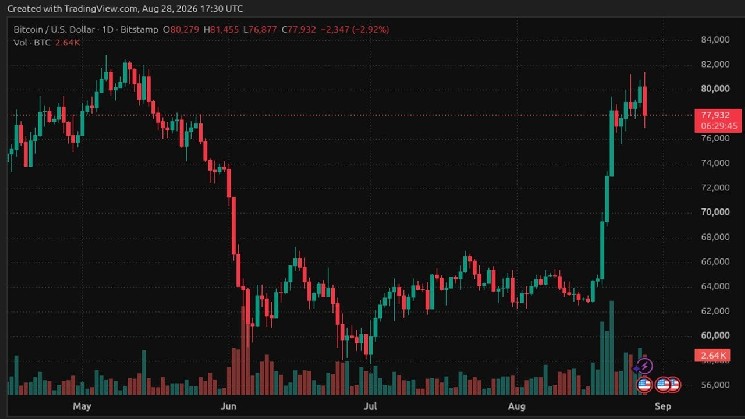
Giám đốc điều hành tỷ phú Trung Quốc dự đoán giá Bitcoin cho cuối tuần này. Gần đây, sự sụt giảm của Bitcoin (BTC) và Ethereum (ETH) đã làm dấy lên kỳ vọng về một đợt điều chỉnh ngắn hạn trên thị trường tiền điện tử. Jiang Zhuoer, người sáng lập Lebit Mining Pool (B.TOP), chỉ ra rằng cả hai loại tiền điện tử chính đều đã giảm xuống dưới mức giá tăng trước đó. Ông Jiang Zhuoer tuyên bố trên mạng xã hội rằng việc phá vỡ xuống dưới kênh tăng giá của Bitcoin và Ethereum gửi đi một tín hiệu tiêu cực từ góc độ kỹ thuật. Ông cũng lưu ý rằng việc đóng cửa thị trường ETF của Mỹ vào cuối tuần đã tạm thời loại bỏ áp lực tiềm tàng từ các nhà đầu tư tổ chức lên ETF spot của Bitcoin và Ethereum. Ông cho rằng điều kiện thị trường hiện tại không thuận lợi cho các nhà đầu tư giữ vị thế mua (long) và cảnh báo về khả năng bắt đầu một xu hướng giảm mới. Mặt khác, dữ liệu từ Coinglass chỉ ra rằng giá Bitcoin có thể đối mặt với nguy cơ thanh lý lớn trong thời gian tới. Cụ thể, nếu giá Bitcoin giảm xuống dưới 76.000 USD, tổng khối lượng lệnh long bị thanh lý trên các sàn giao dịch tập trung lớn có thể đạt khoảng 797 triệu USD. Ngược lại, nếu Bitcoin củng cố và vượt trên 80.000 USD, áp lực thanh lý đối với các vị thế bán (short) có thể vào khoảng 708 triệu USD. *Đây không phải là lời khuyên đầu tư.

cryptonews.ru31 phút trước

Tổng giám đốc, tỷ phú Trung Quốc, công bố dự báo giá Bitcoin cho cuối tuần này

cryptonews.ru31 phút trước

Phân tích nguyên nhân lỗi MANTRA phát hiện lỗ hổng số nguyên khóa cosmos/evm trị giá 3,6 triệu USD

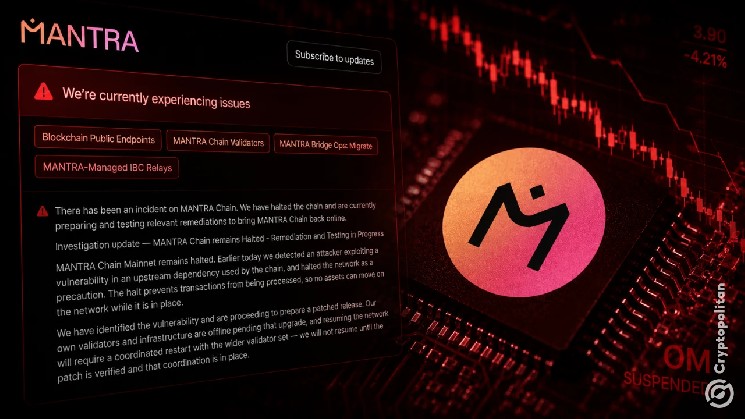
Ngày 28/8, MANTRA Chain đã công bố báo cáo đầy đủ về vụ tấn công xảy ra từ ngày 20-21/8, khi kẻ xấu rút khoảng 720,9 triệu token MANTRA (tương đương 3,6 triệu USD) khỏi dự án. Dự án không đưa ra lời hứa cụ thể về việc hoàn lại tiền, mà tập trung vào phân tích nguyên nhân. Nguyên nhân lỗ hổng được xác định bắt nguồn từ một mã chung cosmos/evm, được sử dụng để khởi chạy các hợp đồng thông minh kiểu Ethereum trên Cosmos SDK. Phiên bản bị ảnh hưởng không kiểm tra khả năng chi trả phí giao dịch trước khi phê duyệt, dẫn đến việc hợp đồng thực thi với số dư âm nhưng lại hiển thị dưới dạng một số nguyên dương cực lớn do lỗi tràn số. MANTRA nhấn mạnh rằng lỗi này không nằm trong mã nguồn riêng của họ và không có khóa xác thực hay cơ chế đa ký nào bị xâm phạm. Kẻ tấn công đã rút 600 triệu MANTRA và thêm 120,9 triệu token từ địa chỉ đốt token và một ví đa ký cũ. Dự án khẳng định không có token mới nào được phát hành, mà số token bị lấy đã nằm ngoài nguồn cung lưu hành và được coi là không hoạt động về mặt kinh tế. Đội ngũ MANTRA thừa nhận đã không phát hiện các giao dịch gian lận trong 4 giờ đầu tiên do thiếu giám sát 24/7 đối với địa chỉ đốt token. Kẻ tấn công đã thực hiện hai giao dịch và chuyển phần lớn số tiền ra ngoài chuỗi trước khi các trình xác thực dừng mạng lưới. Khoảng 37,96 triệu token vẫn còn trong ví của hacker tại thời điểm dừng mạng. Mạng lưới bị ngừng hoạt động trong hơn 30 giờ trước khi được khởi động lại với phiên bản đã sửa lỗi. Sự cố này là một đòn giáng nữa vào MANTRA sau nhiều biến cố trước đó, bao gồm việc token OM cũ của họ sụp đổ hơn 90% vào tháng 4/2025. Giá token MANTRA đã giảm 18,5% sau vụ việc. Dự án cho biết đã báo cáo sự việc cho cơ quan thực thi pháp luật và sẽ cập nhật thông tin khi có tiến trình thu hồi tiền.

cryptonews.ru1 giờ trước

Phân tích nguyên nhân lỗi MANTRA phát hiện lỗ hổng số nguyên khóa cosmos/evm trị giá 3,6 triệu USD

cryptonews.ru1 giờ trước

Giao dịch

Giao ngay
活动图片