Who Was GameFi’s Biggest Winner in March | March Monthly Report

cryptoslateXuất bản vào 2022-04-14Cập nhật gần nhất vào 2022-04-14

Tóm tắt

GameFi projects showed strong resistance to the negative macro environment in February and March, with many areas of development not only growing steadily but breaking out against market trends. 

GameFi projects showed strong resistance to the negative macro environment in February and March, with many areas of development not only growing steadily but breaking out against market trends. 

Footprint Analytics data shows that the number of GameFi game projects went up to 1,406, up 5% MoM. Trading volume at the end of the month was $129 million, up 154% MoM. Active users increased 56% from February. It is worth noting that the two game projects, Par War Online and DeFi Kingdoms, have increased by more than 25,000% in active users in the past 30 days.

The following will analyze the overall situation for GameFi in March using data.

GameFi Market Overview

GameFi Project Count Up 5% MoM, BSC Project Count Up 1303% YoY

Looking at the overall development of GameFi, many blockchains and gaming projects have emerged in the past year. According to Footprint Analytics, as of March 31, there were 35 blockchains participating in the GameFi sector, with 1,406 game projects in total, up 5% MoM.
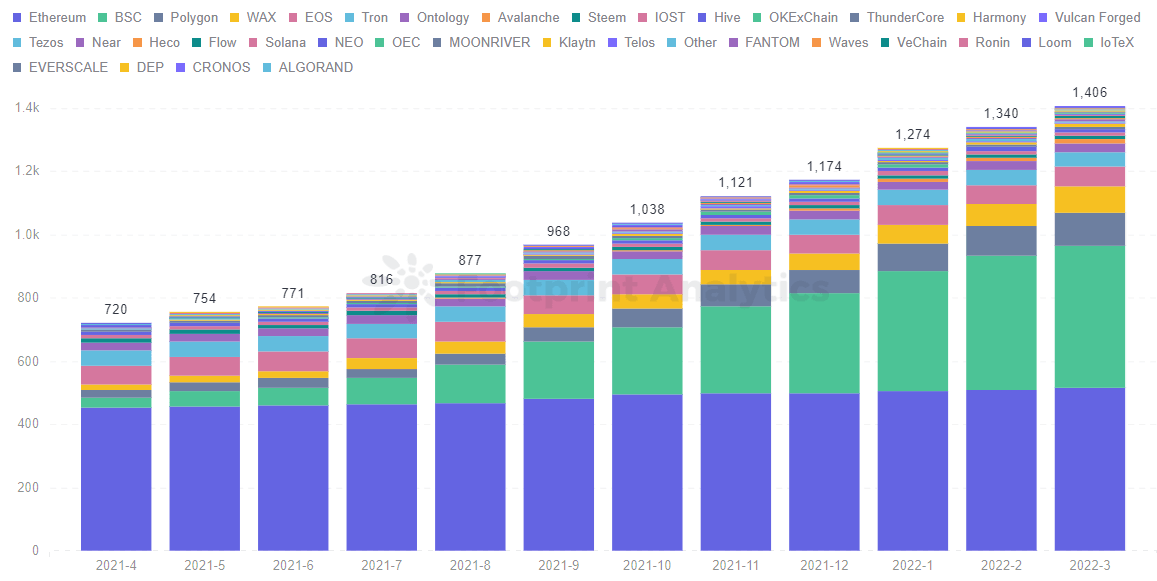
Footprint Analytics - Number of GameFi Protocols by Chains

Footprint Analytics – Number of GameFi Protocols by Chains

Although most of the early projects were concentrated on Ethereum, due to the impact of network congestion and high gas fees, the poor user experience slowed down the pace of development. Instead, on-chain gaming projects such as BSC, Polygon, WAX and EOS are gradually increasing.

Notably, BSC has the fastest growing project count, up 1303% YoY. It has low gas fees and a throughput 5 times higher than Ethereum, with 449 gaming projects deployed on BSC by the end of March.

At the same time, some chain’s have faced the problem of having one project driving the entire ecosystem. 

For example, Splinterlands has single-handedly driven the development of Hive, which has been a Top 5 GameFi project by number of users for the past three months. There is also DeFi Kingdoms on Harmony, which surpassed Axie Infinity multiple times in March in daily trading volume the become the largest project according to this metric.
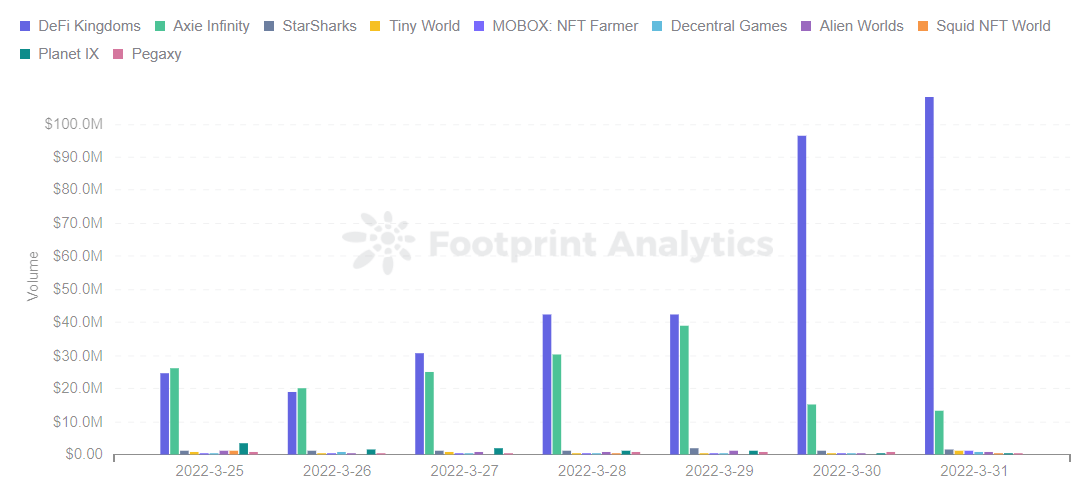
Footprint Analytics - Top 10 Games Ranking by Volume

Footprint Analytics – Top 10 Games Ranking by Volume

GameFi’s Trading Volume Picks Up, Active Users Up 56% MoM

The number of users is the key to the healthy operation of the entire GameFi ecosystem. If there are no users, the game project will become worthless. As of March 31, the total number of active users was 10.96 million, including 1.27 million new users. Compared to February, the number of active users increased by 56%.
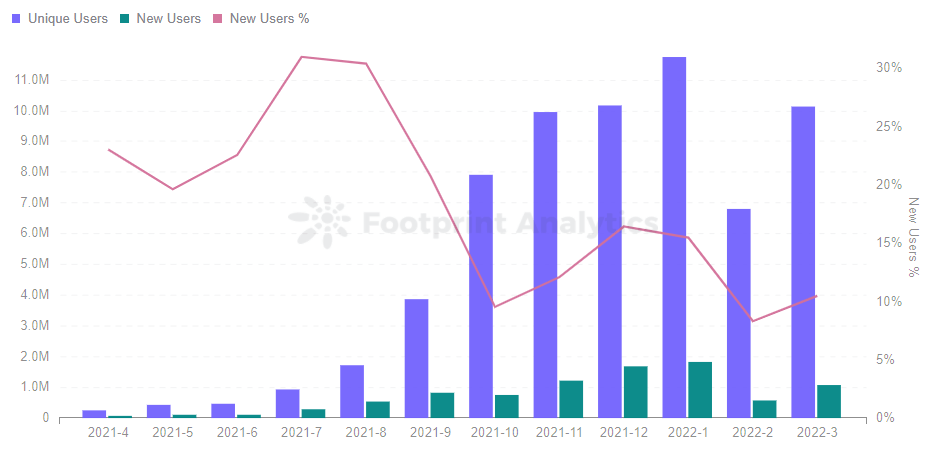
Footprint Analytics - Monthly Gamers Trend

Footprint Analytics – Monthly Gamers Trend
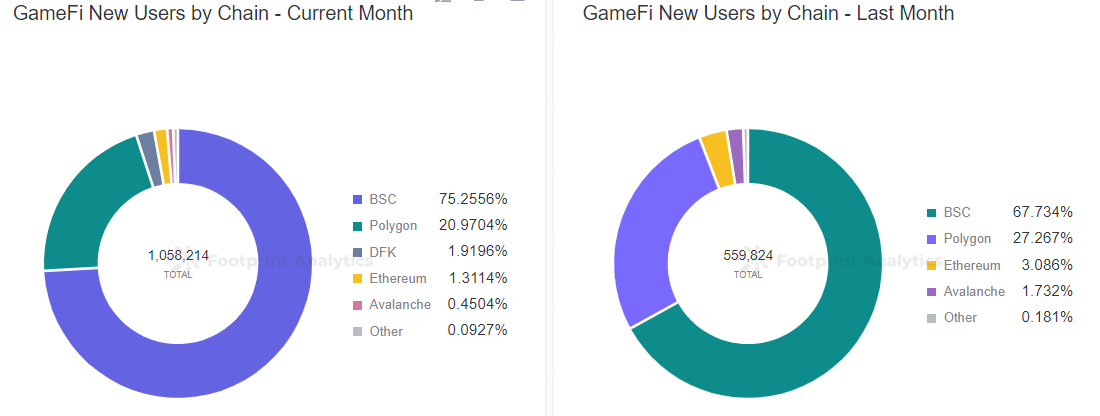
Footprint Analytics - GameFi New Users by Chain 

Footprint Analytics – GameFi New Users by Chain

Par War Online and DeFi Kingdoms are the games that are driving GameFi’s rapid growth in active users. In the last 30 days, active user growth has been 28,931% and 25,319%, respectively. These two games are attracting users primarily because of their high revenue generation opportunities, such as the 300% to 400% APY LP for DeFi Kingdoms.

According to Footprint Analytics data, GameFi’s trading volume has been on a downward trend due to the Russian-Ukrainian conflict. It was only after March 21 that volume picked up quickly, ending the month at $129 million, up 154 percent from February. It gradually recovered from a per capita volume of about $30 to $105 per capita.
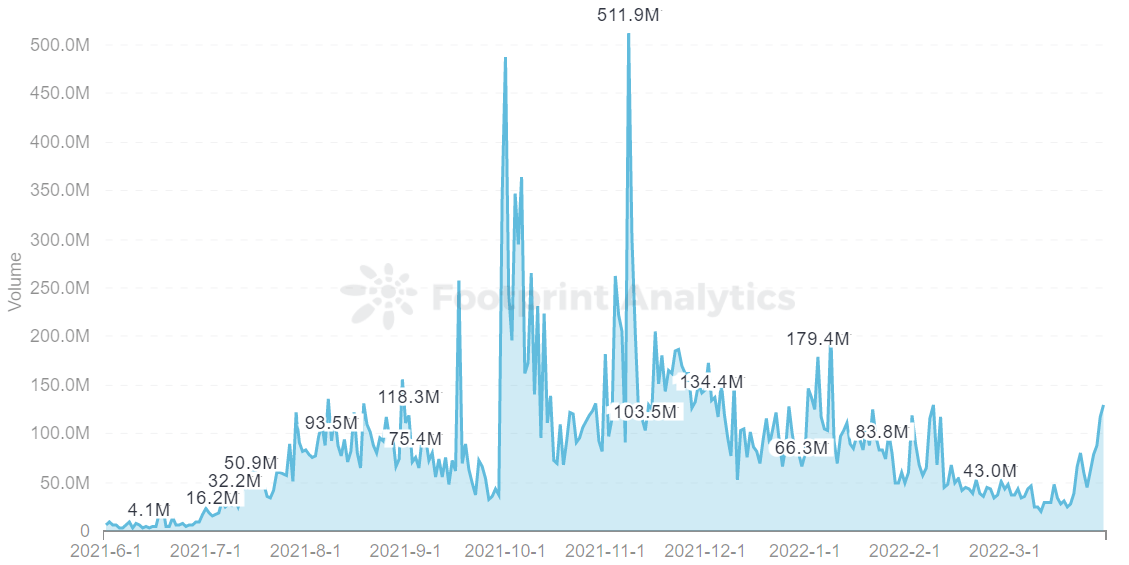
Footprint Analytics - GameFi of Volume Trend

Footprint Analytics – GameFi of Volume Trend
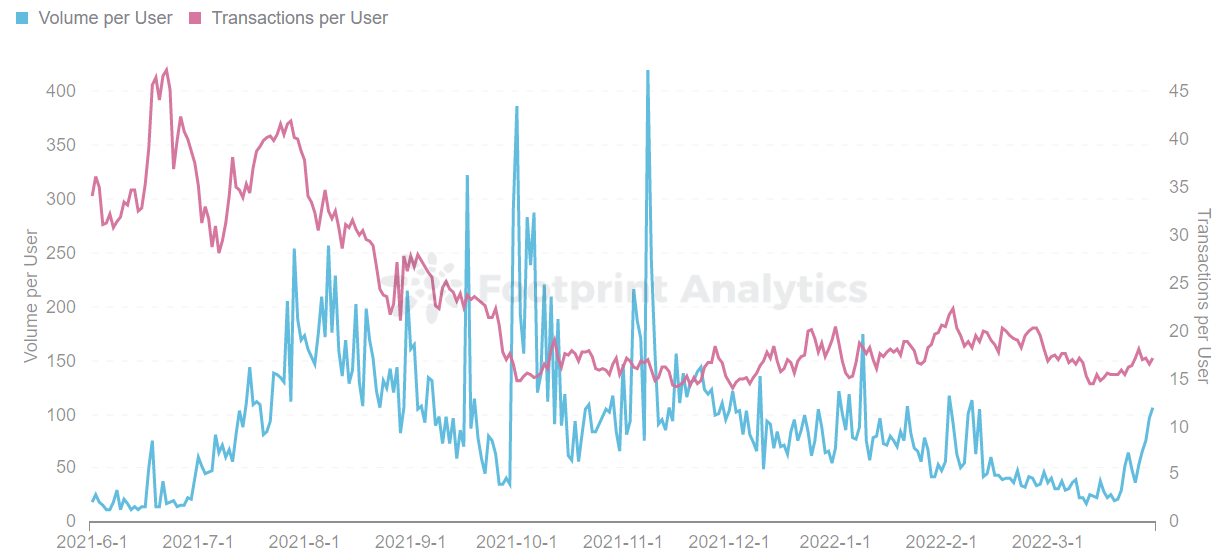
Footprint Analytics - GameFi Volume and Transactions per User

Footprint Analytics – GameFi Volume and Transactions per User

As can be seen, although the GameFi market showed a downward trend in transaction volume due to the macroeconomic impact, it quickly rebounded after late March with more new users engaging in the GameFi sector. This means that sensible tokenomics and products can create games that engage users.

GameFi Monthly Investment Volume Increased 307% MoM

The data shows that GameFi investments in March were $458 million, an increase of 307% compared to February. In terms of investment sector, NFT and Web3 in the GameFi category saw the largest increases. 

As the number of GameFi protocols increases, the influx of blockchains such as BSC has broken the slow pace of Ethereum in the GameFi sector, contributing to the continued inflow of funding.
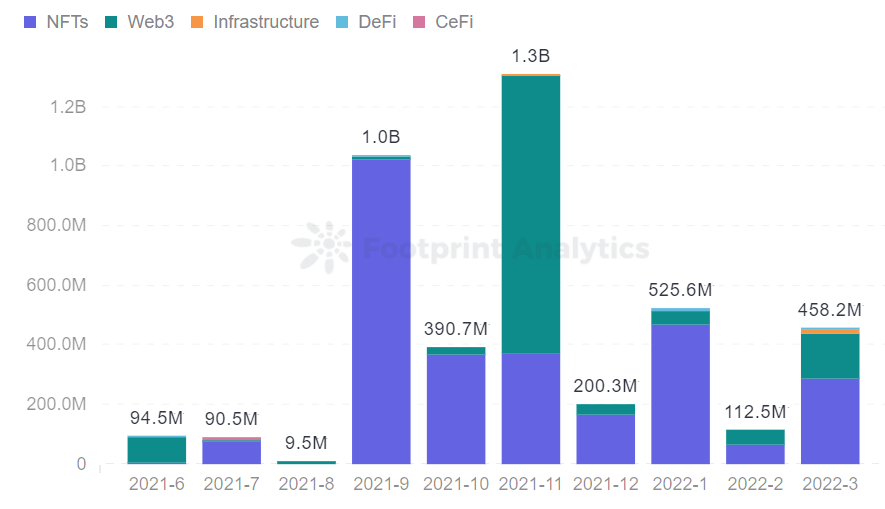
Footprint Analytics - Gaming Financing distribution

Footprint Analytics – Gaming Financing distribution

The financing received by GameFi projects mainly comes from seed rounds, the main reason behind this phenomenon is that the GameFi industry is in the early stage, and the development cycle of quality game projects is long, which is also the trend cycle for investors to observe the industry.
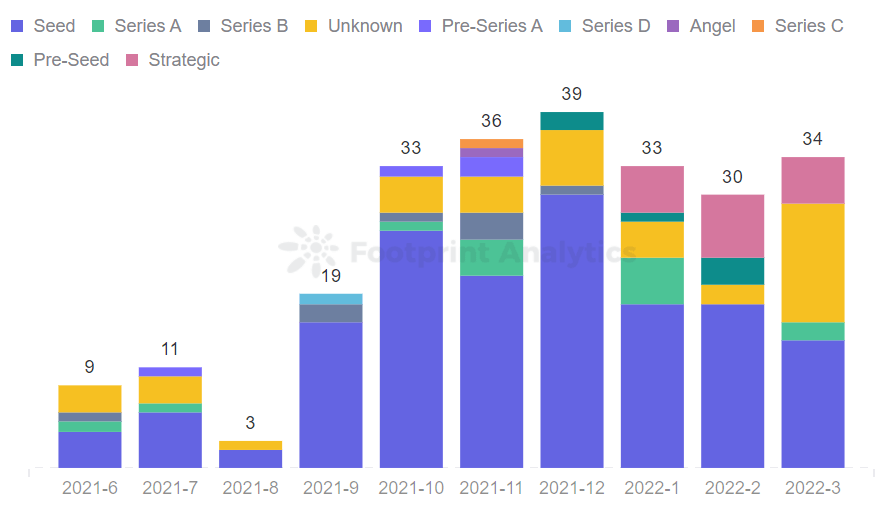
Footprint Analytics - Monthly Number of GameFi Projects Funded

Footprint Analytics – Monthly Number of GameFi Projects Funded

Game Projects That Accelerate GameFi’s out of the Circle in March

Footprint Analytics believes that GameFi is one of the most effective means of attracting new users into crypto. Opportunities with stronger gameplay and higher yields will become the main focus in GameFi in the future. 
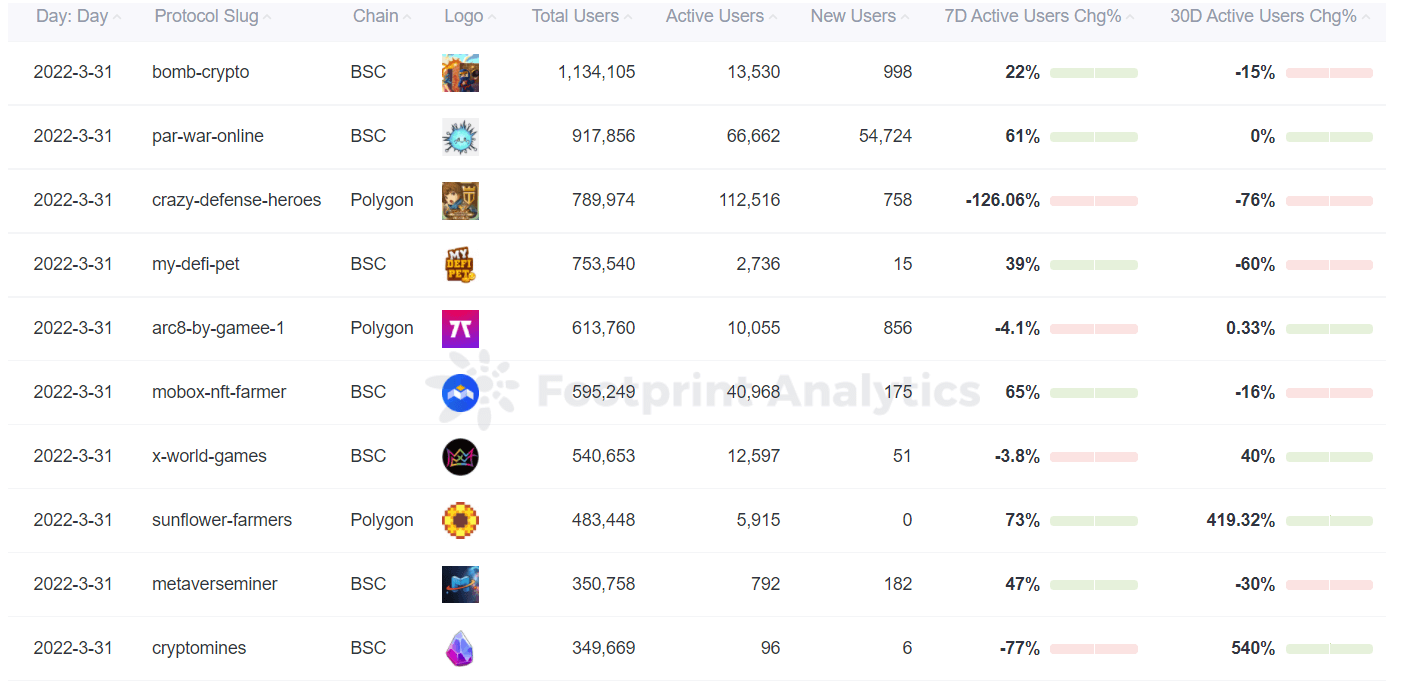
Footprint Analytics -  Ranking of Daily Gamers (March 31)

Footprint Analytics –  Ranking of Daily Gamers (March 31)

Hot Game Projects

Having a multi-game ecosystem and interoperability between games is more attractive for user participation. 

From the number of users and the number of transactions, it can be seen that in March, there were many GameFi projects in which users participated in transactions. But the more popular ones were DeFi Kingdoms, StarSharks and Thetan Arena. The number of users and transactions of the three game projects are on the rise.
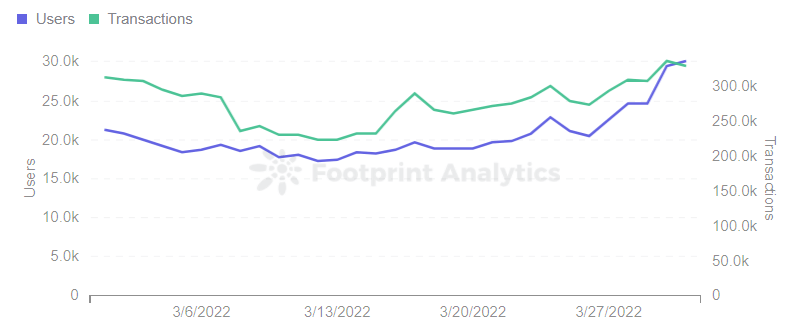
Footprint Analytics -  DeFi Kingdoms Users & Transactions

Footprint Analytics –  DeFi Kingdoms Users & Transactions

Thetan Arena has rapidly gained new users with its strong gameplay, mobile support, short game time (3 to 5 minutes per round), and low entry cost.
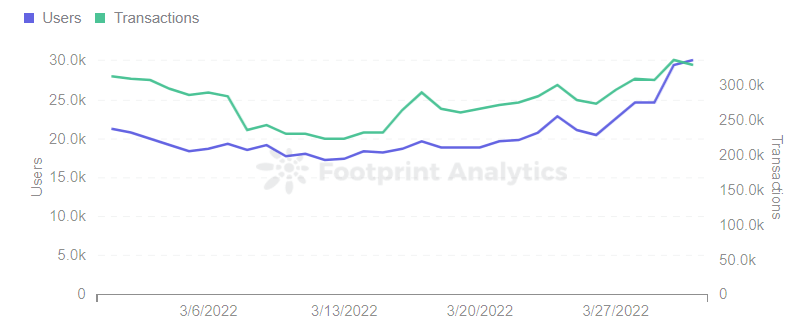
Footprint Analytics -  Thetan Arena Users & Transactions

Footprint Analytics –  Thetan Arena Users & Transactions

Starsharks is the BSC project with the largest user growth. It leverages the innovative Rent to Play model, where players can buy or rent NFTs through the platform’s native leasing feature to facilitate full utilization and liquidity of NFT assets.
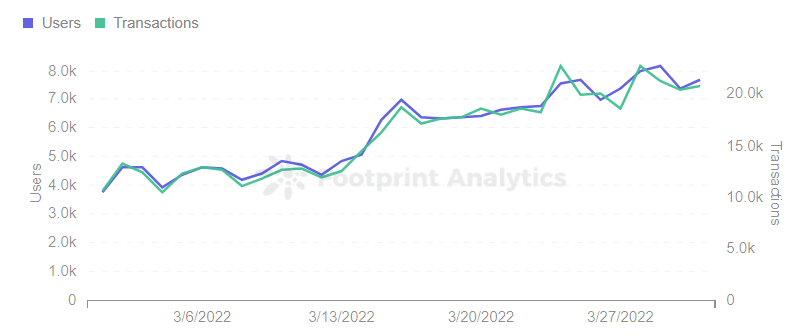
Footprint Analytics -  StarSharks Users & Transactions

Footprint Analytics –  StarSharks Users & Transactions

Starsharks’ retention rate in March was 13%, and the overall user retention rate is declining. By comparison. Cryptokitties (a popular Ethereum chain game) had a retention rate of 1.2% in March. 

This shows that innovation and project liquidity are important to retain users.
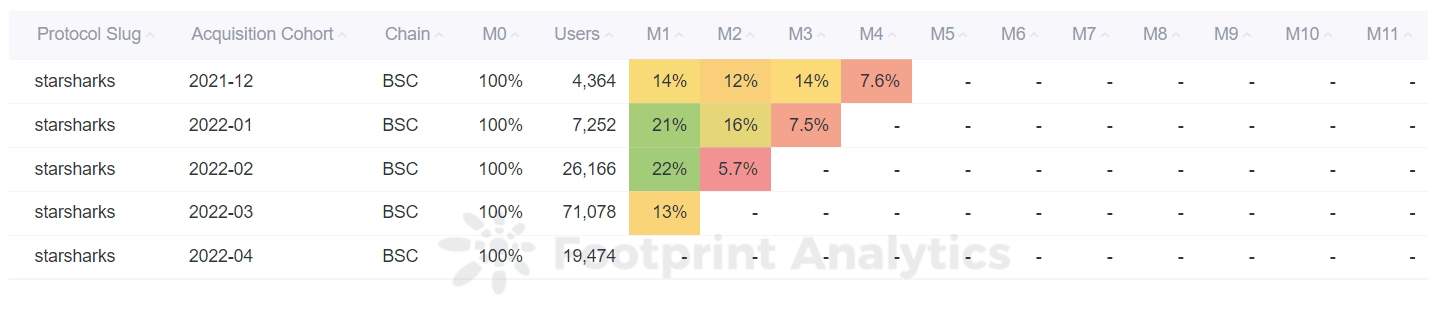
Footprint Analytics -  Starsharks Monthly Retention Analysis

Footprint Analytics –  Starsharks Monthly Retention Analysis
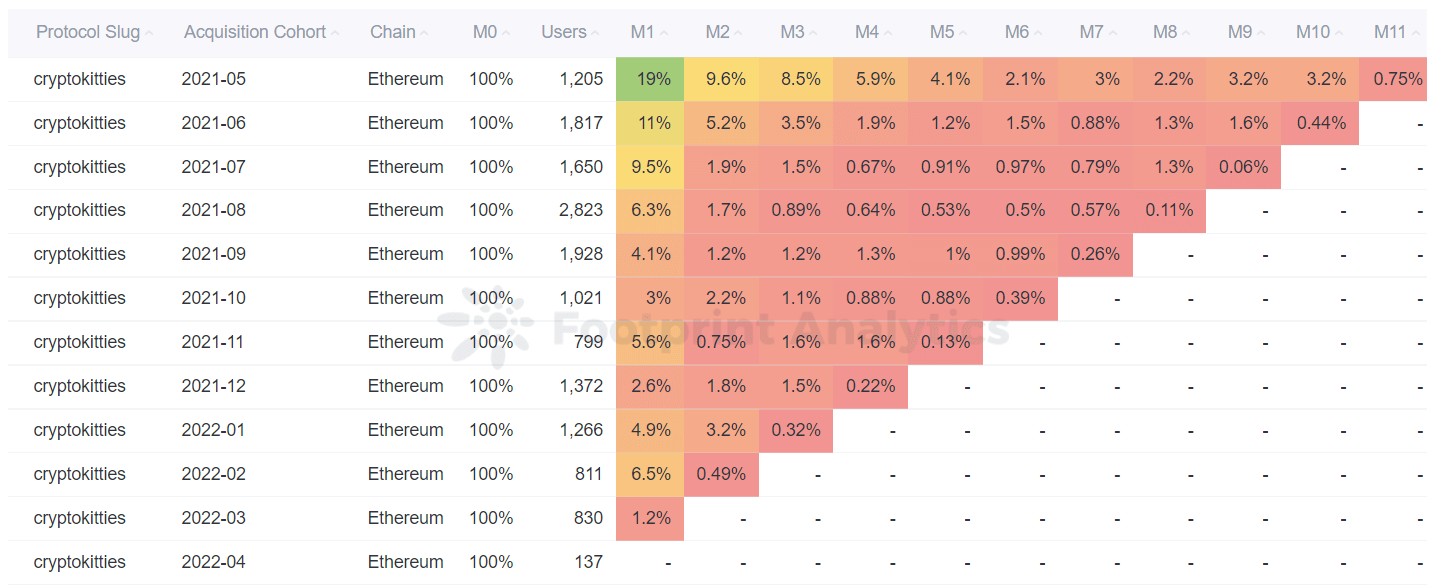
Footprint Analytics -  Cryptokitties Monthly Retention Analysis

Footprint Analytics –  Cryptokitties Monthly Retention Analysis

Game Items with a Crash in the Number of Users

According to Footprint Analytics data, MetaverseMiner’s user numbers and transactions are crashing. Once players earn less revenue (in terms of a stable token or fiat), highly experimental games like this often face the loss of traffic.
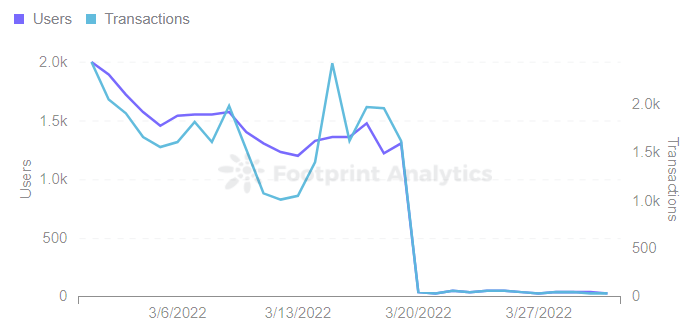
Footprint Analytics -  MetaverseMiner Users & Transactions

Footprint Analytics –  MetaverseMiner Users & Transactions

March also saw one of the largest security breaches in GameFi history. On March 23, cybercriminals stole $622 million from Axie Infinity users in cryptocurrency. As a result, the number of users decreased.
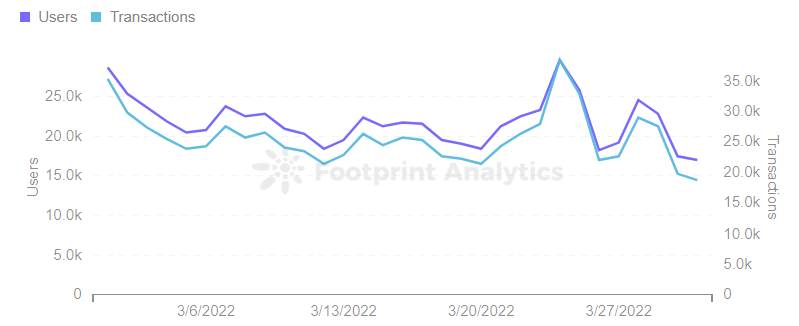
Footprint Analytics -  Axie Infinity Users & Transactions

Footprint Analytics –  Axie Infinity Users & Transactions

Nội dung Liên quan

Steve Hoffman, 'Cha đẻ đầu tư mạo hiểm' Thung lũng Silicon: Web3 + AI có thể là một cái bẫy

Ngày 28/5, công ty Anthropic đứng sau mô hình AI Claude đã huy động thành công 7,5 tỷ USD trong vòng tài trợ Series H, nâng định giá lên 96,5 tỷ USD, vượt mặt OpenAI. Trong bối cảnh các gã khổng lồ AI cạnh tranh khốc liệt về nền tảng tính toán, Steve Hoffman - nhà sáng lập Founder Space, được mệnh danh là "cha đỡ đầu" trong giới đầu tư mạo hiểm tại Thung lũng Silicon - đã có cuộc trò chuyện về tương lai của ngành. Hoffman nhận định, Thung lũng Silicon sẽ tiếp tục dẫn đầu trong nghiên cứu cơ bản về các mô hình lớn (foundation models), trong khi Trung Quốc sẽ chiến thắng trong việc triển khai ứng dụng và thương mại hóa, đặc biệt thống lĩnh lĩnh vực robot. Ông khuyến nghị các startup nên theo đuổi chiến lược "toàn cầu hóa ngay từ ngày đầu" (Global from Day 1) thay vì chỉ tập trung vào thị trường nội địa. Về tác động của AI, Hoffman dự đoán điểm bùng phát thực sự của các tác nhân tự trị (Autonomous Agents) - có khả năng phối hợp và xử lý các mục tiêu phức tạp - sẽ đến trong khoảng 2-4 năm tới, dẫn đến thay thế lao động trên quy mô lớn, bao gồm nhiều công việc tri thức. Giải pháp là thiết kế mô hình kinh doanh theo hướng "cộng tác người-máy" (Human-AI Collaboration) và cải cách chính sách về đào tạo lại, an sinh xã hội. Đối với các startup AI, Hoffman khuyên nên tập trung vào các lĩnh vực chuyên sâu, phức tạp, gắn với ngành cụ thể để tạo ra hàng rào phòng thủ trước các gã khổng lồ công nghệ. Tốc độ lặp lại sản phẩm nhanh chính là lợi thế cạnh tranh then chốt. Ông cũng chỉ ra cơ hội lớn trong lĩnh vực an ninh mạng và chống gian lận AI. Cuối cùng, Hoffman thẳng thắn bày tỏ quan điểm về "Web3 + AI". Ông cho rằng Web3 chủ yếu mang lại giá trị cho một nhóm người nhất định trong hệ sinh thái tiền mã hóa, nhưng không tạo ra tác động thực chất đối với thị trường đại chúng. Việc kết hợp Web3 với AI chủ yếu làm tăng thêm sự phức tạp và có thể là một cái bẫy đối với hầu hết các nhà sáng lập, thay vì một cơ hội. AI mới là công nghệ nền tảng phổ quát thực sự có khả năng chạm đến mọi ngành công nghiệp.

marsbit48 phút trước

Steve Hoffman, 'Cha đẻ đầu tư mạo hiểm' Thung lũng Silicon: Web3 + AI có thể là một cái bẫy

marsbit48 phút trước

Vượt qua "Bức tường Bộ nhớ": Cuộc Cách mạng ở Cấp độ Wafer và Lộ trình Tính toán trong Thời đại Suy luận AI

Năm 2026, chi phí đầu tư cho suy luận AI của các nhà cung cấp điện toán đám mây quy mô lớn lần đầu tiên vượt quá chi phí cho huấn luyện, đánh dấu bước chuyển từ "luyện mô hình lớn" sang "sử dụng mô hình lớn". Trong thời đại suy luận, điểm nghẽn chính chuyển sang "tường bộ nhớ" (memory wall), nơi chi phí và độ trễ di chuyển dữ liệu giữa GPU và DRAM (như HBM) vượt xa bản thân tính toán. Cerebras Systems, với kiến trúc động cơ quy mô wafer (WSE), đề xuất một giải pháp triệt để: thay vì cắt một tấm wafer thành nhiều chip nhỏ, họ sử dụng gần như toàn bộ wafer làm một chip khổng lồ duy nhất. Chip WSE-3 mới nhất cung cấp băng thông bộ nhớ trên chip cực cao nhờ 44GB SRAM, lên tới 21 PB/s, cao hơn 2625 lần so với GPU B200 của NVIDIA, giúp giảm đáng kể độ trễ trong suy luận mô hình lớn. Trong kiến trúc của Cerebras, trọng số mô hình được lưu trữ bên ngoài trên MemoryX và được truyền theo từng lớp đến chip khi cần, cho phép thông lượng token nhanh hơn từ 1.5 đến 5 lần so với B200 trong các mô hình khác nhau. Nó cũng có lợi thế lớn về hiệu suất năng lượng cho kết nối trên chip. Tuy nhiên, Cerebras phải đối mặt với những thách thức: lợi thế SRAM có thể chạm trần vật lý do giới hạn thu nhỏ theo tiến trình bán dẫn, yêu cầu hệ thống làm mát chuyên dụng, băng thông I/O ra bên ngoài thấp gây khó khăn cho mở rộng quy mô lớn, và hệ sinh thái phần mềm độc quyền. Các gã khổng lồ công nghệ đang theo đuổi nhiều con đường khác để giải quyết điểm nghẽn suy luận, bao gồm tự phát triển ASIC (như TPU, Maia), tận dụng công nghệ đóng gói tiên tiến phổ biến (như SoW của TSMC), và khám phá kết nối/quang học. Áp lực thương mại cũng rất lớn, khi Cerebras phải chuyển đổi thành nhà cung cấp dịch vụ đám mây và triển khai năng lực trung tâm dữ liệu khổng lồ theo các hợp đồng. Tóm lại, cuộc đua kiến trúc suy luận AI là về sự đánh đổi: Cerebras tối ưu hóa cực độ cho độ trễ thấp trên một wafer, trong khi NVIDIA duy trì tính linh hoạt và thông lượng cao thông qua kiến trúc cụm GPU. Tương lai của cả hai hướng đi vẫn chưa được định đoạt, phụ thuộc vào sự phát triển của tải công việc và công nghệ.

marsbit59 phút trước

Vượt qua "Bức tường Bộ nhớ": Cuộc Cách mạng ở Cấp độ Wafer và Lộ trình Tính toán trong Thời đại Suy luận AI

marsbit59 phút trước

Bitcoin "Kết thúc phục hồi", chính thức bước vào giai đoạn cuối của thị trường gấu?

Bài viết phân tích xu hướng giảm 13% của Bitcoin trong tuần qua, cho rằng thị trường đang bước vào giai đoạn sau của chu kỳ giá xuống. Các chỉ số chính bao gồm: - Giá hiện tại (~67,000 USD) rơi giữa mức giá thực hiện và trung bình thị trường thực, với chi phí của nhà đầu tư ngắn hạn lần đầu tiên kể từ năm 2022 thấp hơn mức trung bình này. - Tỷ lệ lời/lỗ thực hiện giảm mạnh, xác nhận đợt phục hồi lên 82k USD chỉ là đợt tăng trong xu hướng giảm. - Tổng lỗ thực hiện hàng ngày tăng vọt lên 1.35 tỷ USD, cho thấy áp lực bán ra từ cả nhà đầu tư dài hạn và ngắn hạn. - Giá Bitcoin bị từ chối chính xác quanh mức chi phí trung bình (~83k USD) của các quỹ ETF Mỹ, biến ngưỡng này thành kháng cự mạnh. - Dòng tiền giao ngay chuyển sang âm, áp đảo bởi phe bán. - Thị trường quyền chọn tiếp tục định giá rủi ro cao hơn, với phí bảo hiểm rủi ro biến động gần mức cao nhất trong ba tháng. Kết luận: Thị trường vẫn mong manh với áp lực bán từ nhà đầu tư ETF bị thua lỗ, dòng tiền giao ngay yếu và lỗ thực hiện tăng. Cần có sự cải thiện bền vững về nhu cầu giao ngay và tâm lý nhà đầu tư để đảo ngược xu hướng.

marsbit1 giờ trước

Bitcoin "Kết thúc phục hồi", chính thức bước vào giai đoạn cuối của thị trường gấu?

marsbit1 giờ trước

Dalio cảnh báo: Cơn sốt AI đã xuất hiện dấu hiệu bong bóng, ngày đáo hạn cũng là lúc vỡ tung

Nhà sáng lập Bridgewater, Ray Dalio, cảnh báo về cơn sốt đầu tư vào trí tuệ nhân tạo (AI) đang có dấu hiệu hình thành bong bóng. Trong một cuộc phỏng vấn, ông cho rằng mọi cuộc cách mạng công nghệ lớn thường kèm theo hiện tượng vốn đổ vào quá mức, tạo ra bong bóng và giai đoạn này rồi sẽ kết thúc. Sự cảnh báo này xuất hiện khi các tài sản liên quan đến AI tăng mạnh, dẫn dắt bởi nhu cầu về chip cao cấp phục vụ xây dựng trung tâm dữ liệu. Trong khi CEO NVIDIA, Jensen Huang, lạc quan cho rằng những nhà đầu tư dám mạo hiểm vào AI sẽ nhận được lợi nhuận "điên rồ", thì Dalio lại tập trung vào rủi ro ở giai đoạn cần chuyển hóa đầu tư thành lợi nhuận thực tế. Ông nhận định, khi thị trường bước vào giai đoạn cần chứng minh khả năng sinh lời, bong bóng thường có xu hướng vỡ. Quá trình này chính là việc chuyển đổi giá trị trên sổ sách thành tiền mặt. Mặc dù thừa nhận giá trị cốt lõi của AI, Dalio bày tỏ lo ngại về khả năng sinh lời của một số công ty và cho rằng thị trường hiện nay đang lặp lại vết xe đổ của những bong bóng công nghệ trước đây.

marsbit1 giờ trước

Dalio cảnh báo: Cơn sốt AI đã xuất hiện dấu hiệu bong bóng, ngày đáo hạn cũng là lúc vỡ tung

marsbit1 giờ trước

Giao dịch

Giao ngay
Hợp đồng Tương lai
活动图片