LIT Token Hits Six-Month High: How Long Can the Buyback Flywheel Keep Burning Fuel?

Foresight NewsPublished on 2026-06-18Last updated on 2026-06-18

Abstract

The LIT token of decentralized perpetual exchange Lighter surged to a six-month high above $1.90 on June 18th, with a market cap of $425 million. After a price correction earlier this year, the recent rebound is attributed to its core "buyback flywheel" mechanism. All protocol fee revenue is used for programmatic, hourly market buybacks of LIT. Since its TGE in December 2025, approximately 15 million LIT (6% of circulating supply) has been repurchased for around $21 million. Additional price support comes from the LLP (Lighter Liquidity Pool), where providers must stake LIT worth 10% of their deposited USDC, locking significant token supply. However, challenges persist. Trading volume has declined amidst a sluggish market, with total volume at $1.68 trillion, significantly lower than leading competitor Hyperliquid's $4.37 trillion. While Lighter focuses on perpetual contracts, RWA, and Pre-IPO markets, Hyperliquid has expanded into prediction markets and boasts a U.S. spot ETF, attracting institutional investment and influencer endorsements like from Arthur Hayes. In contrast, LIT currently lacks similar high-profile backing. With 75% of LIT's total 1 billion supply still locked (team and investor tokens begin a 3-year linear unlock in December 2026), there is no immediate unlock selling pressure. The token's future performance hinges on sustaining trading volume growth, successful product iteration, and executing its transparent buyback strategy against a dominant competit...


Written by: Ma He, Foresight News


On June 18th, Lighter's token LIT broke through $1.9, reaching a new high since January of this year. Its current market cap is $425 million with an FDV of $1.7 billion. The token price has since retreated and is fluctuating around $1.6.
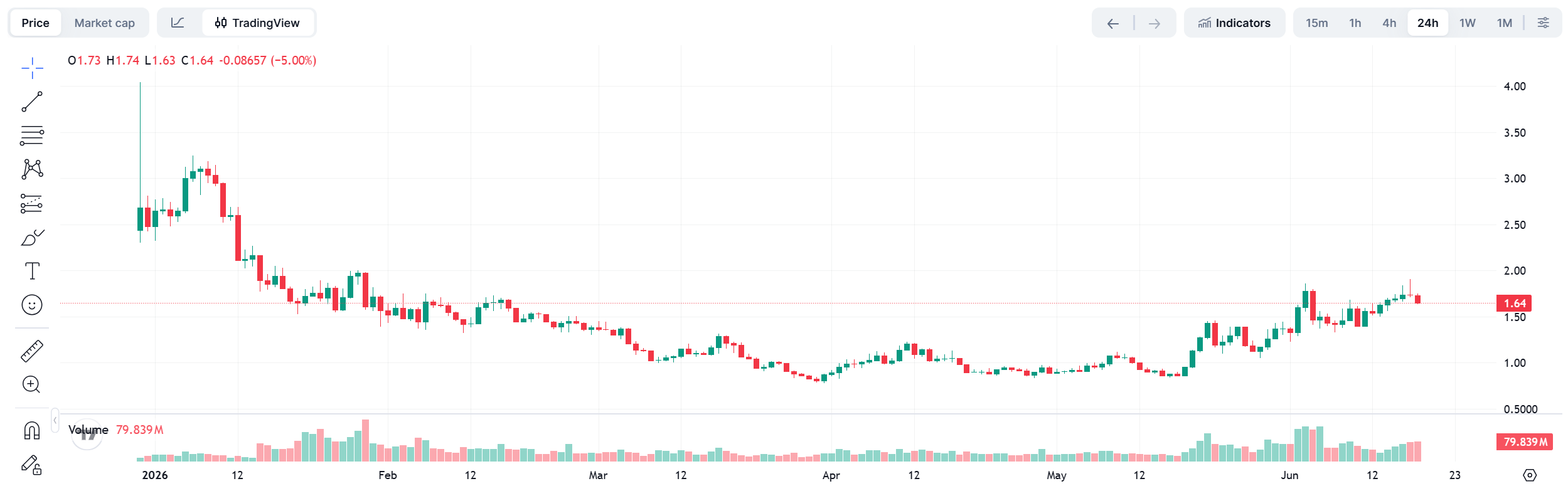


In 2026, Hyperliquid gained significant market attention through its buyback flywheel and expansion into multiple sectors, with its token price surging from $20 to a peak of $76, setting a new all-time high. After adjusting at the beginning of the year, the price of Lighter's token has rebounded significantly recently. So, what factors are currently driving this?


Lighter is a decentralized perpetual contracts exchange. In December 2025, its native token LIT officially underwent Token Generation Event (TGE), accompanied by a large-scale airdrop. The total fixed supply is 1 billion tokens. Specifically, within the ecosystem portion, 25% was automatically airdropped to early users via points seasons at TGE, with the remaining 25% reserved for future incentives, partners, and growth. The team holds 26%, and investors hold 24%. The airdrop portion was released 100% at TGE.


The team and investor portions have a 1-year cliff (starting unlocking on December 30, 2026), followed by a 3-year linear unlock.
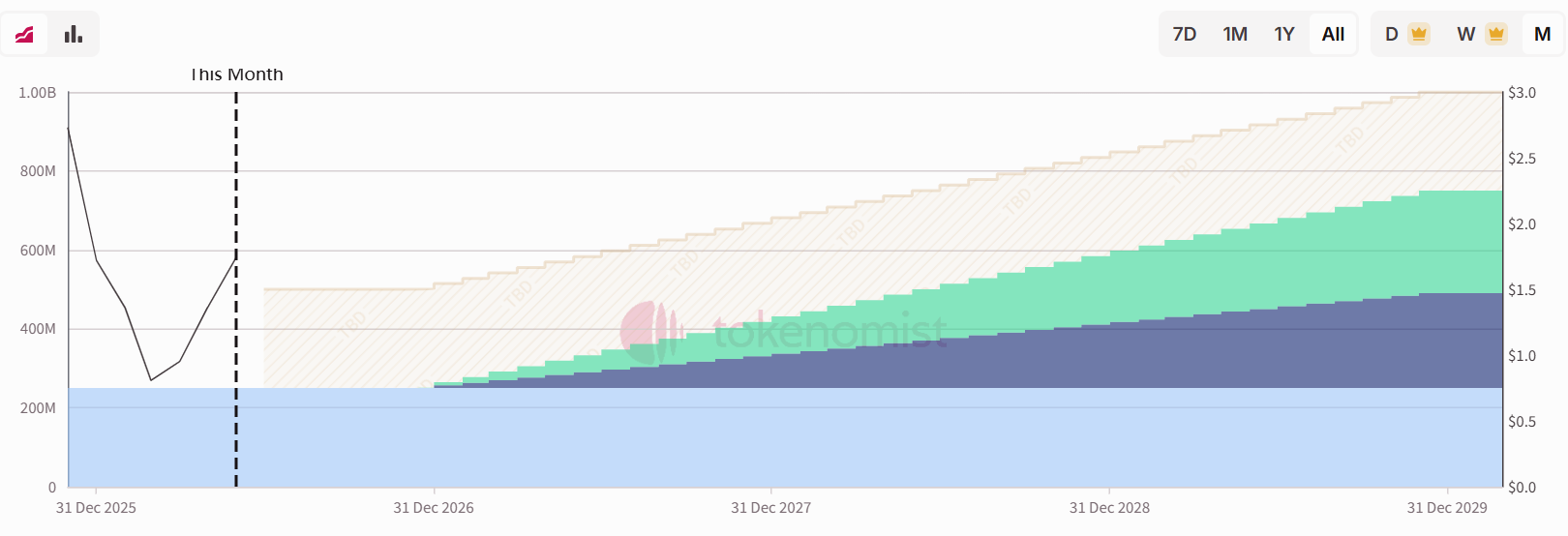


To date, the circulating supply remains at approximately 250 million tokens (25% of total supply), with the remaining 75% still locked. This means there is temporarily no VC and team unlock selling pressure in the second half of this year.


Buyback, LLP & Staking Pool


The buyback mechanism is the core of Lighter's value capture. The protocol uses all fee income generated from products like perpetual trading to buy back LIT tokens on the open market. Official disclosures show this buyback is fully programmatic: the protocol automatically aggregates all fee income hourly and places 100 limit buy orders from the current market price down to a -10% range.
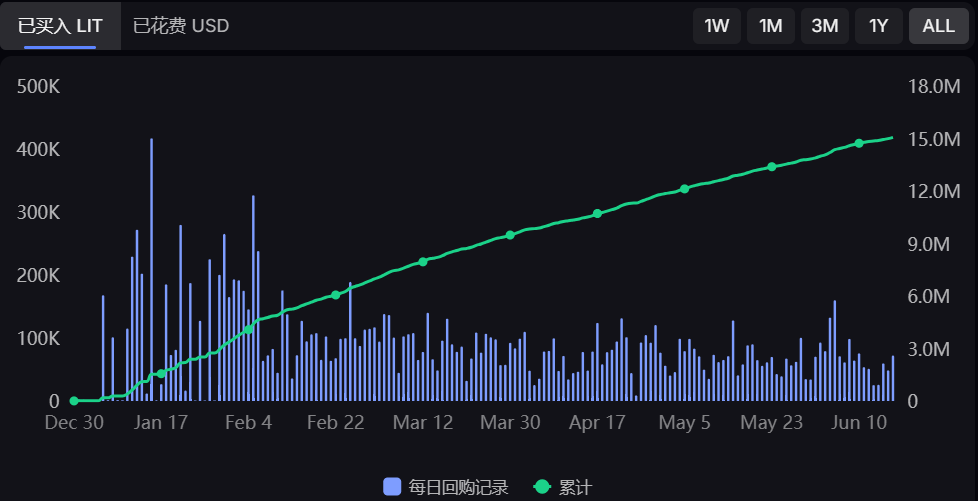


According to the latest data from Lighter, since TGE, the protocol has programmatically bought back approximately 15 million LIT, accounting for about 6% of the circulating supply, with a buyback amount of around $21 million, representing 1.51% of the total supply. These buybacks directly convert protocol revenue into continuous on-chain buy-side pressure.


So, how is Lighter currently performing in the market?


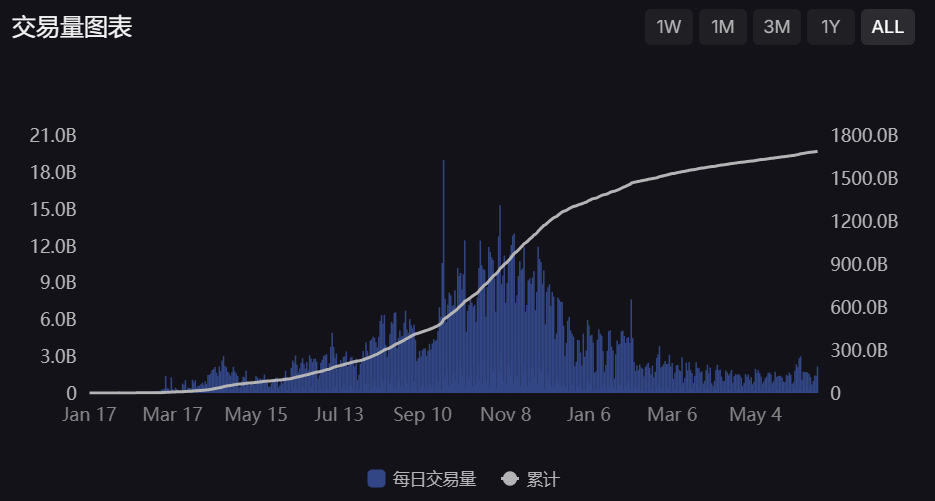
Data from the official website shows its total trading volume has exceeded $1.68 trillion. However, its trading volume has been declining this year due to factors like sluggish market conditions.


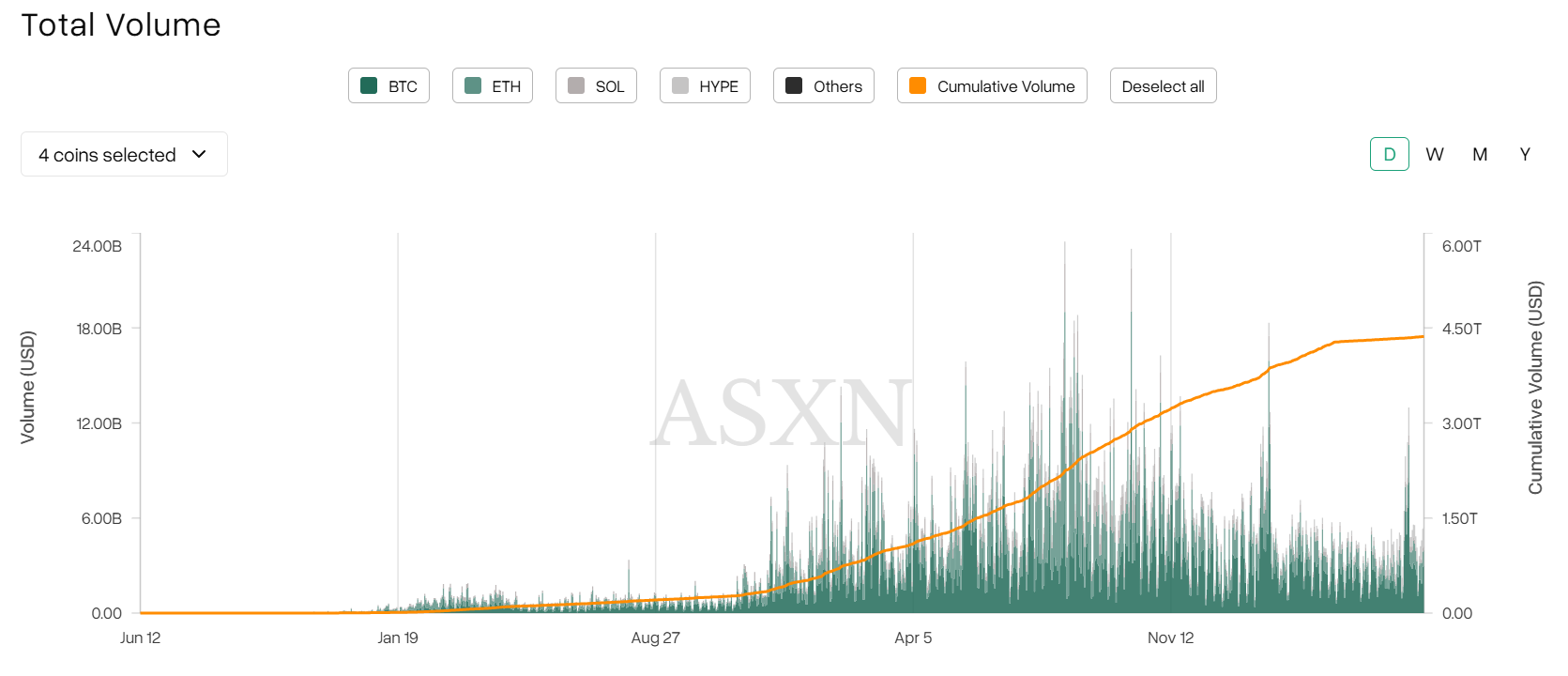
In comparison, Hyperliquid's total trading volume has surpassed $4.37 trillion, nearly three times that of Lighter, and its volume has remained stable since September-October 2025.


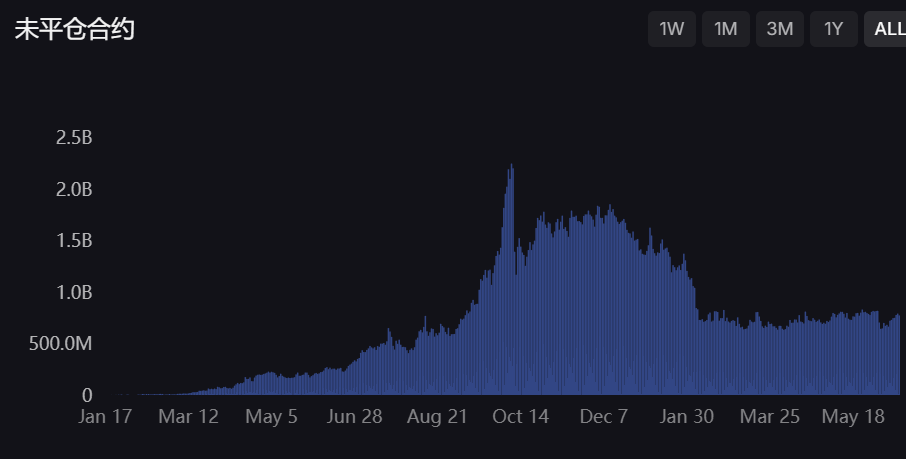
However, turning our attention to open interest, Lighter's open interest data from November 2025 was $1.6 billion, while the current data is $750 million, which isn't drastically low. Hyperliquid's open interest peaked at $9.64 billion and currently remains at $5.06 billion.


Meanwhile, Lighter continues to iterate on the product side. In May, it partnered with Insilico Terminal to introduce a professional-grade execution management system, attracting systematic traders and deepening order book liquidity. The platform has launched a Pre-IPO perpetual contracts market and introduced features like LIT fee points, expanding trading scenarios and user engagement. These actions complement the buyback flywheel, amplifying protocol revenue and buy-side effects under macro event drivers.


Simply put, the Lighter Liquidity Pool (LLP) is the market maker capital pool for the Lighter exchange. In a centralized exchange, when a user goes long, the counterparty is typically a market maker (institution) or another user going short. However, in a decentralized exchange, the underlying logic changes: the "common counterparty" for all traders' positions across the entire exchange is the LLP. In other words, if users profit from going long, the LLP pays them; if users incur losses, those losses are directly absorbed into the LLP.


According to historical big data statistics, retail traders are highly likely to lose money over long periods. Therefore, large players depositing their USDC into the LLP to act as the casino's bankroll are essentially "acting as the house," passively profiting from retail traders' losses and the exchange's fees.



According to the latest official website data, its TVL has risen to $98.42 million, with an annualized rate reaching 11.47%. According to Lighter's official rules, entering the LLP requires staking LIT tokens equivalent to 1/10th of the deposited capital amount. This design makes many large players one of the biggest spot buyers of LIT in the secondary market. The more USDC they deposit, the more LIT tokens are locked in the market.


It's important to note that the LLP liquidity pool is not shared with the staking pool; they are separate pools.


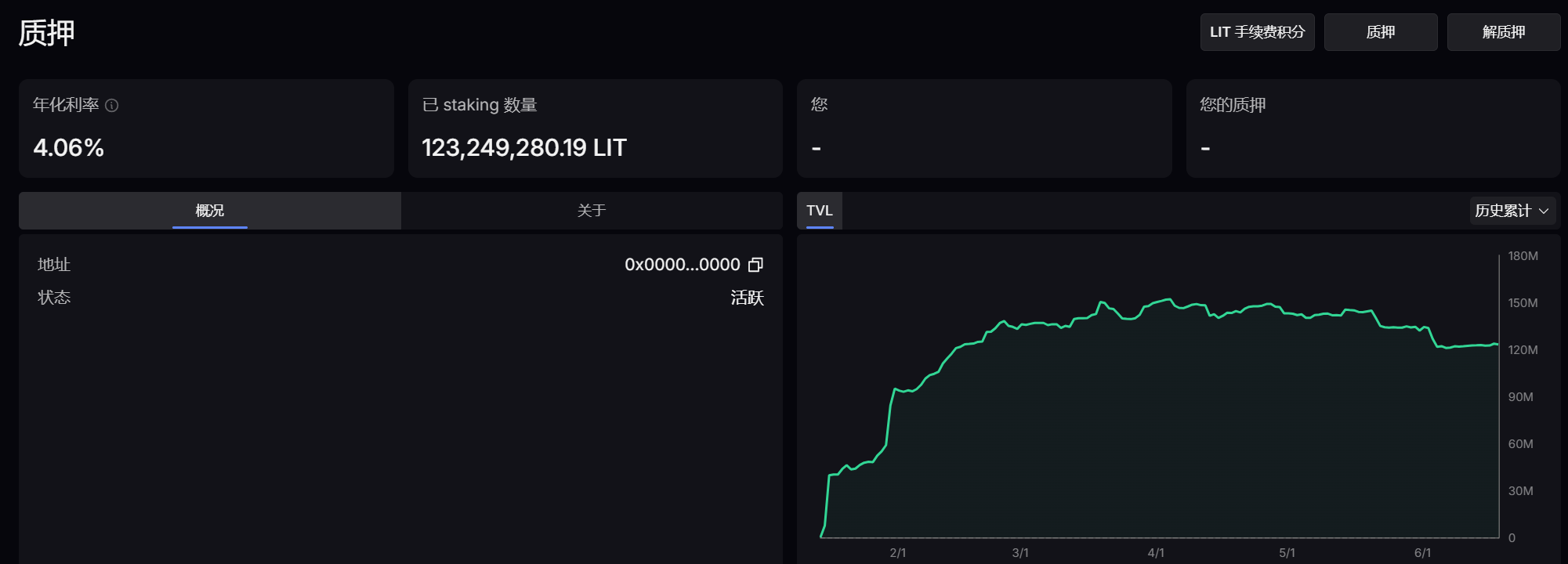
According to the latest official website data, its annualized yield is 4.06%, with 123.23 million LIT tokens staked, totaling over $204.6 million in value.


Compared to Hyperliquid, Concerns Remain


In the perpetual contracts DEX sector, Hyperliquid, with its first-mover advantage and scale effect, is the current recognized leader, while Lighter has established a unique position through technical differentiation and product focus.


Hyperliquid also implements an aggressive revenue buyback strategy with considerable scale. However, combined with staking gas fees and ecosystem incentives, it forms a more comprehensive token utility system. Lighter's buyback execution has certain advantages in transparency and predictability, while Hyperliquid's buyback is matched with a higher base of protocol revenue.


Furthermore, Hyperliquid has broader coverage: beyond perpetual contracts, it continues to expand into RWA and a more complete DeFi ecosystem, even prediction markets (e.g., Bitcoin, Ethereum price predictions). As of June 16th, the World Cup-related section within the HIP-4 prediction markets on Hyperliquid saw its 7-day trading volume surge 202% week-over-week. Continuous business expansion broadens its audience and trading volume, which in turn further boosts the buy-side pressure for the HYPE token. In contrast, Lighter is still focusing on RWA and Pre-IPO layouts and hasn't ventured into areas like prediction markets.


Institutions are also increasingly buying HYPE. According to on-chain analyst Ai Yi's monitoring, since June 1st, wallets related to a16z have withdrawn 1,229,524 HYPE ($85.54 million) and deposited them for staking. Even the prominent endorser Arthur Hayes tweeted, "Looking at the current crypto market cap rankings, most are shitcoins. I believe HYPE should at least surpass SOL before this bull cycle ends."


US institutions have also launched a HYPE spot ETF, providing stable support for its price. According to SoSoValue data, the cumulative net inflow for US HYPE spot ETFs is currently $182.56 million. In contrast, LIT still relies solely on secondary market activity and buybacks for price support.
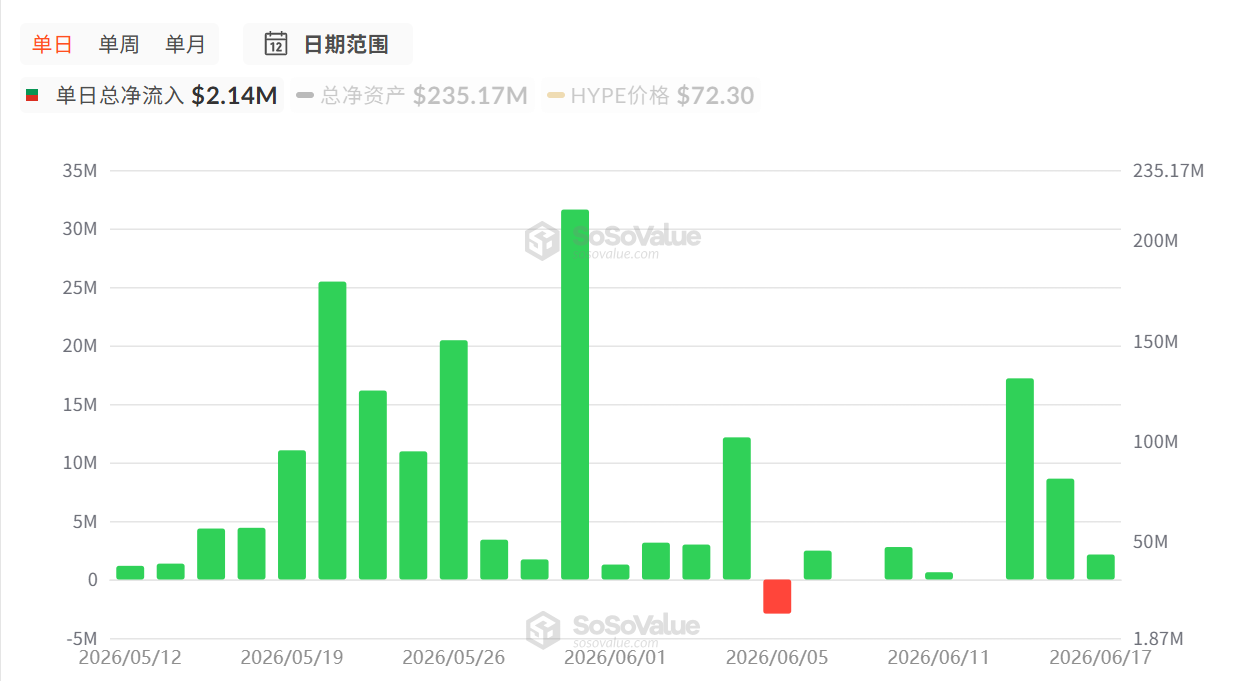


Currently, LIT lacks both influential figure endorsements and public, continuous buying by large institutions, leaving a hint of concern for its token price.


Overall, Hyperliquid currently dominates in scale, liquidity, and ecosystem breadth, while Lighter is building its competitive advantages through its ZK tech stack, transparent buyback mechanism, zero fees for retail users, and differentiated tools for institutional players.


The future relative performance of both will depend on their execution in trading volume growth, product iteration, and market adoption.


Trending Cryptos

Related Questions

QWhat is the core mechanism driving LIT's value appreciation, and how does it work?

AThe core mechanism is a repurchase (buyback) flywheel. Lighter uses all protocol fee revenue generated from its perpetual contracts and other products to programmatically repurchase LIT tokens on the open market. This happens hourly, placing 100 limit buy orders at prices from the current market price down to -10%, directly converting protocol income into continuous on-chain buy pressure for LIT.

QWhat is the Lighter Liquidity Pool (LLP), and what is its role in the ecosystem?

AThe Lighter Liquidity Pool (LLP) is essentially the counterparty for all traders on the Lighter exchange. It acts as the "house" or market maker in a decentralized setting. When traders profit, the LLP pays them; when traders lose, the losses flow into the LLP. This allows large liquidity providers to deposit USDC into the LLP to earn profits from overall trader losses and fees. A key rule is that providers must stake LIT tokens equal to 10% of their USDC deposit, which creates significant buy-and-lock demand for LIT in the secondary market.

QHow does Lighter's current market performance and data compare to its main competitor, Hyperliquid?

ALighter trails Hyperliquid in key metrics. As of the article's data, Lighter's total trading volume is over $1.68 trillion, while Hyperliquid's is over $4.37 trillion, nearly three times larger. Lighter's Open Interest stands at $750 million, significantly lower than Hyperliquid's $5.06 billion. Furthermore, Hyperliquid benefits from broader ecosystem expansion (like RWA and prediction markets), public endorsements from figures like Arthur Hayes, institutional buying, and a US spot ETF, which Lighter currently lacks.

QWhat is the current status of LIT's token supply and upcoming unlocks?

ALIT has a fixed total supply of 1 billion tokens. Currently, the circulating supply is approximately 250 million tokens (25% of the total). The remaining 75% are locked. The allocations for the team (26%) and investors (24%) have a 1-year cliff starting on December 30, 2026, followed by a 3-year linear vesting schedule. This means there is no unlock selling pressure from these major holders until the end of 2026.

QAccording to the article, what are the potential concerns or hidden worries for LIT's price sustainability?

AThe main concerns are its relative lack of broader market catalysts compared to Hyperliquid. Specifically, LIT lacks influential public endorsements (like Arthur Hayes' support for HYPE), visible large-scale institutional buying, and products like a US spot ETF that provide stable demand. Its price is currently supported primarily by the secondary market and the internal repurchase mechanism, making it potentially more vulnerable if trading volumes and protocol fees decline.

Related Reads

"Money Is Useless"? Why Musk's 2036 Prediction Could Completely Reshape Bitcoin's Fate

Elon Musk Predicts "Money Will Be Irrelevant" by 2036, Potentially Reshaping Bitcoin's Future In a recent interview with The Economist, billionaire Elon Musk, CEO of SpaceX and Tesla, made a startling prediction: money will become "irrelevant" within a decade as the world transitions to a state of "unbelievable abundance." He argues that if robots and AI can provide goods and services exceeding all human consumption, the purpose of money would vanish. This prediction coincides with a critical juncture for Bitcoin. While the cryptocurrency has been trading sideways and below its all-time highs, it is approaching what some see as a major turning point. Musk's views are closely watched due to his past statements equating "energy" with true currency—a concept that resonates with Bitcoin proponents, as Bitcoin's security model is deeply tied to energy-intensive mining. His companies, SpaceX and Tesla, collectively hold nearly $2 billion worth of Bitcoin. Although Musk's public enthusiasm for crypto has moderated since its peak, he maintains support for Bitcoin and his favored Dogecoin. He has criticized government-issued fiat currencies as "hopeless" and suggested a preference for Bitcoin. His latest prophecy, envisioning a post-scarcity future driven by AI and robotics, refocuses attention on Bitcoin's potential role as a value anchor in a world where traditional money may lose its meaning.

Foresight News15m ago

"Money Is Useless"? Why Musk's 2036 Prediction Could Completely Reshape Bitcoin's Fate

Foresight News15m ago

Storj Labs Files for Bankruptcy Protection: Can Token Holders Exchange for Company Equity?

Storj Labs, parent company of decentralized cloud storage platform Storj, filed for Chapter 11 bankruptcy protection on July 26 in the U.S. District Court for the Northern District of West Virginia. The company stated its network will operate normally and token functions will be unaffected. Notably, Storj plans to propose a mechanism in its reorganization plan allowing STORJ token holders a path to equity in the restructured company—an unprecedented offer in the crypto industry. However, its feasibility depends on whether any residual value remains after creditor repayments, as token holders are low in the legal priority hierarchy. Founded in 2014, Storj is an early decentralized infrastructure project. It reported a 7x increase in Annual Recurring Revenue (ARR) to approximately $30 million in 2024. In October 2025, it was acquired by Inveniam Capital Partners. Less than a year later, the merged entity entered bankruptcy proceedings. Storj attributed the filing to historical debts from past operations and acquisitions, stating they were too large to be absorbed by business growth. The company also plans to refocus on its core decentralized storage business, likely divesting Valdi, a GPU computing company acquired in 2024. The proposed token-to-equity conversion faces significant legal hurdles. Under U.S. bankruptcy law, creditors are paid before equity holders, and utility token holders are not automatically recognized as equity members. The details—such as eligibility, allocation ratio, and mechanics—are yet to be determined and require court approval. Another factor is token concentration, with Storj Labs itself holding roughly 30% of the total 425 million STORJ supply. In the broader decentralized storage landscape, Storj is a smaller player compared to giants like Filecoin and Arweave. Its key advantage is faster retrieval speeds for "hot" data. The bankruptcy process introduces risks, including potential client and node operator migration to competitors. STORJ price fell roughly 11.2% following the news. Key points for token holders to watch are the specific terms of the equity conversion plan, court approval progress, the treatment of the company's own token stash, and whether the refocused core business can sustain value post-reorganization.

Foresight News18m ago

Storj Labs Files for Bankruptcy Protection: Can Token Holders Exchange for Company Equity?

Foresight News18m ago

Perpetual Futures 'Landing in the US' Hits Roadblock: Why is CME Suing the CFTC in Court?

Perpetual crypto futures, which dominate global crypto derivatives trading, are entering the U.S. market. The CFTC approved KalshiEX to launch a true Bitcoin perpetual contract (BTCPERP) and issued rules allowing licensed exchanges to convert expiring crypto futures into perpetual ones. This move was challenged when CME Group sued the CFTC, arguing that perpetuals should be regulated as "swaps" under stricter rules, not as futures. The lawsuit's outcome will significantly impact the legal foundation of the nascent U.S. perpetuals market. Currently, two legal structures exist in the U.S.: true perpetuals (like Kalshi's) and long-dated futures (like Coinbase's) that mimic perpetuals via frequent funding rate settlements. These funding rates, paid between longs and shorts, keep contract prices anchored to spot. The proliferation of U.S. perpetuals creates fragmented liquidity across platforms (Kalshi, Coinbase, CME), with different rules on leverage, margining, and clearing. This fragmentation reduces capital efficiency, as collateral cannot be shared across products. Key competitive battlegrounds will be cross-product margin efficiency and the response of these new markets to extreme volatility. A pending Coinbase proposal to allow USDC stablecoin as futures margin could improve capital efficiency. Ultimately, the market's evolution hinges on two factors: how U.S. perpetuals behave during sharp Bitcoin price moves, and the court's ruling on whether they are futures or swaps.

Foresight News19m ago

Perpetual Futures 'Landing in the US' Hits Roadblock: Why is CME Suing the CFTC in Court?

Foresight News19m ago

Trading

Spot

Hot Articles

How to Buy LIT

Welcome to HTX.com! We've made purchasing Lighter (LIT) simple and convenient. Follow our step-by-step guide to embark on your crypto journey.Step 1: Create Your HTX AccountUse your email or phone number to sign up for a free account on HTX. Experience a hassle-free registration journey and unlock all features.Get My AccountStep 2: Go to Buy Crypto and Choose Your Payment MethodCredit/Debit Card: Use your Visa or Mastercard to buy Lighter (LIT) instantly.Balance: Use funds from your HTX account balance to trade seamlessly.Third Parties: We've added popular payment methods such as Google Pay and Apple Pay to enhance convenience.P2P: Trade directly with other users on HTX.Over-the-Counter (OTC): We offer tailor-made services and competitive exchange rates for traders.Step 3: Store Your Lighter (LIT)After purchasing your Lighter (LIT), store it in your HTX account. Alternatively, you can send it elsewhere via blockchain transfer or use it to trade other cryptocurrencies.Step 4: Trade Lighter (LIT)Easily trade Lighter (LIT) on HTX's spot market. Simply access your account, select your trading pair, execute your trades, and monitor in real-time. We offer a user-friendly experience for both beginners and seasoned traders.

4.4k Total ViewsPublished 2026.01.15Updated 2026.06.02

How to Buy LIT

Discussions

Welcome to the HTX Community. Here, you can stay informed about the latest platform developments and gain access to professional market insights. Users' opinions on the price of LIT (LIT) are presented below.

活动图片