
World Cup Approaches, Prediction Markets Face a Major Test

marsbitОпубліковано о 2026-05-15Востаннє оновлено о 2026-05-15

Анотація

The 2026 FIFA World Cup represents a major public test for sports prediction markets like Polymarket and Kalshi, which have grown significantly by offering tradable markets on event outcomes. This global event, hosted by the US, Canada, and Mexico, concentrates risks related to sports integrity, cross-border operations, and gambling ecosystems. A key concern is the potential for insider trading on non-public information (e.g., injuries, lineups), which could be exploited in granular prediction markets. FIFA's choice of its official prediction market partner, ADI Predictstreet, has raised significant doubts. The platform, relatively unknown, has faced scrutiny over the integrity of its executives—including past insider trading allegations and associations with a major EU corruption scandal—its rapid licensing in Gibraltar, and the fact its product was not yet live at the time of the announcement. This partnership begins with a "trust deficit." FIFA itself carries historical corruption baggage, and its deepening ties with betting and data industries fuel concerns about maintaining sporting integrity. While FIFA has established monitoring systems, their effectiveness against potential insider trading across decentralized global prediction markets remains unproven. Major US-based prediction platforms have updated rules to prohibit trading based on confidential information. However, the World Cup's complex ecosystem of federations, teams, and officials makes enforcement far mor...

Author: Zen, PANews

In recent years, prediction market platforms led by Polymarket and Kalshi have turned political, macroeconomic, crypto, entertainment, and sports events into tradable markets. Users express probabilistic judgments and earn profits by buying and selling event outcomes. Especially after entering the sports arena, these platforms have seen substantial and sustained growth in trading volume, making sports a pillar of their revenue structure.

In this major sports year, particularly the 2026 FIFA World Cup—co-hosted by the USA, Canada, and Mexico, and expanded for the first time to 48 teams—will represent the most significant public stress test for sports prediction markets to date. It compresses sports competition, cross-border event organization, the betting ecosystem, and global user traffic into a single market scenario, significantly amplifying both risk dimensions and external scrutiny.

In such a high-density, globalized, cross-jurisdictional sporting event, the combination of insiders and tradable prediction markets means that any information asymmetry regarding injuries, starting lineups, referees, or even internal governance could be rapidly converted into pricing advantages.

In this sense, the 2026 World Cup is not only an opportunity for prediction markets to compete for sports traffic but also a public examination of their ability to safeguard sports integrity.

From Obscurity to the World Cup Spotlight: FIFA's Prediction Market Partner Faces Multiple Queries

In April of this year, FIFA (Fédération Internationale de Football Association) announced its official prediction market partner for the 2026 World Cup. Surprisingly, the brand announced was neither Polymarket nor Kalshi, but a little-known platform—ADI Predictstreet.

Just as people were wondering who ADI Predictstreet was, this company placed at the center of the world's largest sporting event began to face public skepticism due to the negative history of its executives, the speed of its licensing, and the immaturity of its product.

The first layer of controversy surrounding Predictstreet involves executive integrity. When ADI Predict Street was announced as FIFA's betting partner, the company's Chief Council Member, Ajay Bhatia, represented the company on stage. He was photographed with FIFA President Gianni Infantino, both holding up a jersey bearing the ADI Predict Street logo.
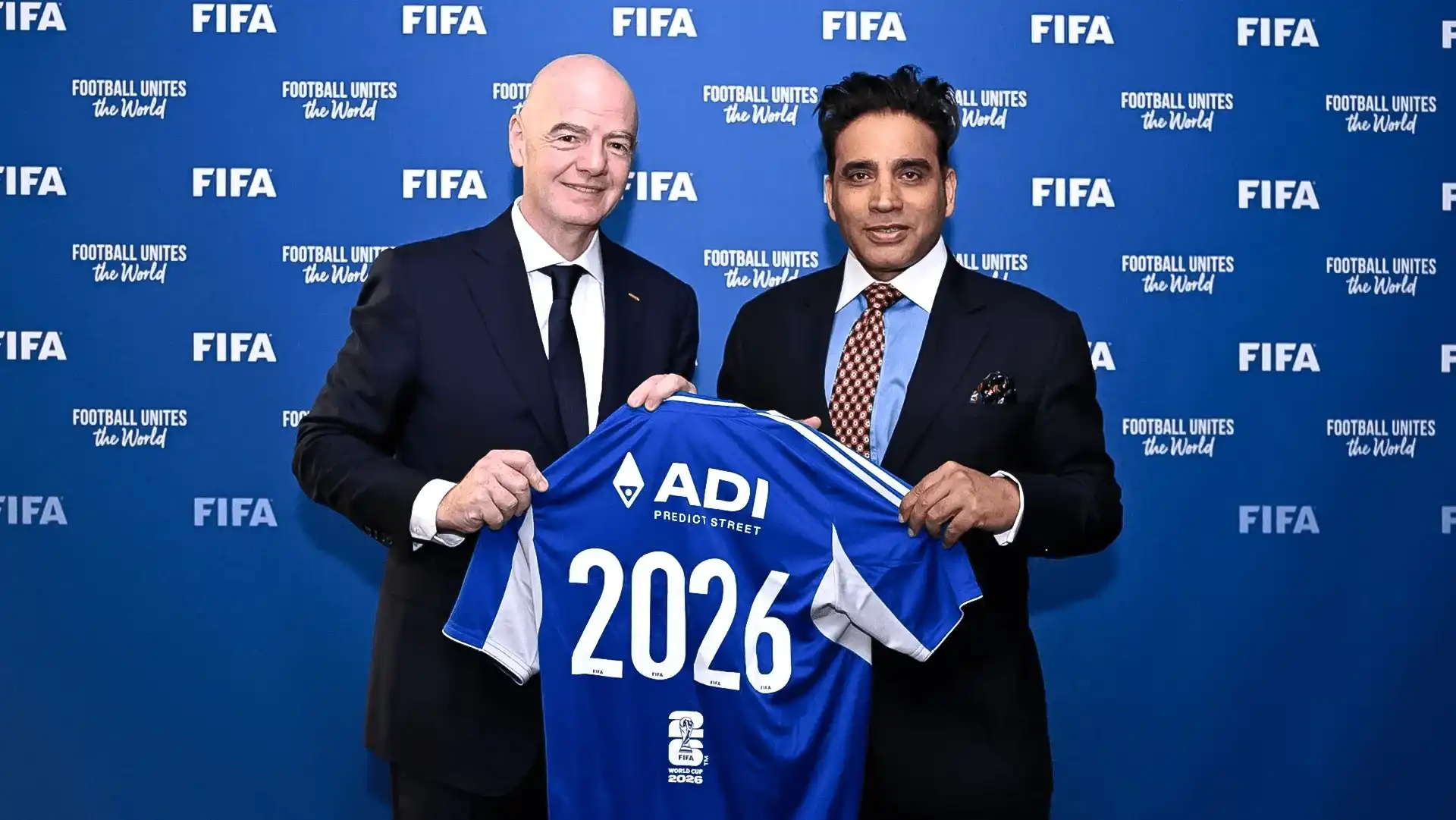
FIFA President Gianni Infantino (left) and Ajay Bhatia (right)

Bhatia is the CEO and Managing Director of QuantLase Lab, a subsidiary of IHC (International Holding Company), which is chaired by a member of the Abu Dhabi royal family and Vice President of the UAE. On the other hand, ADI Predictstreet falls under Finstreet, which is a subsidiary of Sirius International Holding, which is also part of IHC.

According to Norwegian football news outlet Josimar, Bhatia was embroiled in an insider trading scandal in 2025. He was accused of purchasing shares in the Indian energy giant Adani Group before IHC publicly announced it would invest in it. The case was settled for approximately $150,000 in September 2025, with Bhatia not admitting guilt.

Shortly after Josimar disclosed Bhatia's past, ADI Predictstreet announced that Dimitrios Psarrakis would assume the role of CEO. However, Psarrakis's resume also appears questionable. He previously served as an assistant to former European Parliament Vice President Eva Kaili, who was a central figure in the European Parliament's Qatar corruption scandal (also known as Qatargate).

Former European Parliament Vice President Eva Kaili (left) and ADI Predictstreet CEO Dimitrios Psarrakis (right)

Kaili allegedly accepted benefits from Qatar and Morocco in exchange for promoting their interests within the EU. While the legal and ethical risks associated with Kaili cannot be directly equated to Psarrakis, his professional connection to a figure at the heart of a scandal is sufficient to raise questions about reputation and due diligence.

Beyond executive credibility issues, the speed at which ADI Predictstreet obtained its license is also noteworthy. Just days before being announced as the official prediction market partner for the 2026 World Cup, ADI Predictstreet announced it had secured a license in Gibraltar. Officials claimed the approval speed "set a record" and that the entire process was very rigorous.

However, although the ADI Predictstreet website domain was registered in January and it obtained its license by the end of March, its actual product is still not live. The real-money trading experience remains unknown. As the official prediction market platform FIFA has thrust into the World Cup spotlight, the outside world still cannot assess whether its actual trade matching, settlement, risk control, anti-manipulation, and user protection mechanisms have undergone stress testing.

Therefore, with these multiple layers of uncertainty, the World Cup's partnership with ADI Predictstreet began with a deficit of trust.

FIFA's Historical Baggage and Gamblification Controversy

Beyond the questionable credibility of the ADI Predictstreet platform, FIFA itself, often criticized for corruption, struggles to gain inherent trust in this matter.

In 2015, the U.S. Department of Justice brought widespread corruption charges against numerous FIFA officials and sports marketing executives. Then-U.S. Attorney General Loretta Lynch described the corruption as "rampant, systemic, and deep-rooted." This historical backdrop makes it difficult for FIFA to convince the public through official statements alone in any cooperation involving betting, data, or prediction markets.

In recent years, FIFA's ties to the betting and data industries have also deepened, fueling concerns about match integrity at a similar pace.

Shortly before the 2022 Qatar World Cup, FIFA struck a deal with betting operator Betano; the following year, FIFA signed an agreement with New Zealand lottery company TAB for the Women's World Cup; in early 2026, FIFA commercialized its streaming platform FIFA+ through a deal with data company Stats Perform, bringing more lower-tier matches into the betting market.
From a commercial perspective, this can be interpreted as FIFA developing its data assets and fan engagement. But from a sports integrity viewpoint, it also means the World Cup is being embedded deeper into the betting and trading ecosystem. As the event becomes increasingly enamored with the commercial value brought by this ecosystem, a major question arises: can it remain sufficiently independent to control risks?

In response, FIFA has taken some measures to address betting-related threats. In 2024, FIFA relocated its legal department and integrity unit to Miami (resulting in the loss of many experienced staff) and also formed an integrity task force, with members including institutions like Interpol, the U.S. Federal Bureau of Investigation, and representatives from the betting industry.

In February 2026, FIFA announced that U.S.-based integrity and compliance monitoring company IC360 would join this task force and use its ProhiBet software to monitor betting-related threats, including whether players and match officials bet on their own games.

However, this mechanism seems more like a screening tool for regulated markets rather than a complete defense line covering the global betting and prediction market risks of the World Cup. For an event involving parties worldwide and extremely long information chains, truly dangerous insider trading often doesn't occur in the places most visible to regulators.

Insider Trading Concerns Rise, Prediction Market Leaders Tighten Rules

Traditional betting monitoring typically relies on information sharing between betting companies, data providers, leagues, and regulators. Prediction markets, however, may involve crypto wallets, offshore platforms, cross-border accounts, proxy trading, and decentralized settlement. Even if official partner platforms are regulated, other platforms may still open World Cup markets outside FIFA's official system.

If anomalous trading occurs on non-partner platforms, among non-U.S. users, via crypto wallets, or through proxy accounts, it remains an unproven question whether FIFA's traditional integrity tools can penetrate these layers.

In sports prediction markets, risks of insider manipulation for outcomes like World Cup winner, group stage advancement, or a team's progression are typically low, as they are difficult for a single participant to manipulate.

But more micro and granular markets are entirely different. Whether a specific player starts, a player is injured, a red card occurs in a match, a team gets a penalty, a specific referee officiates, or a VAR controversy happens—these events are more susceptible to influence by a few insiders and easier to price based on non-public information.

The U.S. Commodity Futures Trading Commission (CFTC), as the sole regulator of prediction markets, recognized this early. One of its key guidelines for sports prediction markets is to remind regulated exchanges to focus on contracts related to individual player performance, prop bets, and micro-markets vulnerable to manipulation. The CFTC also encourages platforms to share data with sports leagues and strengthen contract settlement and market surveillance.

In response, prediction market platforms in the U.S. have adapted their management. Following Congressional pushes to limit prediction market legislation, Kalshi and Polymarket quickly updated their rules. Kalshi stated it would prohibit sports personnel from trading contracts related to areas they participate in or are employed in. Polymarket also updated its rules, banning users from trading contracts if they possess confidential information or can influence the event outcome.

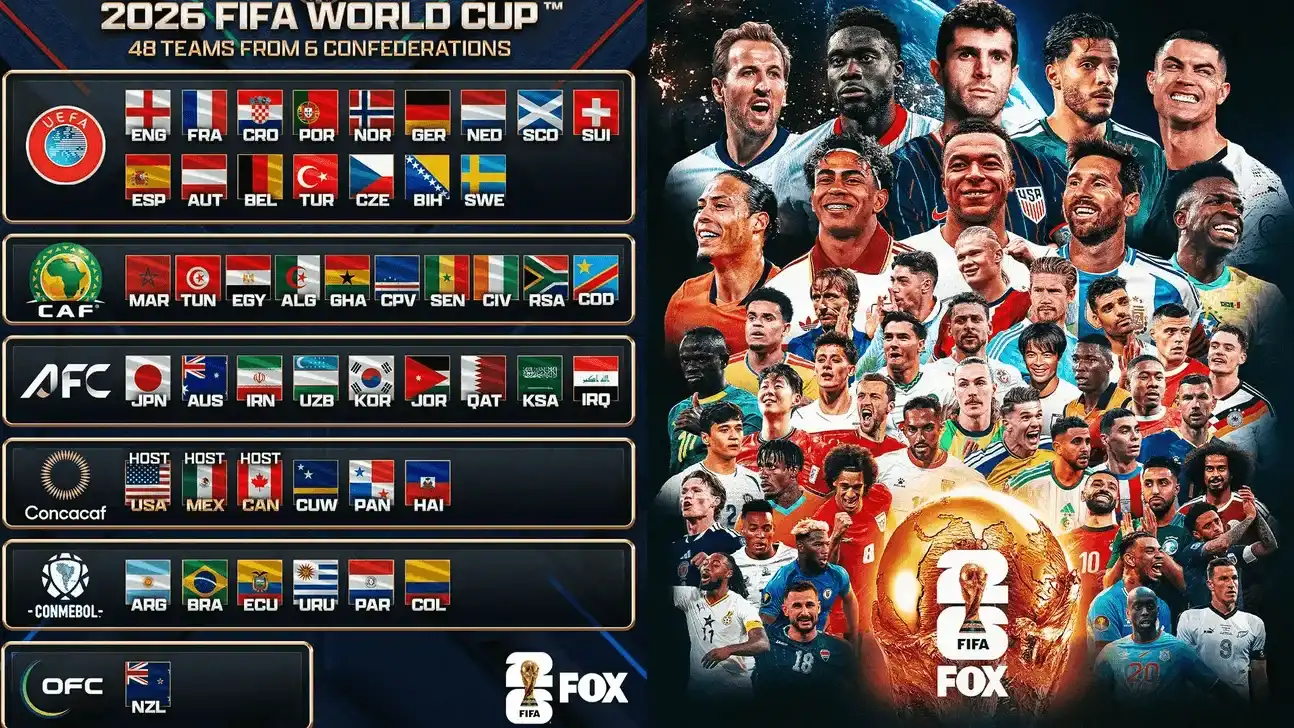
However, the complexity of the World Cup far exceeds that of a single U.S. professional league. Leagues like the NBA and MLB have clear league, team, player union, referee, and official data structures. The World Cup involves a vast array of entities: FIFA, six continental confederations, 48 national teams, clubs, agents, medical teams, referee committees, broadcasters, and data suppliers. Who qualifies as an "insider," how to identify them, and whether they can trade via family, friends, proxy wallets, or third-party accounts? These questions are much harder to answer in the World Cup context.
Furthermore, prediction markets face not just sports integrity issues but also global regulatory legitimacy. In April this year, the Brazilian government blocked 27 prediction market platforms and tightened derivatives rules, prohibiting derivatives based on sports, online games, politics, elections, culture, and social outcomes. Dozens of other countries also reject the argument that "event contracts are not gambling."

In such a climate, FIFA's choice of a platform riddled with question marks and with a product not fully validated as its official World Cup prediction market partner has itself pushed the sports integrity issue to the forefront ahead of time.

Of course, the 2026 World Cup will not determine the survival of prediction markets, but it will likely define the boundaries of their mainstream integration into the global sports industry: will they become a regulated event-trading infrastructure, or just another gambling risk entry point amplified by global sports traffic?


Пов'язані питання

QAccording to the article, what are the main controversies surrounding ADI Predictstreet, the official FIFA 2026 World Cup prediction market partner?

AThe main controversies are: 1) Questionable integrity of its high-level executives, including allegations of insider trading and associations with the 'Qatargate' European Parliament corruption scandal. 2) The extremely fast speed at which it obtained its Gibraltar license. 3) The fact that its actual product was not yet live at the time of the announcement, raising doubts about its transaction, settlement, risk control, and user protection mechanisms.

QWhy is the 2026 FIFA World Cup considered a major stress test for prediction markets?

AThe 2026 World Cup, as a high-density, global, cross-jurisdictional mega-sports event, compresses sports competition, cross-border organization, the gambling ecosystem, and global user traffic into a single market scenario. This significantly amplifies the risk dimensions and external scrutiny. Any information advantage held by insiders regarding injuries, lineups, referees, or internal governance could be rapidly converted into pricing advantages in a tradeable prediction market, posing a severe test to the market's ability to maintain sports integrity.

QWhat specific types of World Cup prediction markets are considered most vulnerable to insider manipulation, according to the article?

AMicroscopic and granular markets are most vulnerable. These include events such as whether a specific player will start, whether a player will be injured, whether a red card will be issued in a match, whether a team will get a penalty kick, which referee will officiate, or whether a VAR controversy will occur. These events are more easily influenced by a small number of insiders and can be priced ahead of time using non-public information.

QWhat actions have established prediction market platforms like Kalshi and Polymarket taken to address integrity concerns related to sports events?

AFollowing legislative pressure in the U.S., these platforms have updated their rules. Kalshi stated it will prohibit sports-related personnel from trading contracts in the fields they participate in or are employed by. Polymarket also updated its rules to prohibit users from trading contracts related to an event if they possess confidential information or are capable of influencing the event's outcome.

QWhat historical and recent factors contribute to skepticism about FIFA's ability to ensure integrity in its dealings with betting and prediction markets?

AHistorical factors include the widespread, systemic, and deep-rooted corruption scandal within FIFA exposed by the U.S. Department of Justice in 2015. Recent factors include FIFA's deepening ties with the betting and data industry (e.g., partnerships with Betano, TAB, Stats Perform), which increasingly embeds events like the World Cup into the gambling and trading ecosystem. This commercial focus raises questions about FIFA's independence and ability to control integrity risks effectively.

Пов'язані матеріали

Who Will Define the Rules of the AI Era? Anthropic Discusses the 2028 US-China AI Landscape

This article, based on Anthropic's analysis, outlines the intensifying systemic competition between the U.S./allies and China for AI leadership by 2028. It argues that access to advanced computing power ("compute") is the critical bottleneck, where the U.S. currently holds a significant advantage through chip export controls and allied innovation. However, China's AI labs remain competitive by exploiting policy loopholes—via chip smuggling, overseas data center access, and "model distillation" attacks to copy U.S. model capabilities—keeping them close to the frontier. The piece presents two contrasting scenarios for 2028. In the first, decisive U.S. action to tighten compute controls and curb distillation locks in a 12-24 month AI capability lead, cementing democratic influence over global AI norms, security, and economic infrastructure. In the second, policy inaction allows China to achieve near-parity through continued access to U.S. technology, enabling Beijing to promote its AI stack globally and integrate advanced AI into its military and governance systems, altering the strategic balance. Anthropic contends that maintaining a decisive U.S. lead is essential for shaping safe AI development and governance. The core recommendation is for U.S. policymakers to urgently close compute and model access loopholes while promoting global adoption of the U.S. AI technology stack to secure a lasting strategic advantage.

marsbit53 хв тому

Who Will Define the Rules of the AI Era? Anthropic Discusses the 2028 US-China AI Landscape

marsbit53 хв тому

“Why Didn’t You Buy 2x Long SK Hynix?”

The article discusses the immense popularity of the "2x Long SK Hynix ETF" (07709.HK) in Hong Kong, which became the world's largest single-stock leveraged ETF by May 2026. Launched in October 2025, the ETF's net value soared over 1000% in seven months, significantly outperforming the 324% gain of SK Hynix's underlying stock, driven by the AI boom and a critical shift in industry demand from computing power to memory. It highlights the mechanics and risks of daily-rebalanced leveraged ETFs. In a smooth bullish market, they generate amplified returns, but during volatile periods—exemplified by market swings during geopolitical tensions in the Strait of Hormuz in March-April 2026—they suffer severe "volatility decay," where choppy price action can cause losses far exceeding twice the drop of the underlying asset. The piece frames SK Hynix, as NVIDIA's primary HBM supplier, within the classic cycle of the memory chip industry—a commoditized sector prone to boom-and-bust cycles of shortage, price hikes, overcapacity, and crashes. While current AI-driven demand and high margins (Q1 2026毛利率~79%) create a "super cycle," the article questions its sustainability. It warns that extreme profits will inevitably tempt competitors like Samsung and Micron to ramp up HBM production, potentially eroding scarcity. Furthermore, the entire narrative remains tethered to the massive AI capital expenditure of tech giants. In conclusion, the ETF's trajectory symbolizes the accelerated, all-in nature of the current AI revolution, where timeframes are compressed and market moves are extreme. However, it also underscores that while industry trends define ultimate returns, macro-geopolitical risks dictate the volatile and uncertain path to get there.

marsbit55 хв тому

“Why Didn’t You Buy 2x Long SK Hynix?”

marsbit55 хв тому

a16z Crypto: A Guide to the CLARITY Act for Crypto Entrepreneurs

The CLARITY Act, a bipartisan crypto market structure bill, has advanced through the Senate Banking Committee, marking a potential historic shift in U.S. digital asset regulation. For years, a lack of clear rules has stifled innovation, pushed development overseas, and exposed consumers to risk. This bill aims to establish a comprehensive framework, providing long-needed regulatory clarity for blockchain networks and digital assets. It builds upon previous legislative efforts like FIT21 and the House version of CLARITY, which gained strong bipartisan support. CLARITY is crucial because it recognizes that blockchain networks are fundamentally different from traditional companies. Networks operate through decentralized, shared rules rather than centralized control. Applying corporate legal frameworks to networks forces them into a centralized model, concentrating power and value. In contrast, decentralized blockchain networks can function as user-owned public infrastructure, distributing value more equitably among participants. The bill seeks to enable the safe launch of networks in the U.S., clarify regulatory jurisdiction between the SEC and CFTC, oversee crypto exchanges, and enhance consumer protections. Its passage would align U.S. law with the nature of decentralized technology, allowing builders to operate transparently and fund projects domestically without structural compromises due to regulatory uncertainty. Similar to the positive impact seen after the stablecoin-focused GENIUS Act, CLARITY could unlock a new wave of innovation, helping the U.S. reclaim leadership in the crypto space while combating fraud and abuse.

链捕手1 год тому

a16z Crypto: A Guide to the CLARITY Act for Crypto Entrepreneurs

链捕手1 год тому

Торгівля

Спот
Ф'ючерси

Популярні статті

Як купити ZEN

Ласкаво просимо до HTX.com! Ми зробили покупку Horizen (ZEN) простою та зручною. Дотримуйтесь нашої покрокової інструкції, щоб розпочати свою криптовалютну подорож.Крок 1: Створіть обліковий запис на HTXВикористовуйте свою електронну пошту або номер телефону, щоб зареєструвати обліковий запис на HTX безплатно. Пройдіть безпроблемну реєстрацію й отримайте доступ до всіх функцій.ЗареєструватисьКрок 2: Перейдіть до розділу Купити крипту і виберіть спосіб оплатиКредитна/дебетова картка: використовуйте вашу картку Visa або Mastercard, щоб миттєво купити Horizen (ZEN).Баланс: використовуйте кошти з балансу вашого рахунку HTX для безперешкодної торгівлі.Треті особи: ми додали популярні способи оплати, такі як Google Pay та Apple Pay, щоб підвищити зручність.P2P: Торгуйте безпосередньо з іншими користувачами на HTX.Позабіржова торгівля (OTC): ми пропонуємо індивідуальні послуги та конкурентні обмінні курси для трейдерів.Крок 3: Зберігайте свої Horizen (ZEN)Після придбання Horizen (ZEN) збережіть його у своєму обліковому записі на HTX. Крім того, ви можете відправити його в інше місце за допомогою блокчейн-переказу або використовувати його для торгівлі іншими криптовалютами.Крок 4: Торгівля Horizen (ZEN)Легко торгуйте Horizen (ZEN) на спотовому ринку HTX. Просто увійдіть до свого облікового запису, виберіть торгову пару, укладайте угоди та спостерігайте за ними в режимі реального часу. Ми пропонуємо зручний досвід як для початківців, так і для досвідчених трейдерів.

204 переглядів усьогоОпубліковано 2024.12.12Оновлено 2025.03.21

Як купити ZEN

Обговорення

Ласкаво просимо до спільноти HTX. Тут ви можете бути в курсі останніх подій розвитку платформи та отримати доступ до професійної ринкової інформації. Нижче представлені думки користувачів щодо ціни ZEN (ZEN).

活动图片












