Trump's White House Crypto Summit Sets Tone: Cryptocurrency Ushers in 'Regulatory Spring'

marsbitОпубліковано о 2026-08-20Востаннє оновлено о 2026-08-20

Анотація

Trump Holds Crypto Summit at White House, Signaling "Regulatory Spring". On July 20, President Trump convened a roundtable with U.S. financial regulators and leading cryptocurrency industry executives. Key attendees included heads of the CFTC and SEC, along with CEOs from Coinbase, ICE/NYSE, Nasdaq, Robinhood, Kraken, Ripple, and Chainlink co-founder. The summit focused on U.S. competition for leadership in fintech and AI. Trump highlighted two legislative efforts: the already-signed GENIUS Act, which facilitates compliant dollar-pegged stablecoins, and the pending Clarity Act, aimed at legally defining "crypto securities" vs. "crypto commodities." Industry leaders indicated a Congressional vote on the Clarity Act is scheduled for September 15. Regulators outlined key initiatives. The CFTC confirmed the launch of the first U.S.-regulated Bitcoin perpetual futures contract and is working to compliantly bring the decentralized protocol Hyperliquid to the U.S. The SEC proposed new rules to clarify legal fundraising for crypto startups using digital assets. In a Q&A, Trump expressed openness to expanding the U.S. government's Bitcoin reserves. The event was widely viewed as a major positive signal for the crypto industry, contributing to a sharp overnight price surge for assets like Bitcoin and Ethereum.

Bitcoin surged from $65,000 to $70,000 in the middle of the night, Ethereum saw a nearly 20% spike, and HYPE is almost at its all-time high.

Cryptocurrency experienced an overnight surge, courtesy of news from the United States.

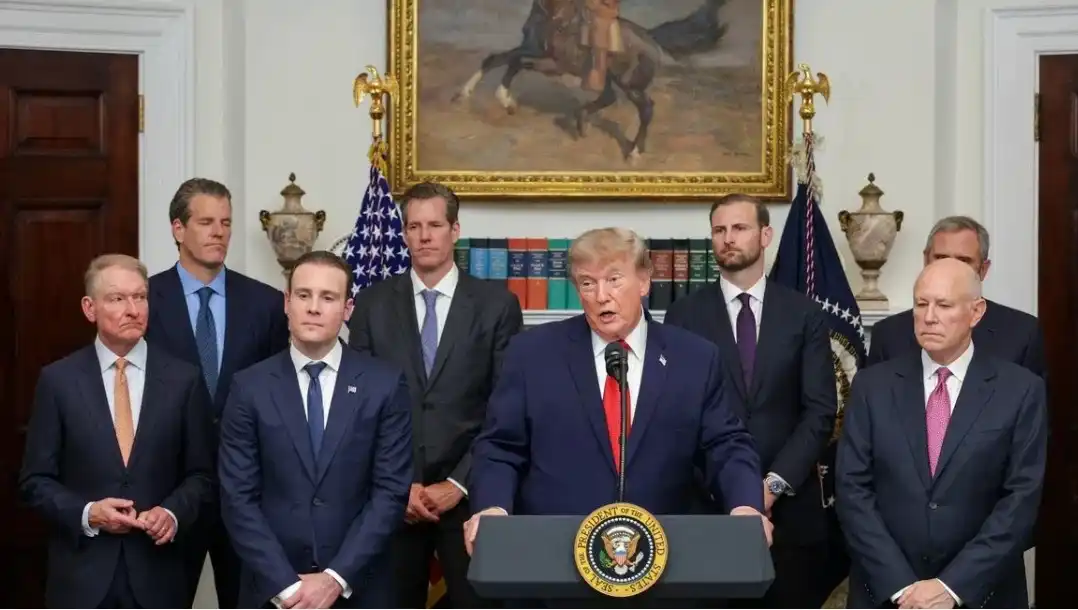
On July 20th, President Trump convened a roundtable discussion and public address at the White House in Washington, D.C., bringing together executives from U.S. finance, cryptocurrency, and technology firms, as well as leaders of regulatory agencies.

The attendees were high-profile. They included Mike Selig, Chairman of the CFTC (Commodity Futures Trading Commission); Paul Atkins, Chairman of the SEC (Securities and Exchange Commission); Patrick Witt, Executive Director of the President's Digital Assets Advisory Committee; and then top figures from the cryptocurrency industry: Brian Armstrong, CEO of Coinbase; Jeff Sprecher, CEO of Intercontinental Exchange (ICE/NYSE); Adena Friedman, CEO of Nasdaq; Vlad Tenev, CEO of Robinhood; Arjun Sethi, CEO of Kraken; Brad Garlinghouse, CEO of Ripple; Sergey Nazarov, Co-founder of Chainlink; and the Winklevoss twins, among others.

The core purpose of this meeting was for Trump to emphasize that the United States is competing with other countries for dominance in the financial markets and AI sector, pledging to ensure the future of global fintech is built and perfected on American soil.

However, as can be seen from the attendees, the cryptocurrency industry was the main focus of this event.

Crypto Legislation

Trump first recounted his accomplishments in the cryptocurrency industry over the past two years, like Bitcoin reserves, but those are less important. What's important was his content regarding crypto legislation.

- The GENIUS Act: Trump mentioned that he signed this landmark legislation a year ago. This act comprehensively paves the way for the large-scale adoption of compliant dollar-pegged stablecoins, not only consolidating the dollar's global hegemony but also driving global capital to purchase U.S. Treasury bonds in large volumes.

- The Clarity Act: Currently in a critical stage of congressional advancement. This act aims to clearly delineate the boundary between 'crypto securities' and 'crypto commodities' at the legislative level.

Trump urged Congress to accelerate the passage of the Clarity Act to establish a clear legal framework for digital assets. Coinbase CEO Brian Armstrong revealed in his remarks that Congress plans to vote on this bill on September 15th. If passed smoothly, it would codify into law the regulatory benefits enjoyed over the past year-plus.

Introducing Hyperliquid, Proposing New Crypto Financing Rules

Then came the statements from the regulatory agencies, equally important as they represent the regulatory layer.

CFTC Chairman Mike Selig and SEC Chairman Paul Atkins detailed the progress of their respective agencies' specific projects on deregulation and embracing innovation.

On the CFTC side:

- First Compliant Bitcoin Perpetual Futures: CFTC Chairman Mike Selig confirmed that the first true 'Bitcoin Perpetual Futures Contract' in the U.S. was launched in May 2026 on a CFTC-registered exchange.

- Introducing the Decentralized Protocol Hyperliquid: The CFTC is fully advancing a compliance framework aimed at introducing the decentralized trading protocol Hyperliquid into the United States in a fully legal and compliant manner.

This is also the core reason for HYPE's overnight surge.

- Protecting 'Prediction Markets': Federal regulators are actively intervening to prevent state officials (such as New York Attorney General Letitia James) from overstepping their authority and interfering with compliant prediction markets, avoiding the forced outflow of such financial innovation overseas.

On the SEC side:

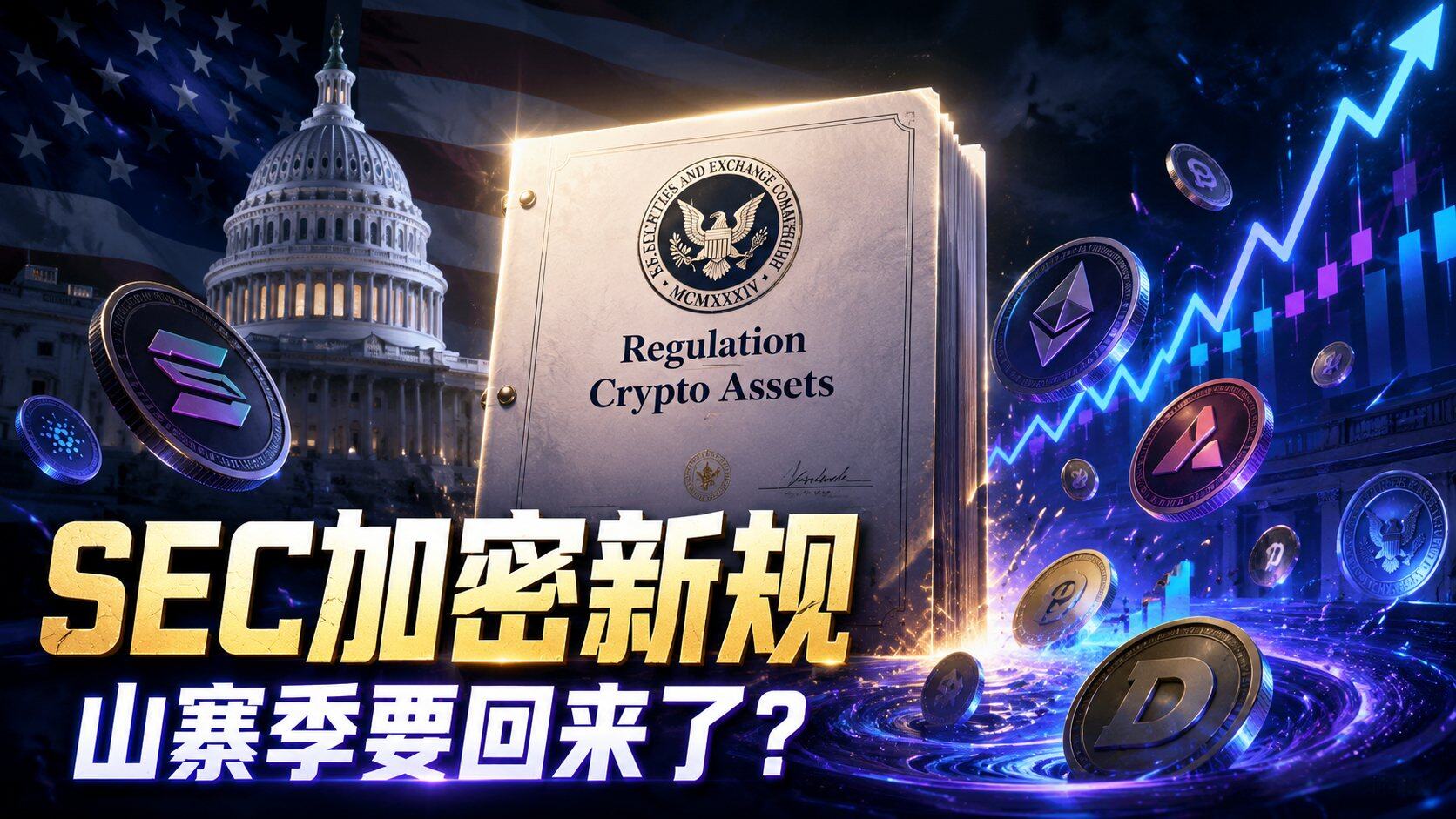
- Proposing 'Crypto Asset Rules': SEC Chairman Paul Atkins announced that the SEC has just proposed new crypto asset rules, fundamentally resolving the certainty for crypto startups to legally conduct equity and capital financing through digital assets in the U.S.

- Capital Market Recovery and the 'Trump Account': Thanks to rationalized IPO thresholds, 583 companies have gone public since the new administration took office (a 75% year-on-year increase), raising $28 billion; simultaneously promoting the 'Trump Account' to allow a new generation of young investors to better share in the capital market's benefits.

The new rules for crypto asset financing are also quite significant—legal ICOs might be making a comeback. For details, see this article: 'The Biggest Boon for the Crypto Circle: Is Compliant Token Financing Coming Back?'

Bitcoin Reserves

During the final Q&A session with journalists, there was also an interesting question about whether the U.S. government would further expand its Bitcoin reserves.

Trump said he is open to the idea and will take advice from his regulatory team.

Just floating the idea is bullish.

Another part was about AI, but not much useful information was provided. Addressing AI's massive electricity demand, Trump proposed a fast-track approval policy, allowing tech companies to build their own dedicated power plants (approved within two to three weeks), which would neither strain the public grid and could feed surplus power back into the traditional grid.


Трендові криптовалюти

Пов'язані питання

QWhat were the main cryptocurrency-related legislative achievements mentioned by former President Trump at the White House summit?

ATrump highlighted two key legislative achievements: The GENIUS Act, which he signed into law a year prior, paved the way for large-scale adoption of compliant, dollar-anchored stablecoins. He also urged Congress to expedite passage of The Clarity Act, which aims to clearly define the legal distinction between a 'crypto-security' and a 'crypto-commodity.'

QAccording to the article, what is a significant reason for HYPE's price surge?

AA significant reason for HYPE's price surge was the announcement by CFTC Chairman Mike Selig that the CFTC is actively working to fully and compliantly introduce the decentralized exchange protocol Hyperliquid to the United States.

QWhat was the core purpose of the White House roundtable as stated by former President Trump?

AThe core purpose, as stated by Trump, was to emphasize that the U.S. is competing with other nations for dominance in financial markets and AI. He promised to ensure that the future of global fintech is built and perfected within the United States.

QWhat major new regulation did the SEC Chairman Paul Atkins announce at the summit?

ASEC Chairman Paul Atkins announced that the SEC had just proposed a new 'crypto asset rule.' This rule aims to definitively resolve the legal uncertainties for crypto startups in the U.S. regarding raising equity and capital through digital assets.

QHow did Trump respond to a question about the U.S. government increasing its Bitcoin reserves?

AIn response to a question about whether the U.S. government would further expand its Bitcoin reserves, Trump said he was open to it and would listen to recommendations from his regulatory team.

Пов'язані матеріали

U.S. Market Trend (August 20): U.S. Treasury Intervention Halts Stock Decline; Moderna's Cancer Vaccine Breakthrough Sparks 180% Surge

U.S. Stocks Rebound on Treasury Intervention; Moderna Soars 180% on Cancer Vaccine Breakthrough Key Points: • U.S. stocks ended a three-day decline, with the rebound driven primarily by the U.S. Treasury Department's move to significantly increase its long-term bond repurchase ceiling. This action briefly pushed the 30-year Treasury yield down by about 10 basis points, easing long-term interest rate pressures. • Despite this, the market faced a countervailing force from the hawkish July FOMC meeting minutes, which revealed broader support for potential rate hikes among officials due to lingering inflation concerns. • Moderna shares skyrocketed nearly 180% after announcing positive Phase 3 trial results for its personalized mRNA cancer vaccine in partnership with Merck, which also rose nearly 13%. This fueled a major rally in the healthcare sector. • Contrary to the broader market, the Philadelphia Semiconductor Index fell over 2%, highlighting persistent pressure on the AI hardware chain. Concerns include AI's potential inflationary impact and questions about application-side cash flows supporting high capital expenditures. • Commodities and cryptocurrencies rallied alongside the equity rebound, supported by a weaker dollar and lower long-term yields. Geopolitical risks continued to underpin oil prices. Outlook: Market focus shifts to whether long-term bond yields stabilize post-intervention, upcoming U.S. economic data (jobless claims, Philly Fed index), and the impact of SK Hynix's massive share buyback plan on the memory chip sector. The tech sector's full recovery remains contingent on the semiconductor index's performance.

marsbit3 хв тому

U.S. Market Trend (August 20): U.S. Treasury Intervention Halts Stock Decline; Moderna's Cancer Vaccine Breakthrough Sparks 180% Surge

marsbit3 хв тому

The 19 Must-Know Top Chinese and American Entrepreneurs Born After 2000 • The 21st-Century Successors Have Arrived

The 21st century's first generation of entrepreneurs, born in the 2000s, are already taking center stage. This analysis of publicly prominent founders reveals distinct trends between China and the U.S., shaped by their respective ecosystems. In China, young founders are heavily focused on giving AI a physical presence, tackling challenges in robotics and hardware. Examples include Huang Yi (RoboParty, humanoid robots), Qin Shentao (Yuanchen Taichu, embodied AI data infrastructure), and founders working on robotic hands, home cleaning robots, and computing power networks. Their paths often emerge from university labs and robotics competitions, prioritizing prototype demonstration, cost control, and manufacturing delivery. In contrast, their U.S. counterparts frequently leverage software, AI, and capital networks to rapidly reorganize digital services and information flows. Startups like Mercor (AI talent/data, reaching $10B revenue), Etched (AI chips), and various AI-powered SaaS tools for consumers and SMBs demonstrate a focus on user growth, subscription models, and global scalability. However, this velocity has also led to high-profile cases questioning business practices and credibility. The key differentiator for this generation is not merely youth, but the compressed early stage of venture creation. Access to open-source tools, AI models, mature supply chains, and willing venture capital allows them to bypass traditional career ladders. Yet, while technology lowers the barrier to product creation, it does not reduce the challenges of building a sustainable company—managing teams, ensuring reliable delivery, and establishing trust remain hard-earned skills. The article concludes that the true test for these founders will be the "second growth": evolving from product creators into responsible company leaders capable of sustained execution and organizational building. For established businesses, the rise of these fast-moving, technologically adept teams necessitates new strategies for collaboration, competition, and investment.

marsbit8 хв тому

The 19 Must-Know Top Chinese and American Entrepreneurs Born After 2000 • The 21st-Century Successors Have Arrived

marsbit8 хв тому

A Trillion-Dollar Consumer Credit Market Lacks Key Players

The trillion-dollar global consumer credit market remains largely untapped by blockchain technology. While projects like Pharos have rapidly attracted millions in stablecoin deposits for short-term consumer loans in emerging markets, they represent early attempts to bring this massive asset class on-chain. The core challenge isn't technical tokenization, but the "repackaging" of countless small, heterogeneous loans into standardized, investable products that digital asset funds can understand and price. Current approaches primarily change the *distribution* of capital—using stablecoins for settlement and smart contracts for transparency—but do not eliminate underlying credit risk. Several models are emerging: Pharos and Huma Finance/Tala focus on connecting high-yield emerging market loans to global crypto capital. Figure stands out by building full-stack, regulated infrastructure, securing AAA ratings for its securitizations and proving blockchain assets can meet traditional institutional standards. Conversely, Goldfinch's difficulties highlight that on-chain transparency cannot replace offline credit underwriting and collection capabilities. The article identifies a four-layer value chain: 1) loan origination, 2) credit structuring & securitization, 3) on-chain infrastructure, and 4) capital. The current gap is in the second layer—the mature capital markets expertise for structuring, rating, credit enhancement, and institutional distribution. This is the critical link needed to transform scattered loans into large-scale, trustworthy on-chain credit assets, bridging traditional finance's rigor with blockchain's new capital pools.

marsbit43 хв тому

A Trillion-Dollar Consumer Credit Market Lacks Key Players

marsbit43 хв тому

Interpretation of SEC's New Crypto Regulatory Rules: Fundraising Below $5 Million Exempt from Registration, Is Altcoin Season Making a Comeback?

The U.S. Securities and Exchange Commission (SEC) has proposed a new regulatory framework titled "Regulation Crypto Assets." This proposal aims to establish tailored exemptions for crypto asset fundraising and a pathway for tokens to transition out of being classified as securities. The core provisions include two exemptions from standard securities registration: 1. **Startup Exemption**: Allows early-stage projects to raise up to $5 million over four years with simplified, narrative-based disclosures, avoiding full registration. 2. **Fundraising Exemption**: Permits raising up to $75 million within any 12-month period. It requires audited financial statements and imposes ongoing reporting obligations, similar to the Regulation A+ framework. A key component is the **Investment Contract Safe Harbor**. This rule allows a token initially sold as an investment contract (a security) to lose that designation once the issuer has completed or permanently ceased the "essential managerial efforts" promised to investors. This theoretically clears regulatory hurdles for tokens where development is finished or abandoned. The proposal defines a narrow scope, applying only to crypto assets that are not securities themselves and are part of an investment contract involving no other assets. This SEC initiative is seen as a response to the stalled progress of the comprehensive *CLARITY Act* in Congress. It represents a shift from relying solely on the historical Howey test, which the SEC admits is ill-suited for dynamic crypto assets. The proposal is currently in a 60-day public comment period, with a final rule likely months away, leaving the U.S. regulatory landscape for crypto in a transitional state.

Odaily星球日报1 год тому

Interpretation of SEC's New Crypto Regulatory Rules: Fundraising Below $5 Million Exempt from Registration, Is Altcoin Season Making a Comeback?

Odaily星球日报1 год тому

Торгівля

Спот

Популярні статті

Як купити HOUSE

Ласкаво просимо до HTX.com! Ми зробили покупку Housecoin (HOUSE) простою та зручною. Дотримуйтесь нашої покрокової інструкції, щоб розпочати свою криптовалютну подорож.Крок 1: Створіть обліковий запис на HTXВикористовуйте свою електронну пошту або номер телефону, щоб зареєструвати обліковий запис на HTX безплатно. Пройдіть безпроблемну реєстрацію й отримайте доступ до всіх функцій.ЗареєструватисьКрок 2: Перейдіть до розділу Купити крипту і виберіть спосіб оплатиКредитна/дебетова картка: використовуйте вашу картку Visa або Mastercard, щоб миттєво купити Housecoin (HOUSE).Баланс: використовуйте кошти з балансу вашого рахунку HTX для безперешкодної торгівлі.Треті особи: ми додали популярні способи оплати, такі як Google Pay та Apple Pay, щоб підвищити зручність.P2P: Торгуйте безпосередньо з іншими користувачами на HTX.Позабіржова торгівля (OTC): ми пропонуємо індивідуальні послуги та конкурентні обмінні курси для трейдерів.Крок 3: Зберігайте свої Housecoin (HOUSE)Після придбання Housecoin (HOUSE) збережіть його у своєму обліковому записі на HTX. Крім того, ви можете відправити його в інше місце за допомогою блокчейн-переказу або використовувати його для торгівлі іншими криптовалютами.Крок 4: Торгівля Housecoin (HOUSE)Легко торгуйте Housecoin (HOUSE) на спотовому ринку HTX. Просто увійдіть до свого облікового запису, виберіть торгову пару, укладайте угоди та спостерігайте за ними в режимі реального часу. Ми пропонуємо зручний досвід як для початківців, так і для досвідчених трейдерів.

712 переглядів усьогоОпубліковано 2025.04.27Оновлено 2026.06.02

Як купити HOUSE

Обговорення

Ласкаво просимо до спільноти HTX. Тут ви можете бути в курсі останніх подій розвитку платформи та отримати доступ до професійної ринкової інформації. Нижче представлені думки користувачів щодо ціни HOUSE (HOUSE).

活动图片