Trading Moments: Bitcoin's 200-week moving average has turned into a resistance level, can the July rise still be realized?

marsbitОпубліковано о 2026-06-29Востаннє оновлено о 2026-06-29

Анотація

**Market Recap: Key Global Developments and Outlook** Global markets are navigating shifting dynamics. Geopolitical tensions eased as the US and Iran agreed to halt further military actions, planning talks for June 30. This pushed oil prices down, with WTI crude dropping below $70. Meanwhile, gold saw a "death cross" (50-day moving average crossing below the 200-day), pressured by a strong dollar and rising real yields. A methodological revision to the US PCE inflation index, set for September, is expected to artificially lower reported core inflation, drawing criticism for lack of transparency. In US equities, major indices extended losses, with the S&P 500 and Nasdaq recording their longest losing streaks since last year. Hedge funds aggressively sold tech stocks, particularly in semiconductors, leading to a sharp rotation into defensive sectors like healthcare and utilities. SpaceX is set for rapid inclusion in the Nasdaq 100, potentially triggering significant passive fund inflows, while its valuation faces scrutiny. Bitcoin is on track for its worst monthly performance since 2022, down over 18% in June. It has failed to reclaim its 200-week moving average (now acting as resistance near $62.6k), raising the risk of a drop toward $55k. Historically, July is a strong month for BTC, with an average gain of 7.6%. Analysts suggest the current sell-off could present a buying opportunity, with a key test being whether Bitcoin can stabilize above $61k to confirm a reversal. I...

Every Monday, Wednesday, and Friday, we review the market with data and seize opportunities through trends, covering macroeconomics, US stocks, precious metals, crude oil, and crypto assets, to gain insights into key changes in the global market. Produced by PANews.

Macro Market

The US and Iran are reportedly set to halt further military actions and plan to hold talks in Doha, Qatar, on June 30 to discuss navigation issues in the Strait of Hormuz. Just 11 days after the ceasefire agreement led by Trump took effect, the market has shifted back from the extreme scenario of "Hormuz Strait closure" to the trading logic of "oil prices returning to fundamentals."

WTI crude oil fell to $68.46, with a weekly drop of nearly 10%, breaking below $70 for the first time since the US-Iran war began. Brent crude also retreated to near pre-war levels. Tariq Zahir, managing member of Tyche Capital Advisors, warned that although the oil price decline is rapid, the ceasefire agreement remains fragile, and the situation in the Strait of Hormuz is still uncertain. JPMorgan believes the rapid pullback in oil prices is not due to supply recovery but rather a contraction in Asian demand, especially from China, far exceeding market expectations.

Although spot gold rebounded 1.36% to $4096 on Friday, it repeatedly fell below the $4000 psychological barrier last week and saw its first "death cross" since September 2023, where the 50-day moving average fell below the 200-day moving average. A stronger dollar and rising real interest rates remain the core logic suppressing precious metals.

Additionally, the US Bureau of Economic Analysis (BEA) announced that it will adjust the methodology for three components of the PCE price index—computer software, portfolio management, and legal services—in September, systematically lowering core inflation. UBS economist Alan Detmeister criticized the move, citing a lack of transparency and potential political manipulation, pointing out that the revision series tilts toward the upper end of the inflation contribution distribution, seemingly designed to artificially lower inflation. Goldman Sachs estimates the new rules could lead to a downward revision of the May core PCE year-on-year by 0.2 percentage points to 3.2%, and lower the forecast for core PCE in December 2026 to 3.0%.

Key upcoming events to watch:

  1. June 30: US and Iranian delegations plan to hold high-level technical talks in Doha, Qatar. Whether they can fully resolve the dispute over international navigation lanes in the Strait of Hormuz will directly determine the lifeline of international oil prices.

  2. July 1, 21:30 Beijing Time: The European Central Bank's Global Central Banking Forum in Sintra, Portugal, commences. Fed Chair Wash will make his first overseas appearance since taking office, engaging in debates with Lagarde, Bailey, and Macklem. Markets should be wary of signals beyond inflation regarding tightening and geopolitical risk premiums.

  3. September 30: The BEA's new PCE price index statistical methodology officially takes effect. The "digital shrinkage" of the core inflation rate will fundamentally reshape the future path of Federal Reserve monetary policy games.

US Stock Market Dynamics
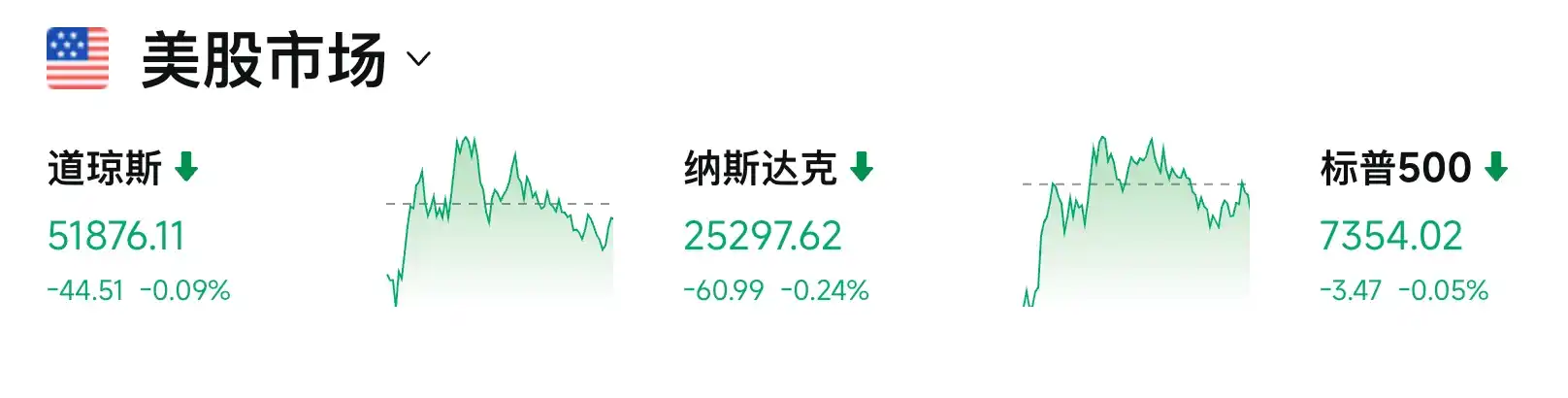
The major US stock indices barely closed flat on Friday. The S&P 500 edged down 0.05%, marking its fifth consecutive decline and the longest losing streak since August last year. The Nasdaq Composite fell 0.24%, also declining for the fifth straight session, its longest losing streak since January this year.

The frenzy over AI premiums is facing unprecedented liquidity unwinding, with hedge funds dumping US tech stocks at the most aggressive pace in a decade. Goldman Sachs PB data shows that as of the week ending June 25, the information technology sector experienced extreme selling at a 4-standard-deviation level, with a sell-to-buy ratio of 1.3 to 1. The semiconductor sector saw net selling for eight consecutive trading days, and the "Magnificent Seven" tech giants suffered continuous reductions for five weeks, with overall holdings nearing a three-year low. EPFR data corroborates this, showing a massive exodus of institutional funds from US tech funds last week following substantial prior inflows.
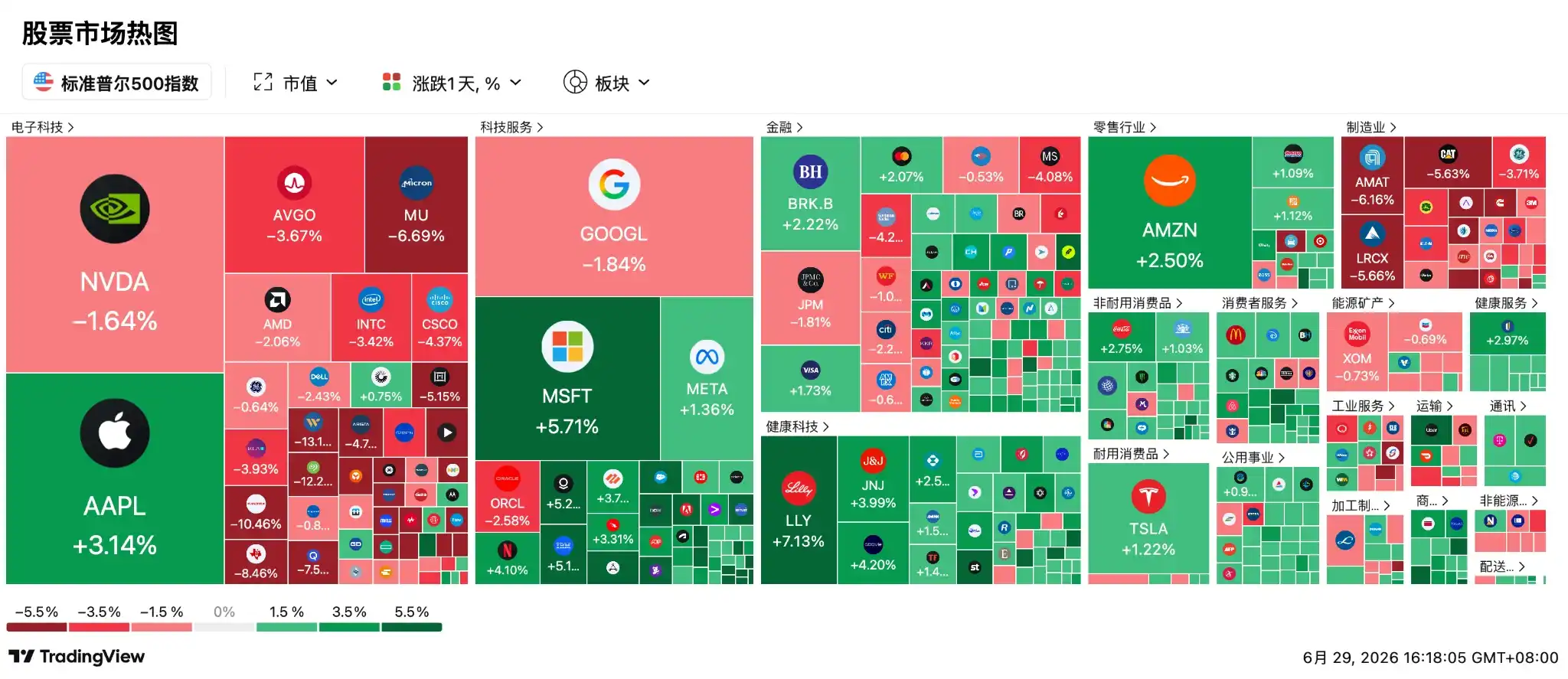
The Philadelphia Semiconductor Index plummeted 5.3% on Friday, with all 30 component stocks falling. Among them, onsemi plunged 23%, and Qualcomm dropped 7.57%. Although Micron Technology rose over 4% for the week, supported by strong earnings, it still succumbed to market pressure and fell 6.7% on Friday. Related memory stocks also declined: SanDisk fell 10.5%, while Western Digital and Seagate Technology dropped 13.17% and 12.24%, respectively. Forex.com analyst Fawad Razaqzada noted that investors have become highly sensitive to stretched AI valuations and high infrastructure costs, suggesting expectations for this sector have far exceeded commercial reality.

Funds are pouring into defensive sectors like healthcare, utilities, and real estate, with the Healthcare ETF and Biotech ETF leading gains. Mark Hackett of Nationwide stated that investor sentiment has turned pessimistic due to sharp rotations, but this looks more like a consolidation phase beneath the surface rather than the beginning of a significant downturn. John Belton, a manager at Gabelli Funds, also believes this is merely a pause, not a sell-off, and the AI platforms built by hyperscale cloud providers will continue to proliferate in the coming years.

SpaceX (SPCX) triggered a Nasdaq rule less than a month after its IPO and will be historically fast-tracked for inclusion in the Nasdaq 100 Index. JPMorgan estimates this will attract approximately $4.3 billion in passive fund inflows within a short period. However, Morningstar strategists indicate the stock is severely overvalued, and S&P Global has explicitly stated it will not follow suit, waiting at least 12 months before considering inclusion. Additionally, expectations for IPOs from OpenAI and Anthropic are heating up, with potential valuations exceeding $1 trillion.

Key upcoming events to watch:

  1. After the close on July 6: $800 billion in passive funds tracking the Nasdaq 100 will begin concentrated allocations to SpaceX stock, which is expected to cause significant supply-demand oscillations in the semiconductor and tech sectors.

  2. Before the market opens on July 7: SpaceX will officially begin trading as a component of the Nasdaq 100.

  3. Throughout July: US stocks are entering the seasonally strongest "July window" of the year. Since 2015, the Nasdaq 100 has averaged a return of 4.4% in July with a historically high win rate, potentially ushering in strong allocation repairs following pension fund rebalancing.

Cryptocurrency
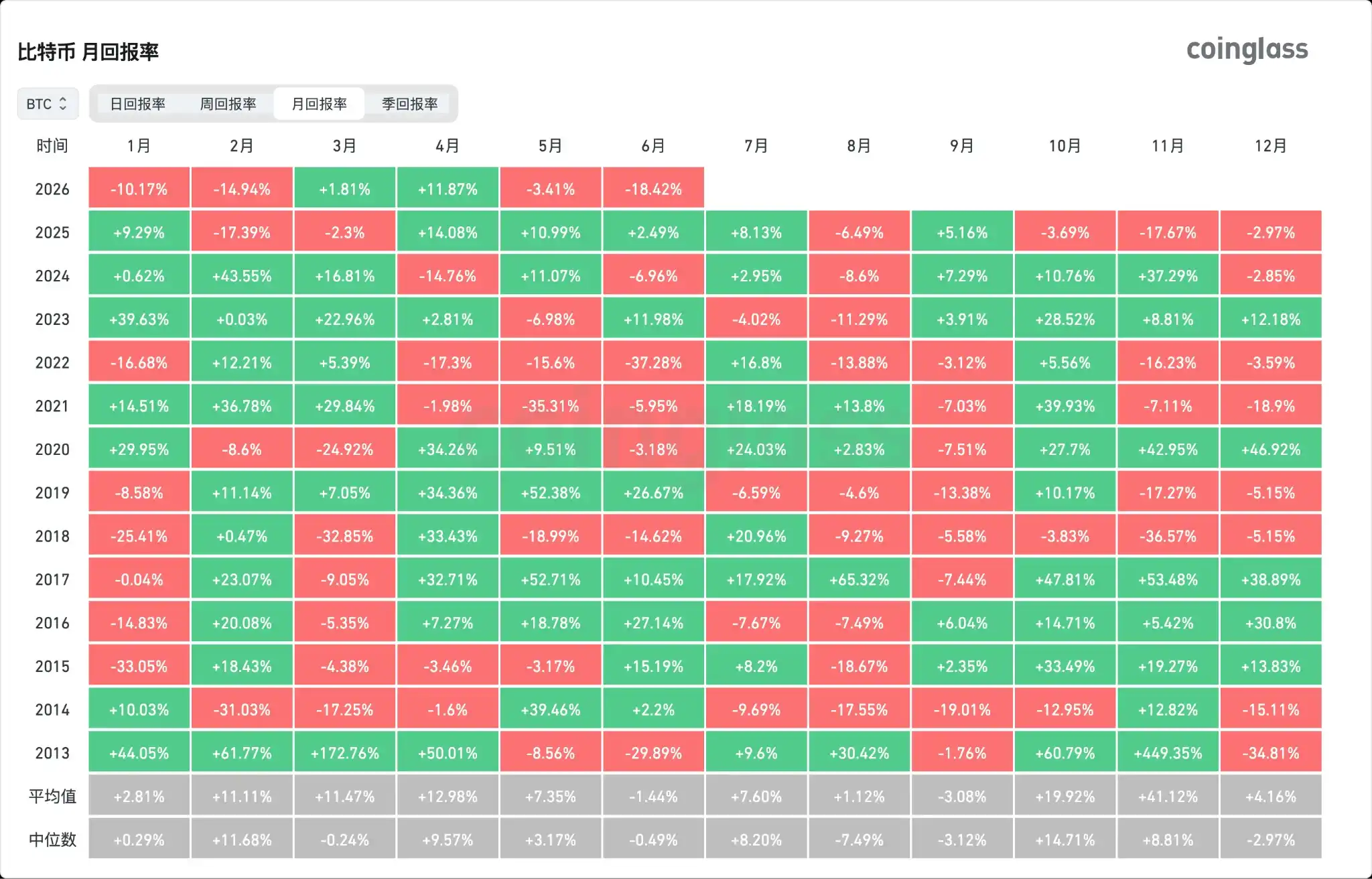
Bitcoin is experiencing its worst monthly performance since 2022. With less than two days left in June, the cumulative decline has reached 18.42%, making it one of the largest monthly drops since the 2022 bear market.

Currently, BTC price is fluctuating around the $60,000 mark, with the market focusing on its rebound potential in July. Since falling from $120,000, BTC has failed to reclaim the 200-week moving average (approx. $62,600) for the first time, turning this key support level into resistance and further increasing the risk of a decline to $55,000.

Historically, July is one of Bitcoin's best-performing months, with an average gain of 7.6% since 2013, and even reaching an average of 10.3% in midterm election years. If historical patterns repeat, BTC's theoretical target lies between $64,500 and $66,100, with an optimistic scenario possibly challenging $75,000.

Li Hua Yi, founder of Liquid Capital, stated this is the last major decline of this cycle, and July to August will present the most perfect buying opportunity for the next three years, with the potential downside limit between $51,000 and $43,000. CrypNuevo pointed out that Monday's market performance is crucial. Stabilizing above $61,000 will confirm a reversal, while falling below $57,000 could lead to a further decline to $52,000. The market is currently in a state of extreme oversold conditions, with a daily RSI divergence forming on the lows. July's performance will be a critical moment to test whether bulls can leverage seasonal effects to reclaim the 200-week SMA (approx. $62,445).

Key points for today:

  • Data: Tokens like SUI, EIGEN, FF are set for significant unlocks, with SUI's unlock valued at approximately $9.4 million.

  • SharpLink to be included in Russell 2000 and 3000 indices, effective June 29.

  • Spain's CNMV issued an urgent warning ahead of the end of the MiCA transition period on June 30.

  • 0xPPL will cease trading functionality starting June 6 and fully shut down on June 30.

  • Base ecosystem project Seamless Protocol announced a gradual shutdown, with the UI interface going offline on June 30.

  • Falcon Finance (FF) will unlock approximately 102 million tokens on June 29, valued at around $6.9 million.

  • Collector Crypt (CARDS) will unlock approximately 28.84 million tokens on June 30, valued at around $6.7 million.

  • Upbit 24-hour trading volume leaders: SLX, BTC, XRP, POWER, HUNT.

  • Bitcoin Spot ETF: Net outflows of $1.79 billion last week, the third-highest weekly net outflow in history.

  • Ethereum Spot ETF: Net outflows of $273 million last week, marking seven consecutive weeks of net outflows.

  • HYPE Spot ETF: Net inflows of $111 million last week.

  • XRP Spot ETF: Net inflows of $22.99 million last week.

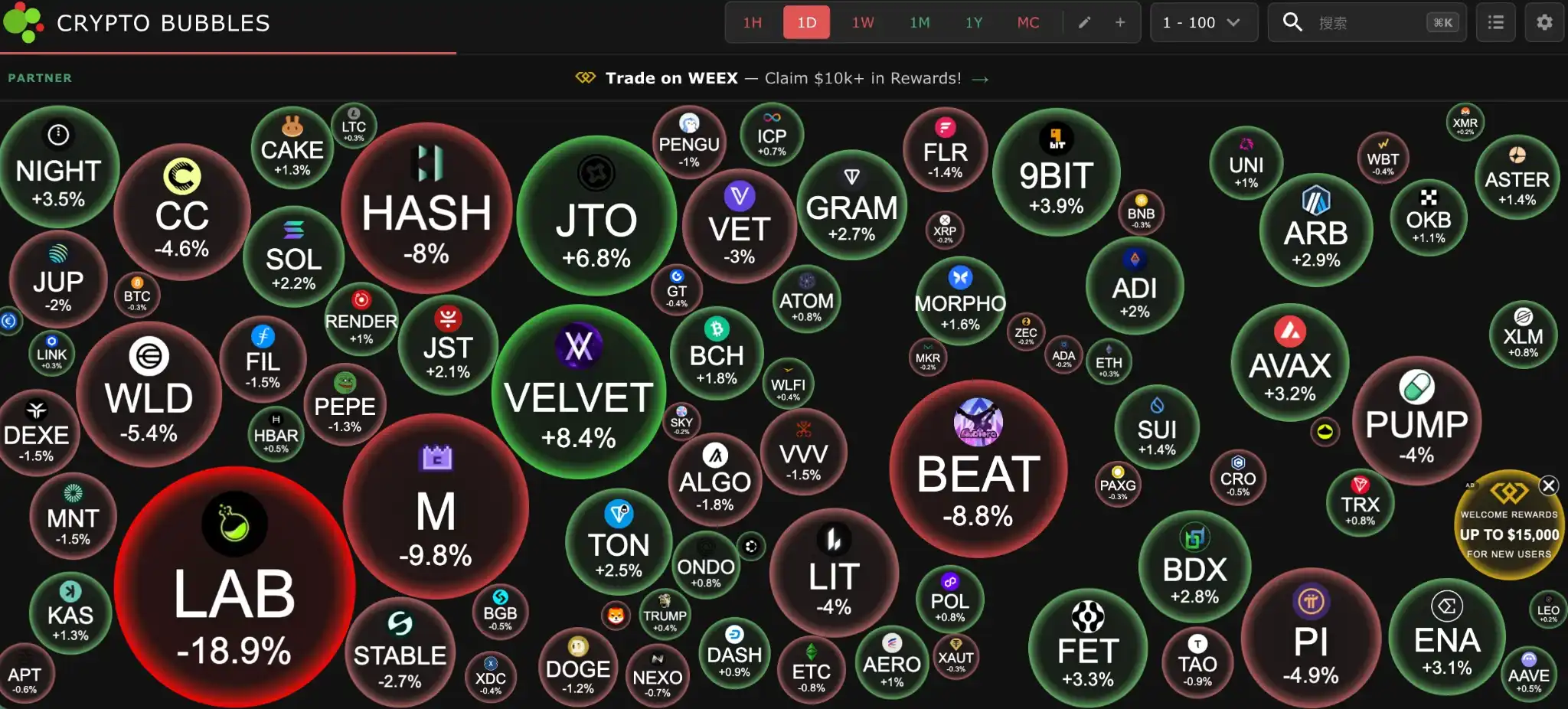
Top gainers among top 100 cryptocurrencies by market cap today: VELVET up 8.4%, JTO up 6.8%, 9BIT up 3.9%, NIGHT up 3.5%, FET up 3.3%.
Asia-Pacific Market

South Korean stocks opened under pressure from memory giants. Despite Aletheia Capital significantly raising DRAM price expectations due to global AI-driven supply shortages, absolute leverage in the market has reached historical highs of 2x-5x. SK Hynix and Samsung Electronics opened nearly 5% lower due to forced liquidation pressure, dragging the KOSPI index down over 3% intraday.

At a critical moment, the South Korean government and President Lee Jae-myung unveiled positive news, announcing the largest industrial investment plan to date, designating semiconductors, physical AI, and AI data centers as the "triangular pillars" of industrial upgrading. President Lee announced an investment of approximately 800 trillion won to build four chip factories in the southwest, with Samsung and SK Hynix each building two, aiming to double DRAM production capacity within five years. Additionally, South Korea plans to invest over 1,000 trillion won in AI data centers by 2035 and spend 81 trillion won to build an advanced packaging cluster in the Chungcheong region.

Buoyed by this news, the KOSPI index, Samsung, and SK Hynix share prices all rebounded.

The Japanese market found support from consumption recovery. May retail sales grew 5.3% year-on-year and 1.9% month-on-month, marking the third consecutive month of growth, with wage increases beginning to outpace inflation. Although the Nikkei 225 index ultimately fell about 0.15%, the consumption recovery narrative remains solid.
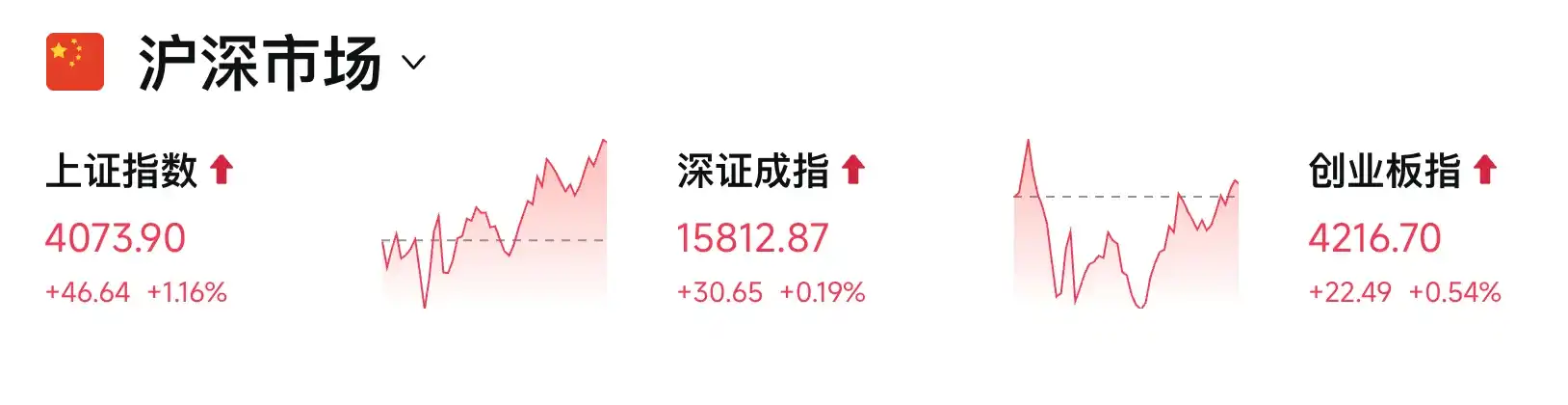
The Chinese market entered a phase of style rebalancing. The Shanghai Composite rose 1.16%, the STAR Composite Index climbed 3.12%, the Shenzhen Component edged up 0.19%, and the ChiNext gained 0.54%.

Innovative drugs were the biggest winners. The CRO sector surged 7%, with over 20 stocks hitting the daily limit-up; BeiGene rose over 10%, Baili Tianheng advanced 12%, WuXi AppTec gained 6%, and Hengrui Pharmaceuticals increased 8%. The catalyst was the National Healthcare Security Administration's announcement of 557 drugs passing the preliminary review for the national reimbursement drug list.

Consumer stocks also recovered. Kweichow Moutai rose over 3%, Dongpeng Beverage climbed 10%, and Bright Dairy & Food hit the daily limit-up. Institutions believe stable wholesale prices for Feitian Moutai indicate channel inventory adjustments are largely complete.

Hong Kong stocks clearly benefited from tech sentiment repair. The Hang Seng Index rose nearly 2%, the Hang Seng Tech Index jumped 3.23%, and the Hang Seng Biotech Index soared 7%. Alibaba surged nearly 6%, Meituan and Baidu gained over 7%, while Lenovo Group bucked the trend, falling over 10%.

Key upcoming events to watch:

  1. June 30, 09:30: NetEase will officially transition to a dual primary listing on the Hong Kong Exchange, which will profoundly impact the capital structure and valuation system of the Hong Kong tech sector.

  2. June 30: The 2026 China Intelligent Computing Industry Ecology Development Annual Conference officially opens, focusing on GW-level Token factory construction. Guidance on the second half of the AI hardware hype, including glass substrates and CPO, will be finalized at the conference.


Трендові криптовалюти

Пов'язані питання

QWhat key technical indicator for Bitcoin has turned into a resistance level, and what historical pattern suggests a potential July rebound?

ABitcoin's 200-week moving average (approximately $62,600) has turned from a key support level into a resistance level. Historically, July is one of Bitcoin's best-performing months, with an average gain of 7.6% since 2013. In midterm election years, the average July gain is even higher at 10.3%.

QAccording to the article, what significant change is the U.S. Bureau of Economic Analysis (BEA) planning for September, and what is a major criticism of this change?

AThe U.S. BEA plans to revise the methodology for three components of the PCE price index—computer software, portfolio management, and legal services—in September, which is expected to systematically lower the core inflation reading. A major criticism, voiced by UBS economist Alan Detmeister, is that the change lacks transparency and carries a risk of political manipulation, appearing designed to artificially reduce inflation figures.

QWhat is happening with investor positioning in U.S. tech stocks, particularly the 'Magnificent Seven', and what sector is seeing a significant inflow of funds instead?

AHedge funds are aggressively selling U.S. tech stocks at the most intense pace in a decade. The 'Magnificent Seven' tech giants have seen five consecutive weeks of减持 (reduction in holdings), with overall positioning nearing a three-year low. Instead, funds are flooding into defensive sectors like healthcare, utilities, and real estate, with healthcare and biotech ETFs leading the gains.

QWhat major semiconductor-related investment plan did South Korean President Yoon Suk Yeol announce, and what was its immediate market impact?

ASouth Korean President Yoon Suk Yeol announced a plan to invest approximately 800 trillion won to build four chip factories in the southwestern region, with Samsung and SK Hynix each building two. The goal is to double DRAM production capacity within five years. This announcement helped lift the KOSPI index and the share prices of Samsung and SK Hynix, which had initially fallen sharply.

QWhat is the significance of Monday's (July 1st) market action for Bitcoin's short-term trend, according to analyst CrypNuevo?

AAccording to CrypNuevo, Monday's (July 1st) market action is crucial for determining Bitcoin's short-term trend. Stabilizing above $61,000 would confirm a reversal, while a break below $57,000 would lead to a continued decline towards $52,000.

Пов'язані матеріали

AI Billing Black Box Exposed: 1.7 Million Overcharged, Anthropic Refunds But Doesn’t Admit Fault

A startup named Vaudit, founded by former Oracle director Michael Hahn, audits AI bills for companies and claims to have identified approximately $1.7 million in overcharges across 60 businesses, totaling $34 million in reviewed bills. The alleged discrepancies primarily involve charges for Anthropic's Claude Code. Common issues cited include billing for newer, more expensive models when older, cheaper ones were used; charging for failed or errored requests; and "retry storms" where AI agents silently retry failed tasks, accumulating costs unnoticed. Major clients like Panasonic, HP, and Honda were among those audited. While Vaudit reports that around 80% of the disputed charges were refunded by providers like Amazon, Google, Microsoft, Anthropic, and OpenAI after申诉, the AI companies largely deny systemic problems. Anthropic stated overcharges do not appear widespread and it does not bill for uncompleted requests or errors, while OpenAI said it found no evidence of such issues affecting its customers. The situation highlights the inherent opacity and complexity of AI billing, which is based on token usage that is difficult to track and predict, especially with multi-agent, multi-model workflows. This complexity is creating a new market for third-party AI bill auditing services like Vaudit, which charges fees based on recovered amounts. Separately, Anthropic faces a proposed class-action lawsuit alleging its high-tier subscription plans deliver far less usage than advertised. The case underscores growing scrutiny over AI service pricing and transparency as major providers prepare for IPOs.

marsbit20 хв тому

AI Billing Black Box Exposed: 1.7 Million Overcharged, Anthropic Refunds But Doesn’t Admit Fault

marsbit20 хв тому

Tencent Buys Baidu Chips

China's internet giants, once defined by building closed, self-sufficient empires, are undergoing a fundamental shift. A key signal is Baidu's plan to spin off its AI chip unit, Kunlun Xin, for a Hong Kong IPO targeting a $50 billion valuation, potentially exceeding its parent company's worth. Concurrently, Alibaba's T-Head is also pursuing independence. Most significantly, reports indicate that rival Tencent has become a major customer for Kunlun Xin's chips. This move, where competitors begin procuring each other's core technologies, marks a decisive break from the past era of internal duplication and isolation. It signals the maturation of China's AI industry into a more open, specialized ecosystem. The underlying driver is the immense and clear cost of AI infrastructure, particularly the exploding demand for inference compute driven by AI agents and applications. Hardware is no longer just an internal cost center but a profitable, strategic business in itself. Globally, a parallel trend is evident as OpenAI, Google, Amazon, and others develop their own AI chips to control costs and optimize performance. The competition has moved beyond model benchmarks to a deeper, foundational war over token cost efficiency, inference cluster performance, and secure, scalable computing power. Baidu and Alibaba aren't dismantling their empires but are instead decoupling non-core, capital-intensive infrastructure to participate in and shape a larger, collaborative industrial base. The era of the all-encompassing super-app is giving way to an age of strategic specialization and open ecosystem building in the AI race.

marsbit35 хв тому

Tencent Buys Baidu Chips

marsbit35 хв тому

The Token Itself Is an Asset: Three Types of Tokenized Stocks, Which One Suits You?

"Tokenized Stocks: Three Types, Which One Fits You? For investors outside the US, buying stocks like SpaceX or Nvidia is difficult, requiring brokers, cross-border transfers, and often accredited investor status. Blockchain offers an alternative through tokenized stocks, a term encompassing three distinct products with vastly different ownership, voting, and profit rights. 1. **Full Real Ownership**: Companies like Superstate register native equity directly on-chain (e.g., Solana). Holders are on the official shareholder registry, with full voting rights, dividends, and legal ownership. This offers maximum rights but potentially less DeFi flexibility. 2. **SPV-Backed Tokens (Surrendered Ownership for DeFi Composability)**: Issuers like Backed (xStocks) and Ondo use offshore Special Purpose Vehicles (SPVs) to hold underlying shares 1:1 and issue tracking tokens. Investors get price exposure and dividends (reinvested as more tokens) but hold a claim on the SPV, not direct stock ownership. This enables use as collateral in DeFi protocols (Kamino, Morpho) and 24/7 minting/redemption, but carries SPV counterparty risk (highlighted by the PreStocks collapse). 3. **Perpetual Futures (Pure Price Speculation)**: Platforms like TradeXYZ (on Hyperliquid) and Ostium offer perpetual contracts. These are synthetic derivatives with no underlying stock ownership, using funding rates to track spot prices. They require only a price oracle, allowing extremely fast listing (e.g., SpaceX pre-IPO) and high leverage, attracting speculators. Their trading volume far exceeds tokenized spot products. The core value of tokens is that they don't need to replicate full stock ownership. Most retail investors never vote. Tokenization creates layered financial tools: full equity for institutions, composable tokens for DeFi users, and perpetuals for leveraged traders."

marsbit35 хв тому

The Token Itself Is an Asset: Three Types of Tokenized Stocks, Which One Suits You?

marsbit35 хв тому

AI as the Boss: Nearly Bankrupts 10 Companies...

A recent study from Princeton University tested 14 AI models, including large language models (LLMs) and a rule-based algorithm, in a simulation where they acted as CEOs of a virtual SaaS startup over 500 days. The goal was to grow an initial $1 million capital. The results were stark: only four "CEOs" ended with a profit. The top performer was Claude Fable 5, multiplying the capital 47-fold to $47.15 million. Claude Opus 4.8 and GPT-5.5 followed. Notably, the fourth profitable entity was a simple, pre-programmed rule-based algorithm, which outperformed many advanced LLMs with $15.76 million in profit. Five other models, including several major LLMs, went bankrupt before the simulation ended. Key takeaways from the research highlight that successful AI CEOs demonstrated a tendency for exploration and adaptation over caution. They excelled in discovering hidden information, predicting future cash flow, adapting quickly to changes (like competitor moves), and engaging in strategic "if-then" planning. The study also found that equipping LLMs with programming-agent frameworks, optimized for coding tasks, actually harmed their performance in this CEO role, suggesting a need for domain-specific adaptations. The article concludes by contrasting AI's current operational proficiency within defined frameworks with the type of visionary, intuitive decision-making—exemplified by figures like Steve Jobs—that truly drives transformative business strategy. This critical "matrix-drawing" capability, it argues, remains uniquely human.

marsbit46 хв тому

AI as the Boss: Nearly Bankrupts 10 Companies...

marsbit46 хв тому

Торгівля

Спот

Популярні статті

Що таке BITCOIN

Розуміння HarryPotterObamaSonic10Inu (ERC-20) та його позиції у крипто-просторі Останніми роками ринок криптовалют спостерігав за зростанням популярності мем-коінів, які привертають інтерес не тільки трейдерів, але й тих, хто шукає спілкування та розважальну цінність. Серед цих унікальних токенів є HarryPotterObamaSonic10Inu (ERC-20), інтригуючий проект, що поєднує культурні посилання з тканинами криптовалюти. Ця стаття досліджує ключові аспекти HarryPotterObamaSonic10Inu, вивчаючи його механізми, спільноту та його взаємодію з ширшим крипто-ландшафтом. Що таке HarryPotterObamaSonic10Inu (ERC-20)? Як випливає з його назви, HarryPotterObamaSonic10Inu є мем-коіном, побудованим на блокчейні Ethereum, класифікованим за стандартом ERC-20. На відміну від традиційних криптовалют, які можуть підкреслювати практичну корисність або інвестиційний потенціал, цей токен процвітає завдяки розважальній цінності та силі своєї спільноти. Проект спрямований на створення середовища, де зацікавлені користувачі можуть об'єднуватися, ділитися ідеями та брати участь у заходах, натхненних різноманітними культурними явищами. Однією з примітних особливостей HarryPotterObamaSonic10Inu є нульовий податок на транзакції. Цей привабливий елемент має на меті заохочувати торгівлю та участь у спільноті, позбавлену додаткових витрат, які можуть відлякувати дрібних трейдерів. Загальна пропозиція монет становить один мільярд токенів, що позначає намір підтримувати суттєву циркуляцію в межах спільноти. Творець HarryPotterObamaSonic10Inu (ERC-20) Походження HarryPotterObamaSonic10Inu дещо окутане таємницею; деталі про творця залишаються невідомими. Розвиток цього токена позбавлений впізнаваної команди або чіткої стратегії, що не є рідкістю в секторі мем-коінів. Натомість проект виник органічно, а його розвиток значною мірою залежить від ентузіазму та участі його спільноти. Інвестори HarryPotterObamaSonic10Inu (ERC-20) Щодо зовнішніх інвестицій та підтримки, HarryPotterObamaSonic10Inu також залишається невизначеним. Токен не зазначає жодних відомих інвестиційних фондів або значної організаційної підтримки. Натомість життєва сила проекту полягає в його базовій спільноті, яка інформує про його зростання та стійкість через колективні дії та залученість у крипто-просторі. Як працює HarryPotterObamaSonic10Inu (ERC-20)? Як мем-коін, HarryPotterObamaSonic10Inu функціонує передусім поза традиційними рамками, що часто регулюють вартість активів. Є кілька відмінних аспектів, що визначають, як працює проект: Транзакції без податку: Завдяки відсутності податкових зборів на транзакції, користувачі можуть вільно купувати та продавати токен, не турбуючись про приховані витрати. Залучення спільноти: Проект процвітає завдяки взаємодії спільноти, використовуючи соціальні медіа для створення шуму та сприяння залученню. Обговорення, обмін контентом та залученість є ключовими елементами, що допомагають розширити його охоплення та зміцнити лояльність серед прихильників. Відсутність практичної корисності: Слід зазначити, що HarryPotterObamaSonic10Inu не пропонує конкретної корисності в рамках фінансової екосистеми. Натомість він класифікується як токен, що призначений в основному для розваги та спільнотних активностей. Культурне посилання: Токен кмітливо вплітає елементи популярної культури, щоб привернути інтерес, зв'язуючи з ентузіастами мемів та крипто-стежками. HarryPotterObamaSonic10Inu ілюструє, як мем-коіни функціонують інакше, ніж традиційні криптовалютні проекти, увійшовши на ринок як інноваційні соціальні конструкти, а не утилітарні активи. Хронологія HarryPotterObamaSonic10Inu (ERC-20) Історія HarryPotterObamaSonic10Inu відзначена кількома значними етапами: Створення: Токен виник з вірусного мему, захопивши уяву багатьох крипто-ентузіастів. Конкретні дати створення недоступні, що підкреслює його органічний розвиток. Лістинг на біржах: HarryPotterObamaSonic10Inu з'явився на різних біржах, дозволяючи зручніший доступ і торгівлю спільноти. Ініціативи залучення спільноти: Ведення діяльності, спрямованої на покращення взаємодії спільноти, включаючи конкурси, кампанії в соціальних мережах та створення контенту від фанатів та прихильників. Плани на майбутнє: Дорожня карта проекту включає запуск колекції NFT, мерчандайзинг та електронну комерцію, пов'язану з його культурними темами, що далі залучає спільноту та намагається додати більше вимірів до його екосистеми. Ключові моменти про HarryPotterObamaSonic10Inu (ERC-20) Спільнотний підхід: Проект надає пріоритет колективному внеску та креативності, забезпечуючи, щоб участь користувачів була в центрі його розвитку. Класифікація як мем-коін: Це є його епігенез розважальної криптовалюти, що відрізняється від традиційних інвестиційних інструментів. Жодного прямого відношення до Bitcoin: Незважаючи на схожість у назві, HarryPotterObamaSonic10Inu є відмінним і не має жодного зв’язку з Bitcoin або іншими усталеними криптовалютами. Зосередженість на співпраці: HarryPotterObamaSonic10Inu створено для того, щоб надати простір для співпраці та обміну історіями серед його власників, забезпечуючи шлях для творчості та спільного зв'язку. Перспективи на майбутнє: Амбіція розширитися за межі початкової концепції в NFT та мерчандайз відкриває шлях для проекту потенційно потрапити в більш мейнстрімні сфери цифрової культури. Оскільки мем-коіни продовжують захоплювати уяву спільноти криптовалют, HarryPotterObamaSonic10Inu (ERC-20) вирізняється своїми культурними зв'язками та орієнтованим на спільноту підходом. Хоча він може не відповідати типовій моделі утилітарного токена, його суть полягає в радощах і товариськості, що підтримуються серед його прихильників, підкреслюючи еволюційну природу криптовалют в усе більш цифрову епоху. Оскільки проект продовжує розвиватися, важливо спостерігати за тим, як динаміка спільноти вплине на його траєкторію в постійно змінюваному ландшафті технології блокчейн.

2.1k переглядів усьогоОпубліковано 2024.04.01Оновлено 2024.12.03

Що таке BITCOIN

Як купити BTC

Ласкаво просимо до HTX.com! Ми зробили покупку Bitcoin (BTC) простою та зручною. Дотримуйтесь нашої покрокової інструкції, щоб розпочати свою криптовалютну подорож.Крок 1: Створіть обліковий запис на HTXВикористовуйте свою електронну пошту або номер телефону, щоб зареєструвати обліковий запис на HTX безплатно. Пройдіть безпроблемну реєстрацію й отримайте доступ до всіх функцій.ЗареєструватисьКрок 2: Перейдіть до розділу Купити крипту і виберіть спосіб оплатиКредитна/дебетова картка: використовуйте вашу картку Visa або Mastercard, щоб миттєво купити Bitcoin (BTC).Баланс: використовуйте кошти з балансу вашого рахунку HTX для безперешкодної торгівлі.Треті особи: ми додали популярні способи оплати, такі як Google Pay та Apple Pay, щоб підвищити зручність.P2P: Торгуйте безпосередньо з іншими користувачами на HTX.Позабіржова торгівля (OTC): ми пропонуємо індивідуальні послуги та конкурентні обмінні курси для трейдерів.Крок 3: Зберігайте свої Bitcoin (BTC)Після придбання Bitcoin (BTC) збережіть його у своєму обліковому записі на HTX. Крім того, ви можете відправити його в інше місце за допомогою блокчейн-переказу або використовувати його для торгівлі іншими криптовалютами.Крок 4: Торгівля Bitcoin (BTC)Легко торгуйте Bitcoin (BTC) на спотовому ринку HTX. Просто увійдіть до свого облікового запису, виберіть торгову пару, укладайте угоди та спостерігайте за ними в режимі реального часу. Ми пропонуємо зручний досвід як для початківців, так і для досвідчених трейдерів.

4.9k переглядів усьогоОпубліковано 2024.12.12Оновлено 2026.06.02

Як купити BTC

Що таке $BITCOIN

ЦИФРОВЕ ЗОЛОТО ($BITCOIN): Комплексний аналіз Вступ до ЦИФРОВОГО ЗОЛОТА ($BITCOIN) ЦИФРОВЕ ЗОЛОТО ($BITCOIN) — це проект на основі блокчейну, що працює в мережі Solana, який має на меті поєднати характеристики традиційних дорогоцінних металів з інноваціями децентралізованих технологій. Хоча він має таку ж назву, як і Bitcoin, який часто називають “цифровим золотом” через його сприйняття як засобу збереження вартості, ЦИФРОВЕ ЗОЛОТО є окремим токеном, розробленим для створення унікальної екосистеми в ландшафті Web3. Його мета — позиціонувати себе як життєздатний альтернативний цифровий актив, хоча деталі щодо його застосувань і функціональностей все ще розробляються. Що таке ЦИФРОВЕ ЗОЛОТО ($BITCOIN)? ЦИФРОВЕ ЗОЛОТО ($BITCOIN) — це токен криптовалюти, спеціально розроблений для використання в блокчейні Solana. На відміну від Bitcoin, який виконує широко визнану роль зберігання вартості, цей токен, здається, зосереджується на більш широких застосуваннях і характеристиках. Помітні аспекти включають: Інфраструктура блокчейну: Токен побудований на блокчейні Solana, відомому своєю здатністю обробляти швидкі та низьковартісні транзакції. Динаміка постачання: ЦИФРОВЕ ЗОЛОТО має максимальне постачання, обмежене 100 квадрильйонами токенів (100P $BITCOIN), хоча деталі щодо його обігового постачання наразі не розголошуються. Утиліта: Хоча точні функціональності не викладені, є вказівки на те, що токен може бути використаний для різних застосувань, потенційно пов'язаних з децентралізованими додатками (dApps) або стратегіями токенізації активів. Хто є творцем ЦИФРОВОГО ЗОЛОТА ($BITCOIN)? На даний момент особа творців і команди розробників, що стоять за ЦИФРОВИМ ЗОЛОТОМ ($BITCOIN), залишається невідомою. Ця ситуація є типовою для багатьох інноваційних проектів у сфері блокчейну, особливо тих, що пов'язані з децентралізованими фінансами та феноменом мем-коінів. Хоча така анонімність може сприяти культурі, орієнтованій на спільноту, вона посилює занепокоєння щодо управління та підзвітності. Хто є інвесторами ЦИФРОВОГО ЗОЛОТА ($BITCOIN)? Доступна інформація вказує на те, що ЦИФРОВЕ ЗОЛОТО ($BITCOIN) не має жодних відомих інституційних спонсорів або помітних венчурних капіталовкладень. Проект, здається, працює за моделлю “рівний до рівного”, зосереджуючись на підтримці та прийнятті спільноти, а не на традиційних шляхах фінансування. Його активність і ліквідність переважно розташовані на децентралізованих біржах (DEX), таких як PumpSwap, а не на встановлених централізованих торгових платформах, що ще більше підкреслює його підхід знизу вгору. Як працює ЦИФРОВЕ ЗОЛОТО ($BITCOIN) Операційні механізми ЦИФРОВОГО ЗОЛОТА ($BITCOIN) можна детальніше розглянути на основі його дизайну блокчейну та характеристик мережі: Механізм консенсусу: Використовуючи унікальний proof-of-history (PoH) Solana в поєднанні з моделлю proof-of-stake (PoS), проект забезпечує ефективну валідацію транзакцій, що сприяє високій продуктивності мережі. Токеноміка: Хоча конкретні дефляційні механізми не були детально описані, велике максимальне постачання токенів вказує на те, що воно може задовольняти мікротранзакції або нішеві випадки використання, які ще потрібно визначити. Інтероперабельність: Існує потенціал для інтеграції з більш широкою екосистемою Solana, включаючи різні платформи децентралізованих фінансів (DeFi). Однак деталі щодо конкретних інтеграцій залишаються невизначеними. Хронологія ключових подій Ось хронологія, яка підкреслює значні віхи, пов'язані з ЦИФРОВИМ ЗОЛОТОМ ($BITCOIN): 2023: Початкове розгортання токена відбувається на блокчейні Solana, позначене його адресою контракту. 2024: ЦИФРОВЕ ЗОЛОТО набуває видимості, оскільки стає доступним для торгівлі на децентралізованих біржах, таких як PumpSwap, що дозволяє користувачам торгувати ним проти SOL. 2025: Проект спостерігає спорадичну торгову активність і потенційний інтерес до ініціатив, очолюваних спільнотою, хоча на даний момент не зафіксовано жодних значних партнерств або технічних досягнень. Критичний аналіз Сильні сторони Масштабованість: Основна інфраструктура Solana підтримує високі обсяги транзакцій, що може підвищити утиліту $BITCOIN у різних сценаріях транзакцій. Доступність: Потенційно низька торгова ціна за токен може привабити роздрібних інвесторів, сприяючи більш широкій участі завдяки можливостям дробового володіння. Ризики Відсутність прозорості: Відсутність публічно відомих спонсорів, розробників або процесу аудиту може викликати скептицизм щодо стійкості та надійності проекту. Волатильність ринку: Торгова активність сильно залежить від спекулятивної поведінки, що може призвести до значної волатильності цін і невизначеності для інвесторів. Висновок ЦИФРОВЕ ЗОЛОТО ($BITCOIN) постає як цікавій, але неоднозначний проект у швидко розвиваючійся екосистемі Solana. Хоча він намагається використати наратив “цифрового золота”, його відхід від встановленої ролі Bitcoin як засобу збереження вартості підкреслює необхідність чіткішого розмежування його передбачуваної утиліти та структури управління. Майбутнє прийняття та адаптація, ймовірно, залежатиме від вирішення поточної непрозорості та більш чіткого визначення його операційних та економічних стратегій. Примітка: Цей звіт охоплює синтезовану інформацію, доступну станом на жовтень 2023 року, і можуть відбутися події, що виходять за межі дослідницького періоду.

126 переглядів усьогоОпубліковано 2025.05.13Оновлено 2025.05.13

Що таке $BITCOIN

Обговорення

Ласкаво просимо до спільноти HTX. Тут ви можете бути в курсі останніх подій розвитку платформи та отримати доступ до професійної ринкової інформації. Нижче представлені думки користувачів щодо ціни BTC (BTC).

活动图片