A Young Man Born in 1995 from Hangzhou Buys a Silicon Valley Castle for 500 Million

marsbitОпубліковано о 2026-08-16Востаннє оновлено о 2026-08-16

Анотація

Hangzhou-born 95s AI researcher Tony Wu, a former co-founder of Elon Musk's xAI, has reportedly purchased a $70 million Hillsborough, California estate, making it the highest-priced residential deal in Northern California so far this year. The property, acquired through a limited liability company, spans 12 acres and features amenities like a golf course and an outdoor theater. Wu, 31, previously bought a $12 million home last year. He specialized in AI reasoning at xAI, contributing to projects like Grok 3 before departing after the company's merger with SpaceX. The historic IPO of the combined entity has created significant wealth for early employees. Wu's latest acquisition highlights the rapid wealth generation for top AI talent through major tech IPOs, a trend also reflected in the Bay Area's surging real estate prices.

After the xAI co-founders all left Musk, where did they go?

Some started their own ventures, others switched jobs.

In contrast, Tony Wu (Yuhuai Wu) has been quite pragmatic and very Chinese:

Buying a house in Silicon Valley.

Yes, you read that correctly. It's that Hangzhou-born 1995 guy who appeared on stage with his arm around Musk during the Grok 3 launch last year.

At 31 years old, he just splashed 500 million on a large house in the Bay Area... A life like that of a protagonist in a wish-fulfillment novel, effortlessly achieved!
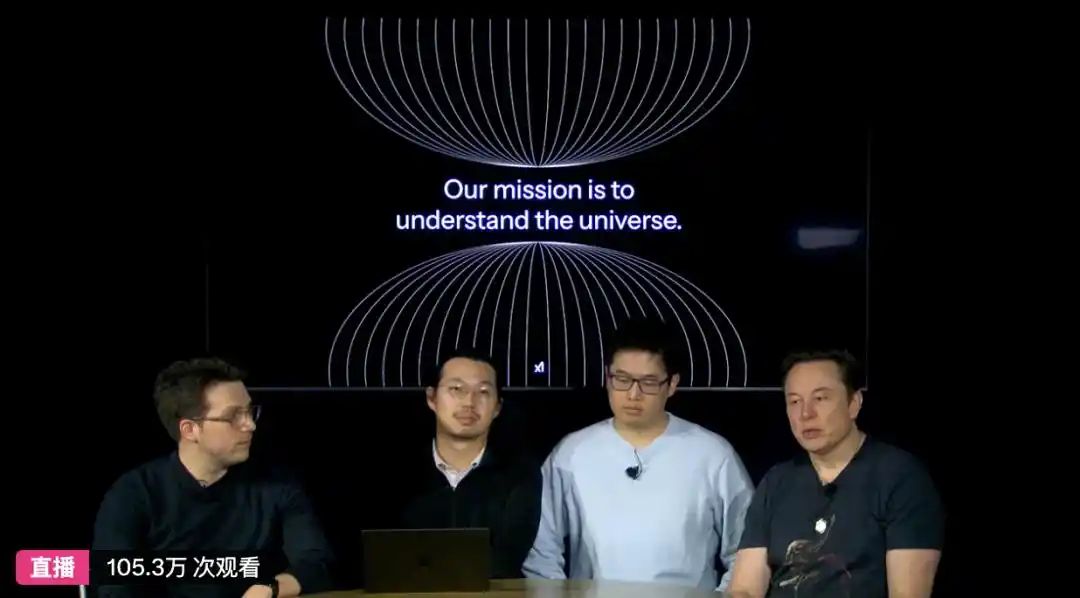
So, what exactly happened?

Recently, the San Francisco Bay Area saw the highest-value residential transaction so far this year. Media traced the clues and found that the buyer pointed to xAI co-founder, Yuhuai Wu, "a young man working in AI."

Just last year, he purchased a top-tier residence for $12 million (approximately 80 million RMB).
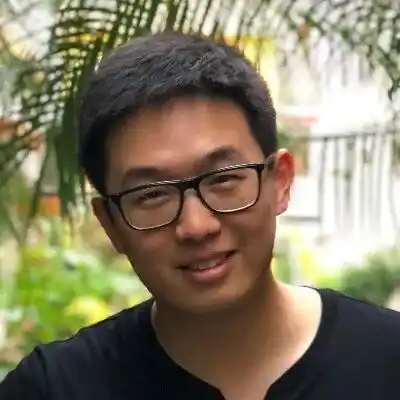
Wow, he's really playing the real-life "Monopoly" · Tech Edition.

The transaction price is soaring like a SpaceX rocket. This wave, cashing out through xAI's historic IPO, is a huge win!

Bay Area's Most Expensive Mansion This Year: Goes to xAI's Chinese Co-founder

The newly purchased estate is located in Hillsborough, a traditional Silicon Valley affluent area. The property spans about 12 acres, with the main house covering approximately 12,000 square feet, plus a 4,600-square-foot guest house.

A tennis court, a nine-hole golf course, an eighteen-hole putting green, and a koi pond are just standard features. The estate also includes a 150-seat outdoor amphitheater, a 2,100-gallon aquarium, and a set of outdoor fountains modeled after the Bellagio in Las Vegas.
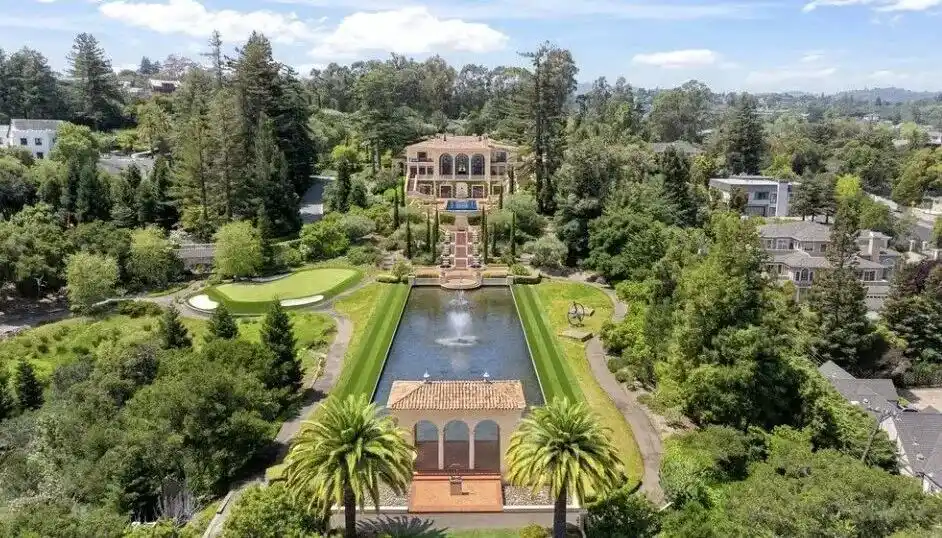
The property was initially listed for $88 million, reduced by $10 million, and finally sold on August 6th for $70 million (approximately 500 million RMB), becoming the largest residential transaction in Northern California so far this year.

In stark contrast to its jaw-dropping luxury, the buyer's identity was tightly concealed.

Public records show the property was purchased by a company named Daikon no Hana Capital. Registered just on July 9th, its manager is a lawyer specializing in estate planning.

And he "coincidentally" transferred Wu's previous $12 million home into a family trust just one week before the new estate deal closed.

Even more coincidentally, the buyer's agent had only handled one other major residential transaction in the past five years, which was precisely the house Wu bought in 2025.

With several clues pointing to him, the identity of the real buyer is almost undeniable.

But even before his real estate investments, Yuhuai Wu was earlier recognized in the AI circle for his work on reasoning models.
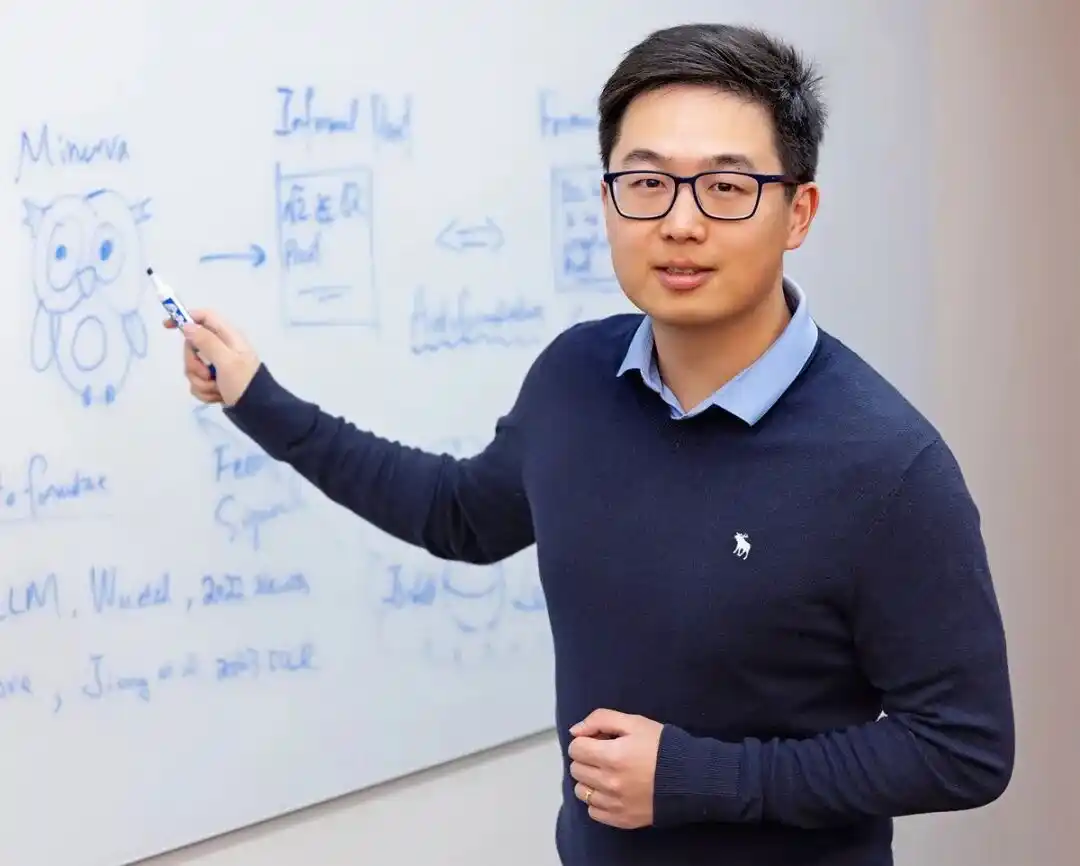
Yuhuai Wu was born in 1995 in Jiande, Hangzhou. He later went to the University of Toronto to pursue a Ph.D. in machine learning, studying under Roger Grosse and Jimmy Ba.

After his Ph.D., he conducted postdoctoral research at Stanford. His personal homepage states his research direction as "building machines that can reason."

Following this path, he participated in projects like the StarCraft AI AlphaStar, the self-taught reasoner STaR, the mathematical model Minerva, the geometry reasoning system AlphaGeometry, and worked or interned at OpenAI and Google.
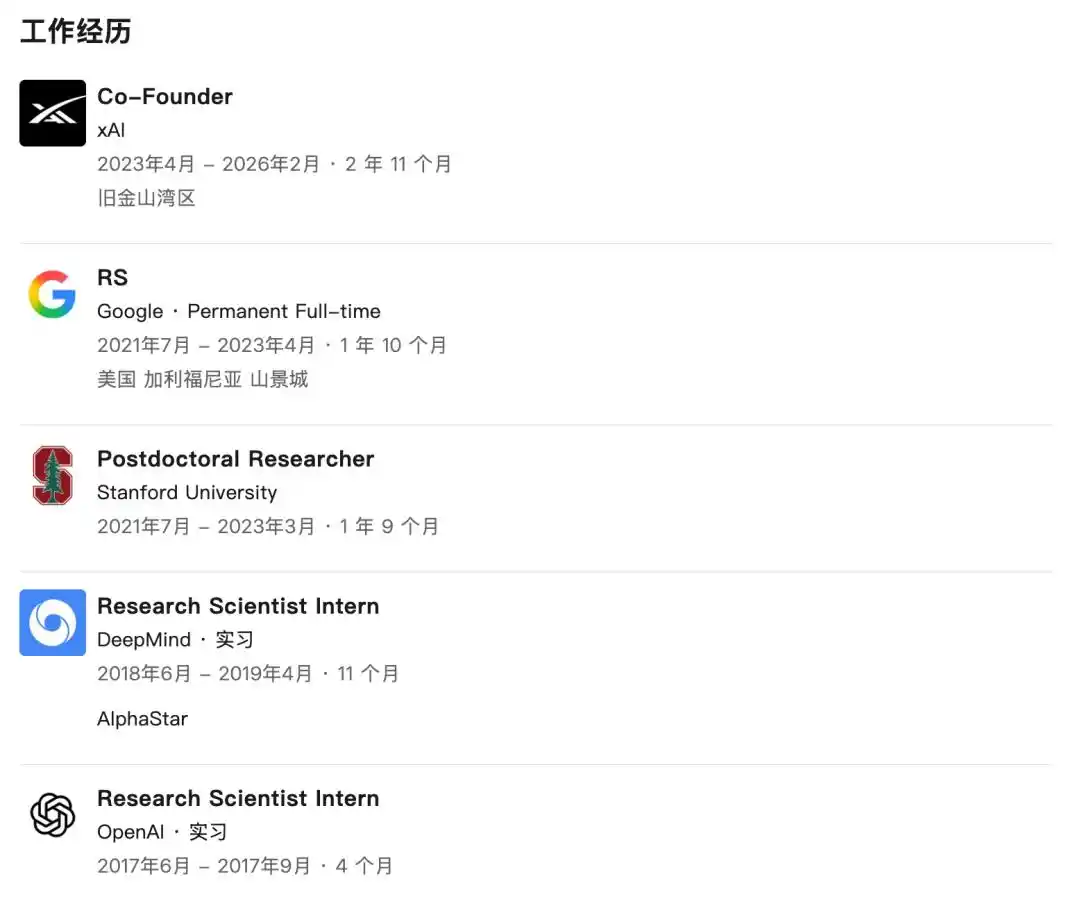
Simply put, his focus is on making models generate reasoning steps, check the process, and continue learning from their own reasoning results.

And this research direction is precisely the current competitive frontier in large language models.

In 2023, Musk formed xAI, and Yuhuai Wu, along with his advisor Jimmy Ba, joined as one of the 12 co-founders. By the time Grok 3 was launched, he was already a core figure in the reasoning team.

Grok 3's key feature of "Think, then answer," and its methods for backtracking, verification, and long-chain reasoning, are all productized implementations of his years of research.

Until this past February, after xAI was merged into SpaceX, Wu announced his departure. A day later, his advisor Jimmy Ba also announced his exit.

At that time, Wu stated his reason:

Next, I will explore a new chapter in life, and I believe a small team armed with AI can move mountains.
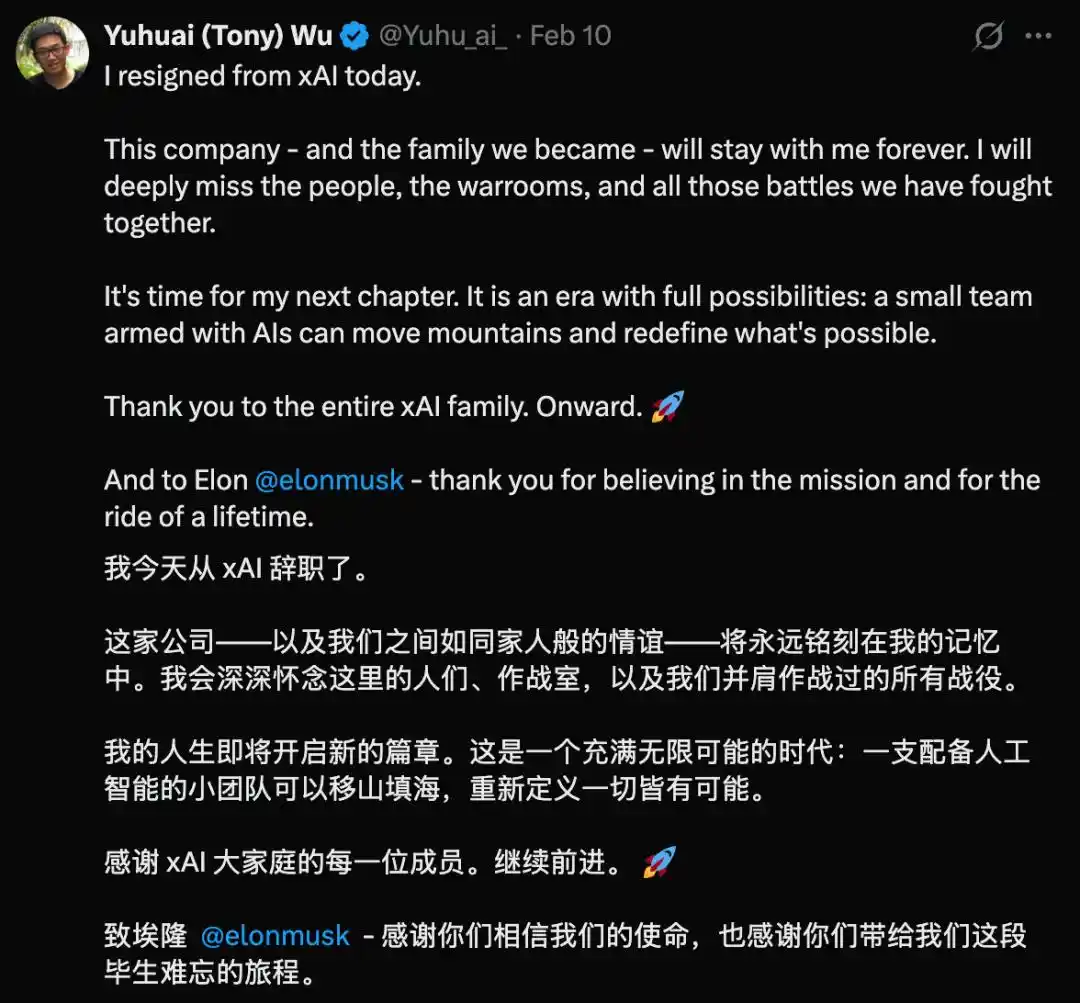
Half a year later, there's still no news about a new company, but the equity accumulated at xAI has once again sparked heated discussion, this time in the form of a mansion.

xAI's Wealth Creation

The merger of SpaceX and xAI earlier this year, in hindsight, indeed achieved a 1+1>2 effect.

The bundled IPO set a new historical record, and the equity stakes of the original co-founders multiplied several times over.

U.S. securities filings disclosed that through conversion, each xAI share corresponds to 0.7165 shares of SpaceX. Based on the closing price on the first day of trading, its value was approximately $115.32.

This is about 53% higher than the $75.46 per share cash option SpaceX offered to some eligible individuals at the time of the merger.

However, Wu's specific shareholding quantity has not been made public. How much he cashed out remains unknown.

But judging by his current extravagant spending, it's clearly substantial, especially considering the immense wealth creation scale of SpaceX itself.
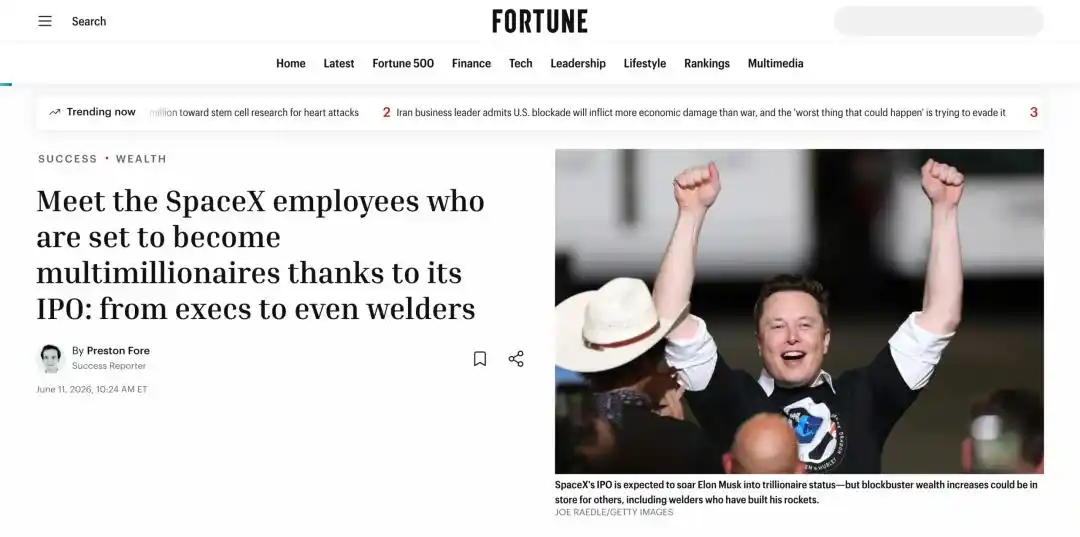
According to media calculations, more than 4,400 current and former employees became millionaires through the IPO, with about 400 holding stakes valued over $100 million.

And such wealth leapfrogging stories are now a daily occurrence in Silicon Valley.

Once Anthropic and OpenAI successively go public with IPOs, more top AI talent will achieve asset leaps through equity acquisitions and super IPOs.

This cohort of frontline researchers is rapidly becoming the protagonists in Silicon Valley's new wealth map.

The most direct reflection of this change is Bay Area housing prices:

They have been steadily climbing, rising by 14% in just the past year.

References:[1]https://sfstandard.com/2026/08/12/xai-cofounder-hillsborough-buyer/[2]https://xhslink.cn/o/6g6pj41mkne[3]https://www.linkedin.com/in/yuhuai-tony-wu-02a641b5/[4]https://yuhuaiwu.github.io/

"Like," "Share," and "Heart" this article

Feel free to leave your thoughts in the comments!

This article is from the WeChat public account "QbitAI," author: Focus on Cutting-edge Technology


Трендові криптовалюти

Пов'язані питання

QWhat did Tony Wu, a former xAI co-founder, recently purchase in Silicon Valley?

AHe recently purchased the most expensive mansion in the Bay Area so far this year, a 12-acre estate in Hillsborough, for approximately $70 million (about 500 million RMB).

QWhat is Tony Wu's professional background and area of expertise in AI?

ATony Wu, a 1995-born from Hangzhou, holds a PhD in Machine Learning from the University of Toronto and was a postdoc at Stanford. His research focuses on building machines capable of reasoning, particularly on making models generate reasoning steps, check processes, and learn from their results. He worked on projects like AlphaStar and AlphaGeometry, and was a core member of the reasoning team behind xAI's Grok 3.

QHow is Tony Wu's recent real estate purchase connected to the financial outcome of the xAI and SpaceX merger?

AThe merger of xAI into SpaceX led to a historic IPO. Tony Wu, as a co-founder, held equity in xAI, which converted to SpaceX shares. The significant value increase from this IPO (with xAI shares valued about 53% higher than the pre-merge cash offer) provided him with the capital for his multi-million dollar real estate investments.

QWhat was the original listing price and the final sale price of the Hillsborough estate Tony Wu bought?

AThe estate was originally listed for $88 million. After a price reduction of $10 million, it was finally sold for $70 million.

QWhat reason did Tony Wu give for leaving xAI earlier this year?

AWhen announcing his departure from xAI in February, Tony Wu stated his reason was to 'explore the next chapter of life' and expressed belief that 'a small team armed with AI can move mountains.'

Пов'язані матеріали

IPO Imminent, OpenAI Faces Major Personnel Upheaval

OpenAI, preparing for a potential IPO, is experiencing significant leadership turmoil. In mid-August 2026, longtime "GPU geek" Scott Gray quietly left, and within three days, Chief Operating Officer Brad Lightcap (8-year veteran) and Chief Revenue Officer Denise Dresser (8-month tenure) departed. This follows a broader exodus of at least 10 senior executives in 2026, including heads of product, safety, and ethics. Analysts view this as a strategic "surgery" to transform from a research lab into a sales-driven enterprise company before going public. Revenue now tilts toward enterprise clients, surpassing consumer income sooner than expected, with annualized revenue reaching $40 billion. The new CRO, Dali Rajic, is a veteran enterprise sales leader. Concurrently, OpenAI has disbanded independent safety teams like "Preparedness," which assessed catastrophic risks, integrating their functions into core research. Critics warn this removes dedicated "brakes" on AI development. The leadership vacuum raises questions about who is the clear second-in-command after former apps CEO Fidji Simo moved to an advisory role. Co-founder Greg Brockman appears to be consolidating power. As OpenAI races against rival Anthropic ($47B annualized revenue), it faces the dual challenge of commercial execution while managing the departure of foundational technical talent and ensuring responsible AI development remains a priority.

marsbit32 хв тому

IPO Imminent, OpenAI Faces Major Personnel Upheaval

marsbit32 хв тому

AI Can 'Have Moods Too'! New Research from USTC: Confusion and Anxiety Make AI Work Better

The article discusses research from the University of Science and Technology of China and Oxford, revealing that allowing AI to recognize and act upon simulated "internal emotions" can significantly improve its performance. The study demonstrates a coherent pairing between specific emotional states in AI agents and their subsequent skill choices. For instance, an agent feeling curious and desirous will search for products, while one feeling confused and tense will rephrase queries. This mirrors human decision-making influenced by emotions. Statistical validation showed a 76.5% semantic consistency in these pairings. Crucially, the research challenges the traditional view of AI errors as flaws to be eliminated. It found that "bad" emotions like confusion, tension, or frustration serve as useful metacognitive signals, indicating a mismatch between the current strategy and the environment. By responding to these signals, AI can proactively adjust before a failure occurs. This is particularly effective in complex tasks prone to failure. For example, in tasks like "heating an item" and "picking up two items," success rates surged from 9.6% to 56.9% and 4.4% to 31.3%, respectively, when using the emotion-driven skill selection method (EMOTION2SKILL). The AI's "nervous" state about a closed microwave, for instance, prompted it to check and open it first, preventing failure. The article also mentions related work from Tianjin University, which embeds emotional prediction into world models (Large Emotional World Model, LEWM), significantly improving prediction accuracy in human-centric environments. Removing emotional data was found to degrade performance even in unrelated logical reasoning tasks. These studies build on earlier findings, like those from Anthropic, that identifiable emotional representations exist within large language models (LLMs). The focus is shifting from philosophical debate about AI emotion to practically harnessing these internal states as functional signals to enhance AI robustness and capability.

marsbit1 год тому

AI Can 'Have Moods Too'! New Research from USTC: Confusion and Anxiety Make AI Work Better

marsbit1 год тому

Торгівля

Спот

Популярні статті

Що таке ₿O₿

Bitcoin Bob ($₿o₿): Піонер Bitcoin-центристського DeFi через гібридні інновації Layer-2 В епоху, коли цифрова економіка швидко розвивається, Bitcoin Bob ($₿o₿) з'являється як революційний проект, що має на меті підвищити корисність Bitcoin у секторі децентралізованих фінансів (DeFi). Офіційно запущений у травні 2024 року, Bitcoin Bob, також відомий як Build on Bitcoin (BOB), представляє собою гібридне рішення блокчейну Layer-2, яке поєднує відому безпеку та незмінність Bitcoin з програмованістю Ethereum. Ця ініціатива прагне заповнити важливу прогалину в екосистемі Bitcoin, полегшуючи інтеграцію смарт-контрактів та децентралізованих додатків, зберігаючи при цьому основні принципи довіри та безпеки, властиві Bitcoin. Завдяки значній підтримці від відомих венчурних капіталістів, Bitcoin Bob має потенціал переосмислити роль Bitcoin у ландшафті DeFi, ставши основою децентралізованих фінансових операцій у всьому світі. Що таке Bitcoin Bob, $₿o₿? У своїй основі, Bitcoin Bob є гібридним рішенням блокчейну, призначеним для покращення функціональності Bitcoin. Основна мета проекту полягає в тому, щоб забезпечити децентралізовані фінанси на Bitcoin, полегшуючи швидкі та безперешкодні транзакції, забезпечуючи при цьому високий рівень безпеки. Bitcoin Bob використовує передову технологію, зокрема гібридну архітектуру layer-2, яка поєднує атрибути безпеки Bitcoin з програмованістю та гнучкістю Ethereum Virtual Machine (EVM). Цей прагматичний підхід дозволяє проекту ефективно працювати, не компрометуючи основні цінності Bitcoin, що робить його монументальним кроком у подоланні розриву між традиційними власниками Bitcoin та новою екосистемою DeFi. Однією з видатних рис Bitcoin Bob є його роль у забезпеченні середовища з мінімізацією довіри через інноваційні механізми, такі як оптимістичні роллапи, які спочатку покладаються на Ethereum, але врешті-решт переходять до повної інтеграції з Bitcoin. Ця гібридна система розроблена для того, щоб забезпечити збереження та ефективне використання великої ліквідності, присутньої в Bitcoin, у різних протоколах DeFi. Хто є творцем Bitcoin Bob, $₿o₿? Творчою силою за Bitcoin Bob є співзасновник та генеральний директор Олексій Замятін, який приносить багатий досвід та знання з його широкого досвіду в сфері криптовалют. Замятін має ступінь доктора наук у галузі комп'ютерних наук і активно займається розробкою Bitcoin з 2015 року. Його глибоке розуміння як екосистеми Bitcoin, так і Ethereum відіграє ключову роль у формуванні бачення та технологічних основ Bitcoin Bob. Разом із Замятіним є співзасновник Домінік Гарц, який обіймає посаду технічного директора (CTO). Разом ця пара сформувала команду талановитих людей з спільною пристрастю до розширення меж технології блокчейну, забезпечуючи інноваційний статус Bitcoin Bob на ринку. Хто є інвесторами Bitcoin Bob, $₿o₿? Bitcoin Bob успішно отримав підтримку від ряду відомих інвесторів та венчурних капітальних компаній, які визнають його потенціал трансформувати ландшафт Bitcoin. У березні 2024 року проект завершив потужний раунд початкового фінансування на суму 10 мільйонів доларів, очолюваний Castle Island Ventures, з помітною участю таких компаній, як Coinbase Ventures та Bankless Ventures. Невдовзі, у липні 2024 року, Bitcoin Bob отримав додаткові 1,6 мільйона доларів стратегічного фінансування. Цей раунд спільно очолили Ledger Ventures, до якого приєдналися ангели з різних відомих компаній, таких як BlackRock, Aave та Curve. Сильна фінансова підтримка відображає визнання індустрії інноваційного підходу Bitcoin Bob до розкриття потенціалу Bitcoin у сфері DeFi. Це фінансування є критично важливим не лише для подальшого розвитку проекту, але й для створення інкубатора, який сприятиме розвитку децентралізованих додатків (dApps), орієнтованих на задоволення потреб зростаючої бази користувачів. Як працює Bitcoin Bob, $₿o₿? Операційна механіка Bitcoin Bob базується на його гібридній архітектурі роллапів, яка розроблена для поєднання переваг безпеки Bitcoin з універсальністю EVM Ethereum. Проект використовує поетапну модель безпеки, яка окреслює його взаємодію з користувачами та розробниками наступним чином: Фаза 1 – Початкова фаза працює як оптимістичний роллап на Ethereum, де транзакції обробляються з обнадійливим очікуванням дійсності, прокладаючи шлях для майбутніх розробок на Bitcoin. Фаза 2 – У міру переходу проекту, він інтегрує фінальність Bitcoin через Bitcoin Staking, використовуючи Babylon Network для підвищення безпеки. Цей механізм вимагає від валідаторів блокувати Bitcoin, таким чином перевіряючи транзакції BOB, що не лише підвищує безпеку, але й створює можливості для отримання доходу для учасників. Фаза 3 – Перспективне бачення Bitcoin Bob полягає в повній інтеграції з Bitcoin, використовуючи інноваційні технології, такі як BitVM та нульові знання, для полегшення обчислень поза ланцюгом, зберігаючи при цьому цілісність безпеки Bitcoin. Ключові інновації, такі як BitVM2, протокол мосту з мінімізацією довіри, співавтором якого є Замятін, є критично важливими для функціональності проекту, дозволяючи депозити та зняття Bitcoin без необхідності в значній залежності від мережі. Це дозволяє екосистемі ефективно підключатися до Ethereum та інших сумісних ланцюгів, створюючи спрощену та ефективну модель взаємодії для користувачів та розробників. Хронологія Bitcoin Bob, $₿o₿ Розуміння еволюції Bitcoin Bob передбачає відстеження його важливих етапів: 2019: Олексій Замятін та Домінік Гарц засновують дослідницьку компанію, зосереджену на рішеннях блокчейну, закладаючи основу для майбутніх проектів. Березень 2024: Bitcoin Bob успішно залучає 10 мільйонів доларів у раунді початкового фінансування, що позначає його входження в конкурентне середовище блокчейну. 1 травня 2024 року: Відбувається офіційний запуск основної мережі, демонструючи можливості проекту з значним прийняттям користувачів та загальною заблокованою вартістю (TVL). Липень 2024: Проект залучає додаткові 1,6 мільйона доларів стратегічного фінансування для створення свого інкубатора, спрямованого на розвиток інновацій, орієнтованих на Bitcoin. Жовтень 2024: Bitcoin Bob випускає “Vision Paper”, в якому детально описується його гібридний дизайн layer-2 та перспективні стратегії. 2025: Очікується впровадження функцій Фази 2, зосереджуючись на фінальності Bitcoin та мостах BitVM, спрямованих на підвищення загальної функціональності. Висновок: Переосмислення ролі Bitcoin у децентралізованих фінансах Bitcoin Bob ($₿o₿) – це не просто ще один проект блокчейну; він представляє собою парадигмальний зсув у способі, яким Bitcoin може взаємодіяти з більш широкими фінансовими додатками. Уважно поєднуючи безпеку Bitcoin з гнучкістю Ethereum, Bitcoin Bob має на меті переформатувати ландшафт DeFi, заповнюючи розрив між цифровою валютою та децентралізованими додатками. З потужною технологічною основою, сильною лідерською командою та стратегічним фінансуванням, Bitcoin Bob має всі шанси стати основним гравцем у екосистемі криптовалют, відкриваючи нові виміри ліквідності та корисності для Bitcoin. Оскільки проект продовжує розвиватися та розширюватися, він обіцяє започаткувати нову еру інновацій, доводячи, що потенціал Bitcoin виходить далеко за межі простого зберігання вартості, а скоріше стає основою майбутнього фінансового ландшафту. У міру просування проекту через його очікувані фази, всі погляди будуть спрямовані на Bitcoin Bob, особливо щодо його зобов'язання впроваджувати децентралізовані принципи та забезпечувати, щоб користувачі могли насолоджуватися всіма перевагами DeFi, закріпленими за Bitcoin.

98 переглядів усьогоОпубліковано 2025.06.30Оновлено 2025.06.30

Що таке ₿O₿

Як купити O

Ласкаво просимо до HTX.com! Ми зробили покупку O1 exchange (O) простою та зручною. Дотримуйтесь нашої покрокової інструкції, щоб розпочати свою криптовалютну подорож.Крок 1: Створіть обліковий запис на HTXВикористовуйте свою електронну пошту або номер телефону, щоб зареєструвати обліковий запис на HTX безплатно. Пройдіть безпроблемну реєстрацію й отримайте доступ до всіх функцій.ЗареєструватисьКрок 2: Перейдіть до розділу Купити крипту і виберіть спосіб оплатиКредитна/дебетова картка: використовуйте вашу картку Visa або Mastercard, щоб миттєво купити O1 exchange (O).Баланс: використовуйте кошти з балансу вашого рахунку HTX для безперешкодної торгівлі.Треті особи: ми додали популярні способи оплати, такі як Google Pay та Apple Pay, щоб підвищити зручність.P2P: Торгуйте безпосередньо з іншими користувачами на HTX.Позабіржова торгівля (OTC): ми пропонуємо індивідуальні послуги та конкурентні обмінні курси для трейдерів.Крок 3: Зберігайте свої O1 exchange (O)Після придбання O1 exchange (O) збережіть його у своєму обліковому записі на HTX. Крім того, ви можете відправити його в інше місце за допомогою блокчейн-переказу або використовувати його для торгівлі іншими криптовалютами.Крок 4: Торгівля O1 exchange (O)Легко торгуйте O1 exchange (O) на спотовому ринку HTX. Просто увійдіть до свого облікового запису, виберіть торгову пару, укладайте угоди та спостерігайте за ними в режимі реального часу. Ми пропонуємо зручний досвід як для початківців, так і для досвідчених трейдерів.

642 переглядів усьогоОпубліковано 2026.06.19Оновлено 2026.06.19

Як купити O

Обговорення

Ласкаво просимо до спільноти HTX. Тут ви можете бути в курсі останніх подій розвитку платформи та отримати доступ до професійної ринкової інформації. Нижче представлені думки користувачів щодо ціни O (O).

活动图片