# Пов'язані статті щодо zkVM

Центр новин HTX надає останні статті та поглиблений аналіз на тему "zkVM", що охоплює ринкові тренди, оновлення проєктів, технологічні розробки та регуляторну політику в криптоіндустрії.

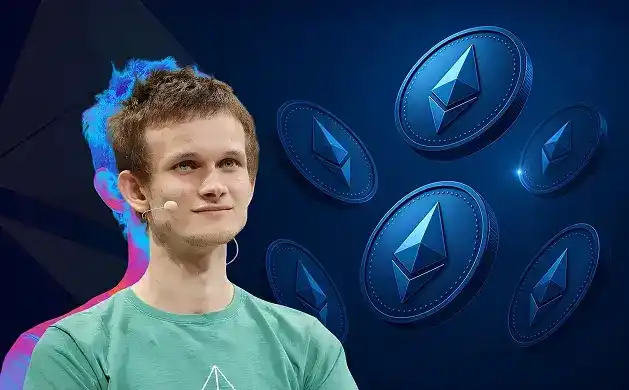
Vitalik's Full Speech at the 2026 Hong Kong Web3 Carnival

In his keynote speech at the 2026 Hong Kong Web3 Carnival, Ethereum co-founder Vitalik Buterin outlined the platform’s vision as a "world computer" and detailed its technical roadmap for the next five years. Buterin emphasized Ethereum’s two core functions: serving as a public bulletin board where applications can publish verifiable data, and enabling shared computational objects like tokens, NFTs, and DAOs. He stressed the importance of Ethereum lies in its ability to provide self-sovereignty, verifiability, and permissionless participation without relying on trusted third parties. He discussed the evolution of Layer 2 solutions, arguing that meaningful L2s should complement Ethereum by integrating necessary off-chain components—such as oracles or privacy protocols—rather than simply scaling through centralization. Key short-term goals include scaling data availability and computational capacity through initiatives like increasing the gas limit and deploying zkEVM for more complex, verifiable computations. Buterin also highlighted ongoing efforts to improve quantum resistance, privacy, and efficiency through proposals like EIP-8141 for account abstraction and quantum-safe signatures. Long-term, Ethereum aims to maximize security and decentralization through formal verification, AI-assisted proof generation, and a hybrid consensus model combining Bitcoin’s longest-chain rule with BFT-style finality. The goal is a robust, easily verifiable platform that supports a wide range of applications—from finance and identity to decentralized social networks—while ensuring long-term resilience and trustlessness.

marsbitВчора 05:40

Vitalik's Full Speech at the 2026 Hong Kong Web3 Carnival

marsbitВчора 05:40

a16z: 3 Ways Crypto Will Outgrow Cryptocurrency by 2026

a16z: 3 Ways Crypto Will Move Beyond Crypto by 2026 The article outlines three key trends for 2026, as predicted by a16z crypto experts: 1. **Smarter, Broader Prediction Markets:** Prediction markets will become more sophisticated by integrating with AI and crypto. They will offer a wider range of contracts for detailed events, moving beyond major elections. This growth presents challenges, such as resolving disputed outcomes, which new decentralized governance and LLM oracles can address. AI agents trading on these platforms could uncover new predictive strategies. Prediction markets won't replace polls but will complement them, with crypto providing tools to verify respondents are human. 2. **Crypto Tech as a Foundational Tool Beyond Blockchains:** The cryptographic tool SNARKs (succinct proofs for verifying computations) will see drastically reduced overhead costs, dropping to around 10,000x the cost of the original computation. This efficiency, achievable on a single GPU, will make "verifiable cloud computing" practical. Users running CPU workloads in the cloud will be able to obtain cryptographic proofs of correctness at a reasonable cost, enabling trust in off-chain computations. 3. **The Rise of "Staked Media":** The traditional media model is being supplemented by a new paradigm where commentators use crypto tools to make verifiable commitments and back their opinions with action. This involves using tokenized assets, programmable locks, and prediction markets to prove they are not engaging in hype or "pump and dump" schemes. Trust is built not on claims of neutrality but on transparent, auditable proof—staking assets to show they have "skin in the game."

marsbit01/11 01:43

a16z: 3 Ways Crypto Will Outgrow Cryptocurrency by 2026

marsbit01/11 01:43

Interop Roadmap Accelerates: After Fusaka Upgrade, Ethereum Interoperability May Take a Key Leap

Recent Ethereum Fusaka upgrade, while primarily focused on Blob capacity expansion, introduced the underappreciated EIP-7825, a critical enabler for Ethereum's zero-knowledge (ZK) and interoperability roadmap. This proposal sets a hard per-transaction gas limit (~16.78 million gas), preventing "mega-transactions" from monopolizing a block. This change transforms block proof generation from a sequential logic problem into a parallelizable computational task, making real-time ZK proofs an engineering feasibility rather than a theoretical impossibility. This foundational shift is pivotal for the L1 zkEVM vision, where Ethereum itself generates verifiable proofs for its state transitions. L1 zkEVM acts as a universal "trust anchor," allowing Layer 2s (L2s) to instantly and trustlessly verify the mainnet's state without waiting for challenge periods. This eliminates the speed-trust decentralization trade-off, enabling near-instant, decentralized cross-chain interoperability. Concurrently, ZK technology is evolving from EVM-compatible zkEVMs to more efficient, ZK-optimized zkVMs. EIP-7825's parallelizable environment allows these zkVMs to operate at peak efficiency, drastically reducing proof generation cost and time. The convergence of EIP-7825, L1 zkEVM, and advanced zkVMs paves the way for the final stage of interoperability (Interop)—abstracting away chain boundaries to deliver a single-chain user experience where cross-chain actions are seamless, secure, and instantaneous.

marsbit12/11 22:52

Interop Roadmap Accelerates: After Fusaka Upgrade, Ethereum Interoperability May Take a Key Leap

marsbit12/11 22:52

活动图片