# Пов'язані статті щодо Soft Fork

Центр новин HTX надає останні статті та поглиблений аналіз на тему "Soft Fork", що охоплює ринкові тренди, оновлення проєктів, технологічні розробки та регуляторну політику в криптоіндустрії.

Less Than Two Weeks Left — Bitcoin's BIP-110 Countdown Begins as Miner Support Grows Ahead of Decisive Moment

The BIP-110 activation process for Bitcoin, which proposes a temporary soft fork to limit specific data-heavy transaction types (like Ordinals inscriptions), is entering its critical final phase. As of July 27, 2026, there are roughly 1,790 blocks remaining until the mandatory signaling window begins at block 961,632 (estimated for August 9). Starting then, nodes enforcing BIP-110 will reject blocks not signaling for the proposal. While support from miners has grown from below 1% to around 3% recently, it remains concentrated among smaller pools and independent miners, with major pools like Foundry, Antpool, ViaBTC, and F2Pool largely not signaling. Foundry's stance is particularly decisive, as it holds a large share of the network's hashrate and has tied its signaling to a client vote. Without a major pool's shift, widespread activation is unlikely. If the current low signaling levels persist after the window opens, nodes enforcing BIP-110 will follow a slower, minority chain, potentially creating a chain split from the majority chain followed by legacy (e.g., Bitcoin Core) nodes. This activation mechanism differs from past soft forks like SegWit, resembling the 2017 UASF BIP-148 more closely. Proponents argue BIP-110 is necessary to curb spam-like data transactions that increase node costs and distort fee markets, framing opposition as a contentious hard fork. Critics, however, view the activation method as a radical overreaction to a minor issue. The final outcome in the coming two weeks hinges on whether a major pool switches support, if major exchanges clarify their chain preference, and how miners actually behave once the mandatory window is open.

cryptonews.ru07/27 21:17

Less Than Two Weeks Left — Bitcoin's BIP-110 Countdown Begins as Miner Support Grows Ahead of Decisive Moment

cryptonews.ru07/27 21:17

Michael Saylor: 110 Reasons to Oppose BIP-110

Michael Saylor presents 110 arguments against Bitcoin Improvement Proposal (BIP) 110, a soft fork aimed at restricting certain non-monetary data storage uses (like inscriptions) on the Bitcoin blockchain. He acknowledges the proponents' valid concerns—such as node costs, fee pressure, and preserving Bitcoin's monetary focus—but fundamentally disagrees with the proposed solution. Saylor argues that BIP 110 represents a dangerous precedent of using consensus rules to enforce value judgments on transaction validity, moving away from Bitcoin's core principles of neutrality and permissionless innovation. His key objections are organized into eleven categories: 1) It violates neutrality and hard consensus by banning currently valid transactions. 2) It fails to meet the high burden of proof required for a consensus change, lacking concrete data on the alleged crisis. 3) Its seven bundled technical restrictions are overly broad, targeting generic script functionalities and blocking future upgrade paths. 4) It sacrifices compatibility and future optionality by closing off designed upgrade hooks. 5) Its temporary rules add significant complexity (grandfathering, expiry states) without sufficient justification. 6) The economic and security impacts, particularly on miner revenue and fee markets, are uncertain and unmodeled. 7) Superior, market-based tools (fee markets, relay/mining policies) already exist to manage blockchain load. 8) It stifles innovation by creating a chilling effect for developers. 9) Its modified activation mechanism (55% threshold, forced signaling) is aggressive and risks network splits. 10) The precedent it sets—using consensus to suppress disliked but legal uses—is more dangerous than the problem it aims to solve. 11) A better path exists: improving measurements, refining resource-based policies, and allowing market forces to work. Saylor concludes that Bitcoin's strength lies in its neutral rules, open markets, and hard consensus. Changing these foundational elements to target specific use cases is an unnecessary and risky "iatrogenic" intervention. He advocates for guarding Bitcoin's neutrality rather than acting as its redeemer.

marsbit07/22 00:06

Michael Saylor: 110 Reasons to Oppose BIP-110

marsbit07/22 00:06

Who Decides the Rules of Bitcoin? BIP-110 Ignites Governance Debate

Bitcoin's governance is once again at the center of a heated debate, this time ignited by BIP-110, the "Reduced Data Temporary Softfork." This proposal aims to curb non-monetary data (like inscriptions and Runes) by introducing seven new consensus-layer restrictions over a year, such as limiting new output scripts to 34 bytes and restoring the OP_RETURN cap to 83 bytes. The controversy stems from BIP-110's fundamental shift: it moves the battle against "spam" from node relay and miner policies to the consensus layer, rendering currently valid transactions invalid. Supporters, arguing that default policy governance has failed (highlighted by Bitcoin Core v30's relaxation of OP_RETURN limits), see this as necessary to protect node resources and Bitcoin's monetary focus. Opponents, led by figures like Michael Saylor and Adam Back, warn it dangerously centralizes governance. Saylor listed 110 reasons against it, criticizing its low 55% miner activation threshold and potential for chain splits. Back emphasized Bitcoin's "permissionless" ethos, arguing no single group should impose value judgments via consensus rules. Further complicating matters, technical critiques suggest BIP-110 may be technically circumventable, and a "BlockSlop" vulnerability in its upgrade path poses a consensus risk. The debate has drawn in diverse stakeholders: miners (with pools like Ocean signaling support and Foundry polling clients), node operators (like Bitcoin Knots), and new players like corporate treasury holder MicroStrategy (Saylor), whose market influence adds a novel dimension. Ultimately, BIP-110 acts as a governance stress test, exposing the unresolved question: who decides Bitcoin's rules? It pits the authority of miners, node operators, developers, and capital holders against each other, with each side claiming to defend Bitcoin's core principles of neutrality and security.

marsbit07/21 06:41

Who Decides the Rules of Bitcoin? BIP-110 Ignites Governance Debate

marsbit07/21 06:41

Who Decides Bitcoin's Rules? BIP-110 Ignites Governance Debate

Title: Who Decides Bitcoin's Rules? BIP-110 Ignites Governance Debate A new technical proposal, BIP-110 (Reduced Data Temporary Softfork), has sparked a fundamental governance debate within the Bitcoin community. It aims to impose new consensus rules for one year to limit non-financial data (like inscriptions and Runes) on-chain, moving beyond simple node and miner policy filters to invalidate currently valid transactions. Supporters argue that default policies have failed due to workarounds, necessitating consensus-layer changes to protect Bitcoin's core monetary function from data spam. Critics, including Michael Saylor and Adam Back, contend this dangerously centralizes judgment, undermines permissionlessness, and sets a risky governance precedent. They advocate for market-based solutions like fees or Layer 2s instead. The debate exposes deeper tensions: miners are divided on activation; node operators assert their sovereignty; Bitcoin Core developers influence defaults without direct accountability; and large corporate holders like MicroStrategy now wield narrative influence. Technically, BIP-110 may not fully block data and carries a disclosed consensus bug risk. Ultimately, BIP-110 acts as a stress test, forcing the community to confront the unresolved question: who legitimately decides what Bitcoin is and how it evolves, amidst competing claims from miners, nodes, developers, and capital holders.

链捕手07/21 06:30

Who Decides Bitcoin's Rules? BIP-110 Ignites Governance Debate

链捕手07/21 06:30

Support Rate Less Than 1%, BIP-110 Still Pushes Bitcoin Towards a Soft Fork?

Title: BIP-110 Pushes Bitcoin Towards a Soft Fork Despite Less Than 1% Approval With its August mandatory activation window approaching, the controversial BIP-110 proposal is back in the spotlight. Proposed in December 2025 by Dathon Ohm and supported by Bitcoin Core developer Luke Dashjr, BIP-110 aims to impose a one-year limit on arbitrary/non-monetary data in Bitcoin transactions, primarily targeting large data storage like Ordinals and Bitcoin NFTs, to reduce network "spam" and refocus Bitcoin on its monetary function. However, the proposal faces overwhelming opposition. To activate, BIP-110 requires a 55% threshold, yet current miner support is below 1%. Of the 102,674 network nodes, only 14.64% (15,035) signal readiness to enforce it. Despite this lack of consensus, BIP-110 has a contentious "mandatory window" mechanism: if the threshold isn't met by block height 961,632, supporting nodes will begin rejecting non-compliant blocks from height 961,632 to 963,647, attempting to force activation by block 965,664. This could lead to a chain split in early August between a minority chain enforcing BIP-110 and the main chain. Proponents, led by Luke Dashjr (founder of Ocean mining pool), argue that inscriptions constitute an "attack" on Bitcoin, congesting block space and raising transaction fees, thereby undermining Bitcoin's primary use as money. They view BIP-110 not as a change but as a reversal of a harmful change. Opponents, including figures like Adam Back, Jameson Lopp, and Michael Saylor, contend that BIP-110 fails to solve the spam problem while creating new risks. They warn it could stifle future innovation (e.g., impacting BitVM), introduce transaction censorship—eroding Bitcoin's neutrality—and potentially cause a damaging chain split that fragments developer resources, hash power, and monetary consensus. They argue market-based fee pressure and block size limits already manage congestion effectively. Potential outcomes post-activation include: 1) The BIP-110 chain stalling due to insufficient hash power; 2) The BIP-110 chain becoming the longest chain if it gains majority miner support (though currently, Ocean holds only 2.6% of hash power vs. opponents like F2Pool at 13.6%); or 3) A persistent minority chain that remains economically unviable, potentially leading to a permanent fork. Most analysts and prediction markets deem BIP-110's success unlikely, with one market giving only a 10% probability that it will become the accepted longest chain by September 2026.

marsbit07/17 10:27
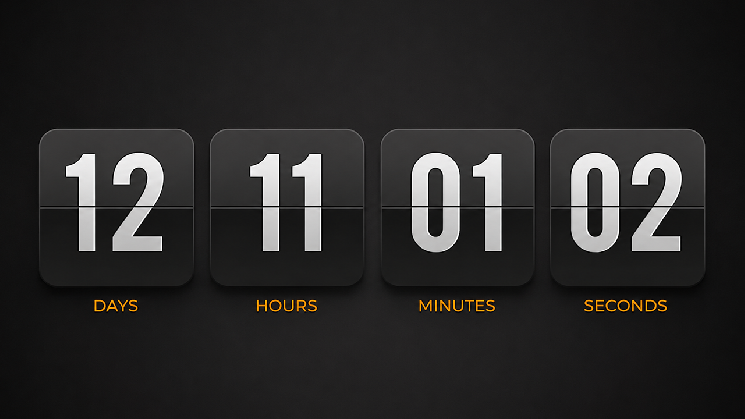
Support Rate Less Than 1%, BIP-110 Still Pushes Bitcoin Towards a Soft Fork?

marsbit07/17 10:27

With Less Than 1% Support, Will BIP-110 Still Force a Bitcoin Soft Fork?

**English Summary:** Despite garnering minimal support (less than 1% from miners and around 14.6% of nodes), the controversial BIP-110 proposal is poised to enter its "forced activation" window in early August. Proposed in December 2025 by Dathon Ohm and backed by Bitcoin Core developer Luke Dashjr, BIP-110 aims to temporarily restrict non-monetary data (like Ordinals and Bitcoin NFTs) in transactions for one year to reduce network "spam" and refocus Bitcoin on its monetary function. The proposal's contentious mechanism means that supporting nodes will enforce the new rules starting at block height 965,664 (late August/early September), even without reaching the 55% activation threshold. This will likely cause a chain split between nodes enforcing BIP-110 and the main chain. **Supporters**, led by Luke Dashjr and his Ocean mining pool, view BIP-110 as a necessary correction to stop what they consider an "attack" on Bitcoin—the use of block space for data storage, which they argue drives up transaction fees and burdens nodes. They believe the stricter BIP-110 chain could eventually become the longest chain. **Opponents**, including figures like Adam Back, Jameson Lopp, and Michael Saylor, argue that BIP-110 fails to solve core issues while creating new risks. Their concerns include stifling future innovation (e.g., hindering BitVM), compromising Bitcoin's censorship-resistant and decentralized ethos, introducing potential chain-split uncertainties like double-spend risks, and fracturing the ecosystem's resources and consensus. They maintain the proposal addresses a cultural problem with a flawed technical solution and are confident it will fail economically. Potential outcomes post-activation range from the BIP-110 chain stalling due to insufficient miner support, to a sustained minority chain that struggles to attract economic activity, potentially leading to a permanent hard fork—an outcome Luke Dashjr currently opposes. Most analysts and prediction markets assign a low probability (around 10%) to BIP-110 successfully becoming the dominant Bitcoin chain.

Odaily星球日报07/17 10:10

With Less Than 1% Support, Will BIP-110 Still Force a Bitcoin Soft Fork?

Odaily星球日报07/17 10:10

Bitcoin's Anti-Spam Data Soft Fork BIP110: Miner Collective Boycott, Already Doomed to Fail?

The article discusses the controversial Bitcoin Improvement Proposal (BIP) 110, a "data reduction" soft fork aimed at limiting non-monetary data, such as certain scripts, within Bitcoin transactions. Proponents argue this data violates network principles, but the author strongly disagrees. The core argument is that Bitcoin's fundamental value lies in its open-access, censorship-resistant ledger. Anyone can write data by paying fees, and attempting to police how data is interpreted externally is both impossible and contrary to Bitcoin's ethos. The author compares this to free speech and notes that Bitcoin's existing protocol limits (block size, sigops) already manage network load effectively, even spurring layer-2 innovation. Technically, BIP110 would impose significant new restrictions on script size, Taproot features, and upgradability, applying to UTXOs created within about a year of activation. Its deployment mechanism is criticized for having an unusually low 55% miner signaling threshold and a forced activation timeline, representing the most aggressive script limitations since 2010. The author finds the rationale weak, stating the "problem" it addresses is already managed, and the fork's rushed process ignores broader ecosystem consensus. Importantly, they note that users of so-called unwanted data have already adapted their software to work around the proposed rules. The conclusion is that BIP110 is destined to fail. It attempts the impossible—controlling how an open ledger is used—based on flawed reasoning and via a reckless process. The article reports that miners, developers, and the broader community have rejected it, and Bitcoin will emerge stronger by continuing its normal operation without this change.

marsbit07/16 01:32

Bitcoin's Anti-Spam Data Soft Fork BIP110: Miner Collective Boycott, Already Doomed to Fail?

marsbit07/16 01:32

Bitcoin's "Anti-Data Spam" Soft Fork BIP110: Collective Miner Resistance, Doomed to Fail?

The article discusses the contentious BIP110 proposal, a "data-reducing" soft fork aimed at limiting transactions containing additional data interpretable by external software (such as in Ordinals inscriptions). Proponents argue this data violates network principles, but the author strongly opposes the fork. The core argument is that Bitcoin's fundamental value lies in its open-access, censorship-resistant ledger. Just as free speech protects unpopular opinions, Bitcoin must allow any valid transaction, regardless of its perceived "non-monetary" use. The author contends there's no clear line between monetary and non-monetary transactions, and node operators don't care about transaction details—only validity. Bitcoin's existing protocol limits (block size, sigops) already minimize network strain from data-heavy transactions and have spurred layer-2 innovation (e.g., Lightning Network). BIP110's proposed technical changes are described as the most radical script restrictions since 2010, including capping script sizes, disabling certain Tapscript features, and invalidating upgrades. Its activation process is criticized for having an unusually low 55% miner signaling threshold and a forced activation mechanism with a short timeline. The author argues BIP110 attempts the impossible—controlling how users interpret data on an open ledger—and that those it targets have already adapted to work around it. The proposal is deemed unnecessary, rushed, and lacking consensus. With miners, developers, and the broader ecosystem largely opposed, the article concludes BIP110 is destined to fail, leaving Bitcoin's core principles intact.

Foresight News07/15 07:27

Bitcoin's "Anti-Data Spam" Soft Fork BIP110: Collective Miner Resistance, Doomed to Fail?

Foresight News07/15 07:27

活动图片