With Less Than 1% Support, Will BIP-110 Still Force a Bitcoin Soft Fork?

Odaily星球日报Опубліковано о 2026-07-17Востаннє оновлено о 2026-07-17

Анотація

**English Summary:** Despite garnering minimal support (less than 1% from miners and around 14.6% of nodes), the controversial BIP-110 proposal is poised to enter its "forced activation" window in early August. Proposed in December 2025 by Dathon Ohm and backed by Bitcoin Core developer Luke Dashjr, BIP-110 aims to temporarily restrict non-monetary data (like Ordinals and Bitcoin NFTs) in transactions for one year to reduce network "spam" and refocus Bitcoin on its monetary function. The proposal's contentious mechanism means that supporting nodes will enforce the new rules starting at block height 965,664 (late August/early September), even without reaching the 55% activation threshold. This will likely cause a chain split between nodes enforcing BIP-110 and the main chain. **Supporters**, led by Luke Dashjr and his Ocean mining pool, view BIP-110 as a necessary correction to stop what they consider an "attack" on Bitcoin—the use of block space for data storage, which they argue drives up transaction fees and burdens nodes. They believe the stricter BIP-110 chain could eventually become the longest chain. **Opponents**, including figures like Adam Back, Jameson Lopp, and Michael Saylor, argue that BIP-110 fails to solve core issues while creating new risks. Their concerns include stifling future innovation (e.g., hindering BitVM), compromising Bitcoin's censorship-resistant and decentralized ethos, introducing potential chain-split uncertainties like double-spend risks, ...

Original | Odaily Planet Daily (@OdailyChina)

Author | Golem (@web3_golem)
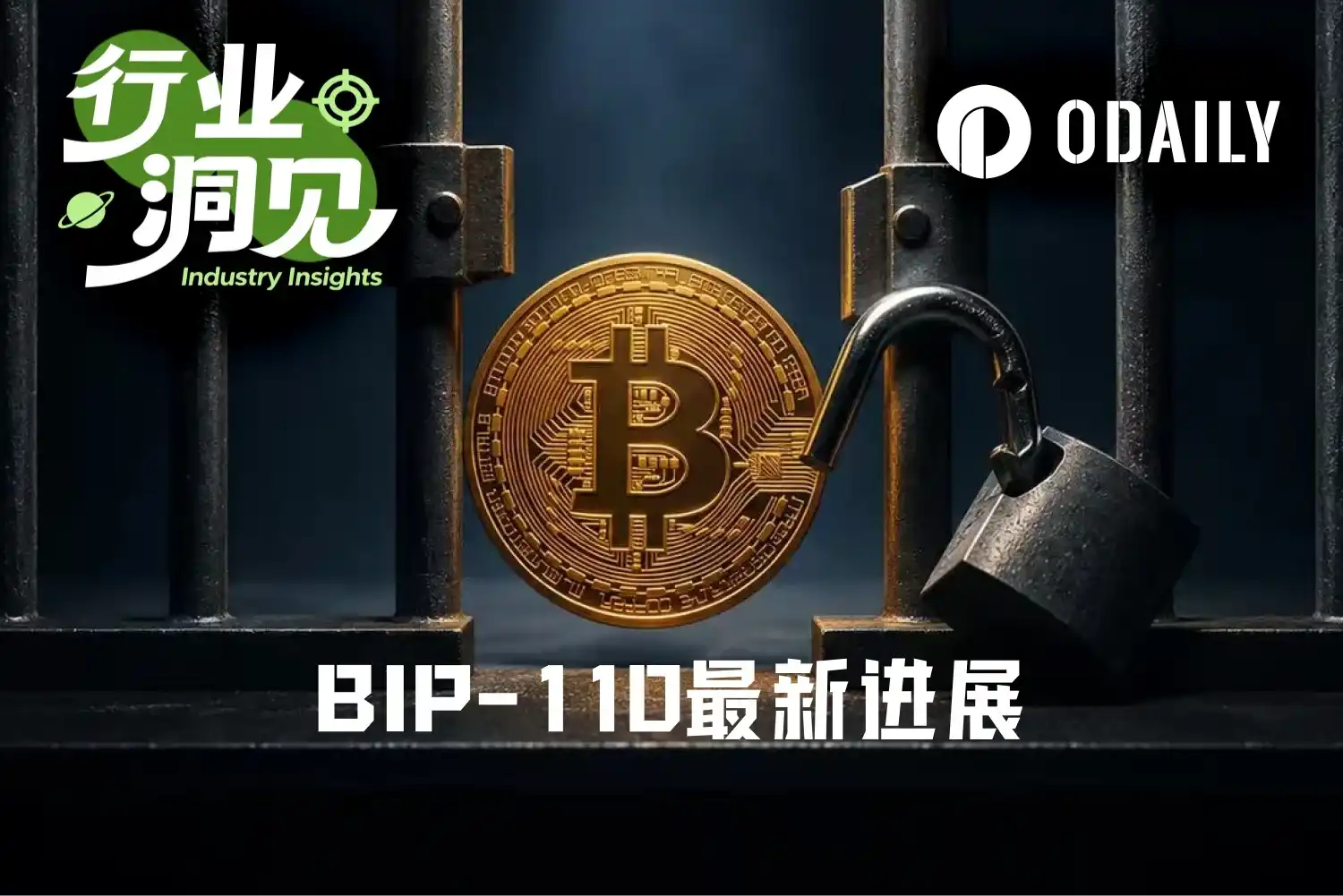
As the mandatory activation window in August approaches, discussions around the BIP-110 proposal have recently heated up again.

BIP-110 was proposed by Dathon Ohm in December 2025 and is supported by Bitcoin Core developer Luke Dashjr. This proposal aims to limit arbitrary/non-monetary data in Bitcoin transactions over the next year, primarily targeting large data storage like Ordinals and Bitcoin NFTs, in hopes of reducing "spam transactions" in the network and keeping Bitcoin focused on its monetary function.

This proposal has been controversial since its introduction, but data shows that BIP-110 currently lacks mainstream support from miners and nodes. The activation threshold for BIP-110 is 55%. According to statistics, current miner support is less than 1%. Out of a total of 102,674 nodes in the network, only 15,035 nodes are willing to enforce BIP-110, a ratio of 14.64%.
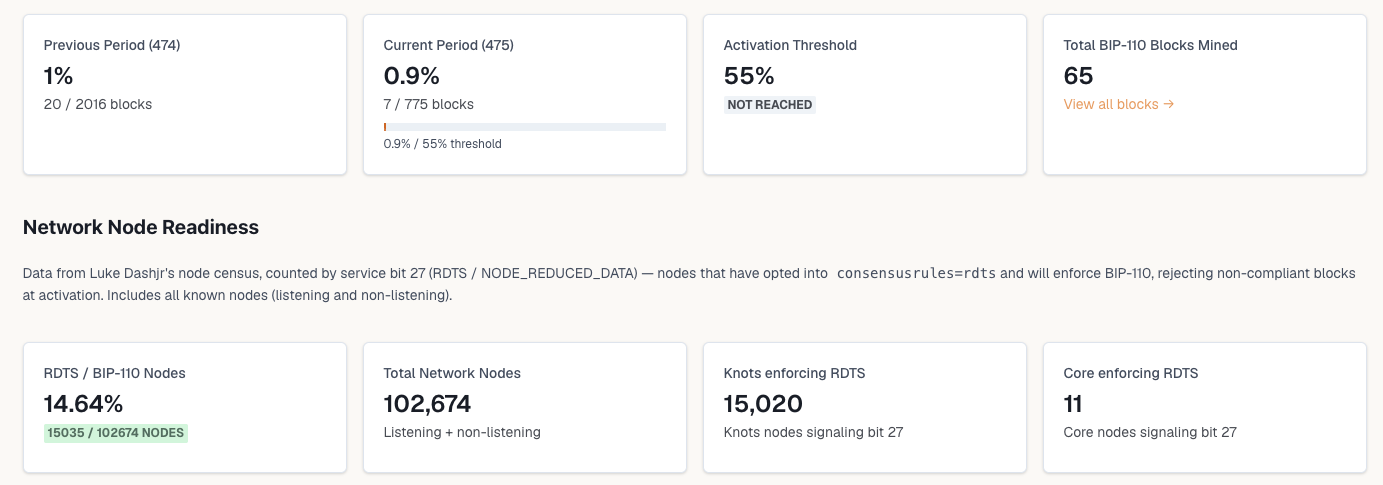
BIP-110 Miner and Node Support Rate

Typically, a proposal with such low support cannot pass on the Bitcoin network. However, the audacious aspect of BIP-110 is that even without achieving consensus, nodes supporting BIP-110 will enforce it. If BIP-110 does not reach the 55% activation threshold before block height 961,632, it will enter a mandatory activation window (block heights 961,632-963,647). During this period, nodes running BIP-110 will reject non-compliant blocks, forcibly pushing the acceptance rate to 100%, enabling BIP-110 to be ultimately activated and enforced at block height 965,664.

At the current Bitcoin network block production rate, BIP-110 will enter its mandatory activation window in early August. This means that although BIP-110 is a soft fork proposal, the Bitcoin network will still experience a chain split (a minority chain supporting BIP-110 and the main chain not supporting it) at that time.

BIP-110 Continuous Controversy

According to Bitcoin's "longest chain rule," a soft fork only succeeds—meaning the entire network unifies under the new rules—when miners supporting BIP-110 (or, more accurately, the proposed changes) actually possess a majority (>50%) of the hash rate, allowing their chain to become the longest chain. Therefore, although the forced activation of BIP-110 seems inevitable, its ultimate persistence still depends on consensus. Otherwise, BIP-110 will likely meet the same fate as the vast majority of Bitcoin soft forks in history: dying out naturally.

Supporters: BIP-110 is not a change, but a negation of a change

The main representatives of the BIP-110 supporters are Luke Dashjr and his mining pool, Ocean. Luke Dashjr has long been a vocal opponent of BRC-20 and inscriptions within the Bitcoin developer community and provided initial suggestions for the BIP-110 proposal.

Luke Dashjr is considered a representative figure of Bitcoin maximalism or fundamentalism. They are unwilling to see Bitcoin block space used for any purpose other than Bitcoin transfers. In the BIP-110 proposal, inscriptions that emerged in 2022 are viewed as a type of "Bitcoin attack." The rationale is that allowing arbitrary data to be embedded in Bitcoin transactions creates a massive and unnecessary burden for nodes. Furthermore, this "junk data" occupies a significant amount of block space, forcing monetary transactions to raise their fee bids to be included in a block, thereby crowding out Bitcoin's monetary use.

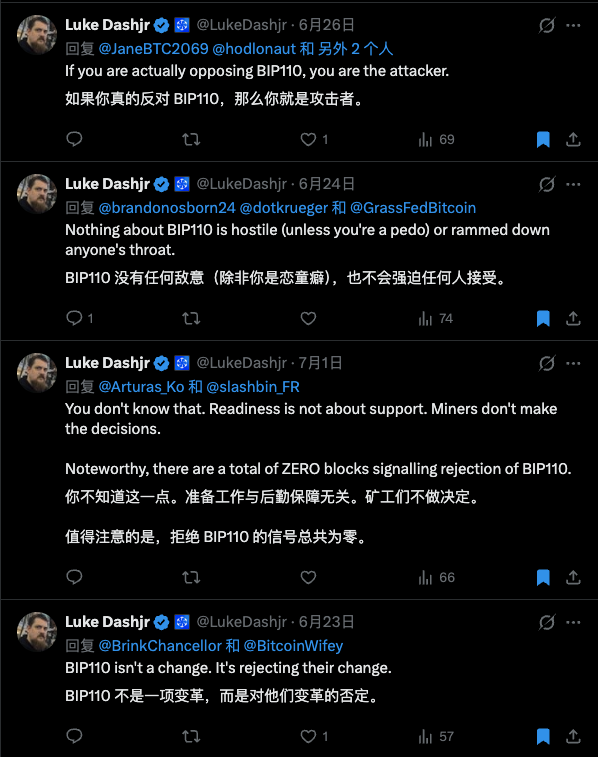
Therefore, Luke Dashjr posted on platform X, stating that BIP-110 is not a change, but a negation of a change. When facing opposition to BIP-110, he also employs sophistry, claiming on one hand that BIP-110 has no hostility and does not force anyone to accept it, and on the other hand, asserting that those who oppose BIP-110 are the true attackers of Bitcoin.

Moreover, although the current voting rate of miners approving BIP-110 is very low (<1%), Luke Dashjr remains optimistic, pointing out that the direct opposition voting rate among miners is also nearly 0%. The implication is that miners are not making a decision; once BIP-110 activates, they will naturally follow.
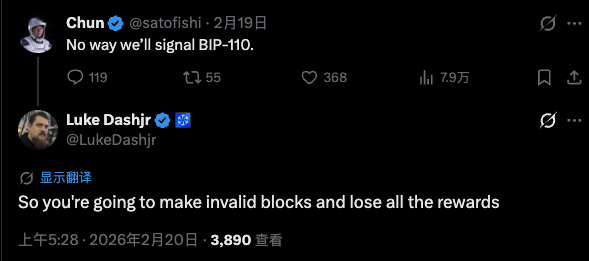
Looking at reality, as of now, the only mining pool publicly supporting BIP-110 is Luke Dashjr's own Ocean. F2Pool co-founder Wang Chun publicly stated back in February that they would absolutely not support BIP-110. Luke Dashjr confidently replied under that post, "Then you will mine invalid blocks and lose all your rewards."
According to miningradar data, F2Pool is the third-largest Bitcoin mining pool globally, with a hash rate share of 13.6%. Meanwhile, Ocean's current hash rate is only 24.6 EH/s, accounting for 2.6% of the network's total hash rate.
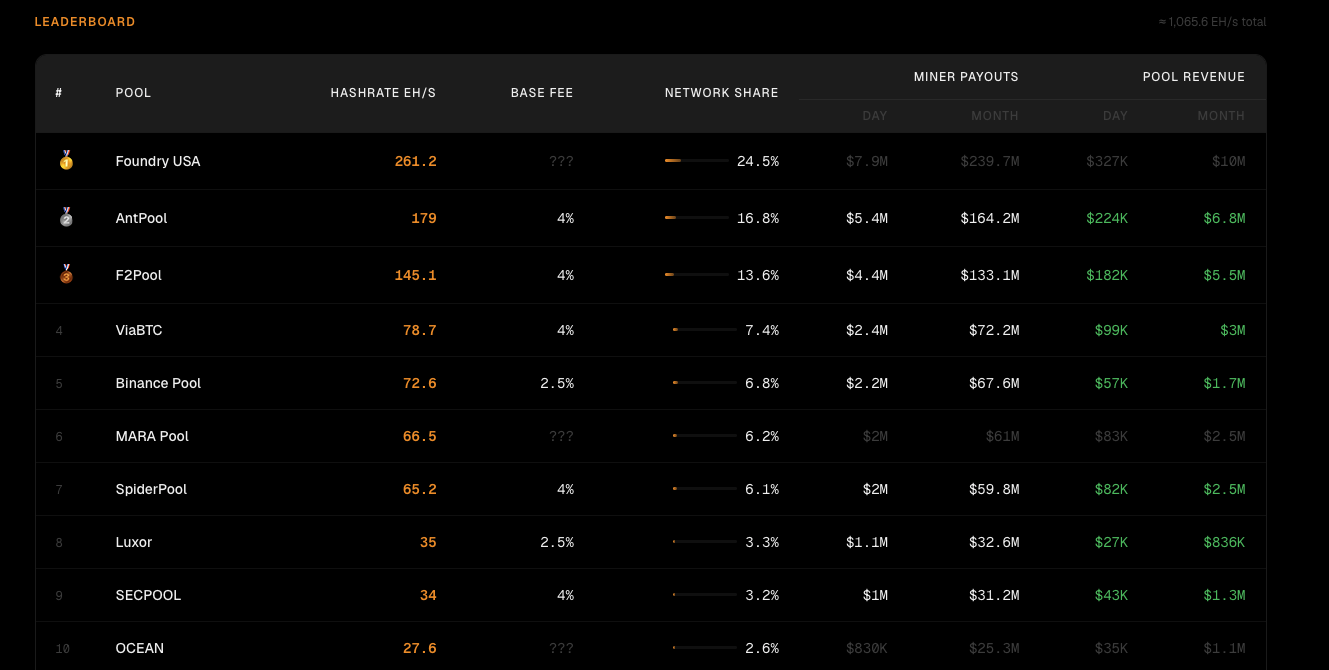
Bitcoin Mining Pool Rankings

If Ocean ultimately becomes the only pool supporting the fork, they would only produce 3-5 blocks per day. Such efficiency and block production speed would be insufficient to become the "longest chain" on the Bitcoin network.

Opponents: BIP-110 Doesn't Solve the Problem and Creates More New Issues

Opponents of the BIP-110 proposal not only focus on whether BIP-110 will be successful after activation but also criticize it for failing to solve the "spam transaction" problem on the Bitcoin network while simultaneously creating many potential new issues. In short, BIP-110 opponents are strongly opposing it out of concern for various unintended consequences, not out of any attachment to Ordinals or inscriptions. Key figures among the opponents include cypherpunk pioneer Adam Back, Bitcoin Core developer Jameson Lopp, and MicroStrategy founder Michael Saylor.

Firstly, opponents argue that BIP-110 cannot completely solve the "spam transaction" issue facing the Bitcoin network; the author of the BIP-110 proposal also admits it can only provide temporary relief. Jameson Lopp believes that Bitcoin's block size limit and the fee market for block space have already mitigated the spam transaction problem to some extent. However, Bitcoin remains a target for various spam transaction attacks primarily because very few people actually use the Bitcoin network regularly, keeping transaction fees consistently low. This prevents the formation of sufficient fee pressure to deter most spam transactions.

Furthermore, BIP-110 could stifle future innovation on Bitcoin. The BIP-110 proposal itself acknowledges that restrictions on Taproot would hinder the implementation of advanced functionalities or complex contracts like BitVM on the Bitcoin network. Although BIP-110 is described as a one-year temporary restriction, Jameson Lopp believes this is merely a delaying tactic by Luke Dashjr. If these restrictions severely constrain future Bitcoin upgrades, it could ultimately lead to a Bitcoin hard fork rather than a soft fork.

Adam Back focuses more on Bitcoin's censorship resistance and decentralized spirit. He argues that BIP-110 would subjectively censor transactions within blocks, fundamentally aiming to regulate others. This goes against the neutrality and censorship-resistant spirit Bitcoin has upheld since its inception, representing a dangerous step towards centralization and control. Adam Back uses Bitcoin's original principles to negate the changes proposed by Bitcoin extremists, essentially "using magic to defeat magic."

Michael Saylor summarizes BIP-110 as a "Bitcoin Iatrogenic Proposal," implying that the "treatment" (BIP-110) itself would harm Bitcoin rather than solve existing problems.
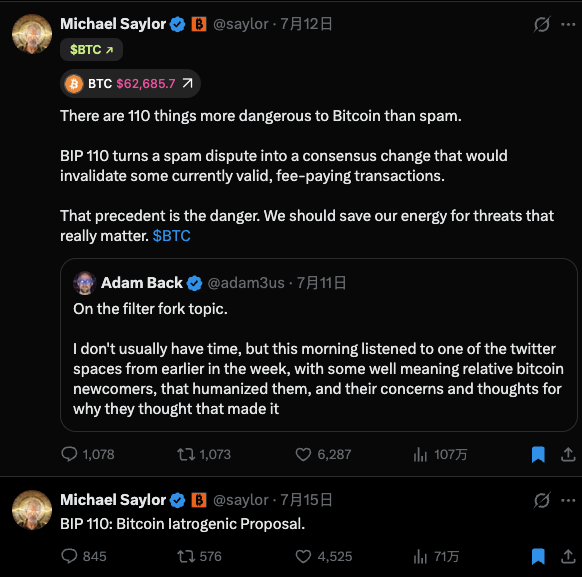
Michael Saylor also believes that if BIP-110 were to become consensus, some valid paid transactions would become invalid, and setting this precedent for censorship is the true danger.

Opponents have another major concern: the serious consequence that activating BIP-110 could split the Bitcoin chain ecosystem. Two competing chains would emerge, vying for the status of the "real Bitcoin." In such a scenario, uncertainty about the fork's outcome could create a risk of Bitcoin double-spending. Even without causing double-spending, if BIP-110 ultimately evolves into a new chain, it would split Bitcoin's developer resources, hash rate resources, and monetary consensus.

Opponents believe BIP-110 is attempting to use a technical solution to address a cultural problem, potentially generating more unpredictable issues in the process.

Despite these concerns, opponents are confident about BIP-110's failure. Jameson Lopp made a bet against BIP-110 back in February, with a minimum wager of 1 BTC. So far, no BIP-110 supporter has publicly accepted the bet.
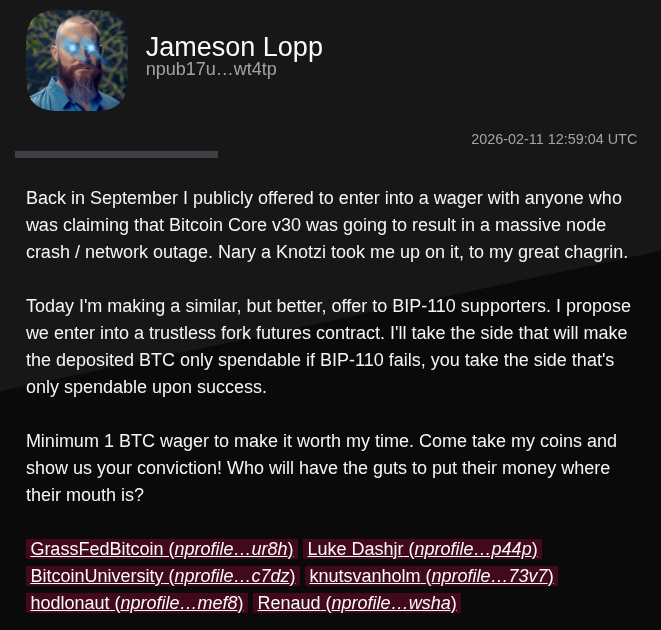
Jameson Lopp's Wager Invitation to BIP-110 Supporters

On the prediction market Predyx, the probability for "BIP-110 will activate and be enforced on Bitcoin between September 1-7, 2026" is 10%. The settlement condition for "Yes" is that the BIP-110 chain must become the "Bitcoin longest chain" and be accepted by most nodes.
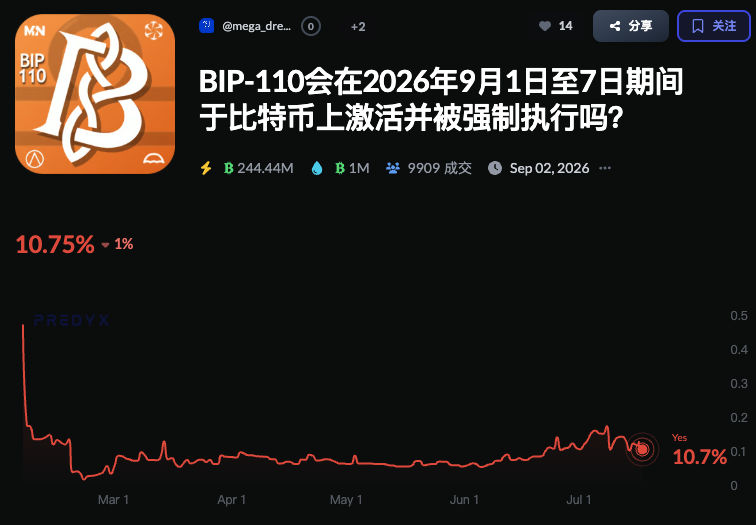
What Happens After BIP-110 Activates?

We can now consider several hypothetical scenarios for what might happen when BIP-110 is ultimately forcibly activated at block height 965,664 (late August to early September).

The first scenario is as described above. After reaching the activation height, BIP-110 nodes reject main chain blocks, but there aren't enough miners producing new blocks that comply with BIP-110 rules. The BIP-110 chain's block production speed would be extremely slow, eventually stopping altogether and ceasing to "grow."

The second scenario assumes a certain proportion of miners support BIP-110. BIP-110 supporters believe they possess an "asymmetric advantage" because BIP-110 rules are stricter. Therefore, while BIP-110 nodes will reject blocks containing违规数据 (inscriptions, etc.), non-BIP-110 nodes (mainstream Core nodes) will consider blocks produced by BIP-110 nodes as valid.

Moreover, currently, inscription transactions only account for about 5% of Bitcoin block space usage, with over 95% being traditional Bitcoin transfer transactions. BIP-110 nodes would still receive a large number of mainstream blocks. This is why Luke Dashjr believes BIP-110 will ultimately become the "longest chain" and unify the network.
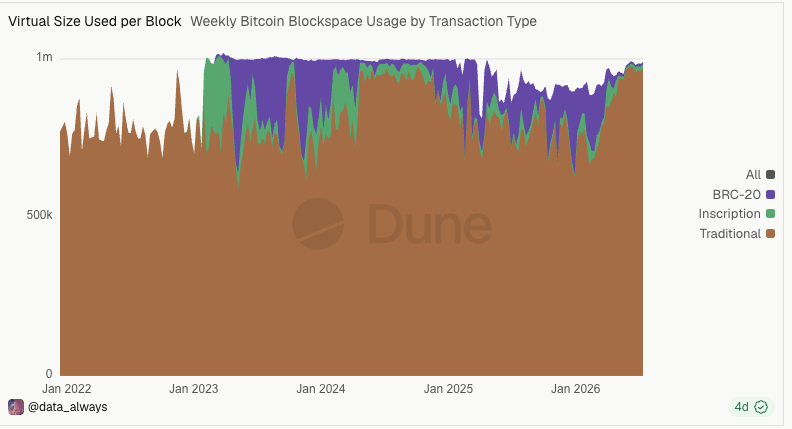
Bitcoin Block Space Usage by Transaction Type

The third scenario involves a certain proportion of miners supporting BIP-110, but their hash rate never surpasses that of the existing majority chain. Typically, miners are highly rational because their machines incur electricity costs as soon as they are turned on. In a competition between two chains, miners weigh the pros and cons. Miners on the BIP-110 chain might find it easier to abandon sunk costs (mining rewards on the minority chain) and join the majority chain, as the minority chain not only lags in length but also accumulates fewer Bitcoin rewards than the majority chain. This would ultimately lead to the first scenario.

Now, assuming Luke Dashjr has immense influence and miners act irrationally, persisting in mining on the BIP-110 chain, what would happen? This chain would continue to operate independently, but block times could be very slow. Miners would essentially be mining for the sake of ideology, consuming energy meaninglessly. The most plausible outcome in this situation is that the BIP-110 chain, driven by its supporters, permanently forks into an independent chain, "manually" adjusts its difficulty, and launches a new network token.

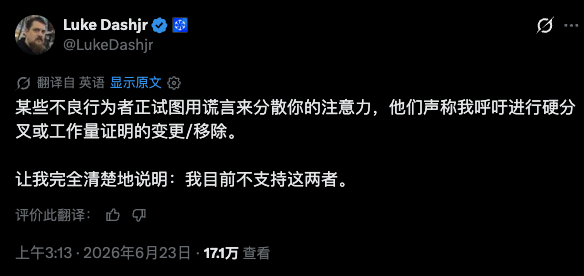
However, Luke Dashjr has repeatedly emphasized his refusal to hard fork for BIP-110, believing it's not yet time to use that method. Public sentiment can be a double-edged sword. At that point, even Luke Dashjr might be carried away by the will of the crowd, finding the arrow already on the bowstring and having to release it.
Therefore, the minority chain run by BIP-110 supporters can technically continue to operate, but it will likely struggle to thrive, as that depends on economic and ecosystem factors, including support from wallets, exchanges, users, etc. There are many such examples on the Bitcoin network; most ultimately fail. Even those that succeed rarely reach heights beyond independent coins like BCH or BSV.


Трендові криптовалюти

Пов'язані питання

QWhat is BIP-110 and what is its main objective?

ABIP-110 is a proposal introduced by Dathon Ohm in December 2025, supported by Bitcoin Core developer Luke Dashjr. Its main objective is to limit arbitrary/non-monetary data in Bitcoin transactions, particularly targeting large data storage like Ordinals and Bitcoin NFTs, over the next year. The aim is to reduce 'spam transactions' on the network and refocus Bitcoin on its monetary function.

QAccording to the article, what are the current support levels for BIP-110 among miners and nodes?

AThe current support levels for BIP-110 are very low. The activation threshold is 55%, but miner support is reportedly under 1%. Out of 102,674 total nodes, only 15,035 nodes (approximately 14.64%) are willing to enforce BIP-110.

QWhat is the 'forced activation period' for BIP-110, and what is the primary concern about this period?

AThe 'forced activation period' for BIP-110 is between block heights 961,632 and 963,647, which is expected around early August. The primary concern is that during this period, nodes running BIP-110 will reject non-compliant blocks, attempting to force the adoption rate to 100% and activate BIP-110 by block height 965,664. This could lead to a chain split between the minority chain supporting BIP-110 and the main chain that does not.

QWho are some prominent opponents of BIP-110, and what are their main arguments against it?

AProminent opponents include cypherpunk pioneer Adam Back, Bitcoin Core developer Jameson Lopp, and MicroStrategy founder Michael Saylor. Their main arguments are: 1) BIP-110 doesn't fully solve the spam transaction problem and could create new issues. 2) It could stifle future innovation on Bitcoin (e.g., hindering BitVM). 3) It introduces subjective transaction censorship, contradicting Bitcoin's neutral and censorship-resistant principles. 4) It risks splitting the Bitcoin ecosystem and consensus, potentially creating two competing chains.

QWhat are the possible scenarios described in the article for what could happen after BIP-110 is forcibly activated?

AThe article outlines three possible scenarios: 1) BIP-110 nodes reject main chain blocks, but without enough miner support to produce compliant blocks, the BIP-110 chain stops growing and 'dies naturally.' 2) A significant portion of miners supports BIP-110. Due to its stricter rules, its blocks are valid on the main chain, potentially allowing it to become the longest chain. 3) Some miners support BIP-110, but their hash power never surpasses the majority chain. Rational miners would eventually switch to the more profitable main chain, leading again to scenario 1. A fourth implied scenario is a permanent hard fork creating a separate chain, though Luke Dashjr has stated opposition to this.

Пов'язані матеріали

Stable Vaults Are the Final Piece in Aave's Mass Commercialization Puzzle

Aave's introduction of "Stable Vaults" aims to bridge the gap between complex DeFi protocols and mainstream users by offering a simplified, predictable savings product. The core innovation is a fixed-yield layer built atop Aave's volatile underlying lending pools. Partnering platforms (like digital banks or wallets) can offer users a guaranteed interest rate (e.g., 4%), shielding them from market fluctuations. The partner absorbs the risk and profit/loss from the difference between this fixed rate and Aave's variable rate. From the user's perspective, Stable Vaults provide ease of use, predictable returns, and familiar services like customer support and account recovery, addressing key barriers like wallet management and volatility. However, users pay a price: they cap their potential earnings (forgoing higher market yields), add counterparty risk from the partner platform, and may lack transparency into the true spread being captured. For partners, Stable Vaults turn idle user funds into a revenue stream via the yield spread. For Aave, this strategy attracts sticky, "sticky" capital from mass-market applications, providing a stable fee revenue stream crucial for its tokenomics (e.g., buyback mechanisms), especially in bear markets. The article contrasts this approach with direct DeFi interaction, where users keep all yield but face complexity and volatility. It argues that Stable Vaults align with proven consumer behavior: most users prioritize convenience, safety, and predictability over maximizing returns, willingly paying a "peace of mind" premium. Examples like Coinbase and Robinhood offering similar "savings" products validate this demand. Thus, Stable Vaults represent Aave's strategic move to commercialize by catering to fundamental human preferences for simplicity and stability in finance.

marsbit52 хв тому

Stable Vaults Are the Final Piece in Aave's Mass Commercialization Puzzle

marsbit52 хв тому

Support Rate Less Than 1%, BIP-110 Still Pushes Bitcoin Towards a Soft Fork?

Title: BIP-110 Pushes Bitcoin Towards a Soft Fork Despite Less Than 1% Approval With its August mandatory activation window approaching, the controversial BIP-110 proposal is back in the spotlight. Proposed in December 2025 by Dathon Ohm and supported by Bitcoin Core developer Luke Dashjr, BIP-110 aims to impose a one-year limit on arbitrary/non-monetary data in Bitcoin transactions, primarily targeting large data storage like Ordinals and Bitcoin NFTs, to reduce network "spam" and refocus Bitcoin on its monetary function. However, the proposal faces overwhelming opposition. To activate, BIP-110 requires a 55% threshold, yet current miner support is below 1%. Of the 102,674 network nodes, only 14.64% (15,035) signal readiness to enforce it. Despite this lack of consensus, BIP-110 has a contentious "mandatory window" mechanism: if the threshold isn't met by block height 961,632, supporting nodes will begin rejecting non-compliant blocks from height 961,632 to 963,647, attempting to force activation by block 965,664. This could lead to a chain split in early August between a minority chain enforcing BIP-110 and the main chain. Proponents, led by Luke Dashjr (founder of Ocean mining pool), argue that inscriptions constitute an "attack" on Bitcoin, congesting block space and raising transaction fees, thereby undermining Bitcoin's primary use as money. They view BIP-110 not as a change but as a reversal of a harmful change. Opponents, including figures like Adam Back, Jameson Lopp, and Michael Saylor, contend that BIP-110 fails to solve the spam problem while creating new risks. They warn it could stifle future innovation (e.g., impacting BitVM), introduce transaction censorship—eroding Bitcoin's neutrality—and potentially cause a damaging chain split that fragments developer resources, hash power, and monetary consensus. They argue market-based fee pressure and block size limits already manage congestion effectively. Potential outcomes post-activation include: 1) The BIP-110 chain stalling due to insufficient hash power; 2) The BIP-110 chain becoming the longest chain if it gains majority miner support (though currently, Ocean holds only 2.6% of hash power vs. opponents like F2Pool at 13.6%); or 3) A persistent minority chain that remains economically unviable, potentially leading to a permanent fork. Most analysts and prediction markets deem BIP-110's success unlikely, with one market giving only a 10% probability that it will become the accepted longest chain by September 2026.

marsbit57 хв тому

Support Rate Less Than 1%, BIP-110 Still Pushes Bitcoin Towards a Soft Fork?

marsbit57 хв тому

Торгівля

Спот

Популярні статті

Що таке BITCOIN

Розуміння HarryPotterObamaSonic10Inu (ERC-20) та його позиції у крипто-просторі Останніми роками ринок криптовалют спостерігав за зростанням популярності мем-коінів, які привертають інтерес не тільки трейдерів, але й тих, хто шукає спілкування та розважальну цінність. Серед цих унікальних токенів є HarryPotterObamaSonic10Inu (ERC-20), інтригуючий проект, що поєднує культурні посилання з тканинами криптовалюти. Ця стаття досліджує ключові аспекти HarryPotterObamaSonic10Inu, вивчаючи його механізми, спільноту та його взаємодію з ширшим крипто-ландшафтом. Що таке HarryPotterObamaSonic10Inu (ERC-20)? Як випливає з його назви, HarryPotterObamaSonic10Inu є мем-коіном, побудованим на блокчейні Ethereum, класифікованим за стандартом ERC-20. На відміну від традиційних криптовалют, які можуть підкреслювати практичну корисність або інвестиційний потенціал, цей токен процвітає завдяки розважальній цінності та силі своєї спільноти. Проект спрямований на створення середовища, де зацікавлені користувачі можуть об'єднуватися, ділитися ідеями та брати участь у заходах, натхненних різноманітними культурними явищами. Однією з примітних особливостей HarryPotterObamaSonic10Inu є нульовий податок на транзакції. Цей привабливий елемент має на меті заохочувати торгівлю та участь у спільноті, позбавлену додаткових витрат, які можуть відлякувати дрібних трейдерів. Загальна пропозиція монет становить один мільярд токенів, що позначає намір підтримувати суттєву циркуляцію в межах спільноти. Творець HarryPotterObamaSonic10Inu (ERC-20) Походження HarryPotterObamaSonic10Inu дещо окутане таємницею; деталі про творця залишаються невідомими. Розвиток цього токена позбавлений впізнаваної команди або чіткої стратегії, що не є рідкістю в секторі мем-коінів. Натомість проект виник органічно, а його розвиток значною мірою залежить від ентузіазму та участі його спільноти. Інвестори HarryPotterObamaSonic10Inu (ERC-20) Щодо зовнішніх інвестицій та підтримки, HarryPotterObamaSonic10Inu також залишається невизначеним. Токен не зазначає жодних відомих інвестиційних фондів або значної організаційної підтримки. Натомість життєва сила проекту полягає в його базовій спільноті, яка інформує про його зростання та стійкість через колективні дії та залученість у крипто-просторі. Як працює HarryPotterObamaSonic10Inu (ERC-20)? Як мем-коін, HarryPotterObamaSonic10Inu функціонує передусім поза традиційними рамками, що часто регулюють вартість активів. Є кілька відмінних аспектів, що визначають, як працює проект: Транзакції без податку: Завдяки відсутності податкових зборів на транзакції, користувачі можуть вільно купувати та продавати токен, не турбуючись про приховані витрати. Залучення спільноти: Проект процвітає завдяки взаємодії спільноти, використовуючи соціальні медіа для створення шуму та сприяння залученню. Обговорення, обмін контентом та залученість є ключовими елементами, що допомагають розширити його охоплення та зміцнити лояльність серед прихильників. Відсутність практичної корисності: Слід зазначити, що HarryPotterObamaSonic10Inu не пропонує конкретної корисності в рамках фінансової екосистеми. Натомість він класифікується як токен, що призначений в основному для розваги та спільнотних активностей. Культурне посилання: Токен кмітливо вплітає елементи популярної культури, щоб привернути інтерес, зв'язуючи з ентузіастами мемів та крипто-стежками. HarryPotterObamaSonic10Inu ілюструє, як мем-коіни функціонують інакше, ніж традиційні криптовалютні проекти, увійшовши на ринок як інноваційні соціальні конструкти, а не утилітарні активи. Хронологія HarryPotterObamaSonic10Inu (ERC-20) Історія HarryPotterObamaSonic10Inu відзначена кількома значними етапами: Створення: Токен виник з вірусного мему, захопивши уяву багатьох крипто-ентузіастів. Конкретні дати створення недоступні, що підкреслює його органічний розвиток. Лістинг на біржах: HarryPotterObamaSonic10Inu з'явився на різних біржах, дозволяючи зручніший доступ і торгівлю спільноти. Ініціативи залучення спільноти: Ведення діяльності, спрямованої на покращення взаємодії спільноти, включаючи конкурси, кампанії в соціальних мережах та створення контенту від фанатів та прихильників. Плани на майбутнє: Дорожня карта проекту включає запуск колекції NFT, мерчандайзинг та електронну комерцію, пов'язану з його культурними темами, що далі залучає спільноту та намагається додати більше вимірів до його екосистеми. Ключові моменти про HarryPotterObamaSonic10Inu (ERC-20) Спільнотний підхід: Проект надає пріоритет колективному внеску та креативності, забезпечуючи, щоб участь користувачів була в центрі його розвитку. Класифікація як мем-коін: Це є його епігенез розважальної криптовалюти, що відрізняється від традиційних інвестиційних інструментів. Жодного прямого відношення до Bitcoin: Незважаючи на схожість у назві, HarryPotterObamaSonic10Inu є відмінним і не має жодного зв’язку з Bitcoin або іншими усталеними криптовалютами. Зосередженість на співпраці: HarryPotterObamaSonic10Inu створено для того, щоб надати простір для співпраці та обміну історіями серед його власників, забезпечуючи шлях для творчості та спільного зв'язку. Перспективи на майбутнє: Амбіція розширитися за межі початкової концепції в NFT та мерчандайз відкриває шлях для проекту потенційно потрапити в більш мейнстрімні сфери цифрової культури. Оскільки мем-коіни продовжують захоплювати уяву спільноти криптовалют, HarryPotterObamaSonic10Inu (ERC-20) вирізняється своїми культурними зв'язками та орієнтованим на спільноту підходом. Хоча він може не відповідати типовій моделі утилітарного токена, його суть полягає в радощах і товариськості, що підтримуються серед його прихильників, підкреслюючи еволюційну природу криптовалют в усе більш цифрову епоху. Оскільки проект продовжує розвиватися, важливо спостерігати за тим, як динаміка спільноти вплине на його траєкторію в постійно змінюваному ландшафті технології блокчейн.

2.2k переглядів усьогоОпубліковано 2024.04.01Оновлено 2024.12.03

Що таке BITCOIN

Як купити BTC

Ласкаво просимо до HTX.com! Ми зробили покупку Bitcoin (BTC) простою та зручною. Дотримуйтесь нашої покрокової інструкції, щоб розпочати свою криптовалютну подорож.Крок 1: Створіть обліковий запис на HTXВикористовуйте свою електронну пошту або номер телефону, щоб зареєструвати обліковий запис на HTX безплатно. Пройдіть безпроблемну реєстрацію й отримайте доступ до всіх функцій.ЗареєструватисьКрок 2: Перейдіть до розділу Купити крипту і виберіть спосіб оплатиКредитна/дебетова картка: використовуйте вашу картку Visa або Mastercard, щоб миттєво купити Bitcoin (BTC).Баланс: використовуйте кошти з балансу вашого рахунку HTX для безперешкодної торгівлі.Треті особи: ми додали популярні способи оплати, такі як Google Pay та Apple Pay, щоб підвищити зручність.P2P: Торгуйте безпосередньо з іншими користувачами на HTX.Позабіржова торгівля (OTC): ми пропонуємо індивідуальні послуги та конкурентні обмінні курси для трейдерів.Крок 3: Зберігайте свої Bitcoin (BTC)Після придбання Bitcoin (BTC) збережіть його у своєму обліковому записі на HTX. Крім того, ви можете відправити його в інше місце за допомогою блокчейн-переказу або використовувати його для торгівлі іншими криптовалютами.Крок 4: Торгівля Bitcoin (BTC)Легко торгуйте Bitcoin (BTC) на спотовому ринку HTX. Просто увійдіть до свого облікового запису, виберіть торгову пару, укладайте угоди та спостерігайте за ними в режимі реального часу. Ми пропонуємо зручний досвід як для початківців, так і для досвідчених трейдерів.

4.9k переглядів усьогоОпубліковано 2024.12.12Оновлено 2026.06.02

Як купити BTC

Що таке $BITCOIN

ЦИФРОВЕ ЗОЛОТО ($BITCOIN): Комплексний аналіз Вступ до ЦИФРОВОГО ЗОЛОТА ($BITCOIN) ЦИФРОВЕ ЗОЛОТО ($BITCOIN) — це проект на основі блокчейну, що працює в мережі Solana, який має на меті поєднати характеристики традиційних дорогоцінних металів з інноваціями децентралізованих технологій. Хоча він має таку ж назву, як і Bitcoin, який часто називають “цифровим золотом” через його сприйняття як засобу збереження вартості, ЦИФРОВЕ ЗОЛОТО є окремим токеном, розробленим для створення унікальної екосистеми в ландшафті Web3. Його мета — позиціонувати себе як життєздатний альтернативний цифровий актив, хоча деталі щодо його застосувань і функціональностей все ще розробляються. Що таке ЦИФРОВЕ ЗОЛОТО ($BITCOIN)? ЦИФРОВЕ ЗОЛОТО ($BITCOIN) — це токен криптовалюти, спеціально розроблений для використання в блокчейні Solana. На відміну від Bitcoin, який виконує широко визнану роль зберігання вартості, цей токен, здається, зосереджується на більш широких застосуваннях і характеристиках. Помітні аспекти включають: Інфраструктура блокчейну: Токен побудований на блокчейні Solana, відомому своєю здатністю обробляти швидкі та низьковартісні транзакції. Динаміка постачання: ЦИФРОВЕ ЗОЛОТО має максимальне постачання, обмежене 100 квадрильйонами токенів (100P $BITCOIN), хоча деталі щодо його обігового постачання наразі не розголошуються. Утиліта: Хоча точні функціональності не викладені, є вказівки на те, що токен може бути використаний для різних застосувань, потенційно пов'язаних з децентралізованими додатками (dApps) або стратегіями токенізації активів. Хто є творцем ЦИФРОВОГО ЗОЛОТА ($BITCOIN)? На даний момент особа творців і команди розробників, що стоять за ЦИФРОВИМ ЗОЛОТОМ ($BITCOIN), залишається невідомою. Ця ситуація є типовою для багатьох інноваційних проектів у сфері блокчейну, особливо тих, що пов'язані з децентралізованими фінансами та феноменом мем-коінів. Хоча така анонімність може сприяти культурі, орієнтованій на спільноту, вона посилює занепокоєння щодо управління та підзвітності. Хто є інвесторами ЦИФРОВОГО ЗОЛОТА ($BITCOIN)? Доступна інформація вказує на те, що ЦИФРОВЕ ЗОЛОТО ($BITCOIN) не має жодних відомих інституційних спонсорів або помітних венчурних капіталовкладень. Проект, здається, працює за моделлю “рівний до рівного”, зосереджуючись на підтримці та прийнятті спільноти, а не на традиційних шляхах фінансування. Його активність і ліквідність переважно розташовані на децентралізованих біржах (DEX), таких як PumpSwap, а не на встановлених централізованих торгових платформах, що ще більше підкреслює його підхід знизу вгору. Як працює ЦИФРОВЕ ЗОЛОТО ($BITCOIN) Операційні механізми ЦИФРОВОГО ЗОЛОТА ($BITCOIN) можна детальніше розглянути на основі його дизайну блокчейну та характеристик мережі: Механізм консенсусу: Використовуючи унікальний proof-of-history (PoH) Solana в поєднанні з моделлю proof-of-stake (PoS), проект забезпечує ефективну валідацію транзакцій, що сприяє високій продуктивності мережі. Токеноміка: Хоча конкретні дефляційні механізми не були детально описані, велике максимальне постачання токенів вказує на те, що воно може задовольняти мікротранзакції або нішеві випадки використання, які ще потрібно визначити. Інтероперабельність: Існує потенціал для інтеграції з більш широкою екосистемою Solana, включаючи різні платформи децентралізованих фінансів (DeFi). Однак деталі щодо конкретних інтеграцій залишаються невизначеними. Хронологія ключових подій Ось хронологія, яка підкреслює значні віхи, пов'язані з ЦИФРОВИМ ЗОЛОТОМ ($BITCOIN): 2023: Початкове розгортання токена відбувається на блокчейні Solana, позначене його адресою контракту. 2024: ЦИФРОВЕ ЗОЛОТО набуває видимості, оскільки стає доступним для торгівлі на децентралізованих біржах, таких як PumpSwap, що дозволяє користувачам торгувати ним проти SOL. 2025: Проект спостерігає спорадичну торгову активність і потенційний інтерес до ініціатив, очолюваних спільнотою, хоча на даний момент не зафіксовано жодних значних партнерств або технічних досягнень. Критичний аналіз Сильні сторони Масштабованість: Основна інфраструктура Solana підтримує високі обсяги транзакцій, що може підвищити утиліту $BITCOIN у різних сценаріях транзакцій. Доступність: Потенційно низька торгова ціна за токен може привабити роздрібних інвесторів, сприяючи більш широкій участі завдяки можливостям дробового володіння. Ризики Відсутність прозорості: Відсутність публічно відомих спонсорів, розробників або процесу аудиту може викликати скептицизм щодо стійкості та надійності проекту. Волатильність ринку: Торгова активність сильно залежить від спекулятивної поведінки, що може призвести до значної волатильності цін і невизначеності для інвесторів. Висновок ЦИФРОВЕ ЗОЛОТО ($BITCOIN) постає як цікавій, але неоднозначний проект у швидко розвиваючійся екосистемі Solana. Хоча він намагається використати наратив “цифрового золота”, його відхід від встановленої ролі Bitcoin як засобу збереження вартості підкреслює необхідність чіткішого розмежування його передбачуваної утиліти та структури управління. Майбутнє прийняття та адаптація, ймовірно, залежатиме від вирішення поточної непрозорості та більш чіткого визначення його операційних та економічних стратегій. Примітка: Цей звіт охоплює синтезовану інформацію, доступну станом на жовтень 2023 року, і можуть відбутися події, що виходять за межі дослідницького періоду.

153 переглядів усьогоОпубліковано 2025.05.13Оновлено 2025.05.13

Що таке $BITCOIN

Обговорення

Ласкаво просимо до спільноти HTX. Тут ви можете бути в курсі останніх подій розвитку платформи та отримати доступ до професійної ринкової інформації. Нижче представлені думки користувачів щодо ціни BTC (BTC).

活动图片