# Пов'язані статті щодо Science

Центр новин HTX надає останні статті та поглиблений аналіз на тему "Science", що охоплює ринкові тренди, оновлення проєктів, технологічні розробки та регуляторну політику в криптоіндустрії.

Sequoia Interview with Hassabis: Information is the Essence of the Universe, AI Will Open Up Entirely New Scientific Branches

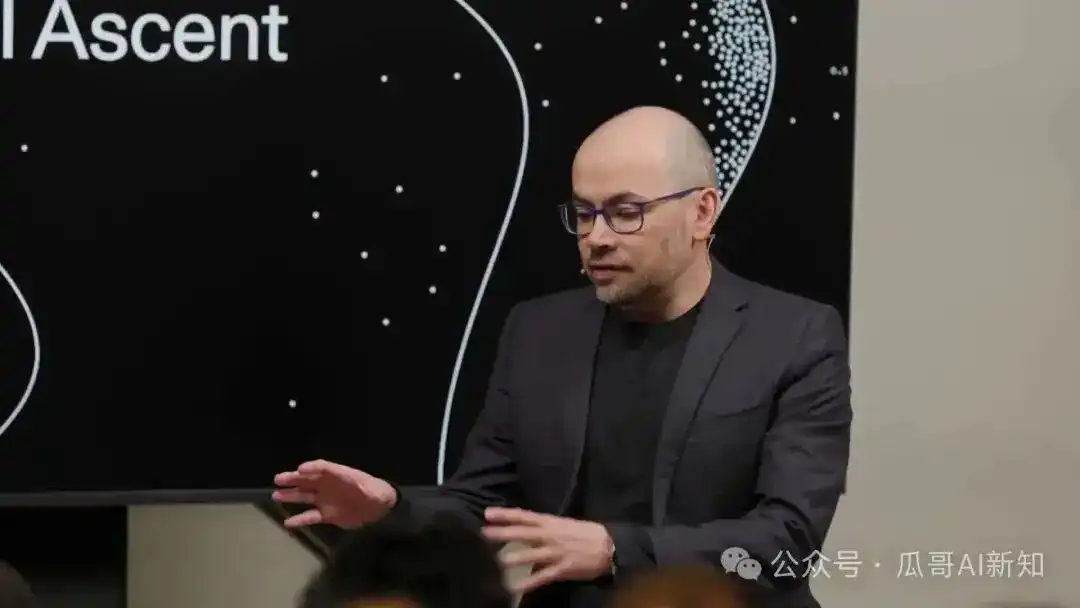
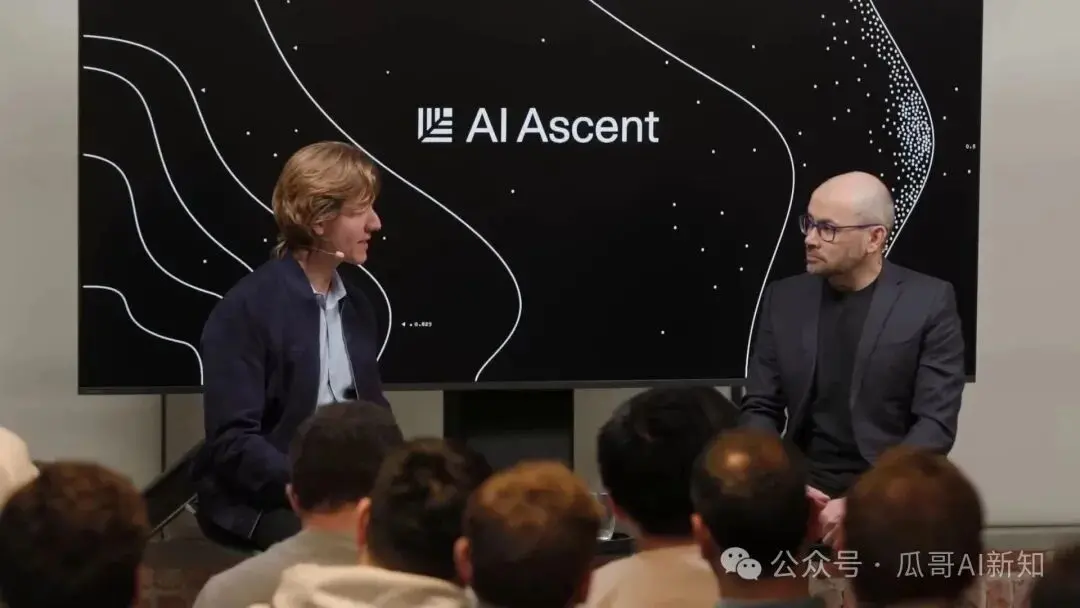
Demis Hassabis, co-founder and CEO of Google DeepMind and Nobel laureate, discusses the path to AGI and its profound implications in a Sequoia Capital interview. He outlines his lifelong dedication to AI, tracing his journey from game development (e.g., *Theme Park*)—a perfect AI testing ground—to neuroscience and finally founding DeepMind in 2009. He emphasizes the critical lesson of being "5 years, not 50 years, ahead of time" for successful entrepreneurship. Hassabis reiterates DeepMind's two-step mission: first, solve intelligence by building AGI; second, use AGI to tackle other complex problems. He highlights the transformative potential of "AI for Science," particularly in biology where tools like AlphaFold have revolutionized protein folding. He envisions AI-powered simulations drastically shortening drug discovery from years to weeks and enabling personalized medicine. Furthermore, he predicts AI will spawn new scientific disciplines, such as an engineering science for understanding complex AI systems (mechanistic interpretability) and novel fields enabled by high-fidelity simulators for complex systems like economics. He posits a fundamental worldview where information, not just matter or energy, is the essence of the universe, making AI's information-processing core uniquely suited to understanding reality. He defends classical Turing machines as potentially sufficient for modeling complex phenomena, including quantum systems, as demonstrated by AlphaFold. On consciousness, Hassabis suggests first building AGI as a powerful tool, then using it to explore deep philosophical questions. He believes components like self-awareness and temporal continuity are necessary for consciousness but that defining it fully remains an open challenge. He predicts AGI could arrive around 2030 and, once achieved, would be used to probe the deepest questions of science and reality, much as envisioned in David Deutsch's *The Fabric of Reality*.

链捕手05/12 02:15

Sequoia Interview with Hassabis: Information is the Essence of the Universe, AI Will Open Up Entirely New Scientific Branches

链捕手05/12 02:15

Anthropic Starts Poaching Scientists? $27K Weekly Onsite Stipend to Fix Claude's Expert-Level Errors

Anthropic has launched a new STEM Fellow program, offering $3,800 per week for a three-month, in-person residency in San Francisco. The role targets experts from science, technology, engineering, and mathematics (STEM) fields—machine learning experience is helpful but not required. Instead, Anthropic values scientific judgment and a willingness to learn quickly. Fellows will work with Claude models and internal tools under the guidance of an Anthropic researcher. Example projects include a materials scientist identifying errors in Claude’s reasoning or a climate scientist integrating atmospheric modeling software with Claude. The goal is to have experts "tell Claude where it's wrong" and improve its scientific capabilities. This initiative is part of Anthropic’s broader strategy to strengthen its scientific ecosystem, following earlier programs like the AI Safety Fellows and AI for Science programs. The company acknowledges that current AI models, while powerful, still produce high-confidence errors and lack end-to-end research autonomy. The program aims to embed domain expertise directly into model development, turning scientists into "high-level reviewers" for AI. Anthropic CEO Dario Amodei has previously emphasized AI’s potential to accelerate scientific breakthroughs, particularly in biology and healthcare. The company believes that the next phase of AI competition will depend not on scaling parameters, but on integrating human expertise to refine model accuracy and reliability.

marsbit04/22 07:44

Anthropic Starts Poaching Scientists? $27K Weekly Onsite Stipend to Fix Claude's Expert-Level Errors

marsbit04/22 07:44

The Self-Destruction of the Startup Bible: The More You Know, the Sooner You Fail

The article "The Self-Defeating Nature of Startup Dogma: The More You Know, The Sooner You Fail" argues that popular startup methodologies—such as Lean Startup, Customer Development, and the Business Model Canvas—have not improved startup survival rates over the past 30 years, based on U.S. government data. The core paradox is that once a methodology becomes widely adopted, it loses its competitive advantage as all founders converge on the same strategies, leading to homogeneity and increased failure rates in competitive markets. The author compares this to the Red Queen effect in evolutionary biology, where continuous adaptation is necessary just to maintain position. Despite the intuitive appeal and scientific claims of these frameworks, empirical data shows no improvement in the survival rates of either general U.S. businesses or venture-backed startups. In fact, the success rate for seed-funded startups securing subsequent funding has declined. The article explores three possible explanations: the theories might be fundamentally flawed; they might be too obvious to require formalization; or they might be self-defeating when universally applied. The author calls for a truly scientific approach to entrepreneurship, one that embraces experimentation, paradigm development, and differentiation rather than dogma. The conclusion is that to succeed, founders must often do the opposite of what popular playbooks advise.

marsbit03/23 08:13

The Self-Destruction of the Startup Bible: The More You Know, the Sooner You Fail

marsbit03/23 08:13

活动图片