Hoskinson Warns Cardano Could Lose Its ‘Science Coin’ Edge

bitcoinistОпубліковано о 2026-05-21Востаннє оновлено о 2026-05-21

Анотація

Charles Hoskinson warns that Cardano risks losing its identity as the "science coin" if DReps fail to approve a key research funding proposal. He explains the ecosystem is in "treasury season" with a tougher funding environment, requesting $52 million this year versus $98 million last year, leading to cuts and layoffs. Hoskinson argues Cardano's research program is its "spine and backbone," responsible for its differentiation through work on proof-of-stake, extended UTXO, Plutus, and academic collaborations. He rejects calls to selectively fund parts of the research group, warning that treating researchers as commodities could lead to an irreplaceable talent drain to better-funded rivals. Hoskinson ties research funding to Cardano's long-term investment case, stating that without it, the project would lose a core value proposition. He ends with a direct appeal to DReps to vote for the proposal, calling it a necessary foundation for Cardano's future.

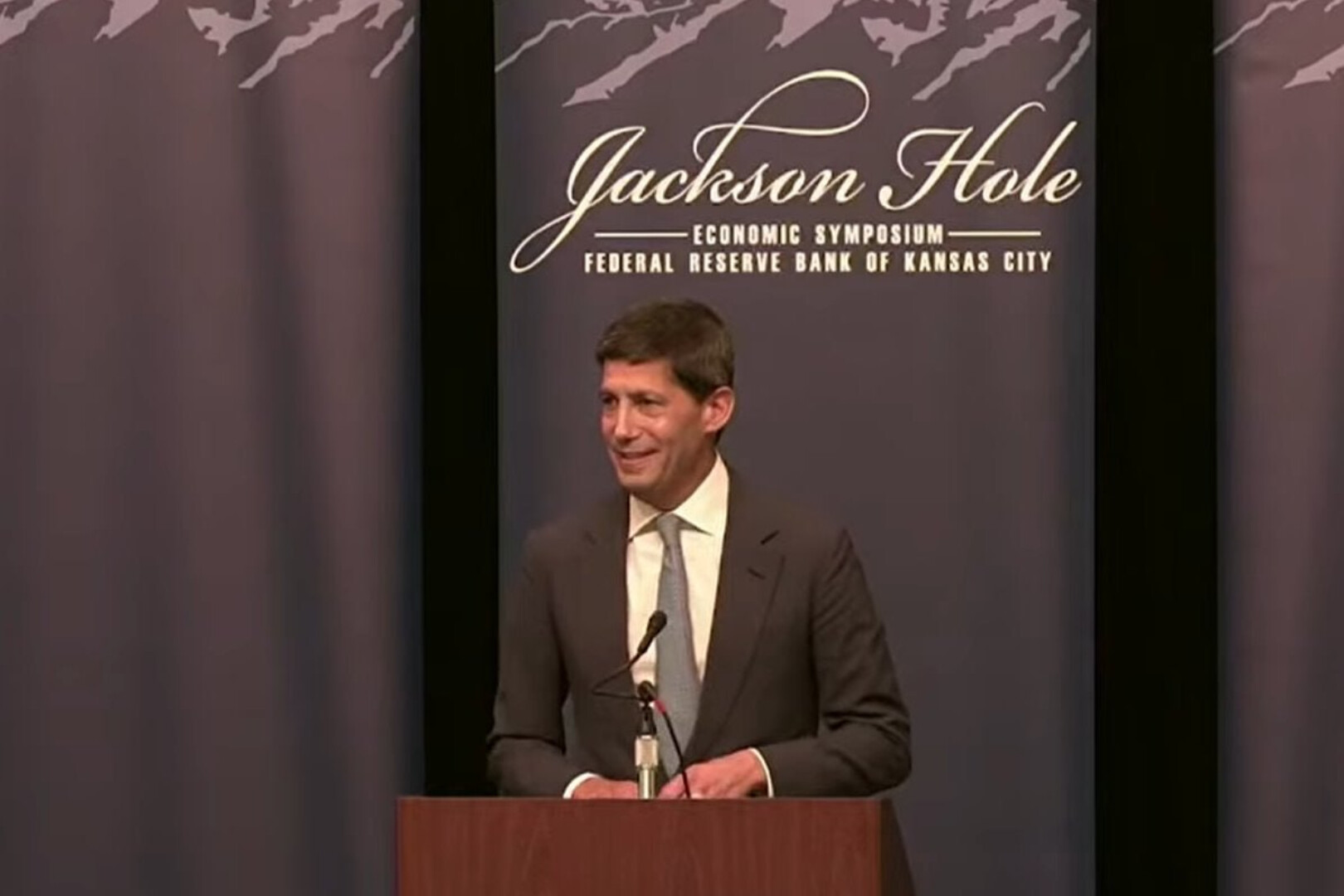
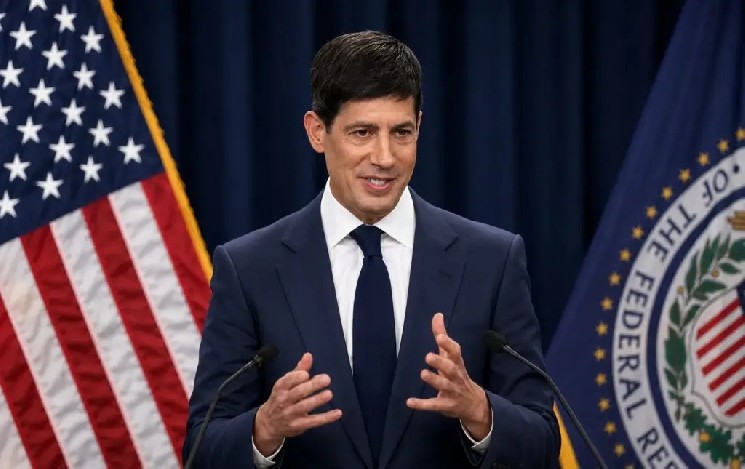
Charles Hoskinson has urged Cardano DReps to back a research funding proposal, warning that a failure to do so could damage one of the network’s core value propositions: its identity as a research-led blockchain.

Speaking in a May 21 livestream from England, Hoskinson said Cardano is in “treasury season” and facing a tougher funding environment than last year. According to him, the ecosystem is asking for about $52 million in funding this year, down from roughly $98 million last year, after cuts that have already affected engineers and community teams.

“Many people have had to make profound sacrifices,” Hoskinson said. “Good people have had to go. Engineers have been let go. Community teams liquidating familiar faces and new faces alike.”

But the proposal that drew his strongest concern was research. Hoskinson said he had seen a “disturbing trend” of some DReps voting against funding Cardano’s research group, despite what he described as its foundational role in the network’s development.

Hoskinson Defends Cardano’s Research Core

Hoskinson framed the debate as larger than a budget dispute. In his view, Cardano’s long-running research program is the “spine and backbone” of the ecosystem and a key reason the project has differentiated itself from other major blockchains.

“The spine and backbone of what makes Cardano Cardano has always been and will always be the fact that we’re the science coin,” he said. “We’re the research coin. Over the last 10 years, hundreds of millions of dollars has been spent, and countless hundreds of researchers have been involved in the production of the largest research group in the world for cryptocurrencies.”

He pointed to Cardano’s work on proof-of-stake research, extended UTXO, Plutus, sidechains and Bitcoin-related DeFi research as examples of the group’s output. He also argued that the network’s academic ties, spanning institutions such as Stanford, the University of Edinburgh, the University of Wyoming and others, are not easily replaceable.

Hoskinson said critics of the proposal have argued that research funding should be broken apart, allowing the ecosystem to “pick and choose” which areas or people to keep. He rejected that framing, saying it would force the ecosystem into decisions it is not equipped to make without damaging the research operation as a whole.

“So then I asked the DReps, which scientists would you like me to fire?” he said, before naming several researchers associated with Cardano’s technical development. “And if not people, perhaps institutions. Which institutions would you like to shut down? And because you’re so qualified, which research agendas do you so feel are unnecessary?”

Warning Over Talent Flight

A major part of Hoskinson’s argument was that Cardano’s researchers could be recruited by better-funded rival ecosystems if the project signals that their work is no longer valued. He said other blockchains with large treasuries would likely be interested in the same cryptographers, programming language experts and distributed systems researchers.

“If you treat these people like commodities, they will leave,” Hoskinson said. “They’ll leave to other ecosystems that have a lot more money and are willing to pay a lot more with better stability and certainty.”

He warned that the loss would not be easily reversible. Academic and technical talent, he argued, depends on long-term stability, and once researchers move on to other ecosystems, Cardano may not be able to bring them back. “We can’t recover this. It’s a one-way door. If you lose your best and brightest, we won’t get them back. We don’t get to say we’re sorry.”

Hoskinson also tied the issue to market perception. He asked what Cardano’s investment case would look like over the next three to five years if the ecosystem signaled it was no longer willing to support research. Without that layer, he suggested, Cardano would have to lean more heavily on metrics such as monthly active users, TVL or transaction volume.

The livestream ended as a direct appeal to DReps who have not yet voted and to those who have voted against the proposal. Hoskinson asked them to reconsider, saying research funding is not a discretionary line item but part of Cardano’s long-term competitive position.

“You can’t walk without a spine,” he said. “Please vote for science. Please vote for the research proposal for IOG. It’s a necessary foundational proposal, and we can’t afford to lose it.”

At press time, ADA traded at $0.2499.
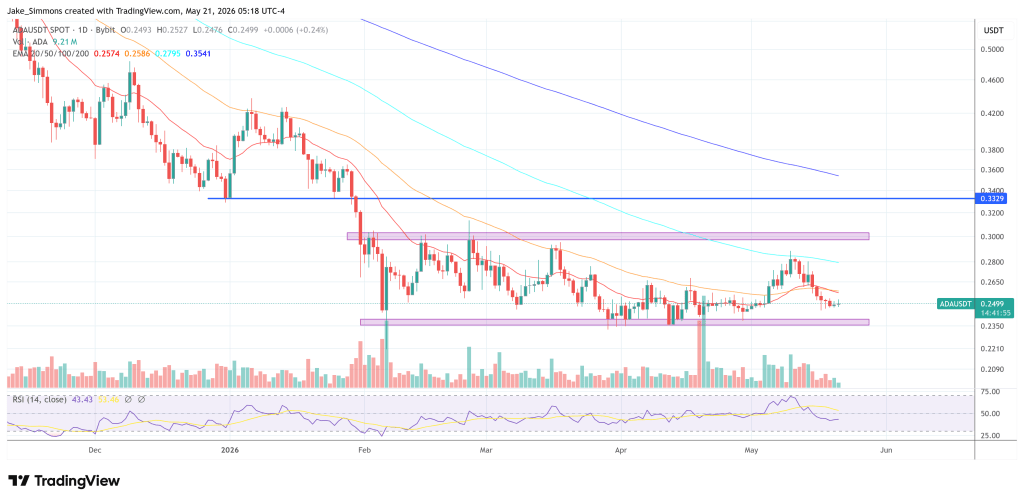
ADA remains in sideways trend, 1-day chart | Source: ADAUSDT on TradingView.com

Пов'язані питання

QAccording to Hoskinson, what is the core identity of Cardano that is at risk?

AAccording to Hoskinson, Cardano's core identity at risk is being the 'science coin' or the research-led blockchain, which he describes as the 'spine and backbone' of the ecosystem.

QWhat is the potential consequence if Cardano's DReps vote against the research funding proposal, as warned by Hoskinson?

AHoskinson warns that voting against the research funding could lead to a talent flight, where Cardano's researchers would leave for better-funded rival ecosystems. This loss would be irreversible and would damage Cardano's long-term competitive position and investment case.

QHow much funding is the Cardano ecosystem asking for this year, and how does it compare to last year?

AThe Cardano ecosystem is asking for about $52 million in funding this year, which is down from roughly $98 million last year.

QWhat examples does Hoskinson give to demonstrate the output of Cardano's research group?

AHoskinson points to Cardano's work on proof-of-stake research, extended UTXO, Plutus, sidechains, and Bitcoin-related DeFi research as examples of the research group's output.

QWhat does Hoskinson say critics of the research funding proposal have argued, and how does he respond?

AHoskinson says critics argue that research funding should be broken apart, allowing the ecosystem to 'pick and choose' which areas or people to fund. He rejects this, stating it would force the ecosystem into decisions it is not equipped to make and would damage the research operation as a whole, challenging critics to name which specific scientists or institutions they would cut.

Пов'язані матеріали

Warsh's First Day in Office, Markets Deliver a 'Wake-up Call': Rate Hike Expected This Year

On his first day in office, newly inaugurated Federal Reserve Chairman Warsh received a stark market warning, with expectations now fully pricing in a 25-basis-point interest rate hike this year. The shift was triggered by hawkish remarks from Fed Governor Waller, who stated that inflation is now the key policy "driver" and that the odds of a hike or cut are evenly split. This sent short-term Treasury yields higher. Waller signaled a significant pivot in his stance, citing disappointing inflation and labor data. He suggested removing "easing bias" language from Fed statements and did not rule out future rate increases if inflation fails to recede, though he noted immediate action isn't warranted without signs of unanchored inflation expectations. Chairman Warsh faces immediate pressure at his first FOMC meeting in June. With the preferred inflation gauge at a three-year high, analysts warn that failing to hike could be interpreted as an implicit easing of policy. The geopolitical situation in the Middle East is adding to existing price pressures. The market's expectation for a hike contrasts sharply with earlier forecasts for multiple cuts. While long-term Treasury yields have been contained by lower energy prices recently, analysts note they remain under structural upward pressure. Warsh's swearing-in at the White House highlights political scrutiny over Fed independence. However, the market has made it clear that inflation is the most urgent challenge, leaving the new chairman little time to settle in.

marsbit58 хв тому

Warsh's First Day in Office, Markets Deliver a 'Wake-up Call': Rate Hike Expected This Year

marsbit58 хв тому

Has Microsoft Lost Its Way in the AI Race, and Can Copilot Bring It Back on Track?

Microsoft, once seen as an early AI frontrunner due to its investment in OpenAI, is navigating a strategic shift amid increased competition. Its initial reliance on OpenAI’s GPT models has been complicated by OpenAI’s growing ambitions as a direct competitor, rapid advancements from rivals like Claude and Gemini, and the disruptive rise of AI agents, which challenge its traditional SaaS business model. These factors contributed to stock declines and slower-than-expected adoption of its flagship Copilot products. In response, CEO Satya Nadella has taken a hands-on role in product development, signaling the urgency of change. Microsoft is pivoting from a model-centric strategy to a "model-agnostic" enterprise platform approach. It aims to become the foundational layer connecting various AI models—from OpenAI, Anthropic, or its own new "Superintelligence" team—with enterprise workflows, data, security, and cloud services. Recent organizational changes merged consumer and enterprise Copilot teams to accelerate innovation, exemplified by new products like Copilot Tasks and Copilot Cowork. However, this transformation comes at a high cost. Microsoft faces massive capital expenditures, potentially reaching ~$190 billion by 2026, to support AI infrastructure. While its platform strategy shows early signs of traction with growing Azure AI revenue, it must balance startup-like agility with the reliability expected by enterprise clients. The core challenge is no longer being the sole AI winner but defending its position as the essential enterprise software entry point amidst rapid technological commoditization and the shift towards always-on AI agents.

marsbit1 год тому

Has Microsoft Lost Its Way in the AI Race, and Can Copilot Bring It Back on Track?

marsbit1 год тому

Why Haven't Forex Stablecoins Taken Off?

Why FX Stablecoins Never Took Off: A Path Forward via Synthetic FX Despite the explosive growth of stablecoin-powered digital banking, which has seen ~$6B in VC investment and a 24x surge in crypto card spending in under a year, a major limitation persists: these banks are essentially dollar-only accounts. This leaves 95-99% of global accounts, which are denominated in non-USD currencies, underserved. Attempts to create native foreign currency (FX) stablecoins (like EURC) have largely failed, with total FX stablecoin TVL at ~$600M compared to $400B for USD stablecoins—a 700x gap. These FX tokens face critical challenges: fragile pegs due to low liquidity, limited exchange/FinTech acceptance, poor on/off-ramps, complex regional compliance, and a chicken-and-egg adoption problem. The article argues that the solution lies not in competing with entrenched USD stablecoin networks (USDT/USDC), but in adopting a synthetic FX model inspired by traditional finance. Specifically, it advocates for Mark-to-Market Non-Deliverable Forwards (NDFs)—cash-settled FX derivatives that allow users to maintain underlying USD stablecoin holdings while having their account balance and P&L denominated in a foreign currency. This approach offers key advantages: strong oracle-based pegs, retention of deep USD stablecoin liquidity and yield, superior on/off-ramps, scalability to any currency with a reliable feed, and capital efficiency. It mirrors how modern institutional FX markets operate. Primary use cases for on-chain NDFs include: 1. **Digital Banks/Wallets:** Enabling multi-currency accounts for international users without leaving the USD stablecoin ecosystem, boosting deposits and retention. 2. **FX Carry Trade Vaults:** Offering access to sovereign interest rate differentials (e.g., earning yield on BRL) in a more stable and scalable format than crypto-native products like Ethena. 3. **Global Enterprise Payments:** Allowing merchants to receive payments in local currency equivalents while settling in USD stablecoins, similar to services offered by Stripe for fiat. The conclusion is that synthetic FX, not native FX stablecoins, is the viable path to integrating foreign exchange into the growing stablecoin digital banking landscape, potentially unlocking the next phase of institutional DeFi and multi-trillion-dollar global adoption.

链捕手2 год тому

Why Haven't Forex Stablecoins Taken Off?

链捕手2 год тому

IOSG Founder: Web3 Is 'Losing Blood,' How Can Practitioners Survive Better?

IOSG Founder: Web3 Is "Bleeding Out" – How Can Practitioners Survive Better? In a candid reflection, the founder of IOSG Ventures voices deep concerns about the current state of Web3, describing an ecosystem experiencing severe "blood loss." Despite the recent MuShanghai event showcasing a successful pivot towards a more diverse, global community, a somber reality persists: many crypto-native attendees were there exploring exits or new labels in biotech, AI, and robotics. The core issue is identified as a breakdown in the ecosystem's positive feedback loop. Alarmingly, underestimated "low-probability bad events" are occurring simultaneously: a significant brain drain of Chinese developers to AI, a lack of breakout applications despite massive funding, and a widening credibility gap for practitioners globally, often stigmatized as scam artists. This has created a dire接班人 (successor) problem, with the next generation seeing little professional prestige or financial upside in crypto compared to fields like AI. A significant portion of the critique focuses on Ethereum and Vitalik Buterin. While not pessimistic about Ethereum's technology, the founder worries that critical development windows were missed by focusing on niche technical narratives like ZK and L2 instead of mass-market applications. A more urgent concern is that Vitalik may be isolated in an "information bubble," shielded from the grassroots community's hardships by layers of intermediaries, preventing crucial feedback from reaching him. The call is for Vitalik to return to a founder's mindset, re-engage directly with the community, and rally efforts for the next decade. The divergence between U.S. and Chinese OG (Original Gangster) ecosystems is stark. While many U.S. builders reinvest their wealth into the ecosystem, the Chinese scene suffers from a severe lack of "造血能力" (blood-making ability), with most market-driven funds struggling and many early success stories cashing out entirely. This threatens the entire Asian Web3 ecosystem's survival. For individual practitioners, survival advice is pragmatic: find your core "why," maintain life balance beyond token prices, continuously learn new skills (like AI), form small, trusted alliances for mutual support, and practice self-compassion. The industry's greatest need is not money or tech, but lighthouses—individuals at all levels who offer mentorship, grants, referrals, and honest reflection to guide others. The piece concludes with a direct appeal: OGs must pay forward the opportunities the industry gave them; founders must not struggle alone; and builders must continue their work, ensuring it remains a viable profession. The survival of Web3's "cathedral" depends not on any single leader but on the collective responsibility of everyone who remains.

marsbit3 год тому

IOSG Founder: Web3 Is 'Losing Blood,' How Can Practitioners Survive Better?

marsbit3 год тому

Торгівля

Спот
Ф'ючерси

Популярні статті

Як купити EDGE

Ласкаво просимо до HTX.com! Ми зробили покупку edgeX (EDGE) простою та зручною. Дотримуйтесь нашої покрокової інструкції, щоб розпочати свою криптовалютну подорож.Крок 1: Створіть обліковий запис на HTXВикористовуйте свою електронну пошту або номер телефону, щоб зареєструвати обліковий запис на HTX безплатно. Пройдіть безпроблемну реєстрацію й отримайте доступ до всіх функцій.ЗареєструватисьКрок 2: Перейдіть до розділу Купити крипту і виберіть спосіб оплатиКредитна/дебетова картка: використовуйте вашу картку Visa або Mastercard, щоб миттєво купити edgeX (EDGE).Баланс: використовуйте кошти з балансу вашого рахунку HTX для безперешкодної торгівлі.Треті особи: ми додали популярні способи оплати, такі як Google Pay та Apple Pay, щоб підвищити зручність.P2P: Торгуйте безпосередньо з іншими користувачами на HTX.Позабіржова торгівля (OTC): ми пропонуємо індивідуальні послуги та конкурентні обмінні курси для трейдерів.Крок 3: Зберігайте свої edgeX (EDGE)Після придбання edgeX (EDGE) збережіть його у своєму обліковому записі на HTX. Крім того, ви можете відправити його в інше місце за допомогою блокчейн-переказу або використовувати його для торгівлі іншими криптовалютами.Крок 4: Торгівля edgeX (EDGE)Легко торгуйте edgeX (EDGE) на спотовому ринку HTX. Просто увійдіть до свого облікового запису, виберіть торгову пару, укладайте угоди та спостерігайте за ними в режимі реального часу. Ми пропонуємо зручний досвід як для початківців, так і для досвідчених трейдерів.

528 переглядів усьогоОпубліковано 2026.03.31Оновлено 2026.03.31

Як купити EDGE

Обговорення

Ласкаво просимо до спільноти HTX. Тут ви можете бути в курсі останніх подій розвитку платформи та отримати доступ до професійної ринкової інформації. Нижче представлені думки користувачів щодо ціни EDGE (EDGE).

活动图片